Win a $50 Co-op Gas Card – New Manitoba IBA Contest for 2019!

The Manitoba IBA Program is delighted that Red River Co-op will be supporting a new initiative to get more people to submit birding records to the program and using our data portal, eBird. Each month from spring to fall, we will set a monthly prize draw for a $50 Co-op gas card. Each month will have a different theme. The rules are simple for anyone wishing to enter:

  1. Each eBird checklist submitted to the program will be eligible as long as:
    1. It is within the boundary of any of Manitoba’s 36 IBAs (for a list of all our Manitoba IBAs, you can simply look at our updated map, clicking here) and;
    2. The checklist is submitted using the IBA Canada Protocol, or if the monitoring is for shorebirds, the International Shorebird Survey (90% should be the former). Here is more information on using the IBA Canada Protocol.
  2. Email the program at iba@naturemanitoba.ca, so we can set up a link to your eBird account. You will need to share your eBird profile name so we can set up a direct link with our account.
  3. Once complete, share your checklist with our account, username being ManitobaIBA (one word).
  4. Each single eligible checklist will be submitted to the contest via a randomised draw (we will use an Excel spreadsheet randomiser to make it fair). The winner will be contacted and then announced early the following month.
  5. Anyone is eligible to enter, except members of the staff from the Manitoba IBA Program.

If you are not an eBird user, do not despair. We have developed a new tool to upload your information to eBird. There is now an online form on our website to match the IBA reporting cards which we have produced, or are producing for each IBA. These will also be included in the contest, with one entry for every day that a bird submission is made via this form. You can see the form, and how easy it is to use at this link.

The first contest will be for March. As this is a shortened month, both for birding in IBAs, and with the long winter, we have made it simple.

For any bird observation submitted during the month of March from any IBA, you will be eligible for the contest.

Happy Birding!

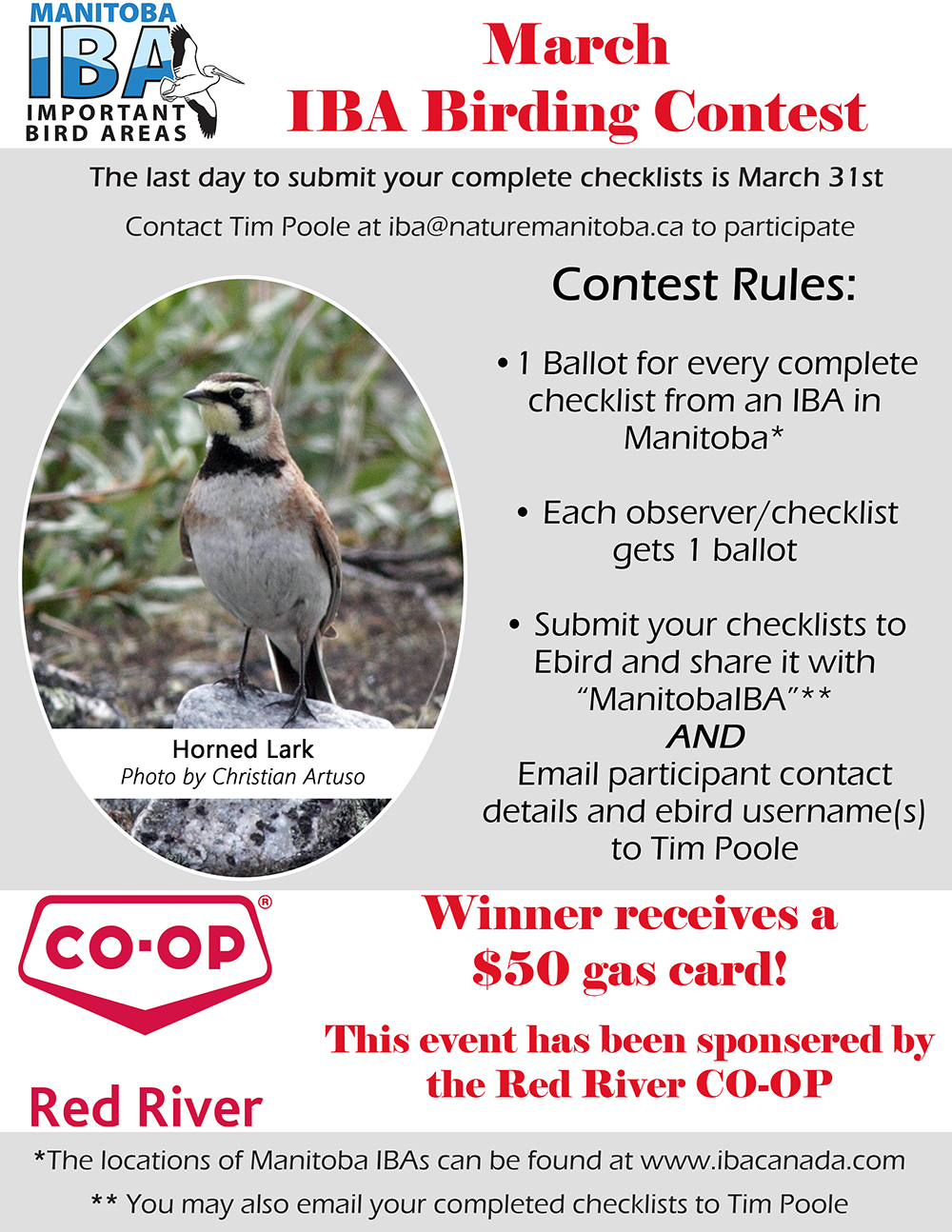
March 2019 IBA Contest Poster

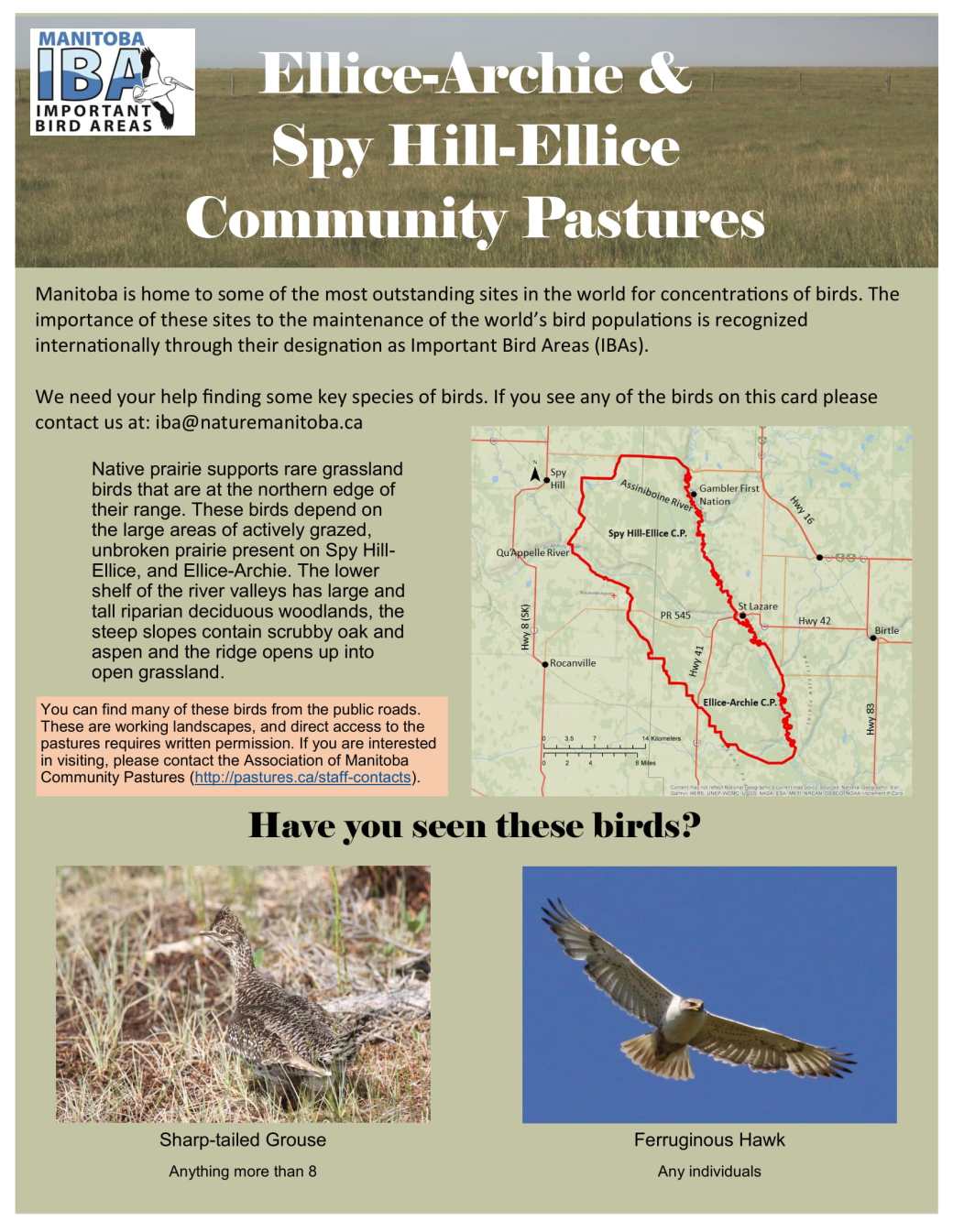
Announcement – Ellice-Archie and Spy Hill Community Pastures Important Bird and Biodiversity Area

Bird Studies Canada, Nature Manitoba and Nature Saskatchewan are delighted to announce a new Important Bird and Biodiversity Area (IBA) in Manitoba and Saskatchewan. The Ellice-Archie and Spy Hill Community Pastures IBA contains significant breeding populations of two globally threatened bird species, a host of other priority birds, and impressive biodiversity.  “Bird Studies Canada is thrilled to designate this new site and to support the essential role that Community Pastures play in keeping birds and biodiversity on the landscape,” said Andrew Couturier, Senior Director, Landscape Science and Conservation with Bird Studies Canada.

Ellice-Archie and Spy Hill Community Pastures (read full profile here)
presentation1.jpg

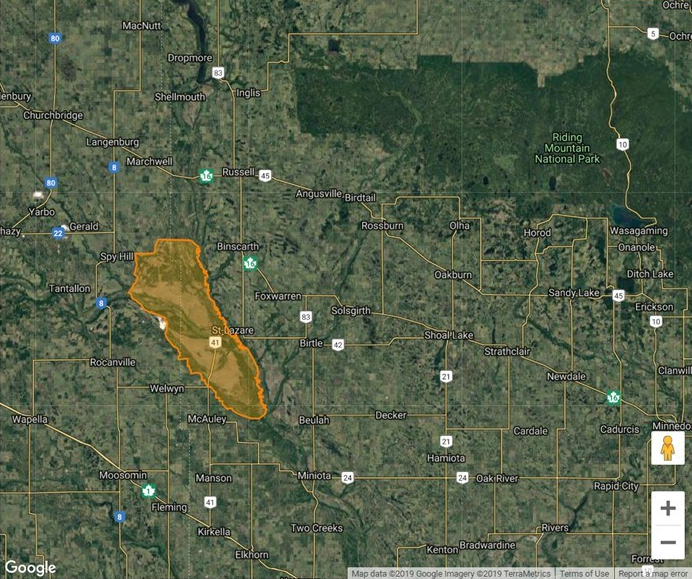
The Ellice-Archie and Spy Hill Community Pastures IBA is located near Spy Hill in Saskatchewan, and Birtle and St Lazare in Manitoba. This is the first Manitoba IBA to  cross the provincial boundary into Saskatchewan, although the Saskatchewan River Delta and Cumberland Marshes IBAs are part of a huge adjoining wetland complex between Cumberland House and The Pas. The Spy Hill-Ellice Community Pasture nestles between the Assiniboine and Qu-Appelle River Valleys, with the Ellice-Archie Community Pasture bordered by the Assiniboine River on the east, and a smaller river valley to the west.

MB103-1

Original map can be downloaded from the IBA Canada website (https://www.ibacanada.com/site.jsp?siteID=MB103)

The Ellice-Archie and Spy Hill Community Pastures take you back to a time long gone. A time when an ocean of grass would spread over the prairies. The experience of wildness begins in the base of the Assiniboine and Qu’Appelle River Valleys. The tall riparian woodlands provide a home for a chorus of migrating and breeding songbirds during May and June.  Climbing the valley sides, the riparian forest phases into an intermediate oak-aspen scrub. Both Eastern and Spotted Towhees breed here – and probably the occasional hybrid can be seen as well. It is only once you climb through the scrub zone that you reach the climax, a sea of grass on the plateau at the top of the valleys.

Slide3

Looking back into the valley, an image of Manitoba’s prairie past. Photo copyright Christian Artuso

The Ellice-Archie and Spy Hill Community Pastures are shaped by history. That history is shaped by the combination of nature and people. The grassland ecosystem would once have been conserved by natural processes, including climate, wildfire and grazing by large herbivores, notably Plains Bison. Some of this area was broken prior to the 1930’s. The dirty thirties define this area in modern history. The Community Pastures were established in the 1930’s as PFRA sites (Prairie Farm Rehabilitation Administration), following years of drought. Drought caused widespread crop failure on lands poorly suited for cultivation, and this led to alternative land-uses being sought. Grass species, notably native species, are drought tolerant and provide land cover which reduces erosion, leading to the establishment of these pastures across Manitoba and Saskatchewan

Slide4

It is rare to find an area in Manitoba with grass this widespread. Copyright Christian Artuso

Interest in the Community Pastures peaked in the past few years following the federal governments decision to divest the management of Community Pastures to provincial control. In Manitoba, this led to the establishment of the Association of Manitoba Community Pastures (AMCP). The grasslands of the Ellice-Archie and Spy Hill-Ellice Community Pastures are primarily native mixed-grass prairie, with some smaller patches of tame non-native grass species.

The two pastures are managed by professional Pasture Managers employed by AMCP. AMCP is a non-profit organization governed by a Board of Directors composed of pasture patrons.  Overall it manages 20 community pastures across Manitoba, and is a significant contributor to the conservation of grassland Species At Risk in Manitoba.

The Province of Manitoba awarded AMCP the 2017 Manitoba Excellence in Sustainability Award for Water and Natural Areas Stewardship.   The Award recognizes AMCP’s range management practices, the numerous environmental benefits of the community pasture program, as well as support for Manitoba’s cattle industry and rural communities.  The specific management activities that support healthy grasslands undertaken by dedicated staff include:

  • Maintenance of large, intact areas;
  • Moderate/sustainable stocking rates;
  • Managed grazing rotations adjusted annually;
  • Work done by horseback to protect the lands; and
  • Range health assessments and long-term land management planning.

Significant Birds and Biodiversity

AMCP is supported by the Range Implementation and Management Group (RIMG). RIMG is comprised of government agencies (Manitoba Agriculture and Manitoba Sustainable Development), a crown corporation (Manitoba Habitat Heritage Corporation) and non-government organisations (Nature Conservancy of Canada and Bird Studies Canada).

Members of the RIMG are involved in monitoring the wider environment around these Community Pastures. It was during these monitoring sessions that it became apparent that Ellice-Archie and Spy Hill-Ellice were special. Dr. Christian Artuso of Bird Studies Canada carried out point counts in 2017, finding 151 species of birds, including 15 Species At Risk. Of those Species of Risk, some were migrants (Canada Warbler, Olive-sided Flycatcher, Rusty Blackbird, Harris Sparrow), some were woodland, scrub and riparian breeding species (Bank Swallow, Eastern Wood-Pewee, Eastern Whip-Poor-Will), and some were grassland birds.

Eastern Whip-poor-will_Artuso

Eastern Whip-poor-will, cryptic, handsome, yet highly threatened. This woodland species breeds in the IBA. Copyright Christian Artuso

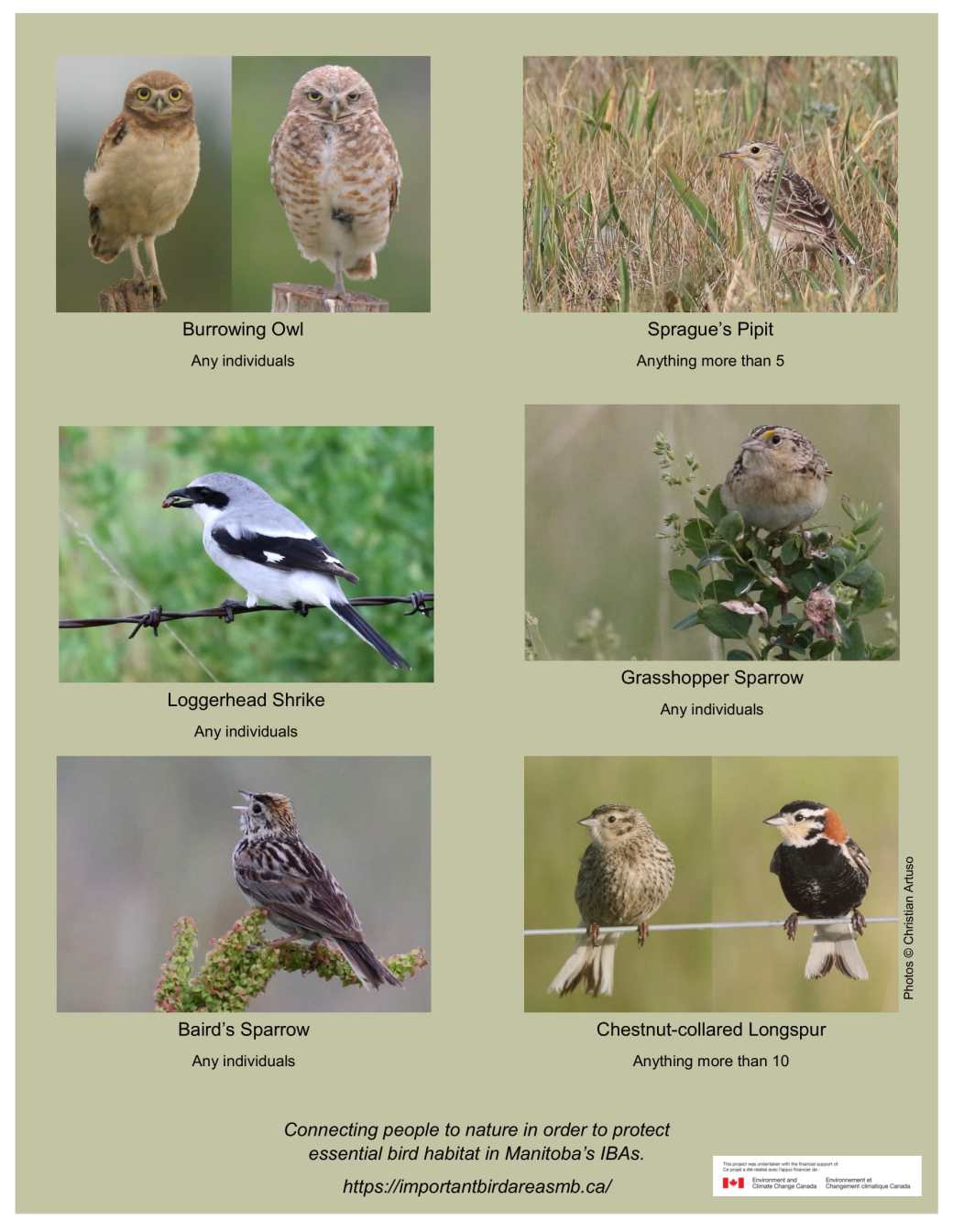
According to various reports, grassland birds are one of the most under threat groups of birds in North America (see State of Canada’s Birds, 2012 for example). Significant populations of two globally vulnerable species of bird breed in these pastures. Sprague’s Pipit numbers are truly impressive. 146 calling males were counted in 2017 across a sample portion of both community pastures.

Sprague's Pipit_3112_Artuso

It may not look like much, but boy you should hear these guys sing! Sprague’s Pipit provide a cascading flight song, echoing across the prairie. Copyright Christian Artuso

The highest total count of another globally threatened grassland bird, the Chestnut-collared Longspur, was 230 individuals in June 2015. Both these totals qualify as globally significant under Birdlife International’s criteria for IBA designation. At the Ellice-Archie Community Pasture, a total of 1.1 Sprague’s Pipit per point count and 1.4 Chestnut-collared Longspur per point count is the highest recorded densities of these species in Manitoba.

Chestnut-collared Longspur_9817_Artuso

The handsome male Chestnut-collared Longspur. Photo copyright Christian Artuso

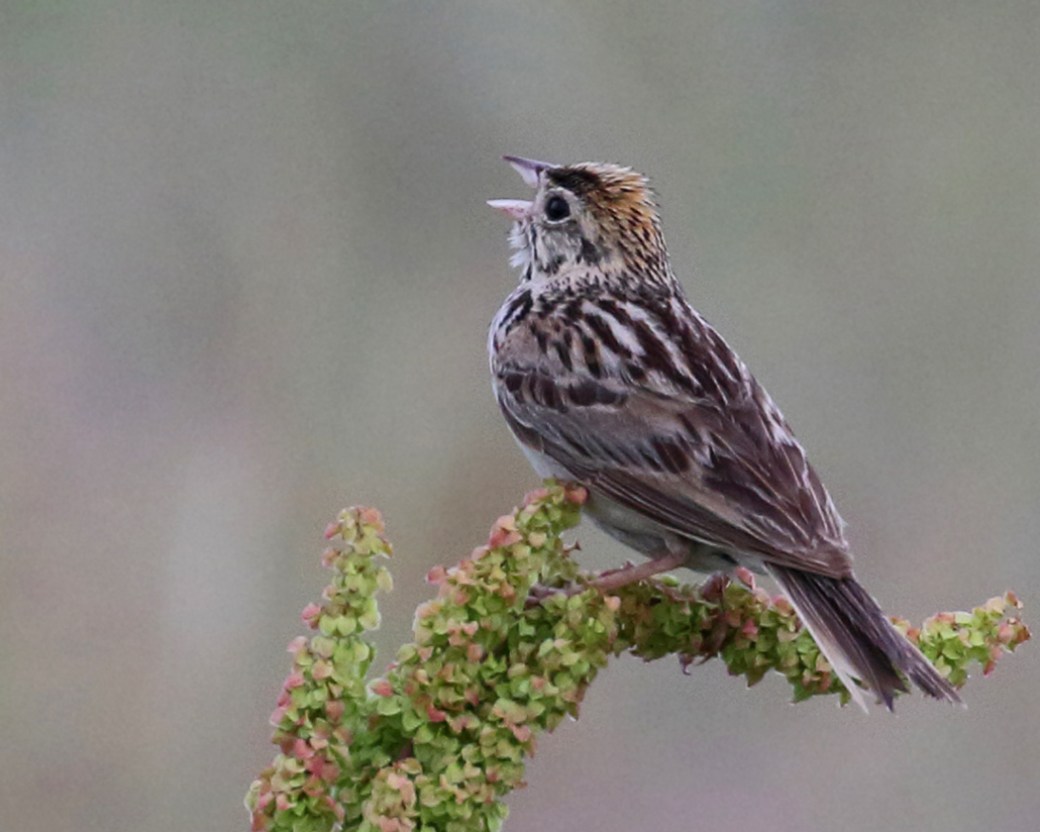
Another threatened grassland bird, Baird’s Sparrow (provincially Endangered, nationally Special Concern) is also present in high concentrations. 12 calling males were recorded here in 2017. There are also good numbers of Grasshopper Sparrow, plus this is one of the best places in Manitoba to see the stunning Mountain Bluebird.
Baird's Sparrow_Artuso

A singing male Baird’s Sparrow. Copyright Christian Artuso

MB103-1.jpg

These grassland birds are under severe pressure. They breed in large, uninterrupted areas of grassland. If the grassland is fragmented (i.e., split up into small portions by roads, fences, infrastructure, scrub, or cropland), then the ability of that grassland to support large concentrations of grassland birds becomes compromised. Fragmenting these habitats may also increase levels of predation, and parasitism by cowbirds. Therefore conserving these large areas of grassland are critical to the survival of these species in Manitoba.

It is not just a place which is special for birds. A report from Manitoba Sustainable Development found at least ten provincially rare or uncommon plants within the IBA in 2002, including Indian Rice Grass and Waxleaf Beardtongue. Of most interest was the presence of the Roundleaf Monkey-Flower, a nationally rare species found in springs and seepy slopes.

Conservation

Ellice-Archie and Spy Hill Community Pastures sits at a crossroads. There are numerous, dire threats facing these critical grassland complexes, including the following:

  • There are few areas of expansive grassland remaining in Manitoba. Tallgrass Prairie, found in remnant patches in southeastern Manitoba near Tolstoi, became one of two endangered ecosystems listed in the Manitoba Endangered Species and Ecosystems Act in 2015. The conservation status of mixed-grass prairie in Manitoba fares little better. Therefore, the future for these birds and their associated habitats is dependent on conserving this expanse of community pasture, the animals that graze it, and the people that steward the land.
  • The proposed Birtle Transmission Line may be routed through the centre of the Spy Hill-Ellice Community Pasture in Saskatchewan (see Nature Manitoba’s objection here). Fragmentation, effectively slicing the grassland in half, is a large factor in the decline of many species, leading to predation, parasitism and an effective loss of habitat.
  • Mineral extraction, notably for potash is a potential future threat. A potash mine is already located on the boundary of the IBA within the province of Saskatchewan.

    Potash Mine

    The north end of the new IBA. Note the potash mine circled in red

  • It is not just potash. The subsurface of the IBA is within the Bakken Oil Fields. Subsurface rights are key, and currently 50% are in the hands of the Crown. The  subsurface holdings are like a checkerboard, and therefore, even if the Crown retains the subsurface rights, there is huge potential for oil extraction over the remainder of the IBA. The demand for extraction activities makes it very difficult to guarantee the extent and quality of the mixed-grass prairie expanses on these pastures.
  • The cumulative impacts of the above industrialisation will likely lead to large-scale losses of habitat, an increase in predation, and parasitism from generalist species such as the Brown-headed Cowbird. However, we need to consider another factor which has been touched upon, but not recognised above. What about the pasture itself, the Pasture Manager, the grazing animals, and the impact that changes to the wider area would have?
  • Climate Change will have an impact on all ecosystems. We need robust grassland ecosystems. In fact, grasslands provide us with huge benefits, for example intact soils sequester, or store carbon.

Opportunities

We mentioned earlier that these are actively managed pastures, but we have not expanded on what this means for the Ellice-Archie and Spy Hill Community Pastures IBA. We have previously espoused the benefit of active grazing management on the conservation of grassland birds. We work on projects with a wide variety of partners, including the Manitoba Beef Producers, Manitoba Habitat Heritage Corporation, West Souris River Conservation District, and Turtle Mountain Conservation District. These projects are aimed squarely at retaining a working landscape, with working people, and grazing animals. Grassland birds need grass. They do not breed in fields of soy beans, or corn, or wheat or potatoes. They need the complex structural mosaic that diverse grass species can offer. They also need the complex structure provided by grazing animals. In our modern world, this means cows. Grassland birds in the native prairies therefore need a thriving beef industry to retain and conserve these special habitats.

Slide1

Ecosystem drivers in action in the new IBA. Cattle are of biological, economical and cultural importance to this area. Photo copyright Christian Artuso

A number of organisations, including Manitoba Sustainable Development, Manitoba Agriculture, Nature Conservancy Canada, Manitoba Habitat Heritage Corporation and Bird Studies Canada, are coming together to work with AMCP to find ways to protect this special place. An amendment under the Crown Lands Act was made recently to enable the designation of community pastures as protected areas. The next steps of course will be to bring this to fruition, but this is a postive development which will protect the land, while retaining the grazing interest.

The AMCP and Pasture Managers are the critical component to Species At Risk management at the Ellice-Archie and Spy Hill-Ellice Community Pastures IBA. The grazing animals and the systems they use to sensitively manage this land, has created something special. We have a place in Manitoba where a sea of grass provides habitat for hundreds of threatened breeding birds, in densities found nowhere else in our province. Surely for this reason alone, this is a place not only worth being called an Important Bird and Biodiversity Area, but also a place worth protecting for generations to come.


If you are interested in visiting this IBA, first understand it is a working landscape. You will need permission from the pasture manager ahead of time, and he will obviously not wish to have lots of people calling. If there is interest, instead, first email the Manitoba IBA Program at iba@naturemanitoba.ca, and we will look into if and how that interest can be met. PR41 from St Lazare to McAuley and further south to Kirkella on the TransCanada does cross the middle of Ellice-Archie, so if you are in the area, this is a great way of seeing the IBA without leaving the road.

Bird Studies Canada Blog by Manitoba IBA

Manitoba IBA Program were delighted that Bird Studies Canada (BSC) asked our Coordinator, Tim Poole to write a piece for their latest enews. The piece is about work funded by the Baillie Fund on the west side of Lake Manitoba.

Thank you to the Baillie Fund for its support in 2018, and to all the people that contribute to the fund through the Birdathon.

You can read the blog at https://www.birdscanada.org/news/baillie-fund-helps-recruit-local-champions-for-birds

A Quick Run Through of A Long, Hectic, and Really Fun Year!

The year is almost ended, there is little time remaining, and everyone is doing their year in review. Here are some of the highlights from our year at Manitoba IBA:

A New Workparty

We tried something new, and decided to start picking up garbage, mainly discarded angling material from St Ambroise Beach. We collected quite the pile.

Shoreline cleanup-Lake Manitoba-MB-000-LARGE-CROP-SMALL-Lynnea A Parker-1110625

Exhausted, but what a collection. Copyright Lynnea Parker

Back to the bar

We managed two more weed pulls at Sandy Bar in 2018. The first, in August attracted quite the crowd.

Weed Pull-Riverton Sandy Bar IBA-MB-000-SMALL-Lynnea A Parker-1110879

A good crowd for a morning of clearing the bar. Copyright Lynnea Parker

The second pull had a smaller crowd, the wind and cold were horrific, but then again, who cares when you can see Red Knots on the tip!

Red Knot_1938_imm_Artuso

Red Knot juvenile. Copyright Christian Artuso

IBA Blitzes

We had a fair few blitz events this year. A visit to Kinosota-Leifur scored over 50 Red-headed Woodpecker (it was World Cup final day after all), visits to North, West and East Shoal Lakes turned out some great numbers of Western Grebes and other waterbirds (spring blitz report here), a trip to Delta Marsh provided a really high species count, Oak Hammock gave us some lovely views of shorebirds on the front pond, and Oak Lake and Plum Lakes provided good counts of Franklin’s Gull, and grassland birds.

Sabina part of Amanda Tim Jock beach near Twin Lakes

Counting shorebirds on Twin Lake Beach in the Delta Marsh IBA. Copyright Randy Mooi

We also had a few great volunteer trip reports. Glennis provided one on a trip to Oak Lake, with Tundra Swans being very prominent. A few days earlier, Katharine did likewise in the same IBA. Photos can also tell a story, and Garry, John and John had quite the find at Delta Marsh in the fall. Not reported previously, but we also know of a Bonaparte Gull trigger in the same IBA in October. Top stuff!

114249501

Thousands of gulls at Delta Marsh IBA. Copyright Garry Budyk

Grassland Birds

We continue to work on grassland bird conservation. This year saw even more landowner surveys delivered in the southwest corner. We plan to publish a report in the New Year, summarising the monitoring results, but in the meantime, Lynnea gave a nice overview of her time out in the prairies. We also delivered a workshop in an indigenous community in this area of the prairies, and three workshops in local schools in Reston, Oak Lake and Pierson.

42092097275_4412359e1a_z

Chestnut-collared Longspur in southwestern Manitoba. Copyright Lynnea Parker

It’s not grim ‘oop north

As part of our northern outreach, Bonnie Chartier returned to Churchill and had some great success taking local members of the community to see some of the special birds of her home area. She was also, thanks to the generosity of Churchill Wild, able to spend a day at the Seal River IBA. Churchill Wild have been extremely generous in fact to the program in the past two years, and we would like to extend our thanks to Mike, Jeanne and the rest of their team for all their help.

Our Coordinator, Tim Poole also got to spend a night on an island on the Nelson River with members of Fox Lake Cree Nation.

Fox Lake Cree Nation - IBA trip

A near miss! Track of the trip along the Nelson River

Sandy Bay Marshes IBA

We did get out for a cold Grebe Watch in May. We have also given a couple of school IBA workshops in the area.

Sandy Bay IBA Blitz-Langruth-Manitoba-000-LARGE-Lynnea A Parker2-1080645

A cold morning out at Sandy Bay for our intrepid grebe watchers. Copyright Lynnea Parker

Shorebirds

It’s been quite the year, with pilot routes of ISS route being delivered at Whitewater and Oak Lake. There are multiple reports on our website, but take a look here for a sample.

P1050307

Whitewater Lake shorebirds. Copyright Tim Poole


There will be many things missed, but all in all, it has been another exceptionally busy year for the program. Thank you to every volunteer and partner who has helped make 2018 a success, and we look forward to working with you in our special IBAs in 2019!

Manitoba IBA News Bites

We were interested to hear the recent updates from the IUCN Red List and Birdlife International. Two of Manitoba’s most well-known species have been listed as Near Threatened. Under IUCN criteria, Near Threatened is the equivalent of Special Concern in Canada. This means that the declines in populations and range are significant, but not considered so significant that they warrant full endangered status.

The first of these species was no surprise, given the Eastern Whip-poor-will is a species which has been listed as Threatened under the Species At Risk Act in Canada for a few years. As an aerial insectivore, it is perhaps no surprise that it’s status has followed that of numerous other birds of this group. Loss of habitat is also thought to be a major contributory factor.

Eastern Whip-poor-will_Artuso

Eastern Whip-poor-will, cryptic, handsome, yet highly threatened. Copyright Christian Artuso

The second species to be listed was, quite frankly jaw-dropping, and extremely concerning. Common Grackles, birds considered by some, but not all, to be agricultural pests, and therefore a species which has been persecuted, have declined enough to be considered as globally Near Threatened. Just think about it – Common Grackles, of all species now require a global listing. That’s incredible! The figures used to come to this conclusion suggest a 50% decline between 1970 and 2014.

Common Grackle_7328.jpg

Much maligned, but needing some love, the Common Grackle. Copyright Christian Artuso

In better news, one of our favourite IBA birds, the Red-headed Woodpecker has lost its global Near Threatened status, and is now merely Least Concern. This is tremendous news, but we have a caveat. In April 2018, COSEWIC, the Committee on the Status of Endangered Wildlife in Canada, voted to upgrade the species to Endangered in Canada. The mismatch seems odd, but presumably the species is doing much better in USA than Canada.

rhwo4671_webj

Juvenile Red-headed Woodpecker in the North, West and East Shoal Lakes IBA. Copyright Garry Budyk


In other news, the IBA Canada website has just updated the Manitoba IBA profiles. This includes up-to-date information on the bird populations, some updates to the conservation status, and description of the area.

Of particular note are the following:

You can find Manitoba’s IBAs and read more about them by clicking on this link. If you find any mistakes in the accounts, please let us know, and we will ask our partners at BSC to edit them.


For those in a birdy nerdy mood, the Manitoba Breeding Bird Atlas, an absolutely stunning success, has now published the full accounts of every species on its website, in English and French. Take a look at the American White Pelican account for some very updated information about the total pelicans counted by Environment and Climate Change Canada at the North, West and East Shoal Lake IBA and the Dog Lake IBA in 2017 (click here).


Finally, we were saddened to hear a few months ago of the passing of Manitoba IBA volunteer, Dave Mayor. Dave, with his wife Pat, were regular attendees at many of our events, and he will be sorely missed. You can read more about Dave’s life here.

Cuba: One of Many Winter Getaway Locations for Birding

Lynnea Parker has been working with the program since January, assisting on a number of projects as our Avian Stewardship Assistant. Recently, she took a well earned vacation in Cuba – and we thought it would be fun for Lynnea to write a short blog on her trip. Here it is in her own words!

I went on a family vacation to Cuba in mid November. While everyone was frying on a beach near Varadero (turning various shades of red to purple) I was often found scampering around the resort looking for birds in the dense vegetation which bordered the property. On the occasion I braved the 30+ degrees Celsius to frolic in the ocean, I was keen to spot potential seabirds. My constant desire to bird watch no doubt annoyed my family to some extent! They didn’t understand why I couldn’t just “relax” 🙂

To prepare for my trip I purchased the Field Guide to the Birds of Cuba by Arturo Kirkconnell and Orlando H Garrido published in 2000. Studying it on the airplane, I identified which species could be found in the Matanzas – Varadero area (located on the north eastern side of Cuba, east of Havana). While I wasn’t going to the “hotspot” of Cuba, which could arguably be Playa Largo near Cuba’s largest National Park, I was still able to put together a list of roughly 100 potential species. The species diversity in Cuba is limited, despite being situated nicely between mainland Florida and Mexico. One reason for islands having reduced biodiversity relates to Island Biogeography Theory, in which limited resources and greatly reduced immigration from other islands, or indeed the mainland, leads to less diversity, but greater appearance of endemics (species which are found nowhere else on Earth). The Galapagos are the most famous example of this phenomena, although being a larger island, Cuba has a greater diversity of species and habitats. The list of potential species included the Cuban Trogon, Cuban Tody, Great Lizard Cuckoo, Key West Quail Dove, Smooth-billed Ani, Antillean Palm-Swift to name a few. 

During my seven day trip I was able to find 50 species. Unfortunately, the Cuban Trogon and Cuban Tody were not among them. The two best places I visited for birds was Rancho Gaviota west of Matanzas (a huge rural farm set in a nature landscape) and the Varahicacos Ecological Reserve on the eastern end of the Varadero peninsula.

Below is a selection of photos to highlight some aspects of my trip, with a species list at the end of this blog post. My full album of photos can be seen here: Birds of Cuba Album

Rancho Gaviota, Matanzas Cuba

On this particular day my family and I drove to Rancho Gaviota in caravan of Jeeps. The excursion was to visit the rural ranch and have a traditional Cuban lunch which consisted of foods originating from the farm. I think everyone agreed it was fantastic. After lunch we had an hour or so to explore the farm, of which my mom decided to cave in and help me bird. I had been recounting earlier in the day how difficult a time I was having finding new species. While, my mom made the difference and found me some of the best species of the whole trip! Who knew! She remarked that I was trying too hard to find the birds, and therefore missing them all.

32225789658_335e6d9c72_z

Helmeted Guineafowl (Introduced Species -Still a Lifer Though!)

44280879640_98e670f70c_z

West Indian Woodpecker

45185301165_8e63718677_z

Great Lizard Cuckoo (very “Great” indeed)

46047069742_2f7ca8a705_z

Cattle Egret


Varahicacos Ecological Reserve

On this day I went off with a companion to check out the ecological reserve close to the resort I was staying at. It was a fantastic experience walking through the reserve. As we walked down the forest path, geckos and lizards would scurry away to the nearest tree. At one point we heard a loud buzzing and found a massive bee’s nest formed in the cracks of a rock fissure (quickly departing after the discovery). While there were few birds to be seen, numerous species could be heard… or was there? I quickly grew tired of the Grey Catbirds and Northern Mockingbirds fooling me at every turn. Despite their trickery, there were a few nice finds.

45185390235_41ddf40a50_z

Key West Quail Dove

46097112861_895e4dcb45_z

Green Heron


Other interesting sightings from my trip:

Left column, top to bottom: Cape May Warbler, Royal Tern, Eurasian-collared Dove, Greater Antillean Grackle

Right Column, top to bottom: Black-throated Blue Warbler, Northern Mockingbird, Sanderling

–>Odd incident, I had a female Cape May Warbler land on my table and eat rice right from my plate while I was still sitting there…. not the kind of species you would expect to come begging for scraps! 

Species Seen in Matanzas and Varadero, Cuba (November 8th to 14th)

Lifers indicated in Bold

Helmeted Guineafowl – Numida meleagris
Rock Pigeon – Columba livia
Scaly-naped Pigeon – Patagioenas squamosa
Eurasian Collared-Dove – Streptopelia decaocto
Common Ground-Dove – Columbina passerina
Key West Quail-Dove – Geotrygon chrysia
White-winged Dove – Zenaida asiatica
Smooth-billed Ani – Crotophaga ani
Great Lizard-Cuckoo – Coccyzus merlini
Antillean Palm-Swift – Tachornis phoenicobia
Cuban Emerald – Chlorostilbon ricordii
Black-necked Stilt – Himantopus mexicanus
Killdeer – Charadrius vociferus
Ruddy Turnstone – Arenaria interpres
Sanderling – Calidris alba
Laughing Gull – Leucophaeus atricilla
Royal Tern – Thalasseus maximus
Magnificent Frigatebird – Fregata magnificens
Double-crested Cormorant – Phalacrocorax auritus
Brown Pelican – Pelecanus occidentalis
Great Egret – Ardea alba
Snowy Egret – Egretta thula
Cattle Egret – Bubulcus ibis
Green Heron – Butorides virescens
Roseate Spoonbill – Platalea ajaja
Turkey Vulture – Cathartes aura
Osprey – Pandion haliaetus
Cuban Black Hawk – Buteogallus gundlachii
Broad-winged Hawk – Buteo platypterus
Yellow-bellied Sapsucker – Sphyrapicus varius
West Indian Woodpecker – Melanerpes superciliaris
American Kestrel – Falco sparverius
Merlin – Falco columbarius
Cuban Pewee – Contopus caribaeus
Blue-gray Gnatcatcher – Polioptila caerulea
Gray Catbird – Dumetella carolinensis
Northern Mockingbird – Mimus polyglottos
Cuban Blackbird – Ptiloxena atroviolacea
Greater Antillean Grackle – Quiscalus niger
Ovenbird – Seiurus aurocapilla
Black-and-white Warbler – Mniotilta varia
American Redstart – Setophaga ruticilla
Cape May Warbler – Setophaga tigrina
Northern Parula – Setophaga americana
Blackburnian Warbler – Setophaga fusca
Black-throated Blue Warbler – Setophaga caerulescens
Palm Warbler – Setophaga palmarum
Yellow-throated Warbler – Setophaga dominica
Prairie Warbler – Setophaga discolor
House Sparrow – Passer domesticus


Volunteer Trip Report by Glennis Lewis – A Swan Song For October Birding at the Oak Lake/Plum Lakes IBA

On Thursday, October 18, Louanne Reid, Gillian Richards and I (Glennis Lewis) set out from Brandon to look for swans at the Oak Lake/Plum Lakes IBA. After several weeks of nasty weather (and a cancelled IBA blitz), it was a great pleasure to hit the road on a gorgeous calm morning with the anticipation of some excellent birding ahead of us.

We entered the IBA at the town of Oak Lake, and quickly spotted 12 Eastern Bluebirds near the town cemetery. Our next big find was a Great Egret, picture perfect on the water’s edge at the intersection of PR 254 and 50 N. And, while some slush ice lingered along the banks of the lake, there was open water on the lake and marshes with many waterfowl dispersed throughout. We found 910 Tundra Swans and 870 Snow Geese on our route north and east of the resort, and along the road to the dam.

SNGO Oak Lake Gillian Richards

Is that flecks of snow around this lovely blue morph Snow Goose. Copyright Gillian Richards


18 American Avocets in their pale nonbreeding plumage were counted north of the lake. We flushed up 3 Snow Buntings along the dam road while 2 Eared Grebes were spotted just west of the dam.


The American Avocets at Oak Lake were still hanging around later in October. Photos all copyright Gillian Richards.

By mid afternoon, the temperature soared to about 22 degrees and the wind picked up, causing fluffy white cattail seeds to explode over the marshes. It is a unique experience being caught in the middle of a cattail blizzard. But, as annoying as it is to have white fluff get in your eyes and up your nose, you have to marvel at the effectiveness of cattail seed production and dispersal.

At the end of the day, we were well content with our bird counts – 46 species, 3,213 individuals (see the list below and on eBird here, here and here). Thanks to Gillian for posting the counts on eBird. Louanne and Gillian also deserve great credit for pulling out branches and weeds that became tangled underneath my car on one of the rougher roads we traveled – an effort much appreciated!

Dowitcher Oak Lake Gillian Richards

Dowitchers doing their distinct pumping feeding action. Copyright Gillian Richards

On Sunday, October 21, I returned to Oak Lake with Jen and Anna Wasko to enjoy another lovely day of birding. We traveled around the north and east side of the lake, and down the dam road observing Tundra Swans. We also took a short walk into the Routledge Sandhills. The Sandhills are always worth a visit and, while they are on private land, there are a few points of public access. A right-of-way into the hills just west of the intersection of PR 254 and 50 N can be easily walked to get a view of one of the largest hills (now sadly much diminished by damage from off road vehicles).

TUSW Oak Lake Gillian Richards

Tundra Swans really do gather here in vast numbers. Photo copyright Gillian Richards

Happily, the Great Egret was still around for viewing, and we counted 6 Snow Buntings along the dam road. Another highlight of the trip was a pair of Golden-crowned Kinglets cavorting about in the oak trees along the road to Jiggins Bluff. Thanks to Jen for driving and to Anna who carefully counted all those Tundra Swans (384 in total).

GREG Oak Lake Gillian Richards

The lingering Great Egret at Oak Lake. Photo copyright Gillian Richards

Both of these field trips to the Oak Lake /Plum Lakes IBA are fondly remembered now that winter is taking hold. And, come next spring, there will be more birding trips to plan in this exceptional IBA with its many diverse habitats of marshes, wet meadows, dry grasslands, deciduous forests, and sandhills.

Species Name 18-Oct
Snow Goose (Anser caerulescens) 870
Canada Goose (Branta canadensis) 79
Tundra Swan (Cygnus columbianus) 910
Northern Shoveler (Spatula clypeata) 91
American Wigeon (Mareca americana) 8
Mallard (Anas platyrhynchos) 159
Northern Pintail (Anas acuta) 12
Green-winged Teal (Anas crecca) 20
Canvasback (Aythya valisineria) 100
Redhead (Aythya americana) 70
Ring-necked Duck (Aythya collaris) 37
Lesser Scaup (Aythya affinis) 250
Bufflehead (Bucephala albeola) 8
Common Goldeneye (Bucephala clangula) 40
Hooded Merganser (Lophodytes cucullatus) 5
Ruddy Duck (Oxyura jamaicensis) 70
duck sp. (Anatinae sp.) 340
Eared Grebe (Podiceps nigricollis) 2
American Coot (Fulica americana) 1
Sandhill Crane (Antigone canadensis) 1
American Avocet (Recurvirostra americana) 18
Short-billed/Long-billed Dowitcher (Limnodromus griseus/scolopaceus) 4
Wilson’s Snipe (Gallinago delicata) 1
Greater Yellowlegs (Tringa melanoleuca) 4
Lesser Yellowlegs (Tringa flavipes) 4
Bonaparte’s Gull (Chroicocephalus philadelphia) 1
Great Blue Heron (Ardea herodias) 1
Great Egret (Ardea alba) 1
Northern Harrier (Circus hudsonius) 2
Bald Eagle (Haliaeetus leucocephalus) 2
Red-tailed Hawk (Buteo jamaicensis) 2
Northern Flicker (Colaptes auratus) 1
Black-billed Magpie (Pica hudsonia) 6
Common Raven (Corvus corax) 5
Black-capped Chickadee (Poecile atricapillus) 5
Eastern Bluebird (Sialia sialis) 12
American Robin (Turdus migratorius) 3
European Starling (Sturnus vulgaris) 30
Cedar Waxwing (Bombycilla cedrorum) 6
American Goldfinch (Spinus tristis) 2
Snow Bunting (Plectrophenax nivalis) 3
American Tree Sparrow (Spizelloides arborea) 3
Dark-eyed Junco (Junco hyemalis) 3
Red-winged Blackbird (Agelaius phoeniceus) 4
Brewer’s Blackbird (Euphagus cyanocephalus) 12
House Sparrow (Passer domesticus)

On behalf of the Manitoba IBA Program, thank you Glennis for writing this excellent piece. Thanks also to the rest of the bird group, Louanne, Gillian, Jen and Anna. It is fantastic to have such a great core of birders in Westman!

Volunteer Trip Profile – Katharine Schulz, Oak Lake and Plum Lakes IBA

Volunteer, Katharine Schulz braved the wintery, blustery weather to visit the Oak Lake and Plum Lakes IBA on October 15th. This was a day after our crane and swan blitz in the area, which we were sadly forced to cancel due to the filthy weather forecast for the day. Gladly, Katharine took the trip a day later, and one other person really braved it on the actual intended day of the blitz. We will profile a third group trip next week. Here is Katharine’s impressions, photos, and map.

I am attaching my GPS track from my October 15th foray into the Oak Lake-Plum Lakes IBA.  I was in the IBA from approximately 9:50 to 4:20 i.e. 6.5 hours and spent the entire time north of #2 Hwy.  The majority of time was spent on the west side of Oak Lake and then I covered a few spots along the 254 up the east side on my way out.

MB011 Katharine Schuklz trip, October 2018

Katharine’s GPS track.

I didn’t manage to take very many good bird photos, but I did have better birding success further south on the west side, and also at a few spots along the 254.  It was a cold, cloudy and windy morning, having been -9C the previous night (in Brandon.)

Frozen marsh 254 S of Hwy 1 Oak Lake IBA Oct 15 2018 IMG_1103

The frozen marsh. Photo copyright Katharine Schulz

The first interesting thing I encountered was a number of apparent piles of snow on a frozen marsh – this turned out to be 31 Tundra Swans, most with their necks tucked in and many of which actually appeared almost frozen into the ice!  Two were juveniles.  When I passed by again later that afternoon, on the way out of the IBA, about 24 were still there, but the now had a bit more room to swim as the day had turned sunny and reached a high of +11, according to the vehicle thermometer.

Tundra Swans in ice 254 S of Hwy 1 Oak Lake IBA Oct 15 2018 IMG_1105

Early morning swans on the ice. Photo copyright Katharine Schulz

Tundra Swans afternoon on same marsh on 254 S of Hwy1 P1330119

Same place later in the day, one or two of the swans appear to have turned into Canada Geese! Photo copyright Katharine Schulz

All in all, it was a good day for Tundra Swans.  A total of 652 were counted at 5 locations plus one flyover group.  The highest numbers were found on larger waterbodies along the 254, one on the south side just west of Oak Lake resort and one on the east side just north of the Oak Lake resort.  These locations also contained numerous ducks, with the latter including at least 125 (likely many more) Northern Shovelers.

Tundra Swans N of Oak Lake resort IBA Oct 15 2018 P1330089

Various waterfowl, including more Tundra Swans  near the resort. Photo copyright Katharine Schulz

Tundra Swans Oak Lake IBA Oct 15 2018 P1330013

Swans flying over. Photo copyright Katharine Schulz

Numerous ducks, mostly unidentified, were encountered throughout the day, in addition to the above.  Many were in flocks in flight.  The highest concentration was found on the west side of Oak Lake upon driving in to the lakeshore along the diversion.  This drive also offered up 2 adult Bald Eagles, a few songbirds and 6 Greater Yellowlegs foraging on a sandbar, along with a few more Tundra Swans on the lake.  A forlorn Yellow-rumped Warbler was also observed attempting to forage on the completely frozen surface of the diversion.

Confused YRWA on icy diversion 46W Oak Lake IBA Oct 15 2018 IMG_1155

Forlorn Myrtle Warbler. Photo copyright Katharine Schulz

While at the lakeshore, Sandhill Cranes were finally heard and then seen in huge flocks in the air to the south-southwest.  I estimated approximately 2,250 in the air, possibly more, and hoped that I might find them when I drove back out to the 150W and then further south and east.

SACR 149W at 43N Oak Lake IBA Oct 15 2018 P1330030

Sandhill Cranes milling around. Photo copyright Katharine Schulz

SACR 149W at 43N Oak Lake IBA Oct 15 2018 P1330027

More Sandhill Cranes in the same field.Photo copyright Katharine Schulz

Unfortunately, I only encountered a small flock of 12 flying west at the 150W and 44N, and then 34 in a field off the 149W at 43N. Interestingly, this was about a mile north of the spot you had indicated for SACR found last year, so they seem to favour that general area.)  Small flocks kept flying overhead, mostly from east to west-southwest, so I attempted to drive further east on the 43N, hoping to get closer to where the huge flocks had appeared to be flying when viewed earlier from the lakeshore.  Unfortunately, about 350 more were observed in the air further east, but no more were found on the ground and the road became too dicey to go any further about 2.5 miles east from the 149W.  Altogether, I believe I had approximately 2,726 Sandhill Cranes after counting small flocks overhead and estimating the large, more distant flocks in the air, but I expect this is an underestimate.

Sandhill Cranes Oak Lake IBA Oct 15 2018 P1330062

Flocks of cranes are commonplace in this area.Photo copyright Katharine Schulz

A decent number of raptors, mostly Red-tailed Hawk and Northern Harrier were encountered throughout the day, but surprisingly few gulls or blackbird flocks.  Oh yes, and I had nice looks at 2 coyotes (and one white cat that I initially mistook for a rabbit – good thing I wasn’t doing a mammal survey!)

Coyote 254 W of Oak Lake resort IBA Oct 15 2018 cropped IMG_1188

Coyote on the prowl….Photo copyright Katharine Schulz

Thanks Katharine for your excellent report, and great photos. Here is the list submitted by Katharine (which can be viewed on eBird).

Snow Goose 55
Canada Goose 66
Tundra Swan 652
American Wigeon 10
Mallard 157
Northern Shoveler 125
Northern Pintail 3
Canvasback 5
Redhead 2
Scaup sp. 30
Bufflehead 22
Common Goldeneye 15
Duck sp. 4138
Western Grebe 1
Northern Harrier 4
Cooper’s Hawk 1
Bald Eagle 2
Red-tailed Hawk 6
Sandhill Crane 2726
Killdeer 1
Greater Yellowlegs 10
Ring-billed Gull 6
Rock Pigeon 85
Mourning Dove 2
Hairy Woodpecker 1
Northern Flicker 1
Balck-billed Magpie 10
American Crow 2
Common Raven 11
Black-capped Chickadee 1
Winter Wren 1
American Robin 5
Yelllow-rumped Warbler 3
Chipping Sparrow 3
Dark-eyed Junco 8
Sparrow sp. 3
Western Meadowlark 6
Blackbird sp. 35

The 12th Prairie Conservation and Endangered Species Conference

Winnipeg will be hosting the 12th Prairie Conservation and Endangered Species Conference on February 19-21, 2019. This is a great opportunity to hear about the diverse conservation initiatives ongoing in the three prairie provinces, meet fellow enthusiasts, and be challenged about the future of the prairies. The theme of ‘Working Landscapes’ is timely, and very much complements the SARPAL projects, of which we are partners.

See http://www.pcesc.ca/ for more info.

PCESC Advrt Poster 2019-1