Updates to the IBA Canada Tables

There has been a recent upload from eBird to the IBA Canada website. In turn, there have been a number of Manitoba IBAs which now have updated in their respective tables. Below are links to the relevant tables. If the writing is in bold, it means that a species trigger has been met (usually either 1% of a global, continental or national (for COSEWIC species) breeding population). If the writing is not in bold type, it means that the total number of birds listed is 75% below the trigger.

If you notice any other changes from 2016 and 2017 which are not highlighted below, please let us know.

MB001 – Delta Marsh IBA,  Semipalmated Plover, Rusty Blackbird

MB003 – Churchill & Vicinity IBA, Little Gull, Rusty Blackbird

MB010 – Oak Hammock Marsh, Buff-breasted Sandpiper, Rusty Blackbird

  • One of the 2016 Rusty Blackbird triggers came from our fall blitz.
  • Buff-breasted Sandpiper was from summer 2017 from an eBird user.

MB015 – Whitewater Lake, American White Pelican, Pectoral Sandpiper, Long-billed Dowitcher, Short-billed Dowitcher, Western Grebe, Tundra Swan, Franklin’s Gull

  • American White Pelican, Pectoral Sandpiper, Short-billed Dowitcher and Western Grebe were all triggered in our August 2016 blitz.
  • Franklin’s Gull received a trigger in our May 2017 blitz.
  • Short-billed Dowitcher and Western Grebe were triggered in our early August 2017 blitz
  • Long-billed Dowitcher and Western Grebe were triggered in our late August 2017 blitz.
  • A total of 2,500 Pectoral Sandpipers has appeared from fall 2014, recorded by Christian Artuso and the late Liis Veelma, indicating that the new boundaries have now been uploaded by Cornell. Thanks to Andrew Couturier and his team at BSC for facilitating this process.

MB024 – Southwestern Manitoba Mixed-grass Prairie, Loggerhead Shrike, Spargue’s Pipit, Chestnut-collared Longspur

MB038 – North, West and East Shoal Lake, American White Pelican

  • The above total shows the IBA Protocol on eBird in action, being a total of 3 different checklists from a single day within the IBA. These were recorded by Christian Artuso and Josiah Van Egmond (checklist 1, checklist 2, checklist 3).

MB055 – Saskatchewan River Delta, Tundra Swan

MB091 – Riverton Sandy Bar, Rusty Blackbird

MB100 – Kinosota-Leifur, Red-headed Woodpecker

  • The above trigger does not include the total for the IBA blitz in July 2017. This will be updated in the next upload.

We do know of some significant totals at Oak Lake and Plum Lakes IBA which will be added in the next data upload in the table (a certain gathering of cranes and some large totals of Tundra Swans).

Thank you to the many people contributing this critical information on eBird. There is a strong possibility that one day your totals might end up on these tables. If you have any high numbers of birds from IBAs, historic or recent, and they are not entered on eBird, then please don’t hesitate to contact us at iba@naturemanitoba.ca. We would be delighted to enter your bird monitoring information on your behalf!


SACRe bleu! Incredible Crane Numbers at Oak Lake and Plum Lakes IBA

Tim Poole describes an incredible spectacle in the stubble fields west of Oak Lake last Friday.

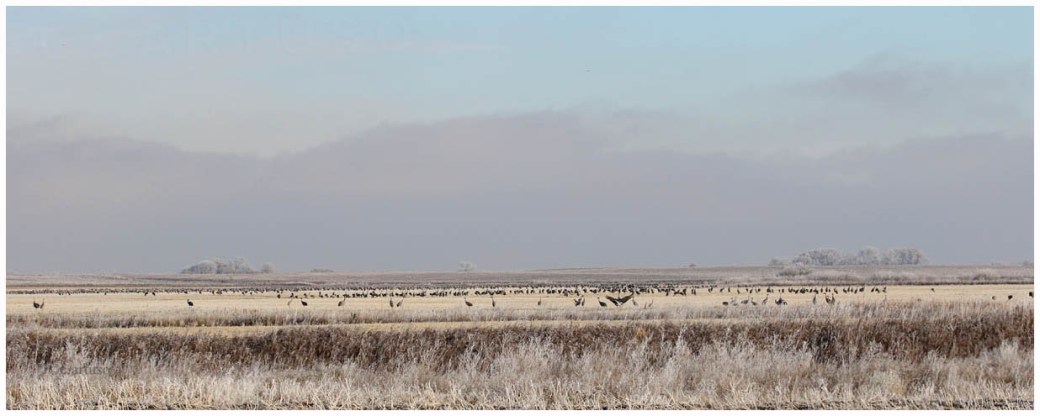
Last Friday (October 27 2017), Christian Artuso and I were driving from Canupawakpa Dakota Nation on the long drive back to Winnipeg when to our collective astonishment, we came across a field full of cranes. Yes, quite literally a field!

Seeing large numbers of Sandhill Cranes is not a complete surprise – after all, the previous Saturday, Glennis Lewis and Linda Boys had encountered 1200 Sandhill Cranes on the west side of Oak Lake. I had also counted 800 on the roads north and west of Canupawakpa an hour earlier.

Initially the numbers of cranes did not appear to be anything special. As we crossed the Bellview Road on 42N our eyes were drawn to a flock of Canada and Cackling Geese with some cranes standing around in the foreground. Christian, offered me the choice of geese or cranes to count. I opted for the geese – the best decision I made all day! As Christian lifted his binoculars to begin counting what he suspected would be a few hundred birds, it suddenly dawned on him that this would not be so simple. For in the background stood a multitude of cranes.

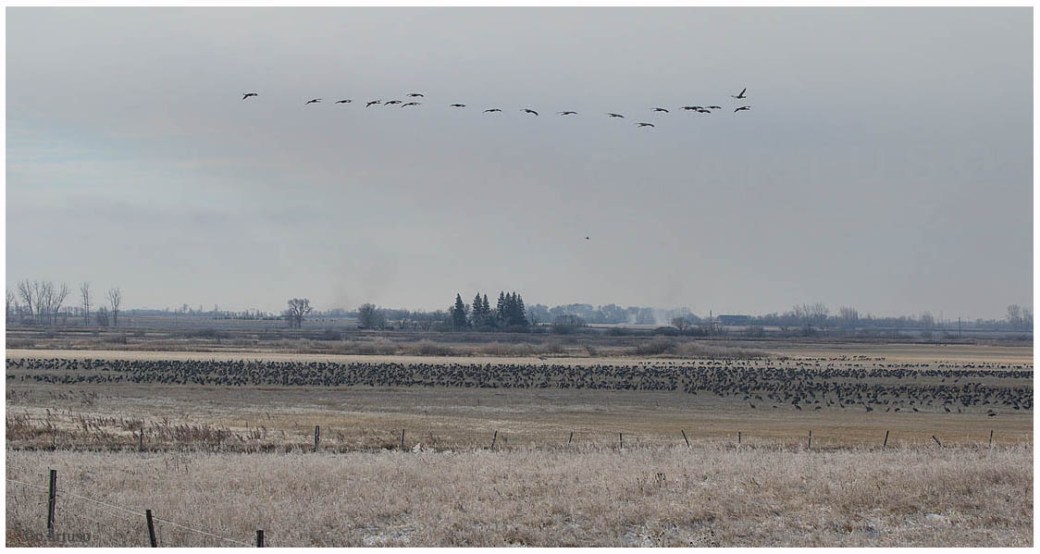
Sandhill Crane_4555_distant flock_Artuso

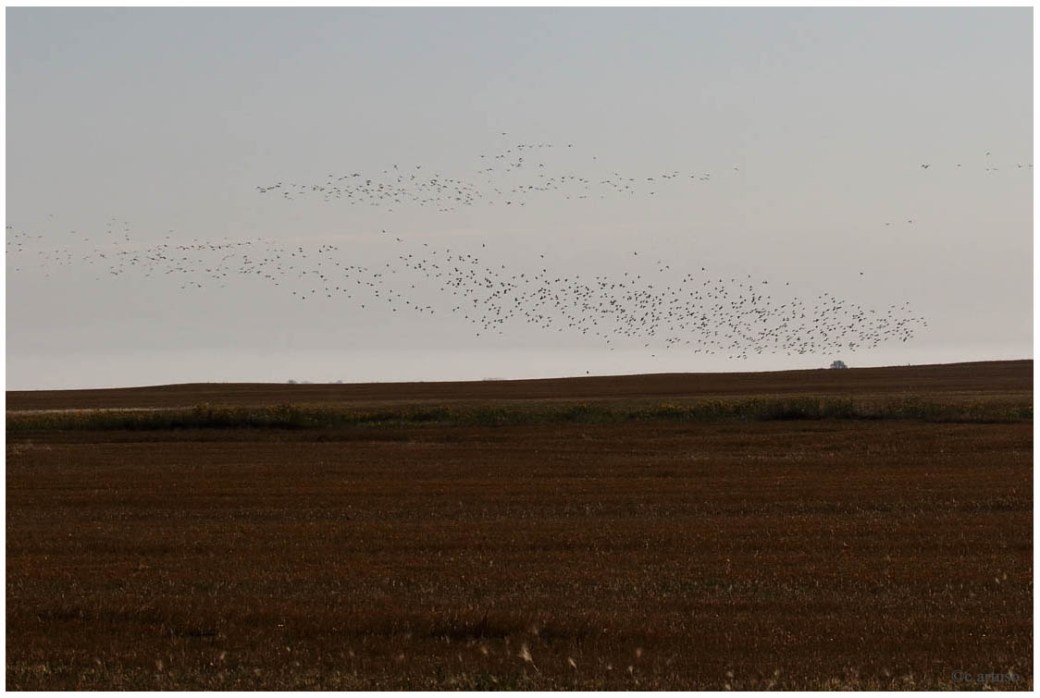
Sandhill Cranes everywhere, truly an astonishing spectacle. Copyright Christian Artuso

It was the densities of cranes which took us aback. Even an experienced bird surveyor as Christian was completely gobsmacked by the scene infront. Just row upon row upon row of cranes.

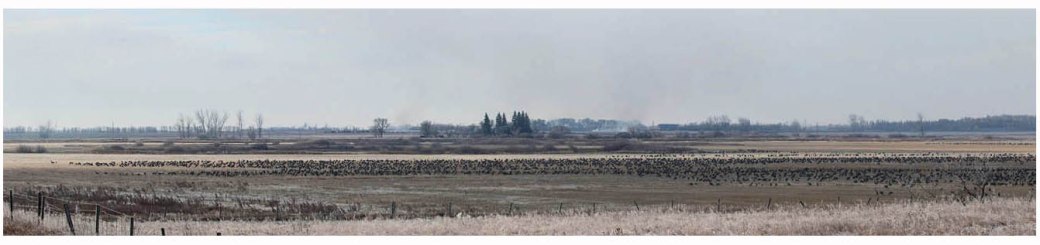
Sandhill Crane_4565_66_comp_Artuso

A stitching together of the Sandhill Cranes. Copyright Christian Artuso

Christian began counting, initially he ticked off groups where he could – 21 groups of 20, followed by 11 groups of 20, then followed by 31.5 groups of 100. At this point things got tricky as the lay of the land impeded our view. Driving to the east end of the section, we turned south and were greeted by the entire flock. Having counted up to a certain point before, Christian was able to continue. Next up 26.5 groups of 100 cranes, another 250 and then 320 mooching around in the foreground. While this was going on, I counted the flocks of birds flying in – 2, 18, 12, 66, 37, 3, 13 and more. Later that day I tallied everything and came to a figure of 7,363 Sandhill Cranes (and not a single Whooping being the sole disappointment).

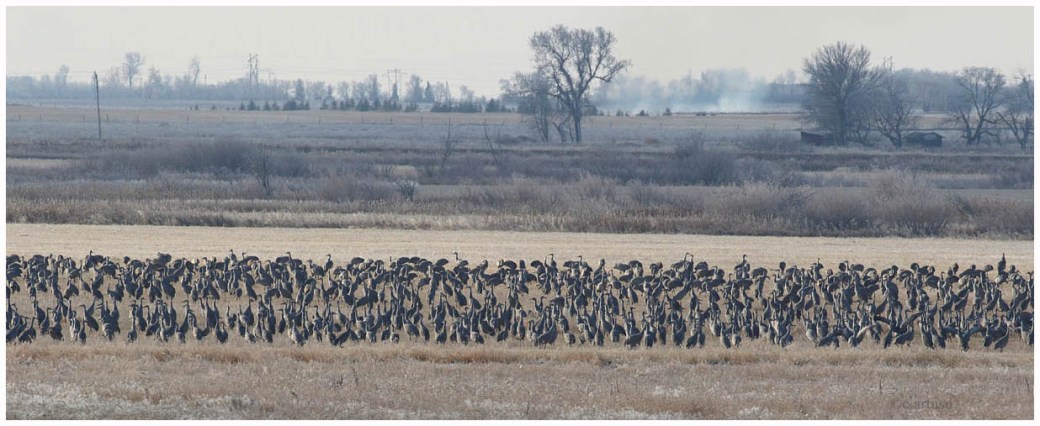
Sandhill Crane_4509_flock_Artuso

A close-up of the flock. Copyright Christian Artuso

My previous highest total of cranes was around 1000 spotted south of here in the Maple Lake area in late September 2016. There were also large concentrations of cranes in the Big Grass Marsh area in the 1960’s. Christian suspected that these might be Lesser Sandhill Cranes. If they were, then these cranes would breed in the Arctic tundra rather than the boreal – those birds presumably pass through earlier in the fall. Lesser Sandhill Cranes are smaller than the boreal breeding intermediate birds (the Greater Sandhill Crane, the larger variant breeds in the northern US). In any case, it was not possible to distinguish the difference given it is solely a question of size.

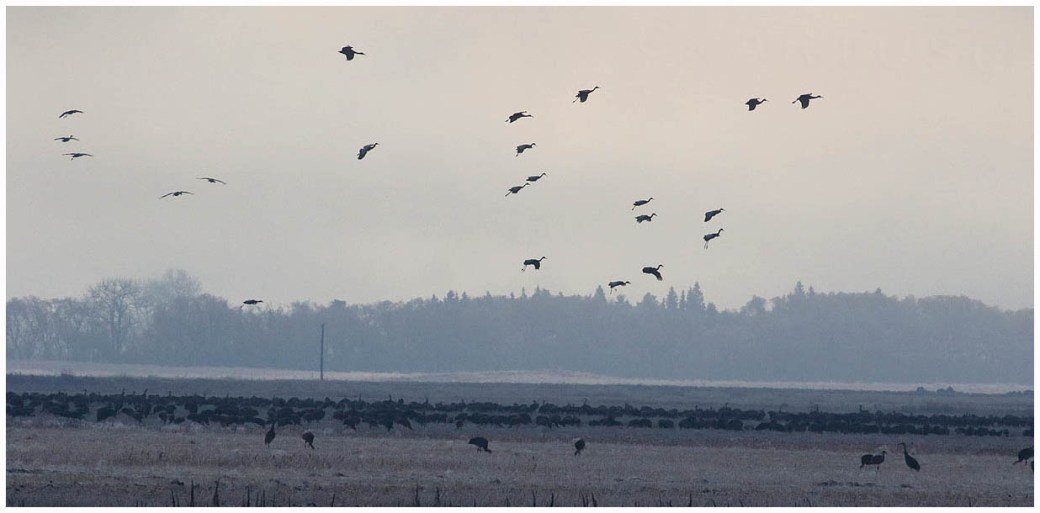
Sandhill Crane_4489_flock_Artuso

Additional cranes joining the flock were counted as they came in. Copyright Christian Artuso

We tried to drive forwards at this point but the first few birds began to flush and we were not keen for these birds to waste energy in sub-zero conditions mid migration. Flushing any bird, even by accident, costs energy which is better conserved for migration. We drove back around and found our way to the south side of the mile section. Christian tried another count which only went to confirm his first total give or take a few! Interestingly, some younger birds were dancing in the foreground – these birds do after all mate for life.

Sandhill Crane_4606_distant flock_Artuso

The cranes on the right of centre in this photo were dancing. Copyright Christian Artuso

Cranes do not forage in water, although they roost in shallow water and certainly breed in open wetlands surrounded by trees and shrubs. In migration these flocks will feed in grasslands and stubble fields, looking for spilt grains, invertebrates and small vertebrates.

Here is a video trying to show the extent of the flock (with sounds effects in the background from Christian).

Departing south and then cutting west, we could still hear the magnificent rattle call from at least 2 miles away. Something had at this point disturbed the cranes and they were now flying off in all directions like a huge swarm of mosquitos or even locusts on the prairie.

Sandhill Crane_4619_distant flock in flight_Artuso

Swarms of cranes. Copyright Christian Artuso

Now we switched our attention to our second big species of the day, the Tundra Swan. Along the southside of Plum Lakes up as far as the Grande Clariere Road we managed to count 863, another brilliant total (we had over 1000 north of here the previous day, but that’s for another blog). There were also other neat birds including 1202 Snow Goose, a single Ross’s Goose, 40 Rusty Blackbirds (globally Vulnerable) and several hundred ducks – but it was the swans which again were the highlight.

Tundra Swan_4726_auditions for loony tunes on ice_Artuso

Auditioning for Loony Tunes on ice? Copyright Christian Artuso

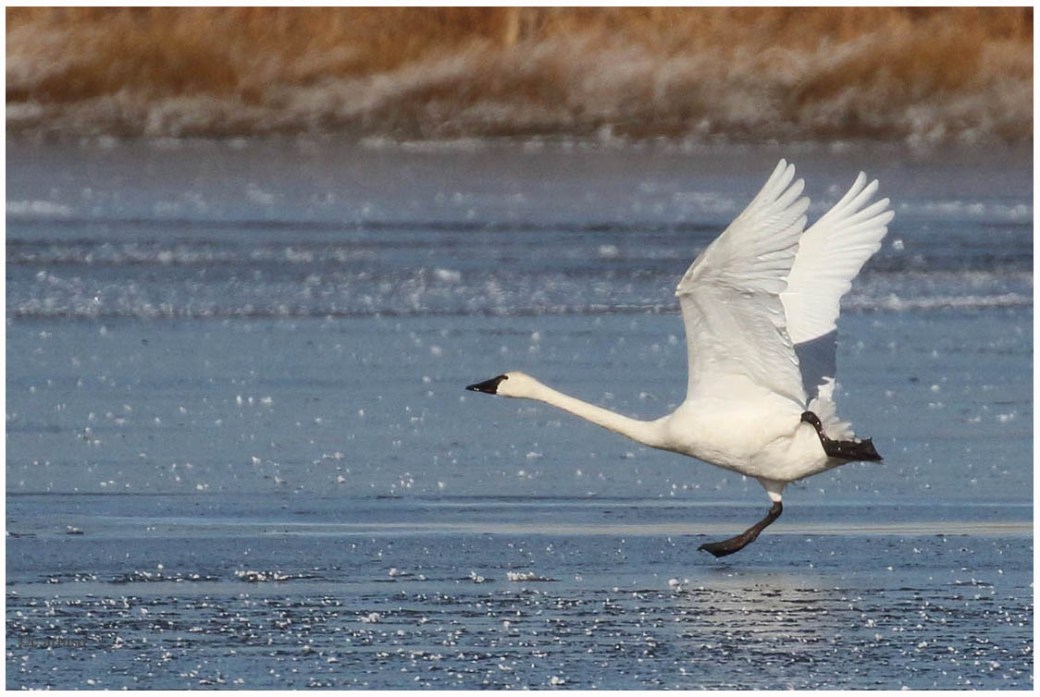
Tundra Swan_4728_take off

That’s better! Must be dancing on ice. Copyright Christian Artuso

It is clear that Oak Lake remains one of Manitoba’s foremost staging areas for migrating waterfowl and other birds. The total for Sandhill Cranes easily triggers the 1% threshold for a globally significant concentration of this species and although our totals fell short in 2017, it is obvious that Tundra Swan concentrations do likewise. Targeting large seasonal concentrations of birds will be a project priority in 2018.

Here is our eBird checklist for the day.

The cranes remained in the area on Saturday. Ken Stewart, a member of the Manitoba Birds Yahoo Group took a trip down and found them once again – see video below. We can make a couple of observations here. First, the temperature is clearly warmer. Second, there appear to be even more cranes! Christian will try to count from the video – we will try to update the blog if he manages to. We are not sure why the birds suddenly flush – possibly a raptor or a large carnivore showed some interest but this is incredible to watch!

Ken has kindly agreed to let us use his video which is copyright Ken Stewart.

You can also see more of Ken’s excellent photos on his Flikr page – https://www.flickr.com/photos/kritterspotter/with/37330706744/

Finally, it would be remiss not to mention that what we saw on Friday was just a small, but significant part of the overall Sandhill Crane population. To see something utterly astounding then you really should head to Nebraska, where over 500,000 Sandhill Cranes stage during spring migration.


Erratum – Thanks to Donna Danyluk for pointing out that Sandhill Cranes in the Platte River Valley stage en masse during spring migration – not overwinter as originally printed. See also the Rowe Sanctuary website.

Tundra Swan Counts in the Oak Lake and Plum Lakes IBA

Keeping up on events around Manitoba has been a challenge. We still need to update on our goose count at Netley-Libau Marsh and catch up on a few other volunteer based activities. For today, it is to Oak Lake and Plum Lakes IBA and a recent visit with volunteer Glennis Lewis.

Glennis is certainly very knowledgable about some of the unique biodiversity of the sandhills and other habitats around Oak Lake and Plum Lakes IBA. Having worked in the IBA (before it was an IBA) as a student (close to the former large Franklin’s Gull colony) or completing a contract looking for western spiderwort, Glennis has spent many days in the Oak Lake area and knows it very well.

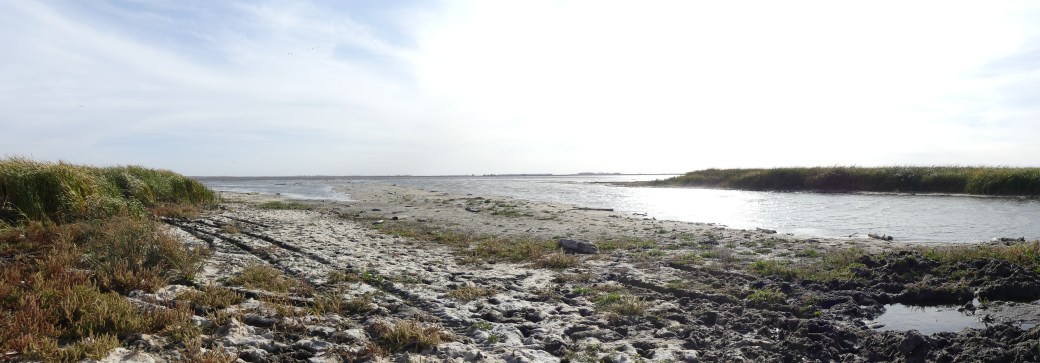
P1040367.JPG

A panoramic view from the weir near Oak Lake Resort. Copyright Tim Poole

On Wednesday October 11th, Glennis and Manitoba IBA Coordinator met up early morning in Brandon and travelled the 45 minutes down the road to Oak Lake. The primary objective was to take a look at a few areas of the IBA which Tim had not visited previously and maybe also get a count of any large concentrations of fall migrants.

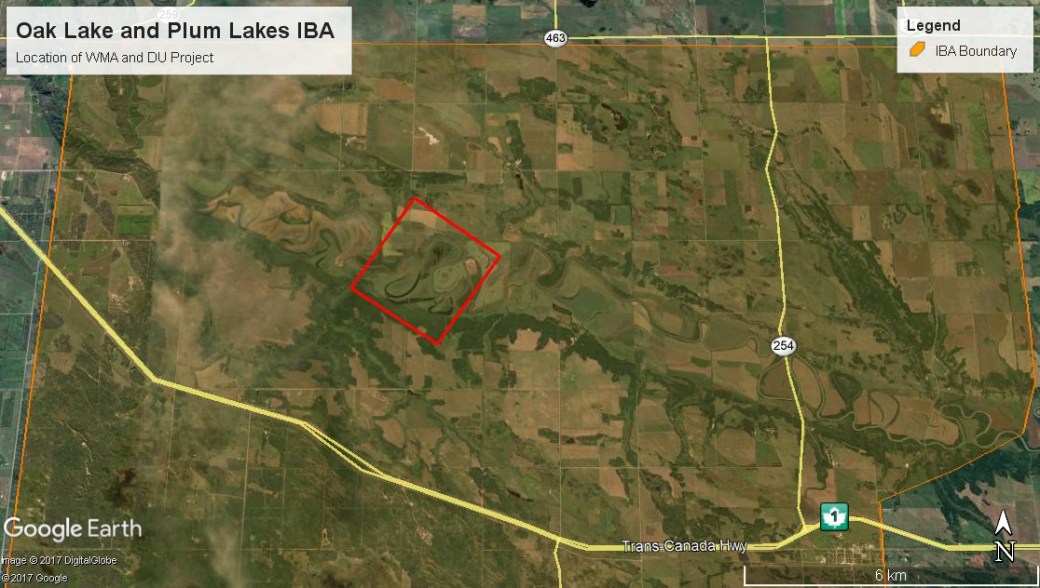
The northern area of the IBA is covered by pasture, hay meadows and the dominant feature, the Assiniboine River Valley. Within this area is part of the Upper Assiniboine Wildlife Management Area. An old wetland project is also to be found in this area – but alas there were few waterfowl to be found here on a warm Wednesday morning in October. The groups of Eastern Bluebird were worth the trip at least.

Location of DU Project

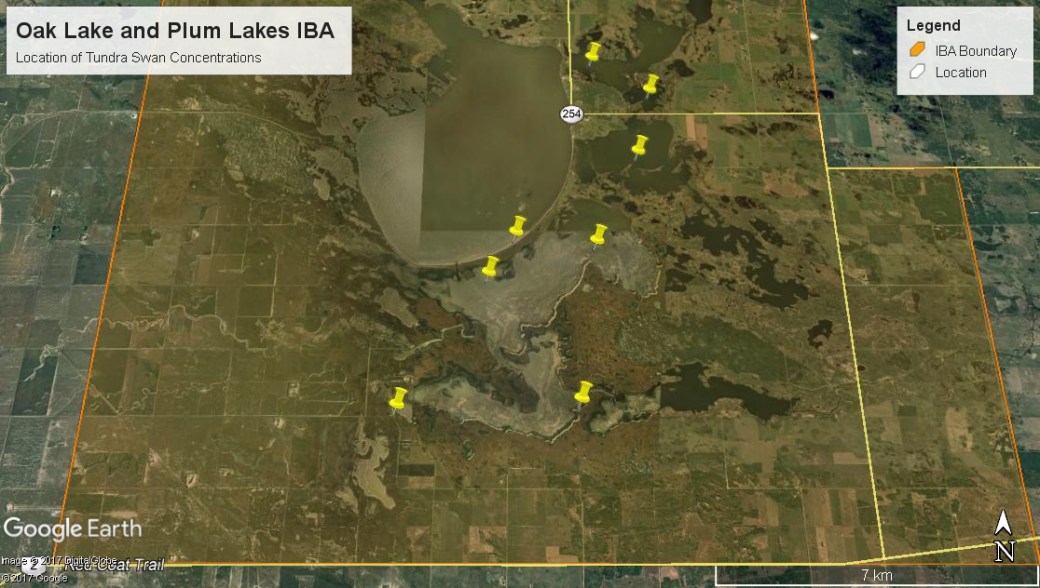
The highlight of the day were the large concentrations of waterfowl, especially Tundra Swan. These northern breeders can be abundant in large concentrations during passage in some of Manitoba’s IBAs (see Saskatchewan River DeltaWhitewater and Churchill and Vicinity). From the southwest corner of Plum Lakes to the wetlands just to the north of Oak Lake we were able to count a minimum of 1765 Tundra Swans, just 135 short of the 1% North American breeding population. See below for a map of where the larger concentrations were encountered.

TUSW locations

These large concentrations suggest that some concerted, targeted counts during fall by a group of volunteers should be able to identify significant concentrations of migratory waterfowl in the Oak Lake and Plum Lakes IBA boundary.

P1040357.JPG

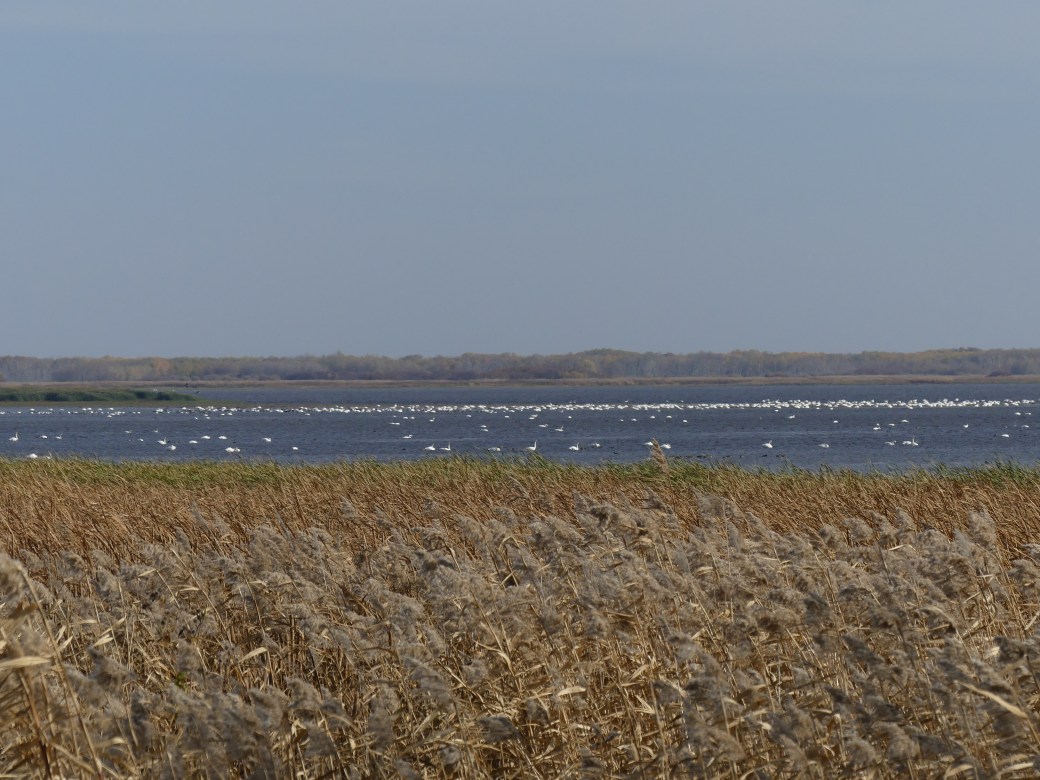
An example of several hundred Tundra Swans at Oak Lake near the weir. Copyright Tim Poole

There were also thousands of Snow Geese in the area, their presence made public thanks to a passing Bald Eagle. Snow Geese tend to be more abundant in southwestern Manitoba at this time – a count of 22,000 was made by Colin Blyth and Gillian Richards on October 22nd at Whitewater Lake. In addition thousands of ducks were feeding along the weir, too many to stop and count at times. Anyway below are a couple of (not the best) videos just to demonstrate the sheer scale of Snow Geese encountered.

In terms of shorebirds, there were still a few around – and Plum Lakes remains in a state of drawdown. Long-billed Dowitcher and both species of yellowlegs were most abundant, with a single Black-bellied Plover flying overhead adding a bit of diversity. Raptors were also present in low numbers including a glimpse of a Northern Goshawk in forest on the Grande Clariere Road and a lovely view of a Great Horned Owl.

4950RTHA

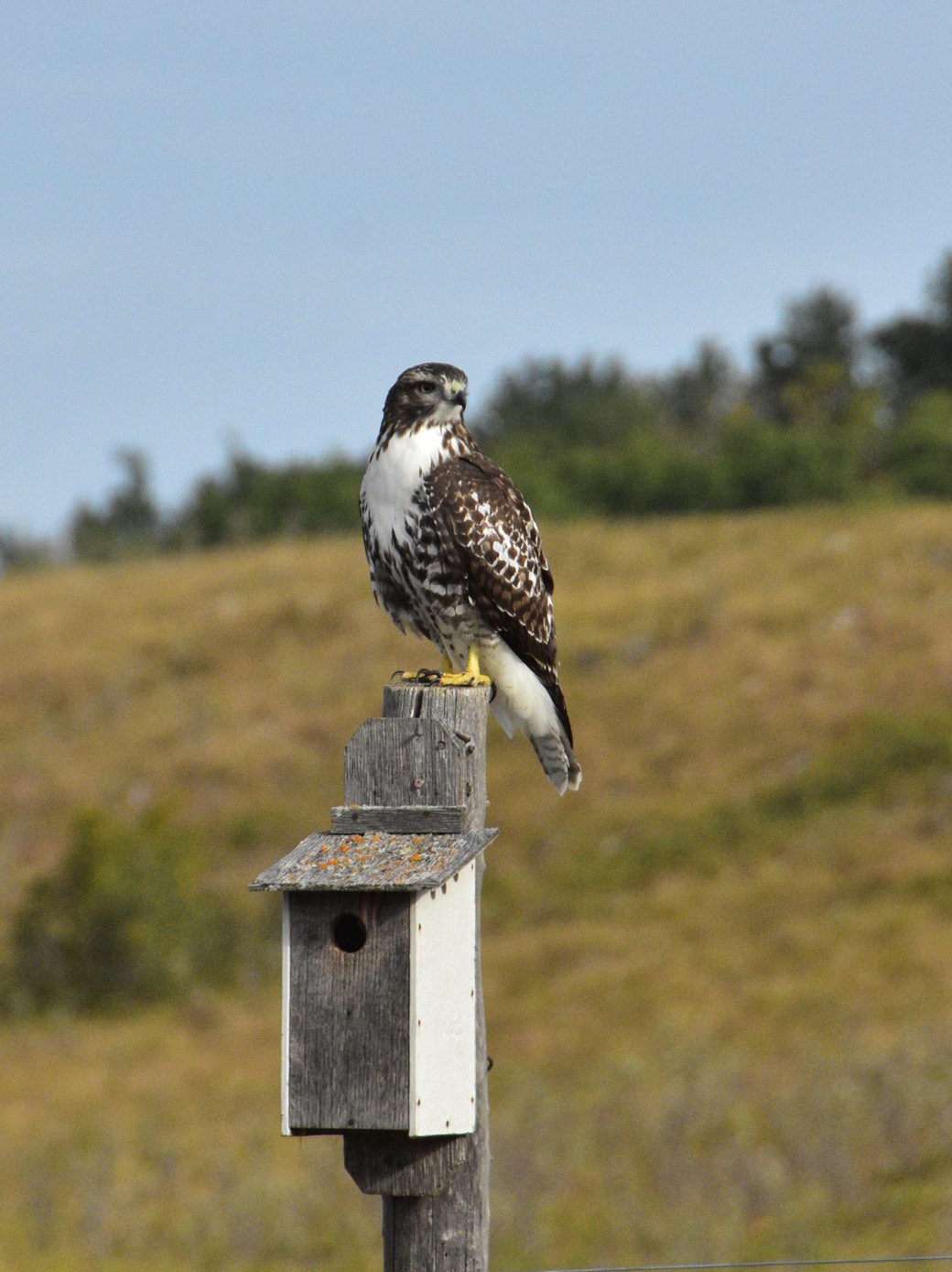
Red-tailed Hawks were among the raptors encountered. Copyright Linda Boys

10 days later and this time Glennis was joined by Linda Boys another one of our IBA volunteers based out of Minnedosa. A focused Tundra Swan count was the aim of the day this time, avoiding the north which lacks good waterfowl habitat. In the intervening period it was apparent that although the numbers of waterfowl were still very high, there had been a certain amount of drop-off from the 11th. A very good total of 1133 Tundra Swans were present in the same areas, a drop of 600 from the high count. No trigger, but at least we now know that with some planning it would be possible to do target counts of swans and other waterfowl during fall.

79642 swans

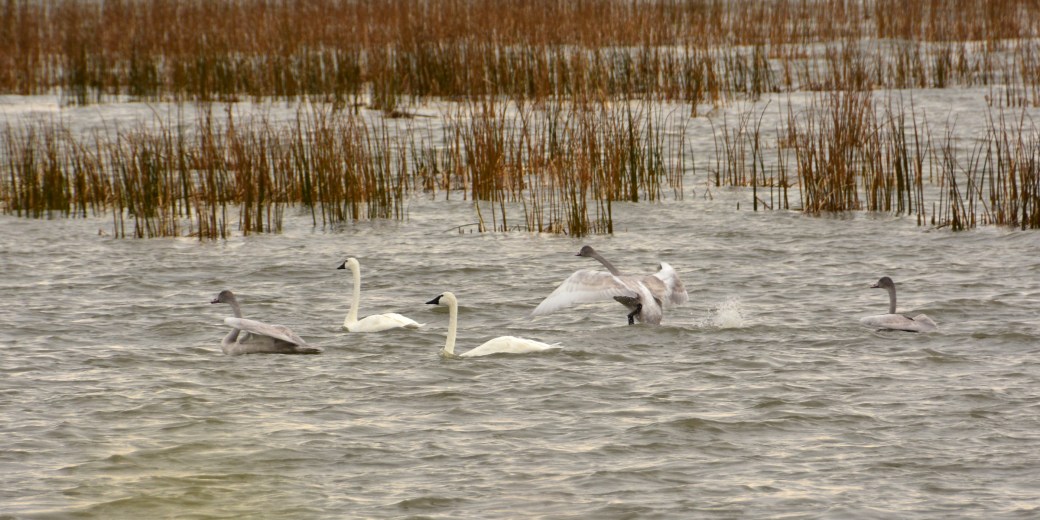
Gorgeous Tundra Swans feeding in the shallow waters around Oak Lake. Copyright Linda Boys

Another major highlight of this trip was a surprisingly large concentration of Sandhill Cranes (for this late in the fall that is). These cranes were all concentrated in a single field in the west of the IBA. Sandhill Cranes are certainly a species to look out for in large concentrations in IBAs with open hay meadows and pastures. In 2016 around 2000 were counted in early October in fields in the Southwestern Manitoba Mixed-grass Prairie IBA and the adjacent Maple Lakes area and the Langruth-RM of Lakeview IBA has historically been a critical staging area for this species. Another species to look out and get more people reporting!

8030cranes

Another stunner from Linda, this time a small snapshot of the huge numbers of Sandhill Cranes present in the western part of the IBA. Copyright Linda Boys

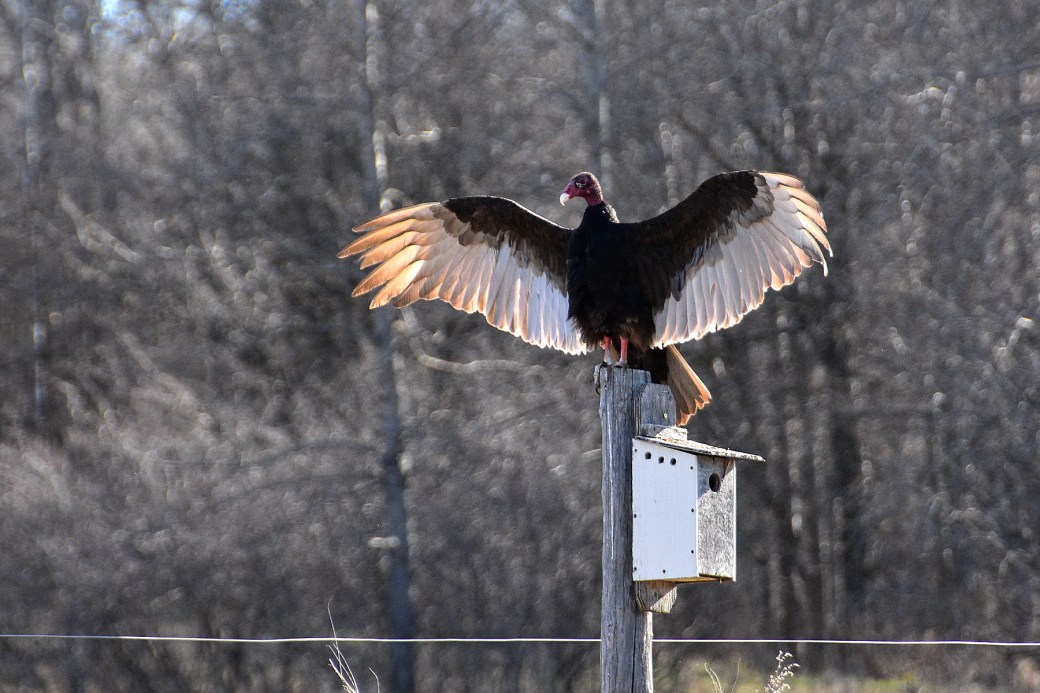
Other late season birds included Turkey Vulture:

8558turkey vulture

Not strictly taken on the 21st but Linda had previously sent us this stunning image of a Turkey Vulture, well worth sharing. Copyright Linda Boys

The combined bird lists of these trips is outlined below. Thanks Glennis and Linda for your time!

October 11th October 21st
Snow Goose 5941 913
Canada Goose 81 105
Tundra Swan 1765 1133
Blue-winged Teal 18 3
Northern Shoveler 80 1
Gadwall 485 1
American Wigeon 8 0
Mallard 417 203
Northern Pintail 14 0
Green-winged Teal 10 2
Canvasback 598 2
Redhead 79 1
Ring-necked Duck 50 1
Lesser Scaup 65 0
Greater/Lesser Scaup 20 0
Bufflehead 66 21
Common Goldeneye 15 0
Hooded Merganser 3 0
Ruddy Duck 1 2
duck sp. 1000 0
Pied-billed Grebe 3 0
Double-crested Cormorant 0 2
American White Pelican 0 1
Great Blue Heron 2 1
Turkey Vulture 1 0
Northern Harrier 5 3
Northern Goshawk 1 0
Accipiter sp. 1 0
Bald Eagle 2 4
Red-tailed Hawk 5 0
American Coot 562 5
Sandhill Crane 24 1200
Black-bellied Plover 1 0
Long-billed Dowitcher 56 0
Wilson’s Snipe 1 0
Greater Yellowlegs 24 0
Lesser Yellowlegs 40 2
Greater/Lesser Yellowlegs 23 0
Ring-billed Gull 20 1
gull sp. 50 0
Rock Pigeon (Feral Pigeon) 2 8
Mourning Dove 1 0
Short-eared Owl 0 1
Great Horned Owl 1 0
Hairy Woodpecker 1 0
American Kestrel 1 0
Blue Jay 2 0
Black-billed Magpie 22 3
American Crow 3 2
Common Raven 10 2
Horned Lark 1 0
Black-capped Chickadee 1 0
Eastern Bluebird 86 0
American Robin 21 7
European Starling 12 0
Lapland Longspur 200 0
American Tree Sparrow 4 28
Dark-eyed Junco 8 18
Harris’s Sparrow 1 2
Vesper Sparrow 1 0
Savannah Sparrow 5 0
Song Sparrow 1 0
sparrow sp. 20 0
Western Meadowlark 6 0
Red-winged Blackbird 9 200
Rusty Blackbird 24 0

A Day of Champions at the Riverton Sandy Bar IBA

Tim Poole gives an overview of the second weed pull at Sandy Bar in 2017

Absolutely amazing turnout again – that was my first reaction as I drove along the track towards the parking lot at Sandy Bar on Friday September 29th. There were vehicles parked up on both sides of the track as the parking lot overflowed. I was a few minutes late having been delayed in Gimli collecting some snacks and coffee – and with Ward Christianson, showing young Josiah Van Egmond his lifer Ross’s Goose near the Icelandic Museum. An early success for the morning.

Following out first previous weed pull there has been a multitude of shorebird sightings on Sandy Bar. Maybe the work is already beginning to bear fruit?

IMG_6914

American Golden Plovers on the waters edge. This is one of a number of shorebird species which have been using Sandy Bar in the month and a half since the previous weed pull. Copyright Joanne Smith

Joanne gave a briefing in the parking lot -while distributing her excellent array of baking. Anyone who knows Joanne will know that she has a wicked sense of humour. On this occasion she added in

‘I will now pass across to Tim for some more sophisticated words’.

Eek! I stumbled through a few garbled, unsophisticated sentences and then sending everyone on their way to the bar. Thanks Joanne!

We had around 32 volunteers join us this time, not bad for a morning in late September. Not only did we have some IBA regulars and Nature Manitoba stalwarts, to representatives of the East Interlake Conservation District and a mass of Riverton locals.

IMG_4942

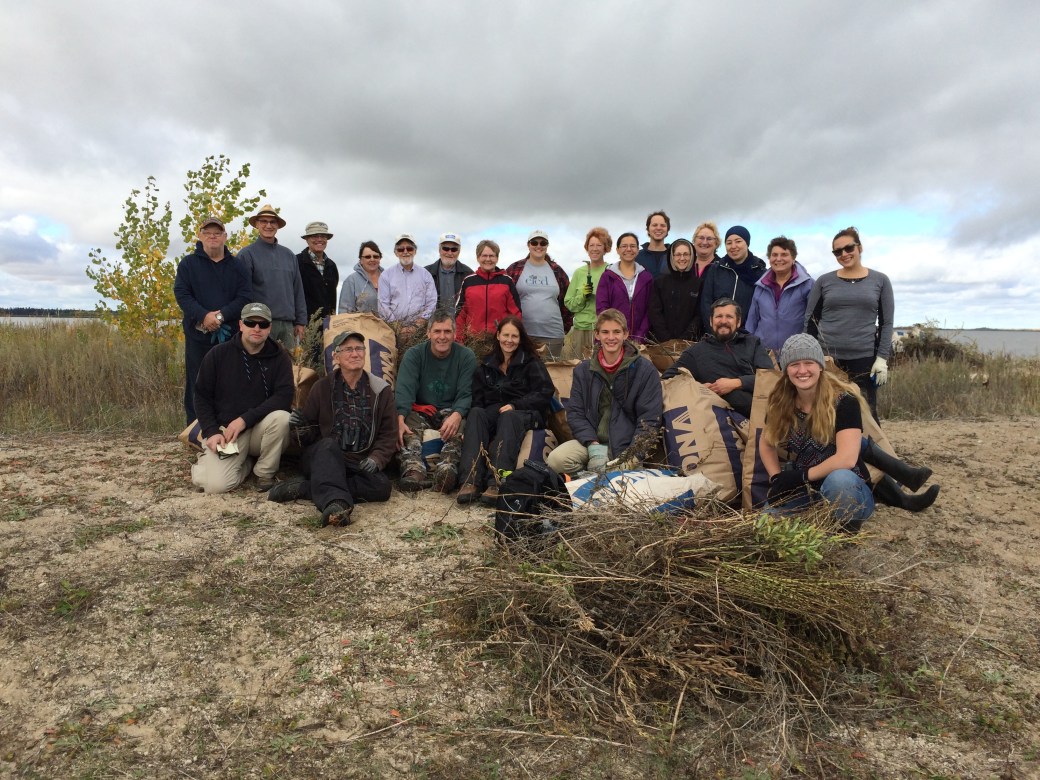
Team photo taken during the weed pull. Copyright Joanne Smith

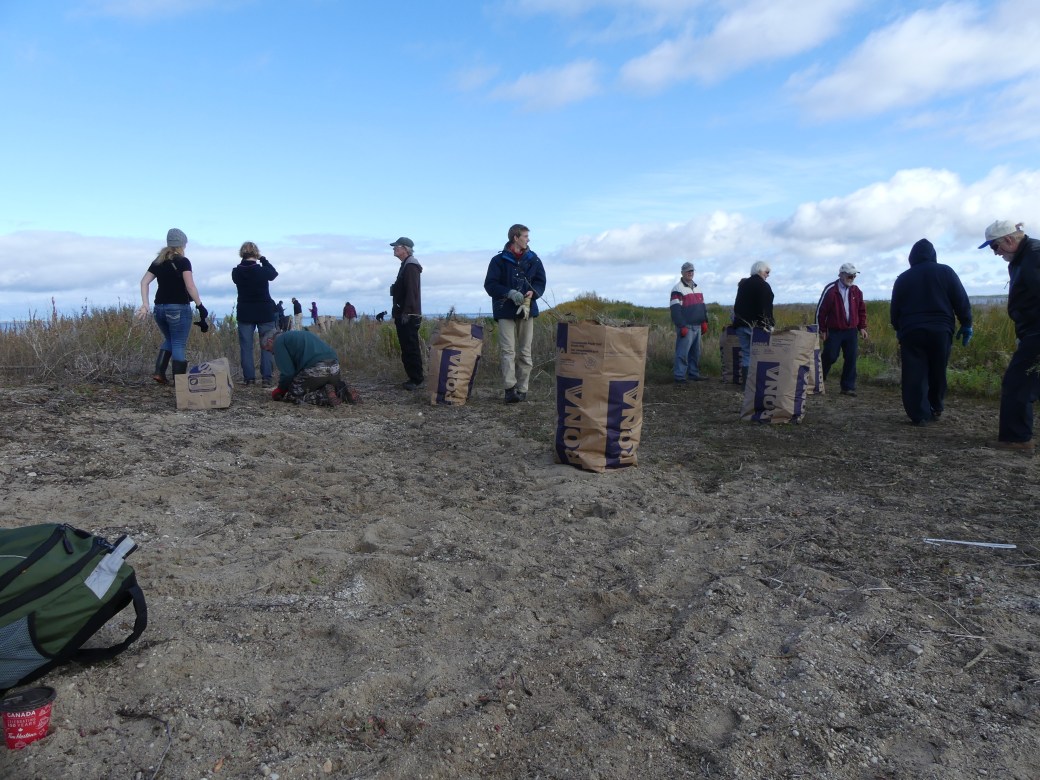
Reaching the weed pulling area took varying amounts of time depending on peoples personal interests. What this means is that in general the birders took a lot longer than everyone else!

IMG_0702

Customary shot of a stream of people making their way to the end of Sandy Bar. Copyright Joanne Smith

Our first task was to show everyone the primary target species, the invasive white sweet clover. This provided an opportunity to describe the ongoing conservation situation with Sandy Bar and the need to continue to attack the weeds on the bar to create more habitat for breeding and migrating birds. While pulling conversation inevitably turned to how we could make things easier for ourselves. Suggestions included using round-up (not on a Special Conservation Area out in the lake), a propane tank with a flame thrower attached (could be fun but there may be some possible issues with setting fire to an entire sandbar) and using goats. The favourite among pretty much all present was using a goat with a flame thrower fitted to its back. Back on Planet Earth, it was explained to people that due to various environmental, health and safety issues, the only realistic way to remove the weeds was good old fashioned people power.

P1040347

Goat, flamethrower or hand pulling? Volunteers get ready to vote. Copyright Tim Poole

Joanne had also set up a visit from the local Riverton High School students led by teacher Don Bodnarus. Midway through the morning she met the first group off the bus at the parking lot and took them on a short walk, explaining to everyone about the importance of Sandy Bar and the weed pull. In total 25 students and 3 adults came from the school and each picked at least a few weeds as time was short. Maybe next year we can have them out for a longer period of time!

IMG_0703

Students making their way onto Sandy Bar. Copyright Joanne Smith

As the title suggests though, this piece is really about a few conservation champions who helped to make this day possible. Firstly all the volunteers who turned out on both weed pulls. Thank you everyone.

P1040349

Busy finding that final weed…..another one of our terrific volunteers. Copyright Tim Poole

Second, to Louise Buelow-Smith and Eric Smith. Earlier in the week they visited Rona and Gimli and persuaded the manager to part with 10 pairs of workers gloves and 50 yard waste bags. Thank you both and thank you Rona in Gimli!

Third, to local resident Thor Johannson. Thor has been absolutely incredible recruiting local volunteer help leading to huge support in both 2017 workparties. He also contacted other local groups including the local Friendship Centre and even a local Don Balinski to potentially remove the bags by boat or ATV. Thanks Thor!

Finally, to Joanne Smith, Caretaker for Riverton Sandy Bar, who is doing an amazing job organising these weed pulls and raising awareness of the area across the local community. Joanne is a tremendous asset to the Manitoba IBA Program!

P1040354

In total over 50 bags were filled. Joanne filled this many herself. Copyright Tim Poole

Thank you everyone!

P1040350

The only photo I could find where Bonnie Chartier is not birdwatching! Copyright Tim Poole

As ever, we finish with a bird list. Joanne shared the following on eBird:

Snow Goose 67
Canada Goose 273
Mallard 10
White-winged Scoter 7
Double-crested Cormorant 6
Great Blue Heron 1
Northern Harrier 2
Bald Eagle 1
Black-bellied Plover 10
American Golden-Plover 2
Ruddy Turnstone 3
Sanderling 64
Dunlin 2
Greater Yellowlegs 1
Bonaparte’s Gull 6
Ring-billed Gull 137
Herring Gull 2
Great Horned Owl 1
Belted Kingfisher 1
Hairy Woodpecker 2
Merlin 1
Common Raven 20
Horned Lark 6
Black-capped Chickadee 2
American Pipit 9
Lapland Longspur 65
Snow Bunting 1
Yellow-rumped Warbler 1
Dark-eyed Junco 2
Swamp Sparrow 4
Rusty Blackbird 19
American Goldfinch 3
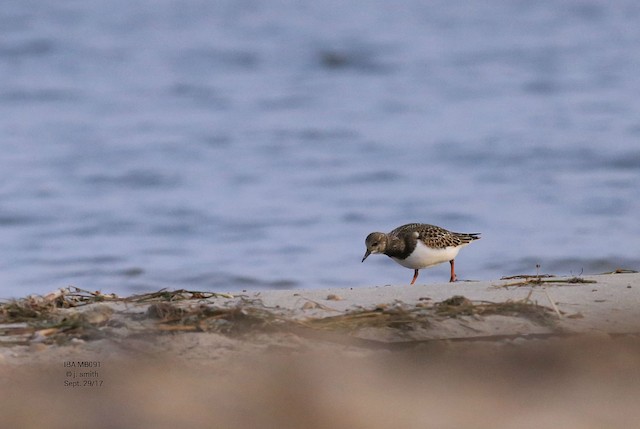
70323961

Another of the shorebirds on Sandy Bar. This time a Ruddy Turnstone. Copyright Joanne Smith

A Saturday Visit to Langruth Harvest Festival and the Langruth-RM of Lakeview IBA

Last Saturday, September 23rd, we were invited to participate in the Langruth Harvest Festival. Langruth is located on the west side of Lake Manitoba, strategically positioned between 3 IBAs, Langruth-RM of Lakeview (or Big Grass Marsh), Sandy Bay Marsh and Kinosota-Leifur.

An early arrival gave ample opportunity to drive PR265 which cuts through the middle of the IBA. Among the highlights was a late Red-headed Woodpecker and several thousand Snow Geese.

IMG_1835

A few larger flocks of Snow Goose were encountered in the IBA on Saturday morning. Copyright Tim Poole

IMG_1836

White and blue morph Snow Geese were present at the weekend. Copyright Tim Poole

IMG_1842

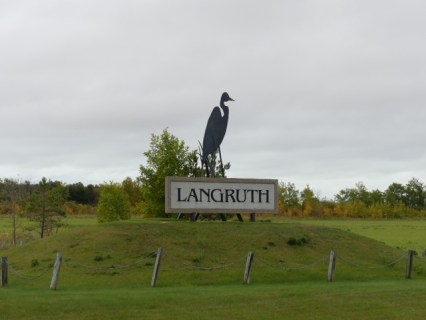
The town greeter. Copyright Tim Poole

Driving into Langruth itself is always a birdy experience. The marsh and the local IBA are a significant part of this community which considers itself the ‘birding capital of Manitoba’. Greeting visitors driving in on the highway to the south is a giant Great Blue Heron.

Further exploration reveals that the heron is not the only feature of the IBA present in the town. Driving back in from the west you come across a rock. But not just any old rock. This one has a plaque on the front with a tribute to the marsh. Reading it (reproduced below) we find that Big Grass Marsh was Ducks Unlimited’s first ever wetland conservation project back in 1938. The fact that the marsh is now under the largest conservation agreement in conservation history thanks to donations of land from the RM’s of Westbourne and Lakeview (and negotiated by our partners at MHHC) merely adds to the historical and biological significance of this IBA. On the side of the memorial stone is a map of the marsh showing the original control structure and the main road access.

All photos of the Big Grass Marsh Memorial Stone copyright Tim Poole.

By now it was time to do some work and off to the Langruth rink for the fair. A steady stream of people would come to our tables. We did a special pine cone bird feeder craft to provide an opportunity to speak with local children about why birds migrate and the need for a steady supply of food in winter for those birds which do not migrate. On the other side we provide information and resources for adults on the local IBAs, not just Big Grass Marsh but Sandy Bay Marshes and Kinosota-Leifur as well. We also attempted a new approach to getting more local people involved in monitoring the IBAs by asking people to send us sightings of particular species: Sandhill Cranes and Snow Geese for Big Grass Marsh; Western Grebe for Sandy Bay Marshes and; Red-headed Woodpecker for Kinosota-Leifur. This is already bearing fruit with Paul reporting 125 Sandhill Cranes just last night. Thanks Paul!

IMG_1832

Our stall. Copyright Tim Poole

Thank you to the Langruth Harvest Fair for the invitation, especially Michelle Teichroeb who has been very helpful in providing information before and during the festival and even took a couple of IBA signs away to be put up locally.

Finally, here is the short bird list from the Langruth-RM of Lakeview IBA

Snow Goose 2539
Ross’s Goose 10
Canada Goose 44
Northern Shoveler 2
Mallard 5
Northern Pintail 19
Green-winged Teal 7
Great Blue Heron 3
Northern Harrier 2
Red-tailed Hawk 3
Greater Yellowlegs 2
Lesser Yellowlegs 4
Mourning Dove 1
Red-headed Woodpecker 1
Northern Flicker (Yellow-shafted) 17
Common Raven 2
Marsh Wren 2
European Starling 50
Western Meadowlark 1
Common Grackle 150
Pine Siskin 20

Quick Report From Weekend Bird Walk at Delta Marsh

Thanks to the folk at the Fort La Reine Museum we had a great morning out at Delta Marsh on Saturday. We had 5 people join us including the former Delta Marsh Manager, Dr Bob Jones, a huge reservoir of knowledge of the history and biology of this area.

IMG_1811

Birding on Delta Beach. Photo copyright Tim Poole

We started off checking for shorebirds at a creek west of the diversion, the site of several thousand migrating shorebirds last August. On this occasion we were limited to a few dozen Lesser and Greater Yellowlegs and large numbers of ducks.

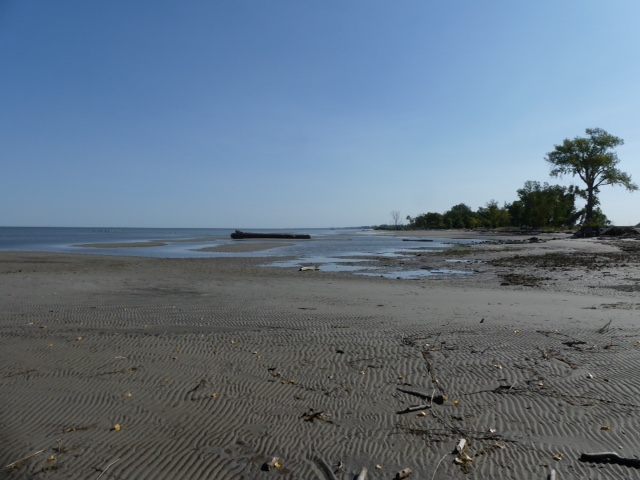
Onwards we headed towards Delta Beach, checking around the diversion but seeing very little of note from the road. Along the road north towards the beach John Hays spotted some movement and eventually we had brief glimpses of 3 Black-bellied Plover flying away. At the Delta Marsh welcome sign there were good numbers of Western Grebe, over 100 in total, and several species of duck. We moved on towards the beach. Following reports of water surges raising the lake levels by up to 5m earlier in the week, it was apparent that there was limited beach available for birds. The advantage of this however was that the shorebirds and miscellaneous gulls were restricted to fingers of beach close to the shore. A mixed flock of Semipalmated Plover (30), Sanderling (12) and Least Sandpiper (2) were certainly the highlight. Behind on the ridge Eastern Phoebe, Yellow-rumped Warbler and Palm Warbler foraged on the dead wood for bugs and swallows battled strong winds seeking the final tasty morsels available before they embark on their long migration.

IMG_1812

Delta Beach. Copyright Tim Poole

Finally we headed to the Delta Waterfowl Trail on the south of the beach ridge. Here again were large numbers of ducks, mainly Mallards, Northern Pintail, American Widgeon and Blue-winged Teal. Bob Jones shared some of the history of the marsh and the different groups involved. The final highlight were flocks of Sandhill Cranes flying south, their wonderful sights and sounds, a clear sign that fall is well and truly upon us.

All Sandhill Crane images copyright Tim Poole

Thanks to the small but knowledgeable group who joined us on Saturday and to Fort La Reine Museum. Delta Marsh is a great area to explore with many wonderful birds to find. We will return here again in 2018!

Sandy Bar Weed Pull #2 Sept. 29th, 2017

On Friday September 29th we are planning another weed pull at Important Bird and Biodiversity Area MB091 Riverton Sandy Bar.

We had an excellent turnout on Aug. 17th with 36 volunteers filling 66 bags of invasive sweet clover, burdock and willow. Because the sweet clover requires regular removal we plan to meet at 9:00 am on September the 29th to  pull more bags of the stuff. Looking far into the future, we also hope to do another pull in late April or early May 2018.

We are looking forward to having Don Bodnarus’s high school class from Riverton Collegiate join us on the 29th as well. It’ll be great to get youth from the community involved.

The purpose of this Weed Pull is to once again clear an area of Sandy Bar to make the habitat more attractive to Piping Plover. This shorebird species last nested at Sandy Bar in 2004. With low lake levels and a large open sandy area we hope that the Piping Plover may once again make an appearance at Sandy Bar.

We’ll also be doing a bit of Birding  and recording the species we see and hear while we’re pulling weeds. It would be ideal if we could pull weeds for 2-3 hours and then walk to the end of the sand bar with binos and scopes to show birders and nonbirders some of the bird species that stop over at Sandy Bar as they continue their fall migration south to areas as far away South America. On September 30th 2016 we saw such species as Rusty Blackbird, Smith Longspur, Lapland Longspur, American Pipit, Horned Lark and American Golden Plover.

There is also a possibility that we may be able to show the volunteers how to enter our bird sightings into eBird under the IBA Protocol.

It would be great to have you join us again on the 29th. Please feel free to forward this email to others who may be interested in pulling weeds, meeting others and learning about the fall migrating birds at Sandy Bar.

More details will be emailed out as we get closer to the date.

Thanks!

Joanne Smith

Sandy Bar Weed Picking Volunteers (1)

Photo copyright Dries Desender

Footnote – please email Tim Poole, iba@naturemanitoba.ca for more details

Silence of the Dowitchers

Following the early August blitz at Whitewater Lake, we decided to give it another go and see what else we might turn out in this critically important area on Sunday August 27th. Manitoba IBA Coordinator, Tim Poole gives an overview of proceedings.

For most bird species, a good look in the scope is enough for a successful identification. However the fall can leave even the best birders sometimes scratching their head. Fall warblers and vireos can be taxing for most but there are always little giveaways to help bring about a successful identification. Sharp-shinned versus Cooper’s Hawk can keep a whole group on Facebook debating for days.

Shorebirds can also be tough in fall. In most cases, there are telling features which help us to get the correct species in the end. In the case of the dowitchers though these features are often difficult to draw out as they gather in ‘large carpets’ of birds. The adult plumage in fall becomes very worn and given these shorebirds can flock in groups of several thousand, they can seem almost indistinguishable between two species, Long-billed Dowitcher and Short-billed Dowitcher.

Short-billed Dowitcher_9801_carpet.jpg

This is a typical image of dowitcher flocks experienced at Whitewater Lake. Large carpets of birds feeding or roosting together can be notoriously hard to identify. Copyright Christian Artuso

Short-billed Dowitcher_9817_carpet

Zoom in on the above – and still difficult even with a scope. Copyright Christian Artuso

Now, these are two distinct species and there has been considerable work done on advancing our knowledge of the key identification differences between these two species. There is an excellent pdf and summary of a talk on exactly this matter on the Surfbird website.

Another resource made available by Christian Artuso is this table outlining the physical differences between the two species. Dowitchers comparison

Interesting enough, juvenile birds in fall tend to be easier to identify in the field than the worn-looking adults. This is due to distinctive differences in the tertials (the innermost secondary wing feathers) which are prominent on the rear of the bird when stationary on the ground. The tertials of the Short-billed juvenile has orange bars, whereas the Lon-billed juvenile has grey tertials with rusty edges.

SB vs LB DO.jpg

A comparison of tertials on juvenile Short and Long-billed Dowitchers. Photos are copyright of Christian Artuso

In reality the best way to count these large flocks is by ear. The Short-billed Dowitcher call is a lower pitched kewtutu  and the Long-billed Dowitcher is a higher pitched, sharp series of kik-kik-kik. However in a flock of 2000 dowitchers, one call from one Short-billed Dowitcher is not going to be enough to allow you to identify the entire flock. So we need some help!

shorebird flock in flight_1159.jpg

Large flock of shorebirds. Ironically if these were dowitchers they would suddenly become easier to identify than if they were standing around in a carpet. Copyright Christian Artuso

Thank goodness then for birds of prey! Fall is also the time for large numbers of raptors to visit and Sunday was no different. For example, in the northwest corner and along the south of the lake, Peregrine Falcons flushed flocks of dowitchers. It was Bald Eagles and Northern Harriers doing this duty along the northern edge of the lake. In one case, over 2000 Long-billed Dowitcher were flushed by an eagle, giving Eric, Louise and myself a single count of this species where previously it was difficult to distinguish between individuals in a carpet of birds.

Peregrine Falcon_1365_pair.jpg

Two Peregrine Falcons resting following a flyby on flocks of shorebirds at 128W. Copyright Christian Artuso

This ultimately led to a total of 2,196 Long-billed Dowitcher, 350 Short-billed Dowitcher and 3357 unidentified dowitcher species, just going to show that most flocks were just not calling enough to identify. The long-billed figure will actually trigger the 1% global concentration on the IBA tables in future – another new species for Whitewater!

As for the remainder of the blitz we had 19 volunteers out around the IBA in 5 groups. Each group was given a section to complete, recording every individual bird within this area in the allotted time.

August 28th IBA Blitz groups.jpg

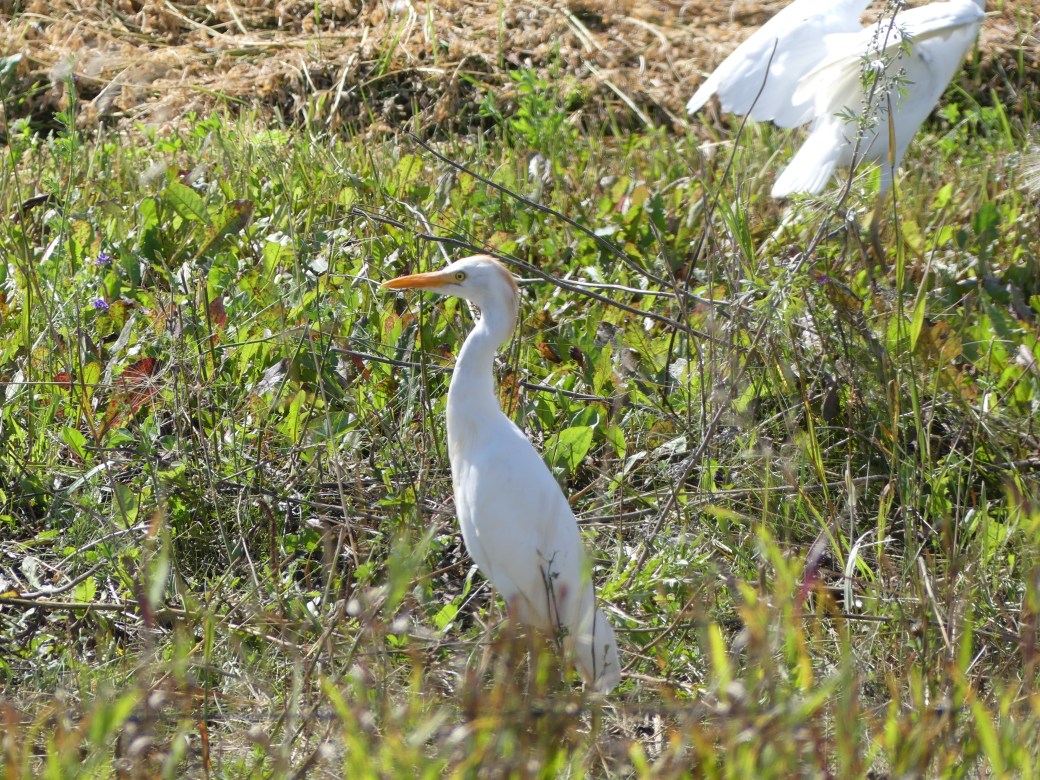
Group 1 consisted of Eric Smith, Louise Buelow-Smith and myself. Our challenge was to get into some of the corners around 19N and 121W and then see if we could access some of the other road allowances. Our early Peregrine and large flock of dowitchers was a precursor of things to come. A large flock of 28 Cattle Egret was a surprise on 19N. Cattle Egret is another which has become a more recent breeding species for Manitoba and is even now spreading out towards Oak Lake, much like the White-faced Ibis. It is though still known as a Whitewater specialty.

P1040283.JPG

Cattle Egert in a pasture at Whitewater Lake. Copyright Tim Poole

Another species of note in this section was the American Avocet. Three large groups were located with a count of 1,795 in total in this one section. Not bad for late August! The northeast is an interesting section, much of it, including the old WMA now inaccessible due to the high lake levels.

P1040251.JPG

Tractor pumping water from right (the drainage ditch) to the left (the lake). Copyright Tim Poole

Group 2 was Lewis Cocks, Ken Simonite, Wally Jansen and Robb Nickel. They covered an area in the southeast up to the main mound. Highlights included a lifer Baird’s Sandpiper for Ken.

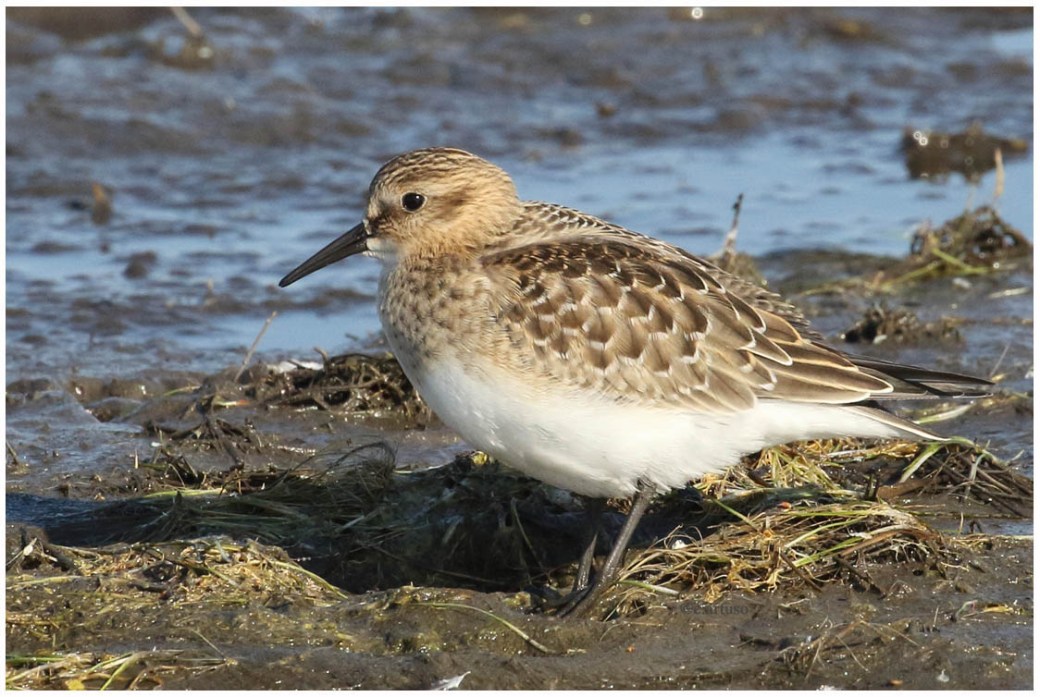
Baird's Sandpiper_1383_Artuso.jpg

Another High Arctic migrant, the Baird’s Sandpiper. Note the brown plumage, a point of difference with the White-rumped Sandpiper. Photo copyright Christian Artuso

They also counted 2 Snowy Egret, another specialty for Whitewater, contributing to a total of 63 species.

In the southeast, Christian Artuso, John Hays and Patricia Rosa spent much of their time on foot around 128W. This area of Whitewater seems to contain phenomenal numbers of birds including 1,000 Northern Pintail, 4,100 Mallard, 1,675 Western Grebe, 703 Double-crested Cormorant, 603 American Coot, 350 Eared Grebe and 420 Black Tern.

Semipalmated Sandpiper_1180_Least Sandpiper_Baird's Sandpiper_American Avocet (1).jpg

Semipalmated Sandpiper, Least Sandpiper, Baird’s Sandpiper and American Avocet. Copyright Christian Artuso

Shorebird totals were very impressive. 83 Baird’s Sandpiper, 187 Least Sandpiper, 830 Semipalmated Sandpiper, 325 Short-billed Dowitcher, 125 Long-billed Dowitcher and 32 American Golden Plover. There were 18 species of shorebird in total. Rarer both here and elsewhere is the Buff-breasted Sandpiper. This High Arctic species is listed as Near Threatened by IUCN and winters in the pampas of South America. In common with its open winter and breeding habitats, on migration this is a species often found in short open vegetation – the most well known spot in Manitoba currently are the sod fields north of Oak Hammock Marsh and earlier this August at Riverton Sandy Bar. Unlike other North American shorebirds, the Buff-breasted Sandpiper uses a lek system of mating where males defend small display territories. Females select a mate and then nest and raise their brood elsewhere.

The gentle looking Buff-breasted Sandpiper (third photo with Least Sandpiper). All photos copyright Christian Artuso.

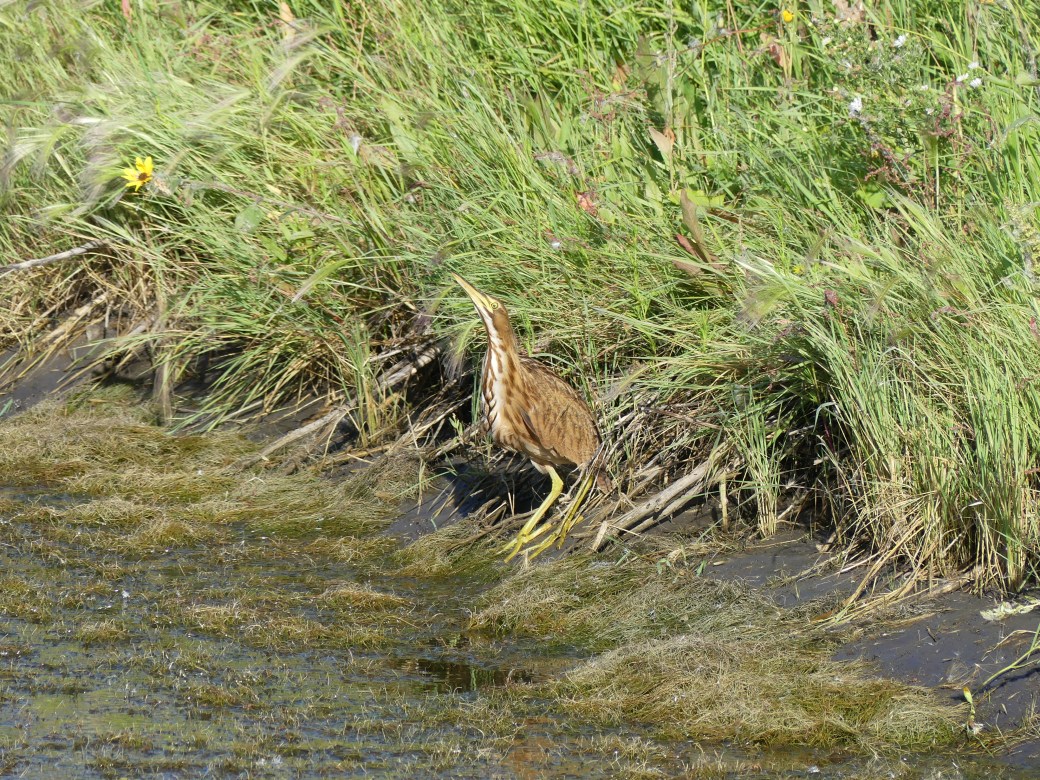
In group 4 we had Dave and Pat Wally. They counted 111 Snow Geese, huge numbers of Bank Swallows (although Tree Swallow appeared more numerous overall this time). They also counted a couple of Black-bellied Plover but this area did not turn up the large numbers of shorebirds that it did in the spring – it did not in early August either. However, there are tall cattails which may be blocking the view of our volunteers in this part of the lake. American Bittern was another species encountered. Margaret and Joan from Pierson and Lyleton arrived later but still had fun birding and joined us for lunch.

P1040264.JPG

Yes we can see you – American Bittern. Copyright Tim Poole

Finally Glennis Lewis, Jen and Anna Wasko monitored the northwest. 6 year old Anna moved on from counting Northern Shovellers and took to counting the numerous American Coots – 517 in total. 116 Western Grebes were counted around Sexton’s Island – adding to another huge total. Shorebirds were very thin on the ground, the ephemeral wetlands were dried out and the best places were along the lake shore which is not always accessible.

P1040253.JPG

Western Grebe’s are present in huge numbers still at Whitewater. Copyright Tim Poole

We will publish a full summary of both the 6th and 27th August blitzes but here is the total for the blitz. Large totals to highlight were 5,507 Mallard, 1,846 Northern Pintail, 2,050 Western Grebe, 4,140 American Coot, 1,938 American Avocet, 892 Semipalmated Sandpiper, 2,196 Long-billed Dowitcher, 4,381 Tree Swallow, 1,423 Bank Swallow and 768 Yellow-headed Blackbird.

Snow Goose 111
Canada Goose 619
Blue-winged Teal 445
Northern Shoveler 281
Gadwall 313
American Wigeon 5
Mallard 5507
Northern Pintail 1846
Green-winged Teal 122
Canvasback 463
Redhead 112
Ring-necked Duck 30
Lesser Scaup 5
Bufflehead 2
Common Goldeneye 1
Ruddy Duck 210
duck sp. 10400
Gray Partridge 15
Pied-billed Grebe 66
Eared Grebe 391
Western Grebe 2050
Double-crested Cormorant 719
American White Pelican 540
American Bittern 6
Great Blue Heron 19
Great Egret 91
Snowy Egret 3
Cattle Egret 84
Black-crowned Night-Heron 18
White-faced Ibis 164
Turkey Vulture 5
Northern Harrier 13
Bald Eagle 23
Swainson’s Hawk 7
Red-tailed Hawk 22
Sora 26
American Coot 4140
American Avocet 1938
Black-bellied Plover 5
American Golden-Plover 32
Semipalmated Plover 46
Killdeer 66
Hudsonian Godwit 8
Marbled Godwit 1
Stilt Sandpiper 6
Sanderling 1
Baird’s Sandpiper 87
Least Sandpiper 210
White-rumped Sandpiper 10
Buff-breasted Sandpiper 3
Pectoral Sandpiper 2
Semipalmated Sandpiper 892
Short-billed Dowitcher 350
Long-billed Dowitcher 2196
Short-billed/Long-billed Dowitcher 3357
Wilson’s Snipe 32
Wilson’s Phalarope 1
Red-necked Phalarope 1
Spotted Sandpiper 1
Greater Yellowlegs 47
Willet 14
Lesser Yellowlegs 10
Bonaparte’s Gull 1
Franklin’s Gull 162
Ring-billed Gull 451
Herring Gull 3
Caspian Tern 3
Black Tern 567
Common Tern 1
Forster’s Tern 62
Rock Pigeon 69
Eurasian Collared-Dove 4
Mourning Dove 81
Northern Flicker 2
American Kestrel 1
Merlin 2
Peregrine Falcon 3
Eastern Phoebe 3
Western Kingbird 15
Eastern Kingbird 38
Black-billed Magpie 14
American Crow 3
Common Raven 9
Horned Lark 3
Tree Swallow 4381
Bank Swallow 1423
Barn Swallow 195
Sedge Wren 8
Marsh Wren 13
American Robin 2
European Starling 326
Cedar Waxwing 7
Yellow Warbler 2
Clay-colored Sparrow 6
Vesper Sparrow 16
Savannah Sparrow 49
Song Sparrow 6
Swamp Sparrow 5
sparrow sp. 14
Yellow-headed Blackbird 768
Bobolink 1
Western Meadowlark 30
Brown-headed Cowbird 30
Red-winged Blackbird 282
Brewer’s Blackbird 120
Common Grackle 15
blackbird sp. 512
American Goldfinch 13
House Sparrow 30

Grand Fair & Festival Summer Tour 2017

by Patricia Rosa & Tim Poole

Over the course of the summer, we’ve had the pleasure to attend fairs and festivals near Important Bird Areas all over Manitoba. This gave us the opportunity to promote Manitoba’s IBAs, but also to discuss some of Nature Manitoba’s other programs with local communities, including grassland bird and Chimney Swift initiatives.

These events also gave us insight into pertinent observations made in these areas, hear out concerns regarding particular issues affecting local landowners, and sometimes simply allow us to help identify birds seen in backyards or explain peculiar bird behaviours.

We would like to say a special thanks to the individuals that facilitated our participation and graciously welcomed us to join in on the fun at these events!

Our first port of call was the La Riviere Raptor Festival. Tim made his now annual trip down to the Pembina Valley to this event celebrating the wonderful raptor migration each year. The festival is organised by Evelyn Janzen and Paul Goosen and the folks at A Rocha Pembina Valley. Unfortunately the day was beset by poor weather but many still came to see a Bald Eagle being released from rehab and various talks from our very own Christian Artuso.

Kris Antonius and Mike Berg from DIY Homesteaders not only extended a complimentary market table to connect with fest-goers, but also gave Tim the opportunity to do a birding/IBA workshop for a great group of kids in the DIY Kids’ Area. Unfortunately the original intention was to take the kids on a walk around the festival grounds where Barn Swallows swooped, catbirds meewed, and warblers, well warbled, but Mother Nature was not in the mood for cooperating. Instead the kids got to see a Chimney Swift nest, play a game of guess the singer and learn about what makes birds so great. The attendees were mainly small landowners, knowledgeable and interested to hear about our programs.

Nicole Kyle from Turtle Mountain (Boissevain) Fair facilitated our participation to this event. I had a great view of the rink! As an added bonus, there were Horned Lark singing and flying around all day.

IMG_20170815_121645

Turtle Mountain (Boissevain) Fair: Ponies, Clydesdales, and birds ©Patricia Rosa

Sabrina Dean coordinated our involvement at the Oak Lake Fair. The fair kicked off with a parade through the town. Although they had a bit of a scare the previous evening due to strong winds and weather warnings, it was a beautiful day and fair attendees were eager to chat with me about birds!

OAK02

Oak Lake Fair kicks off with a parade ©Patricia Rosa

Dale McKay from Portage La Prairie Potato Festival welcomed us to join in on the festivities! I had the best seat in the house and got to connect with many bird-wise spud-thusiasts.

20170812_143212

View from the booth at PotatoFest ©Patricia Rosa

Thanks again to all of these amazing people and we cannot wait for next year’s Grand Fair & Festival Summer Tour!