Silence of the Dowitchers

Following the early August blitz at Whitewater Lake, we decided to give it another go and see what else we might turn out in this critically important area on Sunday August 27th. Manitoba IBA Coordinator, Tim Poole gives an overview of proceedings.

For most bird species, a good look in the scope is enough for a successful identification. However the fall can leave even the best birders sometimes scratching their head. Fall warblers and vireos can be taxing for most but there are always little giveaways to help bring about a successful identification. Sharp-shinned versus Cooper’s Hawk can keep a whole group on Facebook debating for days.

Shorebirds can also be tough in fall. In most cases, there are telling features which help us to get the correct species in the end. In the case of the dowitchers though these features are often difficult to draw out as they gather in ‘large carpets’ of birds. The adult plumage in fall becomes very worn and given these shorebirds can flock in groups of several thousand, they can seem almost indistinguishable between two species, Long-billed Dowitcher and Short-billed Dowitcher.

Short-billed Dowitcher_9801_carpet.jpg

This is a typical image of dowitcher flocks experienced at Whitewater Lake. Large carpets of birds feeding or roosting together can be notoriously hard to identify. Copyright Christian Artuso

Short-billed Dowitcher_9817_carpet

Zoom in on the above – and still difficult even with a scope. Copyright Christian Artuso

Now, these are two distinct species and there has been considerable work done on advancing our knowledge of the key identification differences between these two species. There is an excellent pdf and summary of a talk on exactly this matter on the Surfbird website.

Another resource made available by Christian Artuso is this table outlining the physical differences between the two species. Dowitchers comparison

Interesting enough, juvenile birds in fall tend to be easier to identify in the field than the worn-looking adults. This is due to distinctive differences in the tertials (the innermost secondary wing feathers) which are prominent on the rear of the bird when stationary on the ground. The tertials of the Short-billed juvenile has orange bars, whereas the Lon-billed juvenile has grey tertials with rusty edges.

SB vs LB DO.jpg

A comparison of tertials on juvenile Short and Long-billed Dowitchers. Photos are copyright of Christian Artuso

In reality the best way to count these large flocks is by ear. The Short-billed Dowitcher call is a lower pitched kewtutu  and the Long-billed Dowitcher is a higher pitched, sharp series of kik-kik-kik. However in a flock of 2000 dowitchers, one call from one Short-billed Dowitcher is not going to be enough to allow you to identify the entire flock. So we need some help!
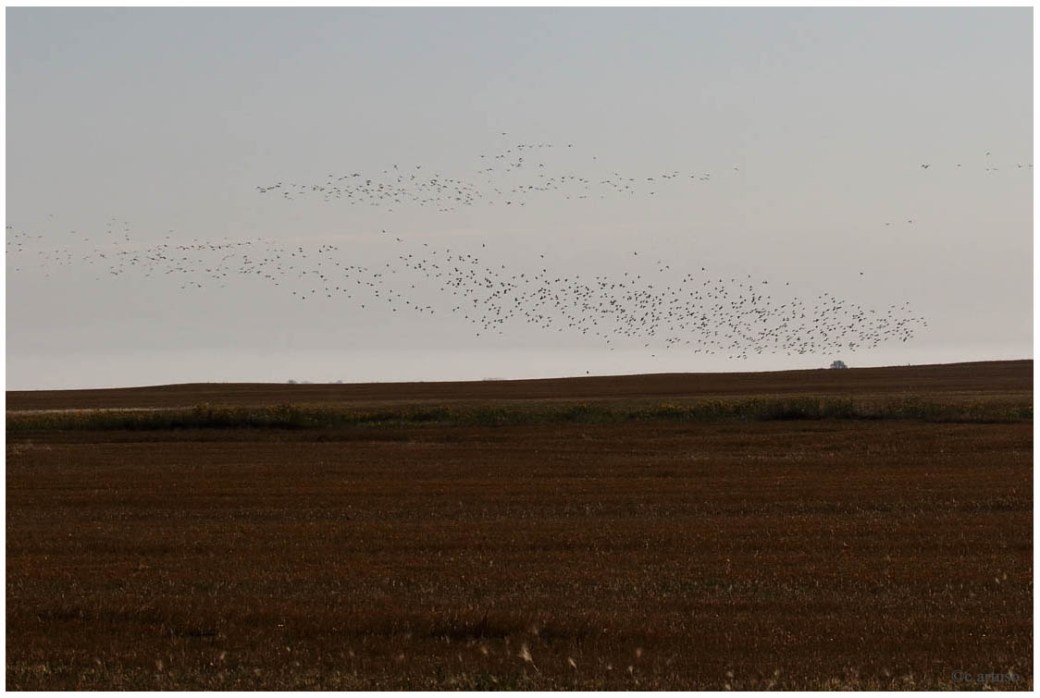
shorebird flock in flight_1159.jpg

Large flock of shorebirds. Ironically if these were dowitchers they would suddenly become easier to identify than if they were standing around in a carpet. Copyright Christian Artuso

Thank goodness then for birds of prey! Fall is also the time for large numbers of raptors to visit and Sunday was no different. For example, in the northwest corner and along the south of the lake, Peregrine Falcons flushed flocks of dowitchers. It was Bald Eagles and Northern Harriers doing this duty along the northern edge of the lake. In one case, over 2000 Long-billed Dowitcher were flushed by an eagle, giving Eric, Louise and myself a single count of this species where previously it was difficult to distinguish between individuals in a carpet of birds.

Peregrine Falcon_1365_pair.jpg

Two Peregrine Falcons resting following a flyby on flocks of shorebirds at 128W. Copyright Christian Artuso

This ultimately led to a total of 2,196 Long-billed Dowitcher, 350 Short-billed Dowitcher and 3357 unidentified dowitcher species, just going to show that most flocks were just not calling enough to identify. The long-billed figure will actually trigger the 1% global concentration on the IBA tables in future – another new species for Whitewater!

As for the remainder of the blitz we had 19 volunteers out around the IBA in 5 groups. Each group was given a section to complete, recording every individual bird within this area in the allotted time.

August 28th IBA Blitz groups.jpg

Group 1 consisted of Eric Smith, Louise Buelow-Smith and myself. Our challenge was to get into some of the corners around 19N and 121W and then see if we could access some of the other road allowances. Our early Peregrine and large flock of dowitchers was a precursor of things to come. A large flock of 28 Cattle Egret was a surprise on 19N. Cattle Egret is another which has become a more recent breeding species for Manitoba and is even now spreading out towards Oak Lake, much like the White-faced Ibis. It is though still known as a Whitewater specialty.
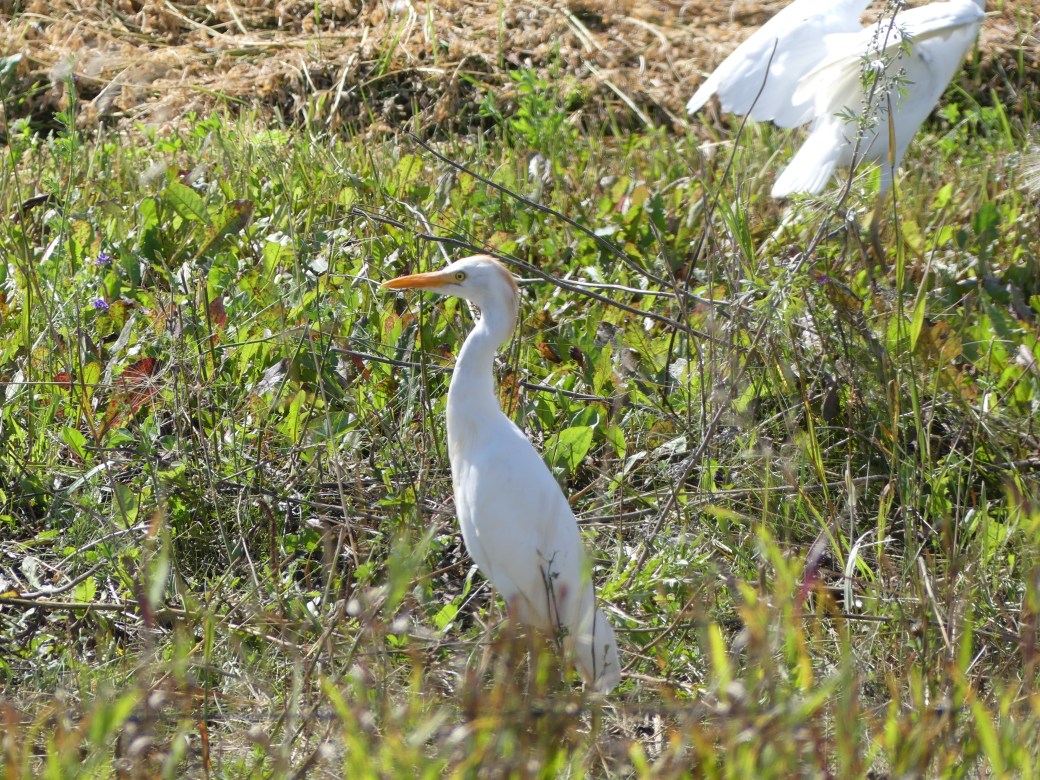
P1040283.JPG

Cattle Egert in a pasture at Whitewater Lake. Copyright Tim Poole

Another species of note in this section was the American Avocet. Three large groups were located with a count of 1,795 in total in this one section. Not bad for late August! The northeast is an interesting section, much of it, including the old WMA now inaccessible due to the high lake levels.

P1040251.JPG

Tractor pumping water from right (the drainage ditch) to the left (the lake). Copyright Tim Poole

Group 2 was Lewis Cocks, Ken Simonite, Wally Jansen and Robb Nickel. They covered an area in the southeast up to the main mound. Highlights included a lifer Baird’s Sandpiper for Ken.
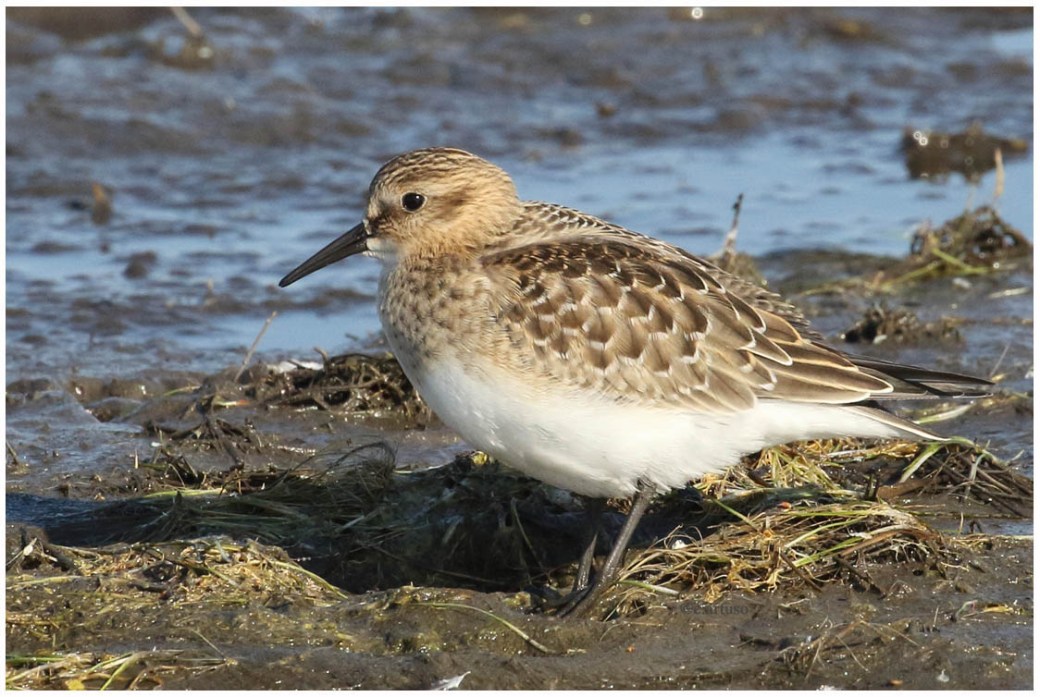
Baird's Sandpiper_1383_Artuso.jpg

Another High Arctic migrant, the Baird’s Sandpiper. Note the brown plumage, a point of difference with the White-rumped Sandpiper. Photo copyright Christian Artuso

They also counted 2 Snowy Egret, another specialty for Whitewater, contributing to a total of 63 species.

In the southeast, Christian Artuso, John Hays and Patricia Rosa spent much of their time on foot around 128W. This area of Whitewater seems to contain phenomenal numbers of birds including 1,000 Northern Pintail, 4,100 Mallard, 1,675 Western Grebe, 703 Double-crested Cormorant, 603 American Coot, 350 Eared Grebe and 420 Black Tern.

Semipalmated Sandpiper_1180_Least Sandpiper_Baird's Sandpiper_American Avocet (1).jpg

Semipalmated Sandpiper, Least Sandpiper, Baird’s Sandpiper and American Avocet. Copyright Christian Artuso

Shorebird totals were very impressive. 83 Baird’s Sandpiper, 187 Least Sandpiper, 830 Semipalmated Sandpiper, 325 Short-billed Dowitcher, 125 Long-billed Dowitcher and 32 American Golden Plover. There were 18 species of shorebird in total. Rarer both here and elsewhere is the Buff-breasted Sandpiper. This High Arctic species is listed as Near Threatened by IUCN and winters in the pampas of South America. In common with its open winter and breeding habitats, on migration this is a species often found in short open vegetation – the most well known spot in Manitoba currently are the sod fields north of Oak Hammock Marsh and earlier this August at Riverton Sandy Bar. Unlike other North American shorebirds, the Buff-breasted Sandpiper uses a lek system of mating where males defend small display territories. Females select a mate and then nest and raise their brood elsewhere.

The gentle looking Buff-breasted Sandpiper (third photo with Least Sandpiper). All photos copyright Christian Artuso.

In group 4 we had Dave and Pat Wally. They counted 111 Snow Geese, huge numbers of Bank Swallows (although Tree Swallow appeared more numerous overall this time). They also counted a couple of Black-bellied Plover but this area did not turn up the large numbers of shorebirds that it did in the spring – it did not in early August either. However, there are tall cattails which may be blocking the view of our volunteers in this part of the lake. American Bittern was another species encountered. Margaret and Joan from Pierson and Lyleton arrived later but still had fun birding and joined us for lunch.
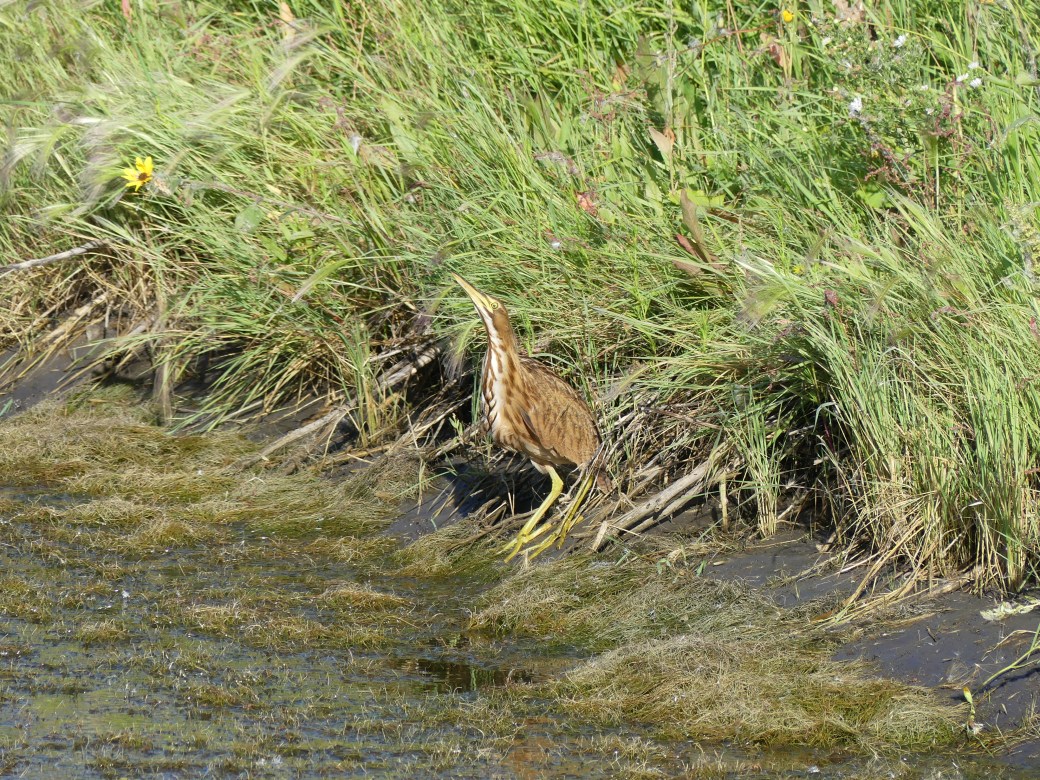
P1040264.JPG

Yes we can see you – American Bittern. Copyright Tim Poole

Finally Glennis Lewis, Jen and Anna Wasko monitored the northwest. 6 year old Anna moved on from counting Northern Shovellers and took to counting the numerous American Coots – 517 in total. 116 Western Grebes were counted around Sexton’s Island – adding to another huge total. Shorebirds were very thin on the ground, the ephemeral wetlands were dried out and the best places were along the lake shore which is not always accessible.

P1040253.JPG

Western Grebe’s are present in huge numbers still at Whitewater. Copyright Tim Poole

We will publish a full summary of both the 6th and 27th August blitzes but here is the total for the blitz. Large totals to highlight were 5,507 Mallard, 1,846 Northern Pintail, 2,050 Western Grebe, 4,140 American Coot, 1,938 American Avocet, 892 Semipalmated Sandpiper, 2,196 Long-billed Dowitcher, 4,381 Tree Swallow, 1,423 Bank Swallow and 768 Yellow-headed Blackbird.

Snow Goose 111
Canada Goose 619
Blue-winged Teal 445
Northern Shoveler 281
Gadwall 313
American Wigeon 5
Mallard 5507
Northern Pintail 1846
Green-winged Teal 122
Canvasback 463
Redhead 112
Ring-necked Duck 30
Lesser Scaup 5
Bufflehead 2
Common Goldeneye 1
Ruddy Duck 210
duck sp. 10400
Gray Partridge 15
Pied-billed Grebe 66
Eared Grebe 391
Western Grebe 2050
Double-crested Cormorant 719
American White Pelican 540
American Bittern 6
Great Blue Heron 19
Great Egret 91
Snowy Egret 3
Cattle Egret 84
Black-crowned Night-Heron 18
White-faced Ibis 164
Turkey Vulture 5
Northern Harrier 13
Bald Eagle 23
Swainson’s Hawk 7
Red-tailed Hawk 22
Sora 26
American Coot 4140
American Avocet 1938
Black-bellied Plover 5
American Golden-Plover 32
Semipalmated Plover 46
Killdeer 66
Hudsonian Godwit 8
Marbled Godwit 1
Stilt Sandpiper 6
Sanderling 1
Baird’s Sandpiper 87
Least Sandpiper 210
White-rumped Sandpiper 10
Buff-breasted Sandpiper 3
Pectoral Sandpiper 2
Semipalmated Sandpiper 892
Short-billed Dowitcher 350
Long-billed Dowitcher 2196
Short-billed/Long-billed Dowitcher 3357
Wilson’s Snipe 32
Wilson’s Phalarope 1
Red-necked Phalarope 1
Spotted Sandpiper 1
Greater Yellowlegs 47
Willet 14
Lesser Yellowlegs 10
Bonaparte’s Gull 1
Franklin’s Gull 162
Ring-billed Gull 451
Herring Gull 3
Caspian Tern 3
Black Tern 567
Common Tern 1
Forster’s Tern 62
Rock Pigeon 69
Eurasian Collared-Dove 4
Mourning Dove 81
Northern Flicker 2
American Kestrel 1
Merlin 2
Peregrine Falcon 3
Eastern Phoebe 3
Western Kingbird 15
Eastern Kingbird 38
Black-billed Magpie 14
American Crow 3
Common Raven 9
Horned Lark 3
Tree Swallow 4381
Bank Swallow 1423
Barn Swallow 195
Sedge Wren 8
Marsh Wren 13
American Robin 2
European Starling 326
Cedar Waxwing 7
Yellow Warbler 2
Clay-colored Sparrow 6
Vesper Sparrow 16
Savannah Sparrow 49
Song Sparrow 6
Swamp Sparrow 5
sparrow sp. 14
Yellow-headed Blackbird 768
Bobolink 1
Western Meadowlark 30
Brown-headed Cowbird 30
Red-winged Blackbird 282
Brewer’s Blackbird 120
Common Grackle 15
blackbird sp. 512
American Goldfinch 13
House Sparrow 30

Grand Fair & Festival Summer Tour 2017

by Patricia Rosa & Tim Poole

Over the course of the summer, we’ve had the pleasure to attend fairs and festivals near Important Bird Areas all over Manitoba. This gave us the opportunity to promote Manitoba’s IBAs, but also to discuss some of Nature Manitoba’s other programs with local communities, including grassland bird and Chimney Swift initiatives.

These events also gave us insight into pertinent observations made in these areas, hear out concerns regarding particular issues affecting local landowners, and sometimes simply allow us to help identify birds seen in backyards or explain peculiar bird behaviours.

We would like to say a special thanks to the individuals that facilitated our participation and graciously welcomed us to join in on the fun at these events!

Our first port of call was the La Riviere Raptor Festival. Tim made his now annual trip down to the Pembina Valley to this event celebrating the wonderful raptor migration each year. The festival is organised by Evelyn Janzen and Paul Goosen and the folks at A Rocha Pembina Valley. Unfortunately the day was beset by poor weather but many still came to see a Bald Eagle being released from rehab and various talks from our very own Christian Artuso.

Kris Antonius and Mike Berg from DIY Homesteaders not only extended a complimentary market table to connect with fest-goers, but also gave Tim the opportunity to do a birding/IBA workshop for a great group of kids in the DIY Kids’ Area. Unfortunately the original intention was to take the kids on a walk around the festival grounds where Barn Swallows swooped, catbirds meewed, and warblers, well warbled, but Mother Nature was not in the mood for cooperating. Instead the kids got to see a Chimney Swift nest, play a game of guess the singer and learn about what makes birds so great. The attendees were mainly small landowners, knowledgeable and interested to hear about our programs.

Nicole Kyle from Turtle Mountain (Boissevain) Fair facilitated our participation to this event. I had a great view of the rink! As an added bonus, there were Horned Lark singing and flying around all day.

IMG_20170815_121645

Turtle Mountain (Boissevain) Fair: Ponies, Clydesdales, and birds ©Patricia Rosa

Sabrina Dean coordinated our involvement at the Oak Lake Fair. The fair kicked off with a parade through the town. Although they had a bit of a scare the previous evening due to strong winds and weather warnings, it was a beautiful day and fair attendees were eager to chat with me about birds!

OAK02

Oak Lake Fair kicks off with a parade ©Patricia Rosa

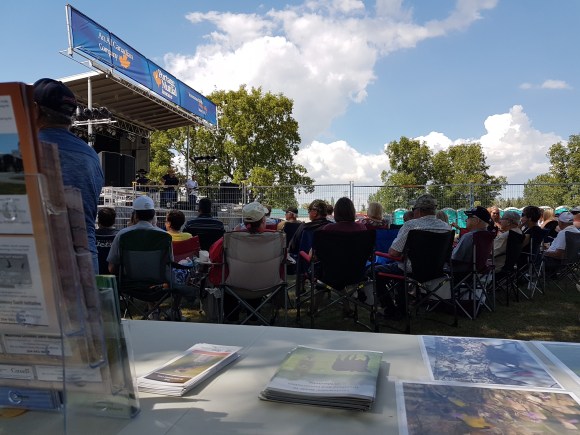
Dale McKay from Portage La Prairie Potato Festival welcomed us to join in on the festivities! I had the best seat in the house and got to connect with many bird-wise spud-thusiasts.

20170812_143212

View from the booth at PotatoFest ©Patricia Rosa

Thanks again to all of these amazing people and we cannot wait for next year’s Grand Fair & Festival Summer Tour! 

Masses Turn Up To Pull Weeds at Riverton Sandy Bar IBA

In 2016, IBA Caretaker for MB91 Riverton Sandy Bar, Joanne Smith, instigated our first ever IBA habitat work party, pulling weeds for plovers (see here, here and here). Earlier this month Joanne and a number of volunteers came back for round 2. Here Joanne gives her take on the days activities.

IMG_0542

Volunteers making their way to the start of the weed pulling area. Copyright Joanne Smith

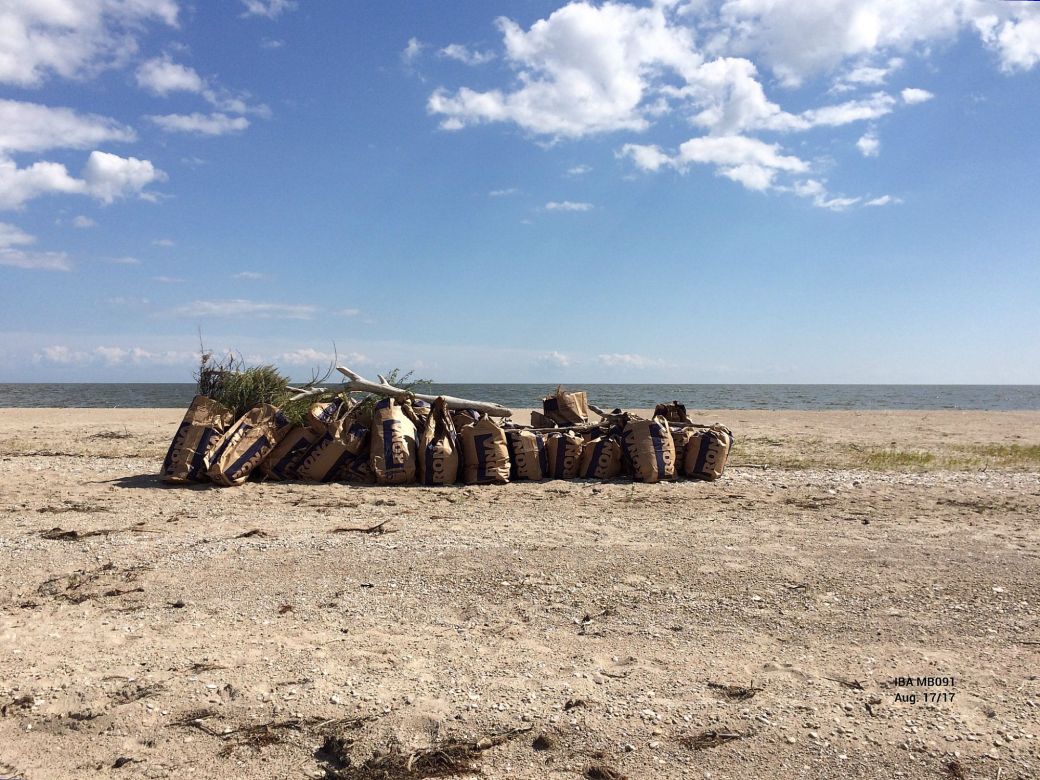
Hmm, the phrase “weed at the bar,” may conjure up some odd, possibly illegal, images, but August 17th was all about pulling invasive sweet clover and burdock at Important Bird and Biodiversity Area (IBA) Riverton Sandy Bar. In fact, 36 volunteers filled 66 bags of the stuff, with the hopes of creating a habitat more appealing to the Endangered Piping Plover. The last time Sandy Bar had nesting Piping Plover was in 2004. With two pairs being seen elsewhere in Manitoba this summer, there is always a possibility that Piping Plovers may once again make an appearance at Sandy Bar IBA MB091. Having annual groups pull invasive sweet clover and other weeds that are choking out the sandbar will hopefully further this cause.

20170817_092549(0).jpg

Hoards of people moving across the car. Copyright Patricia Rosa

On Thursday August 17th, residents from such Interlake communities as Riverton, Arborg, Hnausa and Hodgson; volunteers from Winnipeg; and staff from the East Interlake Conservation District, Manitoba Sustainable Development, Nature Manitoba and Bird Studies Canada met at the Sandy Bar parking area at 9:00 am to participate in this work-bee organised by the Manitoba IBA program. Coffee, donuts and muffins were shared while introductions were given. Water was handed out, sun-screen splashed on, and then the real work began.

Sandy Bar Weed Picking Volunteers (1)

No sweat, although this photo was taken before anyone had pulled a single weed. Pretty much everyone is here. Copyright Dries Desender

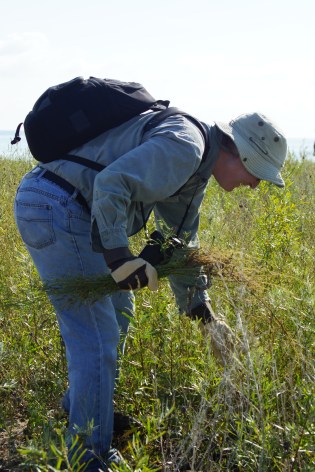
The fifteen-minute walk to the sand bar was followed by hours of weed pulling. Larger, older sweet clover, new young plants, burdock and even young willow were pulled up and carefully bagged. The Piping Plover prefers an open sandy/pebble area with little or no vegetation so the goal was to pull the weeds up from the roots to try to prevent them from taking over the sandbar. This year was ‘reinforcement” following last year’s weed pull and the encouraging results we saw with the areas cleared in 2016 remaining relatively open sand.

A selection of photos of people in action. Copyright for all to Joanne Smith

On September 30th, 2016, we were delighted to have 14 people share in the weed-pulling activity, so having 36 volunteers this year was above and beyond our hopes. Not only did we learn about Piping Plovers and the habitat that they prefer, we had individuals from different areas of expertise who shared information on the different bird species seen and heard, as well as the importance of Riverton Sandy Bar, designated as both an IBA and a Special Conservation Area.

IMG_0540

Maybe next year we will get Rona to pay for all the free advertising! Bags and bags and bags of weeds. Copyright Joanne Smith

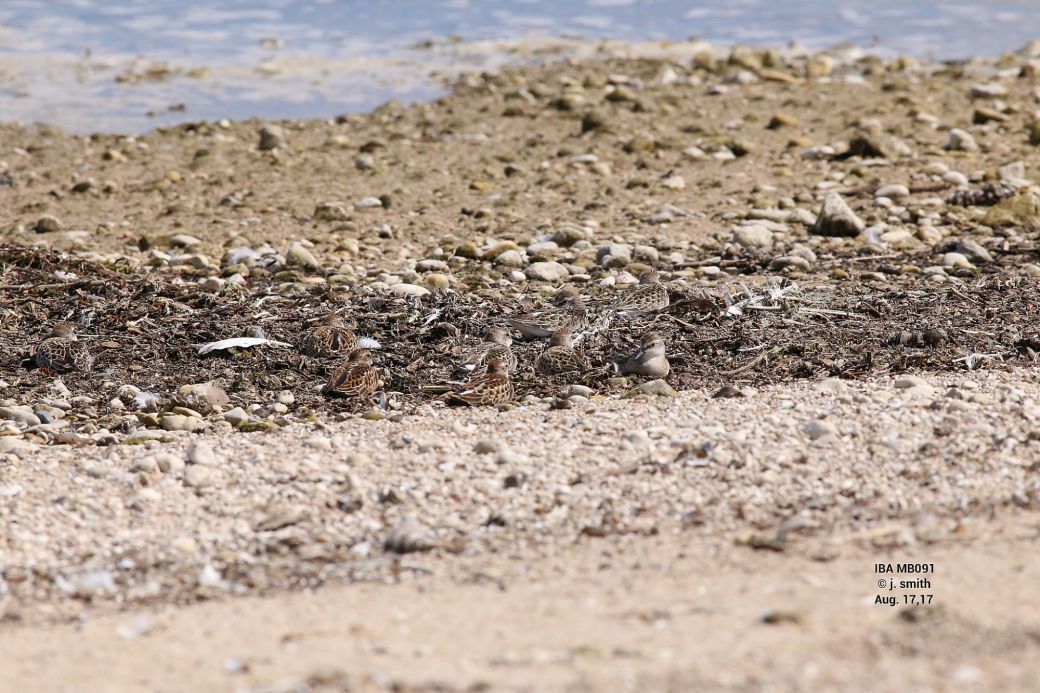
While the goal of the event was to pull invasive sweet clover, there were numerous sightings of birds. Along with the local summer nesting birds such as Sora, Song Sparrow, Red-winged Blackbird, Yellow Warbler, Marsh Wren, Bald Eagle and Herring Gull, there was an appearance by a Great Blue Heron and shorebird species such as American Golden Plover, Black-bellied Plover, Semipalmated Plover, Baird’s Sandpiper, Pectoral Sandpiper, Least Sandpiper, Semipalmated Sandpiper, Spotted Sandpiper, Sanderling and both Greater and Lesser Yellowlegs. Many of these migratory shorebirds are benefiting from the weed pulling activity because it gives them safe, open foraging areas as well as potential roost sites.

IMG_0552

Black-bellied plovers on the open sand. As pointed out above, this type of species would avoid dense vegetation.  Copyright Joanne Smith

IMG_0553

Any guesses for the number of Least and Semipalmated sandpiper in this photo? Answers to iba@naturemanitoba.ca. Copyright Joanne Smith

IMG_0554

Ring billed, Herring, and Franklins Gulls,  Caspian, Common, and Forster’s Terns and Black-bellied Plovers. Copyright Joanne Smith

IMG_0555

Another invasive species that cannot be rid so easily, the zebra mussels are increasingly prevalent on Lake Winnipeg’s beaches. These seem to be spelling out a ‘z’, backwards though. Copyright Joanne Smith

Sandy Bar volunteer pulling weeds (1)

Busy weed puller on the go. Copyright Dries Desender

While pulling weeds in sunny 26°C temperatures was a little tiring, the event was a great success. Filling 66 bags of weeds, seeing numerous bird species and having local residents as well as individuals from various groups all come together to help create a more suitable habitat for Piping Plover was well worth the miles traveled and the effort expended.

There will be more follow-up too, because it will take several more years of effort to “get ahead” of the sweet clover and we are determined to make a difference. So stay tuned to the Manitoba IBA webpage or blog (https://importantbirdareasmb.ca/) and join the fun of our annual “weed at the bar” event!


Sandy Bar pile of pulled weeds (1)

A glimpse of the full yard waste bags. Copyright Dries Desender


Here is the most important thing, the days full bird list:

Canada Goose  125
Green-winged Teal  18
Common Goldeneye  5
American White Pelican  2
Great Blue Heron  1
Northern Harrier  1
Bald Eagle  2
Sora  1
Black-bellied Plover  6
American Golden-Plover  1
Semipalmated Plover  2
Killdeer  1
Sanderling  3
Baird’s Sandpiper  1
Least Sandpiper  8
Pectoral Sandpiper  1
Semipalmated Sandpiper  7
Spotted Sandpiper  2
Greater Yellowlegs  2
Lesser Yellowlegs  5
Franklin’s Gull  4
Ring-billed Gull  33
Herring Gull  26
Caspian Tern  6
Common Tern  9
Forster’s Tern  7
Common Raven  4
Barn Swallow  6
Marsh Wren  3
Yellow Warbler  7
Song Sparrow  2
Yellow-headed Blackbird  1
Red-winged Blackbird  28


From a Manitoba IBA Program perspective, we are obviously extremely grateful to everyone for turning up to help with special thanks to Christian and Patricia for bringing along refreshments and equipment, Thor for getting together a large group of local volunteers, East Interlake Conservation District, Manitoba Sustainable Development, Bird Studies Canada and Nature Manitoba for their support! However we cannot get by without a special note of thanks to Joanne for her amazing dedication in bringing this together. We will be back because this is a project worth pursuing!

Oak Lake and Routledge Sandhills BioBlitz – July 15, 2017

by Patricia Rosa 

On Saturday July 15, a total of 18 volunteer BioBlitzers surveyed Oak Lake/Plum Lakes IBA (MB011). The following blog includes highlights of the large-scale bird survey, and NCC’s Rebekah Neufeld’s account of the Routledge Sandhills portion of the blitz accompanied by entomology experts.

MAP-OakLakeBlitzWRouteledge.jpg

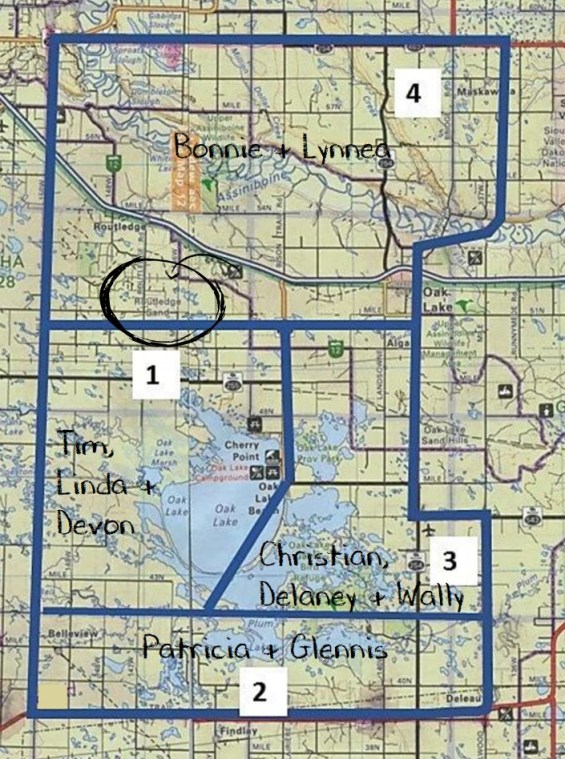
Tim, Linda and Devon were tasked with surveying the western portion of the IBA. They encountered, Sprague’s Pipit and Grasshopper Sparrow. They made it all the way to the west of the lake, which is a great accomplishment in and of itself!

At the start of our survey, Glennis and I saw a Grasshopper Sparrow belting out a tune on a fence post. A few of the species we were able to spot during our visit to NCC’s Jiggin’s Bluff included Yellow-bellied Sapsucker, Say’s Phoebe, and Cedar Waxwing. Plum Lakes hosted a large diversity of shorebirds, ducks, and gulls with one notable visitor: a juvenile Bald Eagle!

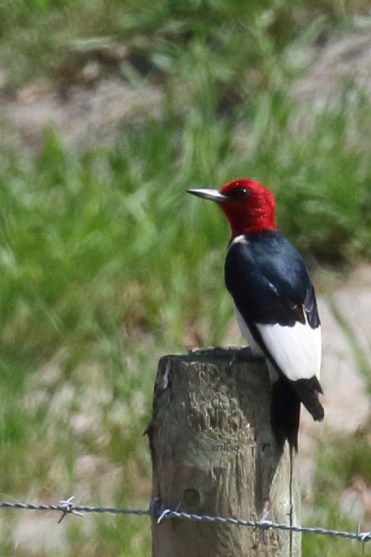
Christian, Delaney, and Wally surveyed the East. Their efforts were rewarded as they were able to get a good look at this beautiful Red-headed Woodpecker.

Red-headed Woodpecker_9136_Artuso

Red-headed Woodpecker ©Christian Artuso

Bonnie and Lynnea took on the North! They not only heard Sprague’s Pipit but also Baird’s Sparrow. After lunch, Bonnie and Lynnea brought a group of us to the location where they heard them, and we were able to hear a couple Baird’s counter-singing in the field.

DSCN3038

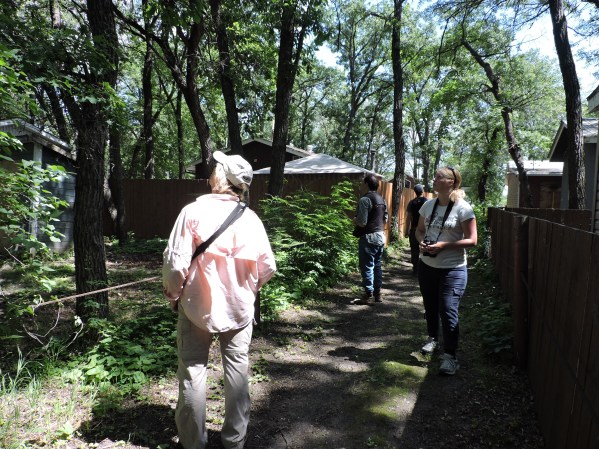
Searching for the Western Wood-Pewee ©Patricia Rosa

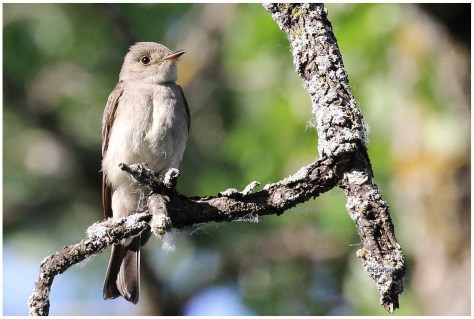
While the day was filled with exciting sightings, nothing gets in the way of motivated birders! Several eager individuals made their way to a more populated area of the IBA to search for Western Wood-Pewee. Although some of us were initially fooled by an Eastern Wood-Pewee, we were finally able to see it. What a great way to end the day!

Western Wood-Pewee_5970

Western Wood-Pewee ©Christian Artuso


Routledge Sandhills BioBlitz by Rebekah Neufeld

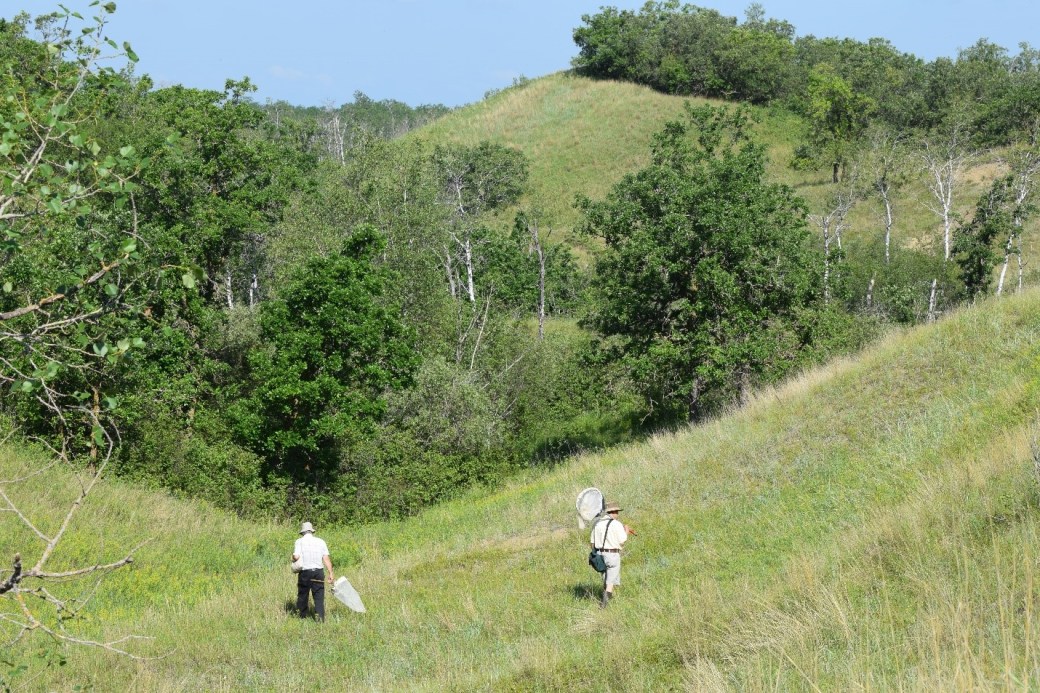
We had 8 volunteers join us for the sandhills portion of the BioBlitz, which took place in the Routledge Sandhills complex on Nature Conservancy of Canada property and adjacent lands, including entomology experts Dr. Terry Galloway and Dr. Bob Wrigley. Unfortunately we did not spot Prairie Skink or Plains Hog-nosed Snakes as we had hoped (or any reptiles for that matter – which is a bit unusual). But the insects were much more forthcoming. Of particular interest were a number of species associated with early-successional and open sand habitats – areas where natural disturbance maintains sparse vegetation and open sand habitat that many plants and animals rely on.

RN01

Located just south of the Trans-Canada Highway near the town of Oak Lake, these inactive (vegetated) sand dunes support a mosaic of prairie ridges, patches of open sand, and Aspen-Oak Woodlands. (Photo by ©Lee Fehler)

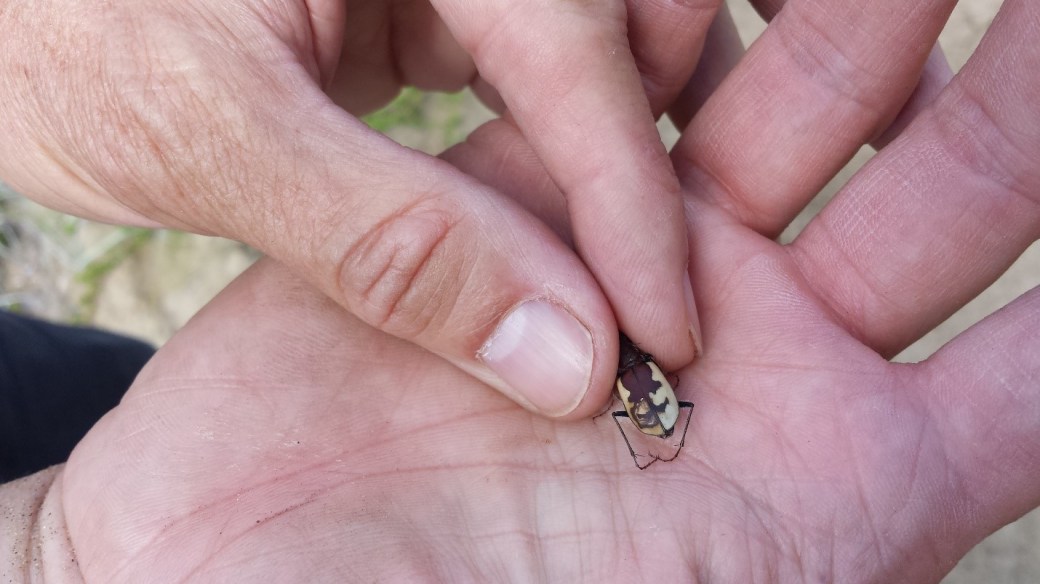
Between them Bob and Terry spotted three species of Tiger Beetles: Big Sand Tiger Beetle (Cicindela formosa), Blowout Tiger Beetle (Cicindela lengi), and Punctured Tiger Beetle (Cicindela punctulata). Known for their distinct, colourful patterns and fast speed, tiger beetles are a treat to watch as they appear to almost float across the ground. The first two species are generally associated with very sandy, loose soils that the beetles burrow into. The third species is not restricted to sand, and occurs on dry, open ground, often along packed trails (like the cattle trails these were found on).

RN02

Big Sand Tiger Beetle. The odd discolouration on this individual makes it look like a burn mark, how or why this occurs is unknown. (Photo by ©NCC)

Terry also spotted the aptly named sandhill or sand dune ant Formica bradleyi. This species is only observed in loose, very sandy soil, generally where the vegetation is somewhat sparse. This brightly coloured ant can be distinguished from other similar-looking red ants you may find in sandy areas by their very aggressive behaviour. This species will swarm and attack when disturbed, while the other species will scatter and run off.


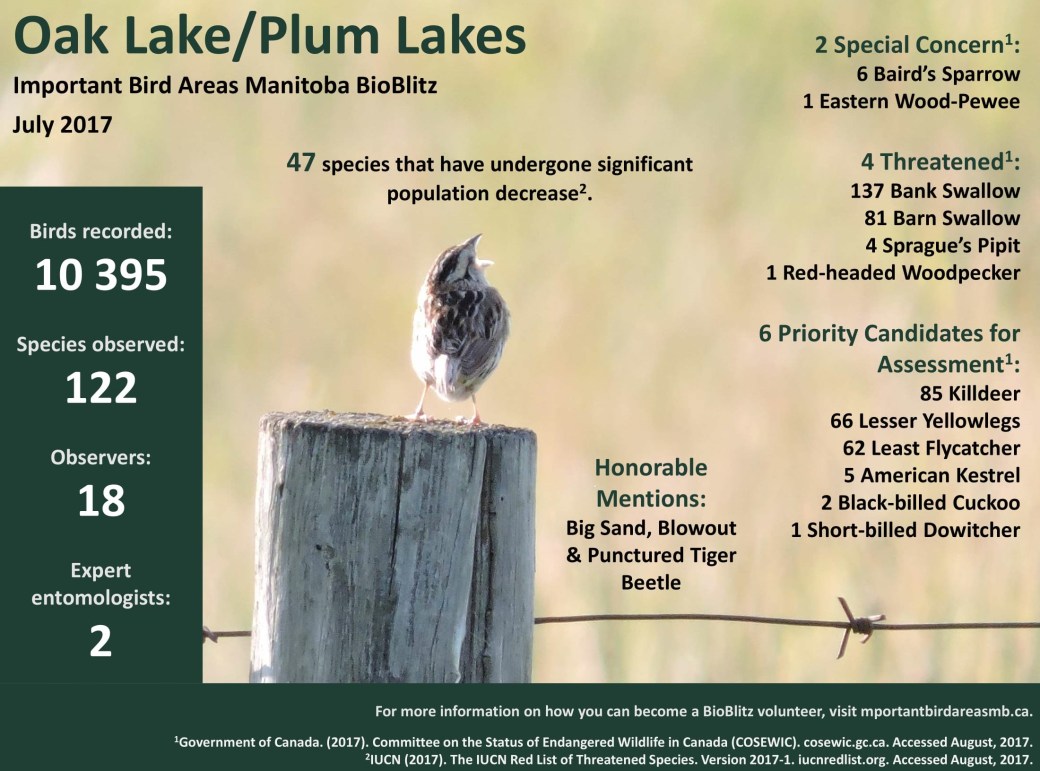
Take a look at the highlights from our July Oak Lake/Plum Lakes BioBlitz and total count:

OAKLAKEjuly2017-1

OAKLAKE-Table-july2017.pdf.jpg

Cherry Point Evening Bird Walk – July 14, 2017 (Part 2 – Birds & beetles)

by Patricia Rosa

Following our birding adventure in Whitewater Lake IBA (part 1), we joined a group of nature enthusiasts at the Legion Hall in the town of Oak Lake for a talk by Dr. Robert Wrigley. He introduces us to the diverse and colourful world of Tiger Beetles and their reliance on appropriate sandhill habitat such as Manitoba’s Routledge Sandhills.

DSCN2975

Cherry Point Evening Bird Walk ©Patricia Rosa

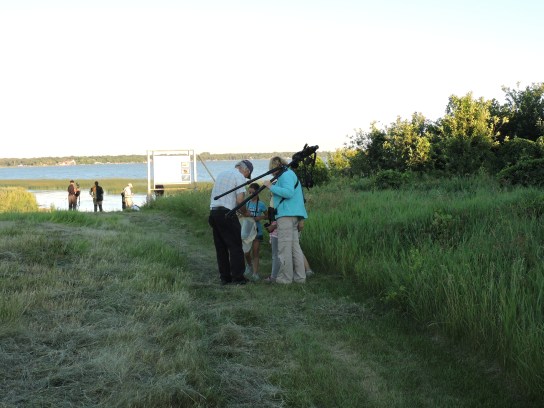
Once we arrived at Cherry Point, Robert Wrigley was ready with his net, Tim and Christian set up their scopes, and the kids were eager to learn and see new things!

DSCN2978

©Patricia Rosa

The water was speckled with a ton of bobbing white spots (642 to be precise). Tim explained to the young naturalists that these were Franklin’s Gull, and they attempted to count them in his scope. Overhead, Northern Rough-winged Swallow were flying around. Cedar Waxwing and a couple Baltimore Oriole were also seen.

Lynnea went on a solo expedition around the area and reported seeing or hearing Least and Great Crested Flycatcher, and American Redstart. Eastern and Western Kingbird particularly captivated the kids! As the kingbirds flew around the site, they were ready with their binoculars in hopes of getting a glimpse.

BirdWalk-FRGUjuv

Captivated by a juvenile Franklin’s Gull ©Patricia Rosa

The kids were not the only ones excited about all the birds present at Cherry Point that evening. An Orchard Oriole was heard, and Bonnie was eager to get her first OROR-sighting of the year! Which she did!

DSCN2990

Glennis and Lynnea focused on a female Baltimore Oriole ©Patricia Rosa

Although we were initially worried that bird diversity would be low at such a late hour in the day, we were pleasantly surprised! Over the course of this short 60-min walk, we observed 35 different bird species, and managed to captivate the interest of potential future IBA advocates!


Take a look at our evening Bird Walk count on Cherry Point Educational Nature Trail situated in the Oak Lake/Plum Lakes IBA:

TABLES-July 14, 2017

Whitewater Lake IBA – July 14, 2017 (Part 1 – Grebe water dances & namesake compliance)

by Patricia Rosa

On a sunny Friday morning, Bonnie, Christian, Lynnea, Tim and I left Winnipeg for the Whitewater Lake IBA (MB015). As the official observation transcriber for this crew of top birders, my hand got quite the workout! Nothing could have prepared me for the large number of flocks and surprises we encountered throughout the day.

On the way to Whitewater Lake, we made a pit stop in St. Claude as Dickcissel were rumoured to be in the area (or to be less ambiguous, Christan knew they were there!). While Christian put me to shame with this amazing picture of a male Dickcissel mid-tune, I was never able to get the timing right and only managed to capture its derrière (#birderproblems)!

Dickcissel_9005_m_singing_Artuso

Dickcissel ©Christian Artuso

Once in the IBA, we witnessed large flocks of shorebirds, grebes, and ducks in our survey area. The shorebirds were incredibly prominent and diverse! One particular flock of Short-billed Dowitcher counted 440 individuals (total of 710 observed throughout the day!) with one juvenile Long-billed Dowitcher hidden among them. We encountered a variety of sandpipers including 240 Stilt, 21 Least and Pectoral, 13 Semipalmated, and one lonesome Baird’s. The Marbled Godwit’s cackling laugh and American Avocet’s high-pitched kweet-ing was heard throughout the day which reflected in our final count of 143 and 165 respectively.

AMAV-MAGO

Heads down, feeding time! ©Patricia Rosa

We were quite entertained by this Cattle Egret, standing on cattle. This would not be the last egret of the day!  We were delighted to see three Snowy Egret and 24 Great Egret.

CAEGonCow

Cattle Egret on a cow ©Patricia Rosa

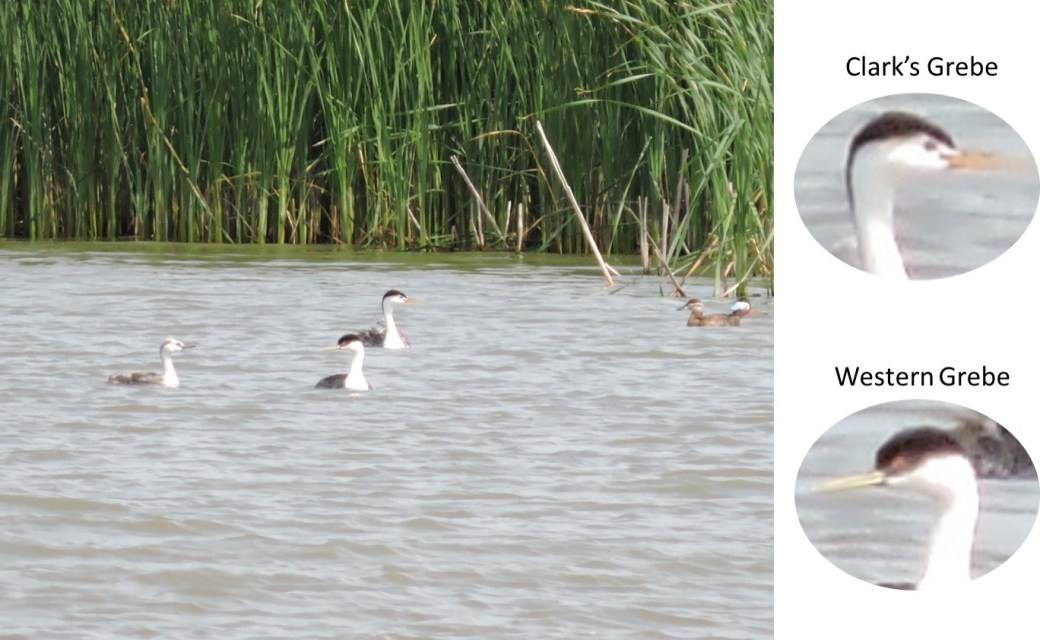
Oh, the grebes! Western, Eared, Red-necked, Pied-billed and even a Clark’s! They were certainly present at Whitewater Lake, with their young in tow. During the excitement of getting a count of the large mixed-flocks, Christian was able to spot a Clark’s Grebe, seemingly paired with a Western Grebe, and their hybrid young. Although very similar to Western, Clark’s Grebe does not have black around the eye and has a brighter yellow bill (see image below for side by side comparison).

EAGR01

Eared Grebe with young ©Patricia Rosa

Clark's Grebe_9113_ad_juv_Artuso

Clark’s Grebe and juvenile ©Christian Artuso

Identification GREBES

Clark’s and Western Grebe. Can you spot the Ruddy Duck? ©Patricia Rosa


Debated finding:

Several research groups have found that grebes may be the flamingo’s closest living relative despite their dissimilar appearance and life-history traits (e.g. Chubb 2004; Ericson et al. 2006; Hackett et al. 2008). This finding has been the subject of debate and criticism (e.g. Livezey 2010). What do you think?


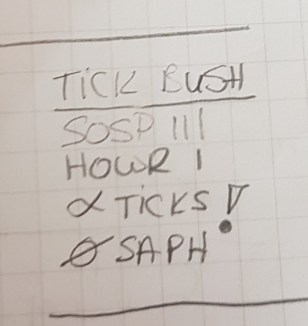
We decided to make one last stop before heading to Oak Lake in what is now designated the Tick Bush. Christian and Lynnea warned us that the walk to get to where they had previously seen a Say’s Phoebe would result in us being covered by ticks. A few ticks do not scare avid birders such as ourselves, and so, we headed towards the site. Not only did we not see the Say’s Phoebe, but Tim and I ended up sprinting towards the vehicles to get out of the tick-infested grass as soon as humanly possible! See detailed field notes below:

TickBushNotes

Observations for “Tick Bush” ©Patricia Rosa

After a pleasant afternoon in Whitewater Lake (and not so pleasant adventure in the Tick Bush), our day was far from over! We headed to Oak Lake’s Legion Hall to learn about Tiger Beetles from the great expert Dr. Robert Wrigley, followed by an evening Bird Walk on Cherry Point Educational Nature Trail. Stay tuned for part 2!


Take a look at our July count from this Whitewater Lake IBA survey:

tables-july-14-2017.png


LITERATURE CITED:

Chubb, A. L. (2004). New nuclear evidence for the oldest divergence among neognath birds: the phylogenetic utility of ZENK (i). Molecular Phylogenetics and Evolution30, 140-151.

Ericson, P. G., Anderson, C. L., Britton, T., Elzanowski, A., Johansson, U. S., Källersjö, M., et al. (2006). Diversification of Neoaves: integration of molecular sequence data and fossils. Biology Letters2, 543-547.

Hackett, S. J., Kimball, R. T., Reddy, S., Bowie, R. C., Braun, E. L., Braun, M. J., et al. (2008). A phylogenomic study of birds reveals their evolutionary history. Science320, 1763-1768.

Livezey, B. C. (2011). Grebes and flamingos: standards of evidence, adjudication of disputes, and societal politics in avian systematics. Cladistics27, 391-401.

Second Weed Pull at Riverton Sandy Bar IBA

Joanne Smith has sent the following message relating to a follow-up weed pull at Riverton Sandy Bar IBA on August 17th. We had a very successful morning out there in 2016 and are committed to keeping this habitat work going. See here for the 2016 story.
Here is the email:
Hi Everyone,

We hope you can come join us on Thursday August 17th for another morning of pulling weeds at IBA Riverton Sandy Bar.

Our September 30th, 2016 weed pull was a success with fourteen people helping pull sweet clover from an area of the main sand bar. We hope that having a weed free area will help to attract possible future piping plover to the Sandy Bar area. It has been well over twenty years since piping plover last nested in this area but with your help we hope to change this.

We’ll meet at 9:00 am at the parking area and then take the 15 minute walk out to the sandbar area together. We hope to pull weeds (which will most likely involve some birding) for three or four hours, depending on the weather. If you can even help for an hour or two, it would be greatly appreciated.

Please bring gloves, hat, sunscreen, water and a bag lunch. The walk out to the sandbar also involves a short distance through thick willows so it’s best to bring long pants and a jacket for that part.

Of course we’ll also probably be keeping our eyes open for early fall migrants.A few birds from an August 12th, 2016 visit gave us numerous species including:

– semipalmated plover
– stilt sandpiper
– sanderling
– red-necked phalarope
– semipalmated sandpiper
– Baird’s sandpiper

And chances are, there’ll be homemade muffins and a few other goodies to boost our energy.

Directions: take HWY 8 to Riverton, and then turn east on PR329 which goes through Riverton. This will take you directly to Sandy Bar.

Hope to see you there.
Joanne Smith
​If you are interested in attending please email us at iba@naturemanitoba.ca

North, West & East Shoal Lakes – July 11, 2017

by Patricia Rosa

On a stormy Tuesday morning, Tim and I ventured out to the North, West & East Shoal Lakes IBA (MB038). Since our plans in another IBA fell through, we decided to direct our efforts towards the Interlake region in hopes of spotting Red-headed Woodpecker and Least Bittern. Despite the less than ideal weather, we saw a “good number of pelicans”, “okay number of herons”, and were surprised at the “lack of ducks” (Tim Poole, pers. comm.).

MAP-ShoalLakes-edited2

We were off to a great start as the rain (thankfully) subsided once we arrived to the IBA and were greeted by a Great Egret near the side of the road.

Great Egret ©Patricia Rosa

Great Egret ©Patricia Rosa

East Shoal Lake was buzzing! We encountered an agitated male Bobolink and were soon able to see the source of all the excitement. A nearby female seemed to be the target audience of this one-man show. Unfortunately, another male showed up (left) and although our performer (right) was definitely more motivated than his rival, she remained close to the cool and collected male, and sure enough, they ended up flying off together!

BOBO01

Agitated male Bobolink attempting to impress the female ©Patricia Rosa

DSCN2663

Two male and one female Bobolink ©Patricia Rosa

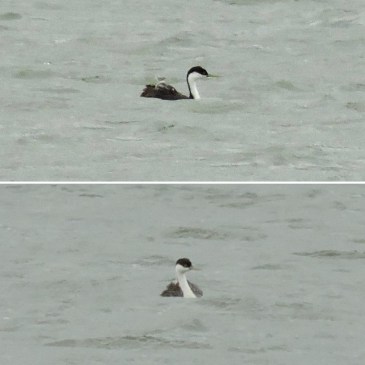
In the field beyond where the BOBO-show was taking place, we got a peek at Sandhill Crane and Great Blue Heron. On the water, we saw lots of Western Grebe, including this brave one carrying young on its back in rough waters. Although getting this grainy shot induced quite a bit of nausea, I was rather proud to have out-photoed Tim on this one (Patricia 1, Tim 0)!

SACR01

Great Blue Heron ©Patricia Rosa

IMG_20170716_124934

Grainy images of Western Grebe carrying young on back. ©Patricia Rosa

The strong winds allowed us to witness and admire the prowess of the Black Tern.

IMG_20170716_130655

Black Tern in action. ©Patricia Rosa

When we came around to suitable Red-headed Woodpecker habitat (e.g. open understorey, standing deadwood, often with cattle grazing), we almost immediately saw two individuals. After several minutes, a bold one flew directly towards us! We had our cameras ready but were too frazzled/excited to get a good picture of it in-flight and both ended up with blurry background pictures (Patricia 0, Tim 0). However, he did stick around and proceeded to pose for us around his habitat!


IMG_20170716_135740

Red-headed Woodpecker ©Patricia Rosa

My biggest disappointment of the day was failing to get an identifiable shot of a Red-necked Grebe. While I struggled, Tim effortlessly took a great picture (Patricia 0, Tim 1).


Last but not least, we saw a Least Bittern flush while scanning appropriate habitat. Although we were ready and hoping to see one, both Tim and I missed our shot despite getting a good long look (Patricia 0, Tim 0).

ImageMissing.jpg

Towards the end of our survey, the wind started picking up and the skies started rumbling once again, and so, we headed back to Winnipeg (Final tally: Patricia 1, Tim 1).


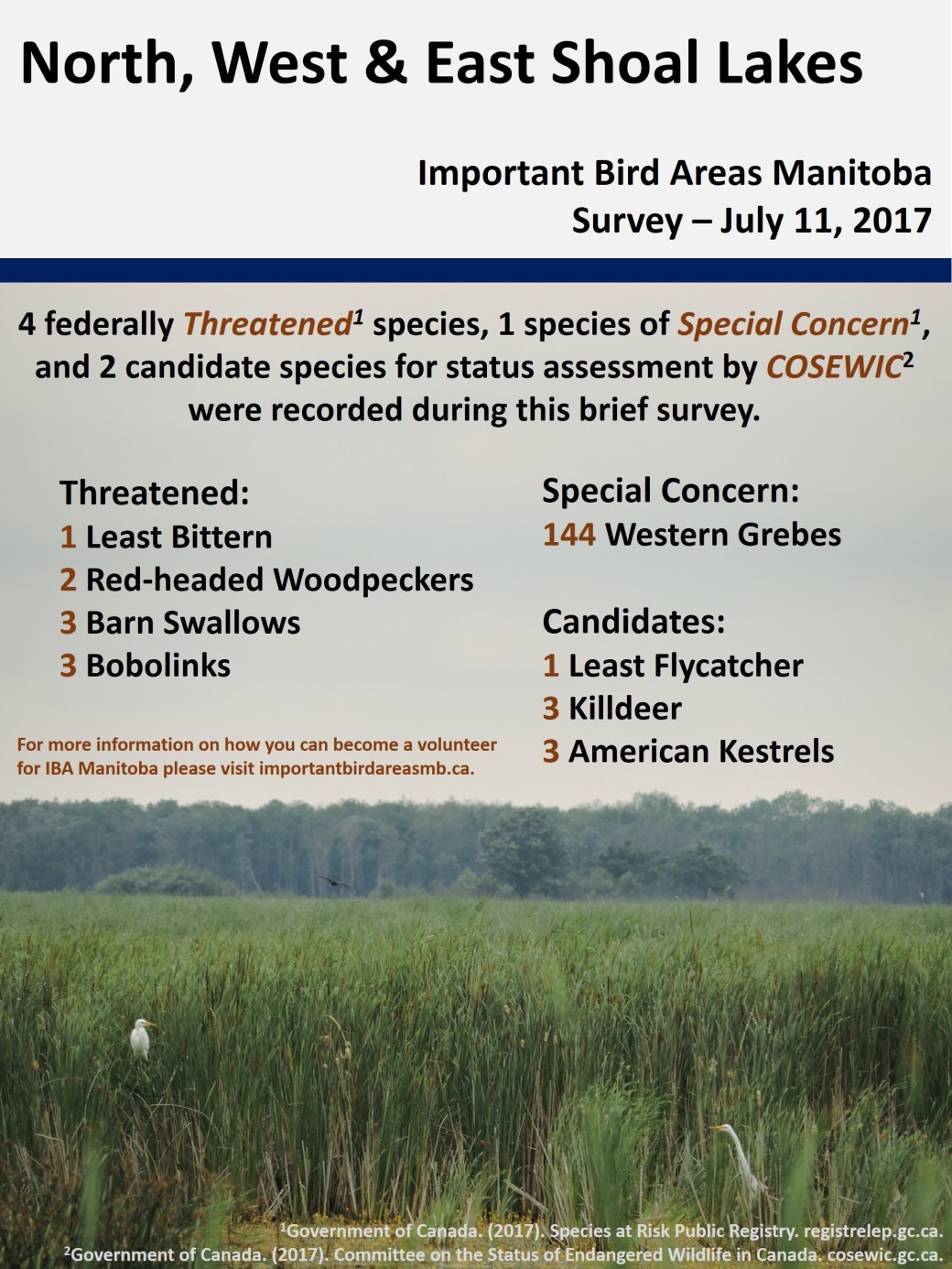
Check out the highlights of our brief survey in this IBA and our total count!


ShoalLakes-INFOGRAPHIC


Table-ListShoalLakes

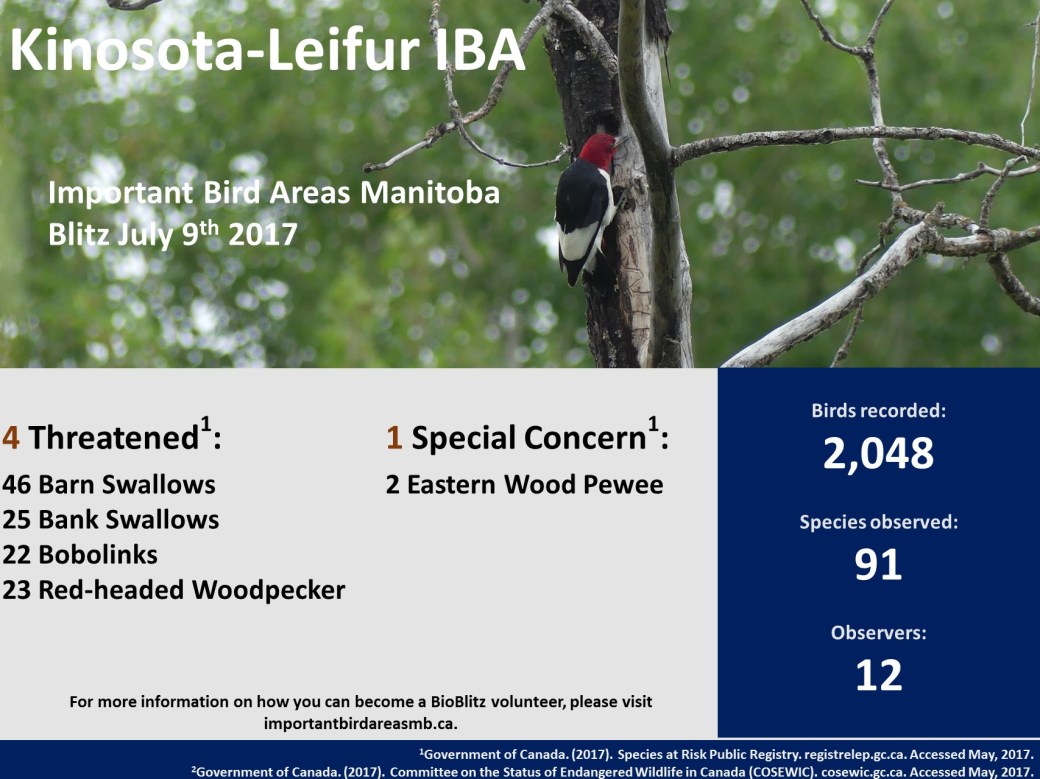
Kinosota-Leifur – The Red-headed Woodpecker Blitz Results

On July 9th, a group of people descended on the relatively unknown Kinosota-Leifur Important Bird Area from as far afield as Portage la Prairie, Winnipeg, Birds Hill and Brandon. Our goal was to locate and count the globally Near Threatened Red-headed Woodpecker, a Species At Risk and a stunning species to observe and enjoy.

The IBA at Kinosota-Leifur was the brainchild of Harry Harris who once worked at the Alonsa Conservation District. It was Harry who put together the IBA information and had estimated that at least 50 pairs were present in this area. Since 1995 though, apart from some atlassing, no one had, as far as we know, tried to do a comprehensive count of this species in this area.

P1030812.JPG

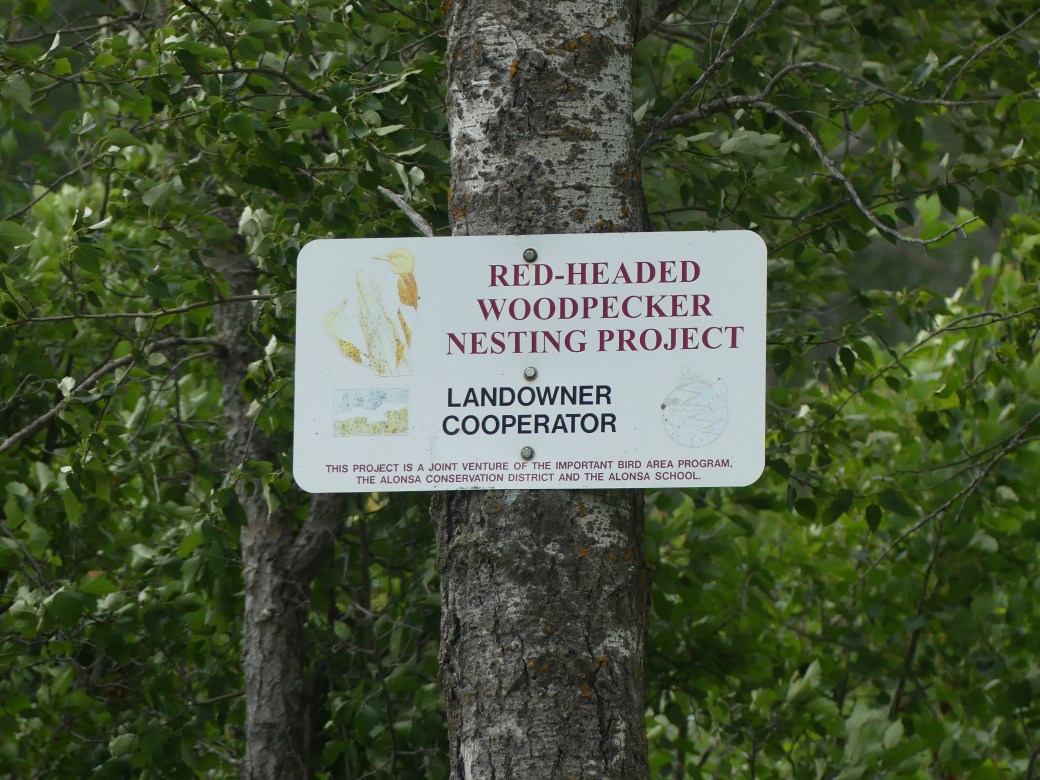
There is still evidence of previous efforts to conserve the Red-headed Woodpecker. Copyright Tim Poole

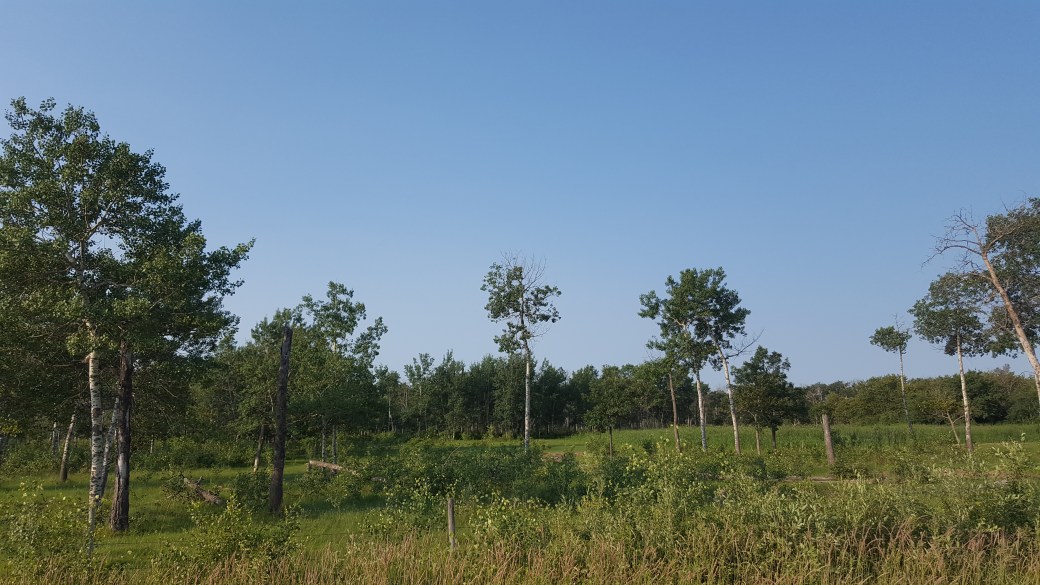
Red-headed Woodpeckers are a species with an interesting habitat preference. They prefer open stands of aspen with plenty of deadwood and snags for cavities. The vegetation must be short and lack dense shrubs, hence they are often present in open woodlots with cattle or horses. The dead trees must all be fairly large, around 25cm diameter at chest height (the technical term is DBH or Diameter at Breast Height).

20170709_081023.jpg

Typical Red-headed Woodpecker habitat in the IBA. Copyright Sabina Mastrolonardo

This is a migratory species in Manitoba, wintering in the United States and returning to breed in deciduous woodlands in the centre of the continent in spring. There are also resident breeding populations in southeastern USA and southern Ontario.

Data from Breeding Bird Surveys suggest that this species has suffered a marked decline of over 65.5% in a 40 year period. According to Birdlife International, this species decline is due to:

‘Habitat degradation, as a result of the removal of dead trees and branches in urban areas (Pulich 1988), and loss of nesting habitat to firewood cutting, clear cutting, agricultural development and river channelling in rural areas (Ehrlich et al. 1992, Melcher 1998).’

As to the blitz, we really did not know what to expect. An article placed in the Neepawa Banner in the days before had managed to drum  up some interest, mainly from people form the wider area letting us know where Red-headed Woodpeckers might be discovered. We had developed a protocol which included periods of listening and playback for woodpeckers and hoped this would be sufficient even as we stepped into the unknown.

Twelve volunteers embarked on this exploration and we split into 4 groups. The search areas were split into a core area, highlighted in red and an extension area which took in areas to the west of the main highway. This second area turned out to be much wetter than expected and it was to the core area we would focus.

Presentation1.gif

In the north, around Kinosota itself we had a team of Louanne, Margaret, Millie and Bill. This group turned out to be the group with the least luck – not a single Red-headed Woodpecker around Kinosota strangely. They did find some suitable habitat – one spot was especially good. On a positive note, they did get two Pileated Woodpecker, always a cracking species to find. Even more remarkable was an overhead White-faced Ibis, something more likely to pop up at Whitewater or Oak Lake. The comments from Louanne were as follows:

‘Margaret, Millie, Bill and I made 23 protocol stops during the Kinosota-Leifur IBA Blitz in search of Red-headed Woodpeckers. Most of the ‘core’ area and a little of the ‘extended’ area of Group/Zone A, were covered. Our effort began under sunny skies but after just over an hour, a cold wind brought in threatening clouds which led to rain, hampering our efforts though sunny skies did return. All observations were made from inside or a short distance from the vehicle.’

20170709_091916.jpg

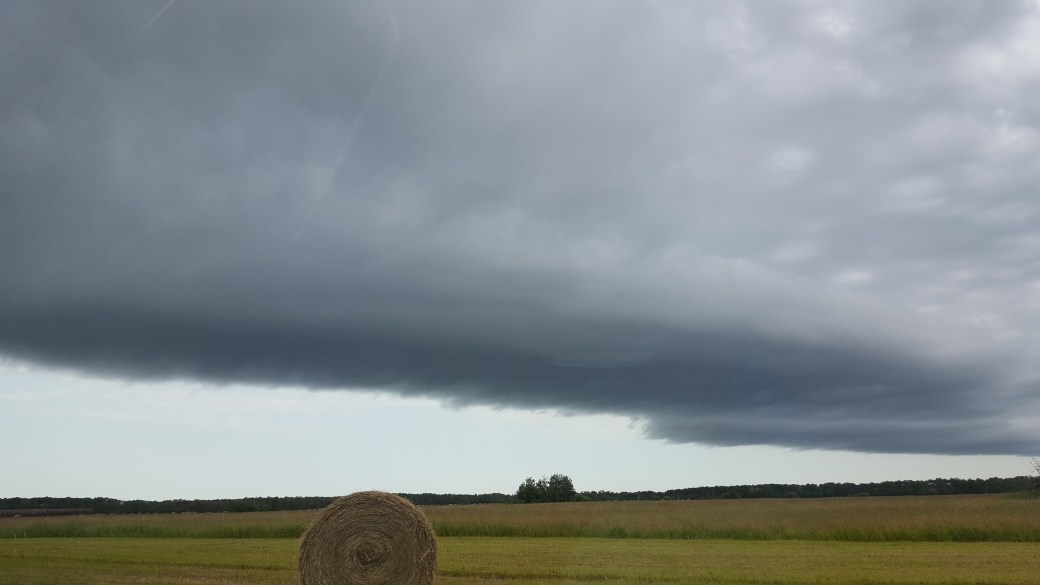
Dark clouds on the horizon. Copyright Sabina Mastrolonardo

The period of windy weather midway through the morning was especially difficult for hearing birds and the second group consisting of Eric, Carrie-Anne and Tim actually revisited suitable habitat which had scored zero woodpeckers first time – scoring a few extra Red-headed Woodpeckers in the process.

P1030835.JPG

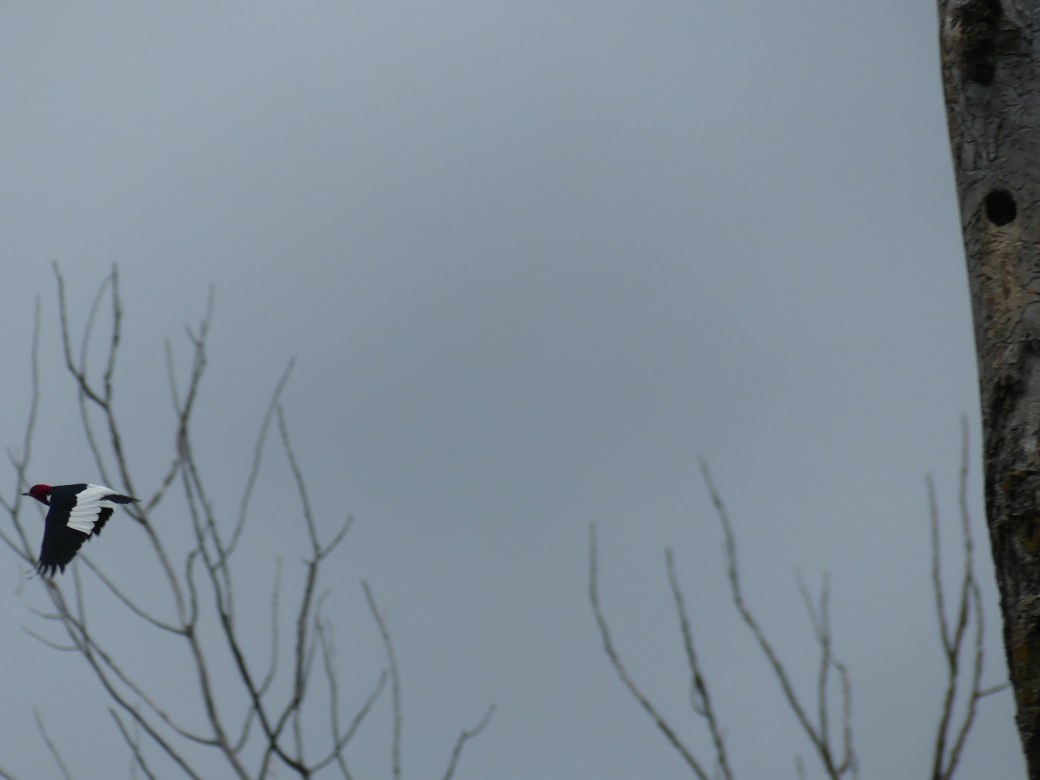
Red-headed Woodpecker flying away under dark skies. Copyright Tim Poole

This group found 11 individual Red-headed Woodpeckers, the most of any group. Interestingly they also scored their first one in Amaranth en route, on a telephone pole. Other species of note included a calling Scarlet Tanager and Black-billed Cuckoo.


All photos copyright Tim Poole

South again and our next group included Wally Jansen, Katharine Schulz and Sabina Mastrolonardo. They recorded 8 Red-headed Woodpeckers in a central area between Silver Ridge and Bluff Creek. A nice little patch of habitat. Other highlights included 6 species of flycatcher, 3 of which were another Species At Risk, the Eastern Wood Pewee, and 10 Bobolink. Interestingly, 10 Bobolink might also point towards issues for the Red-headed Woodpecker, if suitable woodland has been felled and replaced with hayland.

Finally, Garry and John surveyed the southern area, detecting 2 Red-headed Woodpeckers, interestingly the furthest west of the survey. They also grabbed a pair in the group to the norths area thanks to a tip off from a friendly farmer. The other highlight was that of finding a Great Gray Owl, not common in this type of habitat in July.

63075431

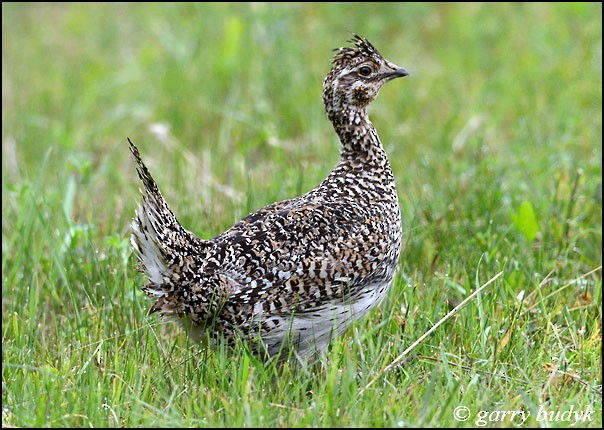
Sharp-tailed Grouse in the Kinosota-Leifur IBA. Copyright Garry Budyk

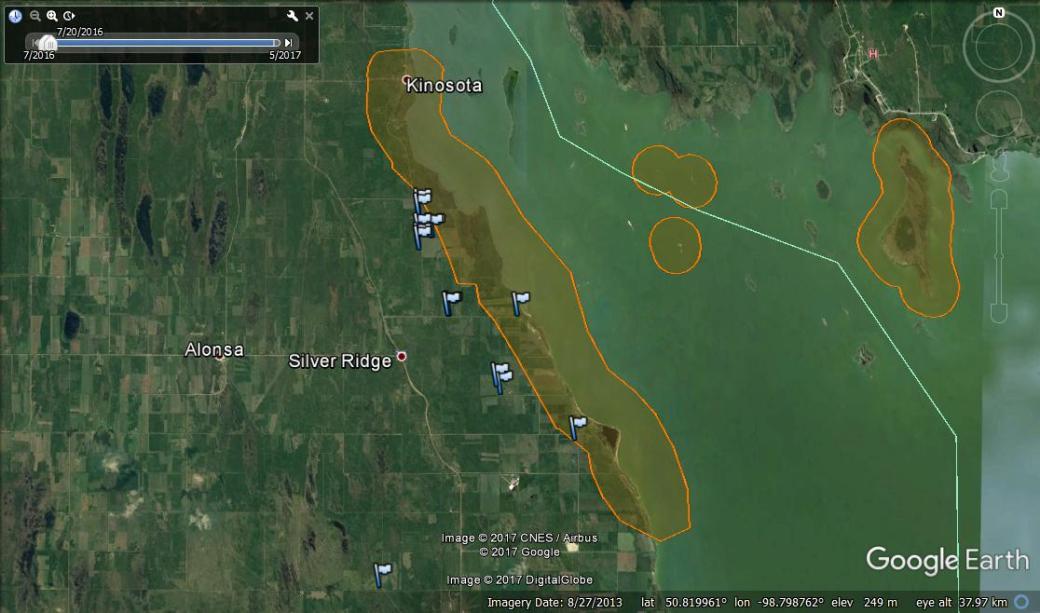
This gave us a total of 23 Red-headed Woodpeckers for the morning. not bad, but not a patch on the 50 pairs found historically. The next challenge is to try to work out whether we were missing a lot of woodpeckers or whether land-use changes in the 25 or so years since the IBA was put together have led to a large loss in habitat. Hopefully there will be more to come on this in the future. Below is the distribution of Red-headed Woodpeckers mapped. As can be seen, the current boundary is not correct and will be changed to reflect these results.

K-L IBA Blitz RHWO.jpg

A summary of all species can be seen below. In total there were 91 species and 2048 individual birds counted, still pretty good and comparable figures to other blitzes. Ring-billed Gulls were numerous as were wetland songbirds such as Sedge Wren, Common Yellowthroat and Song Sparrow.

KL infographic.jpg

Mallard 14
Sharp-tailed Grouse 2
Double-crested Cormorant 3
American White Pelican 15
Great Blue Heron 2
Great Egret 1
White-faced Ibis 1
Turkey Vulture 3
Northern Harrier 5
Sharp-shinned Hawk 1
Cooper’s Hawk 1
Bald Eagle 6
Broad-winged Hawk 1
Red-tailed Hawk 9
Sandhill Crane 5
Killdeer 13
Marbled Godwit 1
Wilson’s Snipe 27
Franklin’s Gull 16
Ring-billed Gull 291
Herring Gull 2
gull sp. 32
Rock Pigeon 15
Mourning Dove 19
Black-billed Cuckoo 2
Great Gray Owl 1
Ruby-throated Hummingbird 3
Belted Kingfisher 1
Red-headed Woodpecker 23
Yellow-bellied Sapsucker 7
Downy Woodpecker 6
Hairy Woodpecker 1
Northern Flicker 25
Pileated Woodpecker 2
American Kestrel 22
Merlin 3
Alder Flycatcher 3
Least Flycatcher

Eastern Wood Pewee

64

2

Eastern Phoebe 7
Great Crested Flycatcher 6
Eastern Kingbird 23
Warbling Vireo 27
Red-eyed Vireo 51
Gray Jay 1
Blue Jay 6
Black-billed Magpie 9
American Crow 48
Common Raven 26
Purple Martin 16
Tree Swallow 13
Bank Swallow 25
Barn Swallow 46
Cliff Swallow 12
Black-capped Chickadee 12
House Wren 25
Sedge Wren 39
Marsh Wren 13
Eastern Bluebird 3
Veery 16
American Robin 70
Gray Catbird 32
Brown Thrasher 2
European Starling 43
Cedar Waxwing 32
Ovenbird 7
Black-and-white Warbler 2
Common Yellowthroat 76
American Redstart 7
Yellow Warbler 86
Chestnut-sided Warbler 3
Yellow-rumped Warbler 2
Le Conte’s Sparrow 15
Clay-colored Sparrow 76
White-throated Sparrow 10
Vesper Sparrow 4
Savannah Sparrow 63
Song Sparrow 103
Swamp Sparrow 16
Scarlet Tanager 1
Bobolink 22
Red-winged Blackbird 140
Western Meadowlark 25
Yellow-headed Blackbird 15
Brewer’s Blackbird 42
Common Grackle 10
Brown-headed Cowbird 12
Baltimore Oriole 8
Purple Finch 14
American Goldfinch 33
House Sparrow 5