Manitoba IBA Program Coordinator, Tim Poole attended a workshop on shorebird identification, ecology and conservation in Chaplin, Saskatchewan. The workshop was organised by the Manomet Shorebird Recovery Program, Chaplin Nature Centre and Nature Saskatchewan. Rather than give a very long blow by blow account of a three day workshop, here are some thoughts and images based on a number of topical issues raised over the 3 days.
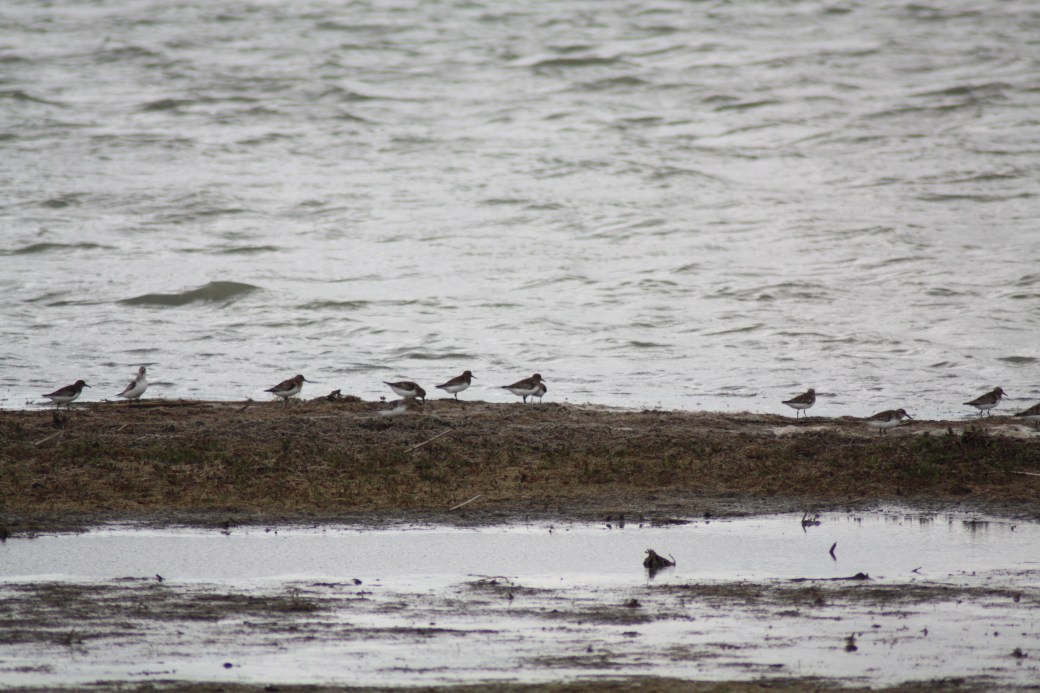
Sanderling at Reed Lake IBA. Photo copyright Tim Poole
Saskatchewan has some excellent places for birds
Whisper is quietly, but some of those IBAs in Saskatchewan are pretty good for birds. In fact, Chaplin Lake and Reed Lake are (begrudgingly) impressive (;
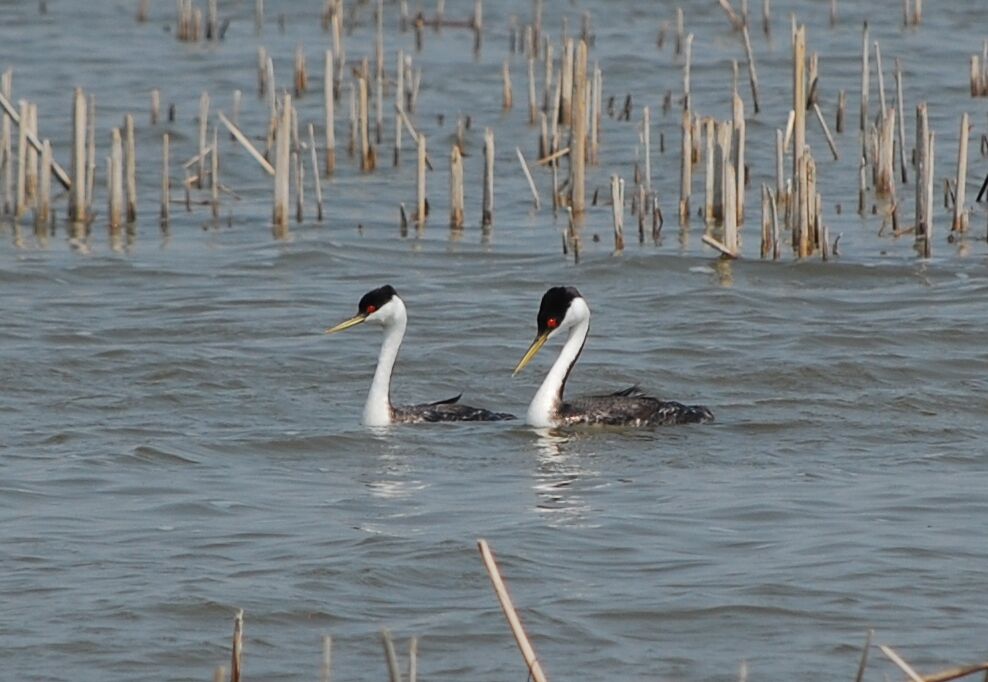
A visit to Reed Lake with Caretaker Lori Wilson on the first afternoon provided views of a few Arctic shorebirds still fattening up, including Red Knot, Sanderling, Ruddy Turnstone, Black-bellied Plover, Semipalmated Sandpiper and Semipalmated Plover. The first 3 species were especially pleasing, given I had not seen any of them since leaving Scotland over 2 years ago. We also spotted prairie breeding birds, Wilson’s Phalarope, Marbled Godwit, Killdeer and Willet. In addition, large congregations of breeding gulls and terns and Canvasback were breeding on an island in the lake and Eared Grebe and Western Grebe were plentiful. This gave us the first opportunity to test out our shorebird identification.
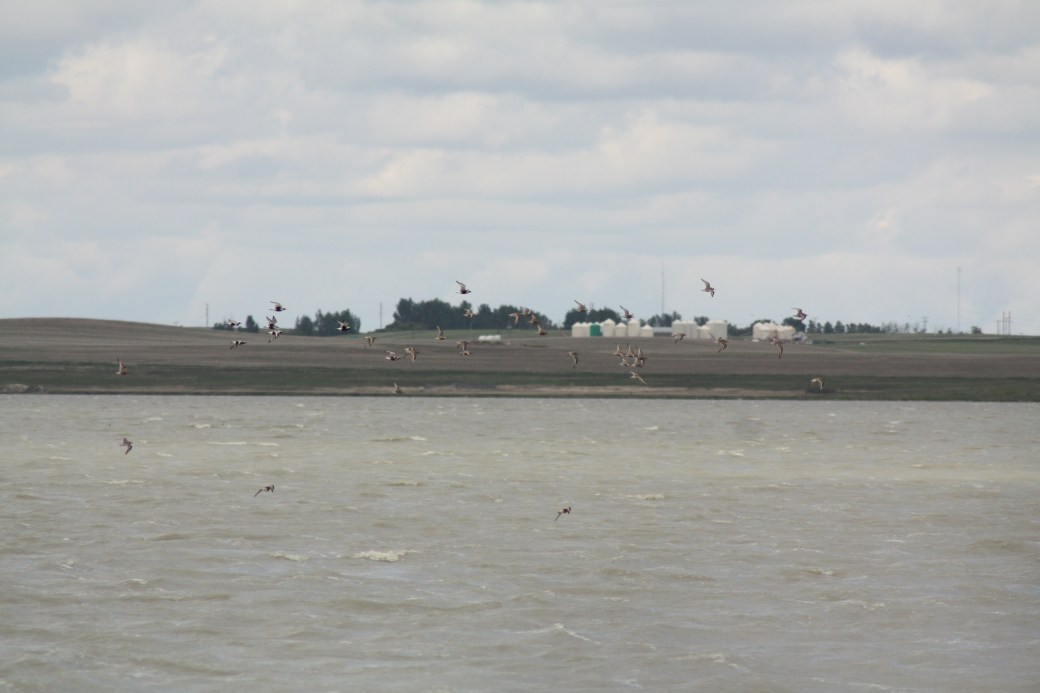
Look closely and you can make out Red Knots and Black-bellied Plover in this photo. Photo copyright Tim Poole

Red Knots at Reed Lake IBA. Photo copyright Tim Poole
On the way back we stopped to look for Cinnamon Teal at a place called Uren (stop tittering). This area of wetland and native prairie is situated in a rather inconvenient location between the eastboudn and westbound parts of the TransCanada. On this occasion we missed out on the teal but lucked out on Black-necked Stilts. This species appears to be expanding its range into Canada, including recent sightings at Whitewater Lake IBA. There were also Baird’s Sparrow and Grasshopper Sparrow calling.

Black-necked Stilt (deliberately overexposed) at Uren with Red-winged Blackbird behind. Note the long legs. Apparently this species has the longest legs in relation to its body size of any bird bar flamingos. Photo copyright Tim Poole
On the second full day we visited Chaplin Lake IBA. Chaplin Lake is highly saline, so high in fact, it is the location of a mine from Saskatchewan Mining and Minerals. The mining operations have had a positive impact on shorebird populations by creating divisions, each of which is flooded with low depth brine water, ideal feeding habitat. The wider area on the Missouri Coteau is the driest part of the province. Chestnut-collared Longspur and Upland Sandpiper were present on the native prairie. The saline mudflats provided habitat for upwards of 5000 Sanderling, and at peak times, apparently half the worlds population of this species. There were also typical prairie shorebirds, a single Dowitcher (too distant for species i.d.) and my personal highlight, Piping Plovers (more on those later). Early June was beyond peak migration for Arctic shorebirds but still, 5000+ Sanderling is not to be sniffed at!
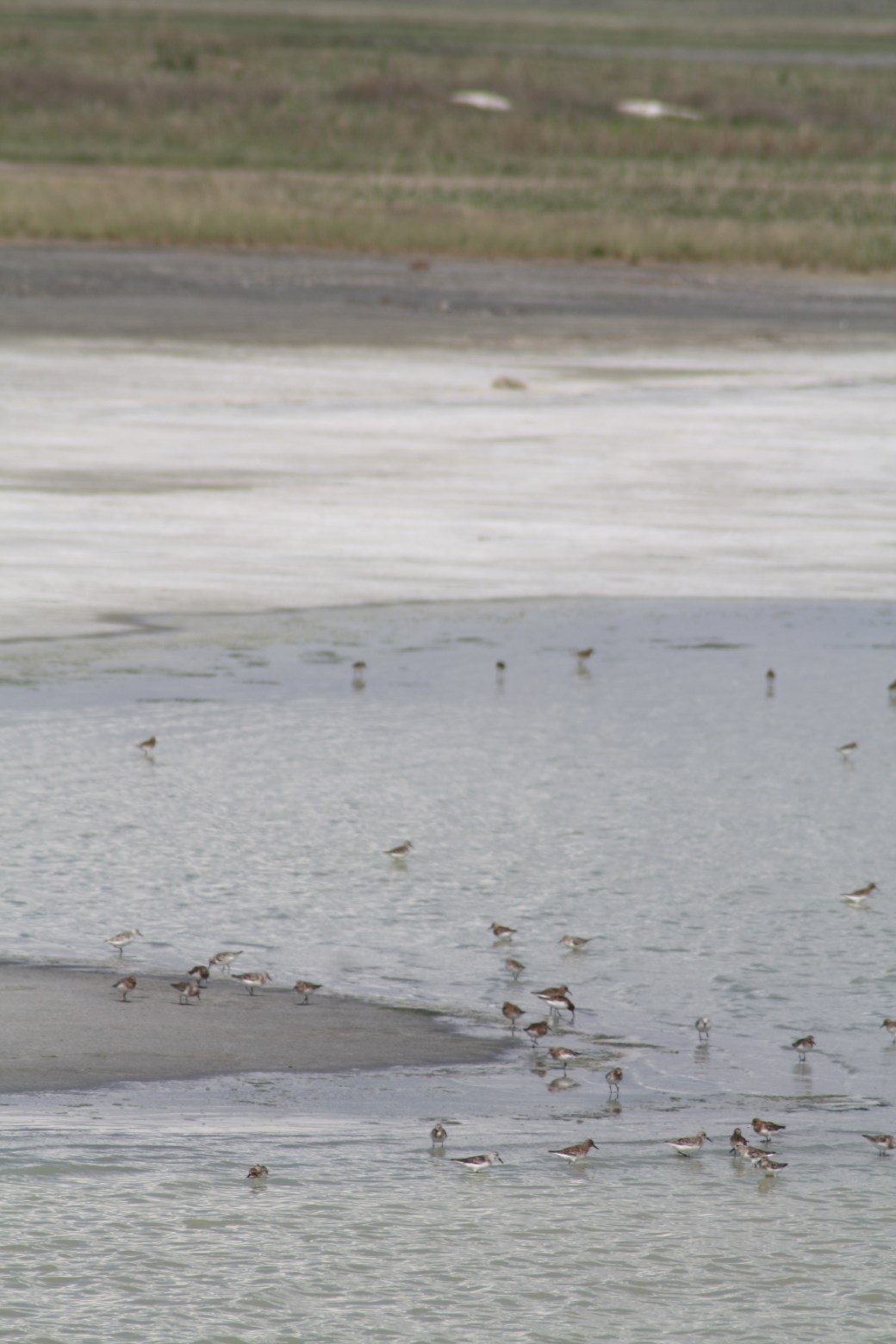
Groups of Sanderling at Chaplin Lake. Photo copyright Tim Poole

The grasslands at Chaplin Lake appeared to be worth further exploration, if only we had more time. Photo copyright Tim Poole
Modern technology is changing our view of shorebird migration
There are 54 species of shorebird in North America, with 74 subpopulations across North America. The traditional view was that shorebirds, and other birds for that matter, follow particular migratory flyways. For example, a shorebird wintering on the California coast would winter in Alaska and a shorebird on the Atlantic shore in the eastern Canadian Arctic. New technology is increasingly revealing that migration of shorebirds is not as simple as that. For example, Marbled Godwits fitted with satellite tags on their wintering grounds on the Georgia coast have been found to migrate to the prairies of North and South Dakota. Concurrently, those wintering in the Gulf of California are breeding in eastern Canada and those wintering in Mexico are breeding in western USA and Canada. Effectively, shorebirds are crossing the entire continent on migration.

Look carefully and you can see the Chaplin Motus radio transmitter on the top of this grain eleveator. Photo copyright Tim Poole
Ongoing research by Christy Morrisey and her team from the University of Saskatchewan is using nanotags to explore Sanderling migratory patterns at Chaplin Lake. These nanotags connect to the Motus Wildlife Tracking System developed and managed by Bird Studies Canada. Motus operates via radio signals which are transmitted to towers at convenient locations, including 3 in Chaplin. The receivers are being put up across North America and into South America, increasing our knowledge of different migratory birds. The great thing about Motus is that anyone can use the system and all the data is sent to Bird Studies Canada for processing at a very reasonable fee. Even better, if you manage your own towers, then the fee is waived – it really is about building up our understanding of bird migration. This particular project is looking at movements of Sanderling in relation to a proposed windfarm project and exploring the potential impact of renewable energy on migratory shorebirds.
Shorebirds are in Peril
This to most people who know about birds is probably an unsurprising statement but is’s worth reiterating. Shorebirds appear to be in real trouble. The just published State of North America’s Birds, 2016 includes the statistic that North American shorebirds have declined by 70% since 1973. This is certainly not an issue confined to North America. North American shorebirds, especially species such as Red Knot, Buff-breasted Sandpiper and White-rumped Sandpiper which breed in the High Arctic, often winter in South America. Outside of the Americas, shorebird declines may be even worse. The world’s most threatened shorebird, the Spoonbilled Sandpiper, breeds in northeastern Russia and winters in an area around Myanmar, Thailand and Bangladesh, occasionally sharing parts of its flyway with some shorebirds from the Pacific Flyway in eastern Asia. In 2015, the IUCN updated its Red List and unfortunately upgraded 8 species of shorebirds (for a Manitoba perspective, see here).
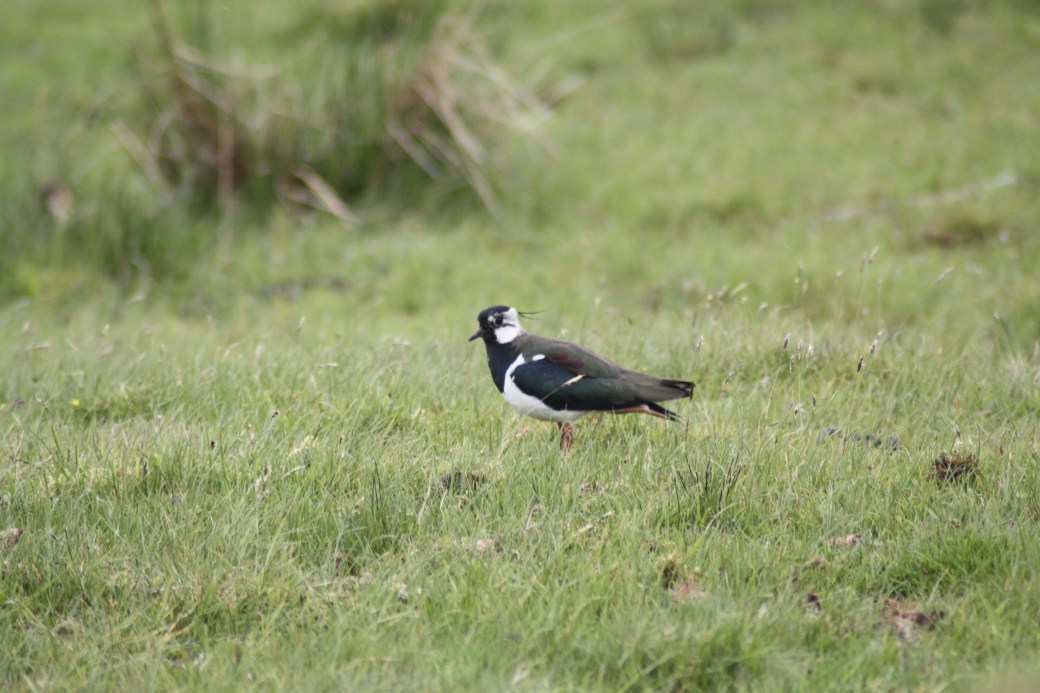
Northern Lapwings are declining in Europe due to agricultural changes and were added to the IUCN Red List in 2015. Photo copyright Tim Poole
The reasons for these declines are many and complicated, involving multiple issues at multiple sites and multiple countries. Some of the factors include::
- Loss of wetlands (5% of US prairie wetlands remain, and those that do are highly fragmented)
- Degrading of coastal inlets
- Unregulated hunting, mainly in Central and South America and the Caribbean (Lesser Yellowlegs in the Lesser Antilles was highlighted as an example)
- Disturbance, including by dogs
- Energy extraction, oil spills, etc
- Climate change which is shifting when different animals breed. A particular example being that cranefly, the primary food for Eurasian Golden Plover chicks in Scotland, are dying due to increased temperatures. This leads to fewer emergent craneflies for the chicks to feed on, increasing chick mortality and reducing population size.
- Environmental pollutants which might impact on body condition and therefore the ability of birds to migrate
We are dealing with migratory birds wintering often in different continents to the one they breed. Inevitably this leads us to a situation where shorebirds are reliant on a network of important sites for wintering, staging and breeding, a concept which sounds somewhat familiar!
Western Hemisphere Shorebird Reserve Network
This network currently covers 95 sites across the Americas and an area of 34 million hectares. Each reserve is identified for its hemispheric, international or regional importance. Saskatchewan currently has 3 sites, including Chaplin/Old Wives/Reed Lakes as a single reserve, whereas Manitoba does not have one. Should Manitoba have a WHSRN? In my view, and a few others, Whitewater Lake would certainly challenge the criteria. The challenge is that we would need to put together an application with good solid data (which is coming together thanks mainly to Colin and Gillian, our caretakers) and community involvement. Anyway, for any interested readers, here is some more information.
Atlantic Flyway Shorebird Initiative
Brad Winn of Manomet spoke briefly about the Atlantic Flyway Shorebird Initiative, a collaborative approach to shorebird management across the flyway from South America to northeastern Canada. As someone who has written management plans and conservation frameworks previously, what interested me about this approach was not so much the international cooperation of which this is obviously a great example, but the approach to actually realising their goal via the Atlantic Flyway Shorebird Initiative Business Plan. If you click on the link, you will see that the plan is not only extremely well targeted, with very clear goals and outlines, it also is specifically aimed at funders from the business community. It includes SMART goals (Specific, Measurable, Achievable, Realistic, Time-bound) and budgets for a 10 year program. Funding (more of that in a bit) is always the pinch-point for conservation projects and therefore this approach certainly has huge merit. Could Manitoba contribute to a Central Flyway Shorebird Initiative and what would our priorities be? Maybe we haven’t heard the last of this.
Piping Plover International Census
We have blogged on this before! It is important to look out for any Piping Plovers. unfortunately here in Manitoba, water levels are still pretty high. Christian Artuso did see some areas with potential for Piping Plovers around Red Deer Point and I guess there must be some more saline mudflats around Lake Winnipegosis. So keep your eyes and ears open and maybe Manitoba will be able to add something to this important body of work. in terms of stewardship, Rebecca Magnus of Nature Saskatchewan gave an interesting presentation on the Plovers on Shore Program, which highlights the importance of landowners to delivery of conservation of shorebirds.
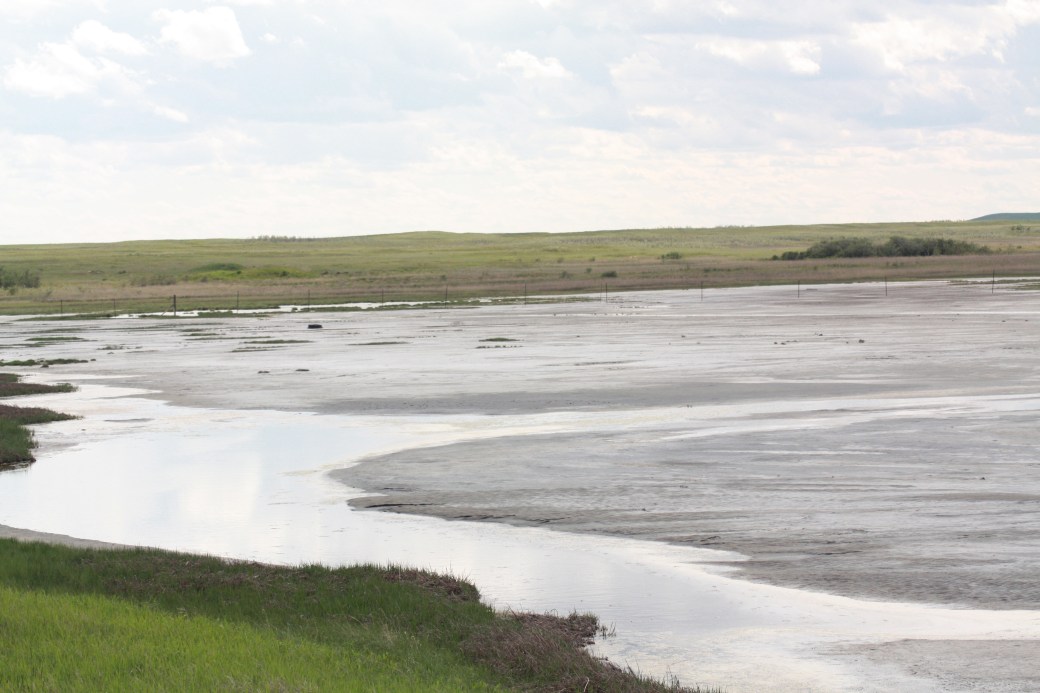
Saline mudflats like this at Chaplin Lake are ideal for Piping Plover. Photo copyright Tim Poole
Shorebird Monitoring
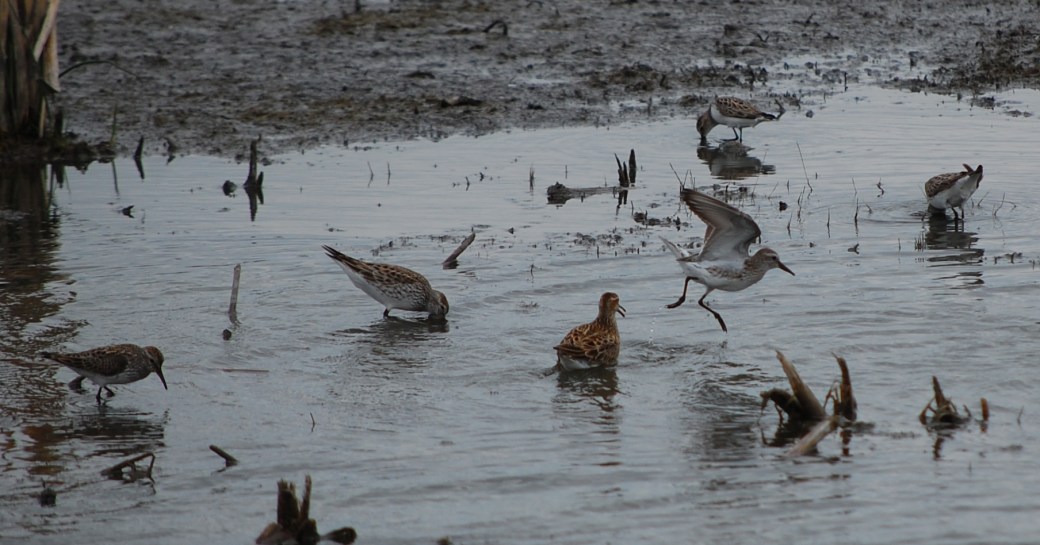
As the IBA Program is only too aware, without updated population information, it is very difficult to determine population trends of species at site and population levels. Most of our knowledge of shorebird trends comes form aerial surveys carried out in the past. This is one of the benefits of the Caretaker Program. Manitoba has some very good shorebird sites but apart from a few in southern Manitoba, I would argue that monitoring is limited. Even on those that we do get in to monitor, we are often unable to cover the entire site in a single day, or our access is limited to certain areas. This is the reason for undertaking blitzes at places like Whitewater Lake. We also have long-term monitoring at a number of IBAs in southern and central Manitoba, which will hopefully begin to build up a picture of shorebird trends over time. There is more to be done though. The northern IBAs, apart from Churchill receive no monitoring and there is surely more to be done at Churchill itself. Below I have pasted some data from the Southwestern Manitoba Mixed-Grass Prairie IBA collected along 2 stretches of road east of Melita by Christian Artuso and me. I have included this to show that the many ephemeral wetlands of the IBA, of which there are many, are full of feeding, resting shorebirds. Ok, numbers are not in the thousands, but there are many more ephemeral wetlands across that region and literally no one is checking them for shorebirds.
|
East of Melita (4km) |
Blind Souris (7.5km) |
TOTAL |
| American Avocet |
0 |
4 |
4 |
| American Golden-Plover |
2 |
0 |
2 |
| Semipalmated Plover |
3 |
0 |
3 |
| Killdeer |
27 |
23 |
50 |
| Solitary Sandpiper |
|
1 |
1 |
| Greater Yellowlegs |
2 |
2 |
4 |
| Willet |
19 |
4 |
23 |
| Lesser Yellowlegs |
4 |
11 |
15 |
| Upland Sandpiper |
0 |
1 |
1 |
| Stilt Sandpiper |
3 |
2 |
5 |
| Baird’s Sandpiper |
14 |
3 |
17 |
| Least Sandpiper |
17 |
1 |
18 |
| Pectoral Sandpiper |
11 |
58 |
69 |
| Semipalmated Sandpiper |
2 |
2 |
4 |
| Short-billed Dowitcher |
10 |
0 |
10 |
| Long-billed Dowitcher |
5 |
0 |
5 |
| Short-billed/Long-billed Dowitcher |
135 |
0 |
135 |
| Wilson’s Snipe |
1 |
0 |
1 |
| Wilson’s Phalarope |
2 |
0 |
2 |
| Red-necked Phalarope |
4 |
2 |
6 |
| TOTAL |
261 |
114 |
375 |
Shorebirds respond to management
This is the good news. There is plenty of evidence which demonstrates shorebird populations responding to conservation management, whether intentional or as part of wider habitat management. If habitat loss is seen as one the primary drivers of population decline then increasing the area and/or quality of habitat should at least have a mitigating effect. Understanding the ecology of shorebirds is critical in this including the provision of habitat for invertebrates, availability of gently sloping edges to wetlands and water depth (generally shorebirds prefer depths between 0-10cm). Periods of drawdown in artificial wetlands especially during migration will also encourage shorebirds to feed in particular wetlands. Most, but not all, shorebirds avoid shrubs which are known to harbour predators. These birds prefer open habitats and short vegetation around prairie wetlands. Conflict can also arise where people may recreate near shorebirds. Visitors to Grand Beach a few years back would have been familiar with this topic via fenced exclosures protecting Piping Plover nests. Although other factors may have had greater influence on Piping Plovers in Manitoba, this type of scheme has been successful in other parts of North America.
Linking Communities – Wetlands and Migratory Birds
This interesting program links wetlands in Mexico (Marismas Nacionales, Nayarit), USA (Great Salt Lake) and Canada (Chaplin and Quill Lakes). All the three wetland areas share three common conservation goals:
- Conservation
- Environmental Education
- Ecotourism
They also share many of the same shorebird species, are each a WHSRN and IBA and have similar economic, social and environmental needs. This program is a fantastic example the need to think big, cross-borders and cultures to work together for conservation across a continent.
Of course, Manitoba already has an example but with a twist, as Oak Hammock Marsh has been twinned with the Hula Valley in Israel. However the idea of linking the actual communities near major migratory hotspots across North, and possibly South America, does add a certain appeal.
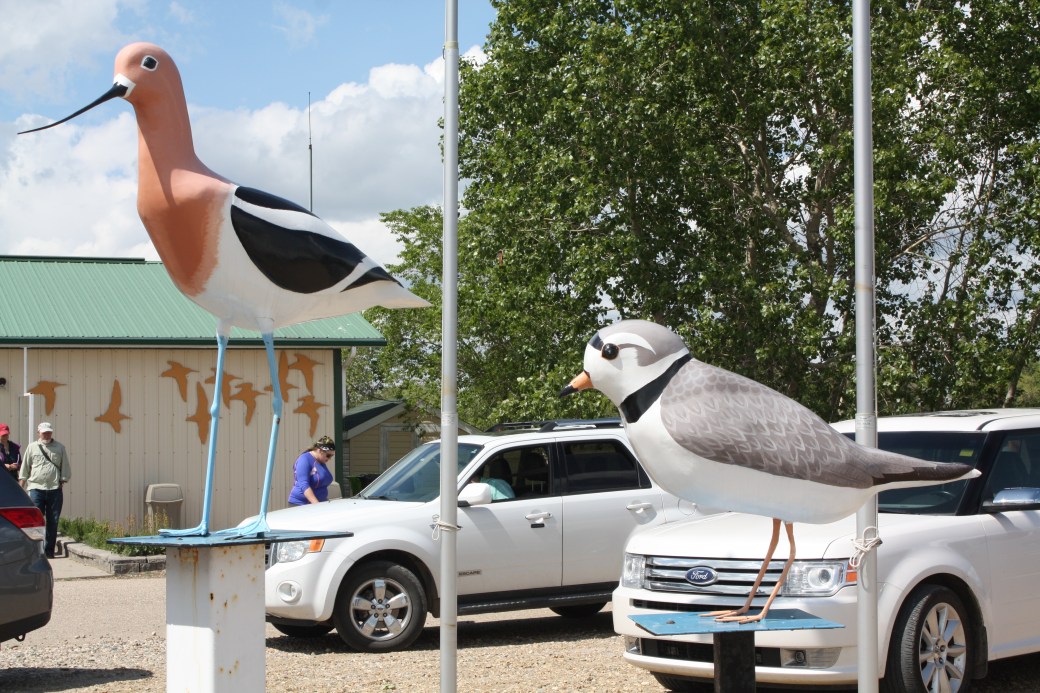
A Piping Plover and American Avocet outside the Chaplin Nature Centre. Photo Tim Poole
And thanks
Finally, I would like to thank the organisers who made this interesting and useful workshop happen, especially Manomet (Monica, Brad and Brian), Chaplin Nature Centre (Lori, Clem and a great team behind the scenes) and Nature Saskatchewan.
This event has struck a chord. Shorebirds have for me been a fun group to watch ever since I was asked to count wintering Northern Lapwing, Eurasian Golden Plover and Grey (Black-bellied) Plover during my period in France. Over 6 years in Scotland, the declines in shorebirds, especially breeding birds, was becoming an increasingly high priority. Many of the same issues appear to be impacting on these birds across continents. A number of our IBAs in Manitoba are important areas in the lifecycle of shorebirds. With populations continuing to decline across global and regional ranges, we in Manitoba need to consider shorebird conservation more than we may have done previously.
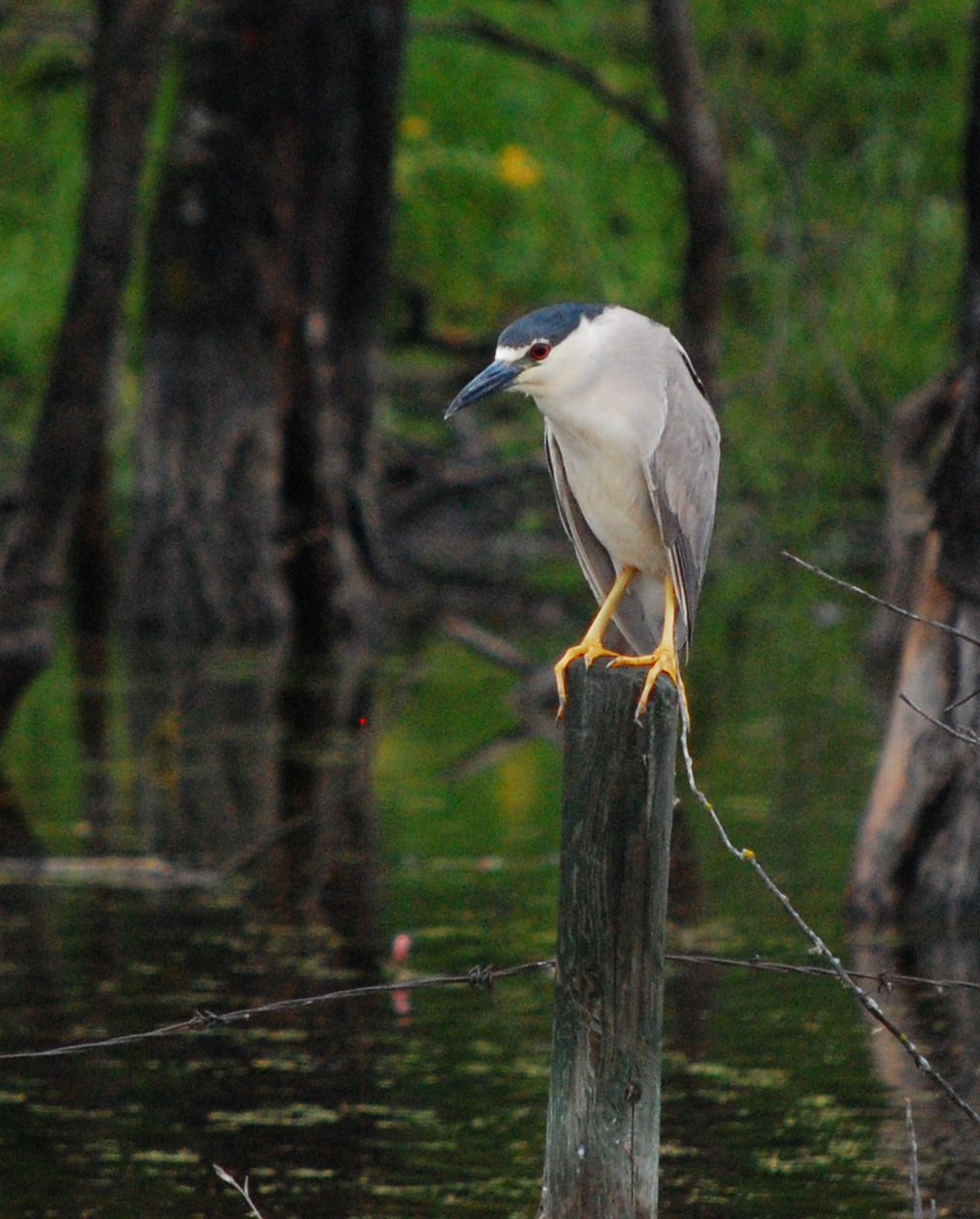









 Eared Grebes are the most widespread species of grebe in the world, being called Black-necked Grebe in Europe, and have an estimated North American population of 3.5-4.1 million individuals. They are also flightless for 9-10 months each year, the longest time period of any species capable of flight anywhere in the world. A gregarious species, Eared Grebe nest in noisy colonies. There were also American Avocet and Wilson’s Phalarope present, species which are presumably abundant across the wider IBA.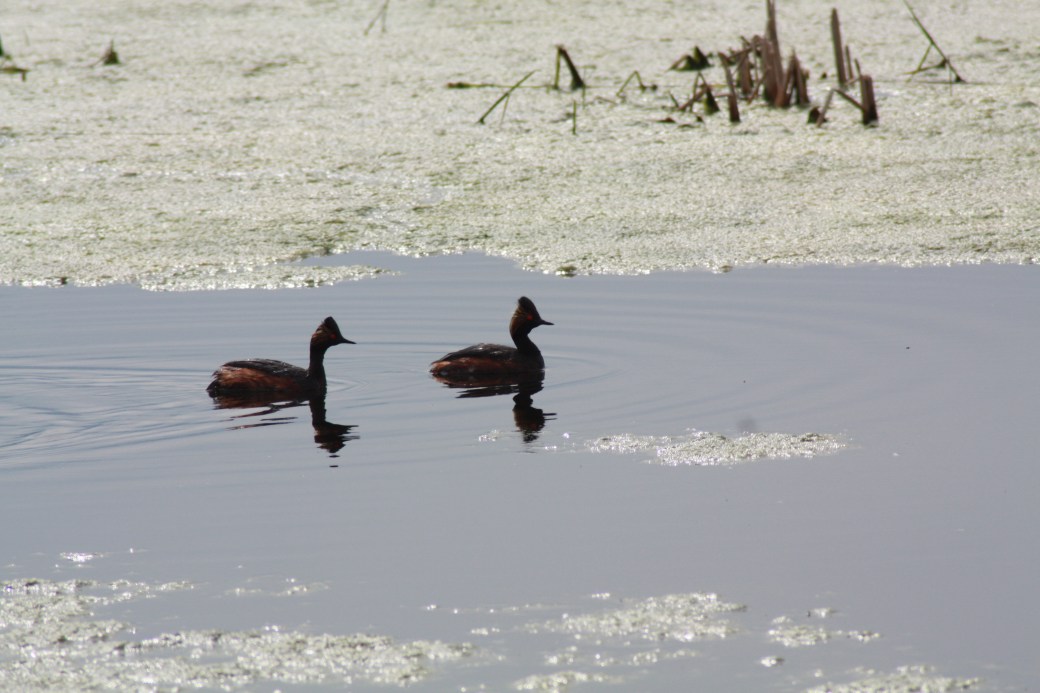
 Manitoba Important Bird Areas Program