Delta Marsh Blitz Day 2

Back to Delta on Monday morning and this time I’m if anything a little more dreary thanks to the 3am wake-up from my daughter. But the show goes on. A quick detour en-route to Marquette and the Buff-breasted Sandpipers appeared to have gone.

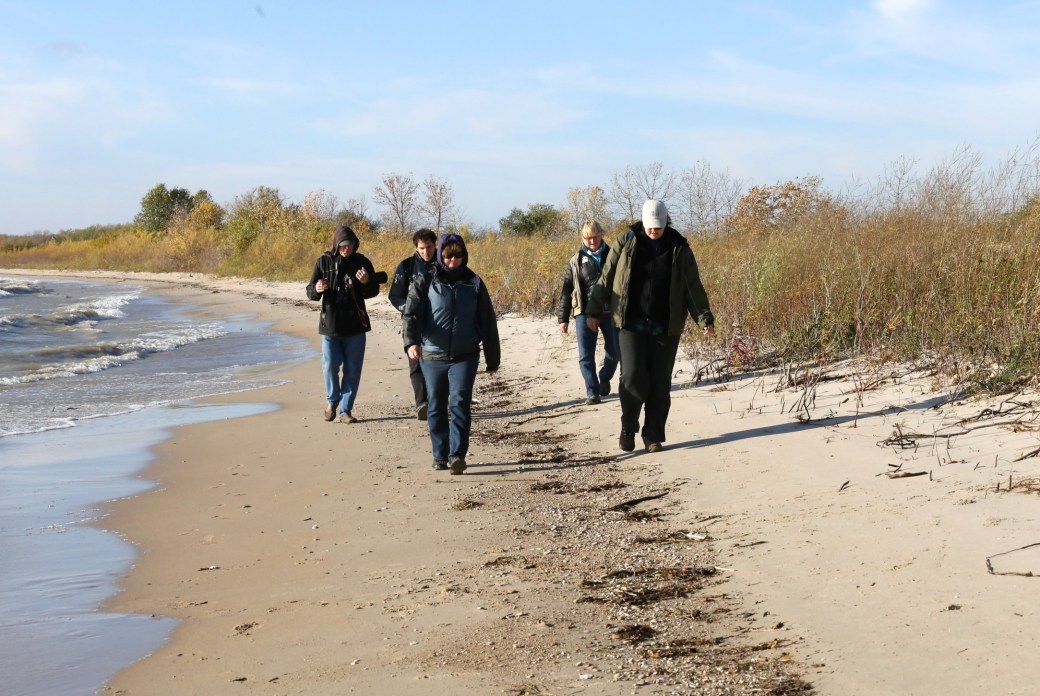
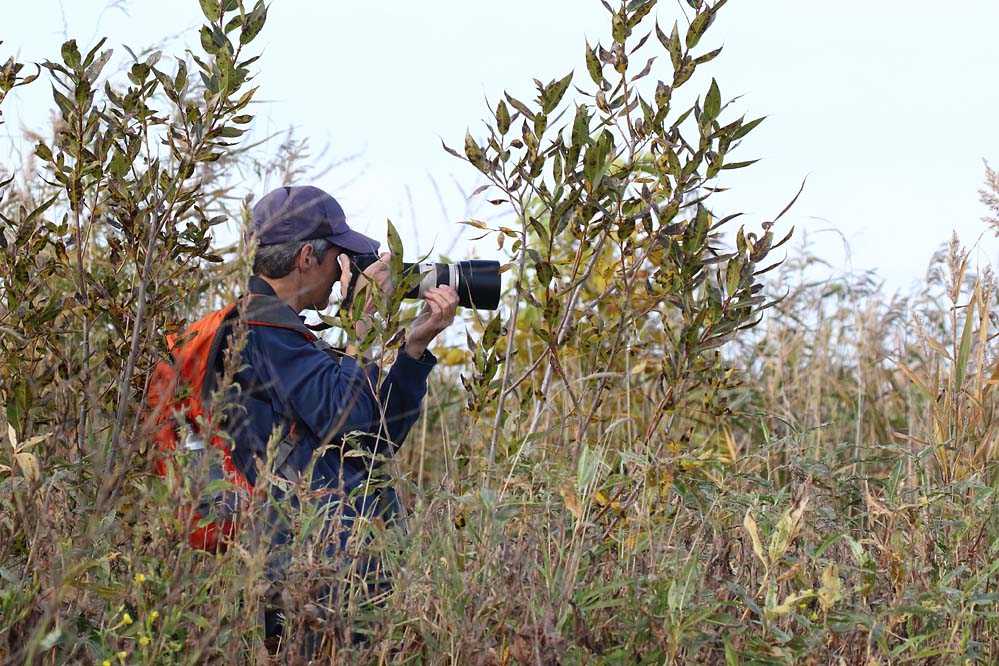
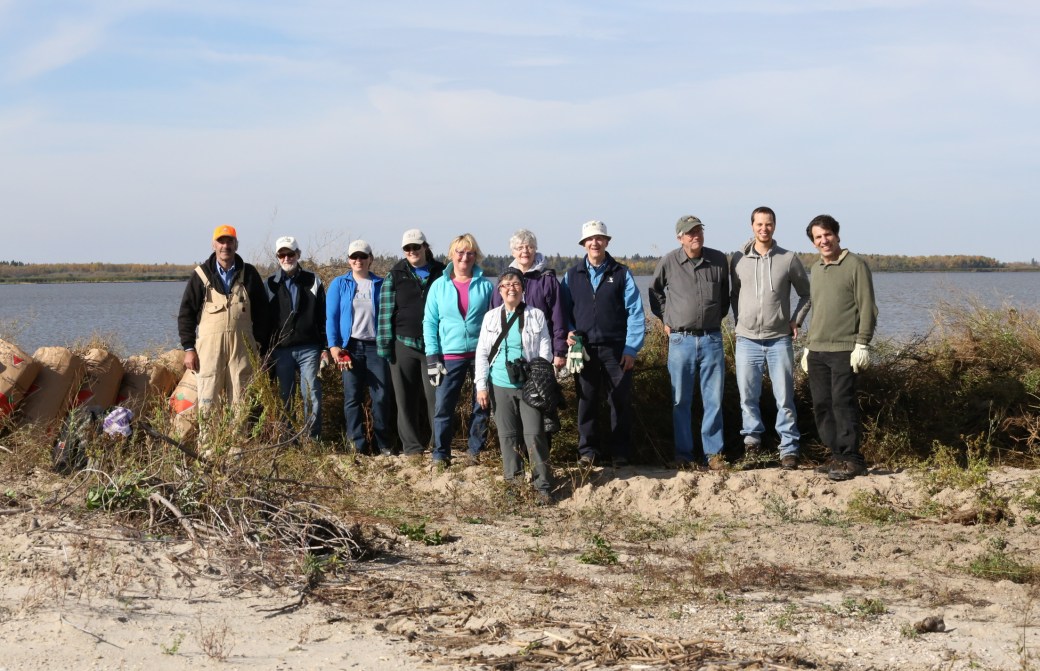
Arriving at the Delta Waterfowl Centre near Delta Beach, we got to watch a number of warblers on the ridge as we waited for people to arrive. Black-throated Green, Cape May, Magnolia, Orange-crowned, Tennessee, Blackpoll, Myrtle (I’m convinced) and American Redstart were all present. In addition to the road and foot patrols of Sunday, we had agreed to get two teams to survey the marsh interior on boats provided by Manitoba Sustainable Development. In addition to our excellent guides and boaters Matt Tower and Riley Bartel, we had Christian Artuso, Cal Cuthbert, Bonnie Chartier and Joanne Smith ready and willing to get their feet wet in the interest of bird conservation.
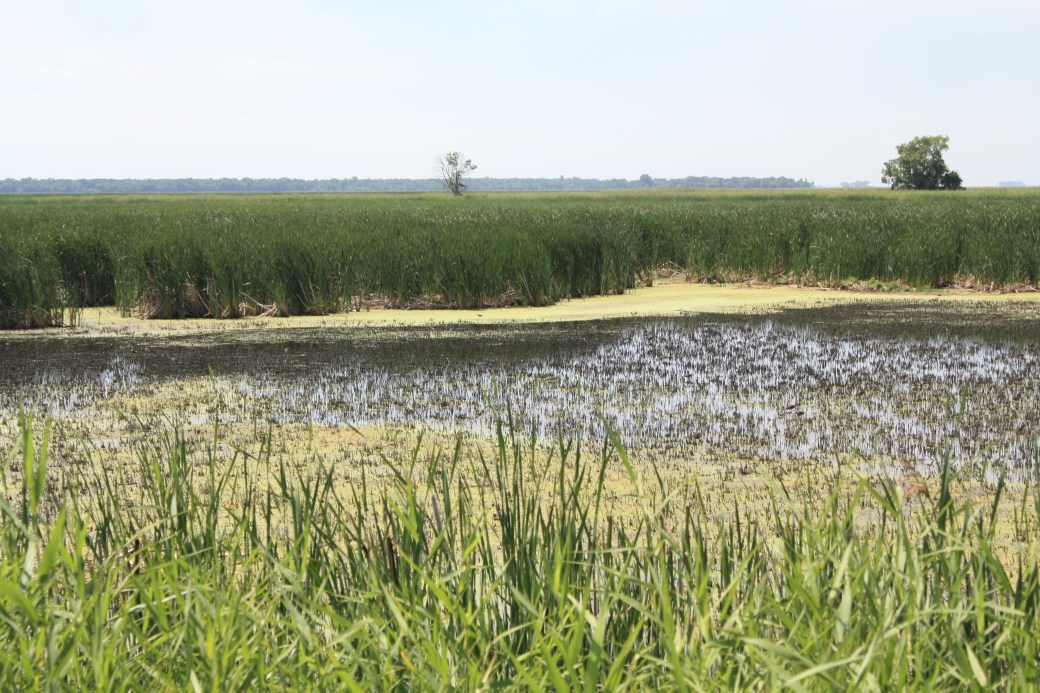
The interior of Delta Marsh, at least on the east of the access road to Delta Beach, consists of a series of channels and areas of open water interspersed with small islands and areas of cattail marsh. To survey this entire area in just 4 hours would not be possible, and with a focus on shorebirds and the wind coming from a north-westerly direction, it was only ever going to make sense monitoring the marsh along the northern bays. As mentioned in the previous blog, the focus of this shorebird monitoring were areas where the water levels had dropped sufficiently to expose cattails and the surrounding mud. This created a unique habitat of dead cattails and wet mud, ideal for foraging shorebirds. Again, as mentioned on the previous blog, the water levels dropped during August which may have reduced the area of available foraging habitat. This pattern was noticeable in some of the sheltered bays we accessed by boat and our guides confirmed that they had previously seen higher densities of shorebirds earlier in August.

We split into two boats, Riley taking Christian and Joanne and Matt taking Bonnie, Cal and myself. The first boat (group 1 on the below map) surveyed the northern edges of Simpson, Blackfox and Bay 22 and the second (group 2) focused on Clair, Gadwell, Waterhen and the surrounding areas.

Delta boat areas.jpg

Approximate monitoring areas. Map adapted from map on page 5 from the following link http://home.cc.umanitoba.ca/~ggoldsb/deltamarsh/occasional/02/op2.pdf

Surveying by boat possesses a number of unique challenges compared to land-based surveys, not least the challenge of watching birds through binoculars on moving water. Fortunately being on the sheltered side of the wetland, this was not a big issue. Another challenge is that a moving boat tends to flush and move birds which are either on the water or feeding close to the shore. This raised issues of double-counting. Interestingly, the shorebirds appeared to be the least jumpy birds on the day which was obviously good for us but pelicans on the otherhand do not appear to appreciate fast moving boats….

As with our previous blitz at Whitewater Lake, I came to the conclusion that we must have missed a peak of migrating shorebirds on this survey. The reports given by both Matt and Riley were of larger concentrations in the preceding weeks. This is one of the dangers of any monitoring program for migratory birds but alas there is little we can do apart from get ore boots on the ground across the season and hope to pick up the peaks and troughs of migratory bird movements. Overnight, the wind had turned from a southerly to a brisk northerly, the perfect conditions for shorebirds on the move. More on that later! The other identifiable difference was that much of the dead cattail habitat had dried out which probably reduced the availability of foraging habitat for shorebirds.

P1050005.JPG

Tipsy photo, we’ll blame the boat! But look carefully and it’s possible to see lots of exposed dry mud. Shorebirds could often be found at the edges where the mud was still damp. Copyright Tim Poole

While making our ways around the various headlands and through the channels, it became obvious that there were a large number of herons using the marsh interior, no surprises there. Our boat on the eastern side of the marsh recorded good numbers of Black-crowned Night Herons, 60 in total. There were also 97 Great Blue Herons. American Bittern and Great Egret were also present, plus over 2000 American Coot.

1-img_0598

Taken the day before and used in the previous blog, but was this one of the 97 Great Blue Herons observed on the boats? Copyright Josie Brendle

Caspian Terns were one of 6 species of gull and tern present as Cal Cuthbert shows us below…..

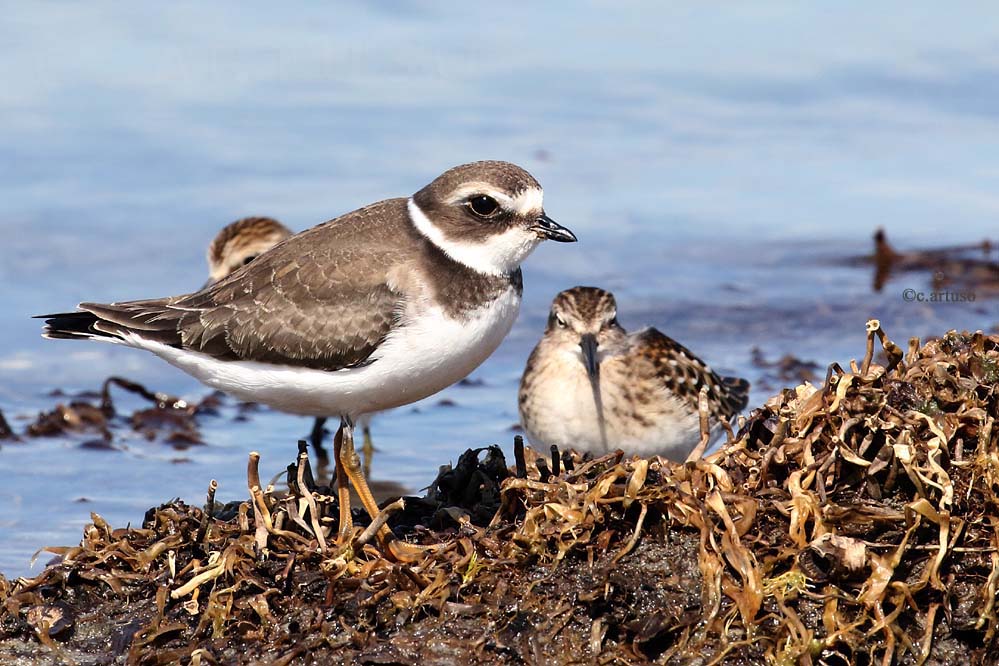
Shorebirds were our primary target and between both groups we counted 17 species. Numbers, something I previously alluded to, were, anecdotally, fewer than previously seen in these areas. The most numerous was Least Sandpiper with 255 individuals. There were also reasonable numbers of Semipalmated Sandpiper, Semipalmated Plover, Killdeer, Greater Yellowlegs, Spotted Sandpiper and Lesser Yellowlegs. My personal highlight was my first Ruddy Turnstone for Manitoba which we only discovered thanks to the driver running us aground on a mudflat.

semipalmated-plover_3138_least-sandpiper

Semipalmated Plover (left) and Least Sandpiper (right) on dead cattails at Delta Marsh IBA. Photo copyright Christian Artuso.

Returning to the boat launch, we had Mr Cal Cuthbert offering a new exercise regime of boat yoga

P1050009.JPG

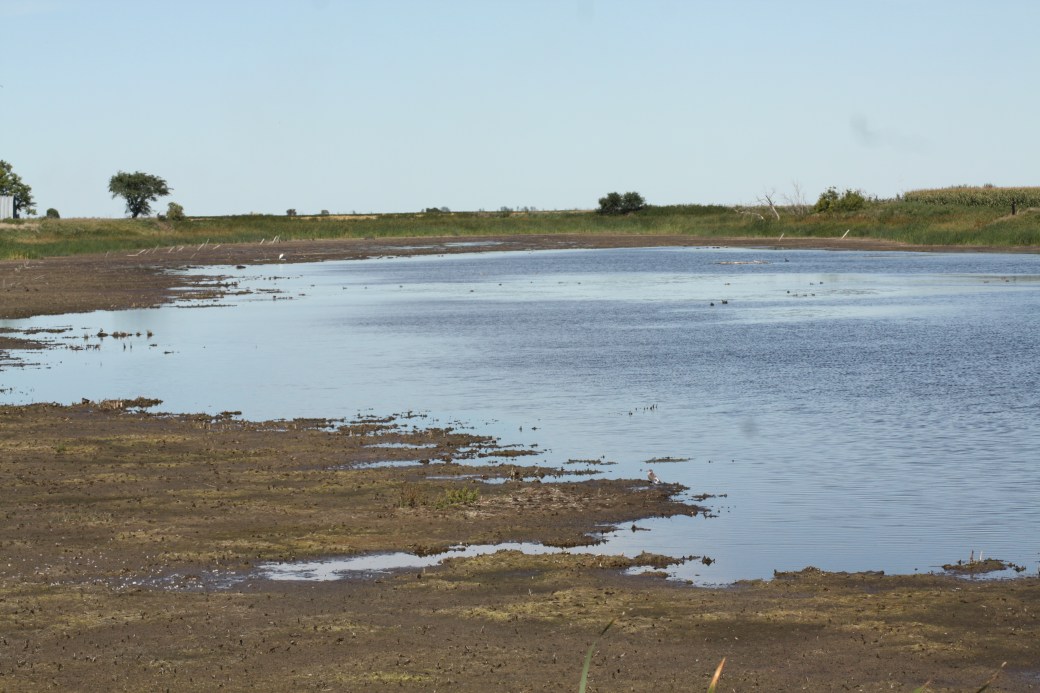
Following our arrival on dry land, Cal offered to take us to the spot in the west of the IBA where Colin Blyth et al had observed large concentrations of shorebirds. The previous day there was an image like this:

OLYMPUS DIGITAL CAMERA

Shorebirds in abundance. Copyright Erica Alex

By Monday afternoon, this was a picture of the same area:

IMG_2439.JPG

Copyright Tim Poole

A quick perusal of the data, showed that Colin’s group counted 4,237 shorebirds across their area but almost all being in this single area. That was on Sunday. On Monday we counted in the same area 16 shorebirds, a dramatic drop which indicated a large movement of migrating shorebirds during the previous night. 20 species on Sunday, 5 on Monday. Here’s a quick comparison of numbers:

Day 1 Day 2
American Avocet 3 1
Black-bellied Plover 1
Semipalmated Plover 1045 7
Killdeer 1
Ruddy Turnstone 2
Red Knot 1 1
Stilt Sandpiper 10
Sanderling 10
Baird’s Sandpiper 5
Least Sandpiper 227
White-rumped Sandpiper 25
Pectoral Sandpiper 102
Semipalmated Sandpiper 2735 3
Short-billed Dowitcher 24
Wilson’s Snipe 2
Wilson’s Phalarope 10
Spotted Sandpiper 2
Greater Yellowlegs 2 4
Willet 1
Lesser Yellowlegs 29
4237 16

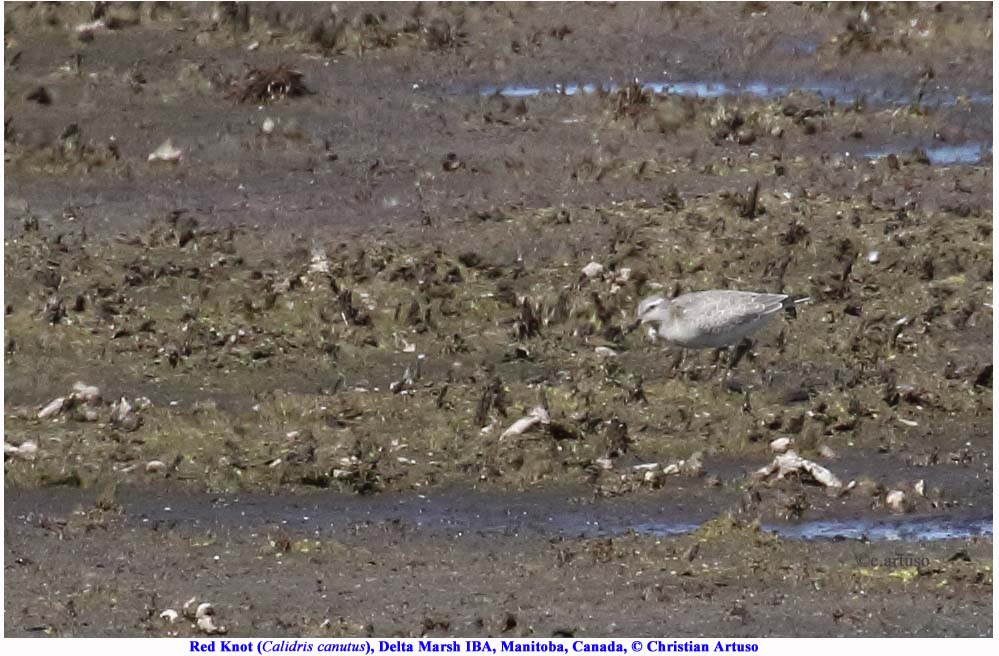
Interestingly one of the few remaining shorebirds was the juvenile Red Knot.

red-knot_3319_artuso

Red Knot hanging around Delta on Monday afternoon, apparently abandoned by everyone else. Copyright Christian Artuso

The final totals for both days will be posted later. Watch this space


Delta Marsh Blitz Day 1

Tim here with an overview of our recent blitz at the world famous Delta Marsh. Firstly, a bit of a disclaimer. Due to severe jetlag, I am unable to remember very much of what happened on the morning at Delta Marsh. Fortunately, thanks to a collection of photos and records from elsewhere, we can fit together a story of endeavor and skill from our fantastic volunteers.

To begin with let us start with some background to the Delta blitz. Boat surveys over the previous couple of years by staff at Manitoba Sustainable Development revealed that there were large concentrations of migrating shorebirds using areas of the marshes interior. Although historically a good place for shorebirds, changes in water levels and the impacts of invasive carp had altered the marsh habitats. The Province of Manitoba have in the last few years worked with partners to exclude the carp from the marsh. As bottom-dwelling fish, carp disturb sediments and uproot plants, leading to deteriorating water quality and loss of aquatic plants and wildlife. Manitoba Sustainable Development have been monitoring the impacts of the carp exclusion on the marsh and the indications are that water quality has improved, emergent vegetation is beginning to establish and wildlife is returning.

See Carp Exclusion Project and the video below for more information on this project.

Cam Meuckon from Manitoba Sustainable Development had originally asked the IBA Program to arrange this blitz in May or June but unfortunately we had to postpone this on three occasions due to poor weather. A late summer/early fall blitz was the only option. Cam had been monitoring the marsh and noticed that there were large concentrations of shorebirds on exposed mud around floating dead cattails. I saw this phenomenon myself when dropping by near Delta Beach one day and spotting several hundred shorebirds in these dead cattails west of the access road.

IMG_2227.JPG

Dead cattail marsh at Delta in late July. If you look very carefully, those small dark blobs are shorebirds. Interestingly, this area of marsh had dried out by late August, something we will return to later on. Photo copyright Tim Poole

Again we were fortunate to have great numbers joining us for the blitz. We eventually ended up with around 8 groups and about 23 people including Manitoba Sustainable Development staff Matt Tower and Riley Bartel who guided a couple of our groups along some privately owned areas.

I kind of slumbered through my group with the ever cheerful Marshall Birch, Pat and Dave Wally and new volunteer Stephanie Connell. We were tasked with monitoring the area around Lake Francis and the east end of Twin Lakes Beach. We had difficulty with accessing Lake Francis itself but still managed to pick up some shorebirds on the beach. Raptors were probably among the most numerous birds in our area.

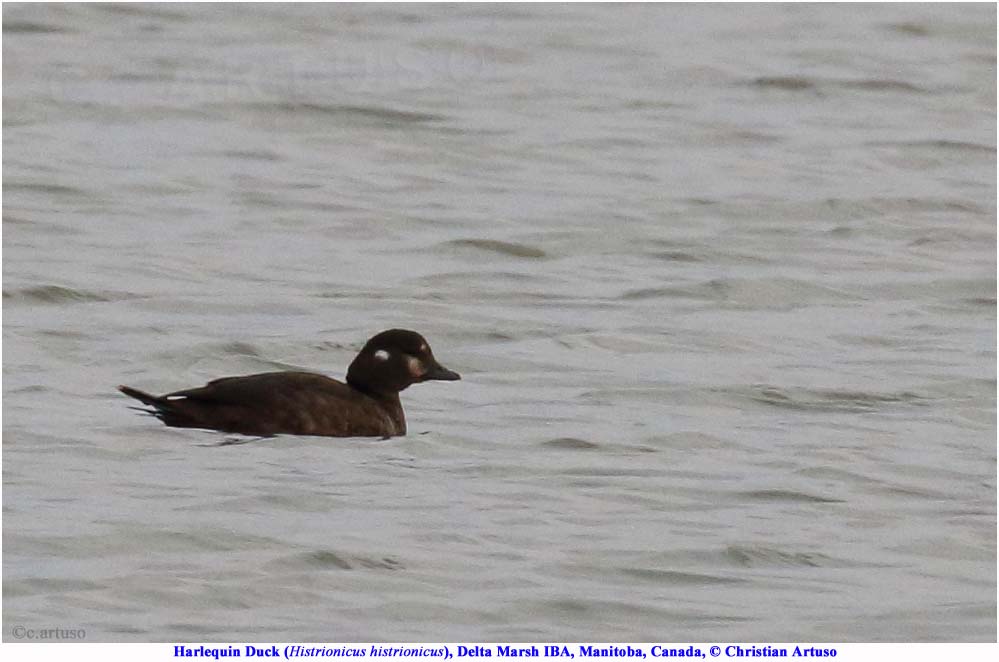
More interesting was the Harlequin Duck found by Matt Gasner on the point where Twin Lake and Ambroise Beaches meet. Matt also had some great luck on the shorebird species count with 13 species.

harlequin-duck_3394_artuso

A northern rarity at this time of year, a Harlequin Duck, bird of the day! Photo copyright Christian Artuso

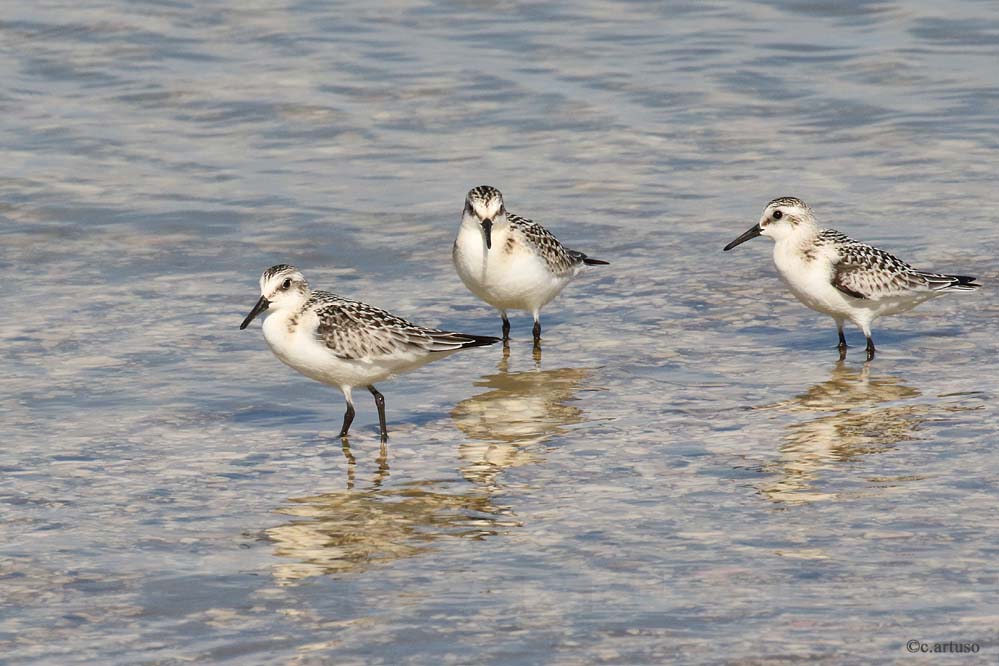
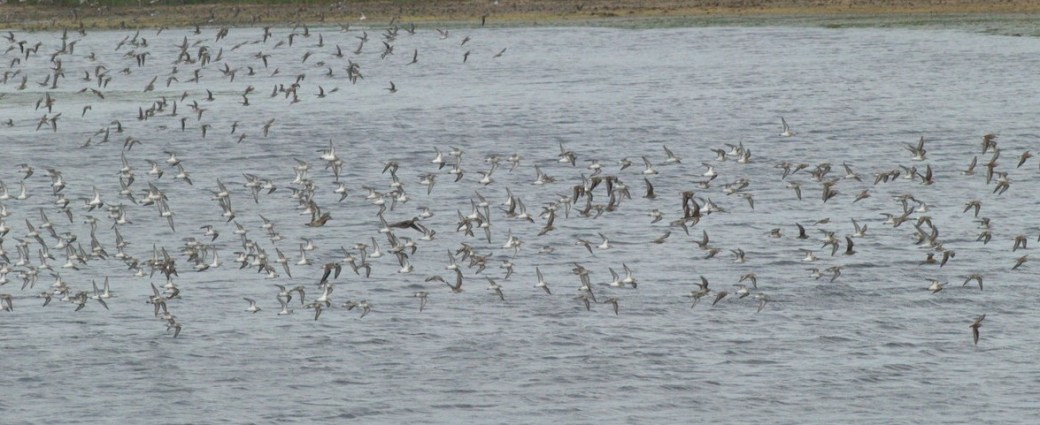
Closeby, Christian Artuso walked along a private track (with kind permission) to access some bays on the marsh interior. What is it with this guy? A shorebird magnet! In addition to 11 species of migratory wood warbler, Christian found some of the best shorebird numbers on the blitz (but possibly not the best, more to come on that). The following photo captions summarise some of these numbers:

sanderling_2973_artuso

110 Sanderlings. Copyright Christian Artuso

semipalmated-plover_3175_artuso

735 Semipalmated Plover. Photo copyright Christian Artuso

least-sandpiper_2670_semipalmated-sandpiper_semipalmated-plover_flock-in-flight

542 Semipalmated Sandpiper and 903 Least Sandpiper (photo also includes Semipalmated Plovers). Copyright Christian Artuso

Further south, Jo Swartz, Betsy Thorsteinson and another new volunteer, Josie Brendle, drove the roads monitoring bird numbers. Shorebirds were thin on the ground but still managed to pick up handy numbers.

1-img_0533-001

Great Egret at Delta. Copyright Josie Brendle

Two groups, Carrie Braden and Luc Blanchette and Bonnie Chartier, Katharine Schulz and Emily McIntosh monitored along Delta Beach and an area north of the marsh interiro with kind permission from Delta Waterfowl. One group had a large flock of Black-bellied Plover and there were very good numbers of herons.

1-img_0598

Great Blue Heron, one of the species present on the marshes interior. Photo copyright Josie Brendle

1-img_0723

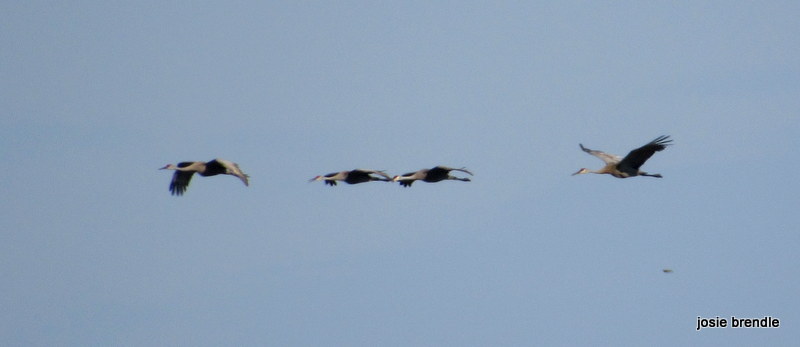
Carrie and Luc also counted good numbers of Sandhill Crane. Photo copyright Josie Brendle

Cal Cuthbert, Janice Madill and Gord Ogilvie, the Portage team walked along the diversion and on Delta Beach. Bird numbers were low on the diversion but better on the beach. Highlight? A Prairie Falcon! They counted over 1000 Franklin’s Gulls and 320 Semipalmated Sandpipers.

Our final group hit the jackpot. Colin Blyth, Louanne Reid and Erica Alex were able to count around 4000 shorebirds at a single point on an opening in a creek.

OLYMPUS DIGITAL CAMERA

Shorebirds in abundance. Copyright Erica Alex

OLYMPUS DIGITAL CAMERA

Semipalmated Plover among a plethora of shorebirds. Copyright Erica Alex

This group had an unusual personal highlight. A Red Knot is not an unusual shorebird at this time of year in Delta but usually one would expect to see it on the beach rather than an internal waterway. The group found this first winter Red Knot among the other shorebirds.

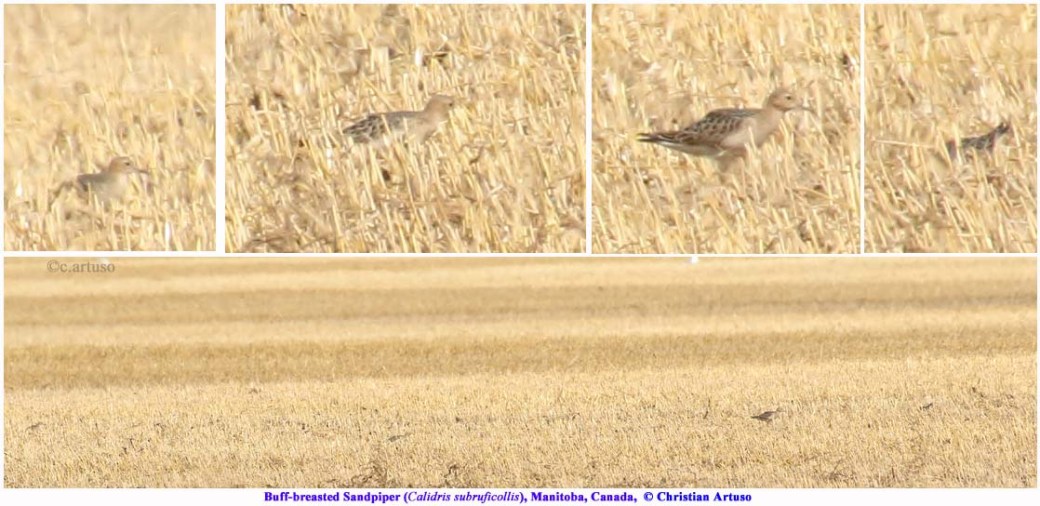
A second blog will follow later this week with a second day of monitoring and then the final blog with the IBA totals. Watch this space. But to finish, Jo, Matt, Betsy and Christian really lucked out on the way home near Marquette seeing 34 Buff-breasted Sandpipers outside the IBA (boo). See Christian’s personal website for the story.

buff-breasted-sandpiper_3234_artuso

Key Biodiversity Areas (KBAs)

As the leaves begin to turn to vivid shades of yellow and red, an array of warblers tumble through the streets of Winnipeg and the days become ever shorter, it appears that change is in the air. Birdlife International have launched a new system of designation, the KBA or Key Biodiversity Areas.

Thus far, Birdlife International and its partners have identified 18,000 different sites, including all globally and continentally significant IBAs (not nationally significant IBAs) as KBAs. We currently do not know what the implications this has for the IBA Program, whether we will eventually become a KBA program or whether IBAs will remain. However it will not have any bearing on the day to day program here in Manitoba. Perhaps we will even end up with some more sites to work with as KBAs are identified here in Manitoba. After all, there are significant areas of habitat in Manitoba important for rare invertebrates and plants. We will look forward to seeing how the program develops.

For more information see:

What are Key Biodiversity Areas?

Top conservation players partner to identify the most vital places for life on earth

World Database of Key Biodiversity Areas

Whitewater Lake IBA Blitz – Media, Invertebrates and Bird Totals

Thanks again to everyone who attended the recent blitz at Whitewater Lake, a stirring effort by all volunteers. In total 26 people made the journey to the southwest for this blitz, a record for the program. There are a couple of excellent articles published about the blitz and rather than write our own report, take a look at the links below:

CBC report on Whitewater Lake IBA blitz by Bryce Hoye

Nature Manitoba newsletter piece by Lynsay Perkins

So for the results. A special guest appearance by Nature Manitoba’s very own Deanna Dodgson produced a list of some of the butterflies and dragonflies of Whitewater. Being August rather than June or July, the total number of species was fewer than one might expect. However, it is great to highlight the fact that Whitewater Lake is a great place for other wildlife not just birds. Here is the list:

Dragonflies
Shadow Darner 1
shadow darner

Cracking image of a Shadow darner taken at Whitewater Lake. Copyright Deanna Dodgson

Unidentified Darner 38+
Saffron-winged Meadowhawk 100+
saffron-winged-meadowhawk

Saffron-winged-meadowhawk taken in another location. Copyright Deanna Dodgson

Cherry-faced Meadowhawk 5
White-faced Meadowhawk 1
Butterflies
Cabbage Butterfly 73+
butterflies_8734c_check species

Cabbage White Butterflies were especially abundant. This photo was taken at Whitewater Lake in 2015. Photo copyright Christian Artuso

Common Wood Nymph 4
Unidentified Lady 1
Monarch 1


In addition a few mammals were spotted out and about around the lake

COYOTE

Coyote lazing on a hay bale. Copyright William Rideout

RACOONS

Couple of sneaky Raccoons. Copyright Bill Rideout

And to the birds. Here is a quick summary of the totals:

Group of Birds Totals
Blackbirds 6943
Cormorants and Pelicans 1971
Grebes 3690
Gulls and terns 4082
Long-legged Wader 495
Rails 6076
Raptor 118
Shorebird 11898
Swallows 24618
Waterfowl 19409
All other birds 1391
TOTAL 80691

The prize for the most unusual sighting of the day goes to Garry, John and Deanna and this Common Nighthawk found sitting on the railway line.

whitewaterIBA5802_webjFP[1]

‘Surely no one can see me’. Common Nighthawks have fantastic camouflage usually but in this case obviously not good enough! Copyright Garry Budyk

As to be expected, there were plenty of shorebirds, something we will return to shortly. Also seen were a number of songbirds including this Le Conte’s Sparrow:

Post Edit Le Conte's

Le Conte’s Sparrow on a willow, not usually a favourite habitat. Copyright Bill Rideout

Here are the main highlights of the blitz

Swallows

Overall, almost 25,000 swallows were counted, a phenomenal number. Concentrations along some the powerlines were so high that volunteers had to estimate the number per metre then calculate the length of resting birds. A novel approach to bird monitoring! The large concentrations are indicative of gathering prior to migration.

Blackbirds

Another group of birds gathering in large concentrations ahead of migrating were the blackbirds. Up to 1000 Yellow-headed Blackbirds were counted in a single flock, an incredibly high number.

Raptors

The high concentrations of songbirds probably attracted a large number of raptors to Whitewater Lake. In total there were 118 individuals representing 9 species. The highlights were the Prairie Falcon and Peregrine Falcon in the eastern section of the lake.

SWAINSON'S HAWK

Swainson’s Hawk, one of 9 raptor species counted at Whitewater. There was obviously plenty of food around for birds of prey. Copyright Bill Rideout

Waterfowl

18 species were counted including a single American Black Duck and 3 Snow Goose. Surprisingly Mallards and Blue-winged Teals were the most numerous.

Long-legged Waders

Given the recent colonisation of Whitewater Lake and southern Manitoba by White-faced Ibis, the total number of 323 was quite staggering. Whitewater Lake has always been known as a great place for this group of birds. Check out the CBC article for a cracking photo of an American Bittern with a salamander taken by Bryce Hoye.

White-faced Ibis102 copy

White-faced Ibis at Whitewater. Copyright Linda Curtis

Pelicans and Cormorants

Manitoba is one of the most important areas for American White Pelicans. We counted 1691 individuals. This does not represent a breeding population but a large concentration of migratory pelicans. The total is just under 1% of the global total for this species, a really impressive number.

Grebes

Clark’s Grebe, a species more likely to be encountered south and west of Manitoba, was recorded. However this was dwarfed by the incredible number of Western Grebes, 2080. This concentration of Western Grebes is greater than the 1% global population for this species and is thus a trigger species for this IBA.

Shorebirds

In total we counted 29 species of shorebird. Of these species, we only encountered one each of Dunlin, Ruddy Turnstone and Whimbrel. The most abundant shorebird was the American Avocet with 3279 individuals counted, mostly along the eastern shore. The 7 Buff-breasted Sandpipers were a wee bit disappointing considering more were reported the previous week. In fact it was likely that there had been some migration of shorebirds during the course of the previous week.

The Black-necked Stilt were a Manitoba bonus for 2016, a rare breeder in this province. These birds were to be found at a location in the west of Whitewater.

Black-necked Stilt 088-2

Black-necked Stilts, a real treat for our blitzers. Photo copyright Linda Curtis

The big news refers to the dowitchers and Pectoral Sandpipers. For both Short-billed Dowitcher and Pectoral Sandpiper it seems that we counted globally significant concentrations, i.e. more than 1% of the global numbers. Due to difficulty distinguishing between Short-billed and Long-billed Dowitcher, it is likely that there were also globally important concentrations of the latter species.

Short-billed Dowitcher 021copy

Short-billed and Long-billed Dowitcher. Photo copyright Linda Curtis

052 copy

Short-billed Dowitcher and Stilt Sandpiper. Photo copyright Linda Curtis

Here is the total numbers:

SPECIES TOTAL
Snow Goose 3
Canada Goose 1061
Cackling/Canada Goose 11
Gadwall 1016
American Wigeon 107
American Black Duck 1
Mallard 5842
Blue-winged Teal 3972
Northern Shoveler 1528
Northern Pintail 1888
Green-winged Teal 240
dabbling duck sp. 400
Canvasback 294
Redhead 59
Ring-necked Duck 39
Lesser Scaup 8
Bufflehead 9
Common Goldeneye 2
Hooded Merganser 5
Ruddy Duck 1114
duck sp. 1810
Gray Partridge 6
Pied-billed Grebe 86
Red-necked Grebe  1
Eared Grebe 1520
Western Grebe 2080
Clark’s Grebe  3
Double-crested Cormorant 280
American White Pelican 1691
American Bittern 11
Great Blue Heron 31
Great Egret 87
Cattle Egret 18
Black-crowned Night-Heron 25
White-faced Ibis 323
Turkey Vulture 1
Northern Harrier 21
Bald Eagle 10
Swainson’s Hawk 26
Red-tailed Hawk 36
Virginia Rail 6
Sora 31
American Coot (Red-shielded) 6039
Black-necked Stilt 4
American Avocet 3279
Black-bellied Plover 28
American Golden-Plover 2
Semipalmated Plover 254
Killdeer 325
Upland Sandpiper 9
Whimbrel 1
Hudsonian Godwit 6
Marbled Godwit 117
Ruddy Turnstone 1
Stilt Sandpiper 233
Sanderling 2
Dunlin 1
Baird’s Sandpiper 34
Least Sandpiper 96
White-rumped Sandpiper 8
Buff-breasted Sandpiper 7
Pectoral Sandpiper 629
Semipalmated Sandpiper 185
peep sp. 22
Short-billed Dowitcher 1594
Long-billed Dowitcher 1012
Short-billed/Long-billed Dowitcher 2774
Wilson’s Snipe 57
Wilson’s Phalarope 146
Red-necked Phalarope 81
Spotted Sandpiper 41
Solitary Sandpiper 5
Greater Yellowlegs 557
Willet 169
Lesser Yellowlegs 214
Greater/Lesser Yellowlegs 5
Bonaparte’s Gull 2
Franklin’s Gull 710
Ring-billed Gull 1280
California Gull 5
Herring Gull (American) 2
Caspian Tern 1
Black Tern 1886
Common Tern 14
Forster’s Tern 182
Rock Pigeon (Feral Pigeon) 127
Mourning Dove 201
Common Nighthawk 1
Northern Flicker (Yellow-shafted) 15
American Kestrel 14
Merlin 8
Peregrine Falcon 1
Prairie Falcon 1
Least Flycatcher 1
Empidonax sp.  1
Eastern Phoebe 3
Western Kingbird 70
Eastern Kingbird 192
Warbling Vireo 25
Black-billed Magpie 8
American Crow 28
Common Raven 21
Horned Lark 33
Purple Martin 26
Tree Swallow 3965
Bank Swallow 18827
Barn Swallow 771
Cliff Swallow 443
swallow sp. 586
Black-capped Chickadee 1
House Wren 4
Sedge Wren 24
Marsh Wren 45
American Robin 23
Gray Catbird 3
European Starling 45
Sprague’s Pipit 1
Cedar Waxwing 10
Common Yellowthroat 9
Yellow Warbler 20
Le Conte’s Sparrow 5
Chipping Sparrow 2
Clay-colored Sparrow 10
Vesper Sparrow 13
Savannah Sparrow 82
Song Sparrow 89
Swamp Sparrow 2
sparrow sp. 100
Bobolink 15
Red-winged Blackbird 1751
Western Meadowlark 32
Yellow-headed Blackbird 3802
Brewer’s Blackbird 226
Common Grackle 543
Brown-headed Cowbird 44
Orchard Oriole 4
Baltimore Oriole 6
blackbird sp. 520
American Goldfinch 86
House Sparrow 80
TOTAL 80691

Finally, thank to all our volunteers, in my particular order:

Colin Blyth and Gillian Richards (Caretakers), Cal Cuthbert, Gord Ogilvie, Erica Alex, Jancice Madill, Bryce Hoye (CBC), Dave Warrenchuk (Nature Manitoba video), Lynsay Perkins (Nature Manitoba Communications), Emily McIntosh, Jo Swartz, Betsy Thorsteinson, Garry Budyk, John Weier, Deanna Dodgson, Katharine Schulz, Donna Martin, Linda Curtis, Luc Blanchette, Bill Rideout, Glennis Lewis, Linda Boys, Louanne Reid and Bonnie Chartier.

whitewaterIBA2_webjFP[1]

Photo copyright Garry Budyk

A Small Gadget on a Single Sandpiper Reveals Why IBA’s are Critical for Birds

Why do we need IBAs? It’s a fair question and Christian Artuso gives a brilliant real-life example involving a Pectoral Sandpiper, a satellite transmitter, some German researchers, Alaska, Hudson Bay, Delta Marsh and Whitewater Lake. Check out this link for the full story.

shorebird flock_7625_GRYE_LEYE_STSA_PESA_SESA_WIPH_SBDO

Find out the significance of this Pectoral Sandpiper by visiting Christians blog. Photo copyright Christian Artuso

Southwestern Mixed-Grass Prairie IBA Total Counts

Thanks again to all our volunteers. Here are the final totals for the event

Species Jo, Betsy & Christian Gillian & Glennis Bonnie, Pat & Dave Christian Tim, Luc, Bill, Betty, Donna & Joan Garry & John Alex Total for species
Canada Goose 8 13 21
Gadwall 11 2 4 17
Mallard 8 1 37 9 6 20 81
Blue-winged Teal 10 1 2 3 16
Northern Shoveler 1 1 1 3
Northern Pintail 12 12
Green-winged Teal 8 4 13 2 27
Canvasback 6 6
Ring-necked Pheasant 1 1 2
Sharp-tailed Grouse 9 2 1 12
Pied-billed Grebe 1 2 3
Great Blue Heron 1 2 1 4
Black-crowned Night-Heron 1 2 3
Turkey Vulture 3 1 4 8
Northern Harrier 1 1 1 1 2 6
Bald Eagle 1 1 2
Swainson’s Hawk 3 1 7 5 16
Red-tailed Hawk 6 8 8 5 8 6 41
Ferruginous Hawk 2 2
Sora 1 7 5 1 1 4 19
American Coot 4 4
Killdeer 84 19 28 8 15 25 179
Spotted Sandpiper 1 1
Greater Yellowlegs 4 4
Willet 7 2 1 10
Lesser Yellowlegs 20 1 6 27
Upland Sandpiper 49 27 20 21 20 25 162
Marbled Godwit 2 2
Wilson’s Snipe 8 15 20 6 23 24 96
Wilson’s Phalarope 2 3 8 8 21
Franklin’s Gull 10 4 1 1 16
Ring-billed Gull 1 2 2 5
Black Tern 6 11 8 9 3 27 64
Common Tern 1 1
Rock Pigeon (Feral Pigeon) 10 3 4 3 20 40
Mourning Dove 68 31 29 20 39 87 274
Black-billed Cuckoo 1 1
Great Horned Owl 2 2 4
Belted Kingfisher 1 1
Yellow-bellied Sapsucker 1 1
Downy Woodpecker 1 1 2
Hairy Woodpecker 2 2
Northern Flicker 2 1 4 3 3 8 21
American Kestrel 2 1 2 5
Willow Flycatcher 1 1
Least Flycatcher 4 1 8 2 5 23 43
Eastern Phoebe 3 3
Say’s Phoebe 2 2
Western Kingbird 13 12 2 2 17 16 62
Eastern Kingbird 22 26 30 9 61 59 207
Loggerhead Shrike 2 1 1 4
Warbling Vireo 1 10 11
Black-billed Magpie 4 11 1 3 7 9 35
American Crow 1 2 10 2 4 4 23
Common Raven 1 1 3 11 16
Horned Lark 39 7 6 7 9 14 82
Purple Martin 7 7
Tree Swallow 15 30 4 1 50
Bank Swallow 20 2 22
Barn Swallow 68 5 32 4 5 49 23 186
Cliff Swallow 70 64 20 20 174
Black-capped Chickadee 1 1 2
White-breasted Nuthatch 1 1
House Wren 3 1 1 9 15 29
Sedge Wren 11 4 20 12 17 46 110
Marsh Wren 2 1 6 7 12 28
American Robin 14 3 4 8 7 22 58
Gray Catbird 2 4 2 1 4 13
Brown Thrasher 1 3 2 1 5 1 13
European Starling 5 1 8 14
Sprague’s Pipit 14 3 2 26 1 10 2 58
Cedar Waxwing 2 2 4
Chestnut-collared Longspur 27 1 13 44 30 14 51 180
Common Yellowthroat 11 2 1 3 3 9 29
Yellow Warbler 3 5 13 21
Grasshopper Sparrow 11 2 27 22 21 2 85
Baird’s Sparrow 2 1 13 5 21
Le Conte’s Sparrow 5 2 4 5 29 45
Nelson’s Sparrow 1 2 6 9
Chipping Sparrow 1 1 4 4 10
Clay-colored Sparrow 38 11 30 9 27 40 155
Lark Sparrow 1 3 4
Vesper Sparrow 8 10 2 8 5 44 4 81
Savannah Sparrow 53 12 5 25 37 99 231
Song Sparrow 9 1 6 3 10 29
Dickcissel 1 1
Bobolink 31 13 3 14 12 5 78
Red-winged Blackbird 300 39 900 15 212 139 1605
Western Meadowlark 73 28 32 50 60 83 21 347
Yellow-headed Blackbird 6 21 2 12 41
Brewer’s Blackbird 200 3 30 30 17 88 368
Common Grackle 8 32 23 6 13 82
Brown-headed Cowbird 39 17 45 45 65 54 265
Orchard Oriole 6 2 3 13 24
Baltimore Oriole 6 1 1 8
blackbird sp. 10 295 305
American Goldfinch 4 18 8 4 13 27 74
House Sparrow 15 7 22
TOTAL NUMBER OF SPECIES 59 63 60 47 60 76 8 98
TOTAL NUMBER OF INDIVIDUALS 1348 543 1496 484 954 1672 125 6622
DSCN5906

That clown, the Upland Sandpiper standing in the mist. Photo copyright Donna Martin

Southwestern Mixed-Grass Prairie IBA Blitz – Searching for Grassland Species-At-Risk

It’s 4am and someones alarm in the house is ringing. Slowly a house of blitzers awake and get ready for a fun morning of birding that lies ahead. We have six groups ready to go in the morning to monitor all the birds of the Southwestern Mixed-Grass Prairie IBA. Rather than drive around an area in random order, we have distributed maps to each team with historic sightings of Sprague’s Pipit and Chestnut-collared Longspur which will help teams locate grasslands and make searching efficient. What could possibly go wrong? Ah, the now traditional thick mist which seems to follow IBA blitzes around, that’s what could go wrong (see here and here).

Well, we were in place and ready to go, and what’s a bit of mist to keep us from a morning of blitzing this fine corner of Manitoba. So instead bundled into different vehicles, we went on our merry way. The map below gives an idea of where we were with a sixth team, consisting of one individual, surveying private land with abundant grassland birds.

SW bird blitz census routes.jpg

The drive from Reston to the IBA was therefore slightly fraught, not helped when I took the road to Melita rather Pierson and started a bit late. However once further east an incredible sunrise was developing and thankfully, unlike the old saying, the weather for the remainder of the day once the mist broke was perfect.

sunrise by Betsy Thorsteinson_small

Stunning sunrise. Photo copyright Betsy Thorsteinson

DSCN5875.JPG

Brooding sunrise over the prairies in the east. Our eastern groups had much better birding conditions early on than the western groups. Photo copyright Donna Martin

For those groups in the west, the mist eventually began to lift….

swmbIBA9245_webjIBA

You can just about see the fenceposts at the rear of this patch of grassland. note also how lush the grassland is, something you probably would not normally associate with somewhere know as the Poverty Plains, or indeed, the Banana Belt. Photo copyright to Garry Budyk

Christian Artuso was first out, the keener, and off to the Melita area. He would be meeting Jo Swartz and Betsy Thorsteinson in Melita (they eschewed the luxury of a house with no beds and spent the weekend in a hotel, crazy). Christian had a large walking section and would be meeting his team at regular spots over the route. They counted a very impressive 1832 individual birds representing 65 species. A great effort! They also found incredible numbers of grassland specialists including Baird’s Sparrow (15), Grasshopper Sparrow (38), Sprague’s Pipit (40) and Chestnut-collared Longspur (71).

Jo and Christian by Betsy Thorsteinson_small

Lost and the sun is still rising! Christian and Jo planning their escape. Photo copyright Betsy Thorsteinson

They also managed to re-find the Dickcissel

Dickcissel_5139c_m_Artuso_Artuso

Echinacea_4806_Artuso

Echinacea. Photo copyright Christian Artuso


It goes without saying that IBA’s are wonderful places for birds. But what about other wildlife? Well, in the previous post I had already alluded to the flora and there is plenty on native grasslands.

When we think of grassland mammals native prairies, the most likely to come to mind would be the bison of the open plains. Another herbivore of the native prairies is the Mule Deer, a provincial Species At Risk. Our group were able to see a Mule Deer north of Lyleton. In the mist we could also see White-tailed Deer. Christian, Jo and Betsy had the mammalian highlight of the blitz with this amazing view of an American Badger.


American Badger_5066_juv_Artuso

An American Badger peering out of the grass. Photo copyright Christian Artuso

Garry Budyk and John Weier took on the central area and recorded 75 species. They had a good sweep of Sprague’s Pipit (10),a Loggerhead Shrike and a great mix of other species such as Savanna Sparrow (99), Le Conte’s Sparrow (29) and Orchard Oriole (13). Garry and John are both long-term volunteers for bird monitoring programs in Manitoba and a terrific help to the IBA Program.

Sprague's Pipit_4796

Not his finest, but the Sprague’s Pipit is one of the most difficult species to see in Manitoba. This species can only usually be detected when it is singing high in the sky and is often not seen at all. This is a threatened species and has been designated as Vulnerable by IUCN and Threatened under the Canadian Species At Risk Act. Photo copyright Christian Artuso

Everyone detected Bobolink. This species has been designated as threatened in Canada by COSEWIC but is currently not listed as a Species At Risk. Bobolink are less sensitive to loss of native grassland habitats as other species and can readily be found in places like alfalfa fields. It is widespread in Manitoba but declining in the east, hence its current designation as threatened.

Bobolink_4947_pair calling_Artuso

Female Bobolinks are sometimes difficult to pick out from the crowd of blackbirds whereas the males are possibly the most distinctive birds of the prairies bar the Western Meadowlark. This photo sums this fact up nicely, with the handsome male in the foreground and the indistinct female behind. Photo copyright Christian Artuso

The group in the northwest corner with Bonnie Chartier and new volunteers Pat and Dave Wally unfortunately ran into major issues with the roads. Very heavy rain in the previous week had effectively wiped out access to large parts of their area in the Poverty Plains. They still managed to find a Loggerhead Shrike and an elusive Baird’s Sparrow, plus 13 Chestnut-collared Longspur.

Baird's Sparrow_4764_singing_Artuso

Christian Artuso had a thrilling moment when two elusive Baird’s Sparrow were singing either side of him. This little guy is obviously singing his heart out! Photo copyright Christian Artuso

The northwest team were Brandon locals Glennis Lewis and Gillian Richards. They were tasked with monitoring around the Broomhill WMA. They were the only group to catch a Ferruginous Hawk, two in fact. This was probably a pair which had already bred and were on territory preparing for 2017. Hope to see them then!

Ferruginous Hawk is obviously the prize species in southern Manitoba, but it’s not the sole raptor recorded on the blitz. Both Red-tailed Hawk (total=41) and Swainson’s Hawk (total=17) were picked up in good numbers. The agile, graceful Northern Harrier soared over wetlands seeking prey. Also Bald Eagle, Turkey Vulture and American Kestrel graced the IBA.


Another bird of prey which is easy to spot in southwestern Manitoba is the Great Horned Owl. If you are ever visiting this area in summer look around the outside of old barns for these night time hunters as they seem to select these sites for nesting.

ghow5282_webjIBA

A Great Horned Owl perched in the window of an old barn. Photo copyright Garry Budyk

Alex Froese from the Manitoba Burrowing Owl Recovery Program surveyed an extra area in the IBA on foot and found 51 Chestnut-collared Longspur and 2 Sprague’s Pipit. Thanks Alex!

Chestnut-collared Longspur_4819_m_flight over prairie_Artuso

A male Chestnut-collared Longspur in flight. This species is known for its fabulous display flights. Photo copyright Christian Artuso

Finally to the southeast group. Luc and I drove to Pierson where we were joined by locals Bill and Betty Warren. Starting out a wee bit later than expected thanks to my detour to Melita, we headed south towards Lyleton, checking out some longspur spots en route. The mist was, as previously stated, an issue and we struggled to pick up birds at our stops. It was pretty obvious that the longspurs would need a helping hand, and the conditions justified use of playback (playing the song on a portable speaker via bluetooth and a phone app). Fortunately for us, it did not take much enticing for the longspurs to begin singing. Interestingly, the Grasshopper Sparrows needed no such encouragement.

DSCN5949

Grasshopper Sparrow on a wire with caterpillar in its mouth, presumably en route to feeding its young. We managed to pick up all Ammodramus sparrows in Manitoba (Grasshopper, Baird’s, Le Conte’s and Nelson’s). The Ammodramus sparrows are all typical of grassland and marshes and have relatively flat heads compared to other North American sparrows. Photo copyright Donna Martin

Reaching Lyleton, we met up with Joan Murray and at this point Donna Martin caught up with us. With a small convoy, we set off, picking up some more longspurs en route to Section 29. Luc also managed to pick up a faint, distant Sprague’s Pipit before we turned off. This area always proves to be a successful for finding grassland birds and today was no different, with good numbers of longspurs (although fewer than 2015), Grasshopper Sparrows galore and even 4 Baird’s Sparrow. Interestingly there were also Nelson’s Sparrow calling in a pasture, a good indication of wetland habitat and possibly revealing how much some of this area has changed in this wet cycle. Our return to Melita also took in Joan Murrays legendary yard, rich in songbirds.

Overall this blitz was a tremendous success. I will post a summary of the total number of birds encountered later today but for the meantime, here are the totals of the Species-At-Risk:

Ferruginous Hawk – 2

Loggerhead Shrike – 4

Spragues Pipit – 58

Chestnut-collared Longspur – 180

Grasshopper Sparrow – 88

Baird’s Sparrow – 21

Bobolink – 78

Baird's Sparrow_4680_singing_Artuso

Go on then, one final Baird’s Sparrow – just it’s so hard to find these guys in Manitoba. Copyright Christian Artuso

Thank you to all our volunteers (in no particular order): Jo, Betsy, Dave and Pat, Bonnie, Garry, John, Glennis, Gillian, Luc, Donna, Bill, Betty, Joan, Alex and Christian.

Southwestern Mixed-Grass Prairie Part 1 – species totals

For anyone interested in these types of things, here are the summary species lists of the Friday and Saturday travels ahead of the blitz (where we will provide a separate list)

Species Name 08-Jul 09-Jul
Species Count Species Count
Canada Goose 102 10
Gadwall 10 5
Mallard 115 44
Blue-winged Teal 45 3
Northern Shoveler 23 5
Northern Pintail 6
Green-winged Teal 6 9
Canvasback 6
Ruddy Duck 52 8
Ring-necked Pheasant 1
Gray Partridge 2
Sharp-tailed Grouse 3
Wild Turkey 9
Pied-billed Grebe 6 1
Red-necked Grebe 2
Eared Grebe 16
Double-crested Cormorant 25
American White Pelican 10
American Bittern 1
Great Blue Heron 8 1
Black-crowned Night-Heron 2
White-faced Ibis 15
Turkey Vulture 12 8
Northern Harrier 2 1
Cooper’s Hawk 1
Bald Eagle 2 2
Broad-winged Hawk 1
Swainson’s Hawk 2 9
Red-tailed Hawk 8 8
Sora 2 1
American Coot 50 25
American Avocet 7
Killdeer 16 8
Spotted Sandpiper 1
Greater Yellowlegs 9 2
Willet 12 13
Lesser Yellowlegs 8
Upland Sandpiper 16 41
Marbled Godwit 1
Wilson’s Snipe 6 15
Wilson’s Phalarope 7 4
Franklin’s Gull 85 24
Ring-billed Gull 2 1
Black Tern 22 42
Forster’s Tern 1
Mourning Dove 20 83
Black-billed Cuckoo 2
Great Horned Owl 2 1
Belted Kingfisher 1 1
Yellow-bellied Sapsucker 3
Downy Woodpecker 2 1
Northern Flicker 5 9
American Kestrel 4 5
Merlin 1 1
Willow Flycatcher 1
Least Flycatcher 14 1
Eastern Phoebe 2
Say’s Phoebe 5
Great Crested Flycatcher 1
Western Kingbird 13 27
Eastern Kingbird 22 45
Loggerhead Shrike 1
Warbling Vireo 11 2
Red-eyed Vireo 3
Blue Jay 5
Black-billed Magpie 12 23
American Crow 23 7
Common Raven 2 6
Horned Lark 12
Northern Rough-winged Swallow 10
Purple Martin 36 49
Tree Swallow 46 37
Bank Swallow 50
Barn Swallow 38 38
Cliff Swallow 55 40
Black-capped Chickadee 1
House Wren 4 8
Sedge Wren 2 24
Marsh Wren 1
Eastern Bluebird 7 1
American Robin 34 37
Gray Catbird 5 17
Brown Thrasher 2 4
European Starling 34
Sprague’s Pipit 4
Cedar Waxwing 17 20
Chestnut-collared Longspur 2 8
Ovenbird 1
Common Yellowthroat 8 7
Yellow Warbler 3 5
Grasshopper Sparrow 2
Baird’s Sparrow 4
Le Conte’s Sparrow 2 10
Nelson’s Sparrow 1
Chipping Sparrow 3 2
Clay-colored Sparrow 17 7
Field Sparrow 1
Lark Sparrow 7 10
Vesper Sparrow 14 26
Savannah Sparrow 28 53
Song Sparrow 11 5
Swamp Sparrow 2
Eastern Towhee 1
Rose-breasted Grosbeak 1 1
Indigo Bunting 1
Dickcissel 1
Bobolink 16
Red-winged Blackbird 70 55
Western Meadowlark 29 66
Yellow-headed Blackbird 30 25
Brewer’s Blackbird 33 45
Common Grackle 2
Brown-headed Cowbird 20 31
Orchard Oriole 2 9
Baltimore Oriole 7 5
American Goldfinch 48 26
House Sparrow 26 12
TOTAL NUMBER SPECIES 100 87
TOTAL NUMBER INDIVIDUALS 1553 1276

Southwestern Manitoba Mixed-Grass Prairie IBA Blitz – Scouting Trip

On the weekend of the 9th and 10th July, 2016, a group of IBA volunteers blitzed the Southwestern Manitoba Mixed-Grass Prairie IBA in search of threatened grassland birds. In our first of two blogs, IBA Coordinator, Tim Poole describes the scouting trip ahead of the big day.

It’s Saturday morning and its raining. Quel surprise! Christian and I have been forced from the field and are having breakfast with local landowner Margaret Macrae and southwestern Manitoba bird conservation legend, Joan Murray. On Friday we had headed to Reston via Spruce Woods (failed Lark Bunting search, long story but I won’t go into it now as it’s rather a sore point for Christian), NCC office in Brandon and some good birding south of Oak Lake and Plum Lake IBA. Travelling with Christian is always an adventure and the species list always better than if I were travelling alone. Here are a few photographic highlights of the journey (click on photos for caption):

Loggerhead Shrike_4220_calling_Artuso

Loggerhead Shrike calling from a powerline north of the IBA. A Sprague’s Pipit was also calling in this area and carrying food and a Grasshopper Sparrow was lurking somewhere as well. Photo copyright Christian Artuso

An early light breakfast and Christian and I headed out into the IBA from Reston. For those who do not know, the Southwestern Manitoba Mixed-Grass Prairie IBA was designated as a site with nationally important populations of Ferruginous Hawk, Loggerhead Shrike and Burrowing Owl. It encompasses some of the best examples of native mixed-grass prairie remaining in Manitoba, including the Lyleton, Blind Souris and Poverty Plains areas. In 2015 it became apparent to us that there were a few issues with the IBA designation. For one, it did not include a large part of the Blind Souris, some of the most extensive grasslands remaining, the last place for Long-billed Curlew in Manitoba and the place to find Buffalograss, a Species At Risk. This was easy enough to solve. W e also discovered that contrary to our original assumptions, the IBA was not considered a globally important area for grassland birds. This was because the populations of the original trigger species were below 1% of global populations and none of these species had a global conservation listing. Two species, the Sprague’s Pipit and Chestnut-collared Longspur, would meet this criteria and it was our intention to locate sufficient numbers of each to have the IBA considered as globally important, something which gladly managed to achieve. Our aim this year was to provide consecutive figures to support this, plus locate a wider list of species present in the IBA.

Just south of Reston, and north of the IBA, we had our first bird of the day was an early morning Great Horned Owl. Driving early in the morning presents its risks, with animals, especially mammals darting into the road. Deer are especially at risk for us and them. We picked up an early calling Baird’s Sparrow, the first of five for the day, a very good number for this elusive and rare species. We were heading to the area just north of Pierson to meet local landowner Margaret McRae. Margaret is a local landowner who has a small area of native prairie and wetland for which she has signed an easement with NCC in memory of her late husband Scotty. You can read more about here.

Mammatus clouds_4233_Artuso

Mammatus clouds building over the prairies on Saturday morning. A storm followed. Photo copyright Christian Artuso

People like Margaret who set aside their land for conservation benefit are the heroes in modern conservation. Another hero in my view is Joan Murray, a local from Lyleton who has done so much to raise the profile and the plight of grassland birds. Joan and her late husband John, along with another landowning couple Ralph and Mary Wang, were instrumental in building nestboxes along fences for Mountain Bluebirds, providing an oasis for migratory birds in their yards and for engaging the wider birding community in grassland bird conservation at a time before the more dramatic declines of recent times occurred. They also supported the likes of Ken De Smet and Christian Artuso in their work in the area.

Margaret’s property certainly provides habitat for a number of bird species. The current wet cycle means the grasslands provide habitat for Le Conte’s and Nelson’s Sparrow rather than Chestnut-collared Longspurs but we could also detect Baltimore Oriole, Clay-coloured Sparrow, Sora, a number of duck species, Bobolink and Least Flycatcher, and that’s all my memory can draw upon. But it was also a place for wild flowers, and boy do the prairies have some stunning flora.

Later that day we continued to look for likely spots where we might find birds for the blitz. We were to target the species listed as Species-at-Risk, especially Chestnut-collared Longspur and Sprague’s Pipit as these species have global conservation listings. more on that in the next blog. Passing by the Wang’s old place near the Saskatchewan border (they have now retired and moved to Saskatchewan), we were impressed that this area still provided an oasis for songbirds. The fences along the prairie were also a place for Mountain Bluebird boxes, although we saw none of these stunning birds. These boxes ere also a Murray-Wang legacy. We did spot a female Sharp-tailed Grouse on the road. Watching her for some minutes, it was pretty obvious that she had a brood with her as she moved nervously around and continuously called. A grouse without a brood would not have stayed in the same place for long – they are too sensitive to disturbance for that.

Next, the comical and resident ‘daft’ invasive bird of the day, a Ring-necked Pheasant. Ok, I think ridiculous bird is more appropriate. This male bird, originally from China but arriving in North America via the UK, is in my view, both beautiful and annoying having recorded them calling at the dancing grounds of threatened grouse. However, this individual was comical, running along the side of the road into the vegetation to get away from us. Looking for photos, Christian looked to drive ahead of it, only to find the bird rather than take the expected route parallel to the road, it suddenly ran across the roa behind us and away into the undergrowth. It did though provide a photo for Christian.

Ring-necked Pheasant_4547_m_Artuso

Daft laddie pheasant. Photo copyright Christian Artuso

Next up, we encountered some flycatchers. First up, the southwest specialty, the Willow Flycatcher. This species is found along creeks in willow shrub and looks completely alike to the closely related Alder Flycatcher. They can only be split by most mortals via their distinct calls.

Willow Flycatcher_4329_singing_Artuso

We heard it, definitely a Willow Flycatcher. Photo copyright Christian Artuso

Next up, the Western Kingbird, a widespread species in southern Manitoba where there is open ground to forage.

IMG_2113.JPG

Western Kingbird. Photo copyright Tim Poole

We tried for Lazuli Bunting and Black-headed Grosbeak at historic sites, but to no avail. We did decided we should do some work though and checked a few grassland areas for our target species. We found a couple of Baird’s Sparrow in a new spot in the southwest corner and heard a Sprague’s Pipit. We were not really detecting may longspurs which was a concern. At one spot where I remembered having longspurs in 2015, I decided to try playback as I was concerned for the Sunday morning. To my relief, a couple of males responded – so they were still in situ. 

Baird's Sparrow_4362_singing_Artuso

The elusive Baird’s Sparrow might not look much but it’s song is enough to lift your spirits on a damp day. A real prairie treasure. Photo copyright Christian Artuso

The morning had disappeared and early afternoon came. Either the early morning was catching up or the Mediterranean heritage was calling as Christian needed a siesta. While taking a nap in the truck near Coulter, I went for a walk along the ridge above the Souris River. There were some birds around, Vesper Sparrow, Bald Eagle, Bobolink, Swainson’s Hawk to name a few but the wind was picking up and seemed like a storm was brewing. Lightning began striking the prairie towards Saskatchewan and North Dakota and Christian came to bail me out as the rain started to fall. Fortunately, the storm seemed to swing north and west and passed up by.

IMG_2123

Willet over the prairies. Note the Wilson’s Phalarope to the left. These are both typical shorebirds of southern Manitoba’s prairie wetlands.  Photo copyright Tim Poole

Instead we headed across the Souris towards the Blind Souris. This area of prairie seemed more extensive than others, but still there are the telltale signs of till breaking up the last vestiges of native habitat. Will it ever stop or are we destined to lose all remaining native prairie in this area?

On our way came the days biggest and best surprise. Passing an alfalfa field, Christian thought he heard a Dickcissel calling from the window. Reversing back we were thrilled to see a male calling from an overhead powerline. Dickcissel are usually rare in Manitoba, being known only as an irruptive species, that is that it is a rarity in most years but there are sudden dramatic population rises. This grassland bird is usually found further south and prefers tallgrass prairies. Volunteers who visited the site later heard a second bird.

Dickcissel_4602_m_singing_Artuso

Dickcissel, what a beauty! Photo copyright Christian Artuso

Heading back to Reston to meet our group, we picked up our fifth Baird’s Sparrow and had some good intelligence for volunteers for the following day. We met up with volunteers in the Rest’n Inn later that evening and planned for the morning. A Eurasian Collared Dove before bed (ridiculous) and we were ready for the morning. What could possibly go wrong….

IMG_2151

Upland Sandpiper, the clown prince of the prairies. Photo copyright Tim Poole

Barn Swallow_4642_juv_Artuso

Barn Swallow brood. Photo copyright Christian Artuso

Oak Lake Blitz Summary Results

Finally, following the trip blogs (blog 1 and blog 2). Thanks to Gillian, Glennis, Louanne, Marshall, Katharine, Luc and Sabina for their terrific efforts. Here are the final blitz scores:

Species Name Species Count
Western Group Eastern Group Additional records TOTAL
Canada Goose 46 19 25 90
Gadwall 43 24 5 72
American Wigeon 2 7 9
Mallard 78 82 15 175
Blue-winged Teal 38 67 105
Northern Shoveler 30 52 82
Green-winged Teal 7 2 9
dabbling duck sp. 19 5 24
Canvasback 8 1 9
Redhead 8 58 66
Lesser Scaup 8 37 3 48
Bufflehead 1 2 3
Ruddy Duck 11 8 19
Pied-billed Grebe 3 3
Red-necked Grebe 1 2 3
Eared Grebe 11 60 10 81
Great Blue Heron 1 2 3
Black-crowned Night-Heron 2 2
Turkey Vulture 2 2
Northern Harrier 3 5 8
Red-tailed Hawk 3 8 11
Virginia Rail 2 2
Sora 11 11
American Coot 26 18 1 45
American Avocet 2 9 11
Killdeer 18 23 2 43
Greater Yellowlegs 1 1
Willet 1 2 3
Lesser Yellowlegs 1 1
Upland Sandpiper 4 1 5
Marbled Godwit 2 3 5
Wilson’s Snipe 19 3 22
Wilson’s Phalarope 2 5 7
Franklin’s Gull 35 65 100
Black Tern 63 43 2 108
Rock Pigeon 6 6
Mourning Dove 16 27 43
Black-billed Cuckoo 2 2
Yellow-bellied Sapsucker 1 2 3
Hairy Woodpecker 1 1
Northern Flicker 1 1 2
American Kestrel 1 1
Eastern Wood-Pewee 2 2
Western Wood-Pewee 1 1
Least Flycatcher 16 8 24
Eastern Phoebe 1 1
Western Kingbird 4 5 9
Eastern Kingbird 21 30 51
Warbling Vireo 8 6 14
Black-billed Magpie 5 3 8
American Crow 4 4
Common Raven 7 10 17
Purple Martin 2 30 32
Tree Swallow 10 37 4 51
Barn Swallow 18 52 70
Cliff Swallow 335 335
Black-capped Chickadee 3 3
White-breasted Nuthatch 6 6
House Wren 3 7 10
Sedge Wren 3 2 5
Marsh Wren 78 2 80
Eastern Bluebird 1 1 2
Mountain Bluebird 2 2
American Robin 18 40 58
Gray Catbird 1 6 7
European Starling 5 2 7
Sprague’s Pipit 1 1
Cedar Waxwing 8 8
Black-and-white Warbler 3 3
Common Yellowthroat 7 6 13
Yellow Warbler 14 35 49
Grasshopper Sparrow 1 1 2
Le Conte’s Sparrow 13 1 14
Nelson’s Sparrow 1 1
Chipping Sparrow 8 8
Clay-colored Sparrow 9 7 16
Lark Sparrow 1 1
Vesper Sparrow 7 7
Savannah Sparrow 66 16 82
Song Sparrow 7 7
Swamp Sparrow 3 3
Bobolink 22 13 35
Red-winged Blackbird 310 135 7 452
Western Meadowlark 32 20 52
Yellow-headed Blackbird 76 129 3 208
Brewer’s Blackbird 20 3 23
Common Grackle 5 29 34
Brown-headed Cowbird 17 45 62
Baltimore Oriole 7 4 11
American Goldfinch 2 5 7
House Sparrow 8 3 11
TOTAL 1701 1372 82 3155

And the area covered

Oak Lake full routes

And just because I really like it, here is Gillian’s photo of the Black-crowned Night Heron again!

OL%20Jun%2019%20BCNH%206965

Copyright Gillian Richards