Volunteer Trip Profile – Katharine Schulz, Oak Lake and Plum Lakes IBA

Volunteer, Katharine Schulz braved the wintery, blustery weather to visit the Oak Lake and Plum Lakes IBA on October 15th. This was a day after our crane and swan blitz in the area, which we were sadly forced to cancel due to the filthy weather forecast for the day. Gladly, Katharine took the trip a day later, and one other person really braved it on the actual intended day of the blitz. We will profile a third group trip next week. Here is Katharine’s impressions, photos, and map.

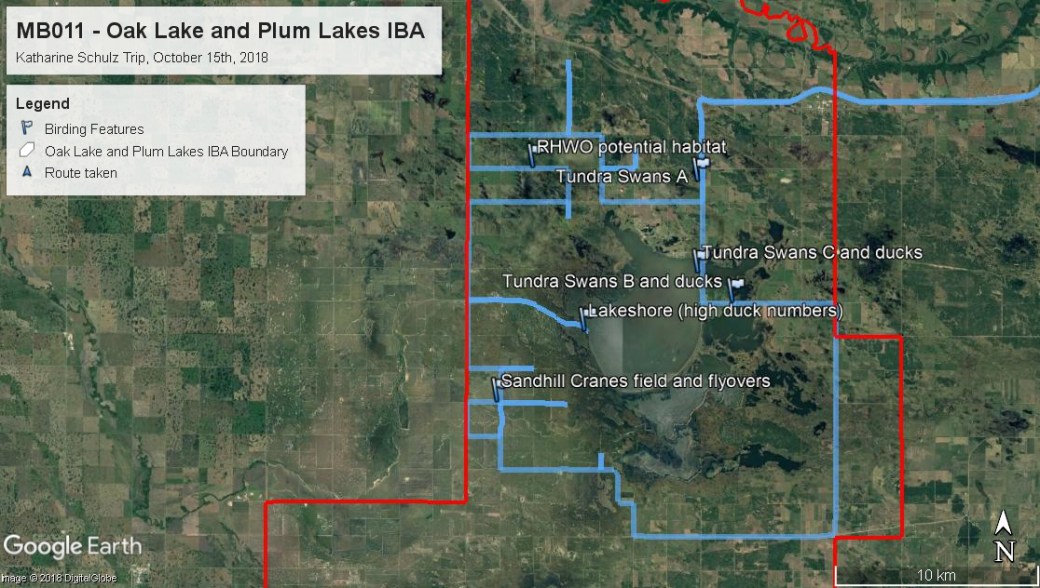
I am attaching my GPS track from my October 15th foray into the Oak Lake-Plum Lakes IBA.  I was in the IBA from approximately 9:50 to 4:20 i.e. 6.5 hours and spent the entire time north of #2 Hwy.  The majority of time was spent on the west side of Oak Lake and then I covered a few spots along the 254 up the east side on my way out.

MB011 Katharine Schuklz trip, October 2018

Katharine’s GPS track.

I didn’t manage to take very many good bird photos, but I did have better birding success further south on the west side, and also at a few spots along the 254.  It was a cold, cloudy and windy morning, having been -9C the previous night (in Brandon.)

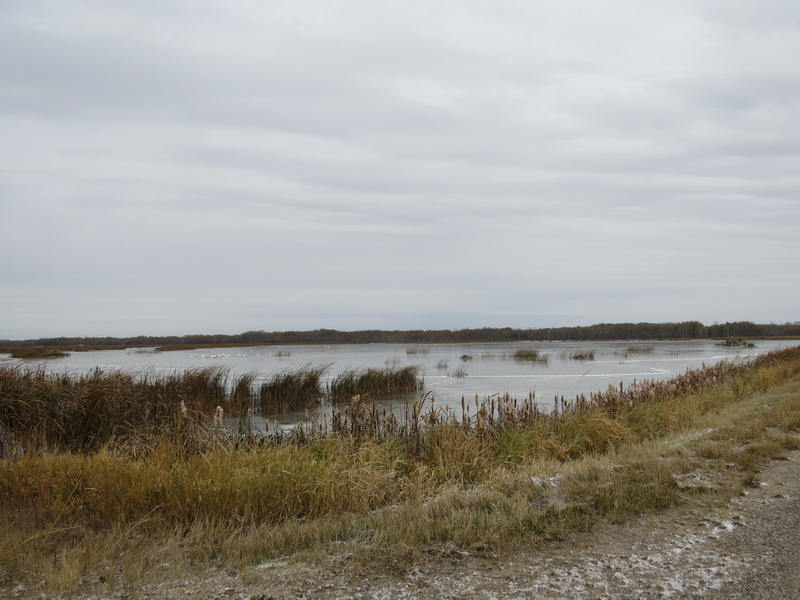
Frozen marsh 254 S of Hwy 1 Oak Lake IBA Oct 15 2018 IMG_1103

The frozen marsh. Photo copyright Katharine Schulz

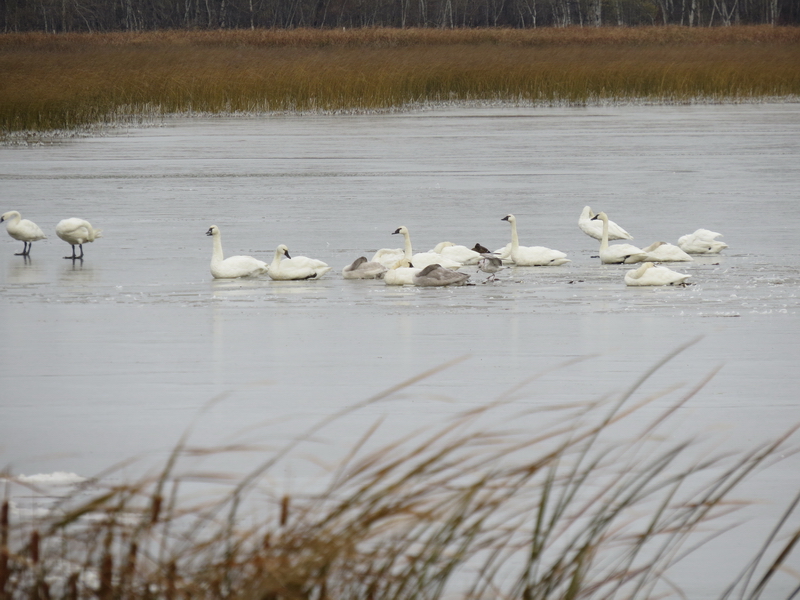
The first interesting thing I encountered was a number of apparent piles of snow on a frozen marsh – this turned out to be 31 Tundra Swans, most with their necks tucked in and many of which actually appeared almost frozen into the ice!  Two were juveniles.  When I passed by again later that afternoon, on the way out of the IBA, about 24 were still there, but the now had a bit more room to swim as the day had turned sunny and reached a high of +11, according to the vehicle thermometer.

Tundra Swans in ice 254 S of Hwy 1 Oak Lake IBA Oct 15 2018 IMG_1105

Early morning swans on the ice. Photo copyright Katharine Schulz

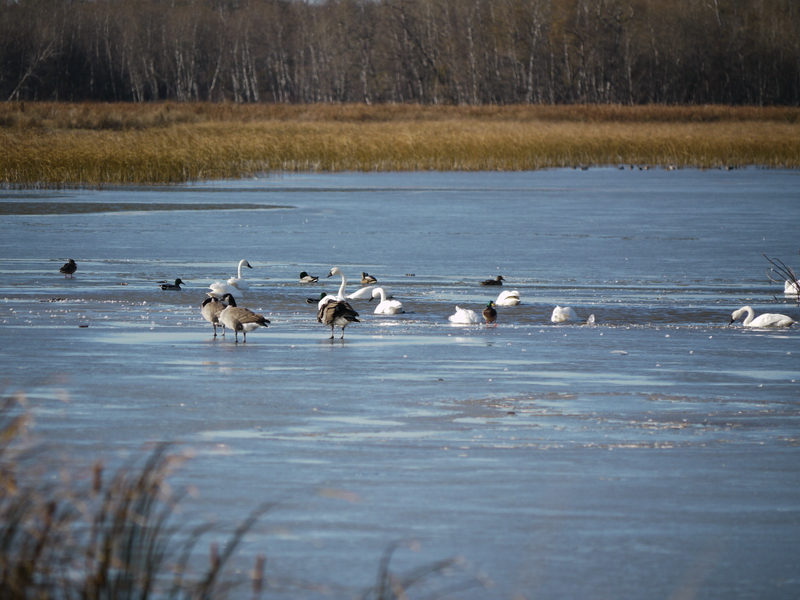
Tundra Swans afternoon on same marsh on 254 S of Hwy1 P1330119

Same place later in the day, one or two of the swans appear to have turned into Canada Geese! Photo copyright Katharine Schulz

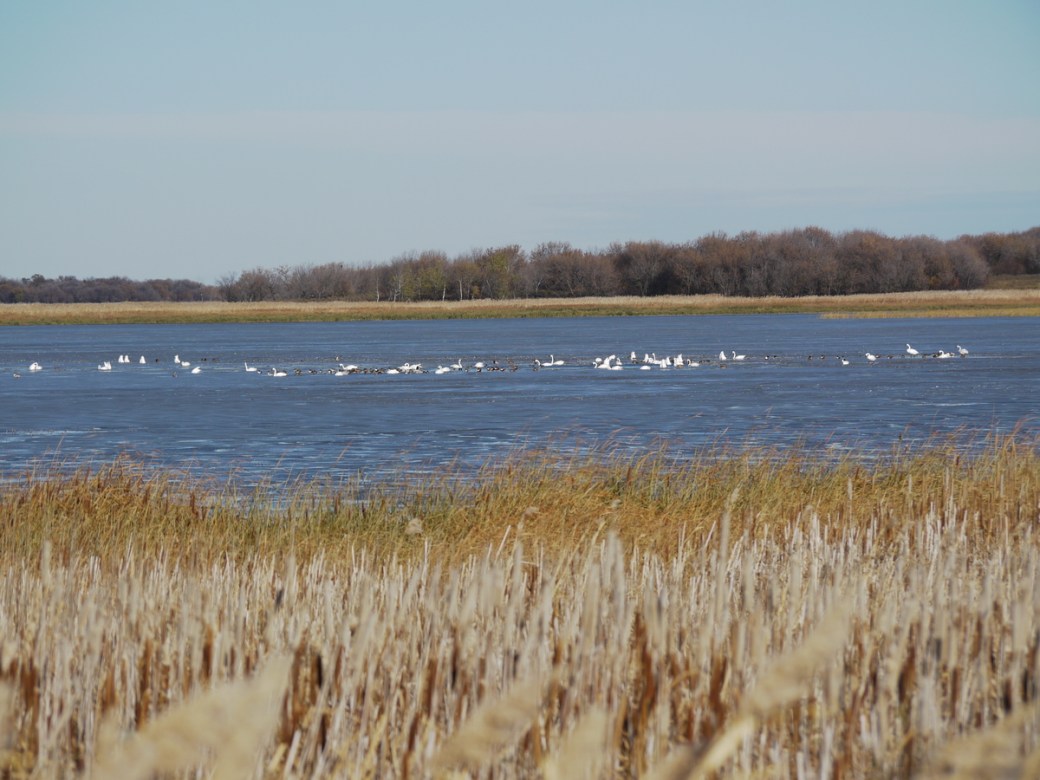
All in all, it was a good day for Tundra Swans.  A total of 652 were counted at 5 locations plus one flyover group.  The highest numbers were found on larger waterbodies along the 254, one on the south side just west of Oak Lake resort and one on the east side just north of the Oak Lake resort.  These locations also contained numerous ducks, with the latter including at least 125 (likely many more) Northern Shovelers.

Tundra Swans N of Oak Lake resort IBA Oct 15 2018 P1330089

Various waterfowl, including more Tundra Swans  near the resort. Photo copyright Katharine Schulz

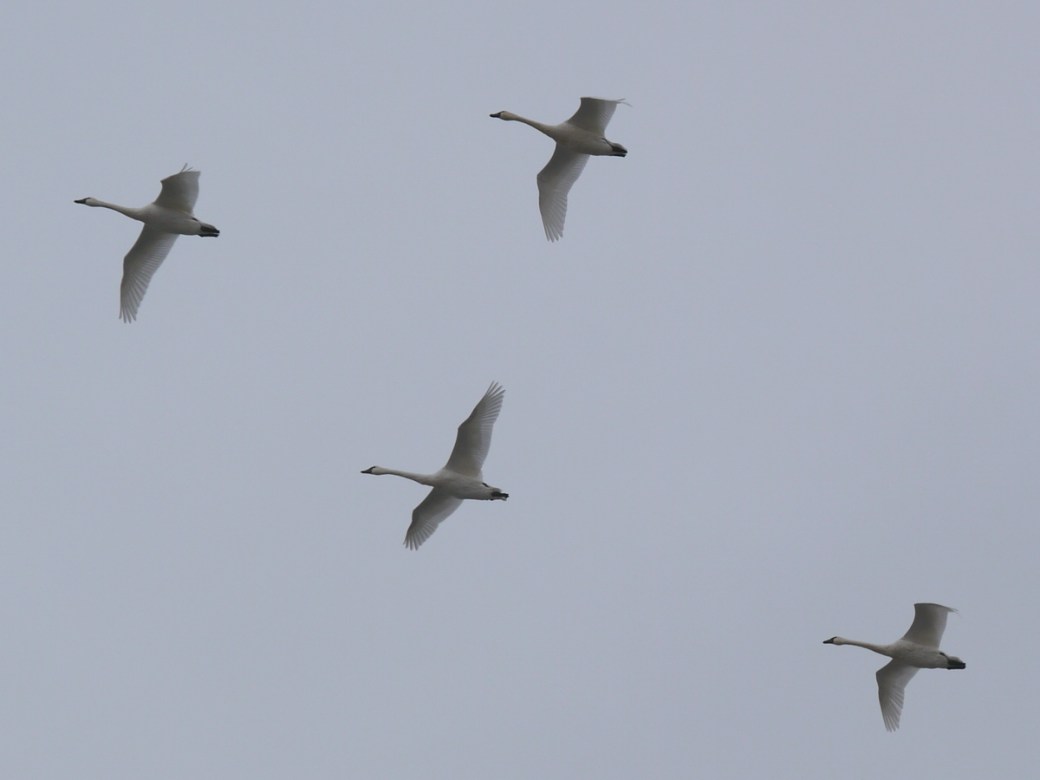
Tundra Swans Oak Lake IBA Oct 15 2018 P1330013

Swans flying over. Photo copyright Katharine Schulz

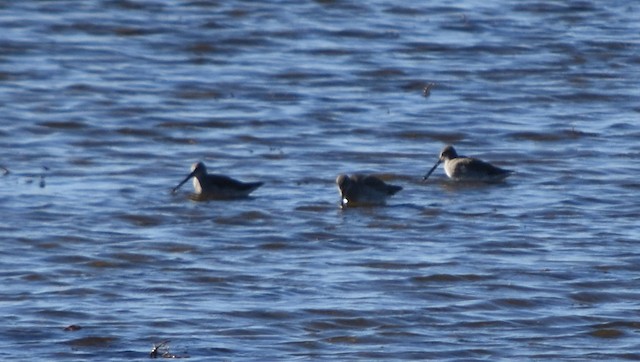
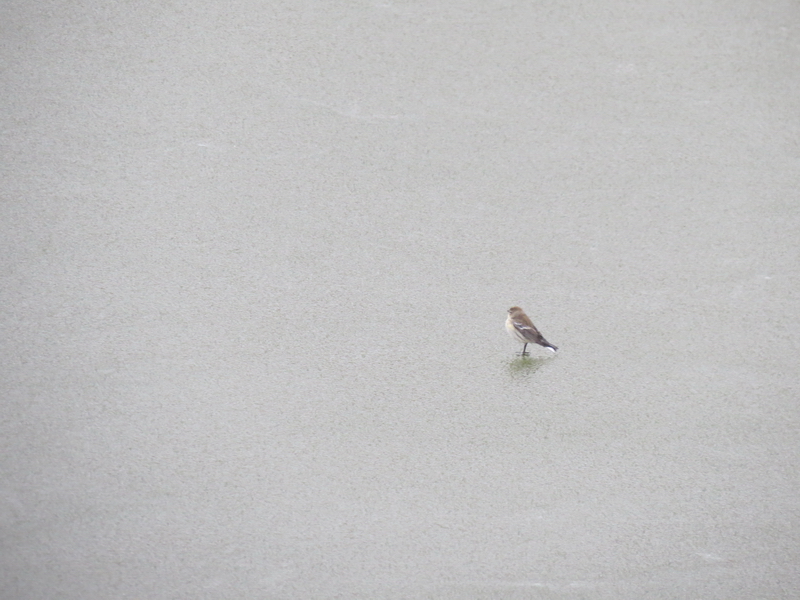
Numerous ducks, mostly unidentified, were encountered throughout the day, in addition to the above.  Many were in flocks in flight.  The highest concentration was found on the west side of Oak Lake upon driving in to the lakeshore along the diversion.  This drive also offered up 2 adult Bald Eagles, a few songbirds and 6 Greater Yellowlegs foraging on a sandbar, along with a few more Tundra Swans on the lake.  A forlorn Yellow-rumped Warbler was also observed attempting to forage on the completely frozen surface of the diversion.

Confused YRWA on icy diversion 46W Oak Lake IBA Oct 15 2018 IMG_1155

Forlorn Myrtle Warbler. Photo copyright Katharine Schulz

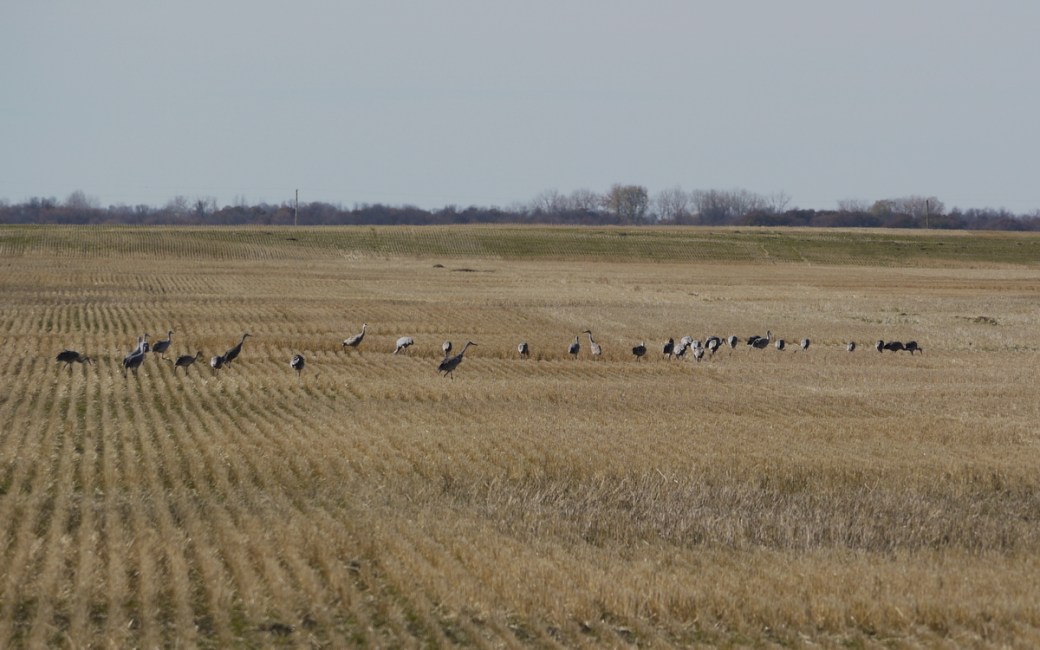
While at the lakeshore, Sandhill Cranes were finally heard and then seen in huge flocks in the air to the south-southwest.  I estimated approximately 2,250 in the air, possibly more, and hoped that I might find them when I drove back out to the 150W and then further south and east.

SACR 149W at 43N Oak Lake IBA Oct 15 2018 P1330030

Sandhill Cranes milling around. Photo copyright Katharine Schulz

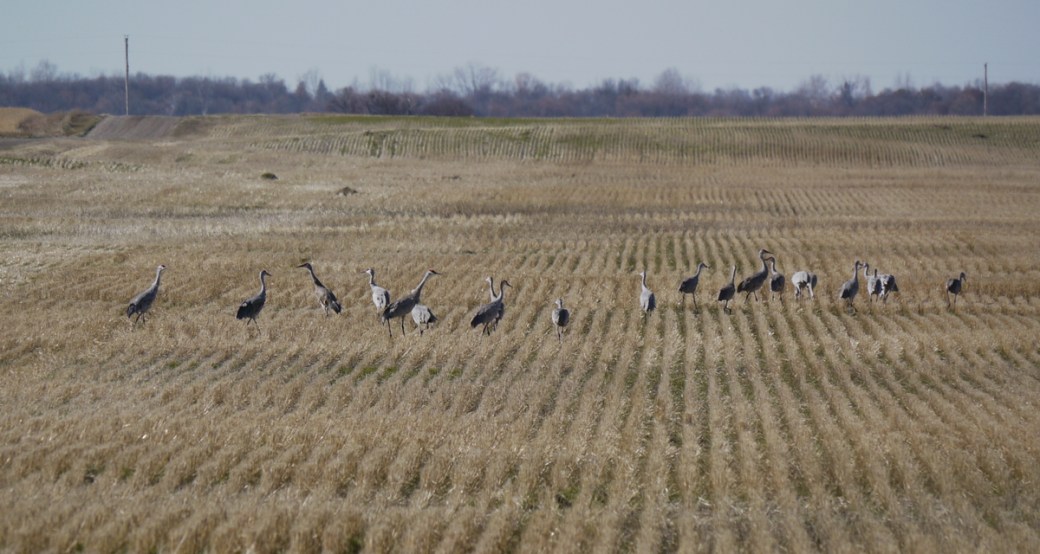
SACR 149W at 43N Oak Lake IBA Oct 15 2018 P1330027

More Sandhill Cranes in the same field.Photo copyright Katharine Schulz

Unfortunately, I only encountered a small flock of 12 flying west at the 150W and 44N, and then 34 in a field off the 149W at 43N. Interestingly, this was about a mile north of the spot you had indicated for SACR found last year, so they seem to favour that general area.)  Small flocks kept flying overhead, mostly from east to west-southwest, so I attempted to drive further east on the 43N, hoping to get closer to where the huge flocks had appeared to be flying when viewed earlier from the lakeshore.  Unfortunately, about 350 more were observed in the air further east, but no more were found on the ground and the road became too dicey to go any further about 2.5 miles east from the 149W.  Altogether, I believe I had approximately 2,726 Sandhill Cranes after counting small flocks overhead and estimating the large, more distant flocks in the air, but I expect this is an underestimate.

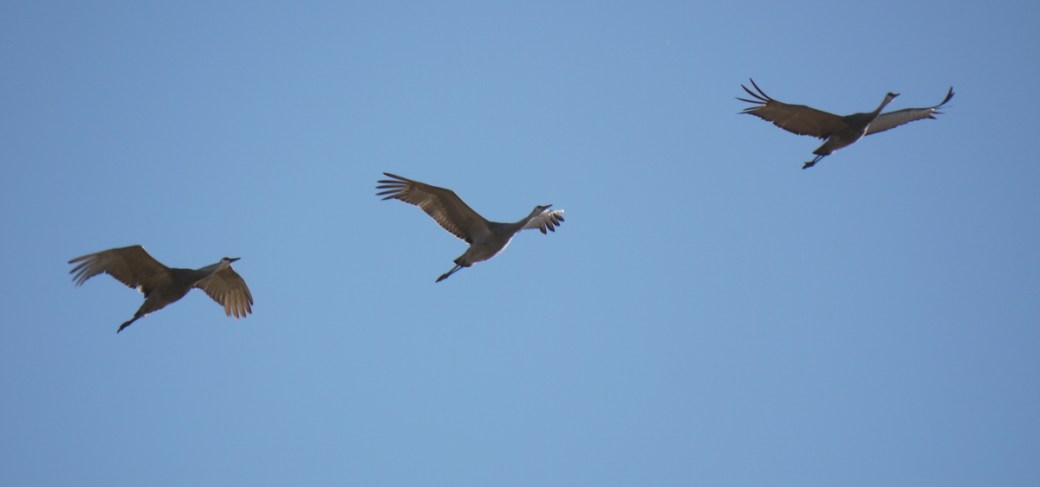
Sandhill Cranes Oak Lake IBA Oct 15 2018 P1330062

Flocks of cranes are commonplace in this area.Photo copyright Katharine Schulz

A decent number of raptors, mostly Red-tailed Hawk and Northern Harrier were encountered throughout the day, but surprisingly few gulls or blackbird flocks.  Oh yes, and I had nice looks at 2 coyotes (and one white cat that I initially mistook for a rabbit – good thing I wasn’t doing a mammal survey!)

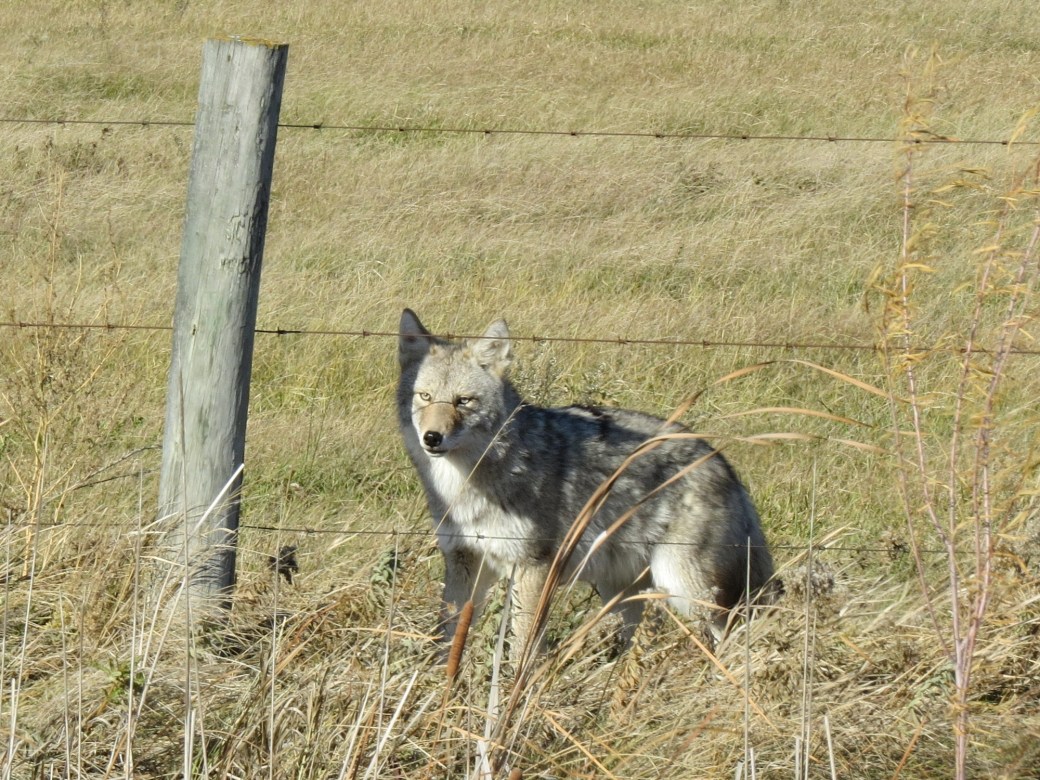
Coyote 254 W of Oak Lake resort IBA Oct 15 2018 cropped IMG_1188

Coyote on the prowl….Photo copyright Katharine Schulz

Thanks Katharine for your excellent report, and great photos. Here is the list submitted by Katharine (which can be viewed on eBird).

Snow Goose 55
Canada Goose 66
Tundra Swan 652
American Wigeon 10
Mallard 157
Northern Shoveler 125
Northern Pintail 3
Canvasback 5
Redhead 2
Scaup sp. 30
Bufflehead 22
Common Goldeneye 15
Duck sp. 4138
Western Grebe 1
Northern Harrier 4
Cooper’s Hawk 1
Bald Eagle 2
Red-tailed Hawk 6
Sandhill Crane 2726
Killdeer 1
Greater Yellowlegs 10
Ring-billed Gull 6
Rock Pigeon 85
Mourning Dove 2
Hairy Woodpecker 1
Northern Flicker 1
Balck-billed Magpie 10
American Crow 2
Common Raven 11
Black-capped Chickadee 1
Winter Wren 1
American Robin 5
Yelllow-rumped Warbler 3
Chipping Sparrow 3
Dark-eyed Junco 8
Sparrow sp. 3
Western Meadowlark 6
Blackbird sp. 35

The 12th Prairie Conservation and Endangered Species Conference

Winnipeg will be hosting the 12th Prairie Conservation and Endangered Species Conference on February 19-21, 2019. This is a great opportunity to hear about the diverse conservation initiatives ongoing in the three prairie provinces, meet fellow enthusiasts, and be challenged about the future of the prairies. The theme of ‘Working Landscapes’ is timely, and very much complements the SARPAL projects, of which we are partners.

See http://www.pcesc.ca/ for more info.

PCESC Advrt Poster 2019-1

Thank You Noventis Credit Union!

We were delighted to receive a cheque for $500 from Noventis Credit Union yesterday. This funding supported outreach and workparties in the Manitoba Interlake including our weed pulls (here are links for weed pull 1 and weed pull 2), our beach clean-up, and blitzes at the North, West and East Shoal Lakes IBA. Thank you for your support.

Nature MB

Manitoba IBA Coordinator, Tim Poole, receiving a cheque from Amanda Wilson from Noventis Credit Union.

Heroic Effort to Pull Weeds at Sandy Bar When the Weather is Knot Fine

Tim Poole has finally thawed out from a bitter weed pull on Friday September 28th. Here is a report on another successful morning at the ‘Bar’.

8 degrees, that’s what they promised. 8 degrees and sunshine, almost the ideal conditions for a Friday morning weed pull at the end of September in Manitoba. This was Wednesday, and we were getting ready for another morning recreating habitat for Piping Plovers. It was therefore, to my absolute horror, when someone at home (she who shall remain nameless), announced that the forecast on Thursday had swung around, and was now a rather milder 1 degree, and flurries. A tiny bit of a turnaround then!

We decided to plough ahead, warning everyone who had contacted us beforehand that the weather was possibly going to be fowl (ok, allow me at least one more bird pun), but we would be going ahead regardless. We are after all a hardy bunch.

The drive up to Sandy Bar was punctuated by many a bird sighting. Seven eBird checklists worth apparently (a recent convert to the eBird App was responsible for recording bird sightings). Sharp-tailed Grouse were probably the best species, although, as the driver, I missed out on that particular species. Not to worry, Sandy Bar rarely disappoints at this time of year.

Arriving early, and the first few souls were already looking chilled to the bone. The north wind rushed across Lake Winnipeg, and what’s more, the coffee and muffins had not materialised. In life, there are times when you need a nice hot coffee, and this was one of them. Eventually, Lynnea and Ward arrived in a flurry of glory, and produced the aforementioned beverages and snacks, and we tucked in (it turned out that ordering in advance, does not mean that your order will be ready – or even being processed when you arrive). At least the early arrivals got to start birding – American Pipit numbers were already building nicely.

American Pipit_1566_Artuso

Just a brown bird? There’s something so completely striking and intricate about the American Pipit. Copyright Christian Artuso

We gathered around, I gave a stirring speech to rally the troops. Following this outpouring of Shakespearean prose, the group seemed just glad to get moving.

Seventeen people showed up, and we are extremely thankful to every single one of them. Unfortunately, Joanne, our instigator in chief, had to work. We did encourage her to ‘pull a sicky’, but she has far too much integrity to do that! The walk along the shoreline was, as ever an opportunity to view some avian treats. Usually these events are defined by the gatherings of Rusty Blackbirds. Not this time though. Warblers, Horned Larks, American Pipits, and various other songbirds seemed to be hiding in the willows.
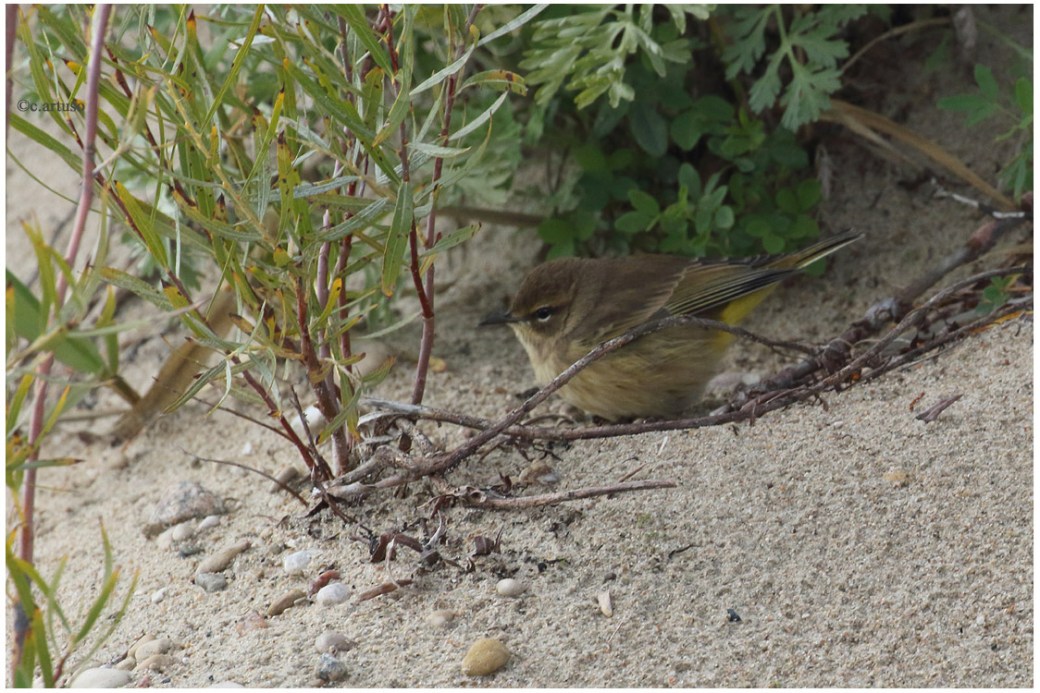
Palm Warbler_2255_Artuso

A Palm Warbler appearing to take shelter from the wind. Copyright Christian Artuso

Our plan for weeding was to widen the large open sandy area midway along the bar, in the hope that we would one day make an area so clear, a Piping Plover would inevitably have no choice but to breed here.
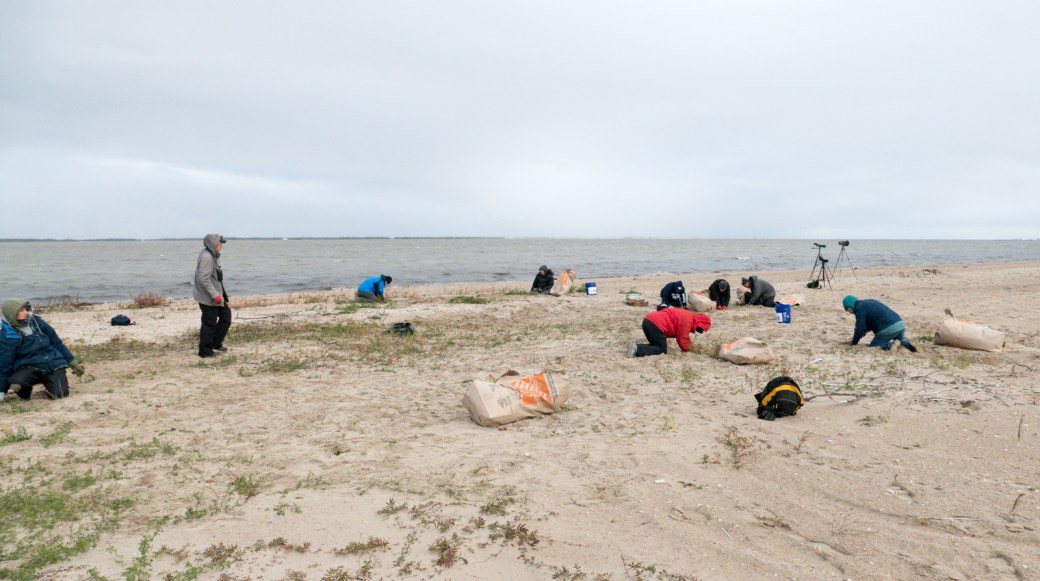
Sandy Bar Weed Pull-October 2018-Lynnea A Parker-1120822

Hard working volunteers digging in for the mornings weed pulling. Copyright Lynnea Parker

Sandy Bar Weed Pull-October 2018-Lynnea A Parker-1120803

Volunteers give up their tripods and scopes and get to work. Note the short vegetation, a sure sign that we are getting somewhere. Copyright Lynnea Parker

The vegetation was pretty clipped, one would assume it was young, and easily pulled. That would be a mistake. The clover was rooted deep into the ground, having more than one season of growth for certain. To remove the roots meant to dig down, grapple with the root and then twist it around your hand, before teasing it out. It often took over a minute to pull a single clover. Hard work, rewarding, and probably a good way to keep warm in the circumstances.
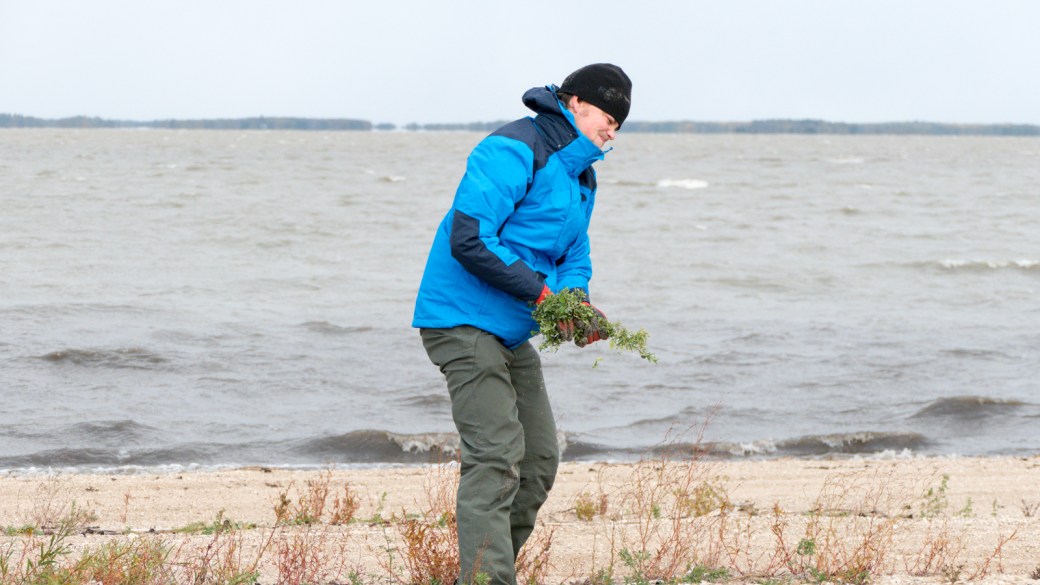
Sandy Bar Weed Pull-October 2018-Lynnea A Parker-1120806

Come on Tim, it can’t be that hard. Photo copyright Lynnea Parker

It seemed like slow work. Each bag was slowly filled with willows, clover and burdocks. In fact, over 30 bags, possibly as many as 40 bags were filled. An average of over 2 per person was some going for a cold day.

Sandy Bar Weed Pull-October 2018-Lynnea A Parker-1120825

Peter having an argument with a Home Depot bag. For clarification, we in the Manitoba IBA Program show no preference for selecting bags, and would like to assure members of the public that garden bags can be purchased from a number of different hardware and garden establishments. Canadian Tire did seem to hold up better though. Copyright Lynnea Parker

Lynnea took some wonderful photos of the group working, and we could not select just one or two to show off, so here is a selection of some of the best ones.

Each bag was dragged into a pile including the bags from our August weed pull, and these are to be burnt by staff from Manitoba Sustainable Development.

Sandy Bar Weed Pull-October 2018-Lynnea A Parker-1120800

Pulling bags to the burn pile. Has anyone else noticed that Lynnea spent an awfully long time taking pics? Copyright Lynnea Parker

At some point in the morning, the attention shifted from pulling the shorter stuff, to pulling anything with a flowering head, and then to targeting the willows rooting along the beach. These plants are rhizomous, meaning that the underground roots are capable of producing new shoots, and new plants (although the new shoot is genetically the same as any other willow on the same root system). We found an efficiency in pulling along these root systems. We also realised that the willows were stabilising the sand bar, and their removal might make the sand less compact, and therefore reduce the seed bed for the weeds.
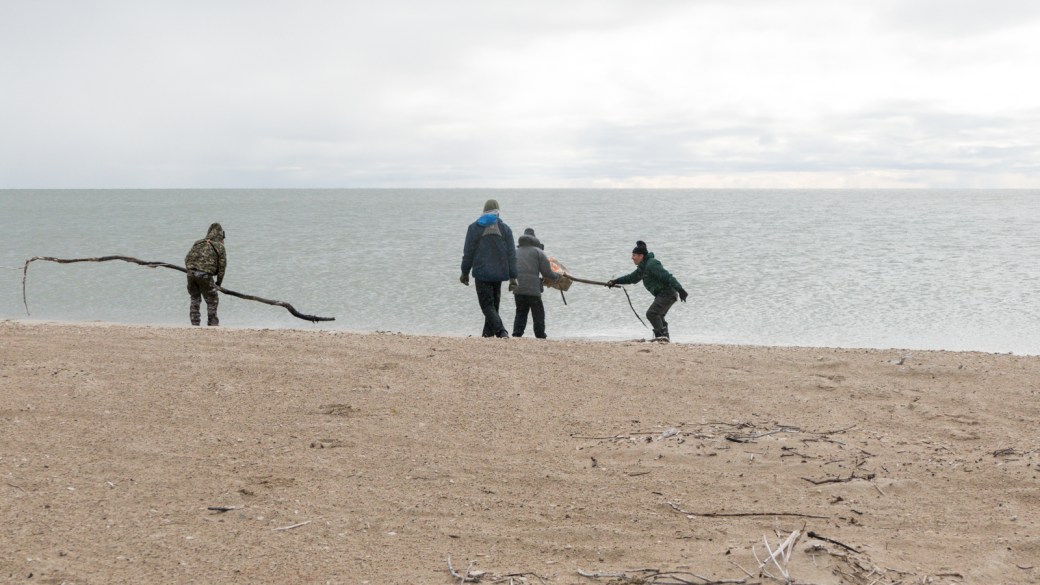
Sandy Bar Weed Pull-October 2018-Lynnea A Parker-1120835

Tug of war over a willow root. Copyright Lynnea Parker

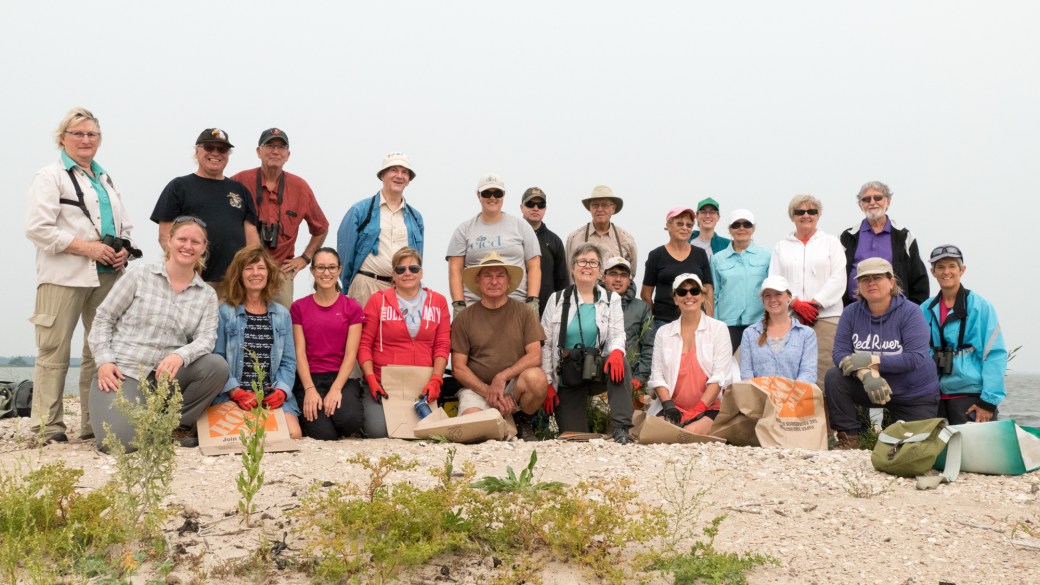
We wound up around midday, following the customary group photo.

Sandy Bar Weed Pull-October 2018-Lynnea A Parker-1120838

Everyone trying to not look too cold. Copyright Lynnea Parker

At this point we began the process of clearing up, making it appear as if no one had ever been there.
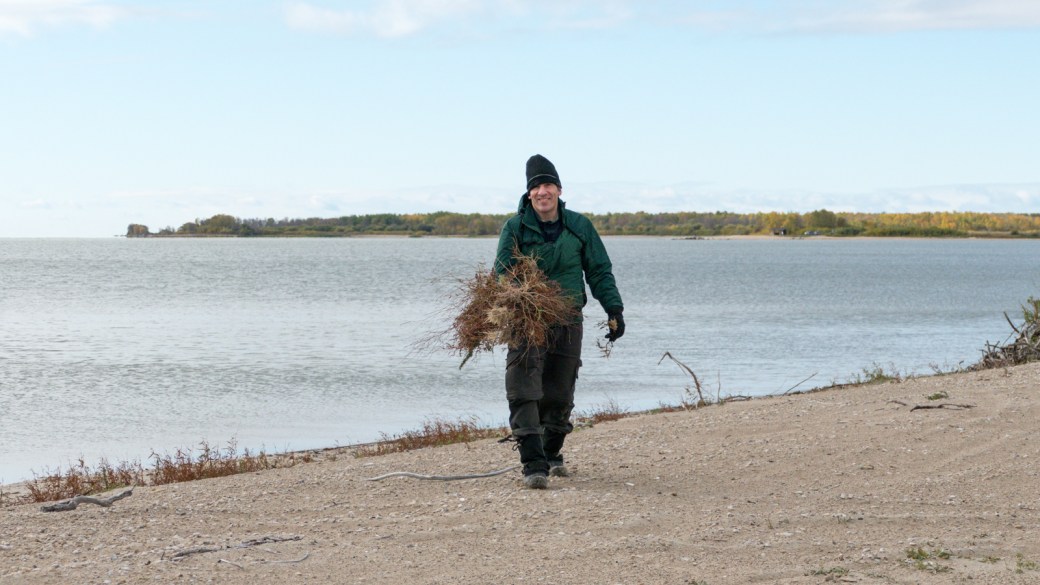
Sandy Bar Weed Pull-October 2018-Lynnea A Parker-1120814

It was fortunate that we persuaded Christian that a bunch of sticks was not going to be an appropriate gift for his wife. Copyright Lynnea Parker

And came to the most important point of the day – the trip to the tip and the chances of finding some birds. Around half the group headed for warmth, but us brave souls wanted to see more birds. Lynnea had to be persuaded by the promise of some snack bars – and she calls herself a birder! The first species was the pale, bustling Sanderling, a species most at home scurrying around in the surf at the waters edge.
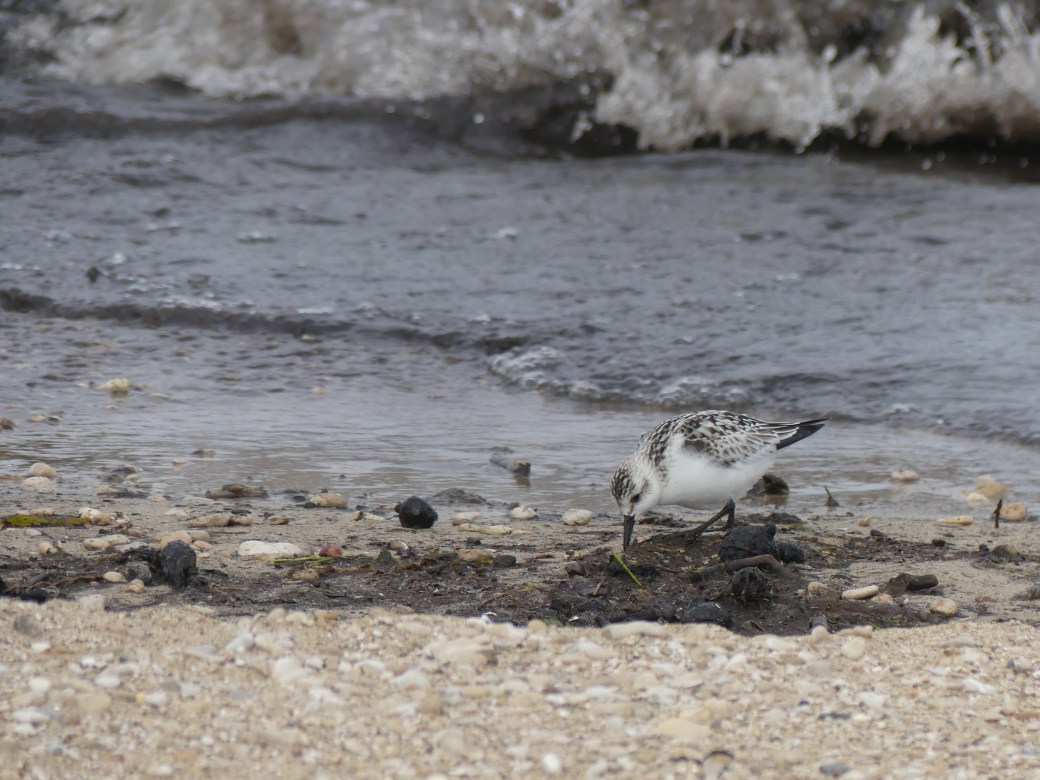
P1050423

Sanderling, one of the few defenses against zebra mussels? Copyright Tim Poole

Walking further up the beach, revealed more birding treats. Horned Lark are not exactly a rare find in Manitoba over the summer, but they rarely show this well.
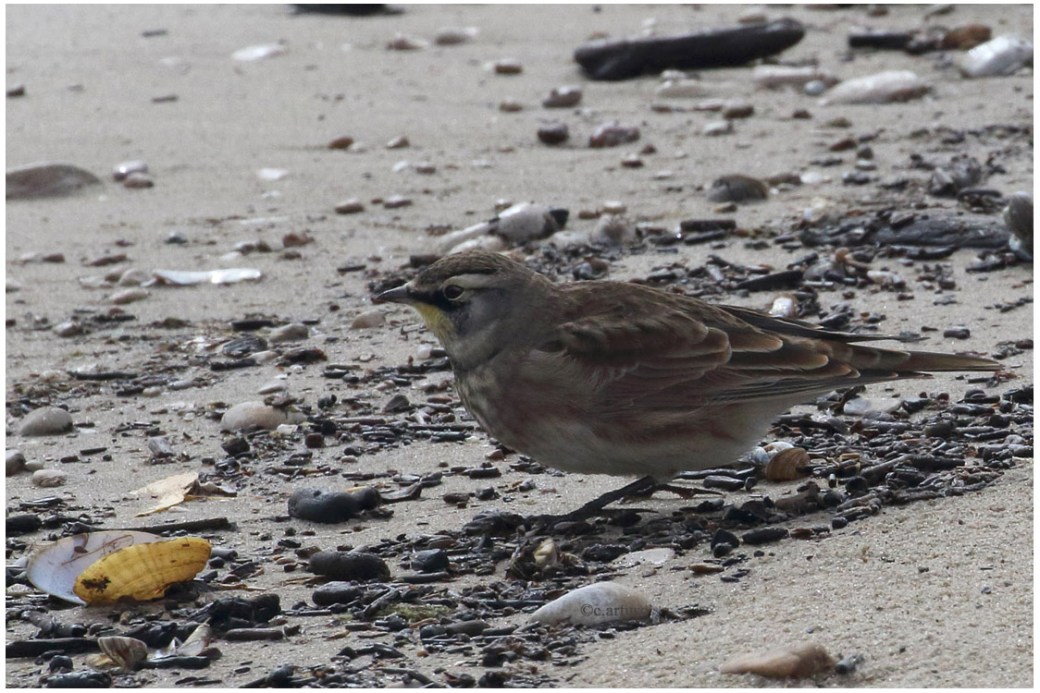
Horned Lark_2236_Artuso

Horned Lark. Copyright Christian Artuso

Another great spot was a Blackpoll Warbler.

Blackpoll Warbler_2042_Artuso

Blackpoll Warbler in the vegetation. Copyright Christian Artuso

To the tip we headed. Peter D. passed us with some exciting news, an opportunity that we would knot be able to turn down.

A group of shorebirds raised the excitement levels, but they disappeared. Had Peter’s birds escaped us? Fortunately not. Two juvenile Red Knots, a globally Near Threatened and a nationally Threatened species were foraging with a juvenile Black-bellied Plover  at the tip of the bar. As with the Sanderling, these are High Arctic breeders.

Red Knot_1429_imm

Juvenile Red Knots. Copyright Christian Artuso

After 20 minutes and a cumulative total of about 1,000 photos between five of us, we were heading back. Lapland Longspurs were getting quite abundant by now.

The second excitable moment was courtesy of Ray. Scoters! White-winged! Alas no, the scoters became scaup, Lesser Scaup at that. Oh well, nice try!

Lesser Scaup_2029_Artuso

Lesser Scaup flying across the lake. Copyright Christian Artuso

Excitable moment three followed soon after. Lynnea had found a Western Sandpiper! It disappeared – would we ever find out whether she was right? Some shorebirds landed behind us, and suddenly we had it in our sights. Christian was convinced – a Western it was! Christian – and the rest of the group for that matter – had briefly taken leave of our senses, and forgot the basic first question for identifying small sandpipers. Christian is a fine teacher – and had taught me to look at the ratio of wing length to tail before proceeding with identification. This bird had long wings projecting far beyond the tail. It was either Baird’s or White-rumped. In fact it was the latter, due to the bright patterning, indicative of a juvenile at that. Alas, Ray kept his jig of delight for another day….

White-rumped Sandpiper_2163_juv_Artuso

Look at that projection! Note the wings project beyond the tail on this White-rumped Sandpiper. Also note the orange on the base of the bill, and the highly patterned back. Copyright Christian Artuso

White-rumped Sandpiper_2146_juv_American Pipit_Artuso

Who’s a little fella! White-rumped Sandpiper versus American Pipit. Note the size differential is hardly noticeable. Copyright Christian Artuso

Pectoral Sandpiper_2051_White-rumped Sandpiper_Artuso

It’s definitely got a white rump! Pipit, Pec and White-rumped Sandpiper. Copyright Christian Artuso.

Excitement over, we returned to the parking lot, returned to the cars, and returned to a warm drink. It was a fantastic effort by everyone, over 30 bags filled, and some great birds for those of us who stuck around until the bitter end.

Thank you to the brave 17 – your efforts were greatly appreciated! Thank you also to our various funders, including Environment and Climate Change Canada, Manitoba Fish and Wildlife Enhancement Fund, TD Friends of the Environment Foundation, and Noventis Credit Union.


Here to the critically important final bird list of the day (see here, here and here).

Species Name Species Count
Snow Goose 195
Canada Goose 160
Mallard 43
Green-winged Teal 2
Greater Scaup 6
Lesser Scaup 50
Bufflehead 18
Common Goldeneye 2
Black-bellied Plover 2
Red Knot 2
Sanderling 10
Dunlin 1
White-rumped Sandpiper 2
Pectoral Sandpiper 5
peep sp. 1
Wilson’s Snipe 6
Bonaparte’s Gull 21
Ring-billed Gull 39
Herring Gull 13
Caspian Tern 3
Double-crested Cormorant 3
Northern Harrier 3
Bald Eagle 11
Belted Kingfisher 3
Downy Woodpecker 1
Hairy Woodpecker 1
Northern Flicker 1
Merlin 3
Black-billed Magpie 2
American Crow 6
Common Raven 8
Horned Lark 27
Winter Wren 1
Marsh Wren 1
Ruby-crowned Kinglet 3
American Robin 15
American Pipit 106
Lapland Longspur 63
Fox Sparrow 2
Dark-eyed Junco 30
White-crowned Sparrow 21
Harris’s Sparrow 11
White-throated Sparrow 30
Song Sparrow 2
Lincoln’s Sparrow 1
Swamp Sparrow 1
Tennessee Warbler 2
Common Yellowthroat 2
American Redstart 2
Blackpoll Warbler 1
Palm Warbler 36
Yellow-rumped Warbler 98


Latest Newsletter

The fall update of the Manitoba IBA Program newsletter has just been published. We include updates on the ISS surveys, including links to the third round of monitoring – and what a round it was too! We also include a focus on a day out from a group of volunteers, finding some rather good bird numbers at Delta Marsh IBA, a brief summary of our summer of fun, plus updates on projects with indigenous communities, and grassland birds. Check it out at the link below:

https://mailchi.mp/5e8a9ce3e78e/manitoba-important-bird-areas-program-news-fall-2018

International Shorebird Survey – Round 3

2018 has seen the launch of the International Shorebird Survey (ISS) in Manitoba. Each month from July to September, volunteers from the Manitoba IBA Program, Bird Studies Canada, and NCC, have traveled to Whitewater Lake and Oak Lake and Plum Lakes Important Bird Areas to carry out these surveys. Our third and (in theory), final trips were completed earlier this week, and here is a summary of the results.


On September 17th, Gillian Richards, Christian Artuso, Josiah Van Egmond, and Ed Jenkins, completed the two monitoring transects at Whitewater Lake IBA. The results were, to say the least, quite spectacular.

The total of 38,861 birds, and 99 species was highly impressive, although a mere 20,764 were noted on the ISS surveys themselves, the remaining birds seen while driving from point to point. The most abundant bird was the Red-winged Blackbird, a colossal total of 8,960 being recorded.


Red-winged Blackbird_0784_flock in flight

Who scared the blackbirds? Photo copyright Christian Artuso

Ducks were also abundant, 4,046 Northern Pintail being the highest individual count, but with sizable counts of Green-winged Teal and Mallard as well. A single Greater White-fronted Goose was another standout, along with the usual totals of Snow and Canada Geese exceeding a thousand individuals.


Northern Pintail_green-winged Teal_Snow Goose_0754

Northern Pintail, Green-winged Teal and Snow Goose at Whitewater. Copyright Christian Artuso

Two Prairie Falcons and two Peregrines were also encountered, which segues nicely to the shorebirds (falcons are notoriously good at flushing shorebirds). The highlight was the Long-billed Dowitcher total of 3,217 individuals. An IBA trigger. This is fascinating. In ISS 1, we had a near trigger for this species, among several thousand dowitchers, but in ISS 2, dowitchers were almost absent. Therefore, large numbers of Long-billed Dowitchers migrated to Whitewater in July, moved on, and were replaced by large numbers in September. Dynamic populations or what! Of the other 21 species of shorebird, they counted a single Red Knot, 407 American Golden Plover, 562 Pectoral Sandpiper (a near trigger), and 542 Greater Yellowlegs.

Long-billed Dowitcher_0705_flock_Artuso

Distant Long-billed Dowitcher flock. Copyright Christian Artuso

Here is the total birds for the day, with a column for those recorded on the ISS transect, and a column for the total Whitewater Lake birds.

ISS Transects Total for Day
Snow Goose 1,170 1,795
Greater White-fronted Goose 0 1
Cackling Goose 0 19
Canada Goose 654 2,679
Wood Duck 2 2
Blue-winged Teal 801 923
Northern Shoveler 365 450
Gadwall 265 572
American Wigeon 276 284
Mallard 1,591 2,456
Northern Pintail 4,043 4,046
Green-winged Teal 2,310 2,422
Canvasback 6 258
Redhead 12 222
Lesser Scaup 4 22
Bufflehead 4 13
Common Goldeneye 0 3
Hooded Merganser 2 2
Ruddy Duck 21 105
Pied-billed Grebe 3 7
Eared Grebe 9 11
Western Grebe 124 167
Rock Pigeon 9 9
Mourning Dove 12 42
American Coot 602 631
Sandhill Crane 338 629
American Avocet 16 16
Black-bellied Plover 10 10
American Golden-Plover 36 407
Semipalmated Plover 38 107
Killdeer 22 53
Marbled Godwit 2 2
Red Knot 1 1
Stilt Sandpiper 360 413
Sanderling 6 6
Baird’s Sandpiper 48 48
Least Sandpiper 191 256
Buff-breasted Sandpiper 1 1
Pectoral Sandpiper 62 562
Semipalmated Sandpiper 205 225
peep sp. 740 940
Long-billed Dowitcher 2,460 3,217
Short-billed/Long-billed Dowitcher 34 1,134
Wilson’s Snipe 4 15
Red-necked Phalarope 1 1
Solitary Sandpiper 1 1
Greater Yellowlegs 499 542
Lesser Yellowlegs 46 46
Bonaparte’s Gull 0 5
Franklin’s Gull 917 1,046
Ring-billed Gull 424 623
Forster’s Tern 0 8
Double-crested Cormorant 6 106
American White Pelican 72 90
Great Blue Heron 2 9
Great Egret 10 18
Black-crowned Night-Heron 8 8
White-faced Ibis 60 102
Turkey Vulture 1 1
Northern Harrier 12 22
Cooper’s Hawk 1 2
Bald Eagle 9 29
Swainson’s Hawk 0 2
Red-tailed Hawk 6 14
Hairy Woodpecker 0 1
Northern Flicker 1 4
American Kestrel 0 1
Merlin 1 2
Peregrine Falcon 2 2
Prairie Falcon 0 2
Blue Jay 0 1
Black-billed Magpie 4 1
American Crow 0 8
Common Raven 2 6
Horned Lark 1 2
Bank Swallow 59 59
Barn Swallow 23 79
Sedge Wren 3 4
Marsh Wren 6 9
American Robin 2 10
American Pipit 7 21
American Goldfinch 2 4
Lapland Longspur 0 10
Clay-colored Sparrow 0 1
Vesper Sparrow 1 2
LeConte’s Sparrow 0 2
Savannah Sparrow 23 114
Song Sparrow 6 11
Swamp Sparrow 7 7
Yellow-headed Blackbird 128 200
Western Meadowlark 4 10
Red-winged Blackbird 1,400 8,960
Rusty Blackbird 0 4
Brewer’s Blackbird 101 126
Common Grackle 43 333
blackbird sp. 0 1,000
Common Yellowthroat 1 1
Palm Warbler 0 2
Yellow-rumped Warbler 3 4
American Golden-Plover_0695_fall flock in stubble_Artuso

Spot the American Golden Plover. Copyright Christian Artuso


On September 18th, Ward Christianson and Linda Boys headed to Oak Lake and Plum Lakes IBA. The totals here were nothing like Whitewater Lake, with only 7 species of shorebird being encountered. Numbers of American Coot, Green-winged Teal, and other dabbling ducks were beginning to build up impressively as well. There were also good numbers of Franklin’s Gulls, and Sandhill Cranes and Tundra Swans were noticeably beginning to appear in the area. Long-billed Dowitcher were the most abundant shorebird, followed by Pectoral Sandpiper, and Lesser Yellowlegs.

advocetm1017

American Avocet in fall plumage at Oak Lake. Copyright Linda Boys

As the totals of non-shorebirds have not been added to eBird yet, we only include the shorebird totals below.

American Avocet 7
Killdeer 12
Stilt Sandpiper 11
Pectoral Sandpiper 32
Long-billed Dowitcher 39
Short-billed/Long-billed Dowitcher 1
Greater Yellowlegs 30
Lesser Yellowlegs 23

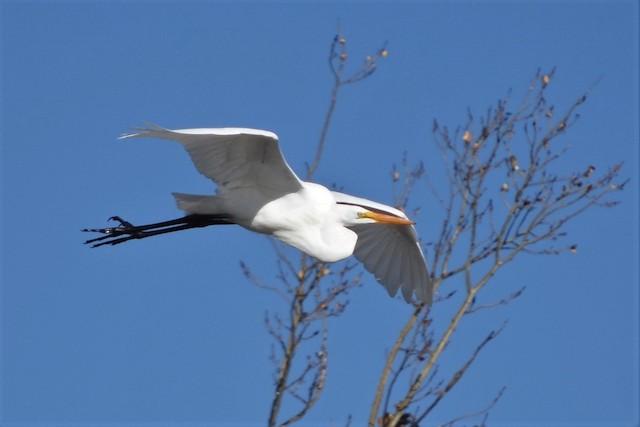
Photos above – another type of wading bird, the wonderful Great Egret. Copyright Linda Boys

Thanks Ward, Linda, Gillian, Josiah, Ed and Christian for all your excellent efforts this week!


For more information on ISS, and previous reports, please see:

Maps, basic instructions and Oak Lake and Whitewater Lake first trip reports
Shorebird Workshop Report – Day 1
Shorebird Workshop Report – Day 2
Whitewater Lake Second Trip Report
Story on NCC website
Story on Manomet website

A Feature on Proven Lake IBA

Tucked in the shadow of Riding Mountain National Park, Proven Lake is the type of place which you might drive past on the road to and from the Park. But take a look, and you might find an interesting place, of Yellow Rails, Le Conte’s Sparrows, Bobolinks, and Alder Flycatchers. Beavers can be spotted here, and even the occasional River Otter. Proven Lake gives you an opportunity to find great birds from spring to fall, and even into winter.

It is fall and maybe not the best time to find some of the treasures named above, but then again, fall is often the time to get up early, visit wetlands, and watch (and count) the extraordinary numbers of waterfowl departing in search of a good meal. Others have commented that Proven Lake shelters hundreds, nee thousands, of waterfowl in fall, and we would encourage anyone staying in that area to get out, and take a look.

Manitoba Sustainable Development have in fact built a trail on Proven Lake. It is little used, and likely to be a bit overgrown, but in mid-summer, apart from the ticks, it provided a great birding walk.

Below, we share maps, and a bit of information about this little known IBA.


Proven Lake is reached by driving north on Highway 10 from Brandon. Turn to the west when Highway 10 meets number 45, and you are almost there! Rather than turn onto the 45 itself, immediately take the gravel road to the north, and head along here. The lake is to the north.

Proven Lake Location

Soon the lake appears. You can see a possible Franklin’s Gull colony on the lake in this area. Of interst to most birders, the habitat here for Yellow Rail looks superb!

Proven Lake Road Map

P1050027

Sedge meadows beloved of Yellow Rail and Le Conte’s Sparrow, among others.

Continuing to head west, you come to the trail. This can be accessed on a road heading north, and you will be able to recognise it as it’s well signposted (see below).

P1050043

Pull into the parking lot, and you face an information sign with an image of the IBA-designate bird, the Black-crowned Night Heron. The original designation pertained to a huge colony of over 300 nests, counted in 1966. In 1995, there were still 200 nests. This represented around 4% of the estimated Canadian population of this species.

P1050028

The information sign on the way into the trail. Copyright Tim Poole

Proven Lake Trail Map

Close up of the trail track taken form a GPS.

Setting out along the trail, you come across a variety of habitats: broadleaf woodland; agricultural land, notably hay meadows; spruce bog and; wetlands including cattail marshes, sedge meadows and open water.

The hay meadows host Bobolinks, Brown Thrasher, and other generalist open ground bird species. These drop into sedge meadows closer to the lake, and this area was notable for its Yellow Rails during the Manitoba Breeding Bird Atlas. Le Conte’s Sparrow are also found here. The lake has hosted large colonies of Franklin’s Gull in the past, at least 800 nests (a modest 100 individuals were noted in summer 2018). Eared Grebe has bred here in significant numbers as well. Being so close to the National Park, a number of warblers can be spotted in migration, as well as some of the typical aspen parkland breeding species, such as Black-billed Cuckoo and Least Flycatcher. Areas of willow scrub, and dead conifer trees are ideal for flycatchers, Alder’s certainly breed here. The cattail marshes also host American Bitterns, and hide breeding dabbling ducks.

P1050042

A female Northern Shoveler, just one of the species of duck using Proven Lake. Copyright Tim Poole


The varied habitat along the trail provides habitat for a host of species. Beaver lodges are noticeable along the channels, and muskrats are present in the cattails. The diverse habitats are also great for invertebrates (although in spring and summer, watch for ticks). Please though be Bear Smart – this is after all in the shadow of Riding Mountain, and this area is very much known for its bears.

P1050040

Muskrat in the lake. Copyright Tim Poole

P1050032

Canadian Swallowtail Butterfly, a species present along the woodland edge in late spring and early summer. Copyright Tim Poole

Monitoring Priorities

Although all the above were taken in June, there is a need to do more monitoring at Proven Lake. Many visiting birders drive straight by it, heading into the boreal treasure trove that is Riding Mountain National Park, and in a way, who could blame them! BUT, Proven Lake is certainly worth a look, and the area here is very much under-birded. You will find species such as Great Gray Owl in the conifer trees along the trail, and it is an ideal spot for the elusive Yellow Rail, so why not stop here next time you come by? In terms of fall priorities, if you are visiting the area, why not take an early morning trip to one of the points on the map below, and count the waterfowl as they leave the shelter of the lake and marshes, and go to feed for the day in the surrounding grain fields? If you are really adventurous, why not try to get a group of people out, and try to count from more than one spot? You might be surprised at the numbers you find!

Proven Lake Waterfowl counting