Whitewater Lake in the Eco-Journal

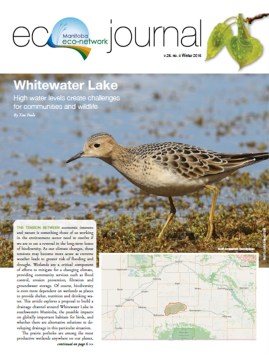
eco-journal-coverIf you do not receive the Eco-Journal, then you might have missed the article published on Whitewater Lake and written by Manitoba IBA Program Coordinator, Tim Poole. We discuss the issues with water impacting communities in this area, the globally important bird populations and what this might mean for the future. A quick note of correction is that all the photos were taken by Christian Artuso, not Tim!

You can download the full article on Whitewater Lake here.

And for our previous offering on grassland birds, you can download here..

A look back at Important Bird and Biodiversity Area IBA MB091 Riverton Sandy Bar 2016 – Guest Blog

A guest blog by Joanne Smith, Caretaker for MB091 Riverton Sandy Bar. All photos are taken by, and copyright of Joanne Smith
Processed with MOLDIV

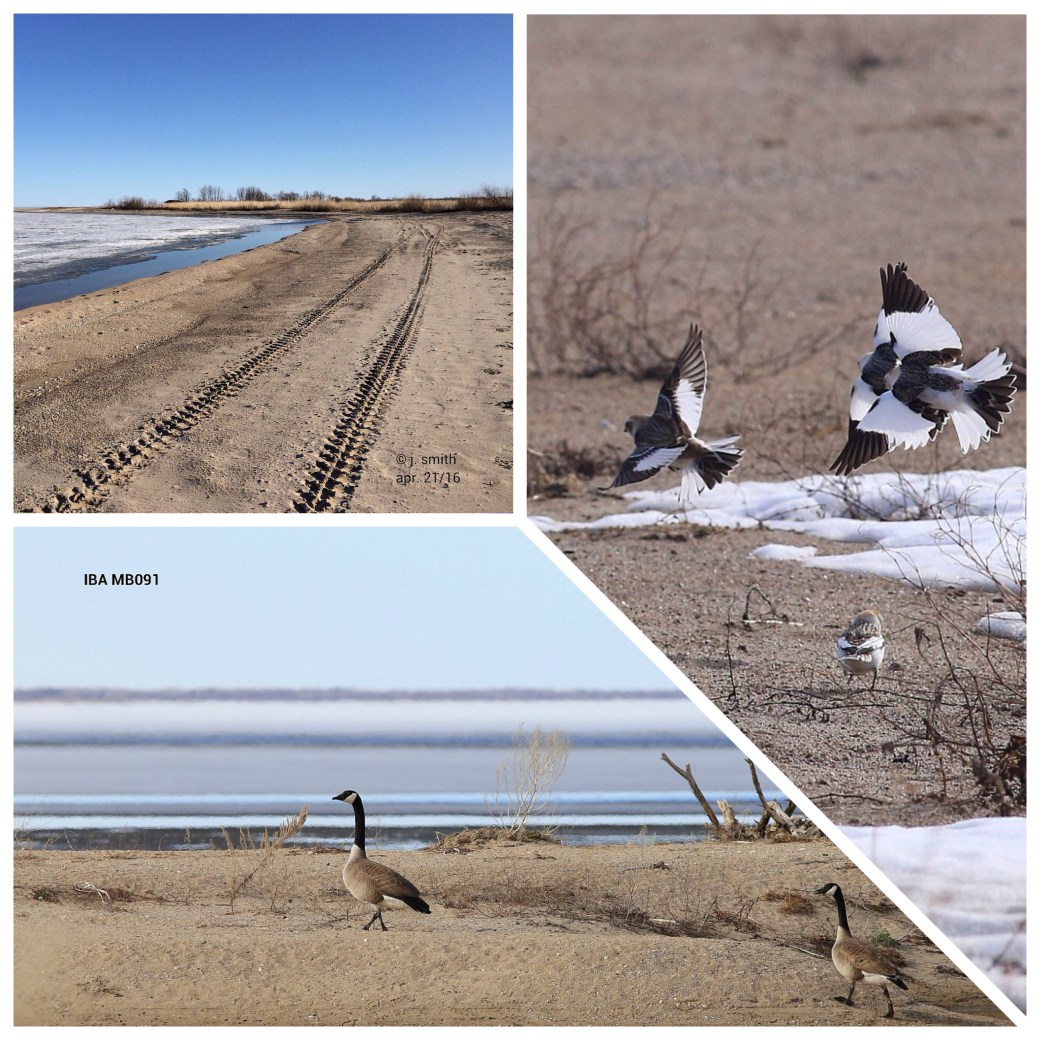
Spring thaw, Snow Buntings and Canada Geese. 2016.

Spring melt brings with it the arrival of various migrants to IBA MB091 Riverton Sandy Bar. Species such as Snow Bunting, Bonaparte’s Gull, Sanderling, Greater White-fronted Goose, Dunlin, and Ruddy Turnstone make brief stops to rest and refuel at this IBA.

Processed with MOLDIV

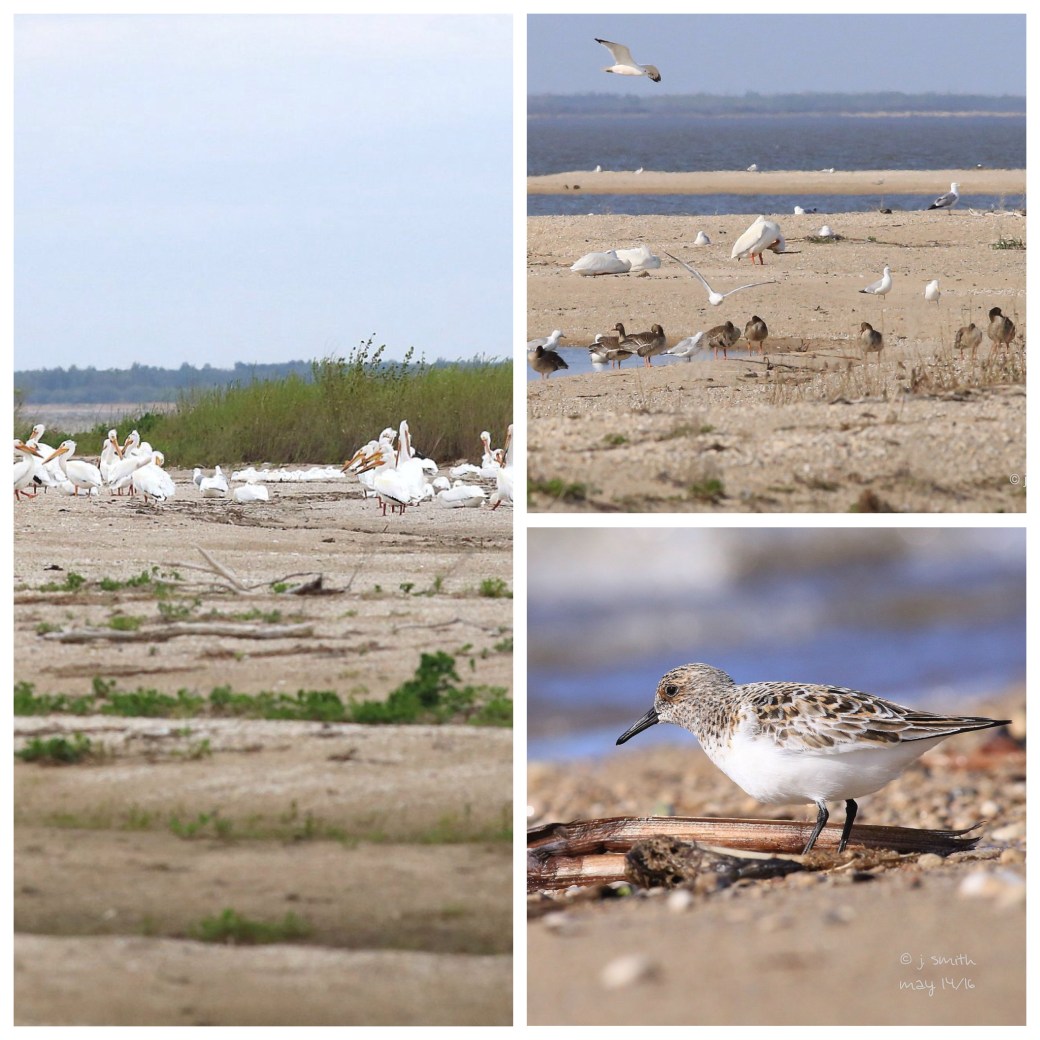
American White Pelican, Greater White-fronted Geese, gull species and Sanderling.

While some migratory species such as the Bonaparte’s Gull may breed nearby in northern Manitoba, many migrants such as the snow bunting nest on the high-Arctic tundra. Finding areas with good food sources, like many of Manitoba’s IBA’s, helps to provide the fuel necessary for these long flights north.

Processed with MOLDIV

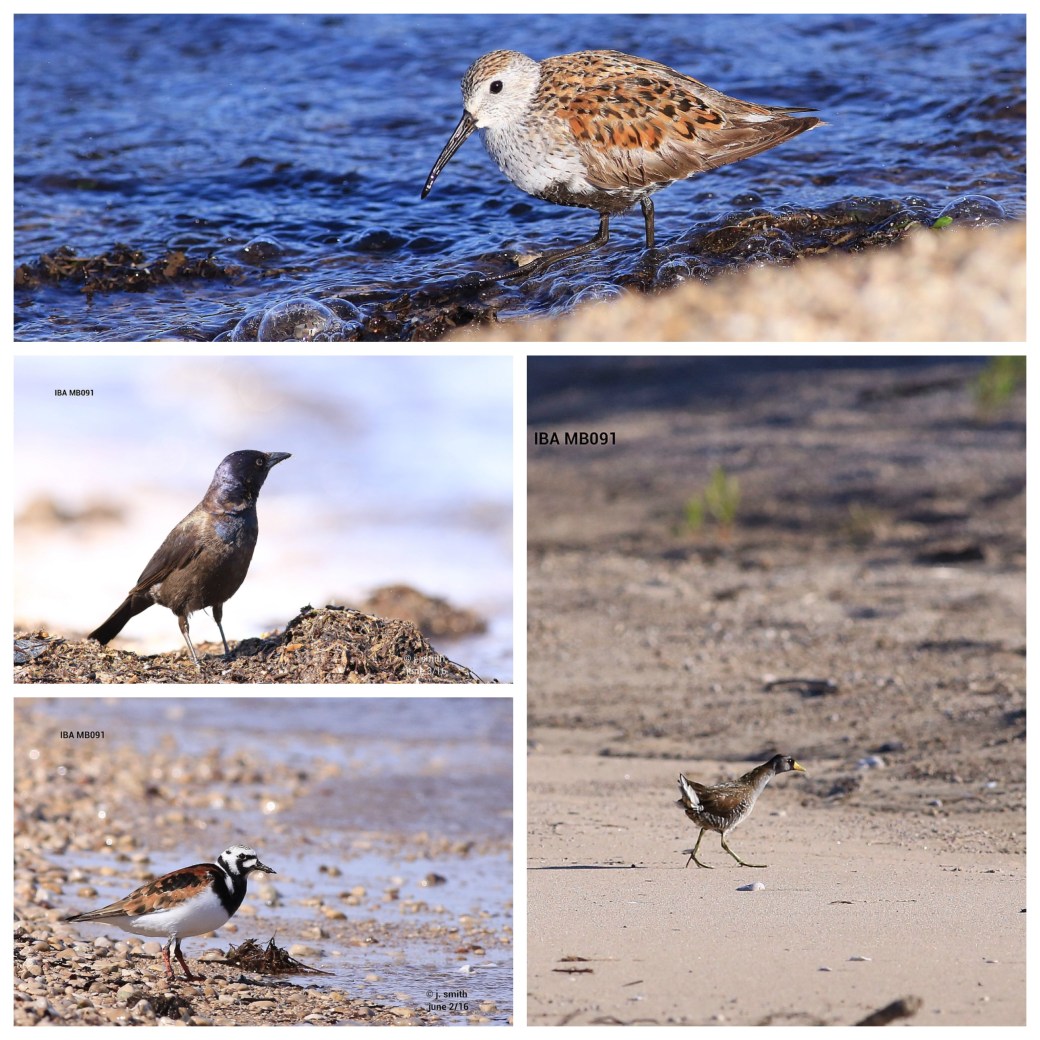
Dunlin, Sora (nests at Sandy bar marsh), Ruddy Turnstone and Common Grackle. 2016.

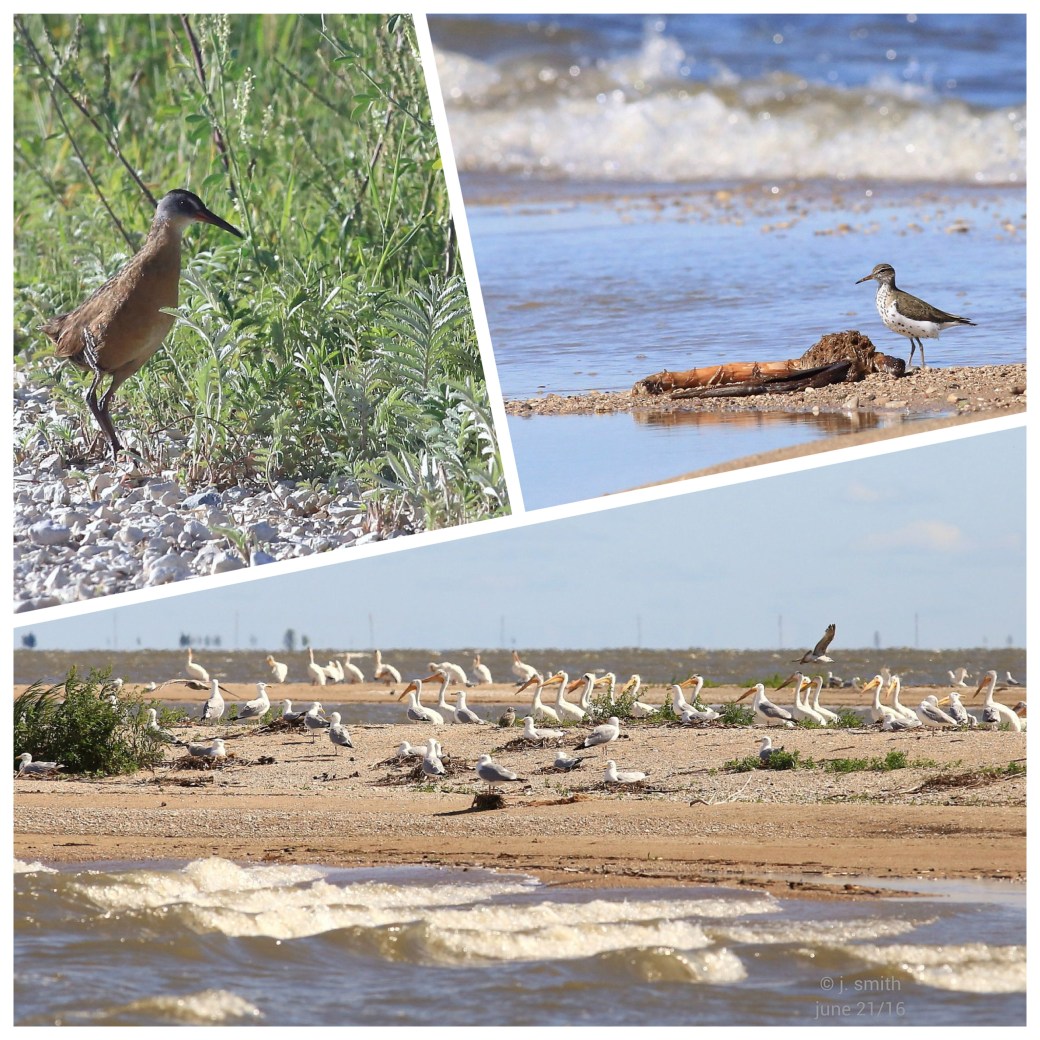
Not only is Riverton Sandy Bar important to many spring migrants, it is also the summer home for species such as Canada Goose, Common Tern, Ring-billed Gull, Herring Gull, Common Grackle, Sora, Virginia Rail, and Spotted Sandpiper. These, along with many warbler and sparrow species, breed, nest and raise their young at this IBA.

Processed with MOLDIV

Virginia Rail (nests at Sandy bar marsh), Spotted Sandpiper (nests on Sandy bar), one small Herring Gull chick can be seen amongst the Herring Gull Nests and roosting American White Pelicans. 2016.

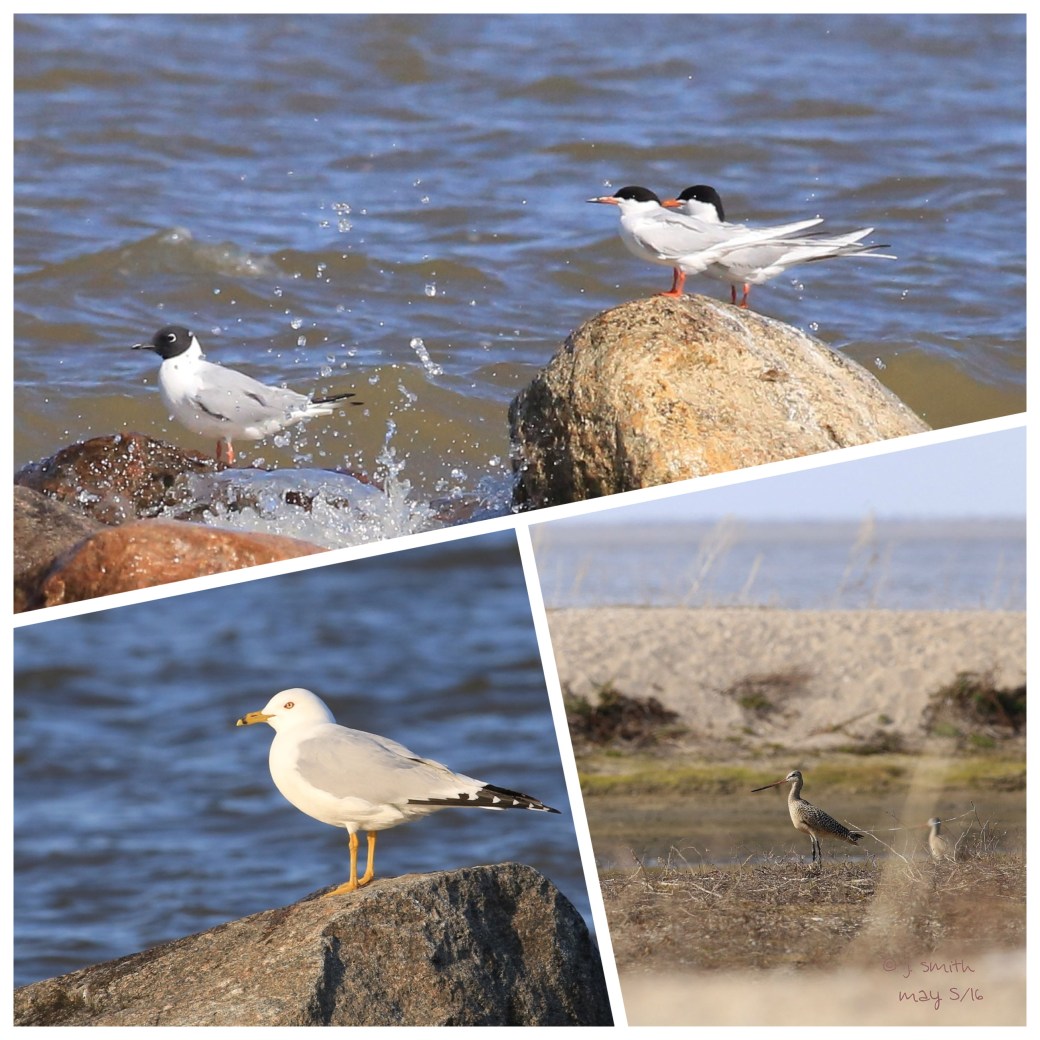
Other species such as Marbled Godwit may nest nearby in open fields. Species such as American White Pelican and Double-crested Cormorant use Sandy Bar as a roosting area during the summer months.

Processed with MOLDIV

Bonaparte’s Gull, Forster’s Terns, Marbled Godwit and Ring-billed Gull. 2016.

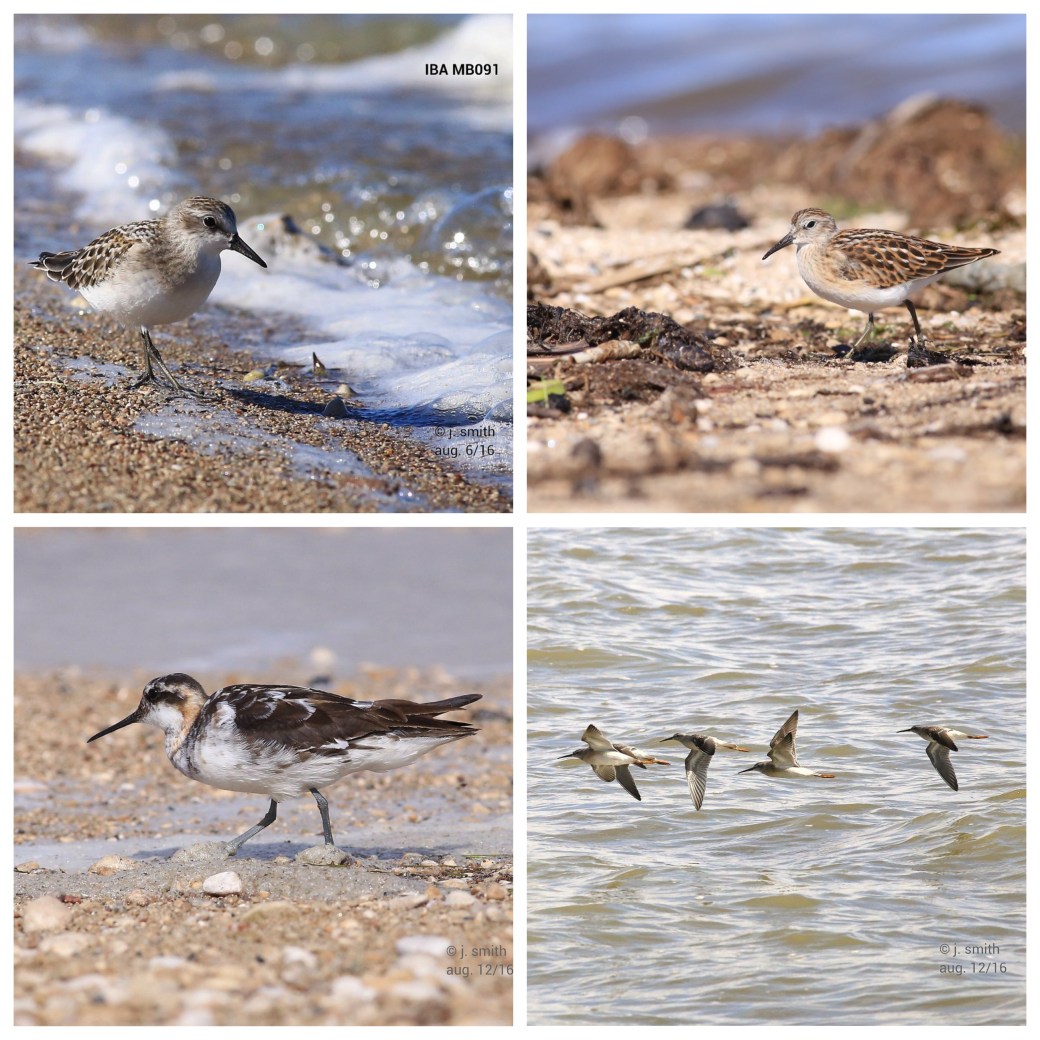
July may seem like summer to us humans but to some species of shorebirds, it means the beginning of fall migration. While Least Sandpiper, Semipalmated Sandpiper and Black-bellied Plover can be regulars at Sandy Bar during the fall migration, sometimes Red-necked Phalarope, Stilt Sandpiper, Buff-breasted Sandpiper and American Golden Plover can be seen.

Processed with MOLDIV

Semipalmated Sandpiper, Least Sandpiper, Stilt Sandpipers and Red-necked Phalarope. 2016.

By late September and early October species such as American Pipit, Horned Lark and Lapland Longspur arrive.

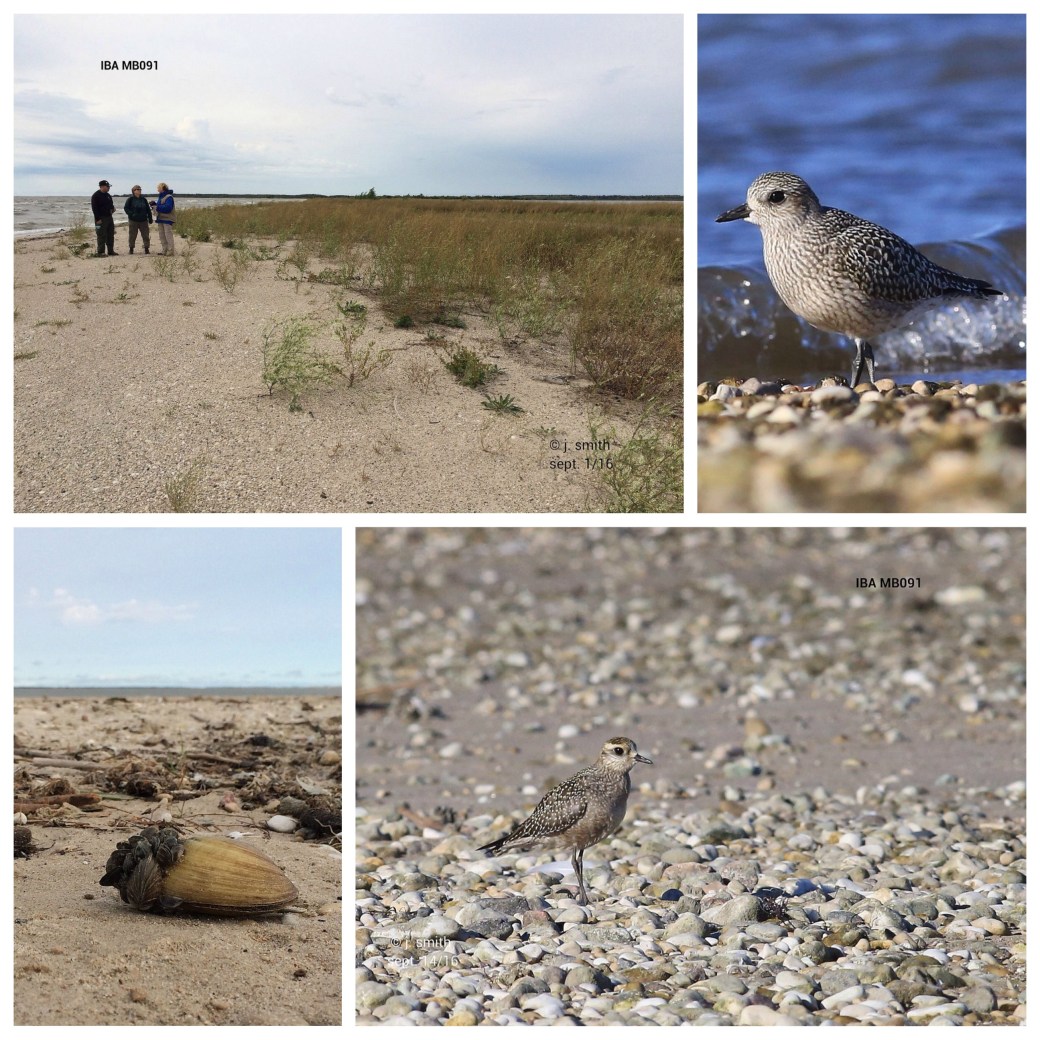
During the last two years there has been an increase in zebra mussels at Sandy Bar. It’ll be interesting to see if this will affect the species that migrate through this area. Some of the scoter species find zebra mussels tasty so this will be something to make note of in the next few years.

Processed with MOLDIV

Dayle Neufeld, Mavis Lewis-Webber and Bonnie Chartier next to invasive sweet clover, Black-bellied Plover, American Golden-Plover and zebra mussels. 2016.

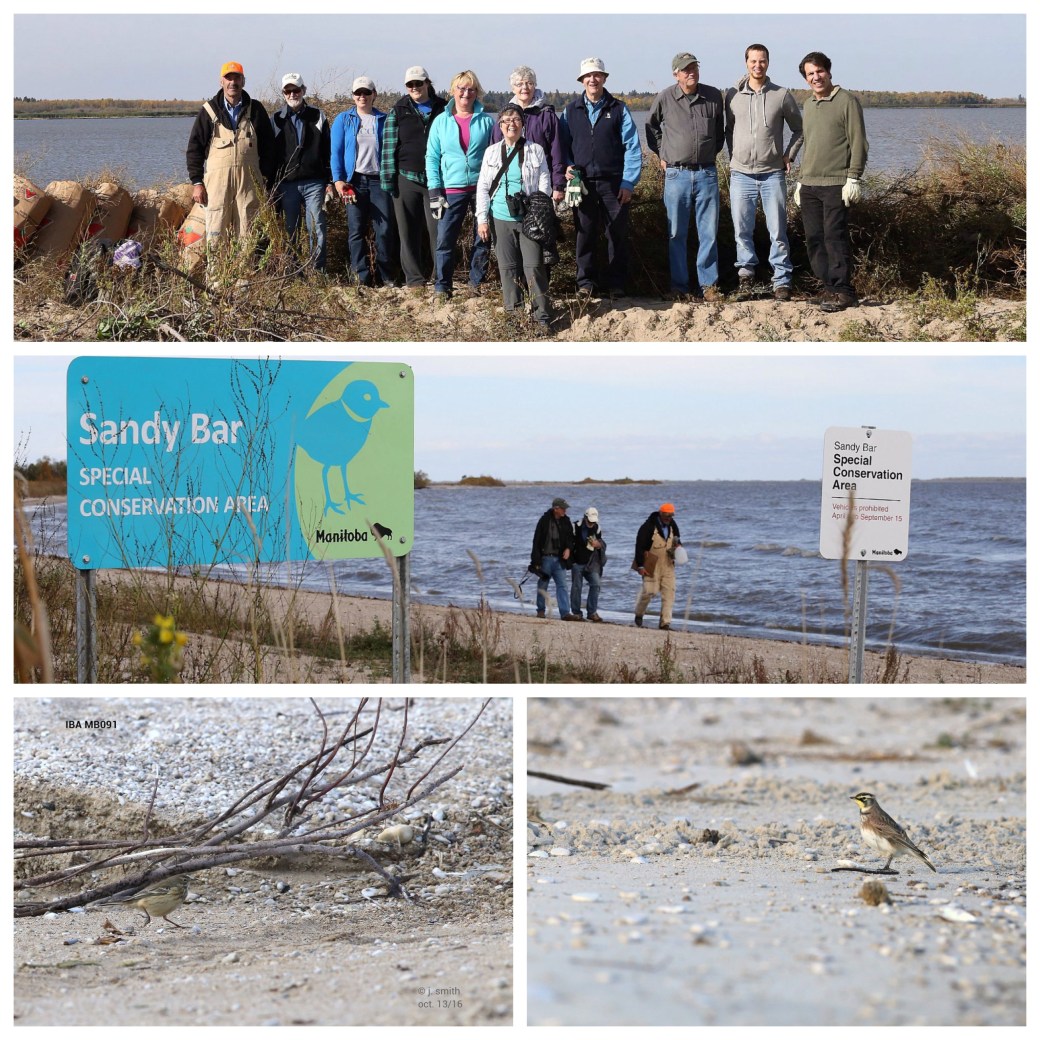
Probably the greatest highlight of 2016 at IBA Sandy Bar was the September 30th weed pull. While piping plover have nested on Sandy Bar and Hecla Bar in past years, there have been no recent reports in this area. However, a report of successful breeding in another area of Manitoba in 2016 suggests that if conditions and habitat were right at Sandy Bar, this IBA could also be home to breeding Piping Plover in future years. With the help of 14 volunteers, many of the invasive clover plants were removed from Sandy Bar. Manitoba’s Sustainable Development also erected the new  Special Conservation Area sign “Vehicles prohibited April  15 to September 15” on September 30th. With the removal  of invasive sweet clover and the reduction of vehicles on the sand bar during these critical nesting months, there will hopefully be an increased chance of piping plover and other bird species successfully nesting at this Important Bird and Biodiversity Area.

Processed with MOLDIV

Workparty highlights including an American Pipit and Horned Lark at the bottom. Copyright Joanne Smith

Many thanks to all who have helped to monitor birds, pull weeds, pick up garbage and carry signs during 2016. It’ll be interesting to see what 2017 brings.

Manitoba IBA Blog Update January 2017

Happy New Year to all our volunteers and readers. As we build up to a new season of events and monitoring there will be a steady build up of activity on this blog and elsewhere. Ahead of that I thought it would be worth highlighting a few posts published on this site over the holiday period and point towards some other activities worth checking out in the next few months.

Events

We are planning to run a workshop in Brandon in late February on the IBA Program, a look at some of the local IBAs and using eBird. This will be a very informal event. If you are interested in coming please email Tim at iba@naturemanitoba.ca. If there is interest in putting something similar on in other places (Winnipeg, Gimli, southern Manitoba) please also get in contact. The events page has recently been updated and there are some interesting workshops being put on by Nature Manitoba including one on shorebird identification and one on electronic birding. Check out the events page for more details.

New Years Resolution

Nature Manitoba asked us for a New Years Resolution and it is included with some other environmental organisations in a piece on their website. It was also picked up by CBC.

Quick Review of 2016 (and 2015)

We thought it would be interesting to look back at some of the monitoring data for the past couple of years using the tables on the IBA Canada site to show where data collected by volunteers has triggered an IBA threshold. You can see more on our end of season blogpost.

Looking Ahead

The second half of the review blog was a piece looking at some of the species in our IBAs for which it might be worth thinking about targeted monitoring. You can check it out here. 

tundra-swan_2361_flock-in-flight_artuso

Tundra Swan, a species which congregates in large numbers in spring and fall migration in Manitoba’s IBAs and therefore a possible target species for IBA monitoring at for example Whitewater, Oak Lake, Saskatchewan River Delta and Delta Marsh. Photo copyright Christian Artuso

We are going to start thinking ahead fairly soon to where we would like to carry out events in 2017. I am keen to spread out from the traditional sites we have previously covered but also think more strategically. For example, is it possible to do goose counts in fall of birds leaving their roosts at Netley-Libau or Big Grass Marsh if we have enough volunteers stationed around the perimeter? Is there areas of Sandy Bay Marshes where we can access with a group to monitor birds? Can we get more people into some of the northern or lake IBAs? If you have any thoughts or ideas, please let us know – we are open to suggestions. Finally we will plan to do some IBA profiles and species profiles highlighting some of the IBAs and the priorities for monitoring. We are generating some terrific data in some IBAs thanks to the efforts of our army of volunteers but maybe in others there is more to be done.

Manitoba IBAs – a List of Possible Species to Target in Your Local IBA in 2017

Following the recent blog demonstrating how volunteer and blitz data is now beginning to bear fruit, offering insights into the significance of some of our bird concentrations in Manitoba, we thought it might be useful to provide a follow-up with suggestions for target groups and species of birds for which triggering an IBA total is both possible and plausible.

Before moving ahead it is worth recalling how IBAs are designated. Each IBA meets the Birdlife International standardised criteria. For a site to qualify as an IBA concentrations of birds must meet one of the criteria laid out in the table below. This table has been adapted and simplified from an explanation available on the IBA Canada website. Note that there are no restricted range or endemic species in Canada and we no longer use the national importance criteria for congregations of birds.

Criteria Globally Threatened Species Restricted-range Species Biome-restricted Species Congregations
1 2 3 4
Global A A1  IUCN listed species,  Critically Endangered & Endangered = 1                             Vulnerable = 30                                                                               Static thresholds. Bird species with a natural
breeding range
less than 50,000 sq km
Bird species with a natural
breeding range of less than 50,000 sq km
.
No species meet this criterion in Canada.
N/A 1% of species’ global abundance. 
Continental B B1  IUCN listed species
Near Threatened: non‐songbird = 30,                 Songbirds = 90.
Static thresholds
 N/A N/A 1% of species’ North American abundance.
National C C1  COSEWIC listed species
1% of all listed species
Threshold set based on species abundance
within the region of listing.
 N/A  N/A  N/A

The trigger for each of the species across Canada are set by the IBA Canada Technical Committee and below is a list of potential species for which it is very possible to meet these criteria on a day out at your IBA.

Remember these lists are updated regularly and there is a possibility that the birds you are counting, although not considered threatened at the time they are recorded, might become endangered in the future so please still record everything you encounter!

Globally Threatened Species

These are species present on the IUCN Red List which has just been updated. A globally threatened species is considered as any species listed on the high end of this list (Vulnerable, Endangered, Critically Endangered, Extinct in the Wild, Extinct). The list of species in Manitoba present on the Red List currently can be found in this spreadsheet which I have condensed from the Birdlife International long list of c. 11,000 species. Fortunately we have very few species on the actual Red List in Manitoba and those that are present tend to be on the lower risk of extinction (apart from those which are likely to be extinct or extirpated from the province). The current list is:

whooping-crane-1

A species we hope to see return to Manitoba’s IBAs in the future, the Whooping Crane. Photo copyright Christian Artuso

  • Eskimo Curlew (almost certainly extinct but still not officially confirmed so we keep it for posterity)
  • Long-tailed Duck
  • Rusty Blackbird
  • Greater Prairie Chicken (Extirpated in the province)
  • Horned Grebe
  • Whooping Crane (occasional visitor but listed under the The Endangered Species and Ecosystems Act for Manitoba)

Continentally threatened species

These are species which are listed by the IUCN Red List as Near Threatened. This means that the species is undergoing sharp declines in population and range but not enough yet to be considered as threatened with extinction. Unfortunately, there are a number of Manitoban species present in this category.

black-scoter_8116_pair_agression-towards-second-male

Black Scoter breed in the Hudson Bay lowlands (one record of confirmed breeding during the Breeding Bird Atlas) and congregate along the Hudson Bay coast. They are also spotted in IBAs such as North, West and East Shoal Lake during fall migration. Photo copyright Christian Artuso

  • Common Eider
  • Black Scoter
  • Chimney Swift
  • Yellow-billed Loon (occasional species)
  • Piping Plover
  • Red Knot
  • Buff-breasted Sandpiper
  • Semipalmated Sandpiper
  • Red-headed Woodpecker
  • Olive-sided Flycatcher
  • Chestnut-collared Longspur
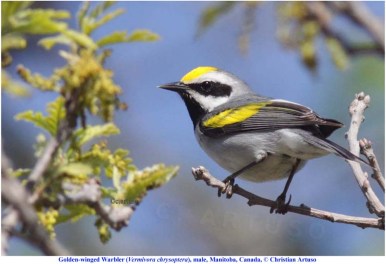
  • Golden-winged Warbler

Nationally threatened species

These are species listed by COSEWIC as threatened in Canada. When counting any of these species it is important to remember that triggering a population threshold is going to be more straightforward for some species than others. For example, even though they are in steep decline, the overall breeding population in Canada of Red-necked Phalarope is 1.85 million  compared to 3600 Ferruginous Hawk. This would mean that to trigger the IBA threshold for each species one would need to locate 18,500 and 36 individuals respectively. The current avian list for Manitoba is:

artuso_golden-winged-warbler_8099_m

Perhaps not a regular IBA visitor in Manitoba, but the Golden-winged Warbler would qualify under continental and national IBA criteria. Photo copyright Christian Artuso.

red-necked-phalarope_4037

Red-necked Phalarope is listed as Special Concern due to large declines in the number of individuals passing through the Bay of Fundy. Photo copyright Christian Artuso

  • Baird’s Sparrow
  • Bank Swallow
  • Barn Swallow
  • Bobolink
  • Buff-breasted Sandpiper
  • Burrowing Owl
  • Canada Warbler
  • Chestnut-collared Longspur
  • Chimney Swift
  • Common Nighthawk
  • Eastern Whip Poor Will
  • Eastern Wood Pewee
  • Evening Grosbeak
  • Ferruginous Hawk
  • Golden-winged Warbler
  • Horned Grebe
  • Least Bittern
  • Loggerhead Shrike
  • Olive-sided Flycatcher
  • Peregrine Falcon
  • Piping Plover
  • Red-headed Woodpecker
  • Red Knot
  • Red-necked Phalarope
  • Ross’s Gull
  • Rusty Blackbird
  • Short-eared Owl
  • Sprague’s Pipit
  • Western Grebe
  • Yellow Rail

Global and Continental Congregations

In simple terms, these thresholds are set for congregations of species which exceed 1% of their global or continental population at any time during their life-cycle. The following are examples of species – not listed under the above categories – for which it is very possible to meet these criteria in Manitoba. This list is not exhaustive and it goes without saying that collecting and entering data for all species is critical. Globally bird populations are in decline and it is conceivable that many more Manitoban species will be added to the IUCN Red List or COSEWIC in the future.

So here is a non-exhaustive list of species:

Colonial nesting birds

franklins-gull

An Environment Canada report from 2004 estimated that 15% of the estimated global population of Franklin’s Gulls breed at Whitewater Lake. Photo copyright Christian Artuso

  • American White Pelican
  • Double-crested Cormorant
  • Ring-billed Gull
  • Herring Gull
  • Franklin’s Gull
  • Black Tern
  • Caspian Tern
  • Common Tern
  • Forster’s Tern
  • Arctic Tern (northern Manitoba)

Waterfowl

Redhead pair

Large congregations of moulting Redhead and Canvasback during late summer can be found at Sagemace and Coleman Island Bay IBA and Long Island and Long Island Bay IBA. Photo copyright Christian Artuso

  • Canada Goose
  • Cackling Goose
  • Snow Goose
  • Ross’s Goose
  • Tundra Swan
  • Trumpeter Swan
  • Canvasback
  • Redhead
  • Greater Scaup
  • Lesser Scaup
  • White-winged Scoter

Long-legged Waders

img_2027

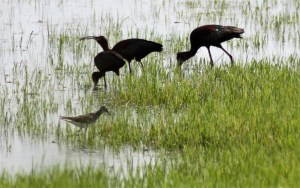
White-faced Ibis, increasing range and population in Manitoba. Copyright Tim Poole

  • White-faced Ibis
  • Black-crowned Night Heron
  • Great Blue Heron
  • Great Egret
  • Sandhill Crane (strictly speaking not a long-legged wader, but for these purposes we’ll include it here)

Grebes and Loons

red-throated-loon_7669_pair

In June 2010, 440 Red-throated Loon, were observed in the Churchill & Vicinity IBA. Photo copyright Christian Artuso

  • Red-throated Loon
  • Red-necked Grebe
  • Horned Grebe
  • Eared Grebe
  • Western Grebe

Shorebirds

pectoral-sandpiper_6102_flock_white-rumped-sandpiper_semipalmated-sandpiper

Shorebirds are one of the most important migratory bird groups in Manitoba’s IBAs. Photo copyright Christian Artuso

Shorebirds are one of the more likely groups of birds for meeting the IBA thresholds. Shorebirds tend to gather in large concentrations during migration (call it safety in  numbers) and this combined with the fact that shorebird habitat is often seasonal means that this is a group where it is certainly possible to locate 1% of the global or continental populations of a species in a single area on a single day. It goes without saying that concentrations of shorebirds are worth targeting during monitoring trips to your local IBA.

Rare Breeders

rosss-gull_scan_artuso

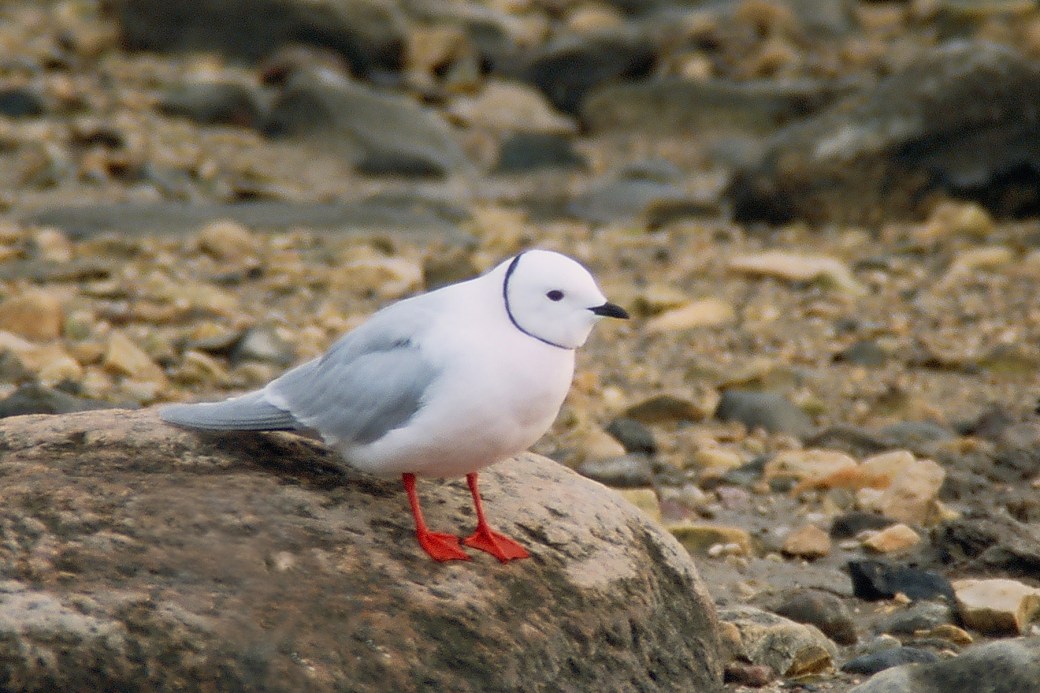
Star attraction – a single pair of Ross’s Gull would easily pass the 1% continental threshold. Photo copyright Christian Artuso

Some rare breeders for North America do appear in Manitoba, especially around Churchill and the Hudson Bay Lowlands. For example, Ross’s Gull is such a rare breeder in North America that even a single breeding pair triggers the continental congregation. To qualify the species must be a breeding species (so a random Eurasian Common Crane turning up in Churchill would not count). However there is a small breeding population of Little Gull in Churchill which would count.


2015 and 2016 – Year Reviews of Significant Bird Populations in Manitoba’s IBAs

As we enter the last few weeks of 2016, it is a great opportunity to reflect on the achievements of the past 12 months. Rather than a full season review which we did last year, I thought this would provide a great opportunity to share some of the contributions to the program from our volunteers by summarising where volunteers had provided bird data which was of global or North American significance to that species. To do this, it is first important to understand how the IBA Program nationally works. This has been summarised really well on the IBA Canada website and can be accessed by clicking on this link.

A huge amount of data has been added to eBird over the past couple of years. Please note that the data summarised below is that which is either already uploaded on the IBA Canada website or data which we expect to see there in the future. There may also be additional data submitted to eBird which we are currently unaware of.

2015

MB015 – Whitewater Lake IBA

3rd May 2015, 800 Pectoral Sandpipers recorded by Gillian Richards and Colin and Scott Blyth. This is over 1% of the estimated North American population.

2nd August 2015, 2197 Short-billed Dowitcher recorded by Jo Swarz and Christian Artuso. This is more than 1% of the total estimated global population.

20th August 2015, 67 Buff-breasted Sandpiper recorded by Christian Artuso, Bill Watkin and Carla Church. This is a concentration of continental significance for this globally Near-threatened species.

17_Artuso_Buff-breasted Sandpiper.jpg

The globally declining Buff-breasted Sandpiper. Photo copyright Christian Artuso

2nd September 2015, 1,500 Short-billed Dowitcher recorded by Colin Blyth. This is more than 1% of the total estimated global population.


MB024 – Southwestern Manitoba Mixed-grass Prairie IBA

June 21st 2015, 41 Sprague’s Pipit, recorded by IBA blitz volunteers. This is a concentration of global significance for this globally Vulnerable species

June 21st 2015, 238 Chestnut-collared Longspur, recorded by IBA blitz volunteers. This is a concentration of continental significance for this globally Near-threatened species

October 28th 2015, 68 Rusty Blackbirds counted by Christian Artuso and Callie Bowman. This is a concentration of global significance for this globally Vulnerable species

MB038 – North, West and East Shoal Lakes IBA

October 3rd 2015, 223 Rusty Blackbirds counted by IBA blitzers. This is a concentration of global significance for this globally Vulnerable species

Donna RUBL

The internationally threatened Rusty Blackbird in all its rusty glory. Photo copyright Donna Martin

Note also that IBA Caretaker Donna Martin documented breeding Least Bittern in this IBA in 2014.

MB055 – Saskatchewan River Delta IBA

April 19th 2015, 3,204 Tundra Swans counted by Joel Kayer. This is over 1% of the estimated North American population of this species.

tundra-swan_2361_flock-in-flight_artuso

Tundra Swans can be counted in high numbers during spring and fall migration. Photo copyright Christian Artuso

2016

MB001 – Delta Marsh IBA

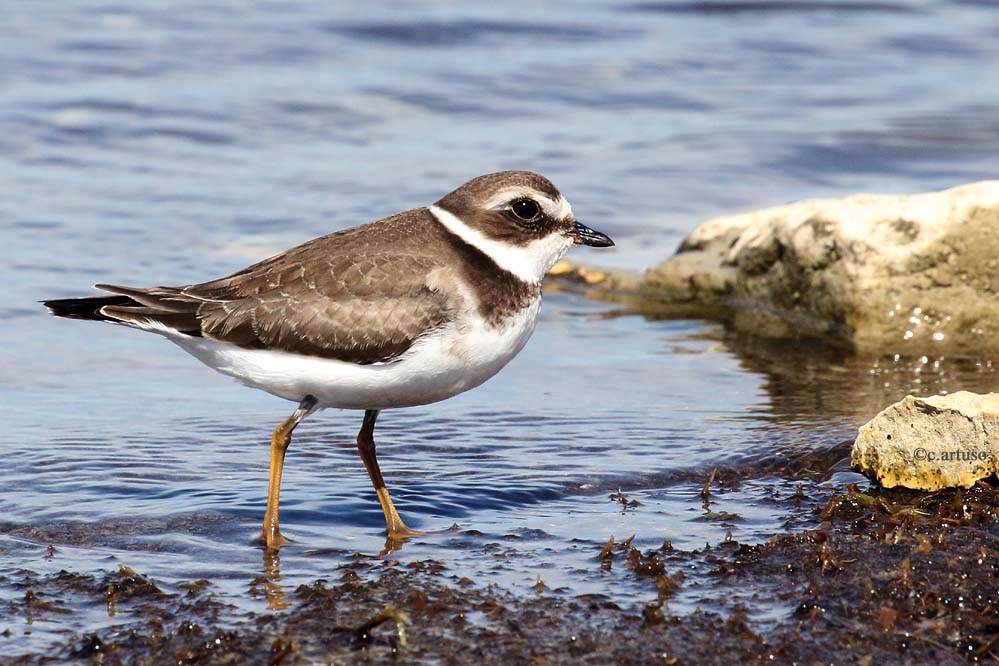
August 28th 2016, 1,936 Semipalmated Plover counted by IBA blitzers. This is more than 1% of the total estimated global population of this species
semipalmated-plover_3175_artuso

A Semipalmated Sandpiper, one of nearly 2,000 counted at Delta Marsh in August. Photo copyright Christian Artuso

November 2nd 2016, 34 Rusty Blackbirds counted by IBA blitzers. This is a concentration of global significance for this globally Vulnerable species

MB003 – Churchill and Vicinity IBA

June 12th 2016, 8 Little Gulls observed by 6 people including Linda Curtis. This is more than 1% of the estimated number found in North America

June 2016, a single Ross’s Gull seen by Bruce di Labio. This would be more than 1% of the total North American population

Ross's Gull_scan_Artuso.jpg

Not taken in 2016, still taken in Churchill. An unexpected appearance in 2016 was the Ross’s Gull spotted in Churchill. Photo copyright Christian Artuso

MB010 – Oak Hammock Marsh IBA

October 1st 2016, 609 Rusty Blackbirds counted by IBA blitzers. This is a concentration of global significance for this globally Vulnerable species.

MB015 – Whitewater Lake IBA

August 2nd 2016, 930 Pectoral Sandpipers observed by Christian Artuso and one other person, equating to more than 1% of the North American population of this species

August 2nd 2016, 4,175 Short-billed Dowitcher observed by Christian Artuso and one other person, equating to more than 1% of the global population of this species

August 7th 2016, 629 Pectoral Sandpipers observed by IBA blitzers and one other person, equating to more than 1% of the North American population of this species

Pectoral Sandpiper_6077_aggression_Artuso.jpg

Pectoral Sandpipers, another species migrating through Manitoba’s IBAs in large concentrations. Photo copyright Christian Artuso

August 7th 2016, 1,594 Short-billed Dowitcher observed by IBA blitzers, equating to more than 1% of the global population of this species

August 7th 2016, 2,080 Western Grebes observed by IBA blitzers, equating to more than 1% of the global population of this species

August 7th 2016, 1691 American White Pelicans counted by IBA blitzers. This equates to just under 1% of the estimated global population of this species.

Note also that Whitewater Lake was also the location of the only known breeding pair of Black-necked Stilt in Manitoba in 2016.

MB024 – Southwestern Manitoba Mixed-grass Prairie IBA

July 10th 2016, 58 Sprague’s Pipit, recorded by IBA blitz volunteers. This is a concentration of global significance for this globally Vulnerable species

July 10th 2016, 180 Chestnut-collared Longspur, recorded by IBA blitz volunteers. This is a concentration of continental significance for this globally Near-threatened species

Chestnut-collared Longspur_4819_m_flight over prairie_Artuso

Chestnut-collared Lonspur in the grassland IBA of southwestern Manitoba. Photo copyright Christian Artuso


Note also the total number of calling Baird’s Sparrow, 21 males, was a notably high count for Manitoba.

MB099 – Riverton Sandy Bar IBA

September 30th 2016, 38 Rusty Blackbirds counted by Joanne Smith and the weed-pulling party. This is a concentration of global significance for this globally Vulnerable species.
IBA Protocol for the eBird app

If you use the eBird app on a phone or tablet to enter your sightings, then this might be of interest to you. Gillian Richards contacted eBird last week as we have previously not been able to enter information under the IBA Canada Protocol even from a pc once the data has been submitted. Thankfully, this is no longer the case. You can do this by:

  1. Open you app and go into Settings
  2. Under the portal option, set your portal to be eBird Canada. Once you’ve done this, when you go to the Review & Submit page, you’ll see “IBA Canada” under the list of “other” protocols.

Hopefully this works but let us know if there are any issues

Some Things to Keep You Going Over Winter

Our volunteers are still getting out to IBAs before the final geese, warblers and shorebirds pack up for warm winter feeding in the south. There are a few opportunities over the coming months to get out and bird, to do some citizen science activities and enjoy hearing about birds (and IBAs). We will be keeping the Manitoba IBA Upcoming Events page on the website updated with anything of interest. For now though, here are a few activities to consider:

Nature Manitoba Birding Events

Saturday 5th November – Lake Winnipeg Beaches

Saturday 3rd November – Winnipeg River Outing

Sunday 18th December – Winnipeg Christmas Bird Count

Nature Manitoba Indoor Events

Nature Manitoba organises a number of terrific workshops and discovery evenings as part of its indoor program over the winter. There are a couple of IBA-related Discovery Evenings worth checking out:

Monday, February 6, 2017, Birds of the Hudson Bay Lowlands (incl. Seal River IBA) by Dr, Christian Artuso

Monday, February 27, 2017, Restoration of two large, coastal wetlands in Manitoba: Delta Marsh and Netley-Libau Marsh by Dr. Gordon Gainsborough

Christmas Bird Counts

Apart from the Winnipeg Christmas Bird Count, there are a number of events across Manitoba, including Oak Hammock Marsh, Portage La Prairie, Delta Marsh, Selkirk, Carman, Brandon, Glenboro, Riding Mountain and Inglis). You can find details about each one on the Bird Studies Canada map.

Nocturnal Owl Surveys

The Nocturnal Owl Surveys is in progress from mid-March to mid-April every year. The Manitoban version has been operating since 1991 thanks to Jim and Patsy Duncan.