Despite a cool and rainy spring, the Manitoba IBA program is looking ahead to our first events of the season! To sign up for events email iba@naturemanitoba.ca unless otherwise noted.
Oak Hammock Marsh Shorebird Walk – Saturday, May 28th at 8:00 am or 10:00 am
We will be at Oak Hammock Marsh for their World Migratory Bird Day celebration on Saturday, May 28th for shorebird walks departing the Interpretive Centre parking lot at 8:00 am and 10:00 am. Spotting scopes will be available to use and this event is suitable for all skill levels. There is a $10/person fee for the walk. This event is run by the Harry J. Enns Wetland Interpretive Centre. To sign up contact the Interpretive Centre or sign up online at: https://oakhammockmarsh.myshopify.com/products/guided-shorebird-survey-walk.
Southwestern Manitoba Shorebird Identification Workshop – Sunday, May 29th at 8:30 am
Join us on a visit in southwestern Manitoba for a practical look at how to identify shorebirds in their breeding plumage. Our location in southwestern Manitoba is to be announced depending on where shorebirds are gathering and accessible. Possible locations include Elton Road Wetland, Griswold Marsh or Oak Lake/ Plum Lake IBA. Spotting scopes will be available to use. Carpooling from Winnipeg or Brandon is available. This is a free event suitable for all skill levels.
Whitewater Lake Bird Blitz – Saturday, June 4th at 8:30 am
Support bird conservation in Manitoba by participating in our citizen science monitoring of Whitewater Lake. Whitewater Lake is a premier destination in Manitoba for shorebirds, and a wide variety of other birds. Carpooling from Winnipeg or Brandon is available. This is a free event suitable for all skill levels.
In the past 24 hours there has been a lot of debate on social media relating to bird feeders. This is obviously quite a sensitive issue for people, depending on their comfort level. Currently the Canadian Food Inspection Agency and the Canadian Wildlife Service are still advising that bird feeders are safe because there are very few cases of HPAI in songbirds. However, if you have a feeder or a bird bath they are recommending regular cleaning. The exact wording is as follows:
“To minimize the risk of transmission of HPAI, do not handle or feed any wild bird by hand. Feeding encourages wild birds to congregate around food sources and can increase the probability of transmission among wild birds, both within and among species.
The use of bird feeders is still safe but they should be removed from areas that are open to poultry and other domestic animals. If you care for poultry, prevent contact between wild birds and poultry by removing exterior/outdoor sources of food, water and shelter that attract wild birds.
Backyard bird feeders and baths should be cleaned regularly using a weak solution of domestic bleach (10% sodium hypochlorite). Ensure they are well rinsed and dried before re-use.”
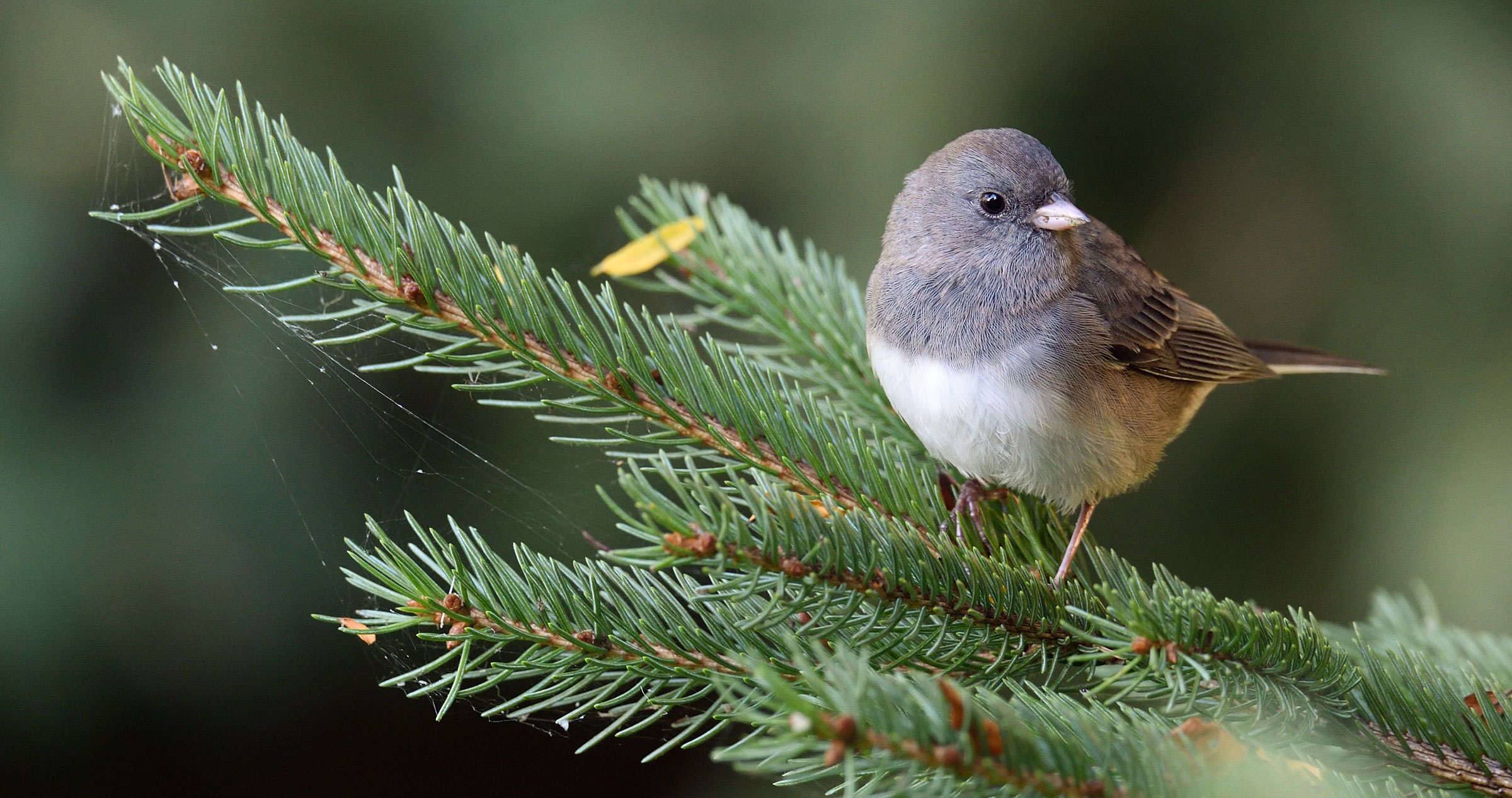
Prior to this winter storm, migration in Manitoba was preceding as normal with people reporting birds like Canada Geese, Dark-eyed Juncos, American Robins, Trumpeter Swans, Herring Gulls and more. While these birds are likely not enjoying the spring snowfall (similar to us humans!), they are adapted to withstand the occasional bout of cold and snowy weather. Similar to humans and other mammals, bird need to keep a constant body temperature, regardless of the weather.
All of the birds I listed above are early spring migrants to Manitoba. With our unpredictable spring weather, this means that they have evolved to be successful under a variety of spring conditions – from warm weather to cold weather, rain to snow!
Feathers
Feathers are a bird’s multi-tool – they serve many different purposed! A bird’s plumage can help attract a mate, or provide camouflage. However, one of the most important roles of feathers is to help keep a bird warm and dry. During periods of cold weather, a bird will fluff up their feathers in the cold to trap as much of their body heat as possible. In fact, they can seem up to 2-3 times their body size all fluffed up! This is similar to how a down duvet traps your body heat. The average bird’s body temperature is approximately 40.6oC (105oF) and they can maintain that in cold weather. Additionally, the oil that birds apply to their feathers while preening works to help repel moisture.
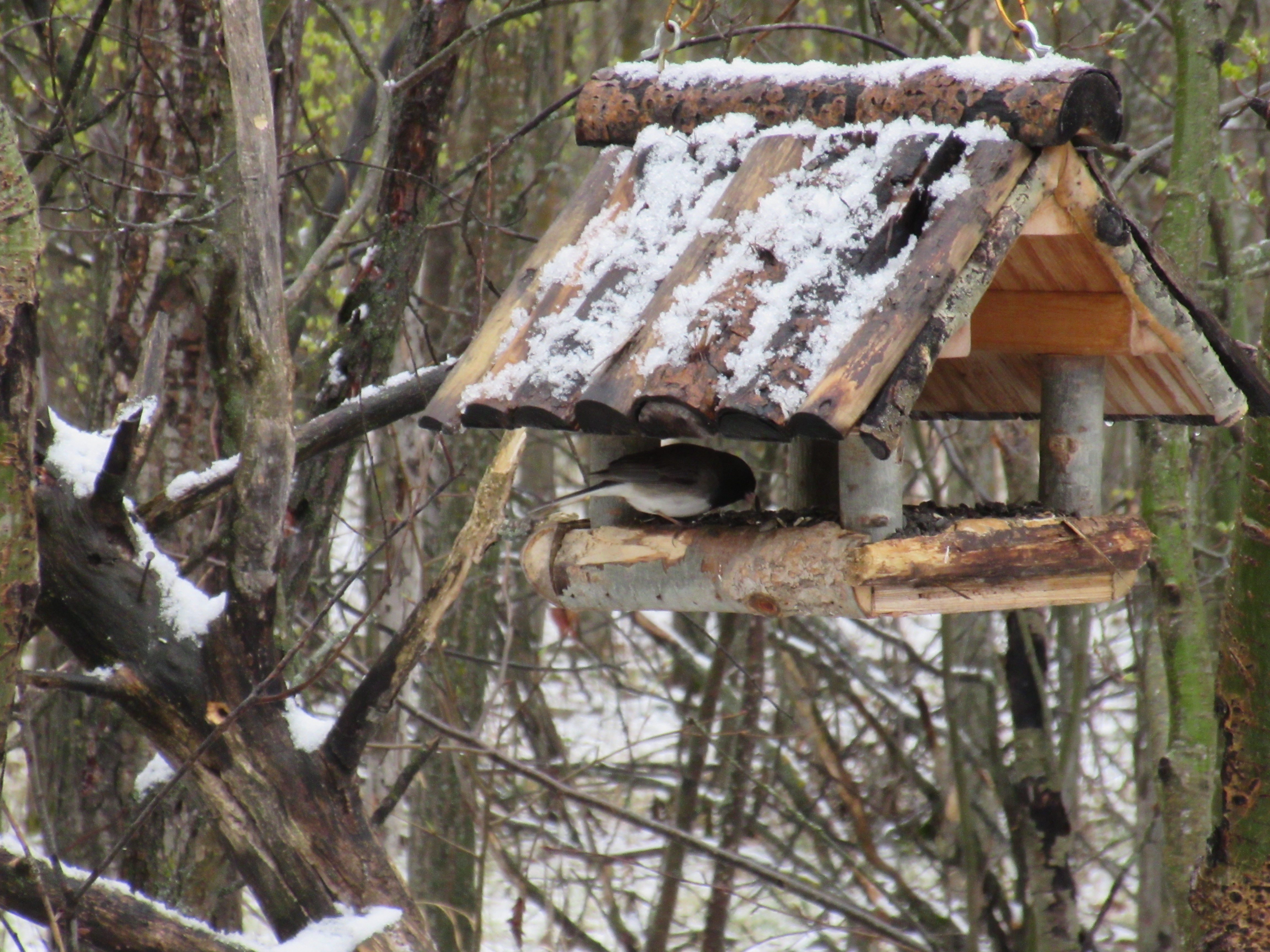
Juncos are a more ball-shaped bird in general but you can see the difference in the body shape of a cold junco! Photos from eBird.org (left) and audubon.org (right).
Shivering
Birds can shiver to help maintain their body temperature in cold weather. When birds shiver in cold weather they activate opposing muscle groups that contract against each other. This allows the birds to better retain body heat.
Feet
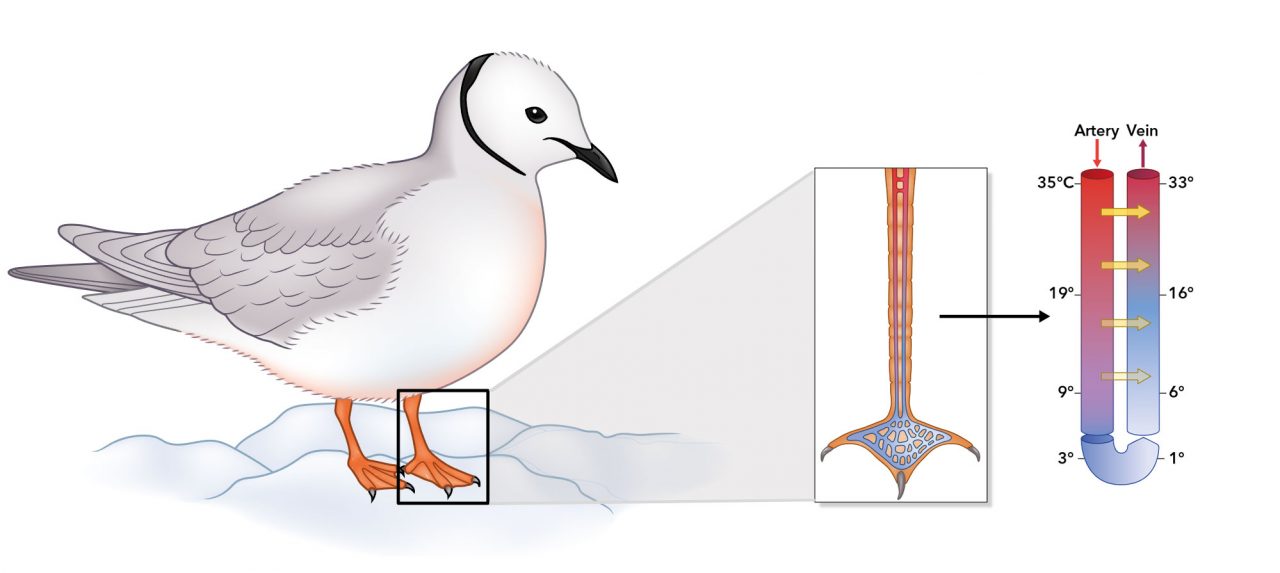
Bird feet in general can withstand lower temperature as they are mostly tendon and bone with little nerve or muscle tissue, so there is not much to freeze. However, the feet of ducks, geese, and gulls have evolved further to withstand cold water and ice. This is done through an adaptation called counter-current heat exchange in their legs and feet. Warm, oxygenated blood is pumped from the heart into the feet through arteries, which are close by the veins in the legs and feet that are returning colder, deoxygenated blood from the feet back to the body. As the arteries and veins are close together heat is transfer from the warmer arteries to the colder veins. Counter-current heat exchange allows the core body temperature to stay warmer, rather than losing heat through the cold legs and feet. Other mammals that live in cold climates, such as squirrels also use counter-current heat exchange.
Counter-current heat exchange in a gull leg and foot. Image from Cornell Lab of Ornithology. Adapted from Randall et al. 2002.
Behavioral Adaptations
There are a number of different ways that birds can alter their behavior to stay warm during spring cold spells. As humans, we can often feel the warmth of the sun in the spring, even if the air or wind is a bit chilly. Birds (especially dark coloured birds) can warm up on sunny days, by doing the aptly named “sunning” whereby they turn their backs to the sun, exposing the largest area of the body to the sun’s heat.
Birds can also flock together to help keep each other warm with combined body heat. In addition to the flocking itself birds may also gather in areas sheltered from the wind or cold, such as in sheltered shrubs or cavities in trees.
We talked about feathers above, but what about areas on a bird’s body that do not have any feathers? The feet, legs and bills/ beaks of most birds are not feathered. These areas of the body are kept warm by tucking them under areas that do have feathers. Birds may stand on one foot, with the other tucked up under the body feathers, or sitting on their feet which allows them to cover both legs and feet with their feathers. Similarly, they may tuck their beak/bills into their shoulder feathers to breathe air warmed by their body.
Opportunistic feeding
It can take a lot of energy to keep warm, so food sources during early spring cold snaps can be especially important. In urban areas, as well as rural farm yards, birds can often find supplemental food through bird feeders. High energy foods that are safe for a variety of birds include black oil sunflower seeds and suet.
The next few days might just be the perfect time to observe how birds adapt to the snowy conditions from the comfort and safety of home!
You may have heard that Highly Pathogenic Avian Influenza (HPAI) has been detected in various US States and Canadian provinces in the past few months. The latest report confirms a first case in Saskatchewan but no suspected cases in Manitoba yet (see http://www.cwhc-rcsf.ca/avian_influenza_testing_results.php).
The Avian Influenza Virus is a contagious viral infection that can affect domestic and wild birds. Many strains occur naturally in wild birds and circulate in migratory populations. HPAI can cause mass disease and mortality in infected poultry but there have been no human cases of avian influenza from exposure to wild birds in North America.
The federal government are providing lots of good information on how to limit the spread of this disease which you can find at – https://www.canada.ca/en/environment-climate-change/services/migratory-game-bird-hunting/avian-influenza-wild-birds.html. The main take home is do not handle wild birds, take precautions if you keep birds at home or work and report any larger groups of dead or sick birds using the contact information on that page. The federal government are continue to update their information and will change their advice based on the latest data.
Reports have been coming in recently about some of our early arriving migratory birds! The first Canada Goose in an IBA was reported on March 16th at Oak Hammock Marsh. In more urban environments the first Peregrine Falcon was spotted on March 17th at the Radisson Hotel in downtown Winnipeg and identified as Hart the next day.
First Canada Goose sighting at Oak Hammock Marsh WMA. Photo from Oak Hammock Marsh.
For many of us the long Manitoba winters mean we go 4-6 months without practicing our ID skills for many of our migratory birds. If you are getting into birding for the first time, or looking for some options to refresh your bird identification skills, or get into citizen science here are just a few free resources to keep you up to date on the sights and sounds of birds in the spring.
1. Check out various webinars
The Manitoba IBA Program spring webinars series is gearing up for April and May. We will be including some bird identification webinars in our mix this year along with some exciting new topics. Stay tuned for the announcement soon! In the meantime, the majority of our past webinars are available to watch on the IBA Manitoba Youtube account here. These webinars are specific to birding in Manitoba and include Grassland Birds, Shorebirds, Wetlands Birds and Bird Species at Risk.
2. Field Guide Apps for sights and sounds
If you are more likely to carry your cell phone along with you than a printed bird guide, consider using a free mobile app like Merlin. You can download “bird packs” local to your area, and once downloaded it can be used without an internet connection. You can browse through birds as you would in a field guide, or you can try giving a description, taking a photo or sound recording of your mystery bird and see if Merlin can identify it for you. There many different birding apps to choose from, some free and some paid.
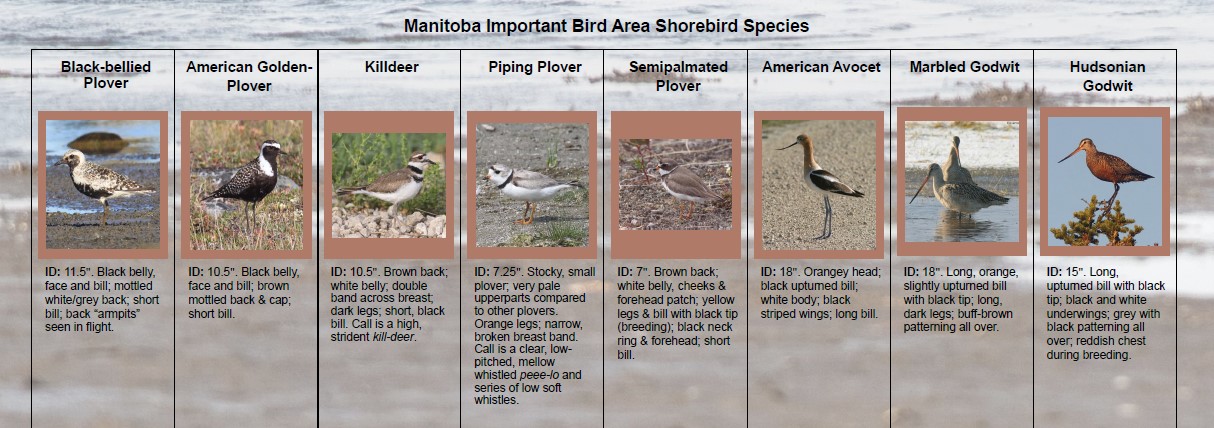
If you are not into electronics while birding, but don’t want to carry around a bird ID book, the Manitoba IBA program has several habitat-based quick ID guides that are available for free both on our website and as a printed copy. Grassland birds, shorebirds, wetland birds and birds of Churchill and the Nelson River Estuary are all available.
3. eBird.org
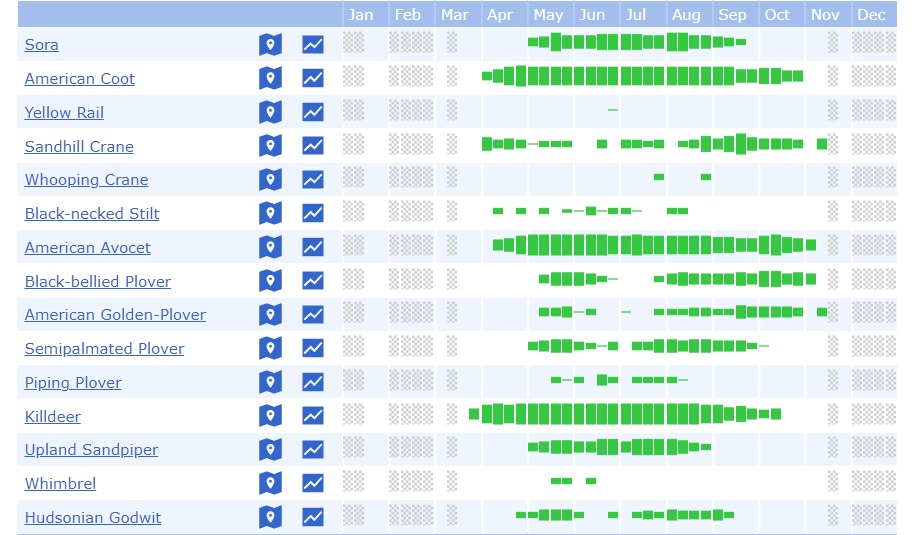
eBird.org is a strong resource for birders and I am always learning about new ways to use it. eBird uses birding checklists submitted by citizen scientists to track abundance and distribution of birds across the landscape. We use the eBird “IBA Protocol” to track birds within our Manitoba IBAs by our volunteers. They even have a mobile app that lets you enter your birding checklists without an internet connection! You can also use the maps and bar charts to explore when are where certain species are sighted historically, or more recently. There is way too much to describe here, but you can check out these guides to getting started on eBird.org or eBird mobile app prior to spring migration!
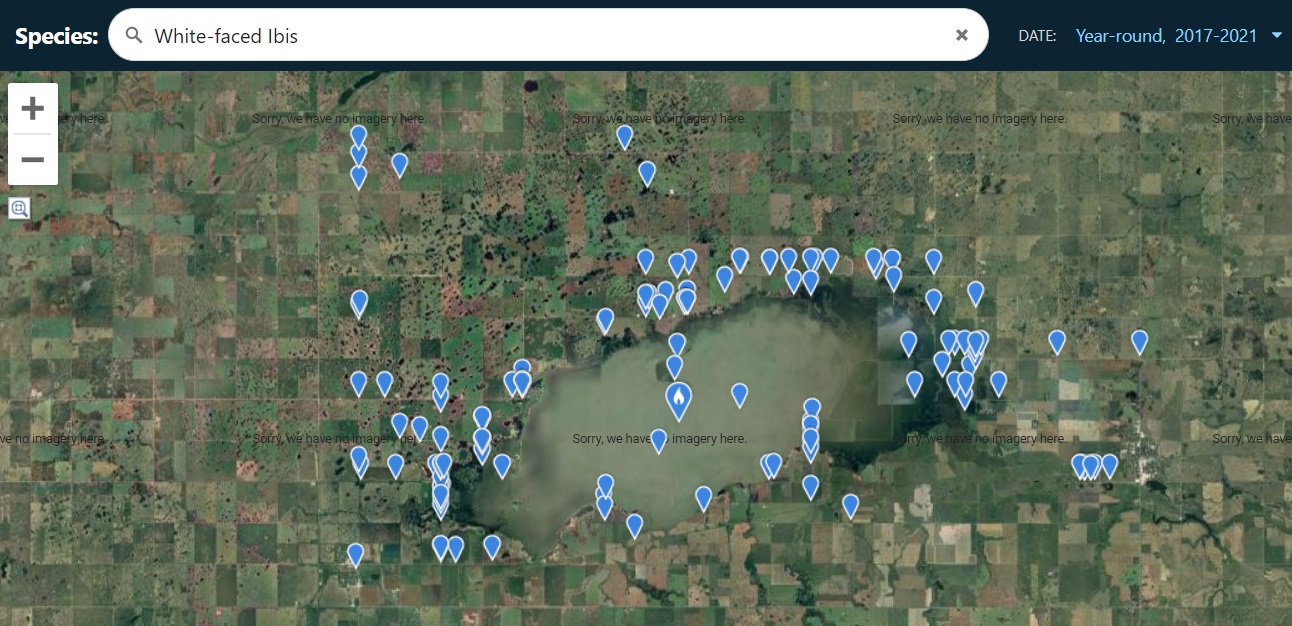
Example of a bar chart generated for Whitewater Lake IBA for bird timings. April is coming up fast with migratory bird sightings to become more and more common!Map generated from eBird that shows locations of White-faced Ibis sightings in the last five years. You can change species, locations and dates to see what birds and found where (and when).
4. BirdCast
BirdCast is a website that uses weather surveillance radar to create bird migration forecast maps, real-time migration maps and local bird migration alerts. Unfortunately, the maps only extend to the Canada-US border, but as concentrations of birds move through the United States on spring migration, we can use the maps to predict when they might arrive in Manitoba. There are many studies that show strong ties between weather and migration rates. Additionally, large numbers of birds actually show up on Doppler radar themselves!
Example of a bird forecast predicted by BirdCast. I watch for areas of migration intensity to move towards the Canada/ USA border, and then I know that they will be in southern Manitoba shortly.
Did we miss anything you consider essential to gear up to spring migration? Let us know!
With our recent wintery weather, you might not be thinking about your local wetlands, but February 2, 2022 is World Wetlands Day.
Today is a great day to reflect on your favourite local wetland. Do you visit in the spring for birding? Do you go canoeing or fishing in the summer? Do you go hiking in the fall? Do you snowshoe across it in the winter?
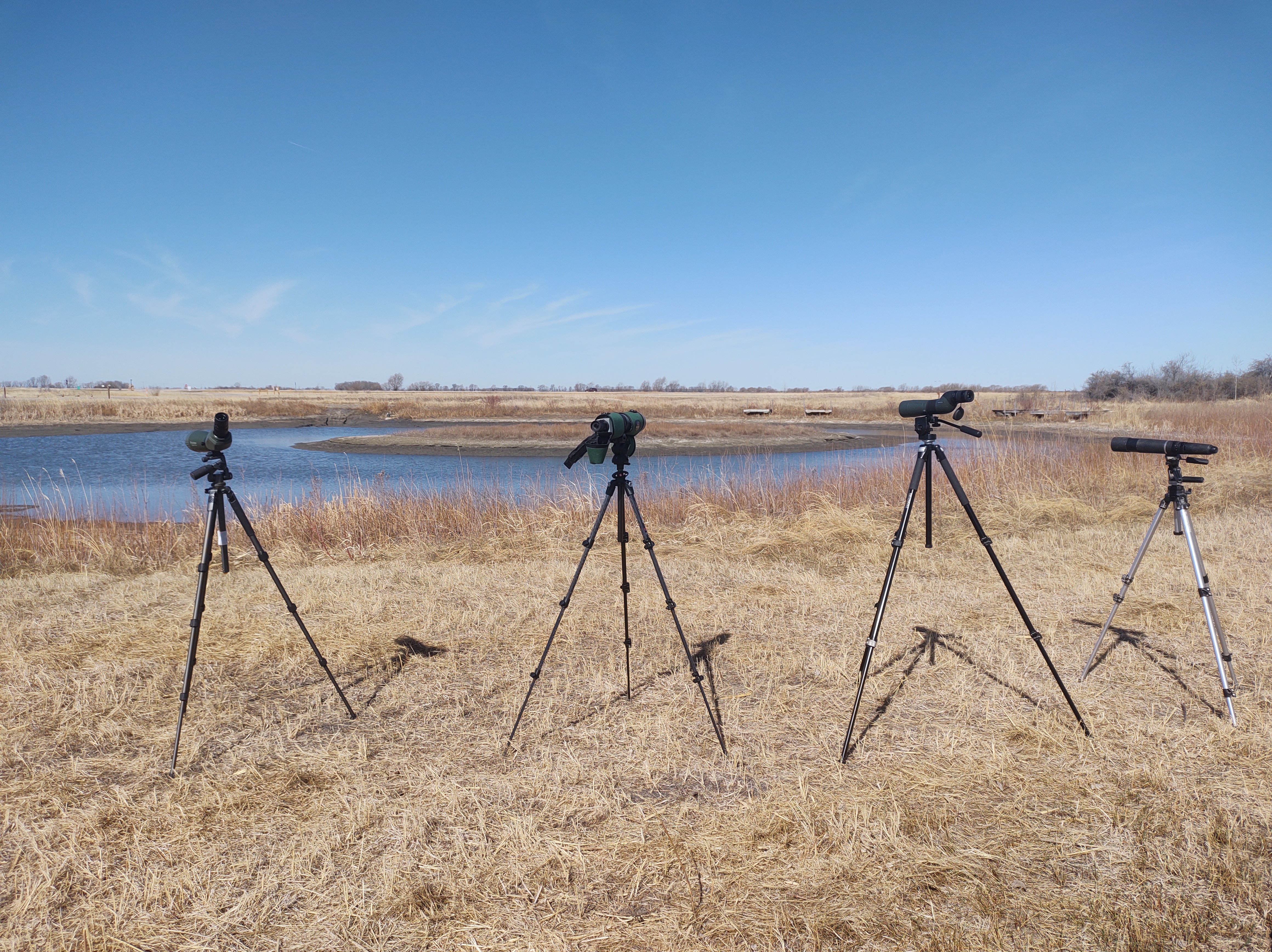
What birds can we spy with our scopes in a wetland? Photo by Amanda Shave.
Wetlands play a huge role in as habitat for both breeding and migrating birds, and is key habitat in our Manitoba IBAs. While not all of our IBAs are designated specifically for wetlands, almost all of them contain wetlands within their boundaries. For example, the Southwestern Manitoba Mixed-grass Prairie IBA contains a lot of – you guessed it- prairie, but also has a variety of large and small prairie wetlands. These prairie wetlands support breeding shorebirds such as Marbled Godwit, Wilson’s Phalarope and American Avocet, and breeding waterfowl such as the Blue-winged Teal, Northern Shoveler and Gadwell, just to name a couple of species of each.
Of course, we also have a number of IBAs that were developed specifically because they contain wetlands. These include Delta Marsh IBA, Douglas Marsh IBA, Big Grass Marsh and Langruth IBA, Netley-Libau Marsh IBA, Sandy Bay Marshes IBA, Marshy Point and Saskatchewan River Delta IBA. Many of our northern IBAs that border Hudson Bay also include a variety of marshes, bogs, sedge meadows and fens, which are all different types of wetlands.
Shorebirds foraging in mudflat and shallow water habitat in the west side of Delta Marsh. Photo by Katharine Schulz.
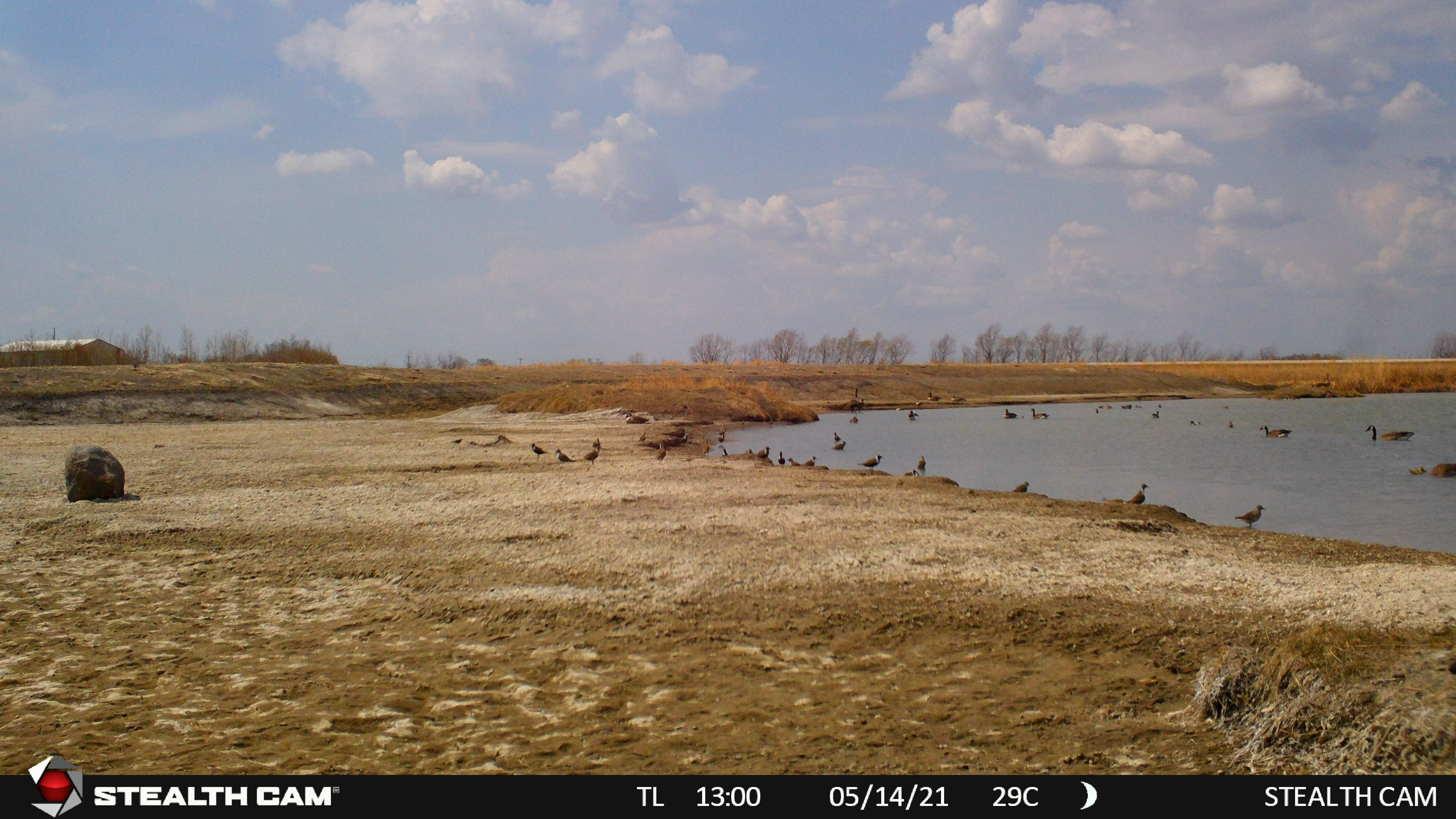
Our IBAs also include human-constructed or restored wetland habitat, such as Oak Hammock Marsh Wildlife Management Area. Oak Hammock Marsh was originally a wetland, but was largely drained for agriculture. In 1967 the provincial and federal governments, Ducks Unlimited Canada, and other conservation organizations and local landowners starting working to restore the wetlands to what we see today. The marsh is managed through a series of dikes, wetland cells and artificial islands that move and store the water across the landscape. Additionally, The Manitoba IBA program, the Province of Manitoba and Harry J. Enns Wetland Discovery Centre staff collaborated to create our province’s first shorebird scrape in 2020 at Oak Hammock. Shorebird scrapes are a feature that holds water in a depression on the landscape, creating mudflat habitat within a wetland. We saw many wetland birds using the scrape via trail camera, and through eBird checklists last season. The scrape was expanded further this past fall! While currently under ice and snow, the scrape is an excellent spring birding destination at Oak Hammock Marsh.
Trail camera image of (mainly) American Golden Plovers and Canada Geese using the scrape and adjacent pond. Photo by: Manitoba IBA Program.
If you would like to learn more about wetland habitats and how they impact our birds check out IBA Manitoba’s Freshwater Habitat for Birds factsheet or our Shorebird Scrape factsheet!
With the end of the old year, we thought we would highlight some of the exciting birding news from Manitoba IBAs in 2021. If we are missing a highlight for you, let us know!
What is an IBA threshold and why is it important?
You’ll read below that we reached IBA thresholds for species in several different IBAs this summer – but why is this important? There are a series of criteria that bird populations at a site must hit for that site to be qualified as an Important Bird Area. We commonly refer to hitting these criteria thresholds as an “IBA trigger”. If species in the IBA are continuing to reach the IBA trigger, it is likely that the site continues to provide key habitat going forward. There are two main types of IBA triggers that are most commonly used in our Manitoba IBAs. The first is for congregations of species, needing either at least 1% of the global population for the species or at least 1% of the national population for the species. The second trigger is for Species at Risk. Due to the challenges that these species face, they require fewer individuals to reach their IBA trigger. Species at Risk are also classified at either a global scale (IUCN listed species) or regional scale (COSEWIC listed species).
Red-headed Woodpecker
It was an exciting year for this charismatic bird and the IBA program. Thanks to volunteers conducting both formal and informal Red-headed Woodpecker surveys we were able to reach the IBA threshold for this species in two IBAs this summer. The IBA threshold is 14 individuals. At the North, East and West Shoal Lakes IBA (north of Winnipeg near Inwood) volunteers and program staff counted 19 individuals. At the Oak Lake/ Plum Lake IBA (west of Brandon) volunteers and program staff counted a whopping 27 individuals. If you are interested in hearing more about our Red-headed Woodpecker experience this summer watch for the next blog which will go more in-depth with our efforts monitoring this beautiful species during summer 2021.
Red-headed Woodpecker in a nesting cavity at Oak Lake/ Plum Lakes IBA in 2021. Photo by Gillian Richards.
Pectoral Sandpiper
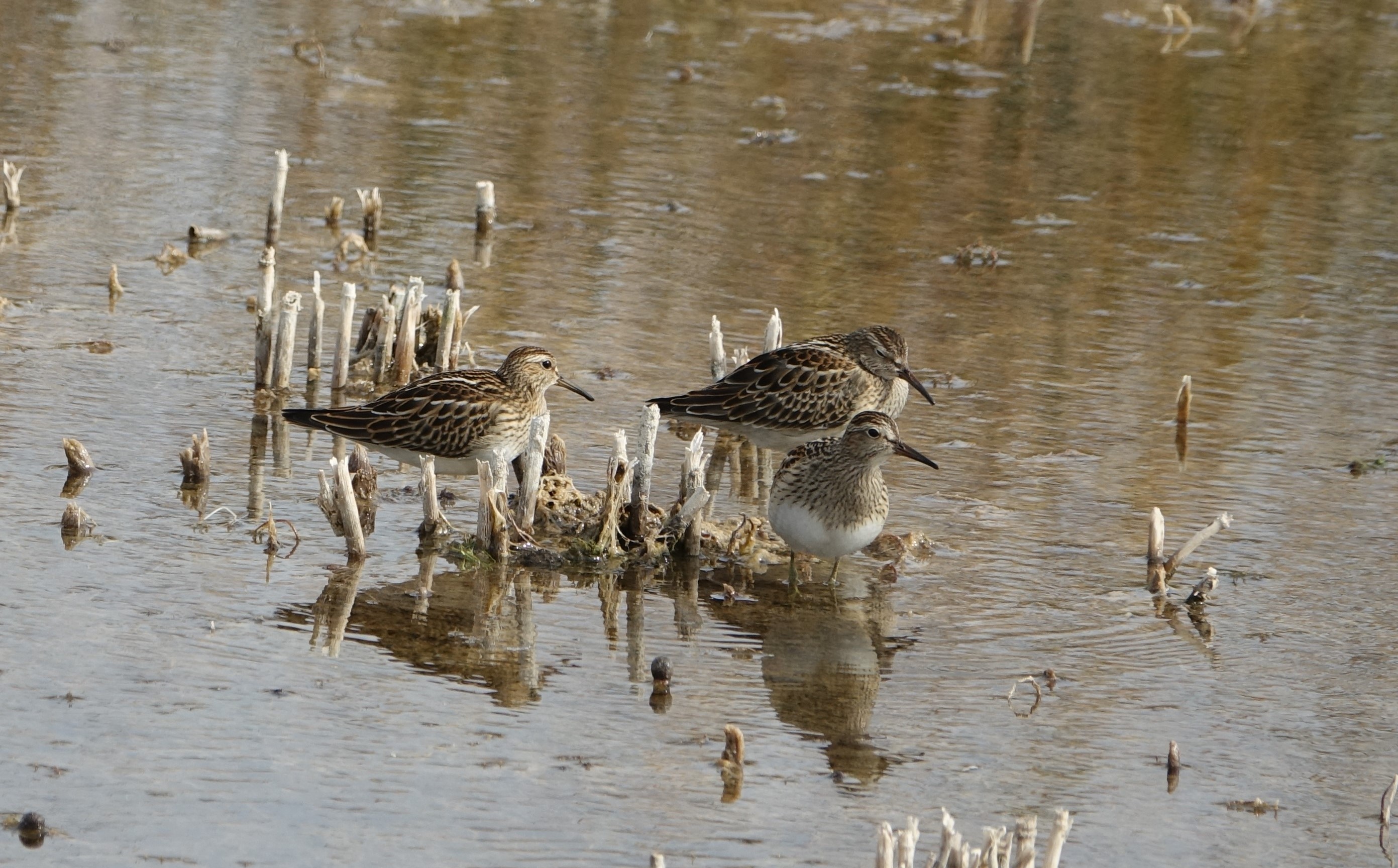
While out doing the International Shorebird Survey (ISS) at Whitewater Lake this spring Gillian Richards counted 12,050 Pectoral Sandpipers while birding along and between ISS routes. Gillian’s sighting was on May 16th. She went back on May 19th and counted 5,652 Pectoral Sandpipers. The number required for the IBA threshold for this species is 625 individuals, so Gillian’s count was well beyond the threshold in both cases! The threshold is approximately 1% of the global and national population for Pectoral Sandpipers, so this observation was approximately 20% of the global population – pretty neat!
Pectoral Sandpipers. Photo by Amanda Shave.
Piping Plover
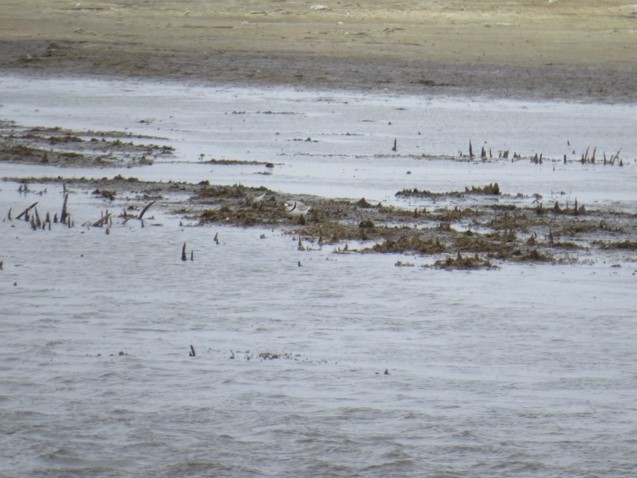
Piping Plovers were seen twice this year in IBAs. The first sighting was on April 30th at Whitewater Lake by IBA Caretaker Colin Blyth. There was just the one individual seen. When he went back to try and find it two days later it was gone. The other sighting of Piping Plovers was at Chalet Beach at the northwest end of Netley-Libau Marsh IBA. A pair of Plovers was seen over the May-long weekend. However, likely due to the high volume of people using the beach over the weekend the plovers left the area before any conservation work could happen for them.
Piping Plover spotted at Whitewater Lake in spring 2021. Photo by Colin Blyth.
Black-necked Stilt
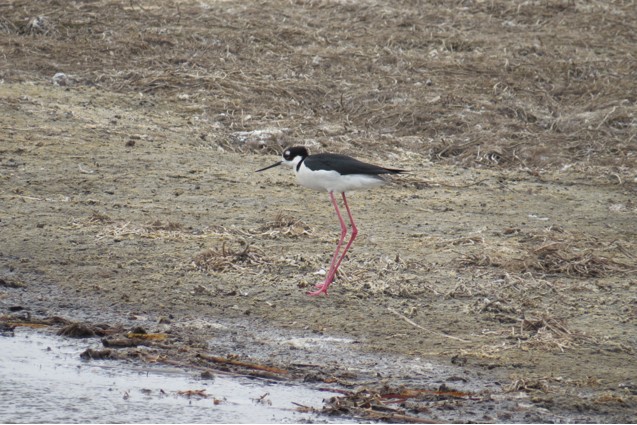
In the same trip where Colin spotted the Piping Plover at Whitewater Lake (April 30th) he also spotted a Black-necked Stilt – a pretty lucky birding trip! Just like the plover, however, the stilt was no where to be found upon a second birding trip.
Black-necked Stilt spotted at Whitewater Lake in spring 2021. Photo by Colin Blyth.
Sabine’s Gull
A Sabine’s Gull was spotted at Delta Marsh on September 20th, 2021 by Cal Cuthburt. He spotted it flying amongst a mixed flock of Forster’s Terns and Franklin’s Gulls. Great spot!
Photo of a Sabine’s Gull taken in 2020 at Delta Marsh. Photo by Cam Nikkel.
Lesser Black-backed Gull
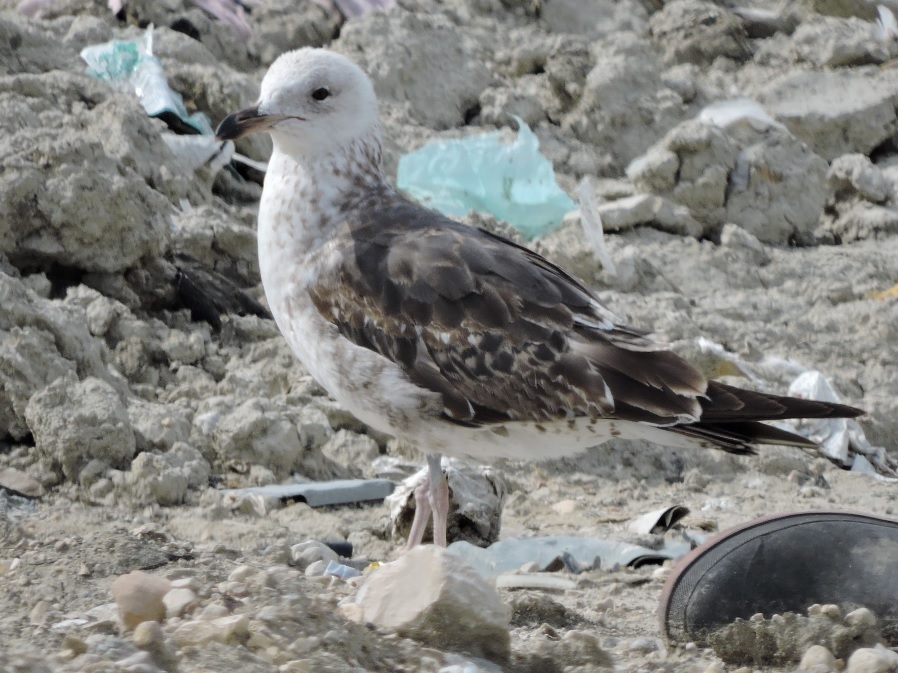
At least three individual Lesser Black-backed Gulls hung around Delta Marsh IBA this spring/ summer. They were largely seen in the community of Delta Beach and/or around the landfill on provincial road 227.
One of several Lesser Black-backed Gulls seen at Delta Marsh in 2021. This photo is taken of a first summer plumage gull at the landfill. Photo by Cal Cuthbert.
Dickcissels
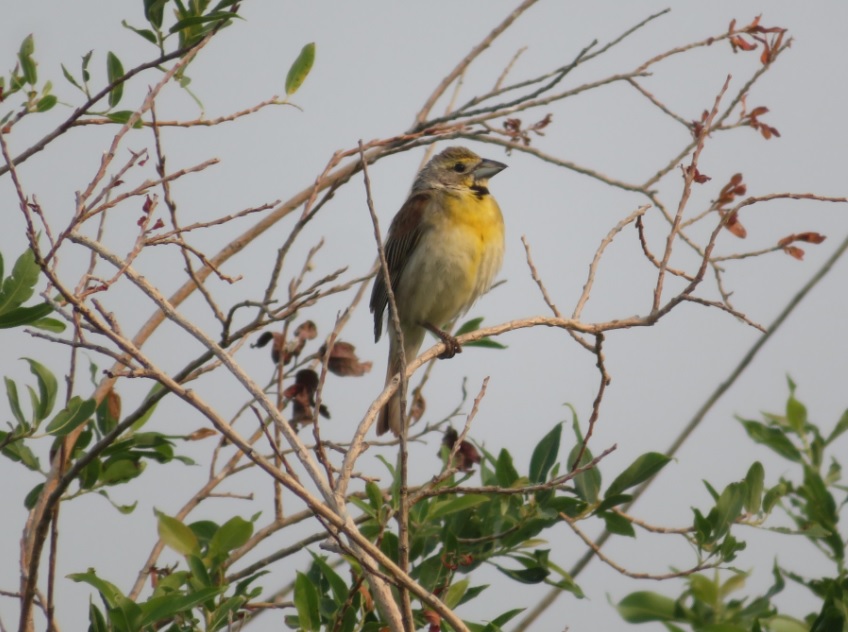
Dickcissels were seen in several IBAs this summer. Including three individuals in the Southwestern Mixed Grass Prairie IBA (on July 1st and 9th), one in Whitewater Lake IBA on June 23rd, and between 1-5 Dickcissels were spotted at Oak Hammock Marsh from July 7th-9th.
A male Dickcissel photographed by Rudolf Koes at Oak Hammock Marsh in summer 2021.
Sandhill Cranes
On October 17th at Oak Lakes/ Plum Lakes IBA, IBA Caretaker Gillian Richards counted 12,000 Sandhill Cranes. The IBA threshold for Sandhill Cranes is 5,300 individuals. Like with the Pectoral Sandpiper, the IBA threshold represents 1% of the global and national population of Sandhill Cranes, so this was approximately 2% of the population seen in this observation.
Not quite the same huge number of cranes spotted by Gillian, but this photo of a flock of Sandhill Cranes taken at Oak Lake shows the habitat that the large flocks will sometimes gather in. The combination of water and wetland habitats with leftovers from cropped fields makes some attractive habitat for flocks of cranes. Photo by Amanda Shave.
Burrowing Owls
Wild Burrowing Owls kept up their streak in southwestern Manitoba this year! A pair of wild Burrowing Owls (i.e. not part of the captive breeding population) successfully nested and raised six young. The Manitoba Burrowing Owl Recovery Program (MBORP) documented the season. You can read more about it, and see photos, on MBORP’s Facebook page and Walter Potrebka’s blog post.
Hopefully our 2022 birding season is just as successful! The Manitoba IBA program wishes everyone good health, happiness and great birding in 2022!
Today is winter solstice – the shortest day of the year and the “official” start to the winter. While the days are short, like our hardy resident birds, we make the best of it! Whether you enjoy the winter or tolerate it I hope you can curl up with a warm beverage of our choice and remember, from here on in our days will start getting longer again, and eventually warmer as well!
From all of us at Manitoba IBA, we wish you the best of the holiday season and health and happiness in the New Year!
-Amanda Shave (Coordinator), Tim Poole (Chair), Bonnie Chartier, Paula Grieef, Christian Artuso, Marika Olynyk and Gillian Richards
Welcome all, to the final post in our grassland blog post series! Today Nate talks about a most mysterious bird found in the prairies. The Grasshopper Sparrow! Is it a grasshopper? No. Is it a sparrow? Yes!
Mystery number one solved, we know that it is a bird (a surprise on a birding blog!). They feed primarily on grasshoppers which they get their namesake from so mystery number two solved! These feathered friends can be observed in the southern grasslands of Manitoba but good luck seeing them. They are very camouflaged and are often identified by their distinctive insect-like song. Wait, they sound like an insect too? Like a grasshopper! Mystery number three solved folks.
Identification
I would first like to get it out of the way that Grasshopper Sparrows do not look like grasshoppers at all. They do however look very similar to other grassland sparrow species such as the Baird’s Sparrow and the LeConte’s Sparrow. Grasshopper Sparrows have less facial, back and breast markings than these birds and have a prominent orange marking that connects that arches from the front of the eye to the back of the bill. Like the LeConte’s Sparrow, they have a black ‘ear-piece’ that extends backwards from their eye-line to the centre of their head. This marking is different from a LeConte’s Sparrow as it tapers downwards at the centre of the head and creates an “L” shape on the Grasshopper Sparrow instead of a more circular patch of the LeConte’s Sparrow. The Grasshopper Sparrow’s breast is buffy coloured and unstreaked while their back is streaked with a rusty grey and a yellow tinged shoulder.
A Grasshopper Sparrow singing away! Note the unstreaked, buffy belly and the orange/yellow spot in front of the eye. Photo by C. Artuso.
As you will most likely be hearing this bird before you see it, let’s talk about its song that is sung by both males and females. It starts with a staccato and separated ‘tic-tack’ and is followed by an insect-like buzzing ‘tzeeeeeeee’. Amazingly, the Grasshopper Sparrow is one of the few sparrows in North America that have two different songs! And we’re not talking about a song and a call, I mean it has two different songs! The second song, which is only sung by the males in flight, is a series of sputtering and musical chips preceded by the original ‘tic-tack tzeeeee’.
The Grasshopper Sparrow’s “simple” song. For bonus points determine which grassland bird song is heard directly after the Grasshopper Sparrow sings. Clue: it is one of our past grassland bird blog highlights. Audio from Xeno Canto.The Grasshopper Sparrow’s “complex” song (the first song in the recording). Audio from Xeno Canto.
Life history
As you can probably guess by now, this bird lives in grasslands. It can be found in a variety of grassy areas such as hayfields, overgrown pastures and prairies. It is less tolerant of areas with a high concentration of shrubs. They can be found foraging in areas of bare ground but usually like to have some dense grasses nearby to dip in for cover when needed. Pairs are seasonally monogamous, meaning they stick with one partner for the mating season and split up after raising their young. Females produce 3-7 eggs and will raise anywhere from 2-4 broods per season! This is doable with the short incubation period of 11-13 days and a nesting period of 6-9 days.
Conservation
The grasshopper sparrow has experienced a steep population loss with an annual decline of 2.5% from 1966 to 2015 combining to a 72% loss according to the North American Breeding Bird Survey. There are approximately 12 subspecies of Grasshopper Sparrows recognized with the Florida subspecies (Ammodramus savannarumfloridanus) being highly endangered with a 68% chance of extinction. The A. s.pratensis subspecies found in Ontario and Quebec is listed as special concern under SARA and COSEWIC. The subspecies commonly found in Manitoba, the Western Grasshopper Sparrow (A. s. perpalldius), is not a species at risk. However, the Manitoba Conservation Data Centre currently has the Western Grasshopper Sparrow listed as vulnerable. Now that it’s our final blog post about grasslands and their importance to birds I’m sure you can guess the major threat to these birds. That’s right its habitat loss, mostly from conversion of pastures and hay fields to row-crops.
Grasshopper Sparrow habitat in southwestern Manitoba. Photo by A. Shave.
Grassland Bird Round-Up
While we have been keeping this grassland bird species at risk series upbeat, learning about species at risk can be quite a sad venture. The more we learn to appreciate these unique animals the more we realize just how much we, the human race, can damage their well-being. With this great power comes a great responsibility as we do have the resources and knowledge to help these critters out. The first step to changing this future is learning about species at risk and the problems they face. I am honoured to have been a part of that journey for you, the reader, and have learned my fair share as well by creating these blog posts. Until next time.
While our program focuses largely on the “bird” portion of the IBA program – the full title is actually “Important Bird and Biodiversity Areas”. Today Nate is going to continue his grassland series and let us know about a few of the non-bird Species at Risk that call the live in our Manitoba grasslands.
As we’ve discussed in the previous posts, many a bird graces these grasslands with its presence. Along with our flappy friends, however, you will find a large number of unique animals without wings that call the Manitoba grasslands home. Some of these critters are rather helpful for birds, others pose great threats, while still others have little interactions with birds at all.
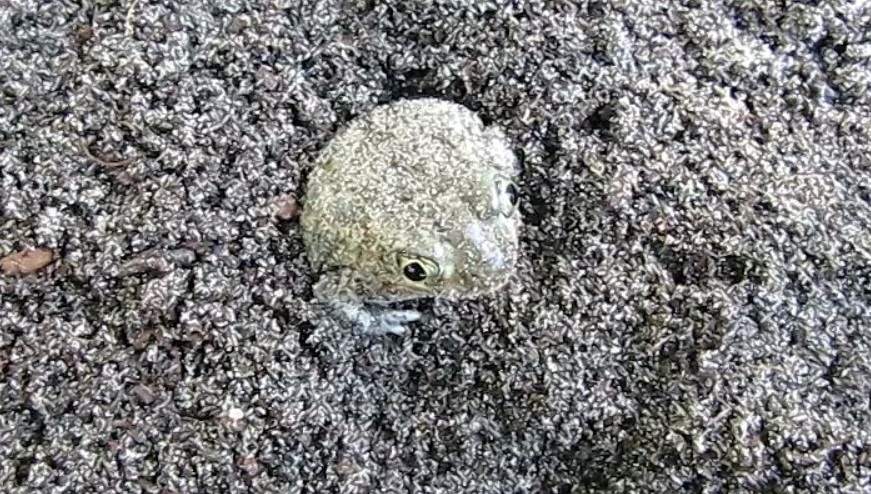
Manitoba grasslands house a number of Species at Risk that can be found on the ground or small patches of water. You might be asking “Water? But I thought we were talking about grasslands!”. Well, amongst grasslands you will find many small pieces of wetlands sometimes called prairie potholes, as well as agricultural dugouts, ditches, and depressions in the ground caused by animal activity. The water-storing ability of these areas to hold water provides breeding habitat for amphibians such as the Great Plains Toad and the Plains Spadefoot Toad, both of which are Species at Risk. These two toads can be found or heard in the southwest corner of the province after a heavy rain.
Great Plains Toad. Photo by Shauna Hewson, Manitoba Herps Atlas.
These toads also depend on soft soils in open grasslands that allow them to burrow and wait out cold and/or dry periods. Plains Spadefoot Toads are named for the shovel-like projection on their hind legs that aid them in digging burrows. Despite their common name, Plains Spadefoot Toads are in the family Pelobatoidea, a unique family that is neither a true frog or toad. In contrast the true toads, such as the Great Plains Toad, belong in the family Bufonidae. Frogs and toads can be an important food source for birds that are adapted to picking prey out of water or sand like herons, gulls and kingfishers.
Plains Spadefoot Toad. They use the “spade” on the heel of their feet to dig backwards into sandy soil. Photo by Manitoba Herps Atlas.The “spade” on the heel of the foot of a Plains Spadefoot Toad. Photo by Manitoba Herps Atlas.
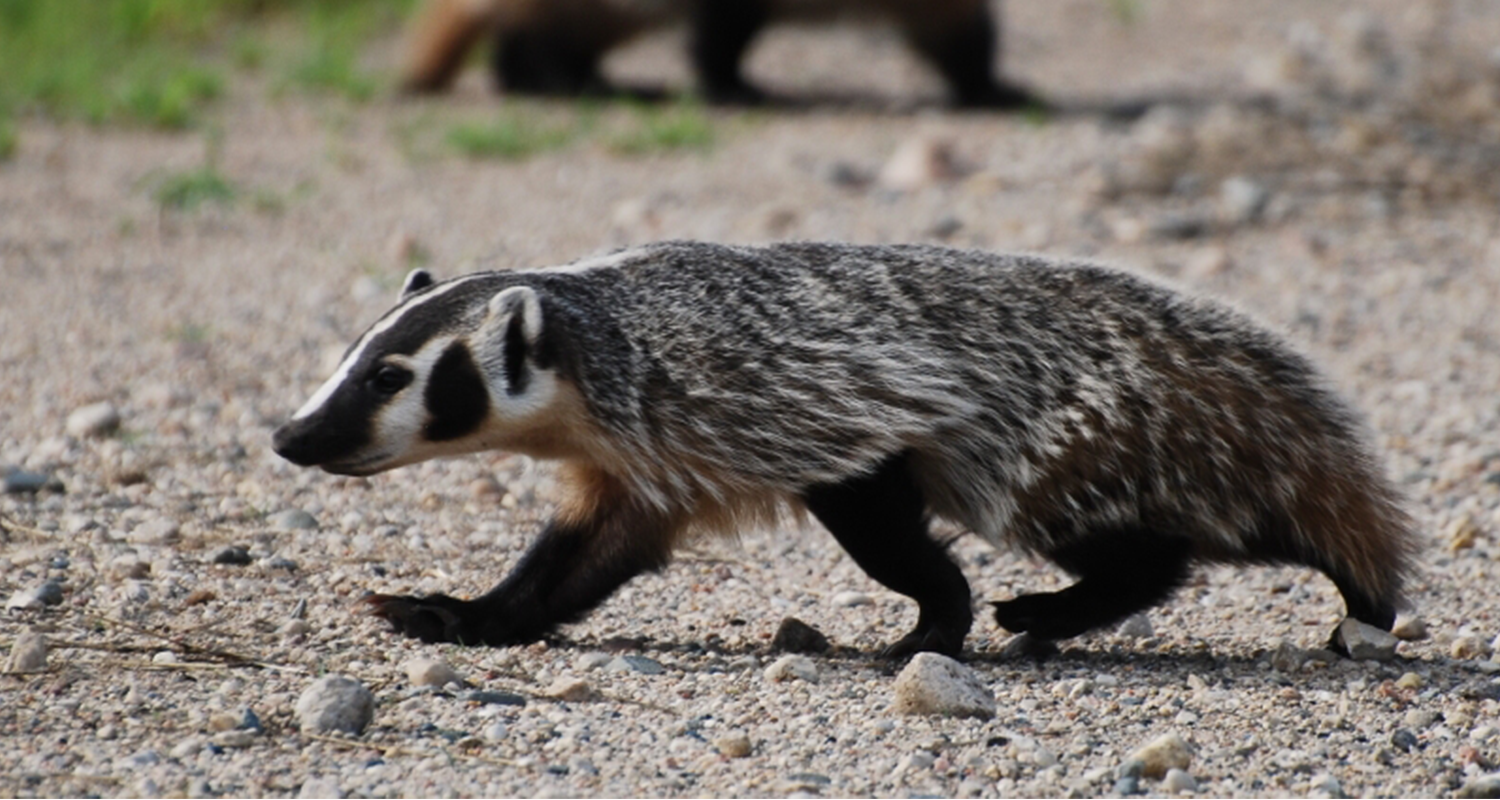
You can find all sorts of holes in our grasslands created by a variety of fossorial animals, which is a fancy way of saying they are good at digging and will spend some time living underground. If you recall a previous post, you might be thinking that I’m about to tell you about our friend the Burrowing Owl. Well, sorry to disappoint you but I’m going to introduce you to an abundant, yet quite secretive, mammal found in the southwest prairies of Manitoba. The American Badger is a large member of the weasel family with immense strength and ferocity. Their compact body is highly adapted for digging burrows to live in as well as digging up prey. Although their abandoned burrows provide beneficial habitat for Burrowing Owls, these animals are highly opportunistic and will feed on small grassland birds and their eggs. The American badger is currently under review for special concern status under the federal Species at Risk Act (SARA).
American Badger. Photo by Nature Canada.
Oh “dear”, I nearly forgot about the cervids, or as they’re known by most, members of the deer family! The most common members of this family found here are the aptly named white-tailed Deer, which can be found galloping and bounding away from danger waving their white tail as a warning sign to nearby friends or family. A close relative of the White-tailed Deer, the Mule Deer can be found primarily in the southwest corner of Manitoba and is provincially listed as threatened. The Mule Deer holds many similarities to the white-tail but the easiest method for identification is to watch how it moves. Mule deer have a unique method of traveling called ‘pronking’ which looks a lot more like bouncing than running. All four hooves land and leave the ground at the same time to create a vision of ‘giant pogo sticks’ jumping across the grasslands. If the deer in question decides not to show off its running style, you can check for a large white rump patch decorated with a thin white tail with a black point on the end. On males the antlers are bifurcating and do not curl inwards like a white-tailed deer. Mule deer have larger, donkey-shaped ears (hence their name), a whiter nose and mouth and a contrasting brown forehead patch.
Mule Deer. Look at those ears! Photo by The National Wildlife Federation.
I’m going to finish off by briefly talking about an extremely rare visitor to the Southwest of our province. I present to you the fastest land mammal in North America, the Pronghorn! Originally thought to be extirpated from Manitoba since 1886, the pronghorn was rediscovered in 2019 just south of Manitou. This speedy mammal can reach speeds up to 100km/h and is happiest in the arid plains of Southern Alberta and Saskatchewan. The pronged horns on these animals, which also are present in females albeit smaller, make them highly distinct. Their caramel and white colouration makes them blend into the dry grasslands of the Southern prairies when running their little heart out isn’t an option.
Pronghorn. Photo by Steven Mlodinow, iNaturalist.org.
The grasslands of Manitoba provide us with ample agriculture, hunting and recreation opportunities. Although these activities can be conducted harmoniously with the natural world, we must take steps in ensuring these creatures and ecosystems will be around for generations to come.











 Manitoba Important Bird Areas Program