Winnipegosis Trip Blog 4 –IBA Workshop

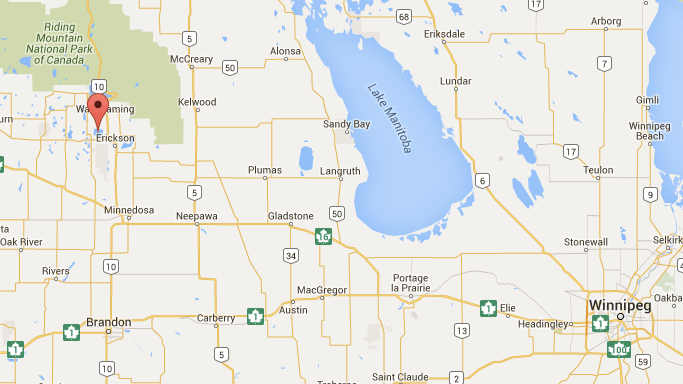
A couple of weekends back (May 7th), Christian Artuso of the Manitoba Breeding Bird Atlas and Tim Poole, IBA Coordinator were invited to deliver a workshop on the IBA Program to local people in Winnipegosis. In this final blog, Tim describes the an evening trip to Red Deer Point near Winnipegosis and adjacent to the Sagemace and Coleman Bay Islands IBA.

Finally, after three blogs, the end is in sight! We finally managed to reach the point where we actually get to do what we came for, not just drop in on IBAs and look at birds! Firstly the background. Kate Basford, Chair of the RM of Mossey River contacted me some time ago to enquire about the local IBA. Following some thought, the local community were keen to increase development opportunities in the area and have been investigating  points of interest and activities such as bird watching, which would attract people to the area. A look at the internet an eventually connection with the IBA program. At this point the plan started to evolve as it became clear that the original IBA data had come from 1986. Sensing an opportunity to increase awareness of the important places for wildlife on their own doorstep and our program goal of recruiting local community caretakers, we decided to put on a workshop for the local community on the IBA Program and the birds of the area.

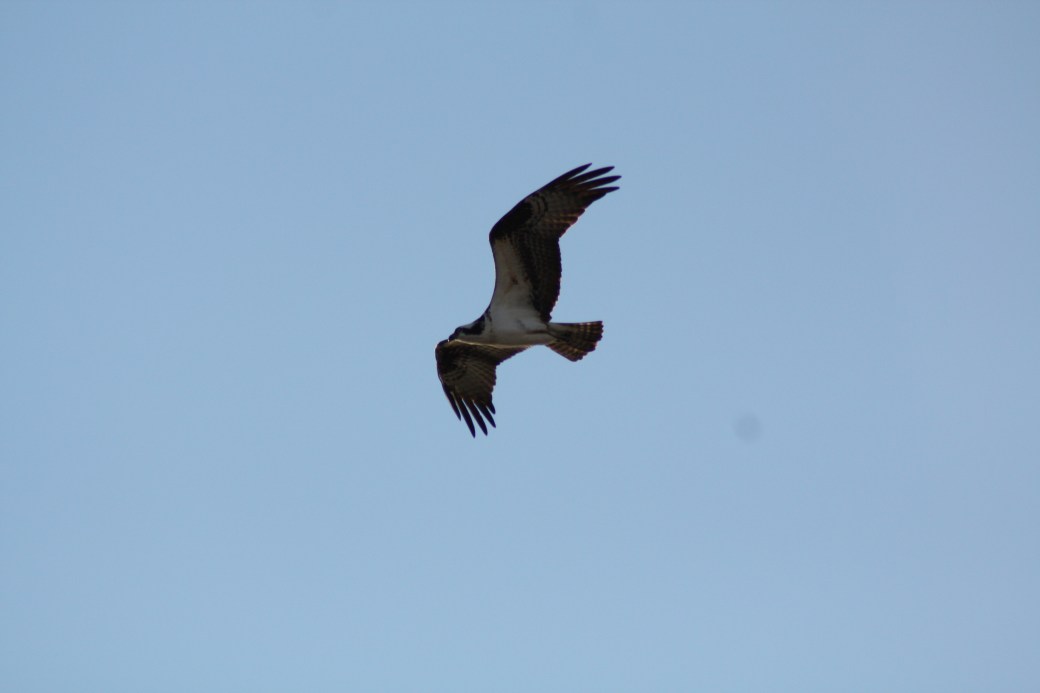
Winnipegosis itself has some great birds, including three besting platforms for Ospreys, Purple Martins, Barn Swallows and Buffleheads.

IMG_1225.JPG

Osprey over the Mossey River in Winnipegosis. Photo copyright Tim Poole

10 people attended the indoor session in the Mossey River Inn. I gave a short 30 minute presentation on the IBA Program and the local IBAs and then following some discussions we left to look at some of the birds of Red Deer Point. Attendees included a couple of council members, a local fisherman with an interest in developing tourism tours in the area, a couple from near Dauphin and some local agricultural producers. This was a great mix and made for some lively discussions. In relation to future IBA involvement, a few points were:

  • Land-based monitoring could occur on Red Deer Point even though it’s not in the IBA
  • There is a possibility of including this in the local school curriculum
  • A local IBA lead was needed, and has hopefully come forward
  • It is possible to survey the IBA from boats and this would be the future plan
  • Monitoring the Lake Winnipegosis Islands needs to begin by identifying where birds are nesting on local islands. Some sort of survey of fishermen and boat users could identify where these places were.
  • It is critical if this program is to work to bring the local community with this concept

Many of the birds were still around on Red Deer Point but shorebird numbers were a little lower. New species for the area included Wilson’s Phalarope and pair of Common Loons. The highlight, and it was a wow moment, was the appearance of a Peregrine Falcon around the shorebirds. Swooping in, the Peregrine startled the flocks of shorebirds, all except the American Avocets who stayed alert but did not flush. The views afforded of the birds I think were very much appreciated and Christian was in his element, showing off the different species and the individual differences between species.

IMG_1264

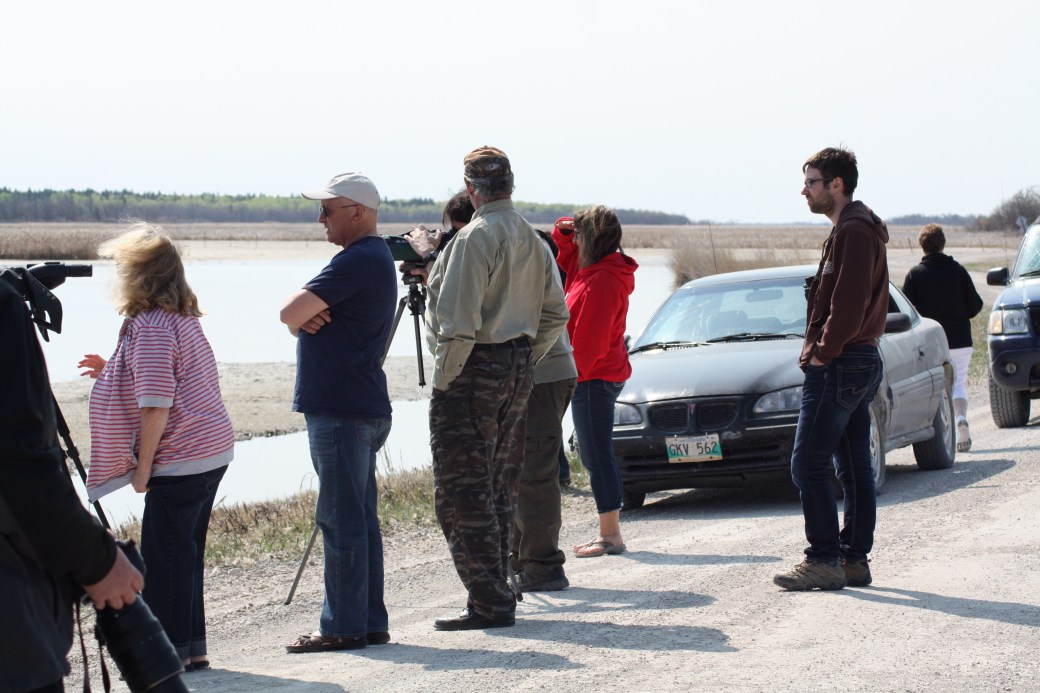
Attendees watching the shorebirds

IMG_1266

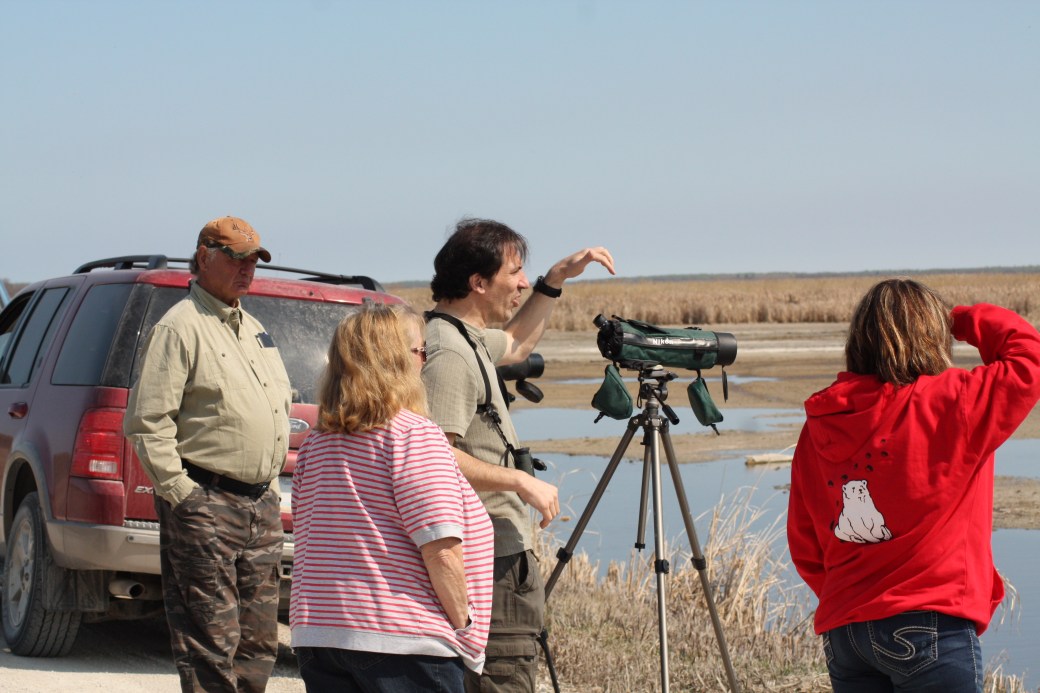
Christian explaining something in the scope!

IMG_1269

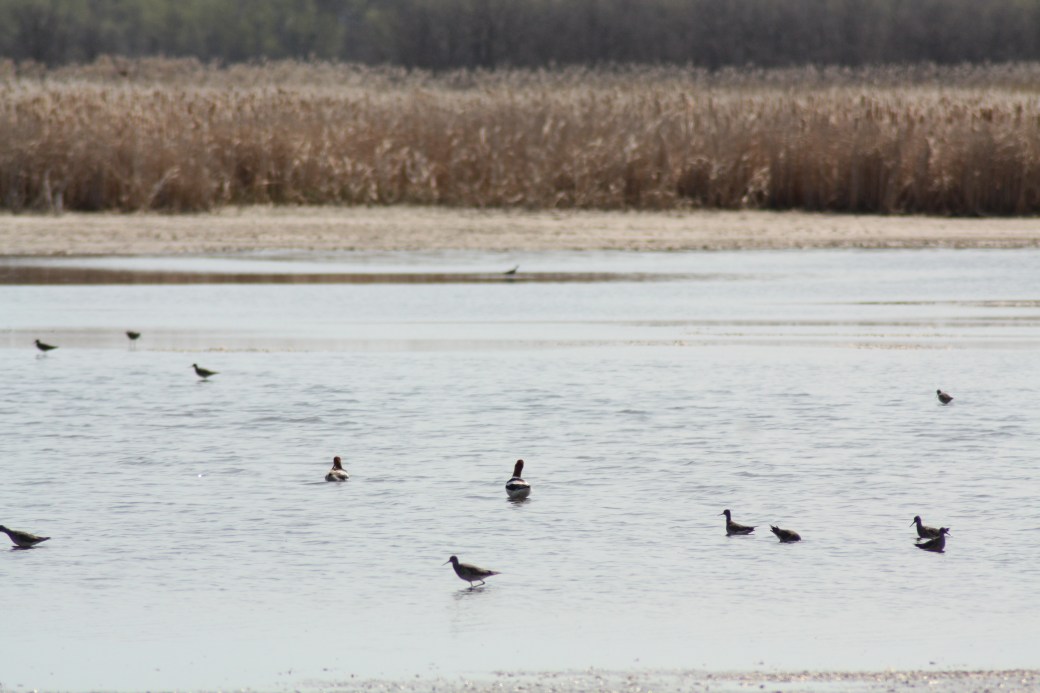
Lesser Yellowlegs and American Avocets on Red Deer Point. All photos copyright Tim Poole

Returning to the Inn, via seeing a pair of Horned Grebe on a small pool by the road, Christian showed everyone how to enter the data into eBird. A quick summary and that was that, but hopefully this will not be the end but the beginning of a new chapter with the Manitoba IBA Program. Thanks must go to Kate Basford for organising things in Winnipegosis and Christian for coming along to give his expert advice. Hopefully the community has enough to get started and we can help them along the way to becoming caretakers of the Sagemace and Coleman Islands Bay IBA.

Final trip list:

Species Count
Canada Goose 3
Gadwall 4
Mallard 7
Blue-winged Teal 12
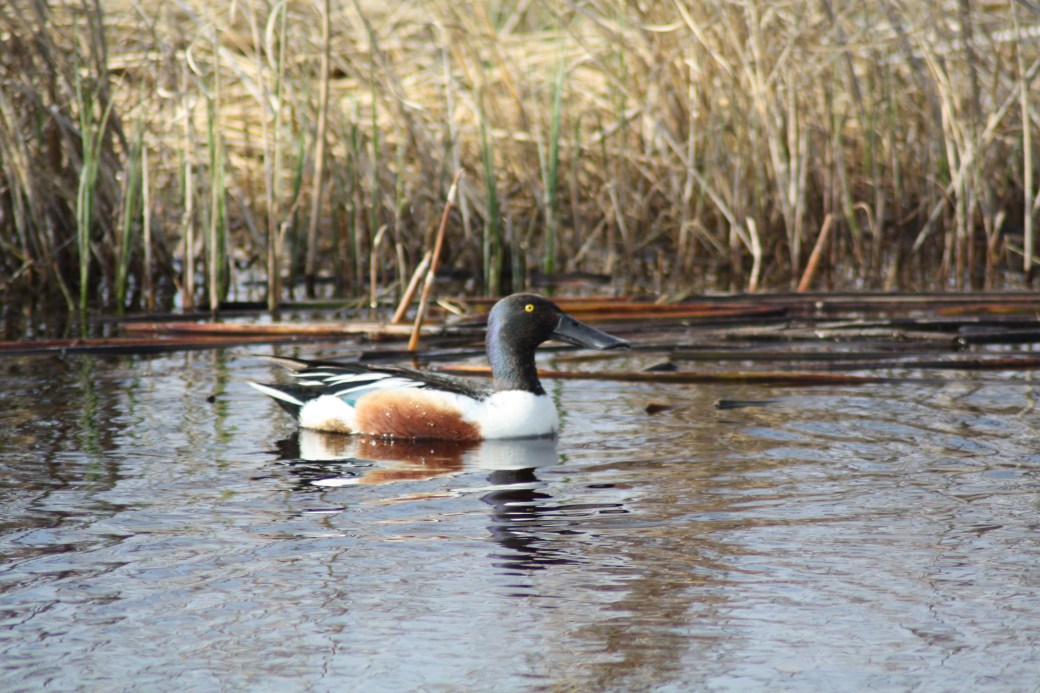
Northern Shoveler 2
Green-winged Teal 1
Ring-necked Duck 2
Common Loon 2
Red-necked Grebe 12
American White Pelican 7
Great Blue Heron 2
Northern Harrier 1
Bald Eagle 3
Red-tailed Hawk 2
Sora 1
American Coot 5
Sandhill Crane 2
American Avocet 21
Semipalmated Plover 2
Killdeer 2
Willet 1
Lesser Yellowlegs 79
Marbled Godwit 4
Least Sandpiper 1
Semipalmated Sandpiper 3
Short-billed Dowitcher 2
Wilson’s Phalarope 2
Ring-billed Gull 3
Common Tern 3
American Kestrel 1
Peregrine Falcon 1
Blue Jay 1
American Crow 1
Common Raven 3
Tree Swallow 2
American Robin 4
Palm Warbler 1
Vesper Sparrow 1
Savannah Sparrow 3
Red-winged Blackbird 50
Yellow-headed Blackbird 20
Common Grackle 10

Winnipegosis Trip Blog 3 –Red Deer Point

A couple of weekends back (May 7th), Christian Artuso of the Manitoba Breeding Bird Atlas and Tim Poole, IBA Coordinator were invited to deliver a workshop on the IBA Program to local people in Winnipegosis. In this third blog, Tim describes the an evening trip to Red Deer Point near Winnipegosis and adjacent to the Sagemace and Coleman Bay Islands IBA.

The greatest challenge with the IBA Program at times is actually being able to access the IBA. The Sagemace and Coleman Islands IBA is one such IBA. I suspect the original IBA boundary did not consider access for monitoring purposes for volunteer birders. The map below shows the location of the IBA in relation to the town of Winnipegosis, the Long Island and Long Island Bay IBA and Provincial Highways.

Sagemace location.jpg

The only access to the actual IBA is by boat, not surprising as the original citation states that the IBA was designated for:

‘Sugar Island, in Sagemace Bay, supports nationally significant numbers of breeding Great Blue Herons. This Great Blue Heron colony has been existence for at least three decades. A 1986 survey found 300 nests on Sugar Island, which is almost 1% of this species Canadian population. This number also meets the general congregatory IBA criteria for wading birds at the national level (500 birds). Large numbers of Double-crested Cormorants also breed on the Sagemace and Coleman Bay islands. In 1986, 975 nests were found on two islands in Coleman Bay, and 20 nests were found on an island in Sagemace Bay. Sagemace Bay is also a traditional molting and staging area for diving ducks, especially Redheads and, to a lesser degree, Canvasbacks.’

This presents us with a conundrum. We are a community-based initiative, aiming to involve local champions in the stewardship of globally important sites for birds and biodiversity but in some cases without the means to access those sites.How do we encourage people to participate in the program in the absence of easy access? The remainder of this blog shows how we decided to approach this issue at Winnipegosis and will hopefully encourage others to approach IBA monitoring in such a way.

In preparation for our Saturday morning workshop, Christian and I headed up to Red Deer Point just to the east of the IBA boundary to find where the best places to introduce some of the local bird species to attendees would be. Our local contact, Kate Basford, chair of council for the Mossey River Rural Municipality, had tipped us off beforehand that there were shorebirds and waterbirds in the area.

We found a few good spots and some great highlights. An old Ducks Unlimited project in the south became a goldmine for ducks, believe it or not! Ruddy Ducks, Ring-necked Ducks, Gadwall, American Wigeon, Northern Pintails, Green-winged Teal, Canvasback, Redhead, Lesser Scaup and Buffleheads. Terrific spot.

IMG_1155.JPG

Gadwall in flight over Red Deer Point. Photo by Tim Poole

Further north was definitely a highlight. The land opened up into some interesting areas of mudflat. With recent dry weather, the mudflats had hardened but in one single location, they opened up into a shallow pool. This area coincided with fantastic populations of shorebirds, including good numbers of American Avocet, Semipalmated Plover, Killdeer, Willet, 116 Lesser Yellowlegs, Marbled Godwit, Least Sandpiper, White-rumped Sandpiper, Pectoral Sandpiper, Semipalmated Sandpiper, Short-billed Dowitcher and Long-billed Dowitcher. This was surprisingly early in Manitoba for this number and diversity of shorebird species, especially given how far north we were and the slow spring migration being encountered around Winnipeg.

Shorebirds on the Red Deer Point. Both photos copyright Christian Artuso

Continuing north, we continued to look for good birding spots

IMG_1168.JPG

Until we eventually caused a wee bit of a commotion. Driving out of a wooded area into open wetland, something jumped up and began running away from us.

IMG_1172.JPG

Raccoon on the run for cover. But from what? Photo by Tim Poole


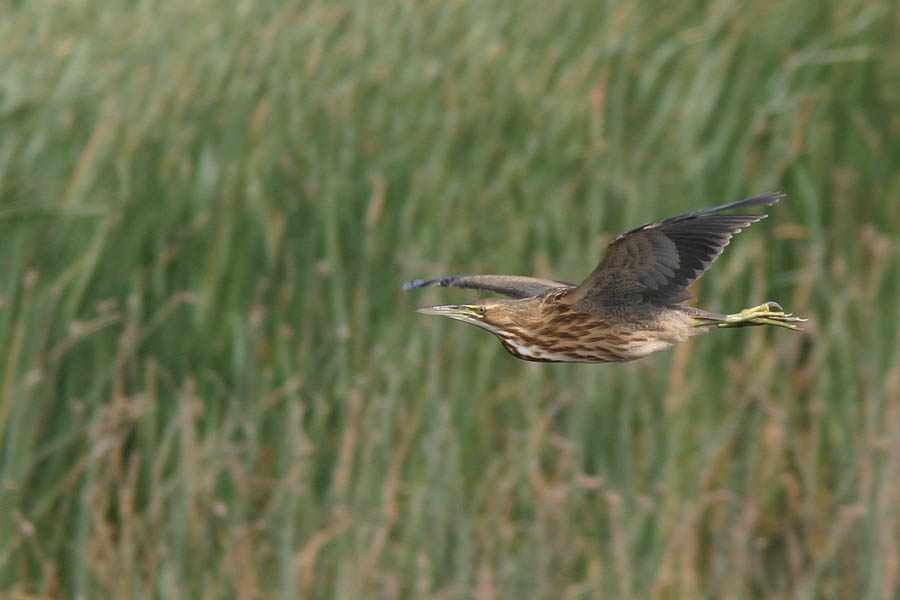
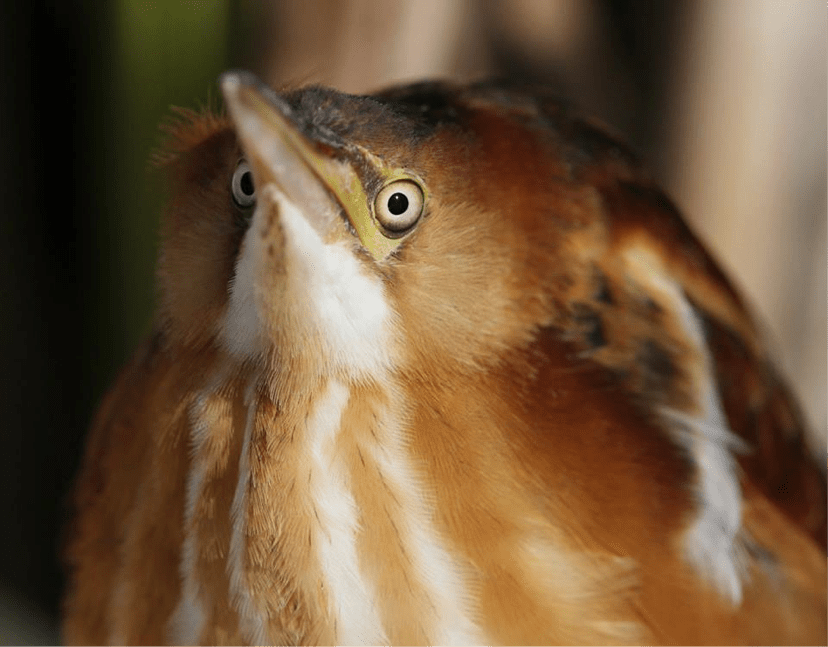
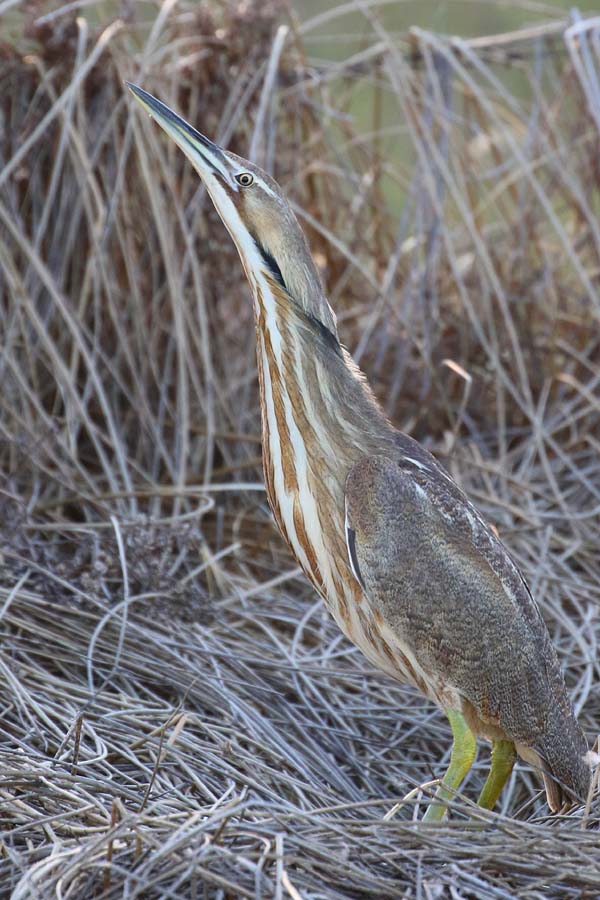
This raccoon then startled something else which flew up to the edge of some dead cattails and stood stock still, neck extended and sharp beak pointing upwards as if it did not have a care in the world:

American Bittern_3998_Artuso

American Bittern, a species of heron in familiar ‘if I don’t move they won’t see me’ pose. Photo copyright Christian Artuso

So the end of a successful evening, 55 species recorded (listed below) and the forthcoming workshop to get our teeth into.

In relation to the start of this blog, the conclusion from our evening journey along a track within 1 or 2 kms of the IBA, was that this area had outstanding potential for people from the local community to monitor the local birdlife, whether breeding birds or migrants. Maybe in the future, if enough good data is forthcoming, we can even put forward a justification to extend the IBA boundary. The important thing to consider in any bird stewardship program is how we can take people close enough to the birds to appreciate them and to engage in citizen science.

Route here:

Sagemace route

Species list for Red Deer Point

Species Count
Canada Goose 30
Wood Duck 4
Gadwall 28
American Wigeon 2
Mallard 50
Blue-winged Teal 300
Northern Shoveler 400
Northern Pintail 10
Green-winged Teal 7
Canvasback 65
Redhead 35
Ring-necked Duck 6
Lesser Scaup 2
Bufflehead 4
Common Goldeneye 8
Ruddy Duck 2
Ruffed Grouse 1
Pied-billed Grebe 1
Red-necked Grebe 12
American Bittern 1
Great Blue Heron 3
Northern Harrier 1
Red-tailed Hawk 1
Sora 1
American Coot 30
Sandhill Crane 2
American Avocet 31
Semipalmated Plover 5
Killdeer 22
Willet 2
Lesser Yellowlegs 116
Marbled Godwit 9
Least Sandpiper 5
White-rumped Sandpiper 1
Pectoral Sandpiper 9
Semipalmated Sandpiper 4
Short-billed Dowitcher 11
Long-billed Dowitcher 1
Ring-billed Gull 10
Common Tern 2
American Kestrel 4
Eastern Phoebe 1
Black-billed Magpie 2
American Crow 2
Common Raven 1
American Robin 8
Yellow-rumped Warbler 1
Savannah Sparrow 3
Song Sparrow 2
Swamp Sparrow 7
Red-winged Blackbird 500
Western Meadowlark 2
Yellow-headed Blackbird 70
Brewer’s Blackbird 10
Common Grackle 5

Winnipegosis Trip Blog 2 – Dog Lake IBA and the Narrows

Last weekend (May 7th) Christian Artuso of the Manitoba Breeding Bird Atlas and Tim Poole, IBA Coordinator were invited to deliver a workshop on the IBA Program to local people in Winnipegosis. In this first blog, Tim describes the second part of the journey to Winnipegosis and Dog Lake IBA.

Dog Lake IBA must be one of those unusual places where so many people must pass it and never realise it exists. It is just a few hundred metres from Highway 68, yet hidden away and with the excitement of the Narrows and the potential of a plethora of other birding spots along the route of your journey, then no wonder no one really ever stops to take a look. But here’s the thing, I have a feeling that Dog Lake might just be a wee bit of a birding gem for anyone who might take a look. Ok, it might lack the open shorelines for shorebirds, but it probably supports a multitude of waterbirds.

Dog Lake IBA

To access the site we had to peruse the map a little and use the backroads to locate the IBA shoreline. We accessed along two tracks, the one further south on the map below not being as interesting as the track further north.

dog lake

Dog Lake is a globally important spot for American White Pelican and nationally important for breeding Great Egret. Before heading down a track to the lake, we were able to spot our first egrets of the year.

IMG_1100.JPG

Great Egret, note the feathered tail and green around the eye, a beautiful example of a bird in full breeding plumage

On arrival at the lake we were able to enter 42 species under the IBA Protocol, including over 2000 Ring-billed Gulls. To give an example (and blurry) impression of the densities of gulls breeding on the closest island, see this:

IMG_1114.JPG

High concentrations of Ring-billed Gulls on Dog Lake

There were also plenty of other waterbirds including Western Grebes. Dog Lake currently has little to no monitoring from anybody and we would love to find volunteers to either caretaker the site or to visit occasionally to collect bird data. We would also like a volunteer to go out for a day with a GPS and map all the entry points to the IBA so future visitors can have a good idea of where to go. Please get in contact if that is something which might suit you.

IMG_1116

Forsters Terns have also made their way back to Dog Lake and presumably would be nesting in the surrounding wetlands

IMG_1121

There’s always a Red-winged Blackbird!

On to the Narrows, with Tundra Swans in a small bay just to the east. We carried onwards to Winnipegosis. The birding highlight was probably this Osprey with a rather large fish.

IMG_1140.JPG

We also stopped off to look at an interesting pasture with huge concentrations of gulls and blackbirds and a first Wilsons Snipe of the day. All in all with two IBAs encountered already and a good number of birds, 63 species and over 5000 individuals in eBird.

Next stop, Sagemace and Coleman Bay Islands IBA

International Migratory Bird Day

Date: May 14, 2016
Time: 8:00 am  to  4:30 pm

Celebrate the diversity of migratory birds at Oak Hammock Marsh!

Oak Hammock Marsh, one of the best areas in North America to watch migratory birds.

  • 8:00 Birding walk with Tim Poole and Christian Artuso
  • 10:00 Presentation on Important Bird Areas (IBA) program and data entry into Ebird with Tim Poole and Christian Artuso
  • 11:00 Returning Manitoba Songbirds by Christian Artuso
  • 1:00 Birding by Ear Workshop with Paula Grieef ($5 per participants plus taxes)
  • 2:30 What to look for when buying Optics with Paula Grieef and Ricky Ryan (from Zeiss) (presentation followed by a walk outside to test some binoculars out)

International Migratory Bird Day sponsored by Zeiss.

Enter the draw to win a pair of Zeiss binoculars.

Winnipegosis trip blog 1 – Marshy Point IBA

Last weekend (May 7th) Christian Artuso of the Manitoba Breeding Bird Atlas and Tim Poole, IBA Coordinator were invited to deliver a workshop on the IBA Program to local people in Winnipegosis. In this first blog, Tim describes the first part of the journey to Winnipegosis and a brief visit to Marshy Point IBA.

Late Friday morning Christian and I set out for  Winnipegosis. We had a rough plan of action for the day which involved checking out a couple of IBAs before hitting the Narrows. Marshy Point was the first of these IBA’s. Although mostly present on privately-owned land, parts of Marshy Point can be accessed by public road. The IBA is nestled on the eastern shore of Lake Manitoba west of Highway 6 between Oak Point and Lundar.

Slide1

Most of the IBA is private and cannot be accessed by volunteers. However there are some possibilities for recording bird data if you do not mind leaving the highway for a short period. The IBA can effectively be split into three zones for monitoring purposes:

Slide2

We did not access the IBA along the southern and central access routes but for completion, here are the access maps on Google Earth Images:

Slide5MB087-Marshy Point IBA Public Access.jpg

Further north we drove and then turned west off Highway 6, heading towards the hatchery road. The fish hatchery on Lake Manitoba is within the IBA and our ultimate destination was the parking area where provincial fisheries staff take the boat across to the hatchery. The route we took can be seen from our GPS track below:

Marshy Point access.jpg

In total we were able to record 36 species in and around the IBA, including our first shorebirds of the day, two Wilson’s Phalaropes in a small pool. In addition there was a group of 16 Lesser Yellowlegs among the cattails and 13 species of waterfowl. It would be interesting given time to explore the other areas on the maps above to determine where best for birds in the accessible part of the IBA. There were also American White Pelicans and a Great Blue Heron in flight, plus a failed attempt at photographing Gadwalls with their white speculum showing.

IMG_1069.JPG

Onwards we headed towards the Narrows, next stop, Dog Lake IBA.

IBA Blitz at Delta Marsh

The Province of Manitoba and the Manitoba IBA Program will be coordinating a blitz of all of Delta Marsh over the weekend of May 28 and 29. Monitoring will take place on both mornings. We will be hoping to organise a thank you meal on one of the lunchtimes. We are looking for different groups of people, including:
1. Experienced boat handlers (boats will be available)
2. Experience of counting birds from a boat
3. Are happy to monitor birds on foot through a hemi-marsh i.e. get your feet a bit wet
4. Would be happy to drive around the roads and tracks monitoring the birds in the area
The plans are still being developed but if you are available to come to Delta Marsh on either of those dates, please contact us on iba@naturemanitoba.ca

Update on IBA Program

For anyone able to pick this up and not on our email distribution list, here is a quick update on some of the goings on in the Manitoba IBA Program
Upcoming Events
  • We have a program of events planned for 2016, including at least 5 bird blitzes. news on these will be distributed by email and on the blog in due course. In the meantime we have a busy start to May. On May 7th, Christian Artuso and I will be heading up to Winnipegosis to deliver a workshop on the IBA Program. We will give an introduction to the IBA Program and some of the birds you would expect to encounter in the local IBAs, including Sagemace and Coleman Bay Islands (http://www.ibacanada.ca/site.jsp?siteID=MB081). If you know of anyone living in the area who might be interested, please get in contact with me.
  • Closer to Winnipeg, International Migratory Bird Day is coming up and Oak Hammock Marsh is the place to be. We will be giving a birding walk at 8am in the morning, demonstrating to people how to carry out the IBA Protocol and hopefully see some fun birds. At 10am Christian and I will be giving a talk on the IBA Program and how to use eBird. The cost of attending is the standard cost of entering the centre. Christian will be giving another talk at 11am on Manitoba’s returning songbirds and then at 1am, Paula Grieef will give what I am sure will be an excellent workshop on birding by ear. To complete the day, there will be an opportunity from 2:30pm to look at some binoculars (see http://www.oakhammockmarsh.ca/events/international-migratory-bird-day/). In addition, if there is any interest in doing a quick IBA blitz at Oak Hammock following some of the events listed, then please let me know.
  • If you are further afield and not going to make it to Oak Hammock, then I really would encourage you to visit your local IBA and collect as much bird data as possible. This is a fantastic opportunity to get out and enjoy the birds in your area. If you do get out, then please send me your completed eBird checklists – it would be fun to post the number of IBAs monitored and what was seen on our blog.
The Blog
Following a rush of blood to the head, there are now a number of new blogs on the website including:
Funding news
We would like to thank our new funders who have in recent months generously donated to the program. We have recently received new funding from MEC Advocacy and Awareness, The Winnipeg Foundation, TD Friends of the Environment Fund, Blennerhassett Family Foundation and Province of Manitoba Green Team. For a full list of funding partners see https://importantbirdareasmb.ca/donors-and-supporters/. Thanks are also due to Environment Canada’s EcoAction Community Fund who supported the program since 2014 until March 31st 2016.
La Riviere Raptor Festival
It was great to see some familiar faces and some new faces at the La Riviere Raptor Festival. It was a fantastic day for all the family and I would really encourage people who did not attend this year to check it out in 2017.
Grassland Bird Conservation Guide
The final output from the EcoAction Program is the new Landowners Guide to Grassland Bird Conservation in Manitoba. If you haven’t see it already, please check it out on our website at https://importantbirdareasmb.ca/manitoba-grassland-bird-initiative/.
Volunteer Reporting
I have updated the volunteer hour reporting forms and will post to the website. If you wish to use one of our bird checklists to record data and send to me to enter into eBird, you can download the copies at https://importantbirdareasmb.ca/volunteer/maps-and-monitoring-forms/. Remember, if you visit and IBA and eBird it, we can record the volunteer hours. These hours are an important part of fundraising to continue the program.
Other IBA news
Bird Studies Canada are looking for a new IBA Coordinator for Ontario with the deadline just a few days away. If you are, or know of anyone interested in this post, please see http://www.birdscanada.org/news/important-bird-and-biodiversity-areas-coordinator-ontario

Whitewater Lake IBA, a Birders Paradise

In celebration of Nature Week from Travel Manitoba, it’s a great opportunity to share some images from Manitoba’s top places for birds. Donna Martin has kindly sent us some fantastic images from a day out last week at Whitewater Lake near Deloraine. We are also fortunate to have two amazing volunteer Caretakers for this site, Colin Blyth and Gillian Richards. If you travel to Whitewater Lake in the coming weeks, we would love to see your checklists entered on eBird. If you need some help with this, please let us know at iba@naturemanitoba.ca.

IMG_3403

Formerly a rarity in Manitoba, the White-faced Ibis has seemingly become numerous at Whitewater Lake. Photo copyright Donna Martin

IMG_3710

Whitewater Lake is not just a great place for birds. Note the changing landuse in the background, a forewarning of things to come? Photo copyright Donna Martin

IMG_4032

A close-up of a wonderful White-faced Ibis. In the coming weeks, the lake will become a temporary home to thousands of migrating shorebirds. Photo copyright Donna Martin

IBA Monitoring Priorities – Delta Marsh

Our second in the series of IBA monitoring priorities looks at the needs around Delta Marsh IBA. After a few exchanges on Facebook recently regarding the boundary of the Delta Marsh IBA, it seemed like a good time to use this site for the next blog.

Delta Marsh, made famous by a combination of Delta Waterfowl and one of North America’s leading bird banding stations, is known for large and diverse populations of birds. Many birdwatchers visit the IBA during spring migration to check the ridge for migrant songbirds on their route north. What is most impressive are the large concentrations of waterbirds, especially ducks and geese. In addition, the marsh has been known as a place for marsh birds such as Yellow Warbler and Common Yellowthroat.

On the south edge of Lake Manitoba, the IBA includes Ambroise Beach and Delta Beach.

You can see a pdf of the IBA boundary by clicking on the link below:

http://www.ibacanada.ca/maps/sites/MB001.pdf

and a Google map here:

http://www.ibacanada.ca/mapviewer.jsp?siteID=MB001

Fall migration is probably the key period at Delta Marsh for both diving (Canvasback, Redhead, Lesser Scaup) and dabbling (Mallard, Gadwall, American Wigeon, and Northern Pintail) ducks.  Around 100,000 waterfowl have been detected during aerial surveys. Canada Geese and Snow Geese also stage in large numbers in spring and fall. The beaches are also good places to monitor shorebirds such as Sanderling and Ruddy Turnstones. Western Grebe are a significant breeding and staging species.

According to the original IBA citation, the following are priority species:

  1. Black-crowned Night-Heron
  2. Forster’s Tern
  3. Snow Goose
  4. Mallard
  5. Western Grebe

18_Artuso_Western Grebe_7872_adult and juv

The original citation also highlights the globally important populations of waterfowl. Other IUCN-listed species such as Rusty Blackbird and Horned Grebe are also worthy of paying special attention.

Donna RUBL

The internationally threatened Rusty Blackbird in all its rusty glory. Photo copyright Donna Martin

The monitoring priorities for 2016 are:

  • Complete checklists to be entered into eBird. If possible these checklists should follow the IBA Protocol.
  • Prioritise counting large flocks of waterbirds.
  • Enter any birds counted outside the IBA under the IBA Protocol while ensuring the eBird point is not in the IBA
  • Add checklists of count of non-target species encountered during other events e.g. fall hawk watches, Nature MB birding trips
  • Do not be afraid to include monitoring in some areas outside the IBA, especially Lake Francis to the east but make sure any birds recorded outside the IBA are listed on separate checklists.

delta iba protocol

For anyone interested in learning a bit more about how to do this, there will be a short walk and talk on May 14th as part of the International Migratory Bird Day (see here).

I can provide a larger printed version of the map and include roads, etc for anyone who requests it. Please use the contact details provided on this website.