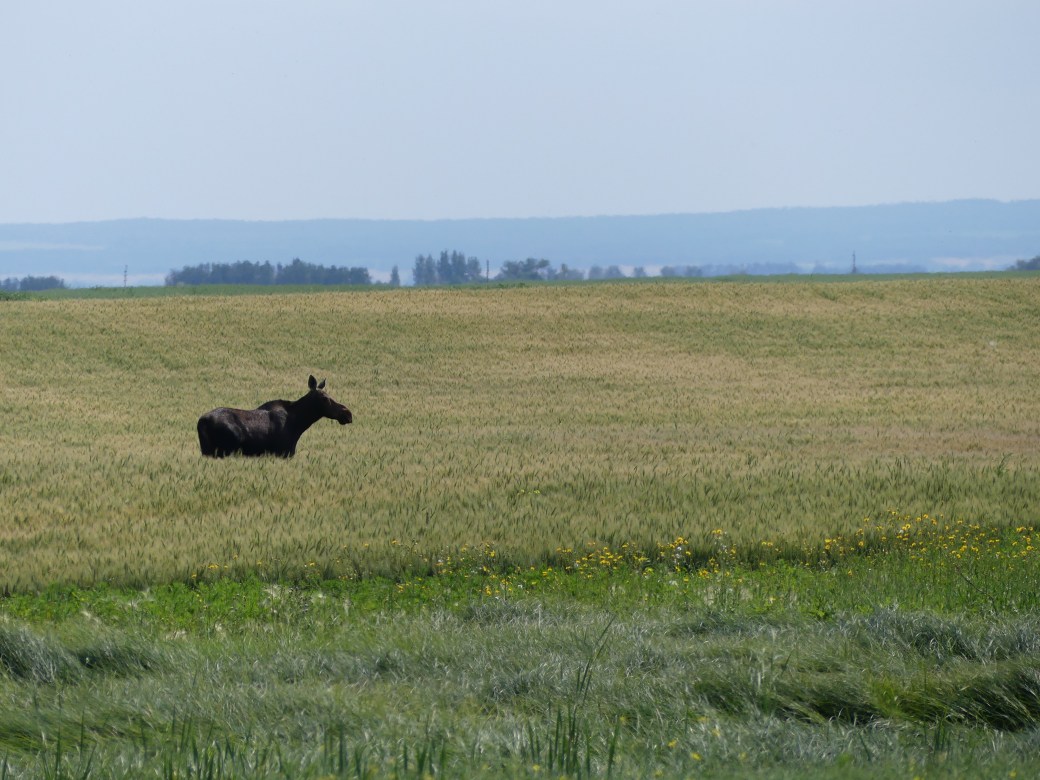
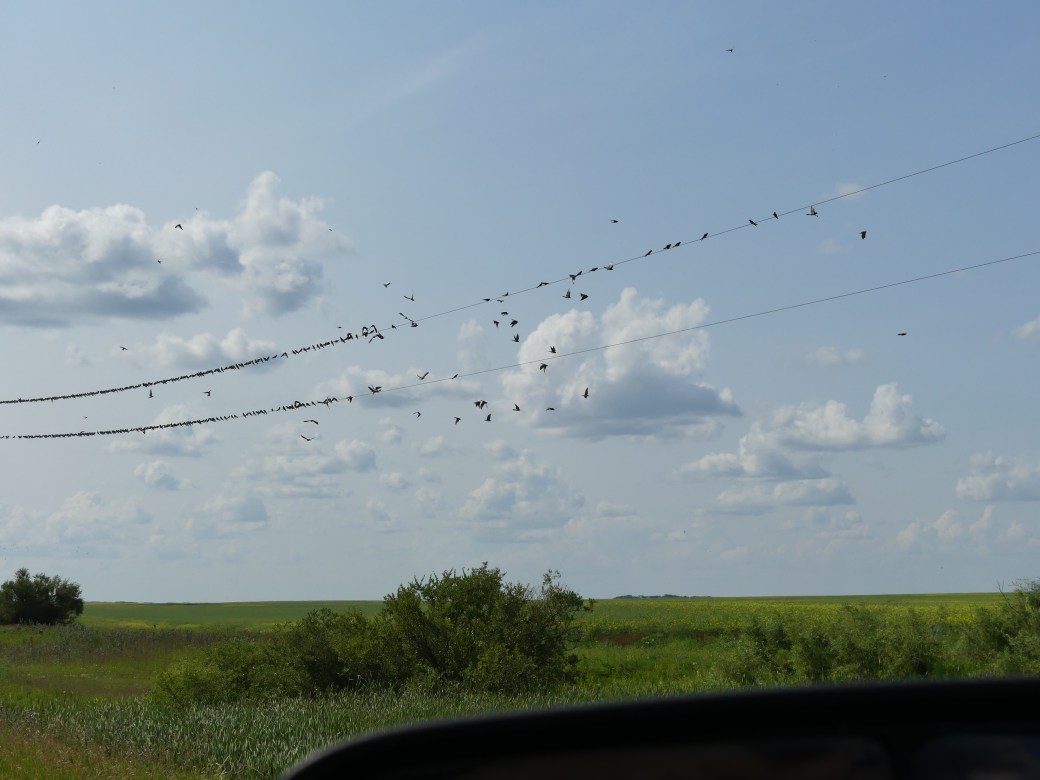
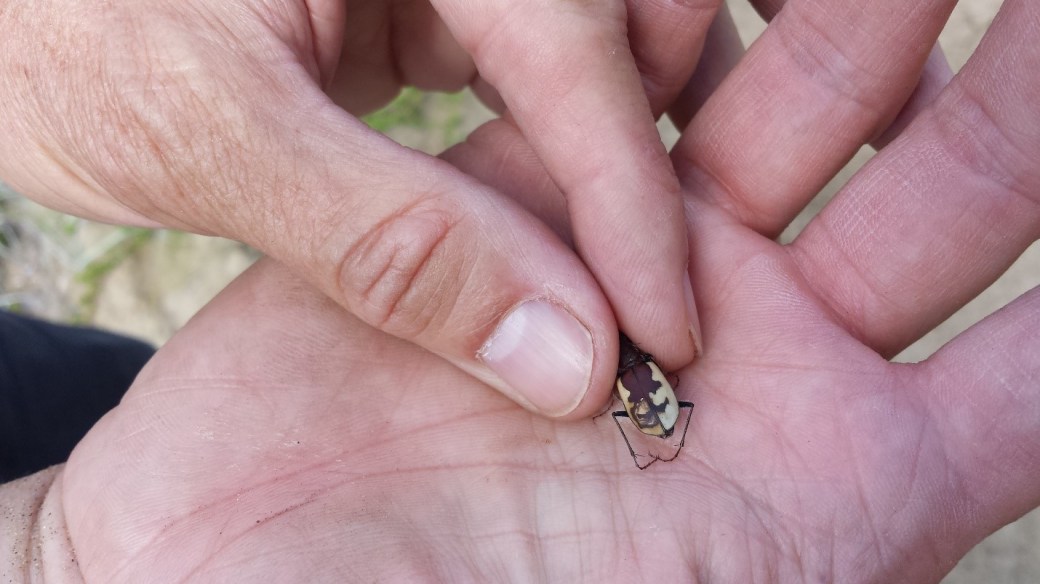
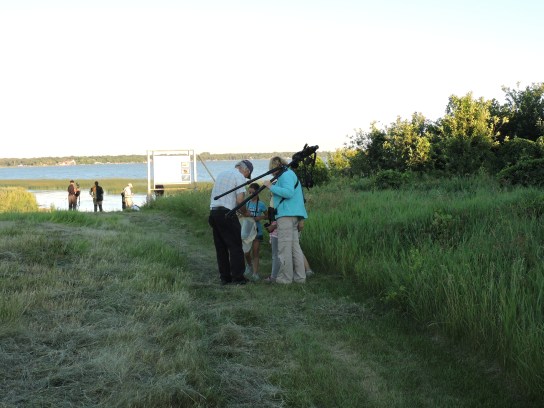
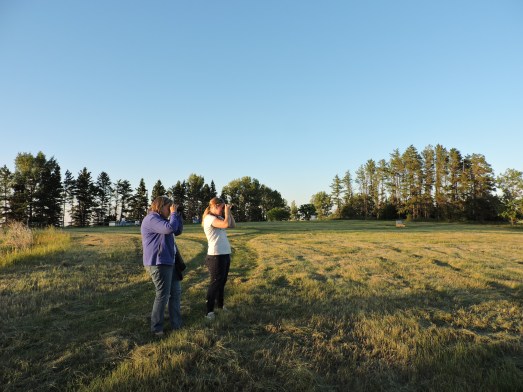
On a sunny Friday morning, Bonnie, Christian, Lynnea, Tim and I left Winnipeg for the Whitewater Lake IBA (MB015). As the official observation transcriber for this crew of top birders, my hand got quite the workout! Nothing could have prepared me for the large number of flocks and surprises we encountered throughout the day.
On the way to Whitewater Lake, we made a pit stop in St. Claude as Dickcissel were rumoured to be in the area (or to be less ambiguous, Christan knew they were there!). While Christian put me to shame with this amazing picture of a male Dickcissel mid-tune, I was never able to get the timing right and only managed to capture its derrière (#birderproblems)!
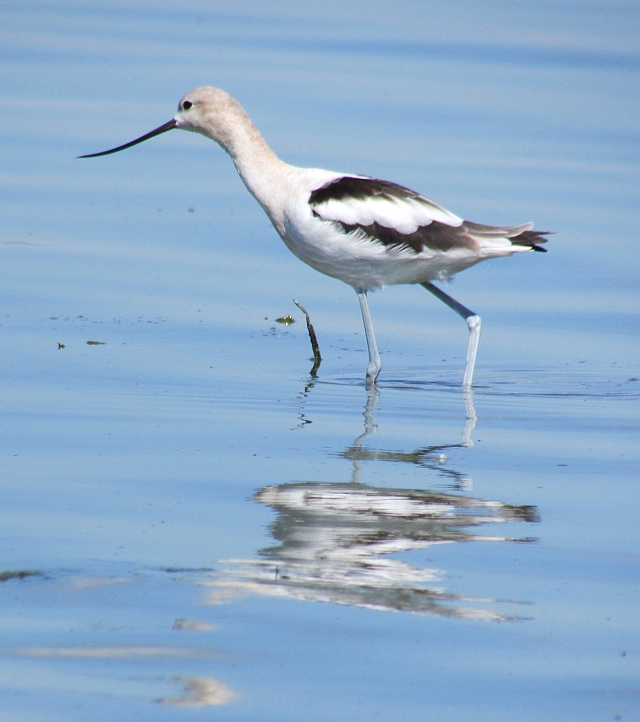
Once in the IBA, we witnessed large flocks of shorebirds, grebes, and ducks in our survey area. The shorebirds were incredibly prominent and diverse! One particular flock of Short-billed Dowitcher counted 440 individuals (total of 710 observed throughout the day!) with one juvenile Long-billed Dowitcher hidden among them. We encountered a variety of sandpipers including 240 Stilt, 21 Least and Pectoral, 13 Semipalmated, and one lonesome Baird’s. The Marbled Godwit’s cackling laugh and American Avocet’s high-pitched kweet-ing was heard throughout the day which reflected in our final count of 143 and 165 respectively.
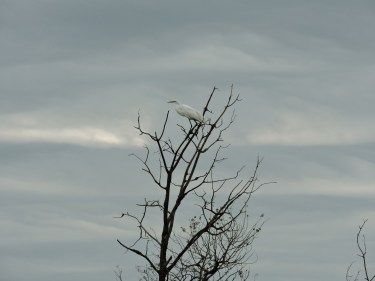
We were quite entertained by this Cattle Egret, standing on cattle. This would not be the last egret of the day! We were delighted to see three Snowy Egret and 24 Great Egret.
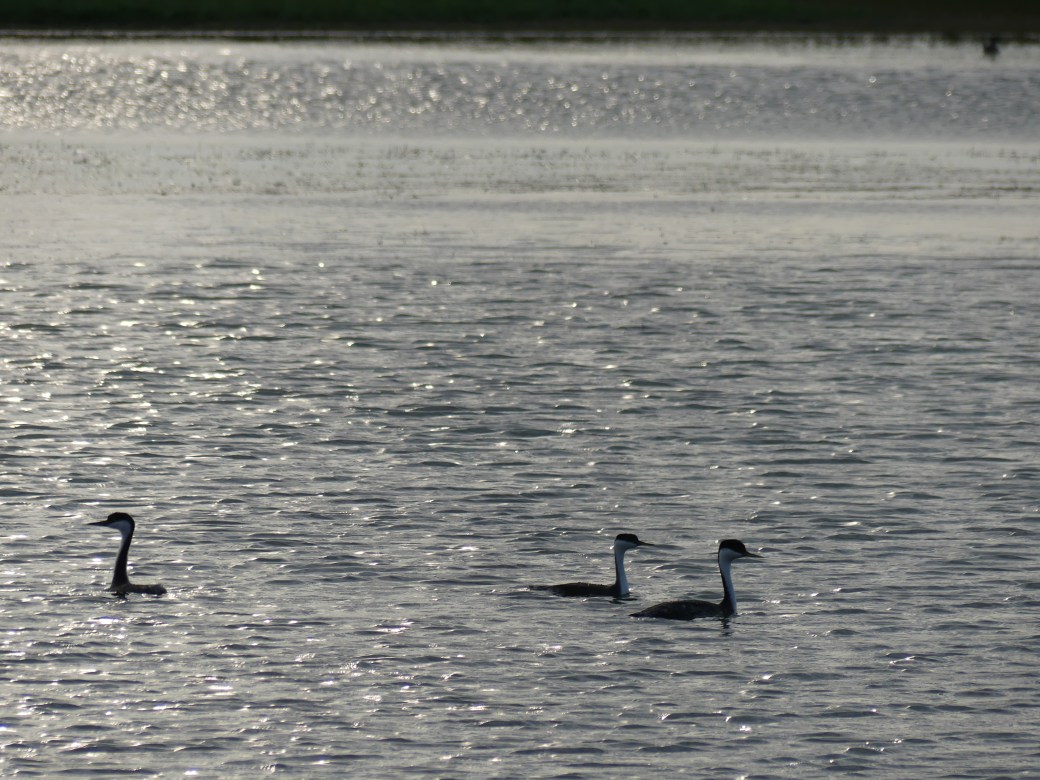
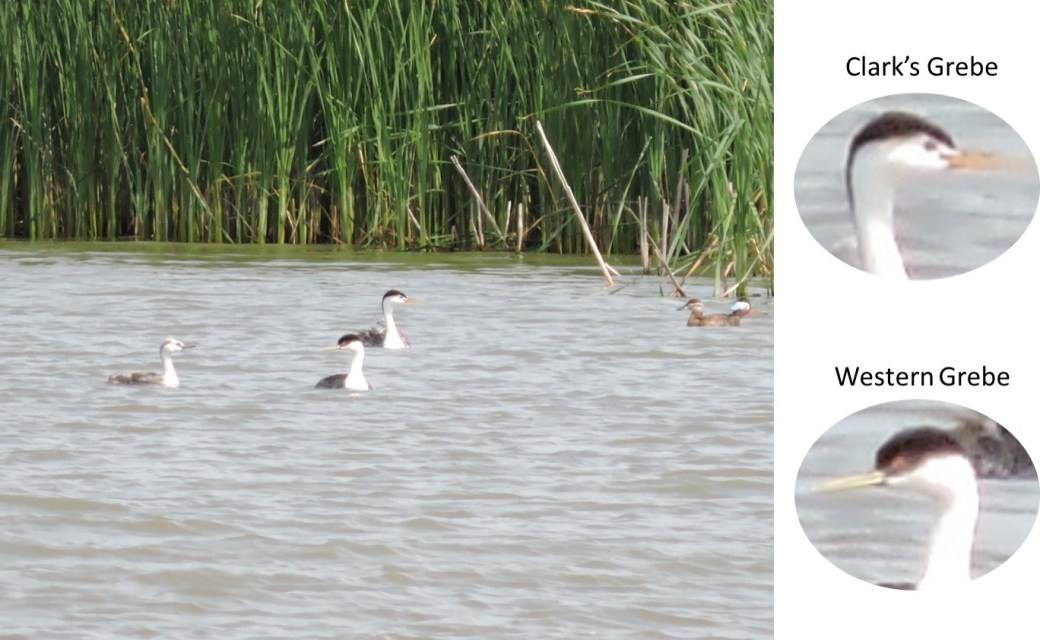
Oh, the grebes! Western, Eared, Red-necked, Pied-billed and even a Clark’s! They were certainly present at Whitewater Lake, with their young in tow. During the excitement of getting a count of the large mixed-flocks, Christian was able to spot a Clark’s Grebe, seemingly paired with a Western Grebe, and their hybrid young. Although very similar to Western, Clark’s Grebe does not have black around the eye and has a brighter yellow bill (see image below for side by side comparison).
Several research groups have found that grebes may be the flamingo’s closest living relative despite their dissimilar appearance and life-history traits (e.g. Chubb 2004; Ericson et al. 2006; Hackett et al. 2008). This finding has been the subject of debate and criticism (e.g. Livezey 2010). What do you think?
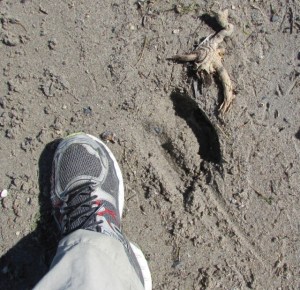
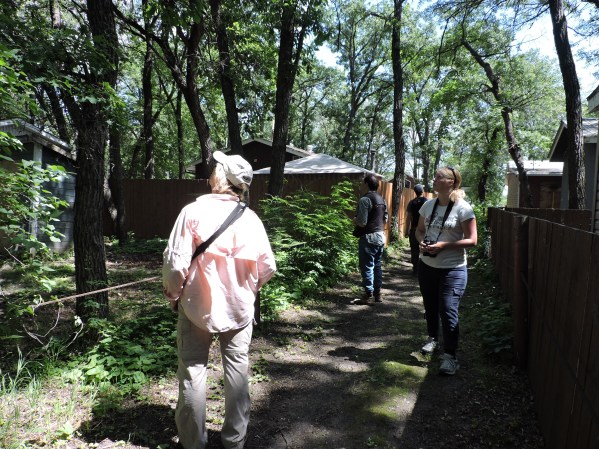
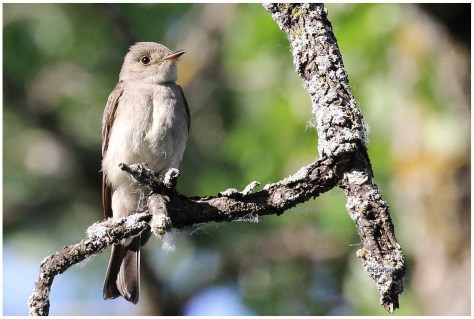
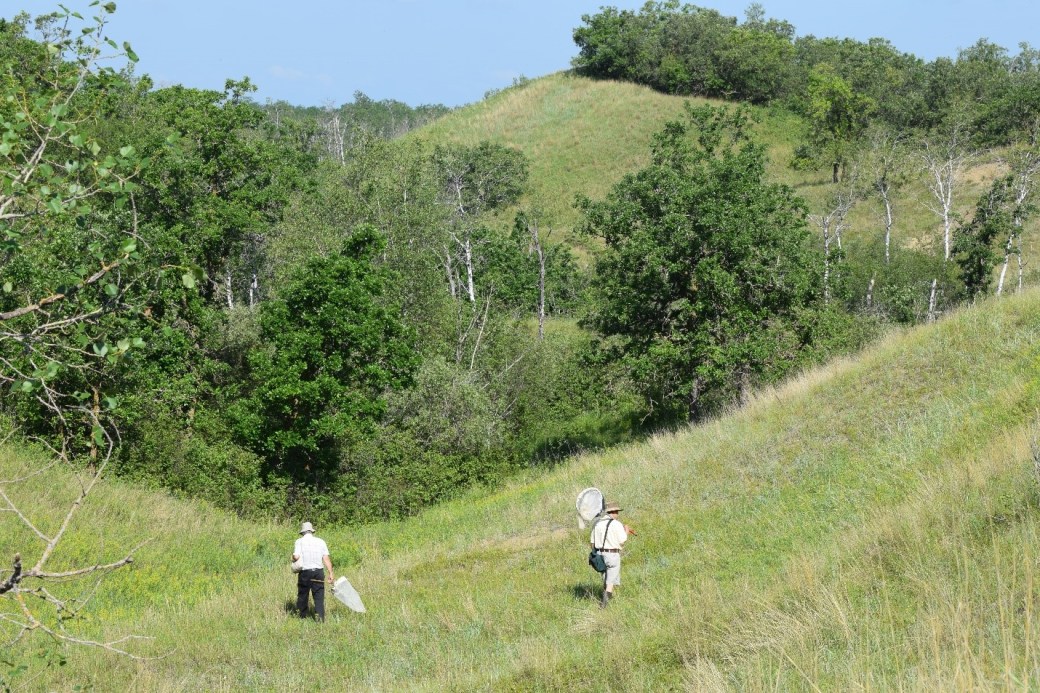
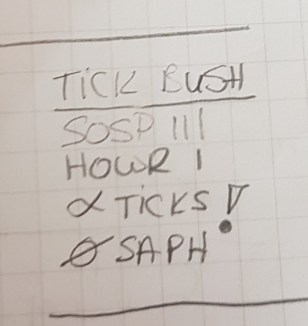
We decided to make one last stop before heading to Oak Lake in what is now designated the Tick Bush. Christian and Lynnea warned us that the walk to get to where they had previously seen a Say’s Phoebe would result in us being covered by ticks. A few ticks do not scare avid birders such as ourselves, and so, we headed towards the site. Not only did we not see the Say’s Phoebe, but Tim and I ended up sprinting towards the vehicles to get out of the tick-infested grass as soon as humanly possible! See detailed field notes below:
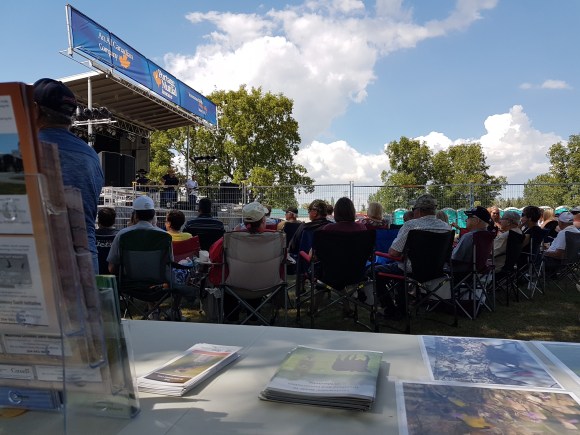
After a pleasant afternoon in Whitewater Lake (and not so pleasant adventure in the Tick Bush), our day was far from over! We headed to Oak Lake’s Legion Hall to learn about Tiger Beetles from the great expert Dr. Robert Wrigley, followed by an evening Bird Walk on Cherry Point Educational Nature Trail. Stay tuned for part 2!
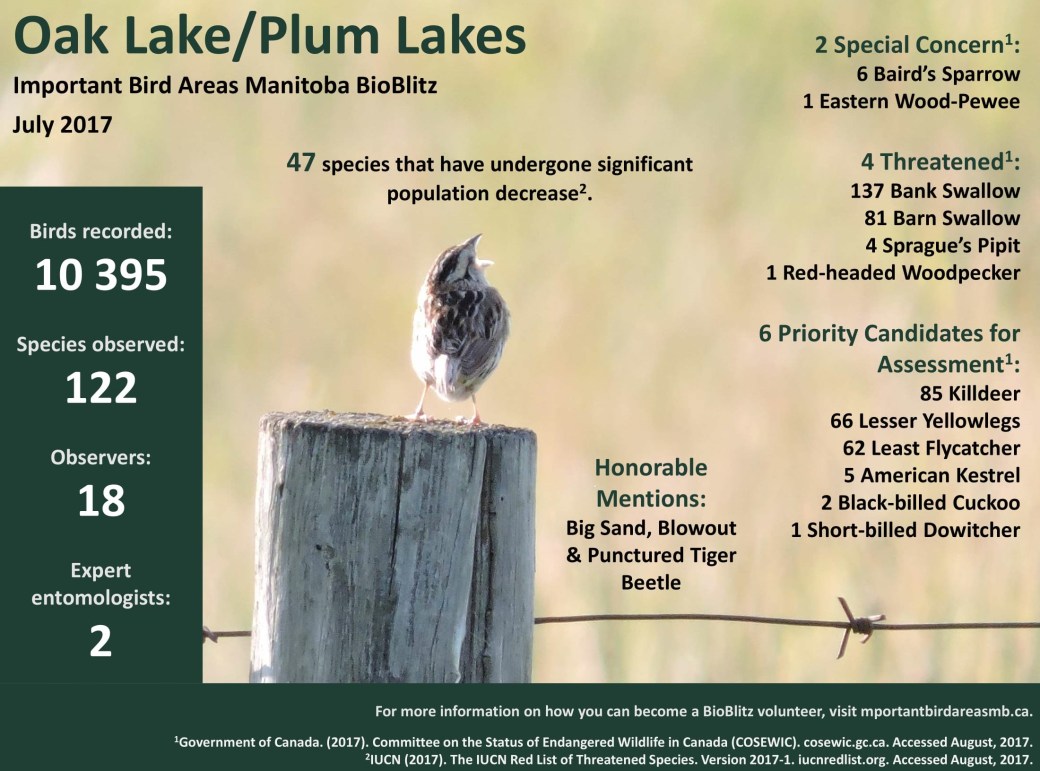
Take a look at our July count from this Whitewater Lake IBA survey:
LITERATURE CITED:
Chubb, A. L. (2004). New nuclear evidence for the oldest divergence among neognath birds: the phylogenetic utility of ZENK (i). Molecular Phylogenetics and Evolution, 30, 140-151.
Ericson, P. G., Anderson, C. L., Britton, T., Elzanowski, A., Johansson, U. S., Källersjö, M., et al. (2006). Diversification of Neoaves: integration of molecular sequence data and fossils. Biology Letters, 2, 543-547.
Hackett, S. J., Kimball, R. T., Reddy, S., Bowie, R. C., Braun, E. L., Braun, M. J., et al. (2008). A phylogenomic study of birds reveals their evolutionary history. Science, 320, 1763-1768.
Livezey, B. C. (2011). Grebes and flamingos: standards of evidence, adjudication of disputes, and societal politics in avian systematics. Cladistics, 27, 391-401.
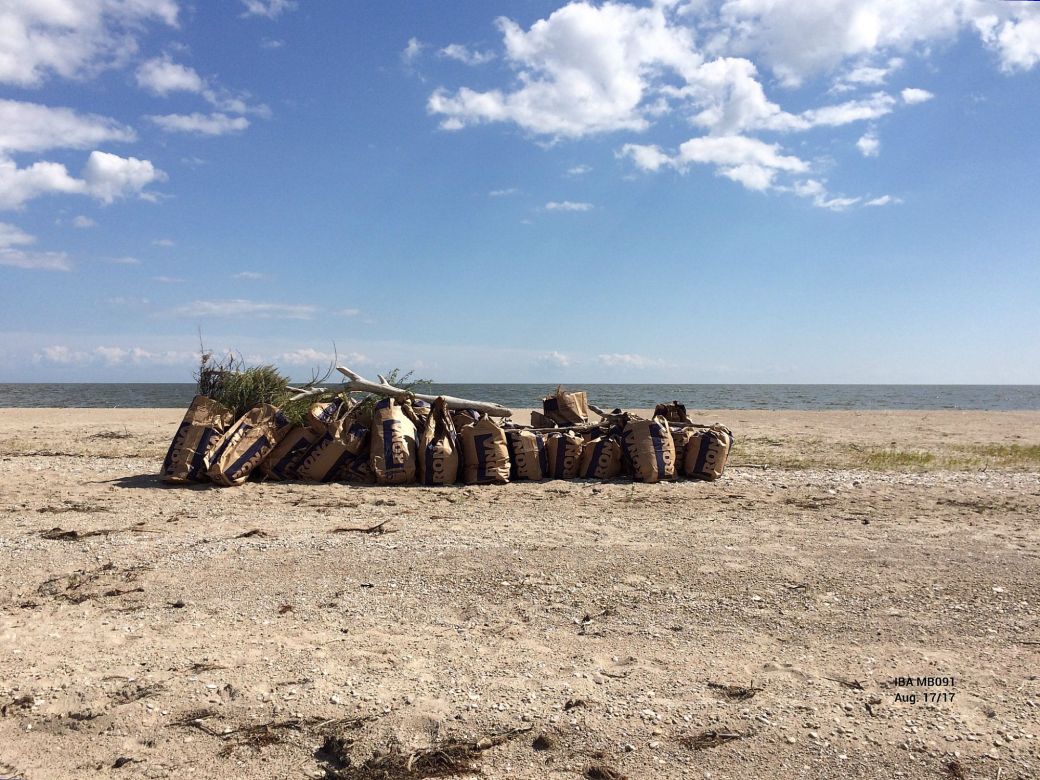
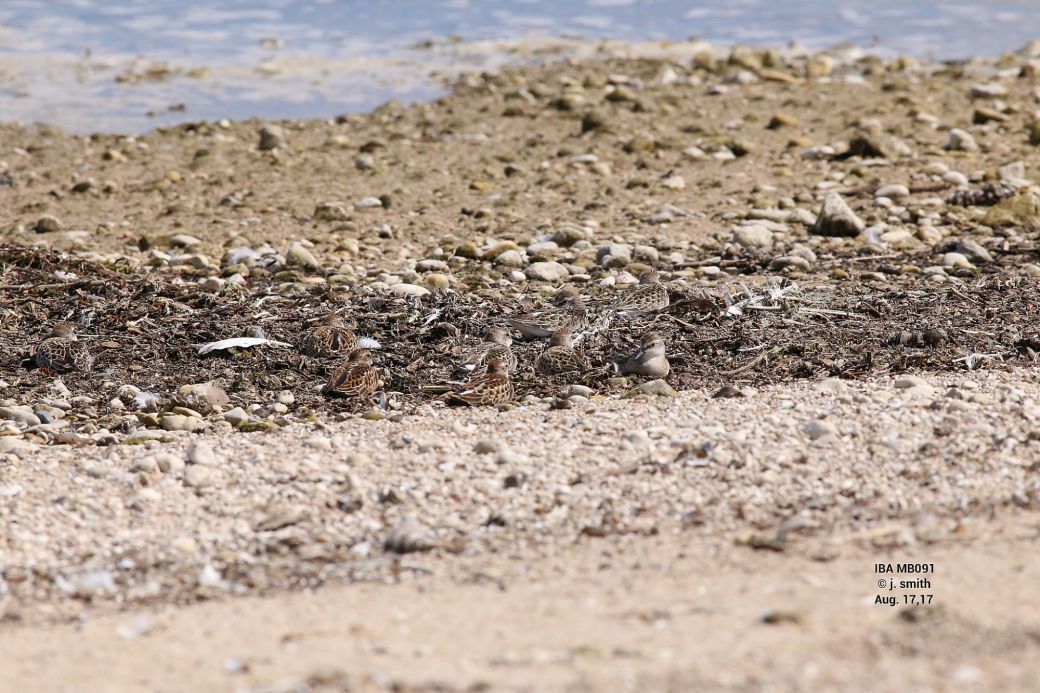
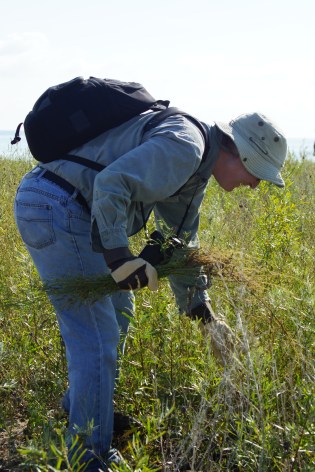
Joanne Smith has sent the following message relating to a follow-up weed pull at Riverton Sandy Bar IBA on August 17th. We had a very successful morning out there in 2016 and are committed to keeping this habitat work going. See here for the 2016 story.
Here is the email:
Hi Everyone,
We hope you can come join us on Thursday August 17th for another morning of pulling weeds at IBA Riverton Sandy Bar.
Our September 30th, 2016 weed pull was a success with fourteen people helping pull sweet clover from an area of the main sand bar. We hope that having a weed free area will help to attract possible future piping plover to the Sandy Bar area. It has been well over twenty years since piping plover last nested in this area but with your help we hope to change this.
We’ll meet at 9:00 am at the parking area and then take the 15 minute walk out to the sandbar area together. We hope to pull weeds (which will most likely involve some birding) for three or four hours, depending on the weather. If you can even help for an hour or two, it would be greatly appreciated.
Please bring gloves, hat, sunscreen, water and a bag lunch. The walk out to the sandbar also involves a short distance through thick willows so it’s best to bring long pants and a jacket for that part.
Of course we’ll also probably be keeping our eyes open for early fall migrants.A few birds from an August 12th, 2016 visit gave us numerous species including:
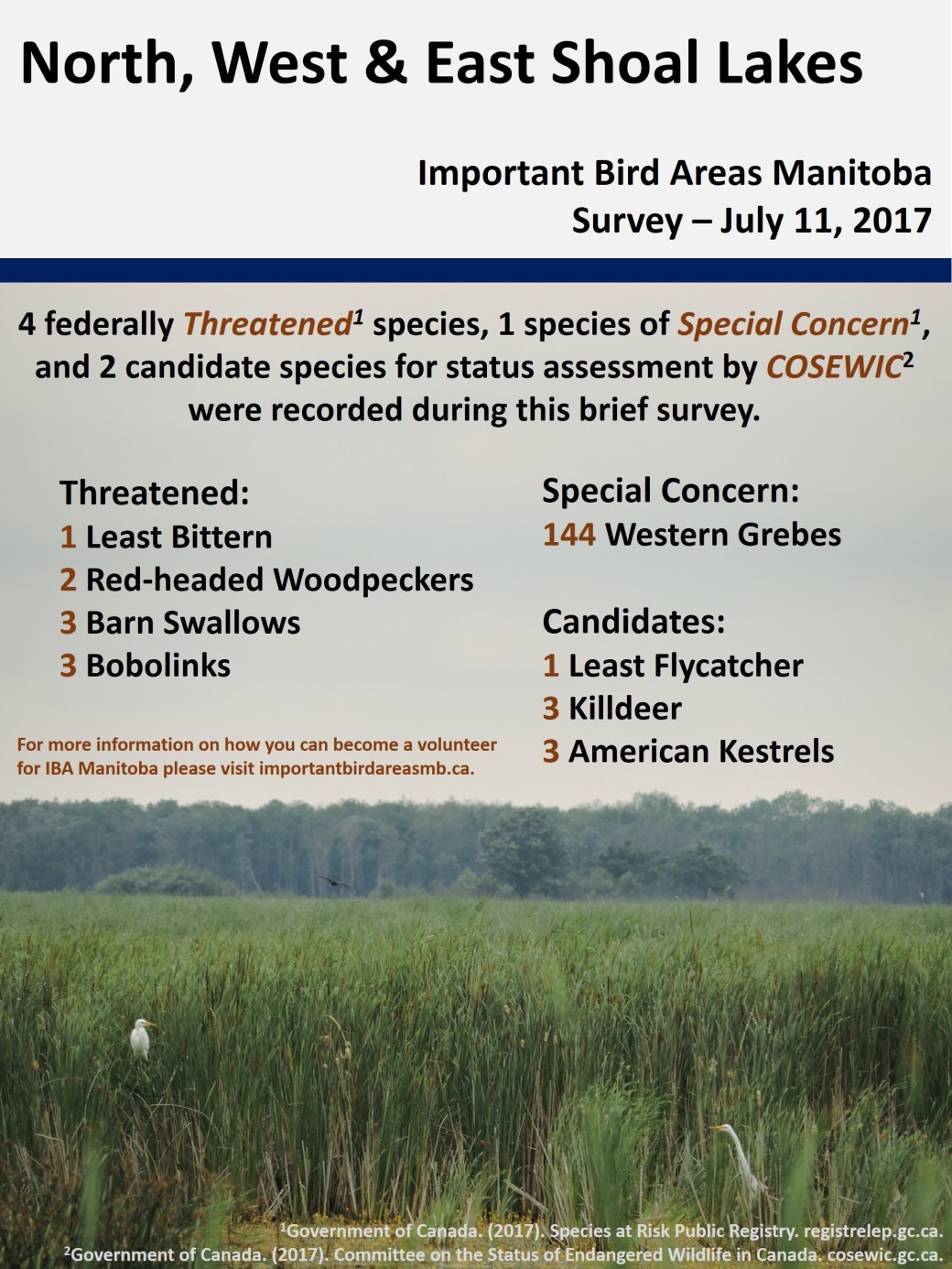
On a stormy Tuesday morning, Tim and I ventured out to the North, West & East Shoal Lakes IBA (MB038). Since our plans in another IBA fell through, we decided to direct our efforts towards the Interlake region in hopes of spotting Red-headed Woodpecker and Least Bittern. Despite the less than ideal weather, we saw a “good number of pelicans”, “okay number of herons”, and were surprised at the “lack of ducks” (Tim Poole, pers. comm.).
We were off to a great start as the rain (thankfully) subsided once we arrived to the IBA and were greeted by a Great Egret near the side of the road.
East Shoal Lake was buzzing! We encountered an agitated male Bobolink and were soon able to see the source of all the excitement. A nearby female seemed to be the target audience of this one-man show. Unfortunately, another male showed up (left) and although our performer (right) was definitely more motivated than his rival, she remained close to the cool and collected male, and sure enough, they ended up flying off together!
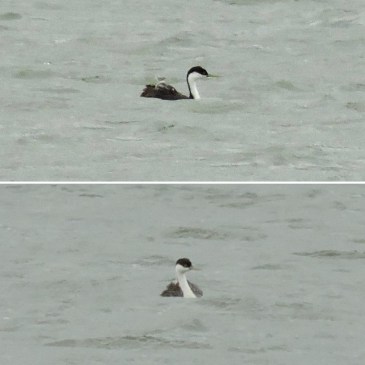
In the field beyond where the BOBO-show was taking place, we got a peek at Sandhill Crane and Great Blue Heron. On the water, we saw lots of Western Grebe, including this brave one carrying young on its back in rough waters. Although getting this grainy shot induced quite a bit of nausea, I was rather proud to have out-photoed Tim on this one (Patricia 1, Tim 0)!
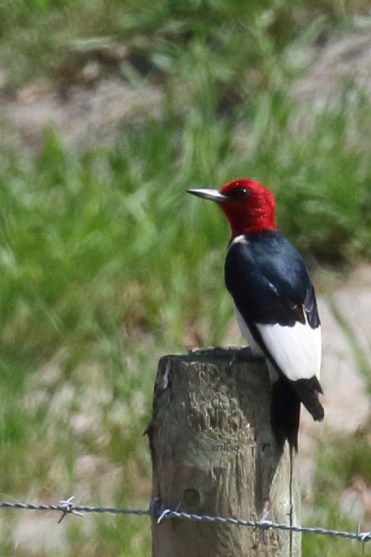
When we came around to suitable Red-headed Woodpecker habitat (e.g. open understorey, standing deadwood, often with cattle grazing), we almost immediately saw two individuals. After several minutes, a bold one flew directly towards us! We had our cameras ready but were too frazzled/excited to get a good picture of it in-flight and both ended up with blurry background pictures (Patricia 0, Tim 0). However, he did stick around and proceeded to pose for us around his habitat!
My biggest disappointment of the day was failing to get an identifiable shot of a Red-necked Grebe. While I struggled, Tim effortlessly took a great picture (Patricia 0, Tim 1).
Last but not least, we saw a Least Bittern flush while scanning appropriate habitat. Although we were ready and hoping to see one, both Tim and I missed our shot despite getting a good long look (Patricia 0, Tim 0).
Towards the end of our survey, the wind started picking up and the skies started rumbling once again, and so, we headed back to Winnipeg (Final tally: Patricia 1, Tim 1).
Check out the highlights of our brief survey in this IBA and our total count!
On July 9th, a group of people descended on the relatively unknown Kinosota-Leifur Important Bird Area from as far afield as Portage la Prairie, Winnipeg, Birds Hill and Brandon. Our goal was to locate and count the globally Near Threatened Red-headed Woodpecker, a Species At Risk and a stunning species to observe and enjoy.
The IBA at Kinosota-Leifur was the brainchild of Harry Harris who once worked at the Alonsa Conservation District. It was Harry who put together the IBA information and had estimated that at least 50 pairs were present in this area. Since 1995 though, apart from some atlassing, no one had, as far as we know, tried to do a comprehensive count of this species in this area.
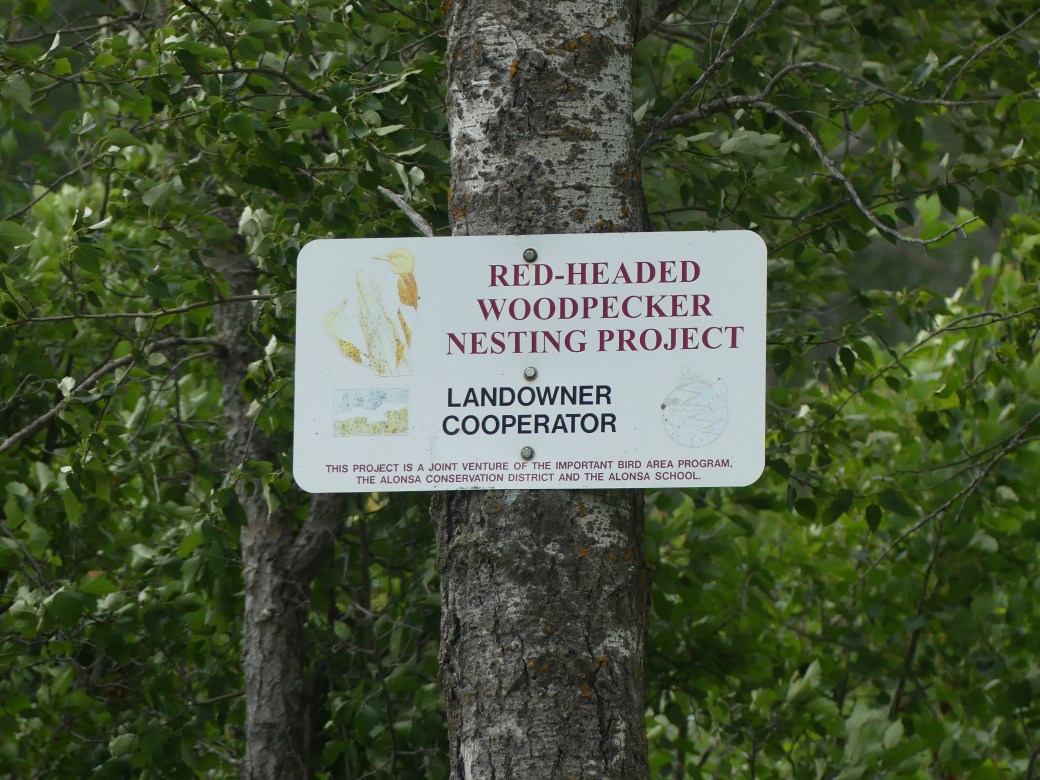
There is still evidence of previous efforts to conserve the Red-headed Woodpecker. Copyright Tim Poole
Red-headed Woodpeckers are a species with an interesting habitat preference. They prefer open stands of aspen with plenty of deadwood and snags for cavities. The vegetation must be short and lack dense shrubs, hence they are often present in open woodlots with cattle or horses. The dead trees must all be fairly large, around 25cm diameter at chest height (the technical term is DBH or Diameter at Breast Height).
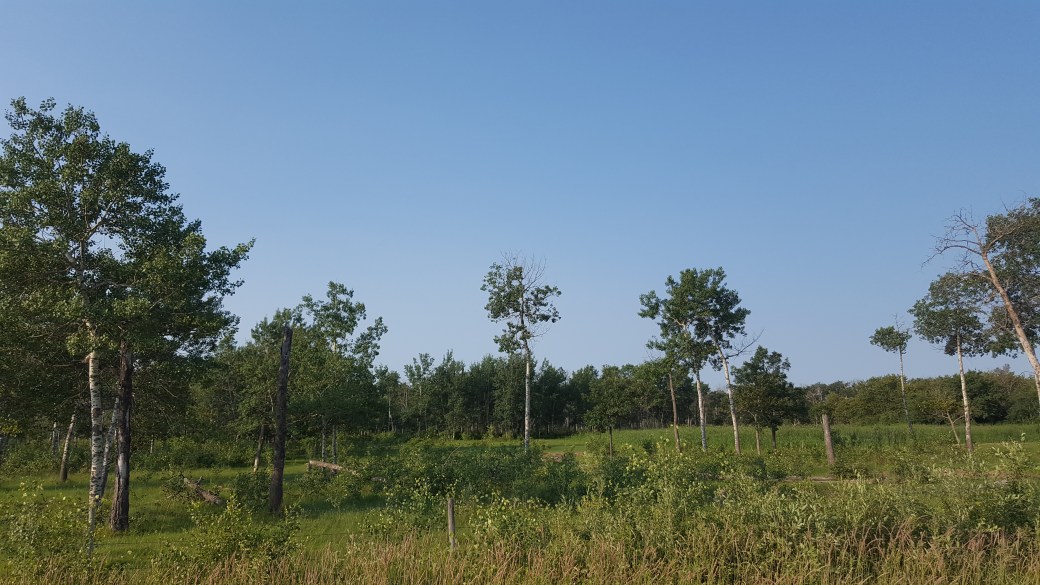
Typical Red-headed Woodpecker habitat in the IBA. Copyright Sabina Mastrolonardo
This is a migratory species in Manitoba, wintering in the United States and returning to breed in deciduous woodlands in the centre of the continent in spring. There are also resident breeding populations in southeastern USA and southern Ontario.
‘Habitat degradation, as a result of the removal of dead trees and branches in urban areas (Pulich 1988), and loss of nesting habitat to firewood cutting, clear cutting, agricultural development and river channelling in rural areas (Ehrlich et al. 1992, Melcher 1998).’
As to the blitz, we really did not know what to expect. An article placed in the Neepawa Banner in the days before had managed to drum up some interest, mainly from people form the wider area letting us know where Red-headed Woodpeckers might be discovered. We had developed a protocol which included periods of listening and playback for woodpeckers and hoped this would be sufficient even as we stepped into the unknown.
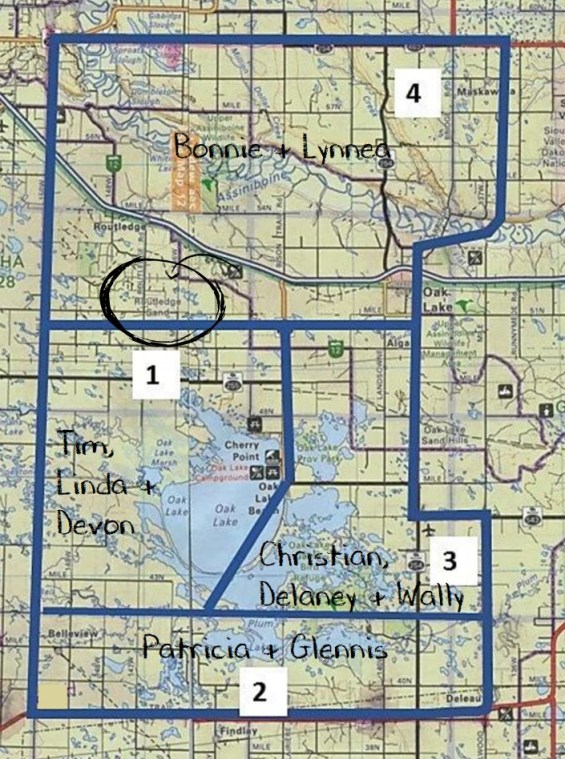
Twelve volunteers embarked on this exploration and we split into 4 groups. The search areas were split into a core area, highlighted in red and an extension area which took in areas to the west of the main highway. This second area turned out to be much wetter than expected and it was to the core area we would focus.
In the north, around Kinosota itself we had a team of Louanne, Margaret, Millie and Bill. This group turned out to be the group with the least luck – not a single Red-headed Woodpecker around Kinosota strangely. They did find some suitable habitat – one spot was especially good. On a positive note, they did get two Pileated Woodpecker, always a cracking species to find. Even more remarkable was an overhead White-faced Ibis, something more likely to pop up at Whitewater or Oak Lake. The comments from Louanne were as follows:
‘Margaret, Millie, Bill and I made 23 protocol stops during the Kinosota-Leifur IBA Blitz in search of Red-headed Woodpeckers. Most of the ‘core’ area and a little of the ‘extended’ area of Group/Zone A, were covered. Our effort began under sunny skies but after just over an hour, a cold wind brought in threatening clouds which led to rain, hampering our efforts though sunny skies did return. All observations were made from inside or a short distance from the vehicle.’
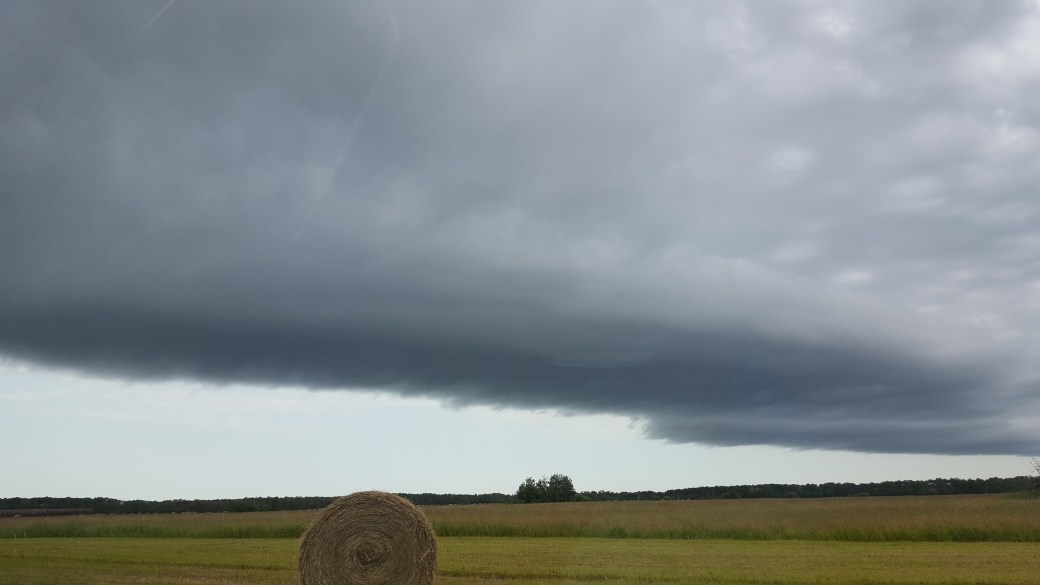
Dark clouds on the horizon. Copyright Sabina Mastrolonardo
The period of windy weather midway through the morning was especially difficult for hearing birds and the second group consisting of Eric, Carrie-Anne and Tim actually revisited suitable habitat which had scored zero woodpeckers first time – scoring a few extra Red-headed Woodpeckers in the process.
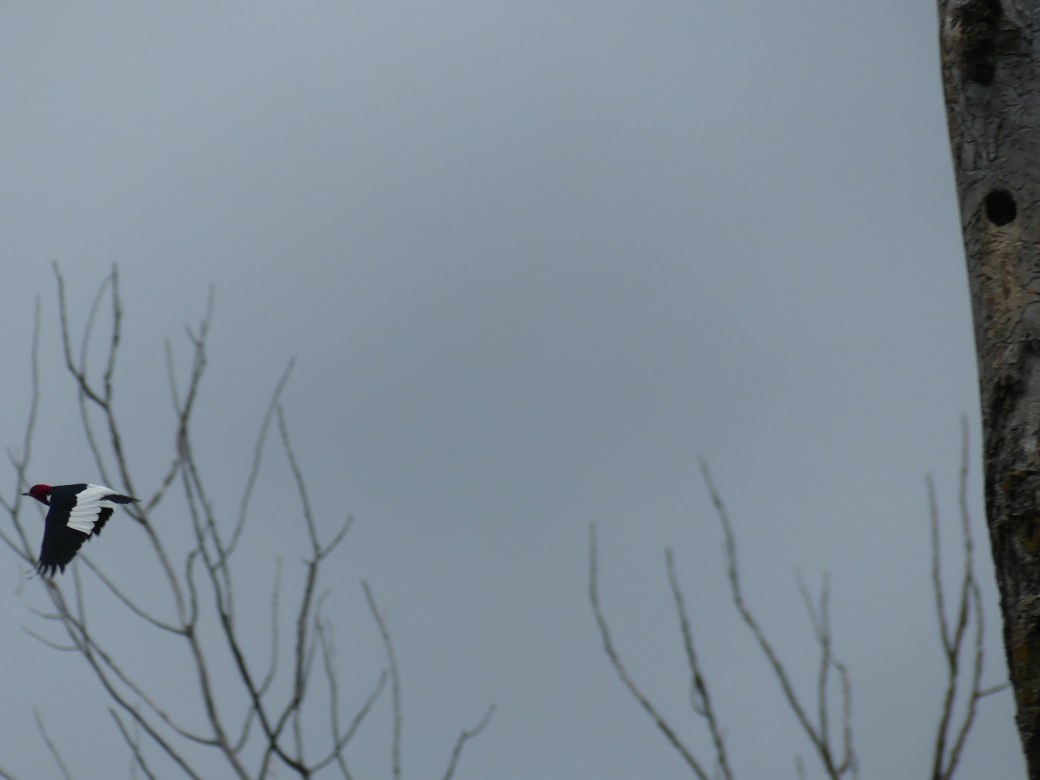
Red-headed Woodpecker flying away under dark skies. Copyright Tim Poole
This group found 11 individual Red-headed Woodpeckers, the most of any group. Interestingly they also scored their first one in Amaranth en route, on a telephone pole. Other species of note included a calling Scarlet Tanager and Black-billed Cuckoo.
All photos copyright Tim Poole
South again and our next group included Wally Jansen, Katharine Schulz and Sabina Mastrolonardo. They recorded 8 Red-headed Woodpeckers in a central area between Silver Ridge and Bluff Creek. A nice little patch of habitat. Other highlights included 6 species of flycatcher, 3 of which were another Species At Risk, the Eastern Wood Pewee, and 10 Bobolink. Interestingly, 10 Bobolink might also point towards issues for the Red-headed Woodpecker, if suitable woodland has been felled and replaced with hayland.
Finally, Garry and John surveyed the southern area, detecting 2 Red-headed Woodpeckers, interestingly the furthest west of the survey. They also grabbed a pair in the group to the norths area thanks to a tip off from a friendly farmer. The other highlight was that of finding a Great Gray Owl, not common in this type of habitat in July.
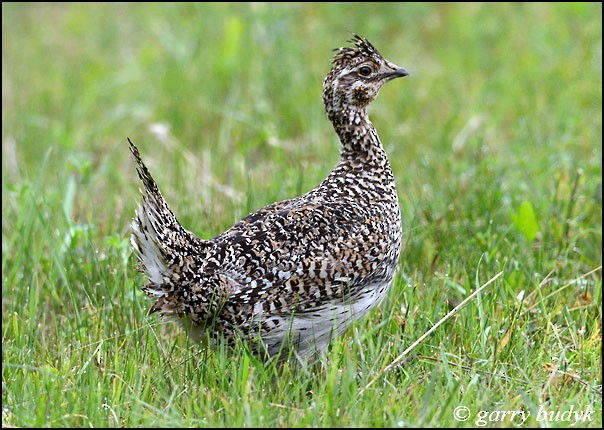
Sharp-tailed Grouse in the Kinosota-Leifur IBA. Copyright Garry Budyk
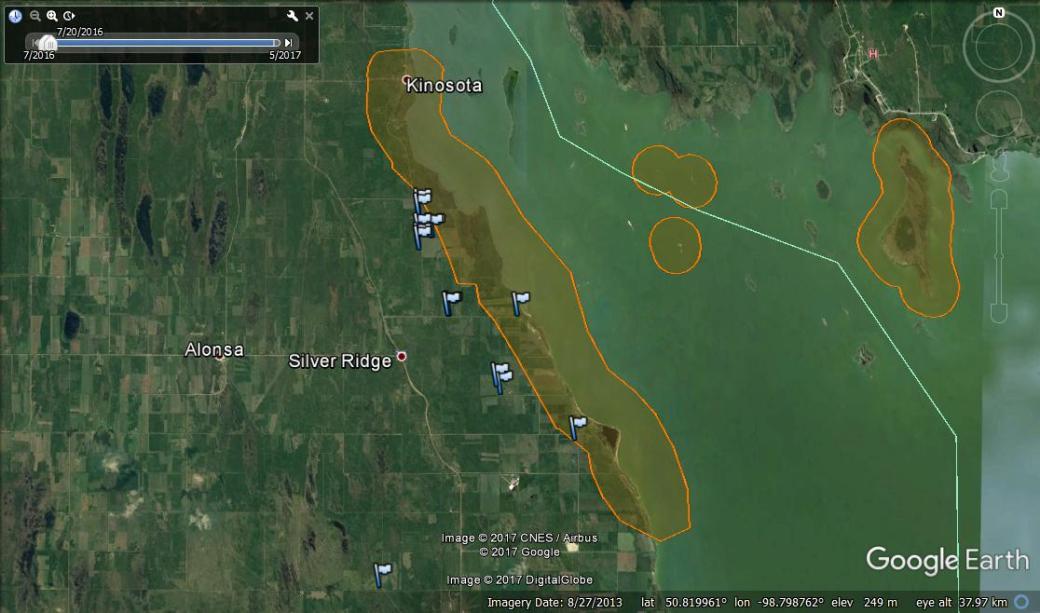
This gave us a total of 23 Red-headed Woodpeckers for the morning. not bad, but not a patch on the 50 pairs found historically. The next challenge is to try to work out whether we were missing a lot of woodpeckers or whether land-use changes in the 25 or so years since the IBA was put together have led to a large loss in habitat. Hopefully there will be more to come on this in the future. Below is the distribution of Red-headed Woodpeckers mapped. As can be seen, the current boundary is not correct and will be changed to reflect these results.
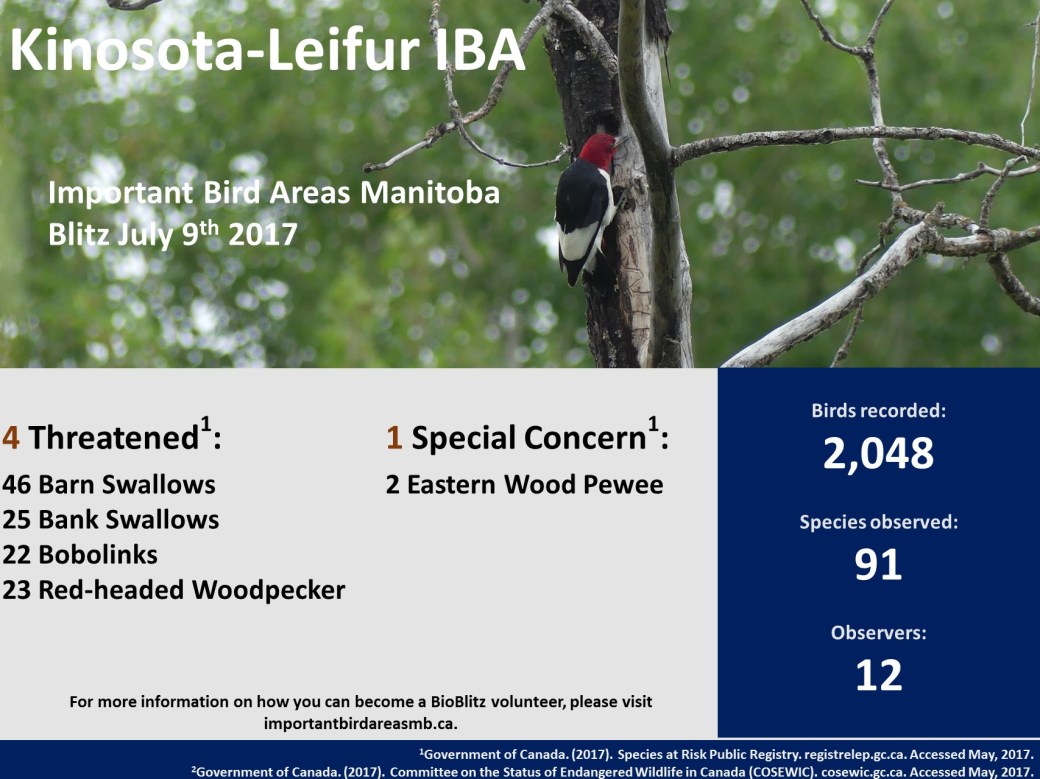
A summary of all species can be seen below. In total there were 91 species and 2048 individual birds counted, still pretty good and comparable figures to other blitzes. Ring-billed Gulls were numerous as were wetland songbirds such as Sedge Wren, Common Yellowthroat and Song Sparrow.
A final full day in Churchill and it was the day we decided to try to put on a wee blitz. We had made arrangements with Rudolf Koes that his weekly workshop group would share their data with us for that day and we would be able to put together a comprehensive list of everything seen between the two groups.
The IBA group met at Cape Merry at 8am. In total 13 people came along, some had to leave at different points (one was even called into work at the boat yard within a couple of minutes of arriving). Cape Merry is a fabulous for birders but we learnt a lesson that it was probably not the easiest place for beginners to learn about IBA blitzing. However we were able to show off some good species including Red-throated Loons, scoters, eiders, Parasitic Jaegars and a few of the gulls. Unfortunately Black-legged Kittiwake noticed by Bonnie was too far for showing folk, off about a mile in the scope. We also got to look at a few of the plants such as this Lapland Rose Bay, a species of native rhododendron.
Lapland Rose Bay. Copyright Tim Poole
Bonnie and I decided that the Granary Ponds would be a better place for counting birds as a group. There were good numbers of Tundra Swan and Greater Scaup hanging around for the day.
Tundra Swans and Greater Scaup at the Granary Ponds. Copyright Tim Poole
The Sandhill Cranes also put in an appearance. This species in the north breeds in bogs, surrounded by trees and mate for life.
Pair of Sandhill Cranes. Copyright Tim Poole
By this point much of our group were gravitating towards other commitments, including the opening of a new piece of art at the Parks Canada Centre. We had coffee with a couple of potential volunteers, told them of the IBA Program, showing them eBird and then headed out for one final look at the Hydro Road.
A bog along the Hydro Road. This bog had Lesser Yellowlegs, Short-billed Dowitcher, Green-winged Teal and Northern Pintail among other species. Copyright Tim Poole
We reached the end of the Hydro Road and CR30 and did another count of the birds on the Churchill River. Given this count is a snapshot of a single spot, the counts of over 100 Tundra Swan moving up river, over 50 Arctic Tern and large groups of scoters would suggest that this area is critically important for all these species. We also got a good close-up of the sandbags protecting the water pump for the Town of Churchill. The sandbagging was apparently a real community effort by members of the public and the authorities.
Sandbags protect the water pump. Copyright Tim Poole
The highlight on the way back was the appearance of two Little Gull among a group of foraging Bonaparte’s Gull.
Little Gull. Copyright Tim Poole
Not the best photo but note the dark underwings on this Little Gull. Copyright Tim Poole
We also checked a few other areas around the town in the afternoon picking up a calling Sora outside Parks Canada (thanks Wanda for the tip). In the evening Tim gave a talk to around 10 people at the Town Complex. There were a few technical issues, including a complete computer freeze halfway through the talk – but Bonnie saved the day with a great little interlude about the history of Ross’s Gull. And that was that. We still have lots of follow-up to do, people to catch and possibly even an opportunity for Bonnie to head up to Churchill in August to follow-up in person.
The results of the blitz are listed below. 836 Canada Goose makes this the most numerous species which would tally with our own observations. In addition there were 138 Tundra Swan, making one wonder how many actually pass through Churchill on passage to the north (some breed here). Snow Goose appeared thin on the ground contrary to the fact that this species is becoming too numerous in parts of the north. Greater Scaup, Black Scoter, Common Eider and Common Goldeneye were also present in good numbers.
Of the shorebirds, 10 species were noted but only Sanderling in migration groups of upwards of 10 individuals. Strange! In June 2016 there are notes from Bruce di Labio published in Manitoba Birds describing groups of White-rumped Sandpiper, 1,750 Semipalmated Sandpiper, 250+ Ruddy Turnstone and 565 Stilt Sandpiper so this year really was unusual.
Thanks to everyone who contributed to the blitz, especially Rudolf and Robert Guth who provided the eBird checklists from that group.
Snow Goose
3
Canada Goose
836
Tundra Swan
138
Gadwall
2
American Wigeon
25
American Black Duck
4
Mallard
19
Northern Shoveler
10
Northern Pintail
45
Green-winged Teal
25
Greater Scaup
124
Lesser Scaup
14
Common Eider
188
Surf Scoter
96
White-winged Scoter
54
Black Scoter
148
Long-tailed Duck
44
Bufflehead
6
Common Goldeneye
142
Hooded Merganser
3
Common Merganser
30
Red-breasted Merganser
32
Willow Ptarmigan
4
Red-throated Loon
31
Pacific Loon
19
Common Loon
4
American Bittern
1
Osprey
2
Golden Eagle
1
Northern Harrier
4
Bald Eagle
1
Sora
2
Sandhill Crane
15
Semipalmated Plover
5
Whimbrel
3
Hudsonian Godwit
17
Sanderling
42
Dunlin
2
Short-billed Dowitcher
4
Wilson’s Snipe
8
Spotted Sandpiper
16
Solitary Sandpiper
2
Lesser Yellowlegs
18
Parasitic Jaeger
4
Sabine’s Gull
1
Bonaparte’s Gull
37
Little Gull
2
Ring-billed Gull
15
Herring Gull
137
Glaucous Gull
1
Arctic Tern
154
Northern Flicker
2
American Kestrel
1
Merlin
1
Alder Flycatcher
1
Gray Jay
1
Common Raven
23
Tree Swallow
5
Ruby-crowned Kinglet
11
Gray-cheeked Thrush
1
Hermit Thrush
1
American Robin
35
European Starling
11
American Pipit
2
Northern Waterthrush
16
Orange-crowned Warbler
7
Yellow Warbler
36
Blackpoll Warbler
10
Palm Warbler
1
Yellow-rumped Warbler
3
American Tree Sparrow
15
Fox Sparrow
32
Dark-eyed Junco
8
White-crowned Sparrow
72
Harris’s Sparrow
1
White-throated Sparrow
4
Savannah Sparrow
35
Swamp Sparrow
6
Rusty Blackbird
4
Pine Grosbeak
8
Common Redpoll
10
Hoary Redpoll
4
House Sparrow
36
A brief foray before Tim’s flight the following day and a Caribou appeared – a definite great addition for any trip to the north.
Caribou – all alone. Possibly an individual who has been stranded from its herd. Copyright Tim Poole
But the trip was over and now the real challenge is to create some momentum and support possible new volunteers for the IBA Program in the north.
Adult female Long-tailed Duck with a pair of Red-necked Phalarope. Copyright Tim Poole
Day 4 of the IBA Churchill trip and again we kick off with a trip to Cape Merry for a sweep of the birds along the coastline. Bonnie worked her way across the shore and Tim abandoned her for an opportunity to watch the Belugas in the water below. It was quite a sight! There were good numbers of white adults and grey juveniles (sorry Raffi, you’re wrong) in moving with the tide in front of us. Also in attendance was a large raft of Black Scoter, good numbers of Red-throated Loon and the usual mix of Surf Scoters and White-winged Scoter.
Beluga photos above all copyright Tim Poole
There were also Tundra Swans present in large numbers throughout the day.
Cape Merry is a place full of wildlife. For example, look below and you will see from the video below the scattering of loons, eiders, scoters and mergansers around the pods of Beluga.
From Cape Merry we headed eventually down towards CR30 on the Hydro Road in the hope of finding some interesting gulls. As the Hydro Road turns into the road at Goose Creek we checked the swallows and were pleasantly surprised to find a Barn Swallow and a couple of Bank Swallows feeding with the Tree Swallows. These species are rare in the north and even the Tree Swallow is only becoming more abundant thanks to Dr Kit’s bird house program.
Tree Swallow searching for bugs in the loose dirt created by the tire tracks. Copyright Tim Poole
One of the most vivid and stunning ducks one could expect to encounter is the Surf Scoter. This is a sea duck which breeds in boreal ponds and lakes. Crossing Goose Creek we noted there were two males and a single female, a situation which would never end well. Unsurprisingly, the two males were in the midst of a battle over the single female, bad for one of the males, great for those of us fortunate to watch them.
Surf Scoter female (left) and two males. The video below highlights the aggressive interaction between these two males. Copyright Tim Poole
Our primary hope was to find Little Gull. Just past the bridge we had not found Little Gulls but the Bonaparte’s were still showing up well.
Couple of Bonaparte’s Gull. We would search the feeding Bonaparte’s for Little Gull. Copyright Tim Poole
Driving through what should have been small wetlands which were no been enveloped in the Churchill River we eventually spotted our target species. A Little Gull looks much like a Bonaparte’s but lacks the white eye ring, has a more extensive hood, is smaller and most noticeable, is dark underwing. Two Little Gull were feeding in a small wetland behind some trees feeding with Bonaparte’s Gulls. In total we would find six that day, a not too shabby number given there are only around 200 breeding in North America.
A count at CR30 put up good numbers of scoters (all three species), loon and another Little Gull. At this juncture the weather was beginning to turn and we were forced to drive back as the rain began to come down.
We were able to see the Surf Scoters one more time and in the same area there was even a pair of Black Scoter.
Further north as the rain really began to come down we also found a couple of feeding Short-billed Dowitcher. For anyone unfamiliar with this species, it has a very distinct ‘sewing machine’ feeding motion, its head probing in and out of the water at a steady tempo. Almost metronomic one might say!
Short-billed Dowitcher feeding in the rain. Copyright Tim Poole
The weather deteriorated to the extent that we were forced to cancel our evening bird walk. The wind and rain making it almost impossible to see let alone watch and talk about birds. This was a shame as our walks had thus been very well attended. However, we had a good day with a good bird walk and we did get to meet some folks at Parks Canada. The daily bird list saw counts of over 1,000 birds and 55 species with Little Gull certainly being the highlight.
Day 3 of our trip to Churchill was always going to be the busiest. In the morning we were due to give a talk and lead a birding walk with students mainly from the Duke of Marlborough High School in Churchill but also from Gillam. In the evening we were also due to give a presentation to people at the Churchill Northern Studies Centre.
Our group consisted of 10 students anf their teacher, Programming Coordinator Stephanie Puleo, her summer assistant Adele and a centre volunteer. We began in the classroom, Tim giving an introduction to birds and birding, how to identify birds, how to count birds and the importance of the Churchill area for birds.
Tim looking contemplative. Photo copyright Bonnie Chartier
Next we stepped out into the grounds and bussed to different birding locations. We were able to show the students a number of interesting species in the scopes, including Pacific Loon, Long-tailed Duck, Parasitic Jaegar and a passing Whimbrel. Willow Ptarmigan were also abundant along this area and showed up well for the students.
A pair of Pacific Loons, another specialty of Northern Manitoba. Copyright Tim Poole
The key thing was to give the students an experience of how we monitor birds, how we might identify the species and how to count them. Fortunately mother nature has a way of obliging at these moments and a passing flock of Canada Geese gave students an opportunity to practice their counting. There were only around 65 geese in the flock but it was still impressive how close the students were to this figure – most people underestimate even small flocks by around half.
Watching birds in the water. Copyright Tim Poole
Following lunch we went back into the classroom. Over lunch we had a discussion with the teacher about what all this really meant and how it was important and he led a group discussion with students about this. Conclusions included the fact that good monitoring information was important as it would inform scientists about climate change (Tim added the story about the canary in the mine at this point). The students also talked about the critical role Churchill and the surrounding area has for large groups of migrating birds. Before all that, they set up their own eBird account and were given a crash course in how to use it by the team. Hopefully we will see some entries from the school group and individual students in the future.
Later in the afternoon, we had a break and headed out to find some American Golden Plovers which were becoming a wee bit of a nemesis. Bonnie decided this would be a good opportunity to introduce Tim to the Tundra Buggies from the outside – Bonnie still hosts groups in the fall with Natural Habitat (there are of course other companies delivering Polar Bear tour experiences in Churchill each fall).
Tundra Buggy equipment including the fuel tank (left). The roof was designed to prevent Polar Bears climbing on top of the cylinder and then making their way onto the Tundra Buggy. To the right was the kitchen buggy. Copyright Tim Poole
A drive down Launch Road eventually yielded a single plover on the dry tundra. The bird was too distant for photos but the views were decent enough in the binoculars. American Golden Plovers similar to their Eurasian counterparts avoid habitats with trees because, in simple terms, trees means something that might eat them, acting as either a perch for a raptor or cover for something like a fox. They are often found on migration in short grasslands, either pasture or even sod fields as at Oak Hammock. They breed on well-drained rocky slopes, common in the Churchill area, and knolls with sparse vegetation and lichen, again a fairly abundant habitat in the north.
Possible breeding habitat for an American Golden Plover. Short vegetation, rocky knolls and lichens with no trees. Copyright Tim Poole
A second lone plover was picked up just outside Camp Nanuq along with a pair of Tundra Swans, Yellow-rumped Warbler and our friend the Merlin from day 2. This would be a Taiga Merlin which is darker than the Prairie Merlin’s found in urban areas in southern Manitoba.
Yellow-rumped Warbler singing his heart out from the top of a tree. Copyright Tim Poole
Returning to the Churchill Northern Studies Centre, Tim gave a talk to around 40 people in the evening including folk from the centre and the town and also did a short eBird introduction for IBA. This well attended talk will hopefully open up more opportunities in the future. Leaving the centre, we stopped off just outside to view a pair of Horned Grebe.
Horned Grebe just west of the Churchill Northern Studies Centre. Copyright Tim Poole
Along the road as the sun began dipping, the views were simply beautiful.
Copyright Tim Poole
Treeline spruce along the main Churchill road. Copyright Tim Poole
Another day highlight along the road was an Arctic Hare mid moult sitting in the dry tundra.
Arctic Hare. Copyright Tim Poole
So another day ended. No bird checklist this time as we did not have sufficient time to do one justice but the highlight of the day has to be the American Golden Plovers.
Day 2 of our outreach trip in Churchill and the priority was to take a drive up to the Churchill Northern Studies Centre and get a feel for the area before heading out the following day to do some presentations.
Cape Merry. Copyright Tim Poole
To start, an early morning trip to Cape Merry to see if any new birds had appeared on the overnight tides. There were 3 Ruddy Turnstones on the shore by the port the only time we encountered this species during the trip. This gave a flavour of the issue we were experiencing with shorebirds as previous counts in Churchill had exceeded 6,000 individuals. We also photographed the gull below which looked a bit funky but turned out to be a 3rd cycle Herring Gull (the dark tips, dark tail with thin white band and overall smudginess suggested it might be something else). Gulls can be tricky, especially subadult birds and this one had us fooled for a while.
Third cycle Herring Gull. Copyright Tim Poole
Our plans for the day were thus to head over towards Twin Lakes via the Churchill Northern Studies Centre. We were joined for the day by one of the Granary Pond birders from the previous evening, Judy who is working for the summer at the Tundra Inn. We set off in good time and made our first birding stop at the Recycling Centre, bagging a Glaucous and Thayer’s Gull along the way. Thayer’s Gull is interesting in that it may not be considered a species for much longer – being potentially joined with Iceland Gull as a single species due to behavioural and phenotypic (i.e. they are physically almost identical) similarities.
A record shot of a Glaucous Gull, a High Arctic breeder. Note how pale this bird is compared to most gulls you expect to see in Manitoba. It is also much larger than the other paler Larus gull, the Iceland Gull and lacks black wing tips. Copyright Tim Poole
Bonnie had pointed out a couple of interesting observations along the way. The first was that there were a lot of Canada Goose (we counted them as we drove along to create a day total). The second was that the Herring Gulls had become far more widespread across the area. As predators of eggs and chicks from other birds, it did make us wonder if there might be a relationship between the population of Herring Gulls and the sparse number of shorebirds.
Bonnie searching an icy lake just east of Churchill. Copyright Tim Poole
The scenery was as expected stunning. Patches of stunted spruce trees on open ground. Driving up to one point we saw a view over the taigi, open peat wetlands with small lakes and then the rocky coastal habitats.
Panoramic view over the taiga. Copyright Tim Poole
Another view over the open taiga. Copyright Tim Poole
Cutting down towards the coastal road, we found a large Arctic Tern colony and birded along the beachfront, taking great care to check for Polar Bears, which although rare at this time of year are not out of the question. The highlight of this stretch was this wonderful Semipalmated Plover. All photos below copyright Tim Poole
Back on the road and it was time for a botany lesson. Bonnie knew some dry tundra which is perfect for Purple Saxifrage, a specialty of these habitats. We popped out to take a closer look at this and some of the other plants of the area.
Purple Saxifrage. Copyright Tim Poole
There were also regular waterfowl in small tundra ponds and lake en route. One of the more common species we would encounter is a wonderful northern specialty, the Long-tailed Duck. This species specialises in diving for molluscs and crustaceans as well as aquatic plants. It is a wintering sea duck which can be found elsewhere in large numbers feeding along sandy shorelines but they breed in the tundra.
The elegant Long-tailed Duck. Copyright Tim Poole
We next pulled into Camp Nanuq. Among the species we found was a Blackpoll Warbler, a northern real specialty of the northern treeline forests. We first detected the calling male by ear and eventually tracked him down.
Got him. Just! A male Blackpoll Warbler. Copyright Tim Poole
The screech of a Merlin interrupted the quiet of this quiet boreal lake. His main source of anger appeared to be a pair of Bonaparte’s Gull. While watching this interaction Iwe stumbled across an adult Bonaparte’s Gull in a nest. This species is unusual for gulls, most of which are ground nesting birds, as it nests in trees.
Now I’ve seen it all. A Bonaparte’s Gull nesting in a tree. This was very much a snap and move away picture as we did not want to disturb this bird any longer. Copyright Tim Poole
At this point we headed to the Churchill Northern Studies Centre. Our aim was to say hello (which we failed to do as the person we wished to meet was on a phone conference) and have a look around the grounds looking for the birds we hoped to encounter the next day. The latter we did succeed in doing up to a point at least.
Panoramic view of the boreal forest in the Twin Lakes area. Copyright Tim Poole
From here we headed down the Twin Lake Road. My primary hope was to get views of Willow Ptarmigan. As a former grouse man, seeing these species in Manitoba for the first time would be something well worth doing. Fortunately it was not long before we spotted a male and a female on a gravel ridge. Grouse feed on very course food in the Arctic region such as grass flowers and tree buds. This course vegetation is too tough to digest without help, and so grouse swallow grit. The food is stored in their crop and then passes into the stomach and gizzard, where the gravel helps to grind it down, making it more digestible.
A male Willow Ptarmigan at the side of the road. At this time of year the female has moulted to a cryptic brown plumage, ideal for camouflage while sitting on her nest. The male on the otherhand has to tradeoff between the need to select a mate and therefore be showy and the need to survive, hence the red feathering on top and the white below – and the large red cone above his eye. Copyright Tim Poole
After this we entered the fen where we saw Whimbrel fly overhead, got our only flash of a pair of Stilt Sandpipers (very surprisingly this was a species which proved elusive for the most part), heard a Dunlin and Tim even heard a Smith’s Longspur through the wind (after much contemplating he decided that this is definitely what he was hearing, plus the great Rudolf Koes had one in the same place 2 days later). Of the shorebirds Hudsonian Godwit were the most showy. Parasitic Jaegar were present in the background, at least 2 pairs flying around. These birds get their name from the fact that they harass other birds, forcing them to drop food and then eating it themselves. You might describe them as a bully, and you would be correct. Arctic Tern were also around in good numbers and it is this species which the jaegar seems to especially target.
Hudsonian Godwit in the fen. This species can often be encountered calling form treetops along the boreal forest edge. Copyright Tim Poole
Entering the boreal we encountered a number of specialists including Ruby-crowned Kinglet, Gray Jay and Pine Grosbeak. We also found Common Loon at the lake. This species is uncommon around Churchill although interestingly we counted at least 4 over the course of our visit. The highlight was a female Spruce Grouse which flew into the tree in front.
Spruce Grouse, copyright Tim Poole
The tracks showed plenty of sign and dropping from Spruce Grouse, although the most interesting feature was a dustbath. Like chickens, grouse find light sandy soils to scrape away and ‘bathe’ their feathers. It is thought that by doing this the grouse can help remove parasites from around its body.
A Spruce Grouse dustbath. Often feathers and droppings also turn up in these features. Copyright Tim Poole
The other exciting feature in the area was the clear signs of wolf, whether from fresh black scat or footprints.
Back in town and we did our second bird walk, this time attended by a respectable 10 people, including a couple of returnees from the previous evening. The Sandhill Crane came in very close this time and there were great views of Short-billed Dowitcher, Spotted Sandpiper and Red-necked Phalarope (the polyandry story from the night before got another airing).
All in all the trip was going well and we had a day delivering programs at the Churchill Northern Studies Centre to look forward to.
The daily bird checklist included 59 species and 1,047 individuals, almost half of which were Canada Goose.
Species Name
Species Count
Canada Goose
429
Tundra Swan
10
American Wigeon
2
American Black Duck
2
Mallard
9
Northern Shoveler
4
Northern Pintail
22
Green-winged Teal
6
Greater Scaup
22
Common Eider
52
Long-tailed Duck
9
Common Goldeneye
59
Common Merganser
20
Red-breasted Merganser
15
Spruce Grouse
1
Willow Ptarmigan
7
Pacific Loon
7
Common Loon
2
Northern Harrier
4
Sandhill Crane
6
Semipalmated Plover
3
Whimbrel
2
Hudsonian Godwit
12
Ruddy Turnstone
3
Stilt Sandpiper
2
Dunlin
1
Least Sandpiper
1
White-rumped Sandpiper
1
Semipalmated Sandpiper
15
Short-billed Dowitcher
6
Wilson’s Snipe
1
Red-necked Phalarope
3
Spotted Sandpiper
2
Lesser Yellowlegs
6
Parasitic Jaeger
4
Bonaparte’s Gull
14
Ring-billed Gull
4
Herring Gull
85
Thayer’s Gull
3
Glaucous Gull
1
Arctic Tern
94
Merlin
2
Gray Jay
1
Common Raven
13
Tree Swallow
1
Ruby-crowned Kinglet
4
American Robin
8
Smith’s Longspur
1
Northern Waterthrush
1
Yellow Warbler
4
Blackpoll Warbler
1
American Tree Sparrow
7
Fox Sparrow
2
Dark-eyed Junco
1
White-crowned Sparrow
20
Savannah Sparrow
18
Pine Grosbeak
2
Common Redpoll
3
House Sparrow
7
The beautiful Willow Ptarmigan were certainly one of the days star species. Copyright Tim Poole
Due to a grant from Nature Canada, and thanks to the generosity of the Gosling Foundation, the Manitoba IBA Program were able to deliver programs in the Churchill and Vicinity IBA this June. Coordinator Tim Poole and Committee member Bonnie Chartier who hails from Churchill and is steeped in the history of birding in this part of Manitoba.
Our aim was to raise awareness of the IBAs along this whole stretch of coastline and recruit some local volunteers along the way. To begin with it was apparent that our first trip should be to the local coffee shop, the place to meet with local people. We were not in fact meeting with a local per se but with an American academic, Dr Kit Schnaars who takes up residence in Churchill each summer and is running a citizen science based Tree Swallow monitoring program. Kit is likely to be a useful contact for the IBA Program over the coming months as someone who spends time in the community and is passionate about bird conservation, although she doesn’t know her CAGO from her CANG……
Pair of Tree Swallows outside the local restaurant on day 1. Tree Swallows were always a visitor to Churchill but only recorded breeding following a bird house program from Kit. Photo copyright Tim Poole
We were due to give a bird walk in the evening, posters were plastered all over the place and so it was a good time to see a few of the important sites for monitoring birds in the area. Bonnie drove us up to Cape Merry, a place for Belugas, seals and large congregations of scoters, gulls and other birds feeding in the estuary of the Churchill River. It is also according to some folk the ‘most miserable plac (sic)’, although this was written a long time ago – and I would suggest not true for anyone interested in both history and/or natural history for which this area is fascinating.
I would respectfully disagree with the person who scratched this on a rock at Cape Merry over a hundred years ago. Copyright Tim Poole
There is still a large amount of pack ice on the sea – good if you are keen to avoid polar bears – and this also helped to funnel birds into the wider estuary area. A count of 43 Sabine’s Gulls was probably the highlight of this trip up to the cape along with at least 132 Black Scoter.
Cape Merry on a blustery afternoon. Still not miserable though. Copyright Tim Poole
During the afternoon we took a trip down the Hydro Road to see what state it would be in for any future birding activities. This area has been flooded badly this spring in floods which have knocked out the railway for the foreseeable future. At the top of the road the IBA Program has helped the town purchase a new bird sightings board which will eventually include an IBA sign at this location.
The new rare bird board. Copyright Tim Poole
The Hydro Road was one of the better places for migratory shorebirds this year. According to Bonnie and a few other folk we chatted to, the numbers of shorebirds were very few this spring in comparison with other years. Given Ruddy Turnstones have been recorded in migratory groups totaling 6,000 birds before and Red Knot in around 3,400 individuals, albeit back in 1974, the low numbers were very surprising. There is always an explanation and maybe a detour due to loss of stopover sites due to flooding upstream is the most logical.
Short-billed Dowitchers were present in small numbers along the Hydro Road, although notably even breeding shorebirds were not easy to locate in early June. Copyright Tim Poole
We also took a few videos of the wildlife available to see on our Youtube page.
According to the IBA Canada website this IBA was designated for among others, Rusty Blackbird, Black Scoter and Red-throated Loon, all spotted on this first day. Indeed, a day watching the Red-throated Loon moving up the Churchill River to Cape Merry would likely have got us close to the previous total of 440 individuals, more than 1% of the North American breeding population of this species.
Rusty Blackbird in the boreal edges along the Hydro Road. Copyright Tim Poole
In the afternoon we met briefly with some of the staff at the town complex and then in the early evening led an evening bird walk for 30 people at the Granary Ponds. We were able to show them good views of Red-necked Phalarope – the first of many opportunities to talk about polyandry, Least Sandpiper, Baird’s Sandpiper and Arctic Tern as well as a plethora of ducks and other waterbirds and an overhead Bald Eagle. We also had a huge group back indoors to demonstrate the use of eBird for the IBA Program and advertise the events to come later in the week.
Part of the large group of people attending our first bird walk at the Granary Ponds. Copyright Tim Poole
Day 1 over and the full list of eBirded birds is available to read through below.
Snow Goose
3
Canada Goose
32
American Wigeon
6
Mallard
16
Northern Shoveler
2
Northern Pintail
15
Green-winged Teal
23
Greater Scaup
29
Common Eider
62
Surf Scoter
22
White-winged Scoter
10
Black Scoter
148
Long-tailed Duck
9
Common Goldeneye
1
Common Merganser
130
Red-breasted Merganser
19
Red-throated Loon
20
Pacific Loon
17
Common Loon
1
Osprey
2
Bald Eagle
1
Sandhill Crane
2
Killdeer
2
Hudsonian Godwit
2
Sanderling
2
Baird’s Sandpiper
1
Least Sandpiper
1
Short-billed Dowitcher
8
Wilson’s Snipe
1
Red-necked Phalarope
14
Spotted Sandpiper
2
Solitary Sandpiper
1
Lesser Yellowlegs
12
Parasitic Jaeger
2
Sabine’s Gull
43
Bonaparte’s Gull
10
Ring-billed Gull
20
Herring Gull
14
Arctic Tern
34
Alder Flycatcher
1
Common Raven
2
Horned Lark
2
Tree Swallow
9
American Robin
7
European Starling
1
Northern Waterthrush
10
Yellow Warbler
57
Yellow-rumped Warbler
10
American Tree Sparrow
5
Fox Sparrow
20
Dark-eyed Junco
2
White-crowned Sparrow
30
Savannah Sparrow
34
Lincoln’s Sparrow
1
Swamp Sparrow
5
Rusty Blackbird
8
House Sparrow
6
Lesser Yellowlegs and Short-billed Dowitchers. Copyright Tim Poole