Hi Everyone! I am pleased to announce that I am back for a second summer with the Manitoba IBA program, filling in the roll of Summer Assistant once again.
Since my departure at the end of August 2021, I have gone on to finish my bachelors degree in Environmental Studies and am excited to kick off my working life doing what I love: looking at Manitoba’s beautiful birds! This year I will continue focusing on species at risk, including Red Headed Woodpeckers and Eastern Whip-poor-wills, as well as working with our Chimney Swift initiative. Some of you may have met me last year during one of our events but if not, I look forward to meeting you this summer!
Despite a cool and rainy spring, the Manitoba IBA program is looking ahead to our first events of the season! To sign up for events email iba@naturemanitoba.ca unless otherwise noted.
Oak Hammock Marsh Shorebird Walk – Saturday, May 28th at 8:00 am or 10:00 am
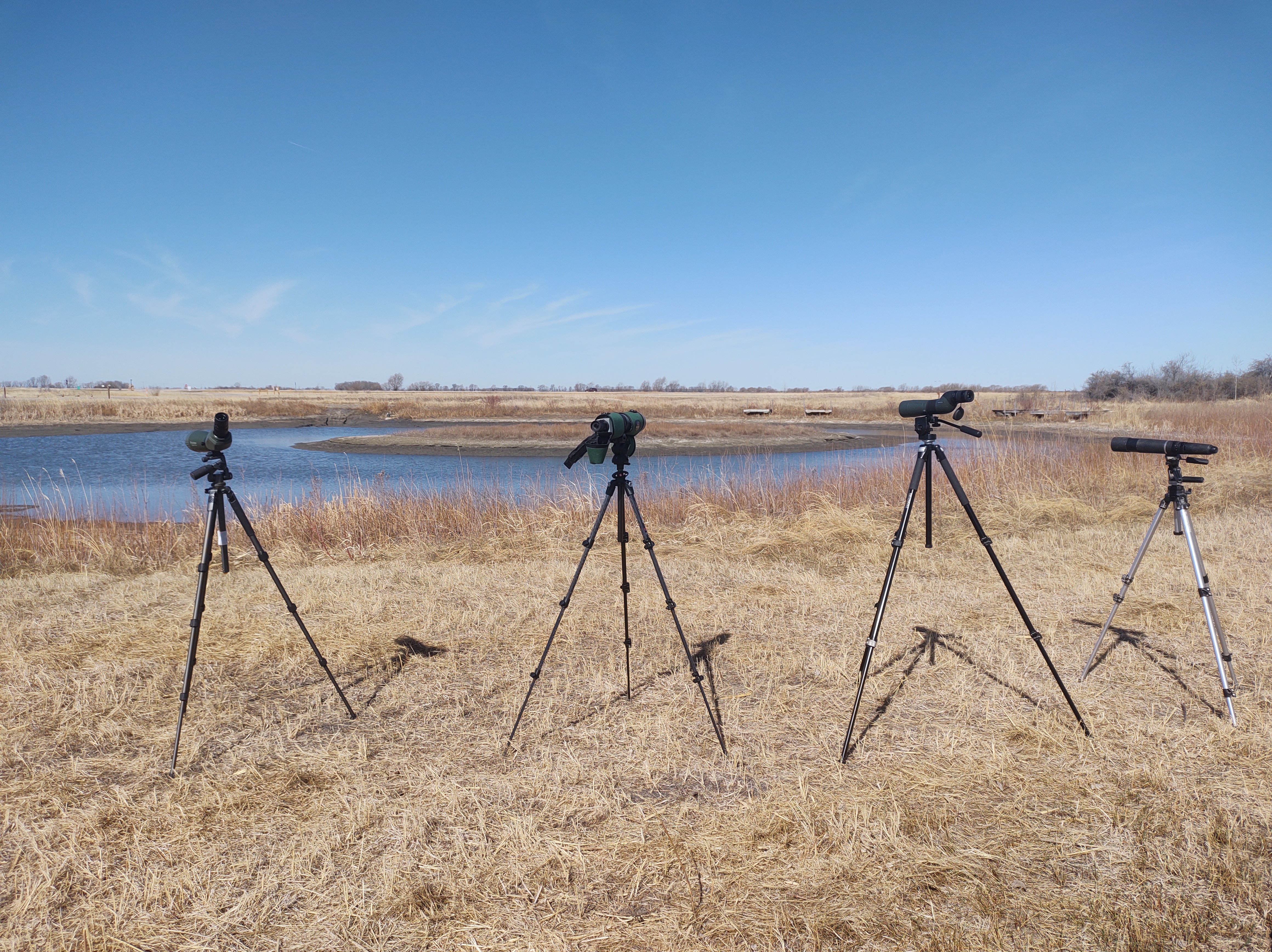
We will be at Oak Hammock Marsh for their World Migratory Bird Day celebration on Saturday, May 28th for shorebird walks departing the Interpretive Centre parking lot at 8:00 am and 10:00 am. Spotting scopes will be available to use and this event is suitable for all skill levels. There is a $10/person fee for the walk. This event is run by the Harry J. Enns Wetland Interpretive Centre. To sign up contact the Interpretive Centre or sign up online at: https://oakhammockmarsh.myshopify.com/products/guided-shorebird-survey-walk.
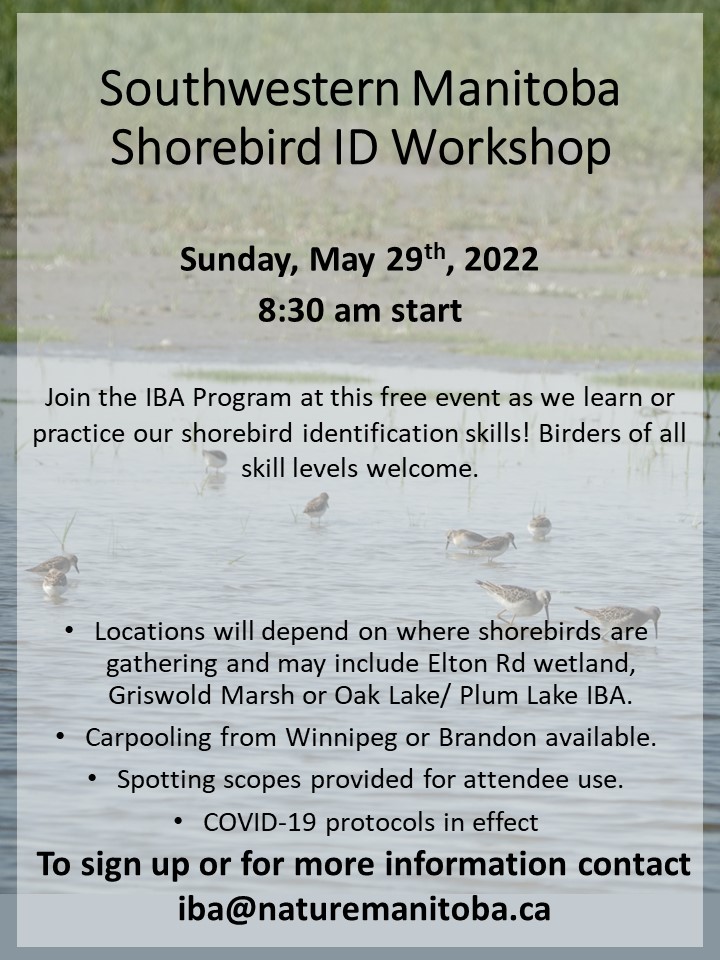
Southwestern Manitoba Shorebird Identification Workshop – Sunday, May 29th at 8:30 am
Join us on a visit in southwestern Manitoba for a practical look at how to identify shorebirds in their breeding plumage. Our location in southwestern Manitoba is to be announced depending on where shorebirds are gathering and accessible. Possible locations include Elton Road Wetland, Griswold Marsh or Oak Lake/ Plum Lake IBA. Spotting scopes will be available to use. Carpooling from Winnipeg or Brandon is available. This is a free event suitable for all skill levels.
Whitewater Lake Bird Blitz – Saturday, June 4th at 8:30 am
Support bird conservation in Manitoba by participating in our citizen science monitoring of Whitewater Lake. Whitewater Lake is a premier destination in Manitoba for shorebirds, and a wide variety of other birds. Carpooling from Winnipeg or Brandon is available. This is a free event suitable for all skill levels.
In the past 24 hours there has been a lot of debate on social media relating to bird feeders. This is obviously quite a sensitive issue for people, depending on their comfort level. Currently the Canadian Food Inspection Agency and the Canadian Wildlife Service are still advising that bird feeders are safe because there are very few cases of HPAI in songbirds. However, if you have a feeder or a bird bath they are recommending regular cleaning. The exact wording is as follows:
“To minimize the risk of transmission of HPAI, do not handle or feed any wild bird by hand. Feeding encourages wild birds to congregate around food sources and can increase the probability of transmission among wild birds, both within and among species.
The use of bird feeders is still safe but they should be removed from areas that are open to poultry and other domestic animals. If you care for poultry, prevent contact between wild birds and poultry by removing exterior/outdoor sources of food, water and shelter that attract wild birds.
Backyard bird feeders and baths should be cleaned regularly using a weak solution of domestic bleach (10% sodium hypochlorite). Ensure they are well rinsed and dried before re-use.”
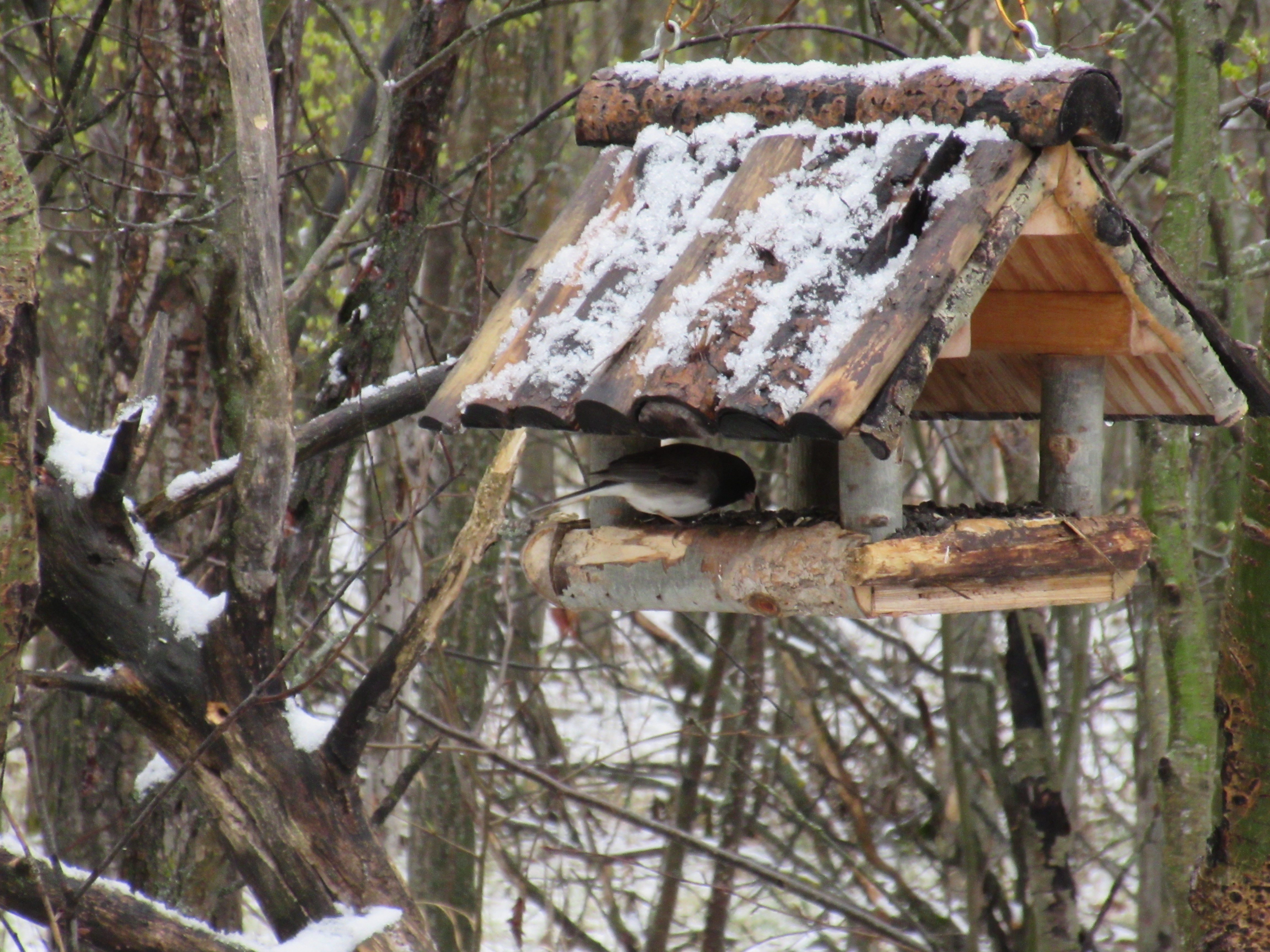
Prior to this winter storm, migration in Manitoba was preceding as normal with people reporting birds like Canada Geese, Dark-eyed Juncos, American Robins, Trumpeter Swans, Herring Gulls and more. While these birds are likely not enjoying the spring snowfall (similar to us humans!), they are adapted to withstand the occasional bout of cold and snowy weather. Similar to humans and other mammals, bird need to keep a constant body temperature, regardless of the weather.
All of the birds I listed above are early spring migrants to Manitoba. With our unpredictable spring weather, this means that they have evolved to be successful under a variety of spring conditions – from warm weather to cold weather, rain to snow!
Feathers
Feathers are a bird’s multi-tool – they serve many different purposed! A bird’s plumage can help attract a mate, or provide camouflage. However, one of the most important roles of feathers is to help keep a bird warm and dry. During periods of cold weather, a bird will fluff up their feathers in the cold to trap as much of their body heat as possible. In fact, they can seem up to 2-3 times their body size all fluffed up! This is similar to how a down duvet traps your body heat. The average bird’s body temperature is approximately 40.6oC (105oF) and they can maintain that in cold weather. Additionally, the oil that birds apply to their feathers while preening works to help repel moisture.
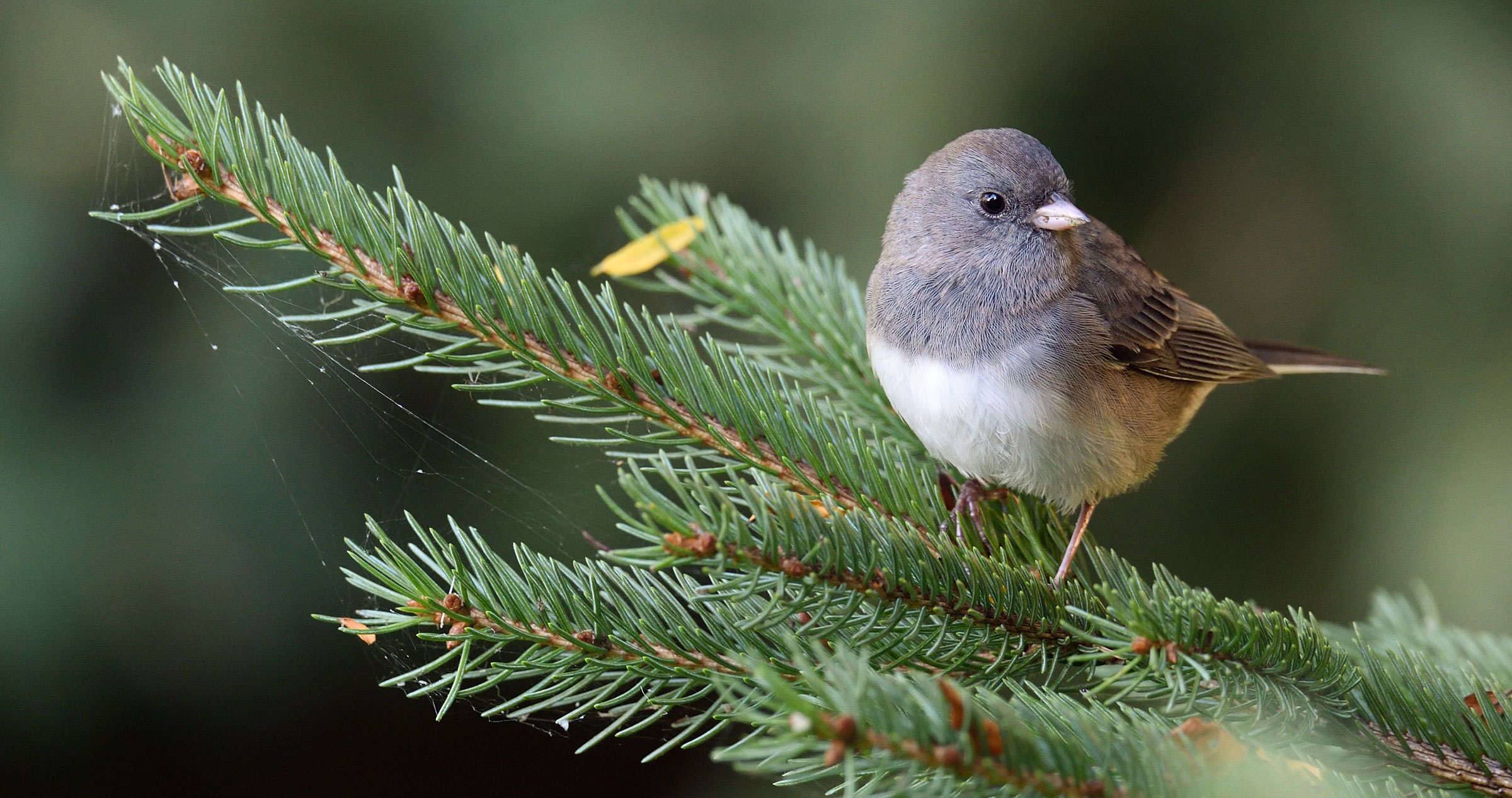
Juncos are a more ball-shaped bird in general but you can see the difference in the body shape of a cold junco! Photos from eBird.org (left) and audubon.org (right).
Shivering
Birds can shiver to help maintain their body temperature in cold weather. When birds shiver in cold weather they activate opposing muscle groups that contract against each other. This allows the birds to better retain body heat.
Feet
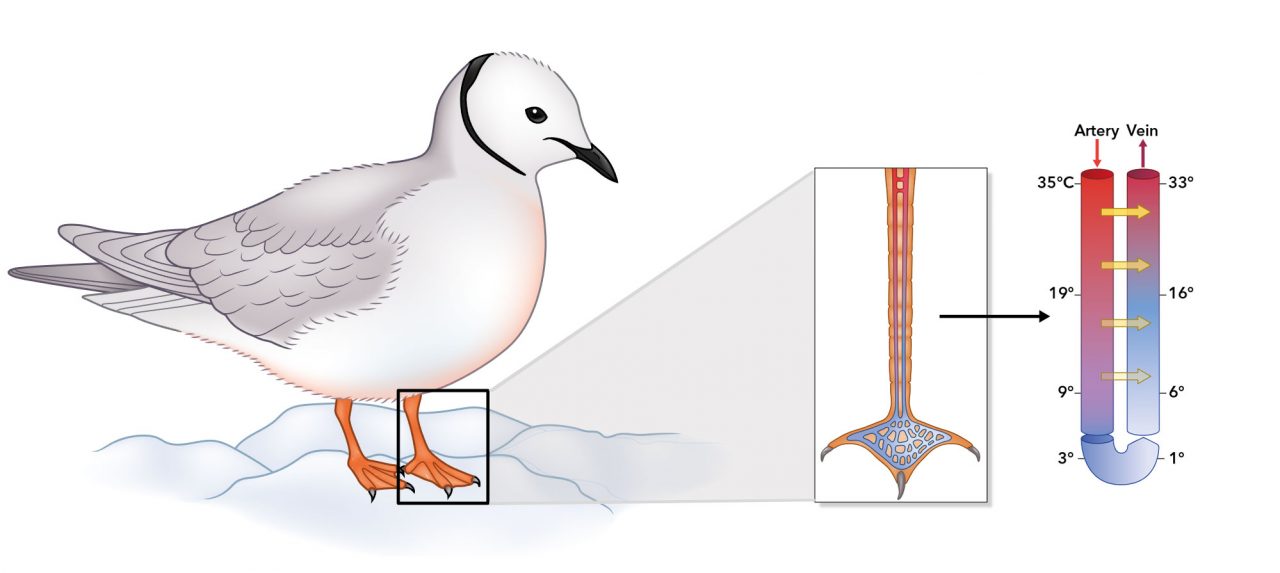
Bird feet in general can withstand lower temperature as they are mostly tendon and bone with little nerve or muscle tissue, so there is not much to freeze. However, the feet of ducks, geese, and gulls have evolved further to withstand cold water and ice. This is done through an adaptation called counter-current heat exchange in their legs and feet. Warm, oxygenated blood is pumped from the heart into the feet through arteries, which are close by the veins in the legs and feet that are returning colder, deoxygenated blood from the feet back to the body. As the arteries and veins are close together heat is transfer from the warmer arteries to the colder veins. Counter-current heat exchange allows the core body temperature to stay warmer, rather than losing heat through the cold legs and feet. Other mammals that live in cold climates, such as squirrels also use counter-current heat exchange.
Counter-current heat exchange in a gull leg and foot. Image from Cornell Lab of Ornithology. Adapted from Randall et al. 2002.
Behavioral Adaptations
There are a number of different ways that birds can alter their behavior to stay warm during spring cold spells. As humans, we can often feel the warmth of the sun in the spring, even if the air or wind is a bit chilly. Birds (especially dark coloured birds) can warm up on sunny days, by doing the aptly named “sunning” whereby they turn their backs to the sun, exposing the largest area of the body to the sun’s heat.
Birds can also flock together to help keep each other warm with combined body heat. In addition to the flocking itself birds may also gather in areas sheltered from the wind or cold, such as in sheltered shrubs or cavities in trees.
We talked about feathers above, but what about areas on a bird’s body that do not have any feathers? The feet, legs and bills/ beaks of most birds are not feathered. These areas of the body are kept warm by tucking them under areas that do have feathers. Birds may stand on one foot, with the other tucked up under the body feathers, or sitting on their feet which allows them to cover both legs and feet with their feathers. Similarly, they may tuck their beak/bills into their shoulder feathers to breathe air warmed by their body.
Opportunistic feeding
It can take a lot of energy to keep warm, so food sources during early spring cold snaps can be especially important. In urban areas, as well as rural farm yards, birds can often find supplemental food through bird feeders. High energy foods that are safe for a variety of birds include black oil sunflower seeds and suet.
The next few days might just be the perfect time to observe how birds adapt to the snowy conditions from the comfort and safety of home!
You may have heard that Highly Pathogenic Avian Influenza (HPAI) has been detected in various US States and Canadian provinces in the past few months. The latest report confirms a first case in Saskatchewan but no suspected cases in Manitoba yet (see http://www.cwhc-rcsf.ca/avian_influenza_testing_results.php).
The Avian Influenza Virus is a contagious viral infection that can affect domestic and wild birds. Many strains occur naturally in wild birds and circulate in migratory populations. HPAI can cause mass disease and mortality in infected poultry but there have been no human cases of avian influenza from exposure to wild birds in North America.
The federal government are providing lots of good information on how to limit the spread of this disease which you can find at – https://www.canada.ca/en/environment-climate-change/services/migratory-game-bird-hunting/avian-influenza-wild-birds.html. The main take home is do not handle wild birds, take precautions if you keep birds at home or work and report any larger groups of dead or sick birds using the contact information on that page. The federal government are continue to update their information and will change their advice based on the latest data.
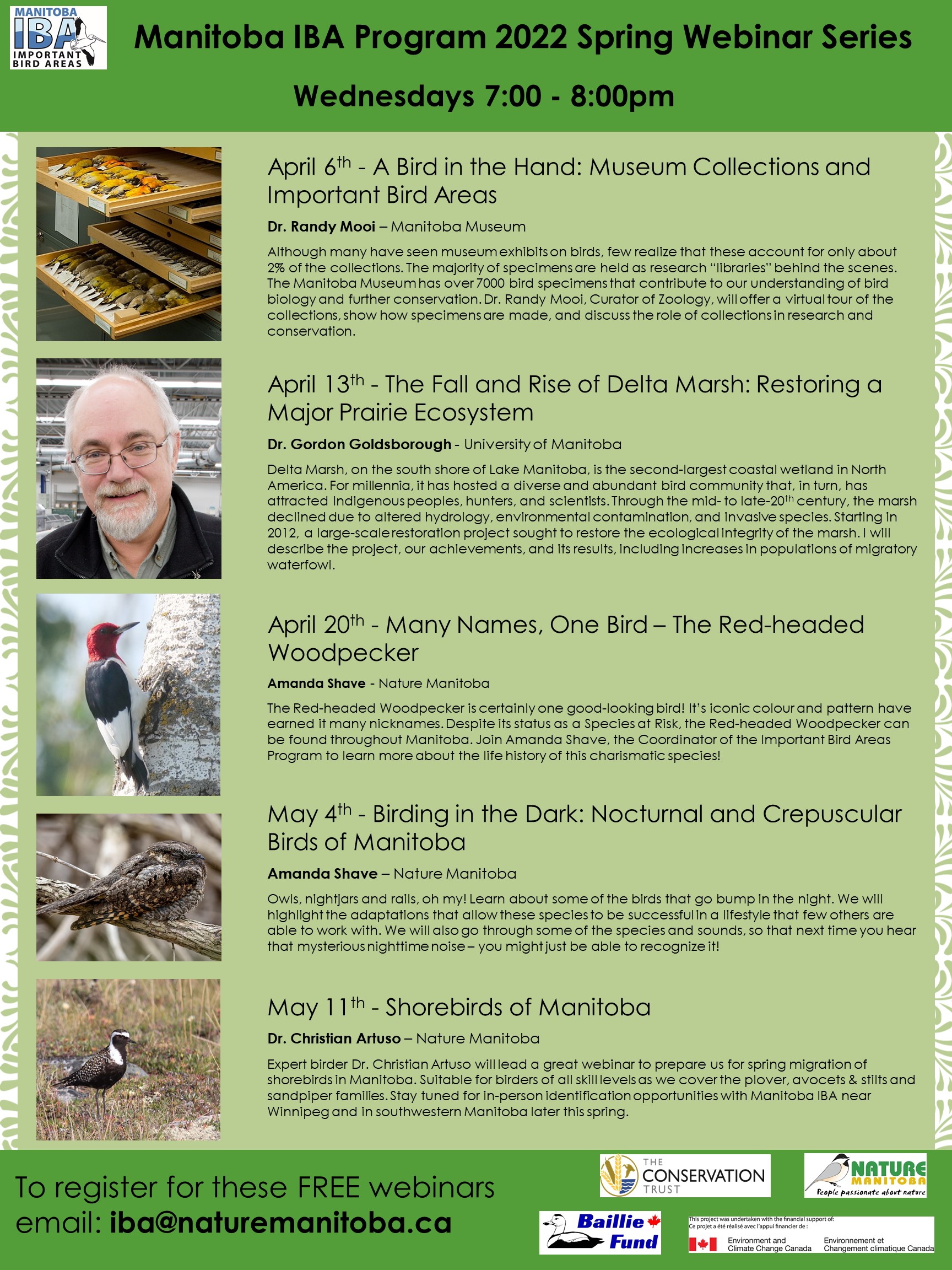
Our spring webinar series is back for another round in April and May 2022. We have a great line-up this year with guest speakers joining the IBA Coordinator to present on all things related to birding in Manitoba, and our Important Bird Areas.
To register email Amanda at iba@naturemanitoba.ca with the webinars you would like to attend. All webinars are free, appropriate for all birding skill levels and open to the public.
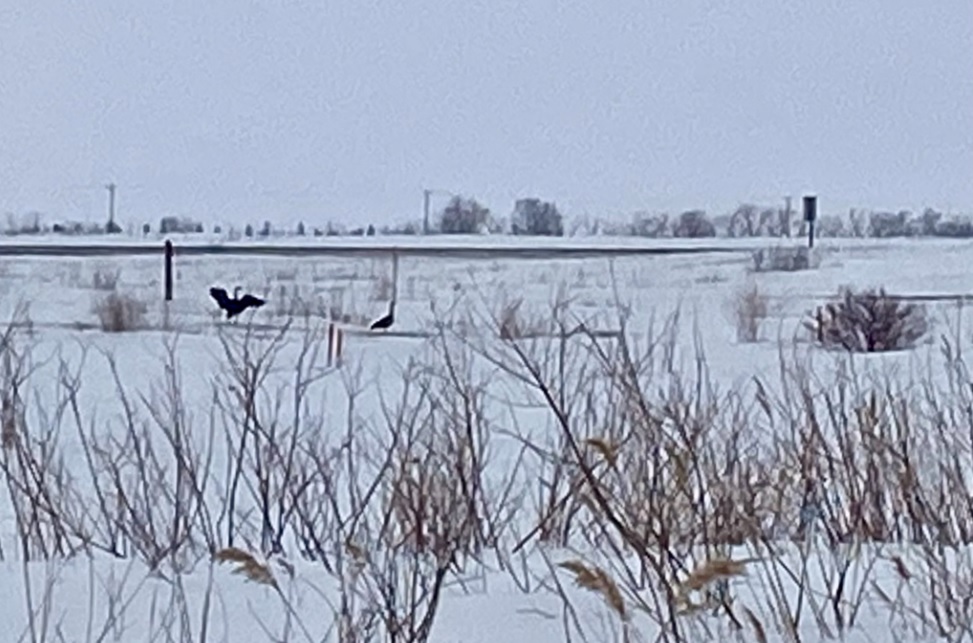
Reports have been coming in recently about some of our early arriving migratory birds! The first Canada Goose in an IBA was reported on March 16th at Oak Hammock Marsh. In more urban environments the first Peregrine Falcon was spotted on March 17th at the Radisson Hotel in downtown Winnipeg and identified as Hart the next day.
First Canada Goose sighting at Oak Hammock Marsh WMA. Photo from Oak Hammock Marsh.
For many of us the long Manitoba winters mean we go 4-6 months without practicing our ID skills for many of our migratory birds. If you are getting into birding for the first time, or looking for some options to refresh your bird identification skills, or get into citizen science here are just a few free resources to keep you up to date on the sights and sounds of birds in the spring.
1. Check out various webinars
The Manitoba IBA Program spring webinars series is gearing up for April and May. We will be including some bird identification webinars in our mix this year along with some exciting new topics. Stay tuned for the announcement soon! In the meantime, the majority of our past webinars are available to watch on the IBA Manitoba Youtube account here. These webinars are specific to birding in Manitoba and include Grassland Birds, Shorebirds, Wetlands Birds and Bird Species at Risk.
2. Field Guide Apps for sights and sounds
If you are more likely to carry your cell phone along with you than a printed bird guide, consider using a free mobile app like Merlin. You can download “bird packs” local to your area, and once downloaded it can be used without an internet connection. You can browse through birds as you would in a field guide, or you can try giving a description, taking a photo or sound recording of your mystery bird and see if Merlin can identify it for you. There many different birding apps to choose from, some free and some paid.
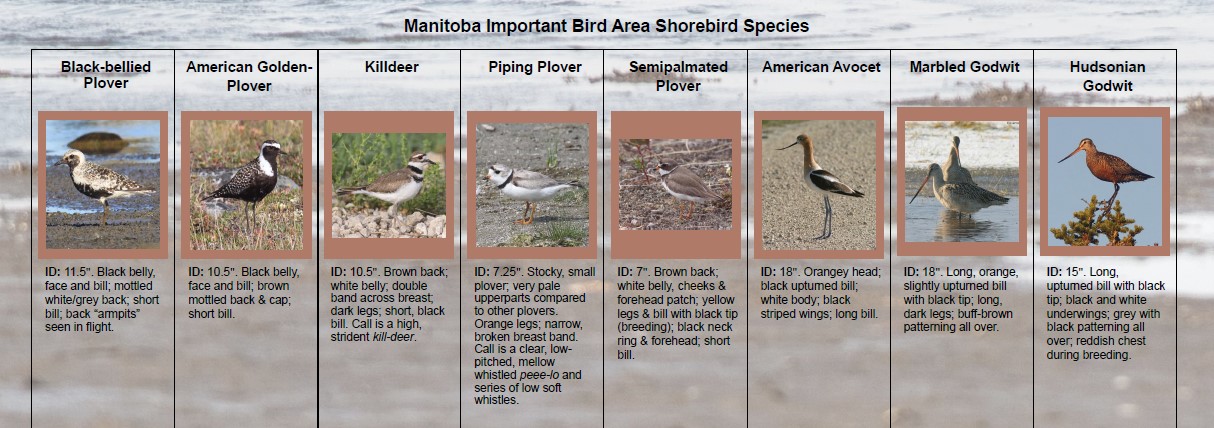
If you are not into electronics while birding, but don’t want to carry around a bird ID book, the Manitoba IBA program has several habitat-based quick ID guides that are available for free both on our website and as a printed copy. Grassland birds, shorebirds, wetland birds and birds of Churchill and the Nelson River Estuary are all available.
3. eBird.org
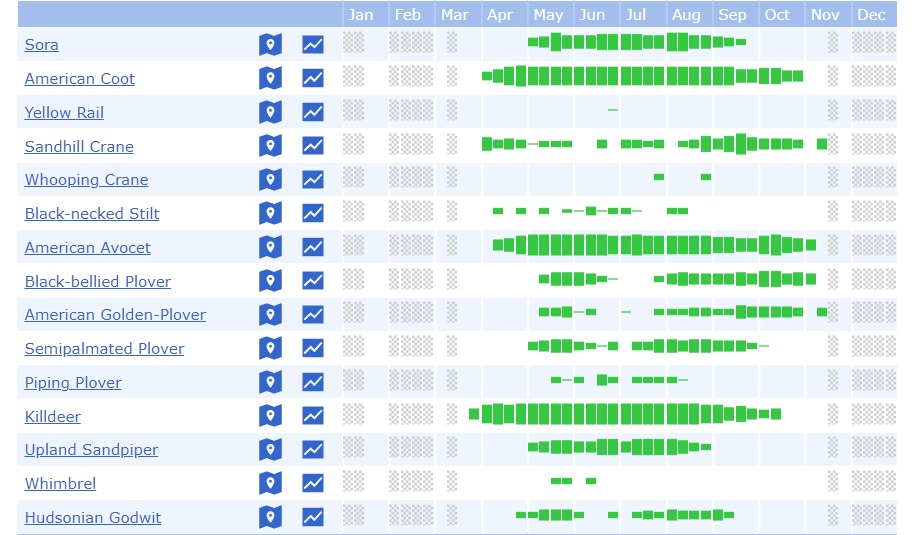
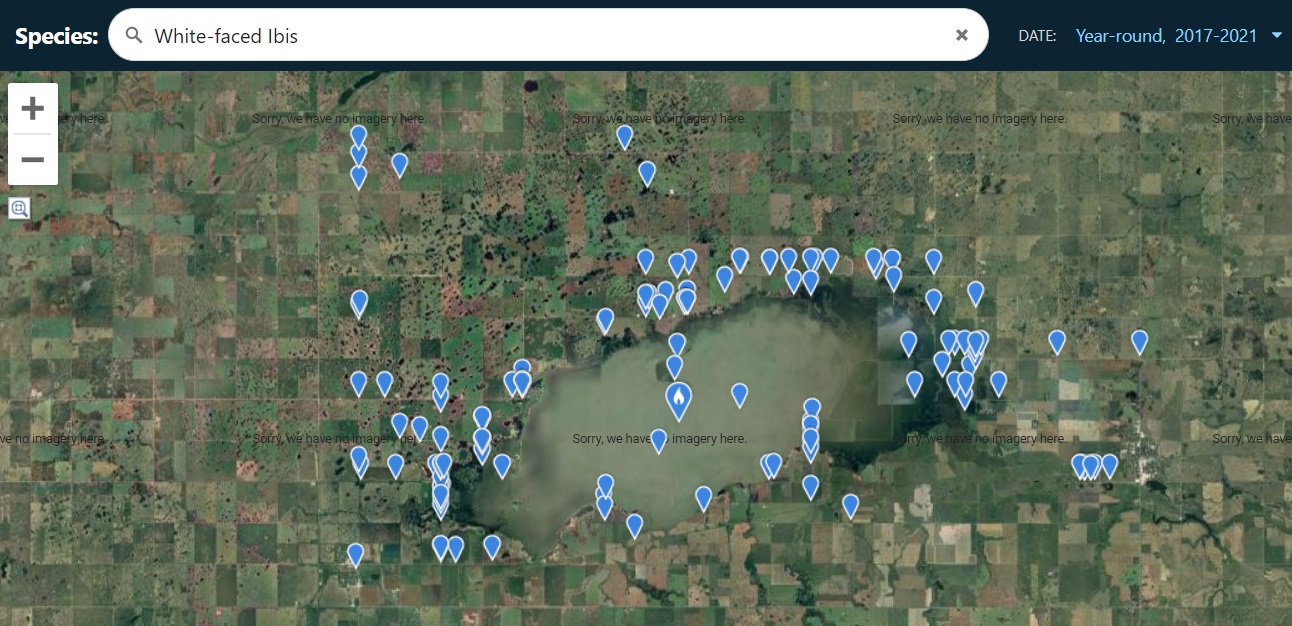
eBird.org is a strong resource for birders and I am always learning about new ways to use it. eBird uses birding checklists submitted by citizen scientists to track abundance and distribution of birds across the landscape. We use the eBird “IBA Protocol” to track birds within our Manitoba IBAs by our volunteers. They even have a mobile app that lets you enter your birding checklists without an internet connection! You can also use the maps and bar charts to explore when are where certain species are sighted historically, or more recently. There is way too much to describe here, but you can check out these guides to getting started on eBird.org or eBird mobile app prior to spring migration!
Example of a bar chart generated for Whitewater Lake IBA for bird timings. April is coming up fast with migratory bird sightings to become more and more common!Map generated from eBird that shows locations of White-faced Ibis sightings in the last five years. You can change species, locations and dates to see what birds and found where (and when).
4. BirdCast
BirdCast is a website that uses weather surveillance radar to create bird migration forecast maps, real-time migration maps and local bird migration alerts. Unfortunately, the maps only extend to the Canada-US border, but as concentrations of birds move through the United States on spring migration, we can use the maps to predict when they might arrive in Manitoba. There are many studies that show strong ties between weather and migration rates. Additionally, large numbers of birds actually show up on Doppler radar themselves!
Example of a bird forecast predicted by BirdCast. I watch for areas of migration intensity to move towards the Canada/ USA border, and then I know that they will be in southern Manitoba shortly.
Did we miss anything you consider essential to gear up to spring migration? Let us know!
With our recent wintery weather, you might not be thinking about your local wetlands, but February 2, 2022 is World Wetlands Day.
Today is a great day to reflect on your favourite local wetland. Do you visit in the spring for birding? Do you go canoeing or fishing in the summer? Do you go hiking in the fall? Do you snowshoe across it in the winter?
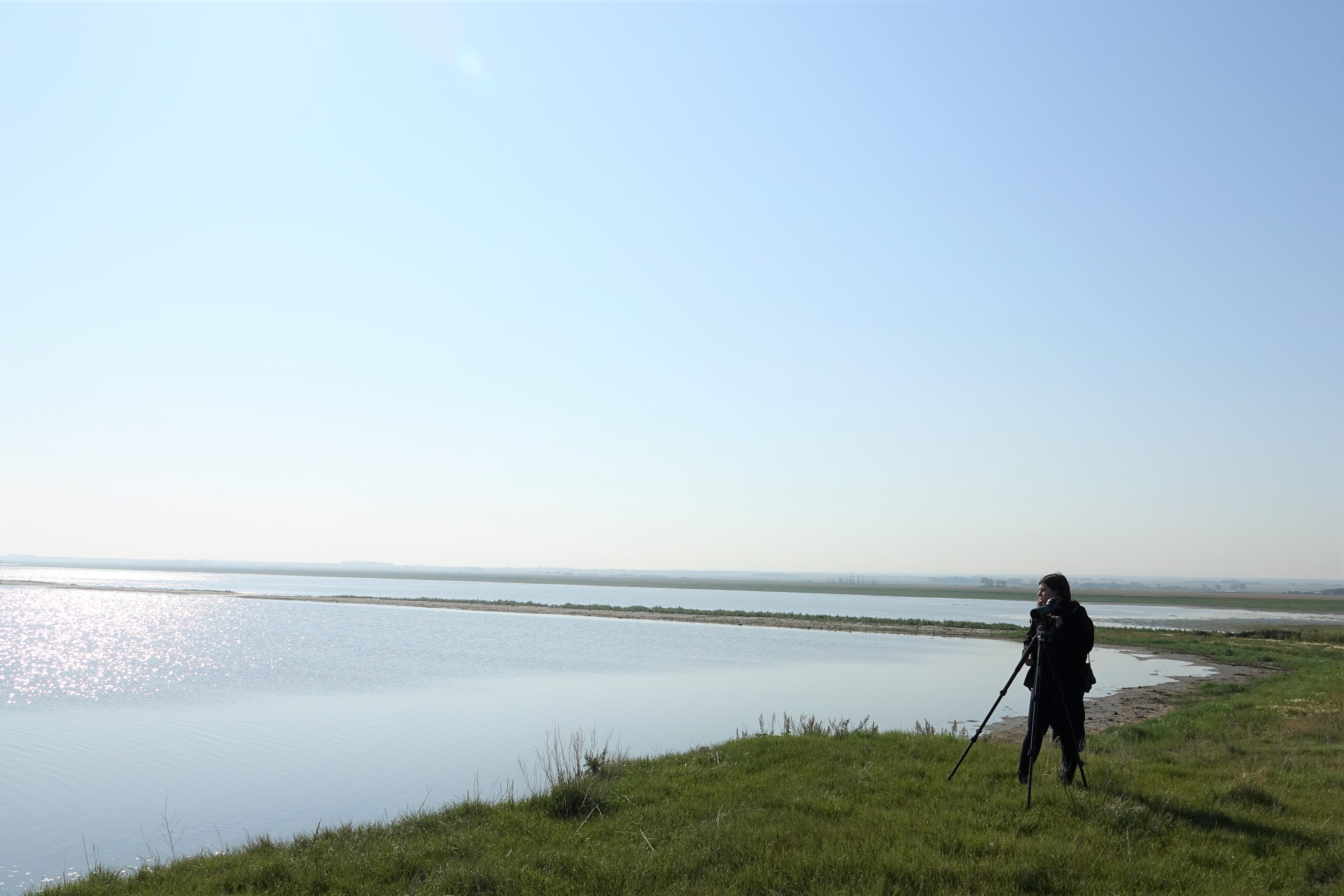
What birds can we spy with our scopes in a wetland? Photo by Amanda Shave.
Wetlands play a huge role in as habitat for both breeding and migrating birds, and is key habitat in our Manitoba IBAs. While not all of our IBAs are designated specifically for wetlands, almost all of them contain wetlands within their boundaries. For example, the Southwestern Manitoba Mixed-grass Prairie IBA contains a lot of – you guessed it- prairie, but also has a variety of large and small prairie wetlands. These prairie wetlands support breeding shorebirds such as Marbled Godwit, Wilson’s Phalarope and American Avocet, and breeding waterfowl such as the Blue-winged Teal, Northern Shoveler and Gadwell, just to name a couple of species of each.
Of course, we also have a number of IBAs that were developed specifically because they contain wetlands. These include Delta Marsh IBA, Douglas Marsh IBA, Big Grass Marsh and Langruth IBA, Netley-Libau Marsh IBA, Sandy Bay Marshes IBA, Marshy Point and Saskatchewan River Delta IBA. Many of our northern IBAs that border Hudson Bay also include a variety of marshes, bogs, sedge meadows and fens, which are all different types of wetlands.
Shorebirds foraging in mudflat and shallow water habitat in the west side of Delta Marsh. Photo by Katharine Schulz.
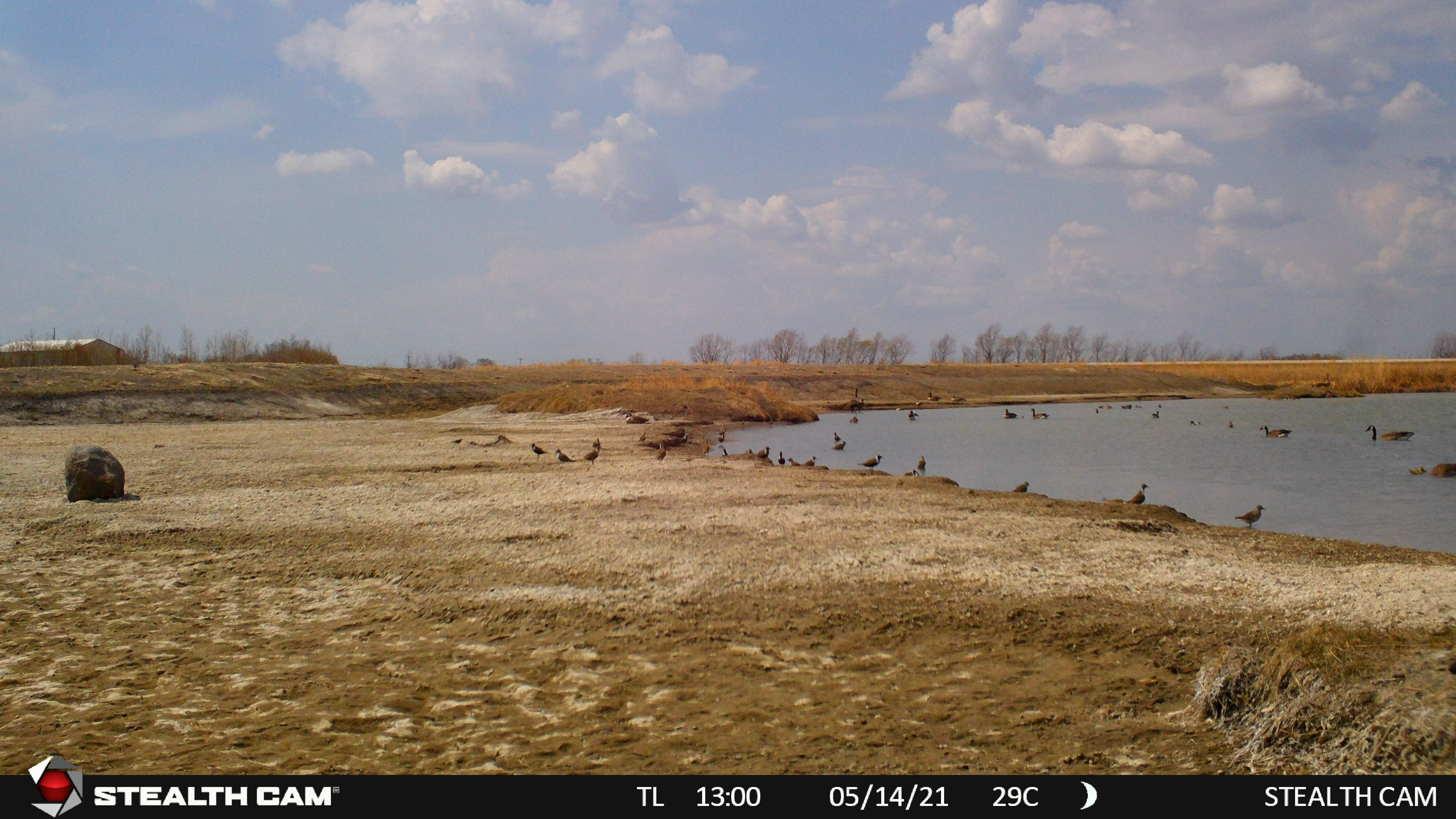
Our IBAs also include human-constructed or restored wetland habitat, such as Oak Hammock Marsh Wildlife Management Area. Oak Hammock Marsh was originally a wetland, but was largely drained for agriculture. In 1967 the provincial and federal governments, Ducks Unlimited Canada, and other conservation organizations and local landowners starting working to restore the wetlands to what we see today. The marsh is managed through a series of dikes, wetland cells and artificial islands that move and store the water across the landscape. Additionally, The Manitoba IBA program, the Province of Manitoba and Harry J. Enns Wetland Discovery Centre staff collaborated to create our province’s first shorebird scrape in 2020 at Oak Hammock. Shorebird scrapes are a feature that holds water in a depression on the landscape, creating mudflat habitat within a wetland. We saw many wetland birds using the scrape via trail camera, and through eBird checklists last season. The scrape was expanded further this past fall! While currently under ice and snow, the scrape is an excellent spring birding destination at Oak Hammock Marsh.
Trail camera image of (mainly) American Golden Plovers and Canada Geese using the scrape and adjacent pond. Photo by: Manitoba IBA Program.
If you would like to learn more about wetland habitats and how they impact our birds check out IBA Manitoba’s Freshwater Habitat for Birds factsheet or our Shorebird Scrape factsheet!
Similar to the Eastern Whip-poor-will surveys reported in our blog several weeks ago, the Manitoba IBA program made a concerted effort this year to survey for Red-headed Woodpeckers in several of our IBAs.
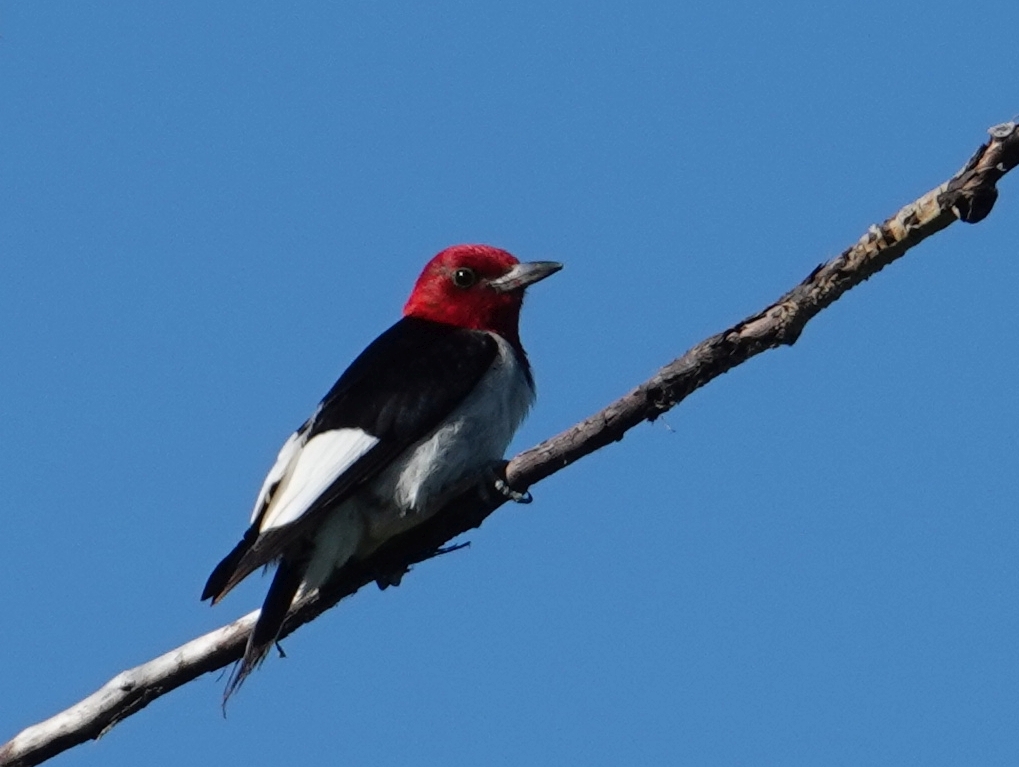
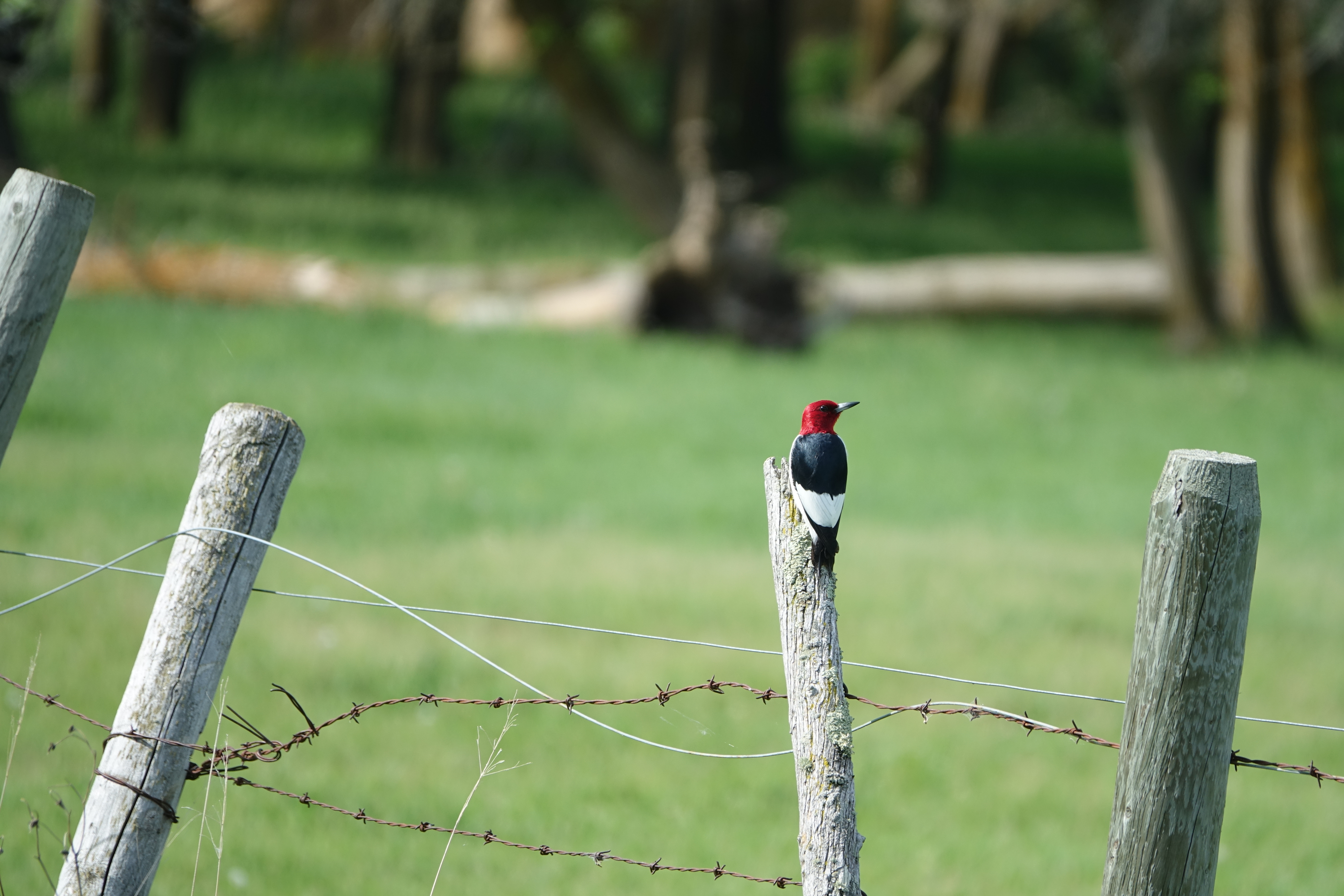
The Red-headed Woodpecker’s federal Species at Risk Status was changed from Threatened to Endangered in April 2018. Under provincial legislation the Red-headed Woodpecker continues to be classified as Threatened. You can look for their distinctive ruby-red heads and white and black wings and body, or otherwise listen for their territorial calling. Red-headed Woodpeckers are out and active for a fairly long period in Manitoba from mid-May until the end of August.
“Querr” or “tcher” call of the Red-headed Woodpecker. Call from xeno-canto.org.Red-headed Woodpecker. Photo by Christian Artuso.
You might think that an Endangered/ Threatened species would be hard to find, but if you look in the right habitat at the right time of year you will probably have some pretty good luck with the Red-headed Woodpecker in Manitoba. Manitoba and Ontario support the majority of Canada’s Red-headed Woodpecker population. We often see them in patches of larger-sized standing dead trees in cattle pastures. The trees need to be large enough to support nesting and roosting cavities for the woodpecker. At the same time, they like habitat with little understory or living tree branches – which the cattle using the pasture tend to keep nice and short.
Some prime Red-headed Woodpecker habitat at North, East and West Shoal Lakes IBA. Note the low understory vegetation and larger diameter standing dead trees. Photo by Katharine Schulz.
The Manitoba IBA program started holding blitzes focusing on Red-headed Woodpeckers in 2017. Since then, we have tried several different ways of monitoring these woodpeckers on blitzes. You may have been on a blitz where we stopped more casually to look for Red-headed Woodpeckers whenever we saw decent habitat, or on a blitz where we surveyed more formally and stopped every 300m in appropriate habitat. The issue with blitzes for the Red-headed Woodpecker is always the trade-off between time and the distance covered. We often have to choose between surveying a smaller area really well or surveying a larger area less thoroughly.
Last winter we set up specific routes and protocol to survey for the Red-headed Woodpecker. Unlike with the Eastern Whip-poor-will, we had a pretty good idea from past IBA program records, eBird records and records from the Manitoba Conservation Data Centre for where to place the survey routes to monitor presence from year to year. Routes were set up in Oak Lake/ Plum Lakes IBA; North, East and West Shoal Lakes IBA; and Netley-Libau Marsh IBA.
Following the pre-set route, surveyors stopped every 300m in Red-headed Woodpecker habitat. The 300m distance was chosen so that individuals would not be double counted. Surveyors would sit passively for two minutes observing. If no woodpeckers were seen then the Red-headed Woodpecker “querr” or “tchur” call was played for 30 seconds before waiting two minutes again.
When we planned our Red-headed Woodpecker surveys the idea was that we would run them similar to a bird blitz with multiple groups each running a route and meeting up at the end. With our routes earlier in the season that was not possible due to COVID-19 gathering limits. Luckily, we had some volunteers who, well, volunteered! A big thank you to Ryo Johnston and Hazel Blennerhassett for surveying in Netley-Libau Marsh IBA; Gary Franzmann and Al Mickey for surveying at the North, East and West Shoal Lakes IBA; and Glennis Lewis and Gillian Richards for their help at Oak Lake/ Plum Lakes IBA.
Onto the results!
Netley-Libau Marsh IBA
As I mentioned above Hazel and Ryon surveyed for us here, in addition to some work our IBA program summer students did. Hazel and Ryon are the IBA Caretakers for the Netley-Libau Marsh IBA, so they know it inside and out. The surveys were conducted in early to mid June. There was a total of 11 observations of Red-headed Woodpeckers during surveys by both teams in this IBA. After accounting for repeat observations, we are confident that there were 9 unique individuals spotted during the survey. Of the 9 birds there were three sets of assumed breeding pairs (adult pairs seen in the same territory) and three single individuals.
The first ever Red-headed Woodpecker seen by the IBA summer students during a survey for this species in Netley-Libau Marsh IBA. Drumming was heard first at a bit of a distance and once play-back was used it was easy to confirm which species of woodpecker it was! Photo by Amanda Shave.
North, East and West Shoal Lakes IBA
Gary and Al were of great help surveying at the North, East and West Shoal Lakes IBA, along with Manitoba IBA program summer students. Between the two teams there were a total of 24 observations with 19 unique individuals based on locations and likely territory size. These numbers were largely driven by observations at two key locations. On the east side of Shoal Lake, at a well-known Red-headed Woodpecker habitat site (near the corner of highway 415 and 416) Al and Gary were able to spot 11 Red-headed Woodpeckers at one survey stop! At another site on the west side of the lakes on highway 518 they had four individuals! There were four other sightings of one individual each. They also had a sighting JUST outside the IBA.
It is important that I break down the sighting just outside the IBA because for the very first time since 2018 and only the second time in the history of the IBA we hit the IBA threshold for Red-headed Woodpeckers at Shoal Lakes IBA! The number of woodpeckers needed to hit the threshold in an IBA is 14. You can view the Shoal Lakes IBA’s list of species that have reached the IBA threshold at the IBA Canada site here. In 2018 20 Red-headed Woodpeckers were counted, so the population within the IBA appears to have stayed fairly stable in the last four years.
Southeast of Shoal Lakes IBA
If you have taken part in IBA blitzes at the Shoal Lakes IBA or read our past blogs, you may have noticed that we sometimes get a group to monitor an area just to the southeast of the IBA itself. This is because we have long suspected (and over the years confirmed) that this area had good Red-headed Woodpecker habitat due to all of the cattle pastures in the area. This year Ariel and Vicky (our summer students) spent a couple of days doing a thorough exploratory survey of the area and counted a huge number of Red-headed Woodpeckers! They observed at least 70 unique individuals with another possible two individuals that they were not 100% sure on.
Our data from this year, combined with provincial data on Red-headed Woodpeckers collected several years ago has shown this area to be key to Red-headed Woodpeckers in Manitoba over several years (and likely longer). While this area is not in the IBA, we still hope to be able to work more with the landowners and birds in future years since it is so close to the Red-headed Woodpecker population inside the Shoal Lakes IBA.
Oak Lake/ Plum Lakes IBA
The Red-headed Woodpecker surveys were held at Oak Lake/ Plum Lakes IBA in late July. This meant that we were able to hold the surveys together with volunteers during a Red-headed Woodpecker blitz as intended! We had two of the three blitz groups survey a pre-planned Red-headed Woodpecker route at the start of the blitz. Once each group had run their route (and the third group which had no route in their area) they switched to a less formal monitoring style for the areas that had less optimal Red-headed Woodpecker habitat. You may remember we had Gillian Richards, Kathryn Hyndman, Katharine Schulz, Glennis Lewis, Vicky Tang, Ariel Desrochers and myself at the blitz (you can check out the blog post for that blitz here, if you are curious).
A Red-headed Woodpecker seen along 45N in the Souris Sandhills area of the IBA. Photo by Katharine Schulz.
At the time of the blitz we had 12 Red-headed Woodpeckers spotted in the IBA and 3 woodpeckers spotted just outside the IBA. This was pretty close to the IBA threshold for Red-headed Woodpeckers, which is 14 individuals. However, we were not able to cover all the ground in the IBA during that blitz. One of our intrepid volunteers, Glennis, returned to the IBA to survey additional areas four times in later July and early August and found 15 more woodpeckers – putting us over the IBA Red-headed Woodpecker threshold for a second IBA this year! So in total there were 27 unique Red-headed Woodpeckers spotted at Oak Lake/ Plum Lakes IBA this summer. This is the first time that Red-headed Woodpeckers have reached the IBA threshold at this IBA. You can view Oak Lake/ Plum Lake’s list of species that have reached the IBA threshold at the IBA Canada site here.
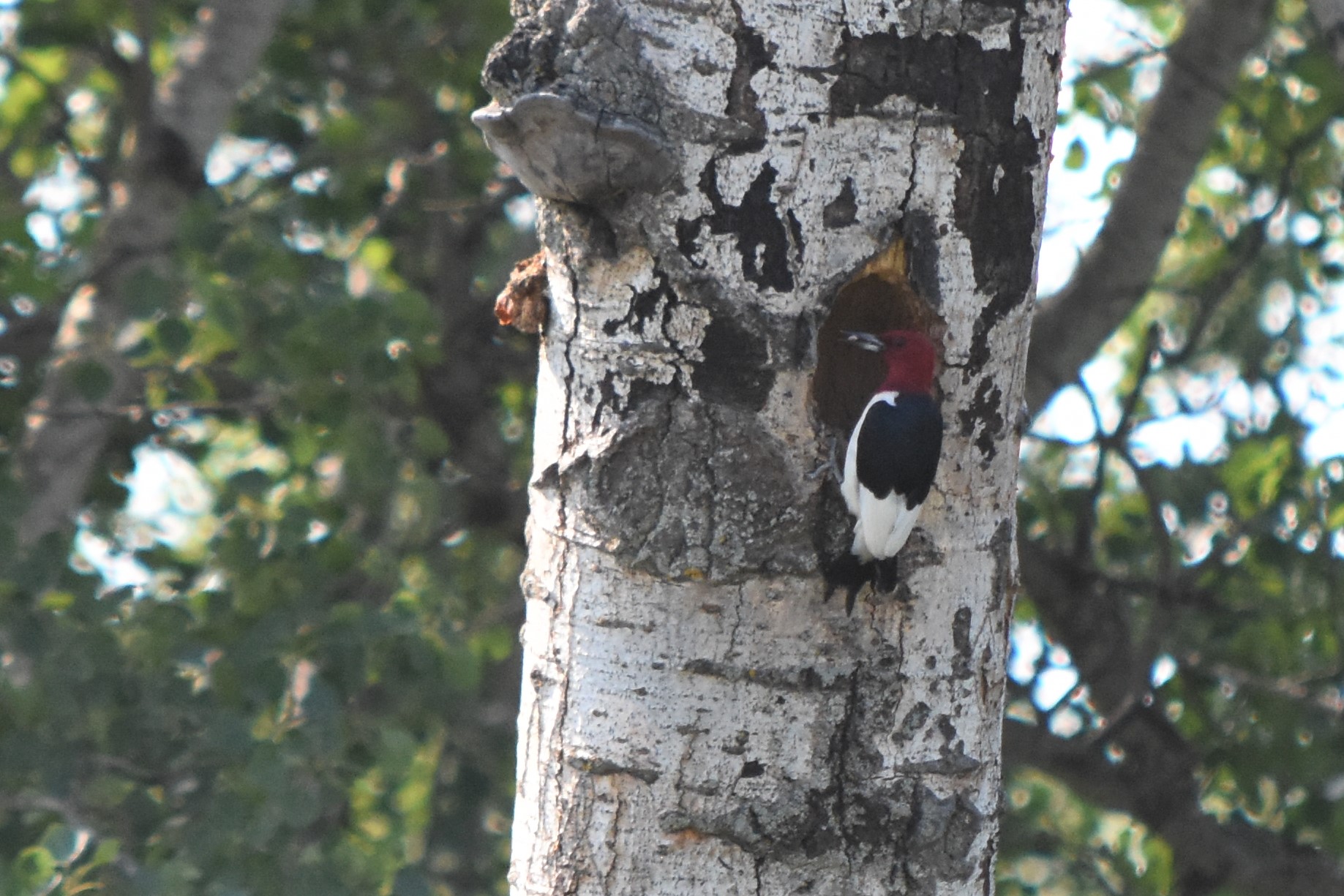
An adult Red-headed Woodpecker bringing in a food item to a nesting cavity at Oak Lake/ Plum Lakes IBA in summer 2021. Photo by Gillian Richards.
Other Red-headed Woodpecker Observations
We did have some other Red-headed Woodpecker sightings brought to our attention that were outside these target IBAs (or IBAs in general) that were interesting this year. Four Red-headed Woodpeckers (2 adults and 2 juveniles) were reported at Delta Marsh IBA by Jo Swartz on August 14th. She saw them along road 77N just west of highway 430. A confirmed nesting cavity for Red-headed Woodpeckers was also reported by Ray Methot in Matlock this year – so assuming two adult woodpeckers there as well.
Overall, it appears to have been a good year for Red-headed Woodpeckers – or at least observations of them!
If you have Red-headed Woodpecker habitat on your land that you would like to help conserve let us know and we’d love to help. Also, if you are interested in searching for Red-headed Woodpeckers keep an eye out for postings of surveys and blitzes next year as we are planning on continuing to run activities based around this charismatic species!
With the end of the old year, we thought we would highlight some of the exciting birding news from Manitoba IBAs in 2021. If we are missing a highlight for you, let us know!
What is an IBA threshold and why is it important?
You’ll read below that we reached IBA thresholds for species in several different IBAs this summer – but why is this important? There are a series of criteria that bird populations at a site must hit for that site to be qualified as an Important Bird Area. We commonly refer to hitting these criteria thresholds as an “IBA trigger”. If species in the IBA are continuing to reach the IBA trigger, it is likely that the site continues to provide key habitat going forward. There are two main types of IBA triggers that are most commonly used in our Manitoba IBAs. The first is for congregations of species, needing either at least 1% of the global population for the species or at least 1% of the national population for the species. The second trigger is for Species at Risk. Due to the challenges that these species face, they require fewer individuals to reach their IBA trigger. Species at Risk are also classified at either a global scale (IUCN listed species) or regional scale (COSEWIC listed species).
Red-headed Woodpecker
It was an exciting year for this charismatic bird and the IBA program. Thanks to volunteers conducting both formal and informal Red-headed Woodpecker surveys we were able to reach the IBA threshold for this species in two IBAs this summer. The IBA threshold is 14 individuals. At the North, East and West Shoal Lakes IBA (north of Winnipeg near Inwood) volunteers and program staff counted 19 individuals. At the Oak Lake/ Plum Lake IBA (west of Brandon) volunteers and program staff counted a whopping 27 individuals. If you are interested in hearing more about our Red-headed Woodpecker experience this summer watch for the next blog which will go more in-depth with our efforts monitoring this beautiful species during summer 2021.
Red-headed Woodpecker in a nesting cavity at Oak Lake/ Plum Lakes IBA in 2021. Photo by Gillian Richards.
Pectoral Sandpiper
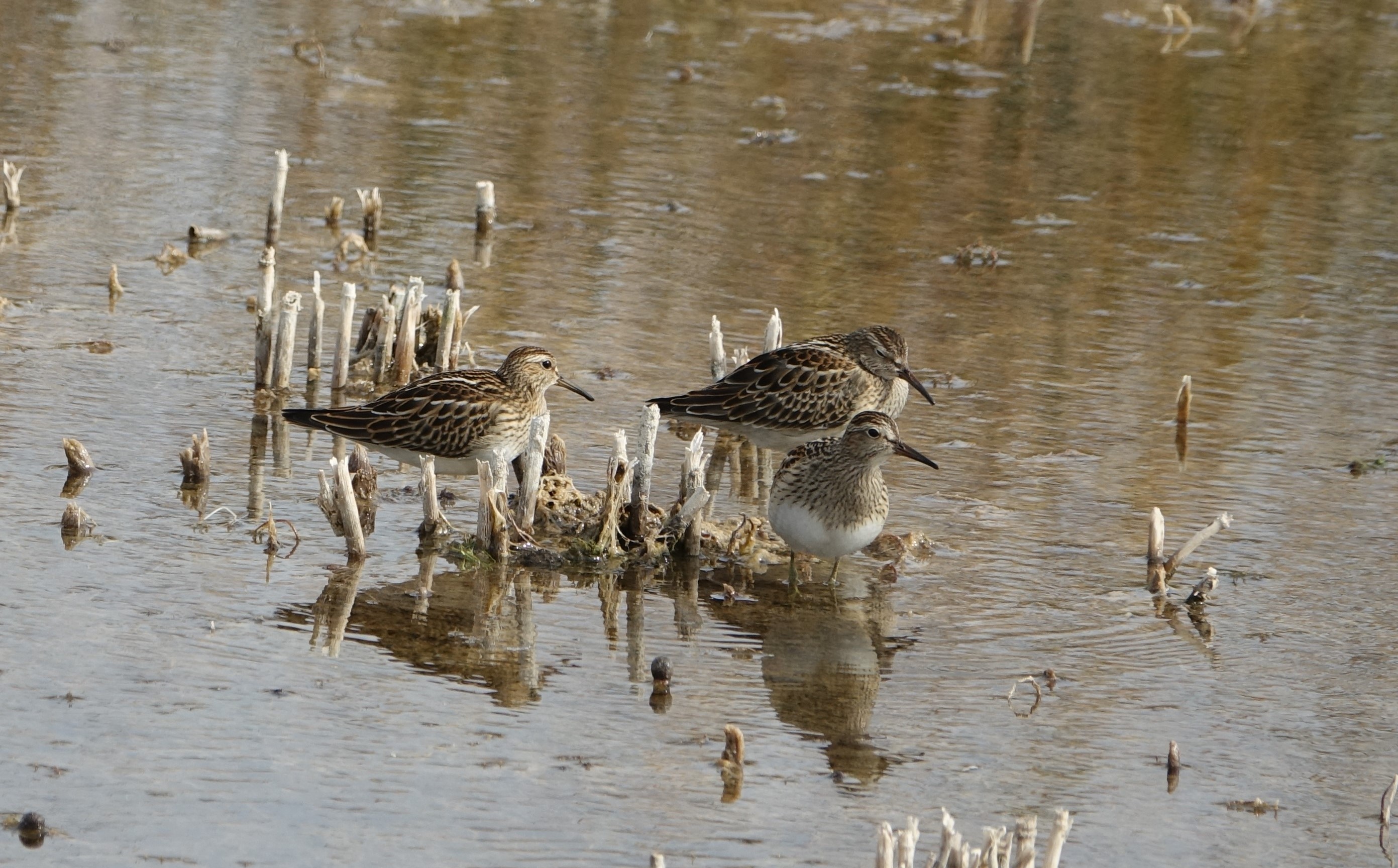
While out doing the International Shorebird Survey (ISS) at Whitewater Lake this spring Gillian Richards counted 12,050 Pectoral Sandpipers while birding along and between ISS routes. Gillian’s sighting was on May 16th. She went back on May 19th and counted 5,652 Pectoral Sandpipers. The number required for the IBA threshold for this species is 625 individuals, so Gillian’s count was well beyond the threshold in both cases! The threshold is approximately 1% of the global and national population for Pectoral Sandpipers, so this observation was approximately 20% of the global population – pretty neat!
Pectoral Sandpipers. Photo by Amanda Shave.
Piping Plover
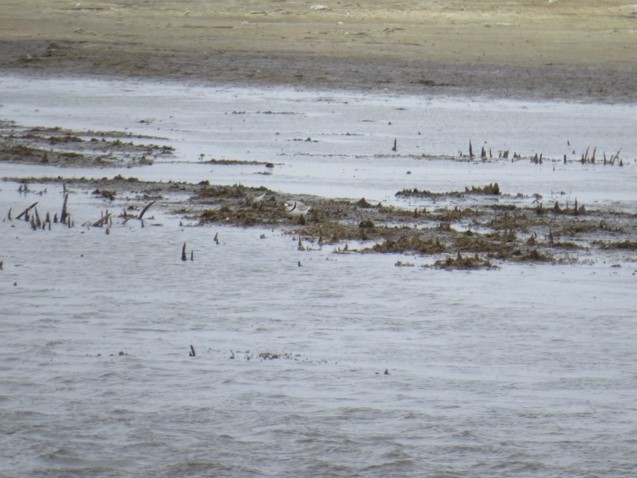
Piping Plovers were seen twice this year in IBAs. The first sighting was on April 30th at Whitewater Lake by IBA Caretaker Colin Blyth. There was just the one individual seen. When he went back to try and find it two days later it was gone. The other sighting of Piping Plovers was at Chalet Beach at the northwest end of Netley-Libau Marsh IBA. A pair of Plovers was seen over the May-long weekend. However, likely due to the high volume of people using the beach over the weekend the plovers left the area before any conservation work could happen for them.
Piping Plover spotted at Whitewater Lake in spring 2021. Photo by Colin Blyth.
Black-necked Stilt
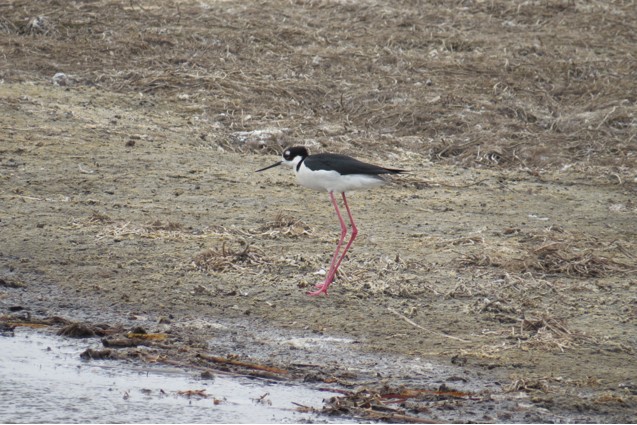
In the same trip where Colin spotted the Piping Plover at Whitewater Lake (April 30th) he also spotted a Black-necked Stilt – a pretty lucky birding trip! Just like the plover, however, the stilt was no where to be found upon a second birding trip.
Black-necked Stilt spotted at Whitewater Lake in spring 2021. Photo by Colin Blyth.
Sabine’s Gull
A Sabine’s Gull was spotted at Delta Marsh on September 20th, 2021 by Cal Cuthburt. He spotted it flying amongst a mixed flock of Forster’s Terns and Franklin’s Gulls. Great spot!
Photo of a Sabine’s Gull taken in 2020 at Delta Marsh. Photo by Cam Nikkel.
Lesser Black-backed Gull
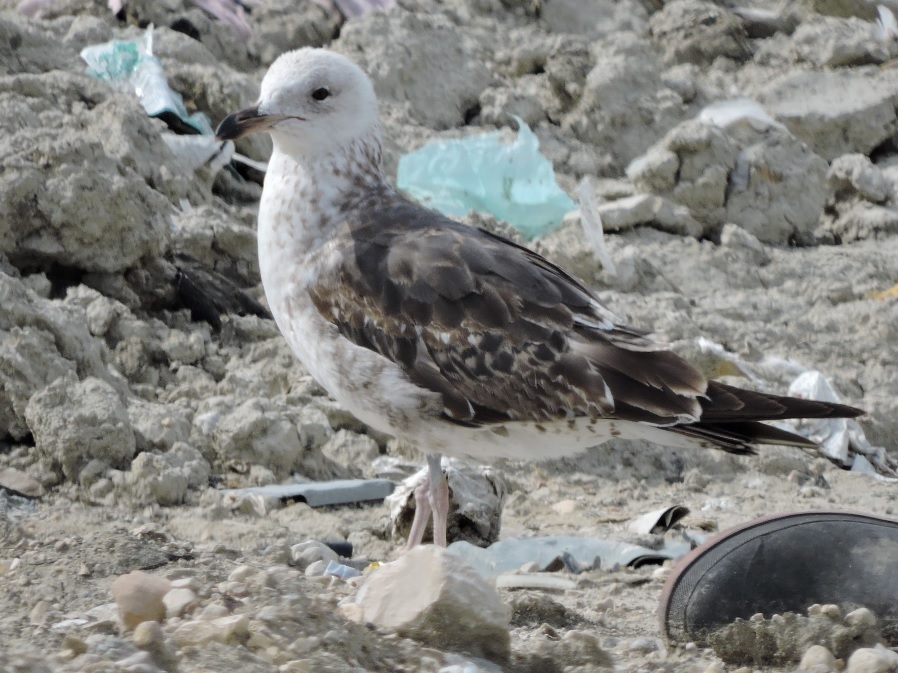
At least three individual Lesser Black-backed Gulls hung around Delta Marsh IBA this spring/ summer. They were largely seen in the community of Delta Beach and/or around the landfill on provincial road 227.
One of several Lesser Black-backed Gulls seen at Delta Marsh in 2021. This photo is taken of a first summer plumage gull at the landfill. Photo by Cal Cuthbert.
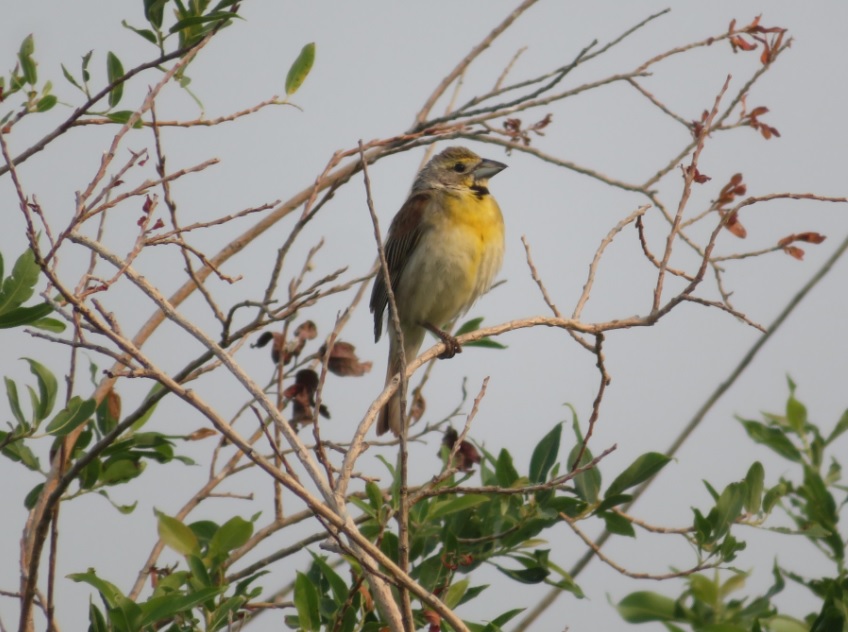
Dickcissels
Dickcissels were seen in several IBAs this summer. Including three individuals in the Southwestern Mixed Grass Prairie IBA (on July 1st and 9th), one in Whitewater Lake IBA on June 23rd, and between 1-5 Dickcissels were spotted at Oak Hammock Marsh from July 7th-9th.
A male Dickcissel photographed by Rudolf Koes at Oak Hammock Marsh in summer 2021.
Sandhill Cranes
On October 17th at Oak Lakes/ Plum Lakes IBA, IBA Caretaker Gillian Richards counted 12,000 Sandhill Cranes. The IBA threshold for Sandhill Cranes is 5,300 individuals. Like with the Pectoral Sandpiper, the IBA threshold represents 1% of the global and national population of Sandhill Cranes, so this was approximately 2% of the population seen in this observation.
Not quite the same huge number of cranes spotted by Gillian, but this photo of a flock of Sandhill Cranes taken at Oak Lake shows the habitat that the large flocks will sometimes gather in. The combination of water and wetland habitats with leftovers from cropped fields makes some attractive habitat for flocks of cranes. Photo by Amanda Shave.
Burrowing Owls
Wild Burrowing Owls kept up their streak in southwestern Manitoba this year! A pair of wild Burrowing Owls (i.e. not part of the captive breeding population) successfully nested and raised six young. The Manitoba Burrowing Owl Recovery Program (MBORP) documented the season. You can read more about it, and see photos, on MBORP’s Facebook page and Walter Potrebka’s blog post.
Hopefully our 2022 birding season is just as successful! The Manitoba IBA program wishes everyone good health, happiness and great birding in 2022!









 Manitoba Important Bird Areas Program