Riverton Sandy Bar Day Trip

IBA Program Assistant Marshall Birch tells a tale of boatin’ n’ birdin’.

3:30 in the morning is not a time I would usually choose to wake up, but if it means I get to ride around in a boat and stroll on a beach instead of being in the office for a day, I’m in. This was the agenda for July 7th, when Tim and myself would be heading to the Riverton Sandy Bar IBA to meet up with caretaker Joanne Smith for a tour around the IBA. This would be Tim’s first visit to the IBA, and while I had seen it last year, it was in quite different shape this summer. Water levels were lower, meaning quite a bit more of the area was above water. What could this mean for bird populations? We aimed to find out.

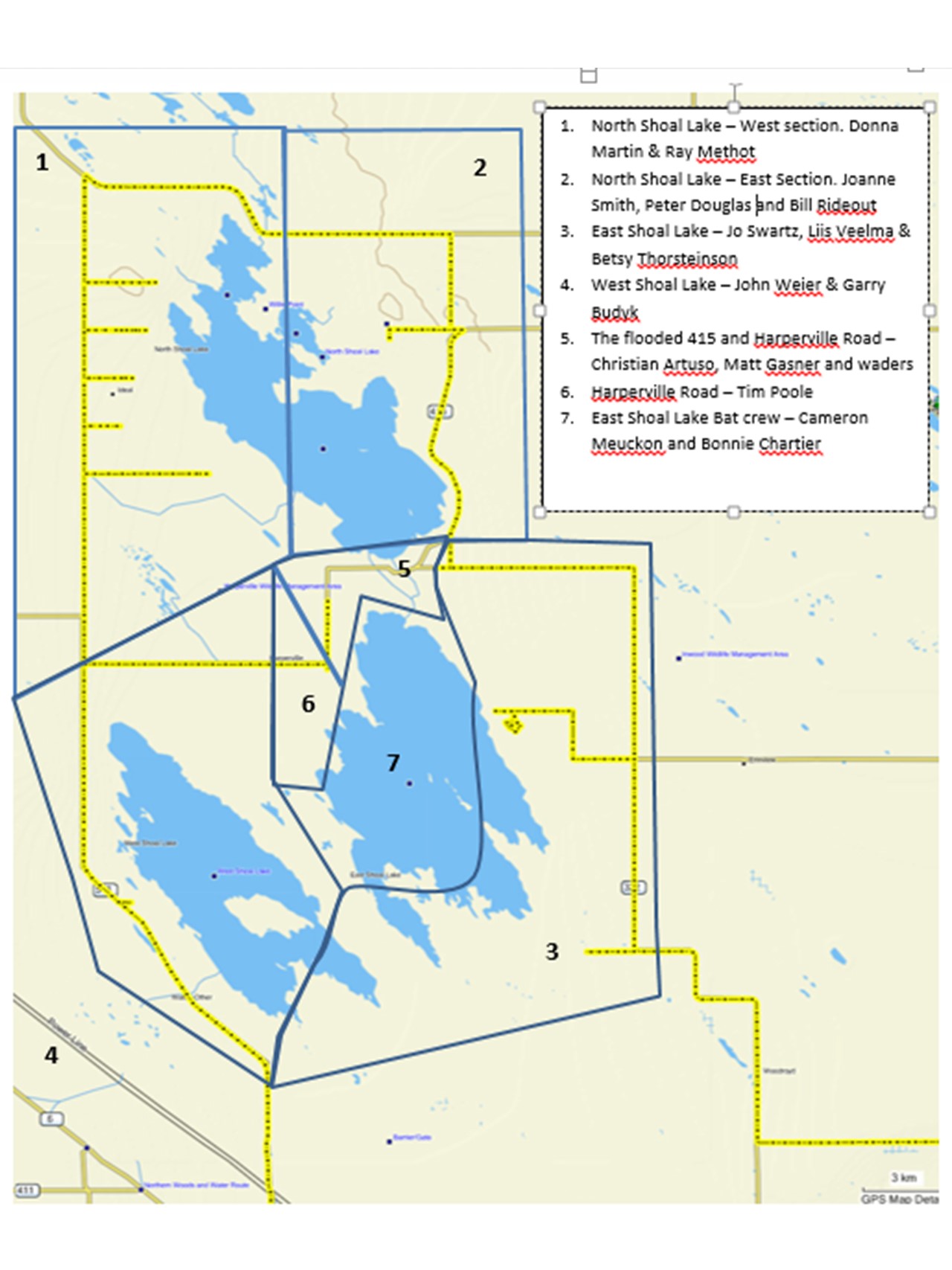
Riverton Sandy Bar IBA labelled on map.

Riverton Sandy Bar IBA labelled on map.

We had planned to meet Joanne and her husband Dave at the junction of Highways 8 and 329, just West of the town of Riverton, at 6:30, and we had both actually managed to get out of bed early enough to beat them there. This left us some time to explore the exciting boomtown that is Riverton. In particular, we were interested in catching a glimpse of their famed “Lundi Moose,” Riverton’s town statue (every town in Manitoba needs one, right?). Sure enough we found it, surrounded by a nice assortment of Robins and Warblers singing in the trees. “Lundi,” meaning “grove of trees” in Icelandic, was the original name of this settlement along the Icelandic River, which feeds into Lake Winnipeg. We headed back to the highway to find Joanne and Dave with boat in tow, and followed them back through Riverton to a dock on the Icelandic River. There had been some speculation that the water might be a bit too rough for boating, but things seemed pretty calm so we headed out. We followed the river out to Lake Winnipeg, or more specifically, to a bay on the West side of the lake that is surrounded on the North and East sides by Hecla/Grindstone Provincial Park. To the South is a long sandy bar jutting out from the main land, which has historically reached all the way to Hecla Island at times. It is this bar that gives the IBA its name, as it is here that much of the bird species are found.

A flock of pelicans. Photo by Joanne Smith.

A flock of pelicans. Photo by Joanne Smith.

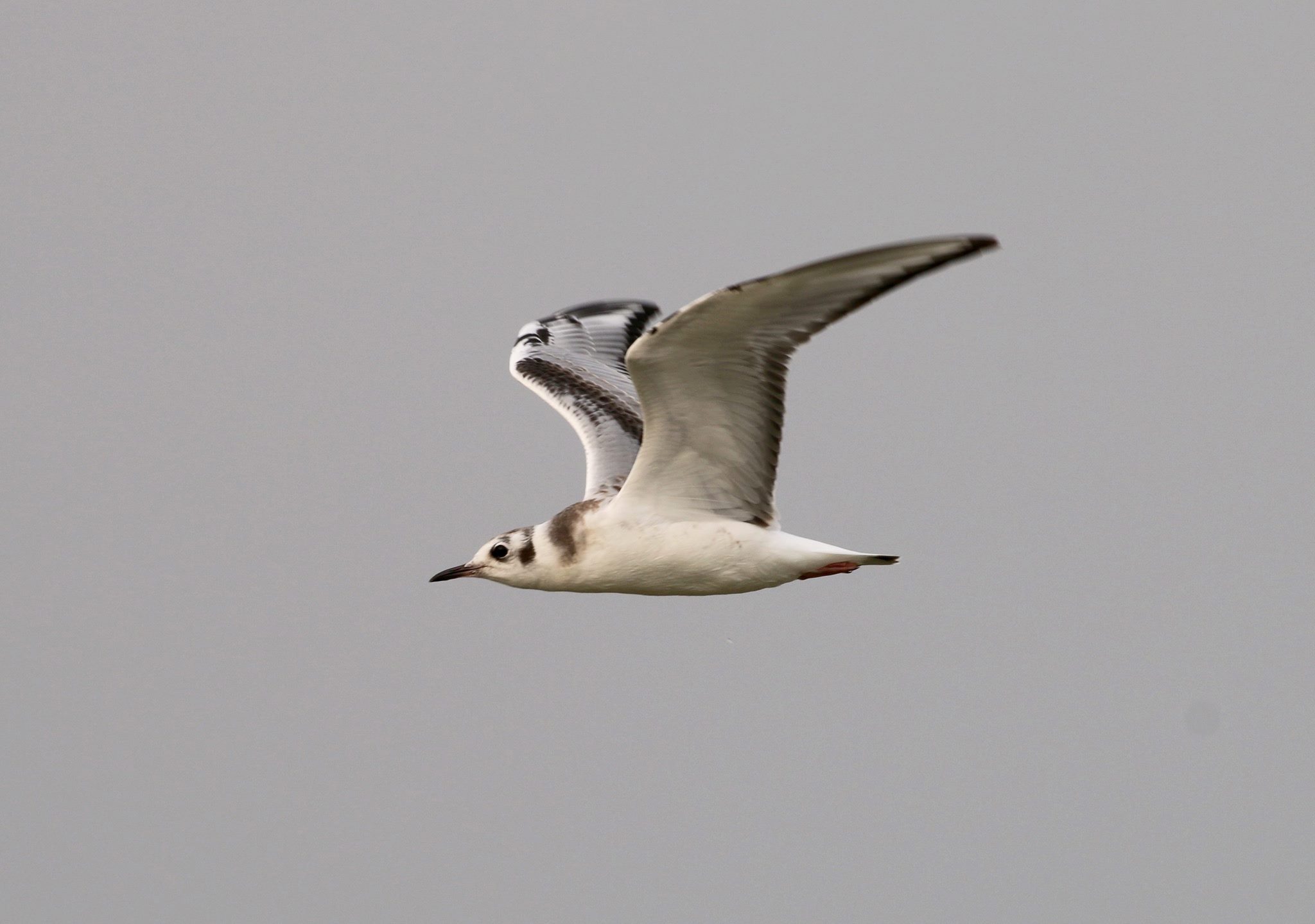
A sand bar also reaches out from the Southwestern point of Hecla Island towards the main land, with little islands poking out between the two bars, though the strip no longer spans all the way across. We headed straight across to the Hecla side first, as it is contained within the IBA, and because it was the smarter/safer boating route to take (I think?). Despite viewing from a distance in a somewhat rocky boat, we counted around 100 American White Pelicans, 150 Franklin’s Gulls, 40 Ring-billed Gulls, 35 Common Terns (including 3 fledgling young), 20 Herring Gulls, 2 Bonaparte’s Gulls, and about 25 other gulls that were likely Herring or Ring-billed, but which we were unable to identify for certain.

Myself, Dave, and Tim havin' a look around the sand bar. Photo by Joanne Smith.

Myself, Dave, and Tim havin’ a look around the sand bar. Photo by Joanne Smith.

Following this we headed West to the sand bar which was attached to the mainland. There were a few sandy islands near the tip of the bar itself, and it was here that we found the largest numbers of birds – over 200 Herring Gulls, 24 American White Pelicans, 13 Double-crested Cormorants, along with one Bonaparte’s and one Ring-billed Gull. We were able to pull the boat on shore and hop off to explore the bar by foot. Not wanting to disturb the larger flocks, we headed a ways down the bar before pulling in. There were less species here, but we were able to get a good look at the habitat and check for signs of nesting. Several nests were found, but they looked like they had been abandoned, quite possibly due to a loss of eggs following heavy storms the previous weekend. Aside from the previously mentioned birds, we identified two Common Goldeneyes, one Song Sparrow, one Red-winged Blackbird, three Common Grackles, and one Common Tern, which seemed agitated by us, suggesting a nest nearby. Also of note was a heavily picked-on beaver carcass. What’s a beaver doing on a sand bar anyways? We figured it was washed up, or maybe even carried there by an Eagle or Hawk.

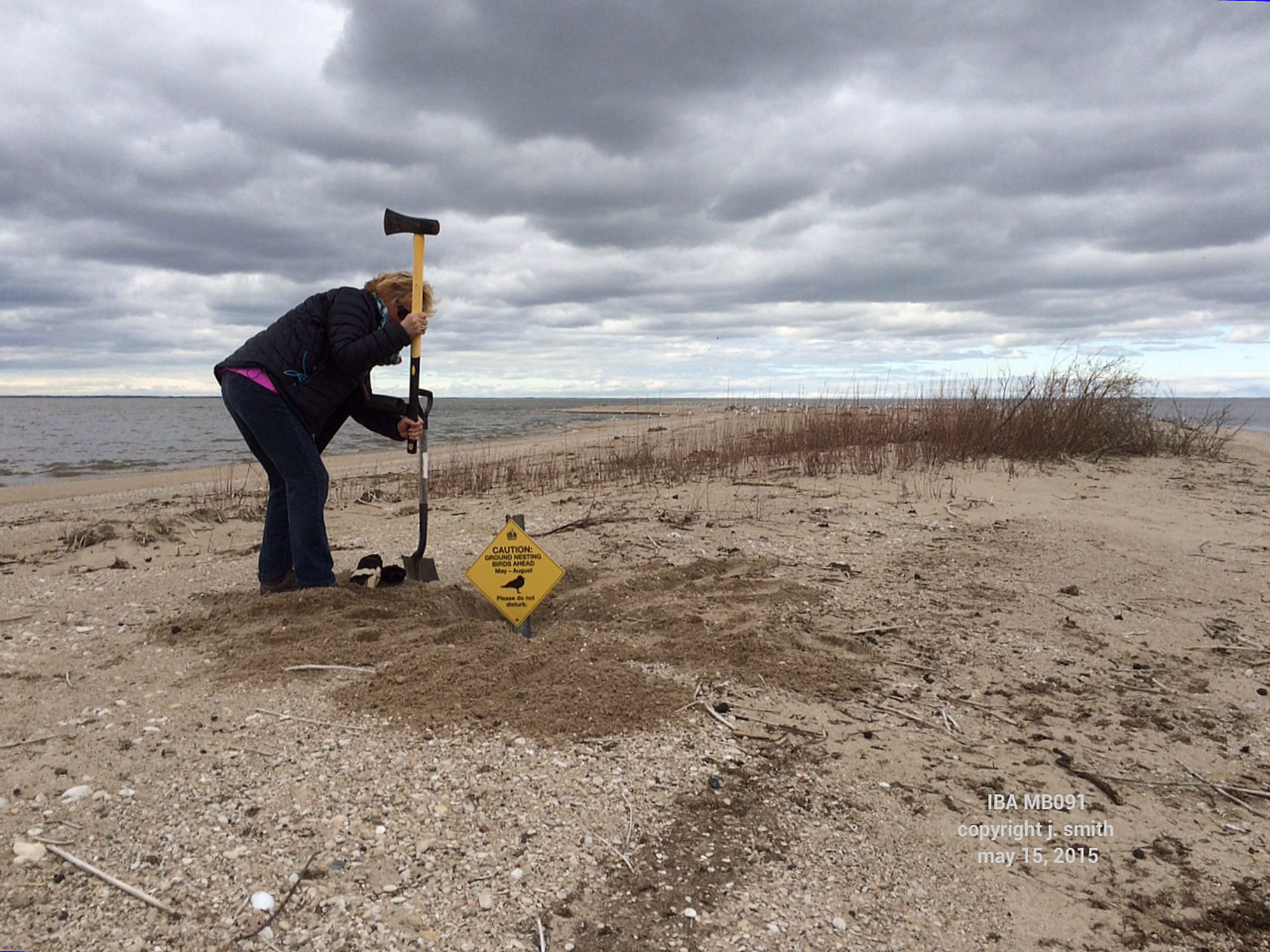
Manitoba IBA Program Steering Committee member, Bonnie Chartier,  hammering in a sign warning visitors of nesting birds.

Manitoba IBA Program Steering Committee member, Bonnie Chartier, hammering in a sign warning visitors of nesting birds. Photo by Joanne Smith.

We hopped back in the boat and trawled along the marshy coast for a while, hoping to see something of interest. For a moment we thought we saw a couple of shorebirds in flight, but they disappeared into the tall grasses before we could get a good view of them. Next we thought we spotted the head of an interesting species of waterfowl poking out of a clearing in the marsh. It looked goose-like but was oddly fully grey. Even stranger was that it seemed to be able to keep perfectly still, despite us moving in closer for inspection – an inspection that revealed it to be a grey, plastic goose decoy. We were left to question all we had known to be true, as Dave took us back to the Icelandic River. Before getting back to the dock we were able to spot an Orchard Oriole singing from a tree along the banks, as well as four Barn Swallows, which seemed to be living in a big old fishing boat that had been hauled on land. Boat Swallows?

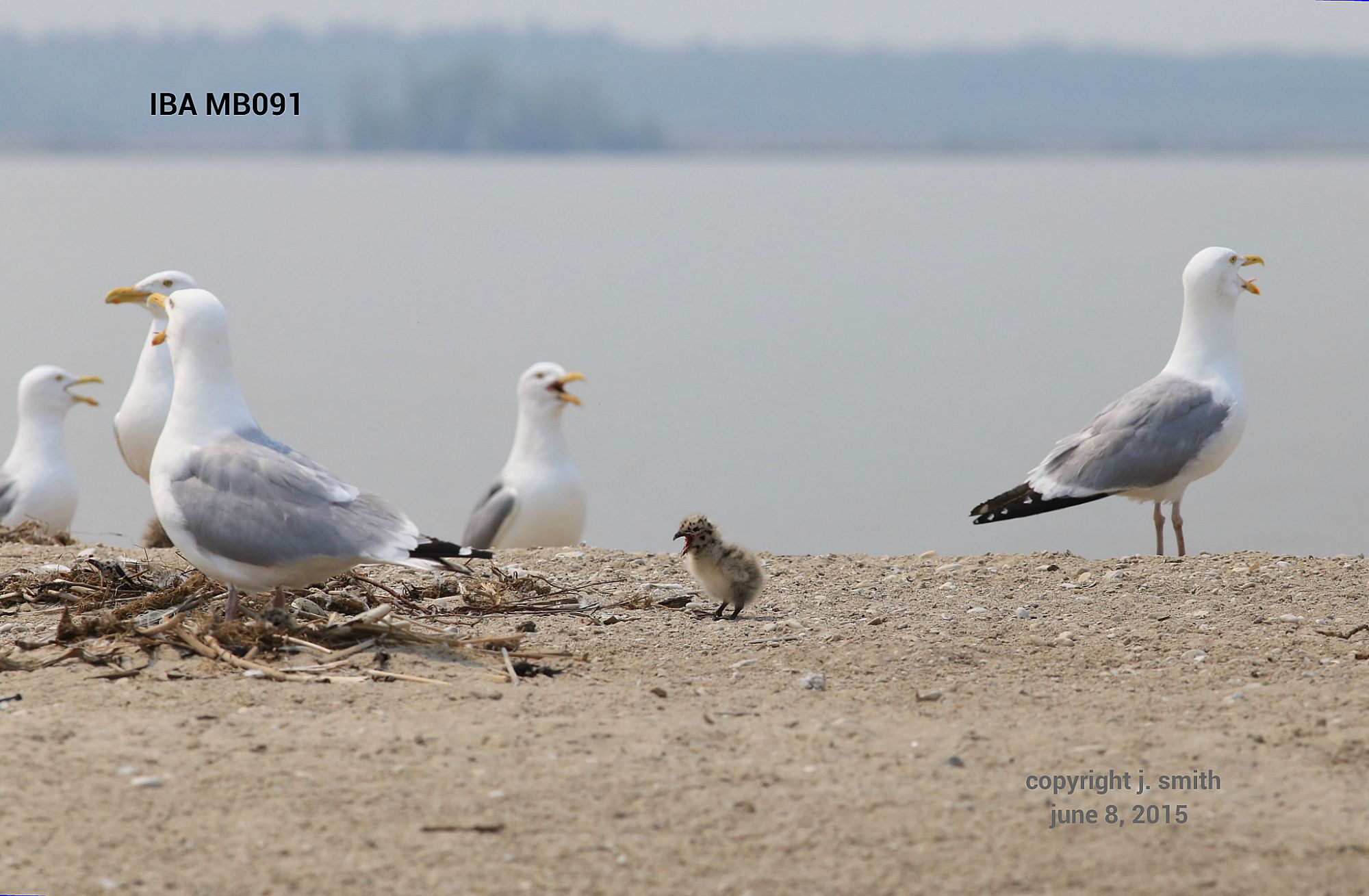
Herring Gulls with chick. Photo by Joanne Smith.

Herring Gulls with chick. Photo by Joanne Smith.

Joanne and Dave hitched up the boat and we headed East of town on the 329, to the main entrance to the IBA. We ignored a gazebo inhabited by Barn Swallows (we’d already seen some that day, and Joanne had been watching them throughout the year), left Dave to do some fishing, and took a stroll down the beach. Due to the lower water levels, the entire sand bar was walkable – last year much of it was underwater. We walked down to about where we had parked the boat on the bar earlier, seeing a nice assortment of birds on the way. We identified one of each of the following: adult and immature Bald Eagle, Sora, Double-crested Cormorant, Canada Goose, Purple Martin, and American Goldfinch; along with two Barn Swallows, two Cedar Waxwings, three Marsh Wrens, four Yellow Warblers, five Song Sparrows, and five Red-winged Blackbirds.

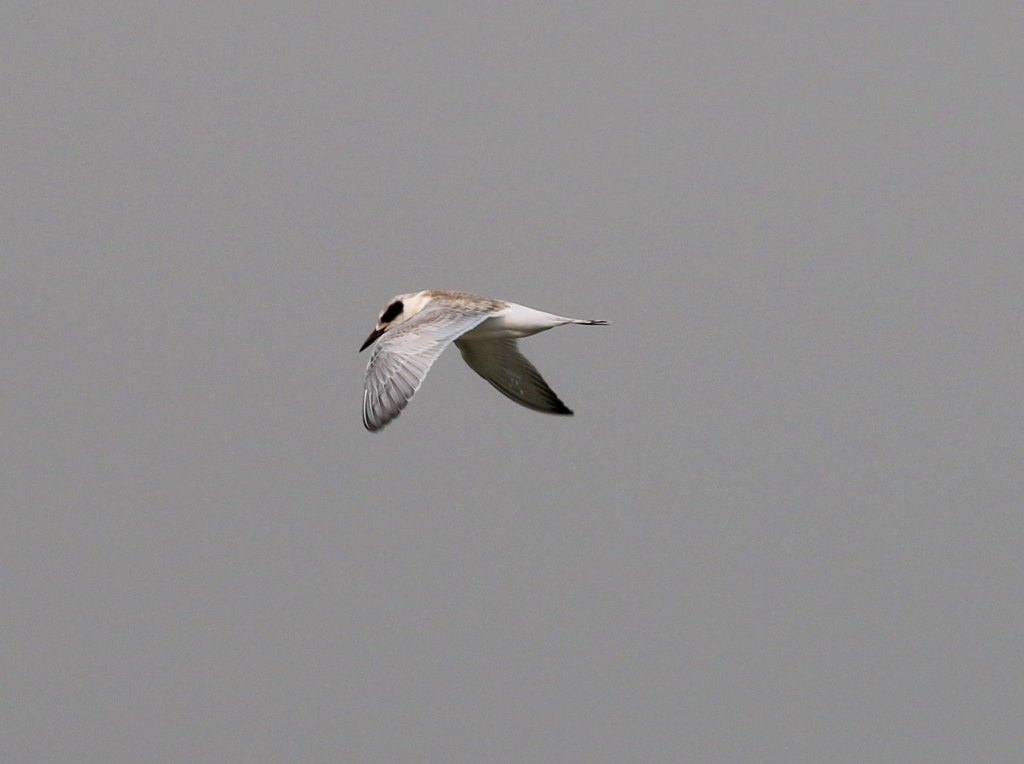
Common Terns. Photo by Joanne Smith.

Common Terns. Photo by Joanne Smith.

To our disappointment, we also saw plenty of ATV (all-terrain vehicle) tracks, along with scattered litter (mostly beer cans). The species that nest on this sand bar are in an unfortunate position – if water is high, people aren’t able to easily access and disturb the area, but their nests may be washed out; if water is low, their nests are generally safe from inundation, but they face the risk of being trampled by feet or crushed under vehicle tires. Whether disturbance of the sandbar in this manner reflects a lack of concern for nesting species, or simply a lack of awareness of them, it can and does do real harm to these birds. This harm is reflected in diminishing numbers of many species, which have been recorded over the past several decades – a notable example being the provincially and nationally endangered Piping Plover, which has not been seen at the Riverton Sandy Bar since 1991. While the sandy bar faces threats just as any habitat near to human settlement will, it remains a thriving home to many nesting and migrating birds, and is well worth a visit to anyone interested in seeing large flocks of waterbirds while enjoying a fine day on the beach.

Oak Hammock Marsh Day Trip

Program Assistant Marshall Birch recounts the his first trip of the summer with the Manitoba IBA Program.

We’d been in the office for a couple of weeks, and with our trip to the Southwestern Manitoba Mixed-Grass Prairie IBA a few weeks away, Tim decided we should get out for a day to visit a nearby IBA. Today we’d be visiting what is likely the province’s most well-known IBA, and a generally popular place for birding and nature outings of all kind – Oak Hammock Marsh. There was no specific goal for the day, but its always worthwhile to periodically stop in at some of the local IBAs to take a look around. In addition, I was getting a bit of a refresher on bird counting, as this would be my first official trip out with the IBA Program since last summer.

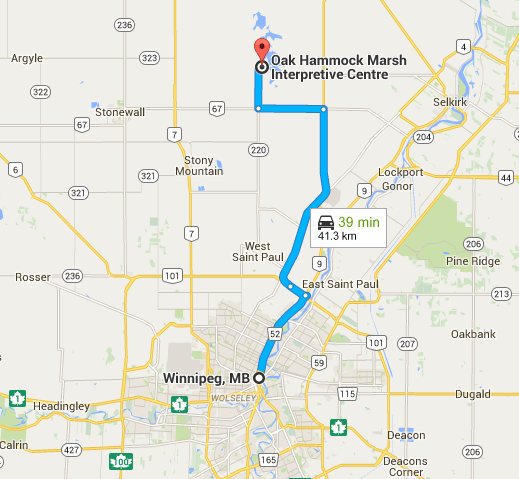
Oak Hammock Directions

Directions from Winnipeg to Oak Hammock Marsh

For those unfamiliar with the site: Oak Hammock Marsh lies about half an hour North of Winnipeg, between Highways 7 and 8, or about midway between Stonewall and Selkirk. The marsh has been restored and managed since the 1960’s through a partnership between the Federal and Provincial Governments and Ducks Unlimited Canada. Today it boasts an extensive system of walking paths, an interpretive centre, and a cafe, helping to make it a popular destination for conservationists, school field trips, birders, nature lovers, and anyone who wants to get out of the city for a day. The marsh is semi-artificial, having water levels in separate cells being controlled with pumps. These levels are cycled to mimic natural conditions, and oftentimes one part of the marsh will present an entirely different habitat from another. While the main paths near the parking lot and interpretive centre are the most popular, the site is far more extensive than the area most visitors see, including grassland habitat to the North.

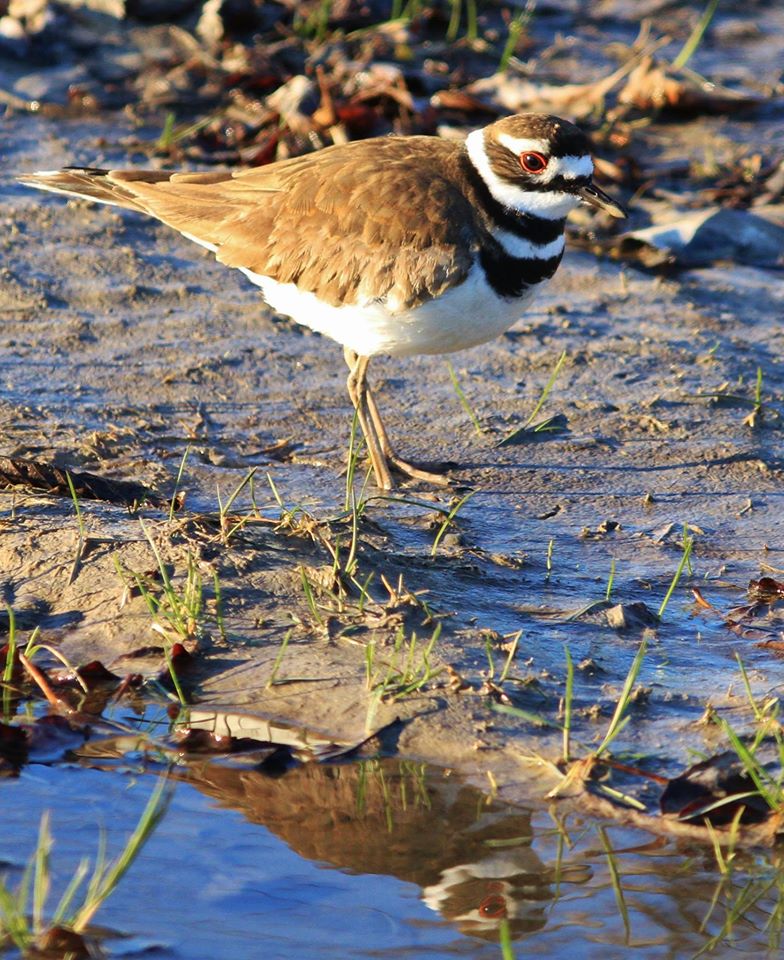
Killdeer. Photo by Donna Martin.

Killdeer. Photo by Donna Martin.

We headed out on a sunny morning on June 3rd, arriving before too many groups of school children took over the trails to run and shout and frighten away the birds. On pulling into the parking lot we were met with a pair of Yellow-headed Blackbirds, an Eastern Kingbird, and most interestingly, a couple of Killdeer protecting their nest. They seemed a little stressed out, but they may have brought that upon themselves by placing their nest directly on the path to the boardwalk, which is likely crossed hundreds of times a day by visitors and workers. It was symbolically protected by a couple sticks surrounding it and marking it out. I reminded myself not to step there on the way back.

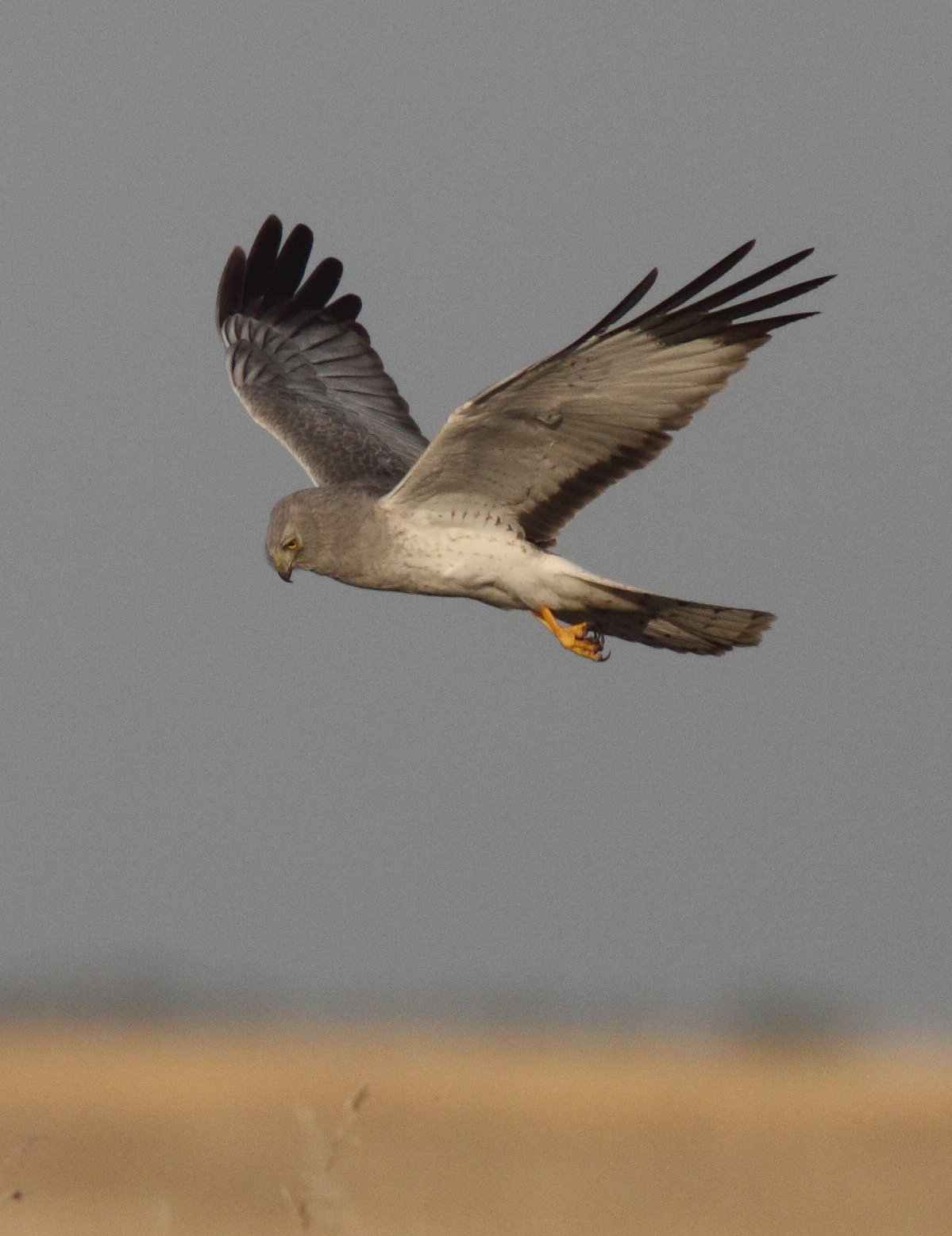
Northern Harrier cropped

Northern Harrier. Photo by Christian Artuso.

We started along the short boardwalk towards the first observation mound which leads to the Cattail Trail. Along the way were a good sampling of marshy passerines, either seen or heard: Sedge Wren, Savannah, Song, Swamp, and Clay-coloured Sparrows, Yellow Warbler, Common Yellowthroat, Brown-headed Cowbird, and Alder Flycatcher were all identified. Way on up we could see a good amount of American White Pelicans soaring about (we counted around fifty by the end of the day), along with a few Northern Harriers.

Wilson's Phalarope. Photo by Tim Poole.

Wilson’s Phalarope. Photo by Tim Poole.

We continued to the fist observation mound, known for the Swallows which nest in the gazebo (primarily Barn Swallows, but also a few Bank and Tree Swallows were seen), and its Ground Squirrel colony. From there we followed the Cattail Trail between Cell 1 and the Coot Cell, and further on between Cell 1 and Cell 2, all the way over to the East observation mound. On either side of us was fairly high water, which meant the majority of our sightings were of waterfowl: Mallards and Canada Geese galore, as well as good numbers of Gadwalls, Blue-winged Teals, Northern Shovelers, Redheads, American Coots, and Wilson’s Phalaropes, a few Lesser Scaups, Ruddy Ducks, Soras, Wood Ducks, and Ring-necked Ducks, one Pie-billed Grebe, and one Eared Grebe.

A couple Marbled Godwits. Photo by Christian Artuso.

A couple Marbled Godwits. Photo by Christian Artuso.

Further off in the distance of Cell 2, shallower water made good foraging territory for a fairly large group of shorebirds, primarily dominated by Stilt Sandpipers, with a few Marbled Godwits, Willets, and Baird’s Sandpipers scattered about. Other species of interest included Ring-billed Gulls, Black Terns, and of course, more Red-winged Blackbirds than you could shake a stick at. Finally, upon reaching the East observation mound, we spotted a Bobolink – the first I’d ever seen. This seemed like a good enough reason for me to go celebrate with lunch at the interpretive centre, so we headed back. On our way we spotted a large flock of shorebirds circling about. They were difficult to identify in flight from such a distance, and when they finally came down they were primarily out of our view. Tim suggested I go eat while he chased down the flock to see what we were dealing with. I headed back to find that the cafe was closed due to some issues with their water supply, so I got myself a vending machine orange juice and hunkered down to watch a couple of Barn Swallows take turns sipping from a water fountain and battling each other (it was pretty entertaining). Tim arrived with news that the flock seemed to be primarily White-rumped Sandpipers, though there was also a Dunlin in there, and since he wasn’t able to see all of them, the flock were simply recorded as “shorebirds” – around 600 of them.

Bobolink. Photo by Christian Artuso.

Bobolink. Photo by Christian Artuso.

Following this, we drove North along Highway 220 to see what else the site had to offer. Here I’d thought the Oak Hammock Marsh was all, well, marsh. Not so. A turn on the 220 takes you West then North along a stretch of tall-grass prairie which contrasts with the marshier areas that most visitors are familiar with. We stopped and got out periodically to survey and found seven more Bobolinks, as well as eleven Savannah Sparrows, a couple Clay-coloured Sparrows, a Western Meadowlark, a few Yellow-headed Blackbirds, an Eastern Kingbird, and a pile of Red-winged Blackbirds. We drove to the Northern limit of the IBA, to a bridge swarmed by its own assortment of Swallows – this time primarily Tree Swallows – before heading back in hopes of beating rush hour.

All in all a fine day was had – we got out of the office, did some bird counts, explored an area of the IBA that I hadn’t been familiar with, and somewhere in there I had a pretty tasty apple. I was prepared for Southwestern Manitoba now.

Southwestern Mixed-grass Prairie IBA Weekend – Day 4, Whitewater Lake IBA and a Field Sparrow

Tim Poole, Manitoba Important Bird Area Program Coordinator, describes the final day of the Southwestern Mixed-grass Prairie IBA weekend.

So thanks Marshall for the fantastic trip reports from days 1-3 of our southwestern odyssey. After our 2nd Chicken Chef of the trip, Garry, Bonnie, Ken and Marshall departed on long journeys. This left Christian and me in the company of Colin and Karla for the remainder of the day. At this point I managed to introduce the others to a favourite pastime of mine – driving aimlessly around small towns looking for something. We were searching for the Antler River Historical Society Museum having been given reports of Chimney Swifts entering the chimney. Originally I intended to go in the evening but by this point, tiredness had caught up with everyone and I decided just to take a look instead.

Returning to Tilston, it was time to take a rest. Downtime is also a great excuse to explore and I took a walk through the town. Tilston has an interesting history. Apparently it was once a bustling town with a station on the Canadian Pacific Railway. The town is now much smaller than at its peak, the school has been abandoned (http://www.mhs.mb.ca/docs/sites/tilstonschool.shtml) and derelict houses have been demolished. The large grain elevators and other farm buildings are still a sign that this is old arable country which contrasted a bit to the prairie pastures further east and south.

Wetlands surrounding Tilston are home to an abundance of birds and other wildlife. Photo by Tim Poole

Wetlands surrounding Tilston are home to an abundance of birds and other wildlife. Photo by Tim Poole

The storm clouds were gathering over Saskatchewan and North Dakota by mid-afternoon and heading our way. There remained a fair few birds around including Say’s Phoebe, Sora, Western Meadowlark, blackbirds and various waterfowl. Soon after the rumbles of thunder and flashes of lightning were over us and it was time to retire to a dry building.

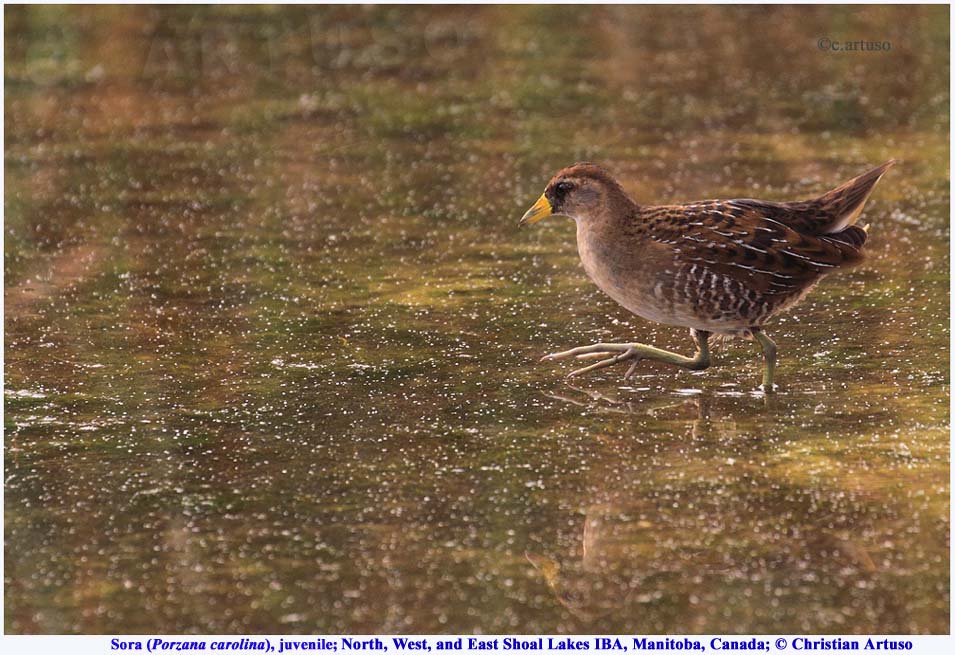
Sora, a common species of rail heard whinnying frequently on wetlands around Manitoba. Photo by Tim Poole

Sora, a common species of rail heard whinnying frequently on wetlands around Manitoba. Photo by Tim Poole

The combination of storm, tiredness and the fact we had seen pretty much everything there was to see meant that we avoided any further birdwatching that night. The following morning Christian and I set off early for a visit to Whitewater Lake IBA. This was my first visit to this site apart from during the depths of winter and I was excited by the prospect of seeing some of its rich birdlife and getting to find out a bit more about one of Manitoba’ best known IBA’s.

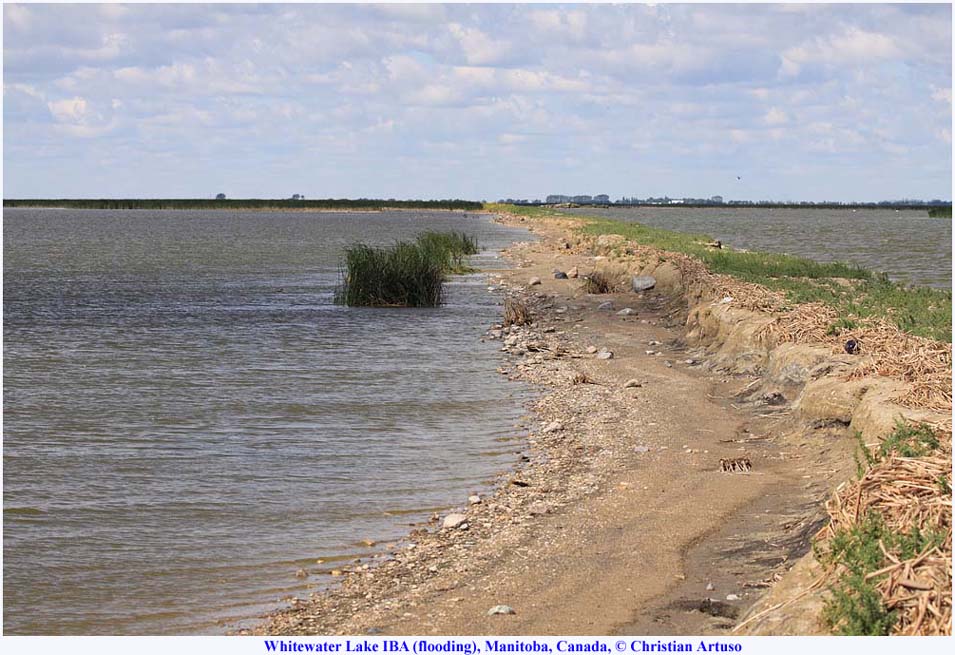
It had been mentioned by various people that Whitewater Lake had expanded somewhat since the original IBA boundary had been determined. It is well known that we are currently experiencing a period of high water levels across Manitoba, maybe not quite the resurgence of Lake Agassiz, but still, enough to significantly alter habitats over a wide landscape. The area outside the IBA is currently very important for birdlife, with large bodies of temporary water, small wetlands, muddy scrapes for shorebirds and temporary pools in the middle of agricultural fields in abundance. There were also a number of Ducks Unlimited signs highlighting Conservation Easements and Wetland Restoration Projects. It was pretty obvious that the last few years must have hit local farmers hard, with entire arable fields now under water or covered in cattails rather than arable crops. It’s amazing to see how quickly nature will re-establish itself when the opportunity presents itself.

Part of the western end of Whitewater Lake which would previously have been a combination of agricultural field and wetland. Photo by Tim Poole

Part of the western end of Whitewater Lake which would previously have been a combination of agricultural field and wetland. Photo by Tim Poole

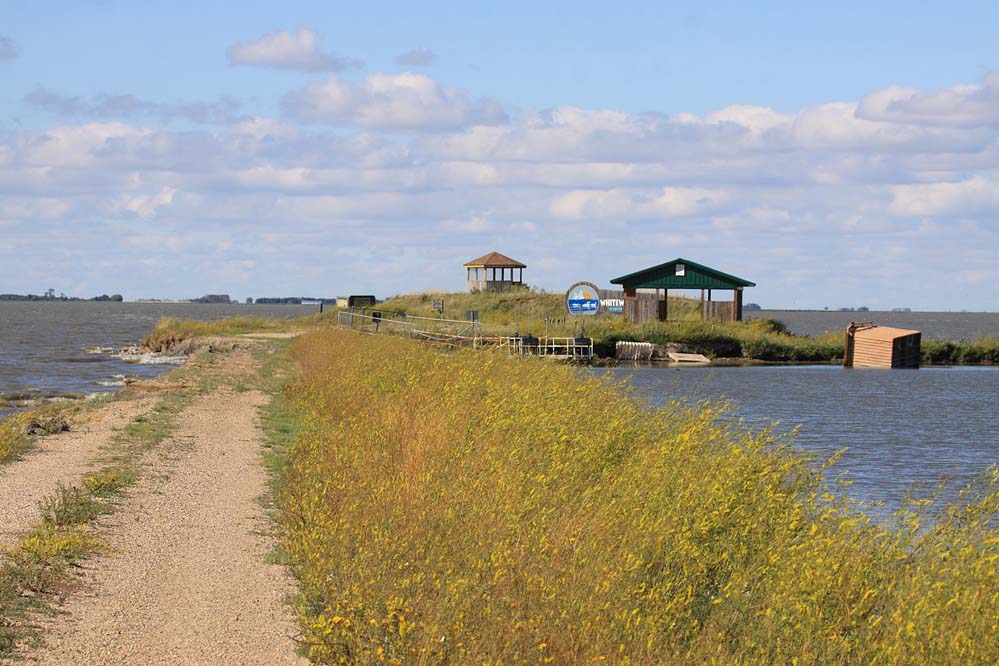
Unfortunately at this point I should say that I doubt we managed to get as far as entering the IBA itself. The main viewing mound to the south is now inaccessible and the roads were too tricky on the day due to the heavy overnight rainfall, to enter on either the north or west. Ironically from a birding point of view, this would not matter so much but from the point of view of our Caretakers Colin and Gillian, this must be frustrating. The area as I previously mentioned was teeming with birdlife. The highlights for me, still so new to Canada, were 2 lifers. The first being the White-faced Ibis. These colonial nesting birds are relative newcomers to Manitoba having only begun to appear as the water levels began increasing during the last 10 years. My 2nd lifer was a California Gull which is a rare breeder but more common visitor to Manitoba.

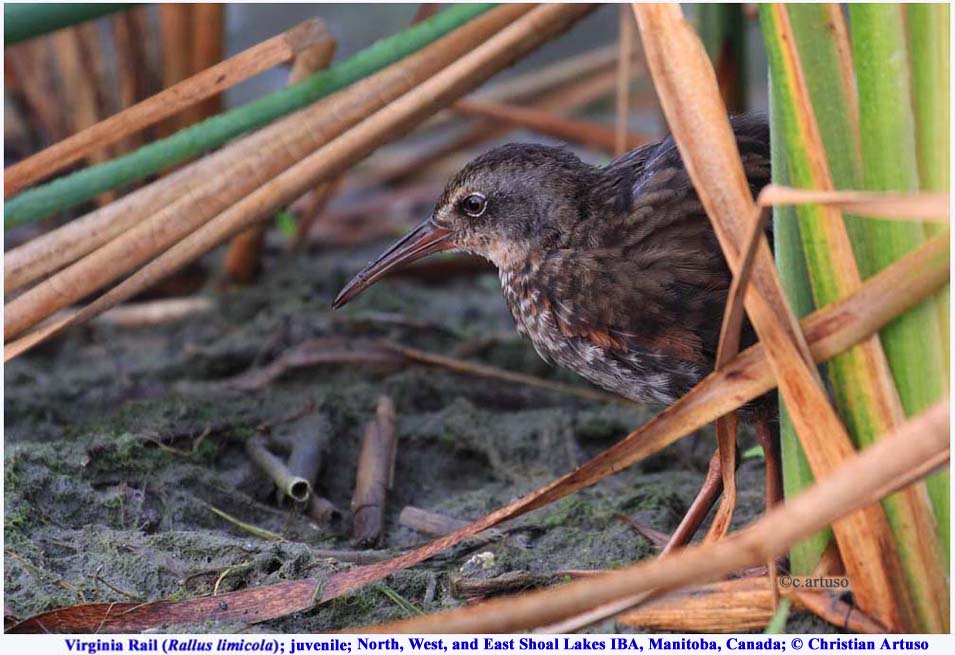
Not a California Gull or Ibis maybe but this Virginia Rail peeked his head through the grass at Whitewater Lake IBA. Photo by Tim Poole

Not a California Gull or Ibis maybe but this Virginia Rail peeked his head through the grass at Whitewater Lake IBA. Photo by Tim Poole

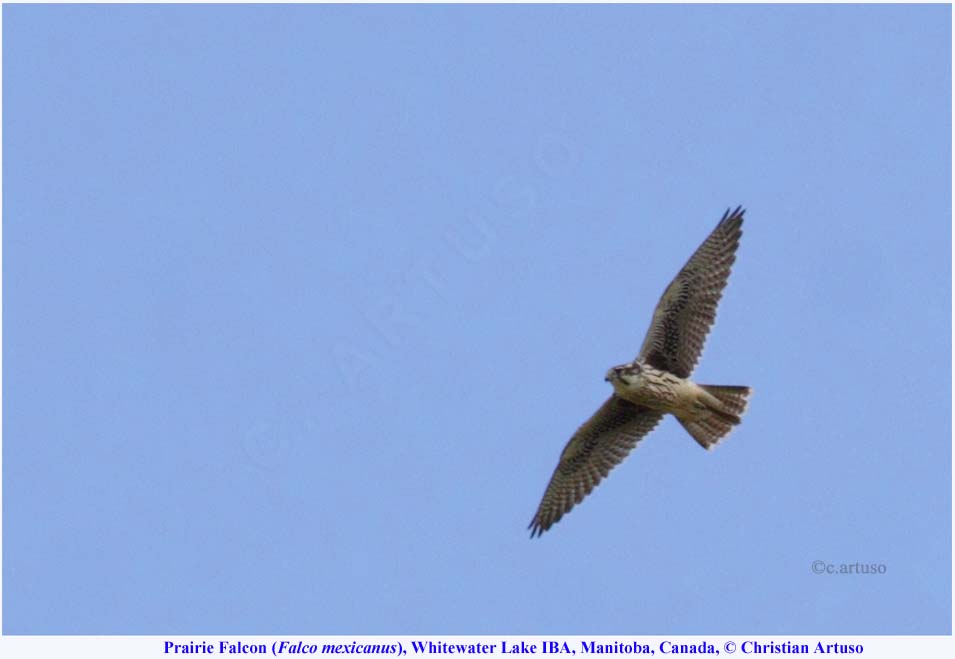
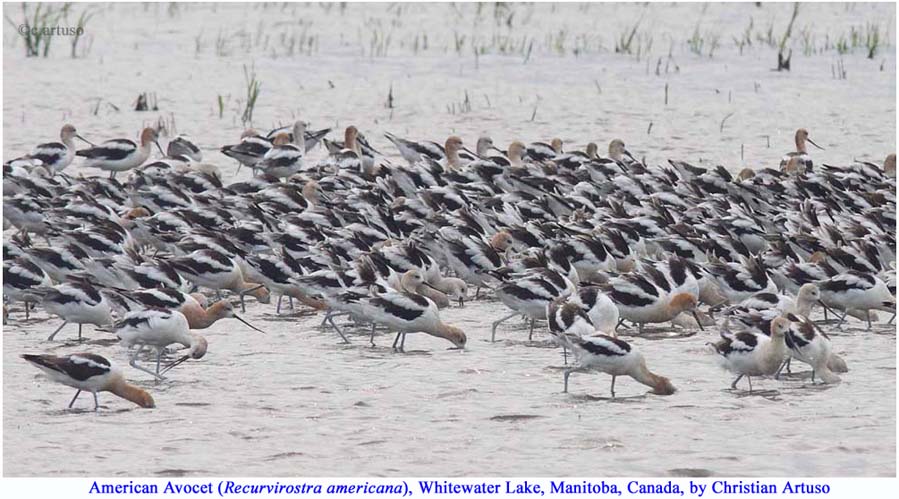
Other species of interest included cracking views of a Virginia Rail, a pair of Upland Sandpipers, Great White Egret, American Bittern, Great Blue Heron, Ring-necked Duck, Swainson’s Hawk, Sora, 4 species of grebe, Willet, Avocet, Marbled Godwit, Wilson’s Phalarope, Brown Thrasher. In total 71 species in just a short visit and a great introduction for me for this IBA. It did occur to both of us though that we might need to look at that IBA boundary again at some point.

IMG_0364

We left Whitewater and headed north towards Highway 1. We took a quick detour to look for the Field Sparrow north of Souris and secured my 3rd lifer of the day in the process. Field Sparrows are another vagrant which usually breed in the eastern USA as far north as southern areas of Minnesota and North Dakota. This particular bird has been in this spot the last couple of years so he obviously likes it! We also had great views of Lark Sparrow and a further 30 species. Back on the road and heading for home via the Sioux Valley to look for Yellow-breasted Chat, another Manitoba rarity. This time, for the first time all weekend we were unsuccessful. It was pretty windy and we wondered if on a better day we might have heard it. Since then Garry Budyk and John Weier managed to hear one in that spot, so obviously we missed out!

Field Sparrow in song. Photo copyright Christian Artuso (http://artusophotos.com/)

Field Sparrow in song. Photo copyright Christian Artuso (http://artusophotos.com/)

Then it really was heading home. At this point I wanted to thank everyone for making this weekend a success, landowners, volunteers, Christian (driver and birdwatcher extraordinaire), Bonnie, Garry, Colin, Karla, Ken, Marshall, Alex, Colin and Gillian. Carrying out single day IBA blitzes to census bird populations is likely to be an important tool to increase the area covered and accuracy of our IBA monitoring. Watch this space for more news on this front in the future.

Southwestern Mixed-grass Prairie IBA Weekend – Day 3, Blitzing for Endangered Species

Manitoba Important Bird Area Program Assistant, Marshall Birch gives us the lowdown on his final day of our Southwestern Mixed-grass Prairie IBA visit.

My final day in the Southwestern Manitoba Mixed-Grass IBA began by being woken at around two in the morning by what I think was some sort of Grouse cooing and clucking and gurgling about, seemingly half a foot from my head. After a couple more hours of sleep I was up to another granola bar breakfast, graciously provided by Tim, as I hadn’t thought to prepare morning sustenance. No time for coffee this morning, I was running a little late and had to pack my tent up before we headed out.

The early start and dim light makes birding by ear the priority. Photo by Tim Poole

The early start and dim light makes birding by ear the priority. Photo by Tim Poole

While the previous two days I had accompanied Bonnie on our drives around the IBA, this morning I would be riding with Christian. Today was the day we hoped to ensure the site’s designation as a globally significant IBA. While it already hit the targets for national IBA status, as of previous counts it had fallen short of targets for global status – this we hoped to remedy by identifying at least thirty Sprague’s Pipits (a globally vulnerable species), and at least ninety Chestnut-collared Longspurs (a globally near-threatened species). To do this we would have to survey every stretch of viable habitat in one of the provinces larges IBAs, which meant splitting the area up into five sections, and sending one team of two to each section. Christian and I were assigned the Southeastern corner – Section Five. Other teams involved were Colin Blyth and Gillian Richards in the Northeast, Bonnie and Colin in the northwest, Ken and Karla in the centre (and freestyling wherever Ken felt like going) and Garry and Tim in the southwest. We also had help from the Burrowing Owl Program team in a top secret location….

The wonderful Chestnut-collared Longspur, globally listed as Near-threatened by IUCN. The characterful display flight and bold colouring really does make this one of the birding highlights of the prairie. Photo copyright Christian Artuso (http://artusophotos.com/)

The wonderful Chestnut-collared Longspur, globally listed as Near-threatened by IUCN. The characterful display flight and bold colouring really does make this one of the birding highlights of the prairie. Photo copyright Christian Artuso (http://artusophotos.com/)

First step was getting me up to speed on using the GPS (global positioning system) unit – something I’d somehow avoided throughout my entire Geography degree. My job would primarily consist of using the GPS, as well as good old pen and paper, to record locations of birds Christian identifies. I managed to hear or sight many of what Christian caught, but it made more sense to have the much more experienced birder in charge of finding the birds. After twisting and turning all around our section for hours, periodically getting out to look, listen, and occasionally tromp through a pasture when we’d find a suitable one, we managed to find nine Sprague’s Pipits and thirty Chestnut-collared Longspurs – if everyone else did as well we’d easily meet our goal, so we were feeling good.

The tumbling flight song of the Sprague's Pipit is increasingly rare to hear. Seeing a Sprague's Pipit on the ground is even rarer. Photo copyright Christian Artuso (http://artusophotos.com/)

The tumbling flight song of the Sprague’s Pipit is increasingly rare to hear. Seeing a Sprague’s Pipit on the ground is even rarer. Photo copyright Christian Artuso (http://artusophotos.com/)

To make things a bit easier, we had a map of sites where the Pipits and Longspurs had recently been sighted, colour-coded so we’d know which property we were allowed on (a few sites) and which we weren’t (the majority of sites). We’d generally spend a bit more time surveying these sites, usually turning up one or two species of interest. While we were only recording sightings of endangered or threatened species – Pipits, Longspurs, Baird’s Sparrows (we saw four), and Bobolinks (we saw lots) – there were a good deal of other interesting species to find as well. A few Great Horned Owls were perched on an abandoned house, several Soras were seen peeking through the grass or speeding across the road, a Mountain Bluebird crossed the Souris River with us, a Ring-necked Pheasant was spotted on a landowner’s driveway, several Sharp-tailed Grouse were seen together (which may have suggested a lek nearby), as well as the regular host of waterfowl, Kingbirds, Blackbirds, Meadowlarks, Snipes, Upland Sandpiper, etc.

The ungainly and slightly cartoon-like looking Upland Sandpiper is a regular occurrence in southwestern Manitoba. Photo by Tim Poole

The ungainly and slightly cartoon-like looking Upland Sandpiper is a regular occurrence in southwestern Manitoba. Photo by Tim Poole

A good portion of our section was dominated by tilled farmland which is not suitable for any of the species we were looking for, so we were able to breeze through a decent amount of it. This was convenient, as we had agreed to meet the other teams at one o’clock back at the Chicken Chef in Melita, and had already spent most of our time around the marked areas with past sightings. Satisfied that we’d thoroughly investigated all likely sighting locations, we headed back to Melita to see how everyone else had done and have some lunch. There was good news to be had – between the five groups we had reached 227 Chestnut-collared Longspurs and over 30 Sprague’s Pipits. The exact number of Pipits is still being determined, as there may have been a few repeats, but we are confident that even considering these, we will have over 30 sightings.

Back to Melita to be welcomed by a smiling Banana with a Blue Jay on its shoulder. The Blue Jay's t-shirt has 'IBA' written on it! Photo (taken from a moving vehicle) by Tim Poole

Back to Melita to be welcomed by a smiling Banana with a Blue Jay on its shoulder. The Blue Jay’s t-shirt has ‘IBA’ written on it! Photo (taken from a moving vehicle) by Tim Poole

The weekend was declared a success! After a gourmet meal at Chicken Chef, we parted ways. Tim and Christian stayed an extra day to do some more surveying, while Bonnie and myself headed home. Bonnie had been given directions to locate a Field Sparrow just West of Souris, so we decided to try to find it. We were not successful, but it was only a short side-trip, so no big loss. On the ride home, I noticed how few birds there were. I had previously had the feeling that we were just seeing more species in the IBA because we were focused on finding them, and that if you were as tried you could identify similar numbers all over the province. This did not seem to be the case. IBAs are special places, not just because they provide habitat for a few threatened or endangered species, but because they are filled with interesting birds of all kinds. While many different species of birds can be found in all areas of the province, IBAs are key sites where especially large numbers can be seen over relatively small areas.

Southwestern Mixed-grass Prairie IBA Weekend – Day 2, Landowners, Derelict Buildings, Broken Bridges and Great Birds

Manitoba Important Bird Area Program Assistant, Marshall Birch gives us the lowdown on day 2 of our Southwestern Mixed-grass Prairie IBA visit.

Up at five on an overcast and slightly rainy morning, and after a granola bar breakfast and a cup of coffee we were off to get some early birding done before our scheduled meeting with local landowners at eight. We had heard tell of an area that was supposed to have nesting Loggerhead Shrikes, one of the threatened bird species of the area. On the way we ran into Garry Budyk, who was in the middle of doing his Breeding Bird Survey (to know more about Garry, see his photography website http://imagesofmanitoba.shawwebspace.ca/). He didn’t have much time to stop and chat, but he agreed to meet up with us later. A little further down the road we did indeed see a pair a Loggerhead Shrikes perched in a group of shrubs not far off the highway. This was a satisfying moment for myself, as last time I was in the area I thought every Eastern Kingbird (a common species in the area) could be a Loggerhead Shrike, only to be disappointed time and time again.

Loggerhead Shrike, photo copyright Christian Artuso http://artusophotos.com/

Loggerhead Shrike, photo copyright Christian Artuso http://artusophotos.com/

Already a good start. We continued on to scope out the nest of a Ferruginous Hawk, North America’s largest hawk, and also a threatened species in Canada. It took us a little bit to discover one perched low on the ground, not far from the nest, but in the mean time we had a chance to spot some other key species: Chestnut-collared Longspur, of which we saw eight all day; Le Conte’s, Grasshopper, and Savannah Sparrow; and several Bobolinks, which were beginning to feel about as rare and special as Red-winged Blackbirds. With grassland species such as these, it is not so easy to pick out where one might be in the expansive surrounding pastureland, so they are most often identified through song and sighted afterwards. Generally you won’t spot these species on a drive-by – it’s best to stop and listen for them, and often times when searching for one species you’ll find another. After we spotted the Ferruginous Hawk it shifted to a perch atop a hydro pole where we not only had a great glimpse and photo opportunities, but also noticed a second Ferruginous on the ground in a pasture near the pole. Things were going well, but it was about time for us to meet up with the landowners.

IMG_0199

Ferruginous Hawk. Photo by Tim Poole

We parked along a roadside I’ll never be able to find again or locate on a map, and scoped out the species in the area as we waited for the eight or so people who had braved the poor weather to join us. Various sparrows and warblers, Bobolinks, Western Meadowlarks, Brown-headed Cowbirds, Red-winged and Yellow-headed Blackbirds, Eastern and Western Kingbirds, and American Goldfinches were easy to see and hear along the roadside and adjacent pastures. As people arrived, we handed out species references sheets that I had prepared, introduced ourselves, and explained what we were doing. Though this section of the outing only involved a short walk down a country road, it proved to be a rich birding experience, with all the above-mentioned species identified, along with Baltimore and Orchard Orioles, Wilson’s Snipe, Killdeer, Willet, Lark Sparrow, and a small array of waterfowl. The highlight perhaps was a pair of juvenile Great Horned Owls, sitting low in a cluster of trees, attempting what may have been some of their first flights.

Following this we dined upon muffins and fruit punch before taking the group back to see the Ferruginous Hawk – successfully locating the hawk as well as the majority of other species we’d seen in the area earlier. Garry met up with us here and set up his scope so everyone could get a good view of the hawk as well as a Grasshopper and Clay-coloured Sparrow. By this time is was getting a bit past noon and we were all a bit tired and hungry for a good meal. The group of locals headed home and we were promised one more stop before heading towards fine dining at Melita’s elegant Chicken Chef. The area in question was a bridge-crossing at a wooded bend in the Antler River – we had been tipped off that there was a Lazuli Bunting living around there and decided to see if we could find it. It took a bit, but a little persistence paid off and we heard then saw the Lazuli Bunting, as well as a few flycatchers, and several American Goldfinches.

Lazuli Bunting_1231

Singing Lazuli Bunting taken on a previous visit. Photo by Christian Artuso (http://artusophotos.com/)

For most normal people this would be time to stop and refresh but not for us avid birders. Oh no! Tim had some gaps in his lifelist which needed filling before lunch so off we went to look for them. First up to the famous Section 29 and the shy and rare Baird’s Sparrow. These little guys charmed us all with their tuneful song. Chestnut-collared Longspurs aplenty greeted us as well in this area. Gainsborough Creek was next on the list, the place to pick up Willow Flycatchers, not the most inspiring bird on our journeys. Garry required his first for the year Rough-winged Swallow but unfortunately we missed out on this occasion. A Cuckoo was also heard, and as many a cuckoo clock has in the past, it signaled time for lunch, via a few more unsuccessful attempts to find Rough-winged Swallow, and then back to Tilston for a nap.

These birders will go anywhere to get that Rough-winged Swallow. Photo by Tim Poole

These birders will go anywhere to get that Rough-winged Swallow. Photo by Tim Poole

After an invigorating fifteen minute nap, I was back up with another cup of coffee and another granola bar. Ken De Smet, a biologist and avid birder with great familiarity with the area, had joined, and the powers that be were setting plans for the evening and the following morning. Our primary obligations for the day were out of the way, so we had some time to explore around, looking for birds to tick off on our year or life lists. At this point we had a good team of experts in the area too, so we were well-prepared to hunt down what we needed.

In two vehicles we were lead down roads, primarily of gravel or lesser quality, spotting birds on every side. Upland Sandpipers and Wilson’s Snipes were common sights on fence posts, with Northern Harriers, Red-tailed Hawks, and Swainson’s Hawks atop hydro poles or soaring through the sky. We stopped by a few abandoned buildings inhabited by Say’s Phoebes, Barn Swallows, and Great Horned Owls. Near a marshy wooded area, alongside fields populated primarily with oil derricks, we were able to locate Mountain and Eastern Bluebirds, as well as a Wild Turkey. Each wetland we passed had it’s own assortment of ducks, Coots, Avocets, Phalaropes, and Terns. Open fields offered sightings of Sharp-tailed Grouse, Blackbirds, Meadowlarks, Wrens, and Sparrows of all kinds, while wooded areas revealed Flickers, Sapsuckers, Woodpeckers, Warblers, Goldfinches, Flycatchers, and Orioles. We stopped by a few bridges teeming with Cliff and Tree Swallows, along with the occasional Bank or (finally) Rough-winged Swallow.

Young Great Horned Owl in a barn. Photo by Tim Poole

Young Great Horned Owl in a barn. Photo by Tim Poole

While virtually every second bird was a new and exciting experience for myself, the rest of the group had more refined tastes, and only the best would do, so it was off to find more of the real prizes: the Sprague’s Pipit, the Chestnut-collared Longspur, and the Baird’s Sparrow. We headed to a mostly overgrown path between two pastures which was the perfect habitat for all of these species-at-risk. I had been here the previous year with little success, though this time I was with a whole team of skilled professionals, and before long all three species had been identified, along with a Nelson’s Sparrow, a Red-tailed Hawk, a Northern Harrier, Bobolinks, Grasshopper and Clay-coloured Sparrows, what appeared to be a Short-eared Owl in the distance, and a couple of Mule Deer.

Pair of Mule Deers watch the sunset over southwestern Manitoba. Photo by Tim Poole

Couple of Mule Deer watch the sunset over southwestern Manitoba. Photo by Tim Poole

The mosquitoes got bad pretty quick, and having found all the birds we were aiming at, we headed back to Tilston. By the time we were done discussing our plans for the following morning it was around eleven, and we were set to get started by five, so it was bed time for us.

Southwestern Mixed-grass Prairie IBA Weekend – Day 1, Douglas Marsh IBA, Skunks and Atlas Awards

The weekend of the 19th -21st June, a group of staff and volunteers from the IBA Program dropped into southwestern Manitoba for a weekend committed to prairie birds. Manitoba Important Bird Area Program Assistant, Marshall Birch gives us the lowdown on day 1.

On Friday, June 19th, IBA Program Coordinator Tim Poole and myself headed Westward on a weekend trip to the Southwestern Manitoba Mixed-Grass Prairie IBA. We were joined by Christian Artuso and Bonnie Chartier, both memebers of the Manitoba IBA Program Steering Committee and skilled birders. This particular IBA has been the key focus for our work this summer. The area itself is unique as it is the only IBA in Manitoba that specifically focusses on grasslands, while most other IBAs focus on marshes, lakes, and other wetland areas. The Mixed-Grass Prairie also happens to be one of the province’s most threatened ecosystems, which means the species which rely on it may also be at risk.

We had a few key goals for the trip. We had arranged to meet with a group of local landowners on Saturday morning to take them on a bird-watching outing, to share information and raise awareness about local species and their potential threats. We also had a mission to accomplish which would ensure that the area be designated a globally important bird area. That was to take place Sunday – more about that later. For today our goal was simply to get there, find the house we’d be staying at, and maybe take a look around the area.

Tilston, Manitoba, our base for a couple of nights. Photo by Tim Poole

Tilston, Manitoba, our base for a couple of nights. Photo by Tim Poole

Since Christian and Bonnie were busy receiving their Partnership Award for the Manitoba Breeding Bird Atlas at the Manitoba Service Excellence Awards, we didn’t hit the road until around three PM, arriving at our weekend home in Tilston around seven. Manitoba Conservation had rented out a house in the town for Colin and Carla, who had been working in the area collecting data on plants, birds, toads, mussels, and other threatened species.

On the way we made a quick stop by Douglas Marsh, just South of the Number 1 Highway and East of Brandon, to see if we could call out the elusive Yellow Rail. We failed of course, given that it was early evening and the Yellow Rail is mostly active at night. A nice side-trip, anyhow, with a few Bobolinks and various waterfowl around to see and hearing the unmistakable calls of Manitoba’s other 2 species of rail, Virginia Rail and Sora.

Douglas Marsh IBA with not a Yellow Rail in sight! Photo by Tim Poole

Douglas Marsh IBA with not a Yellow Rail in sight! Photo by Tim Poole

Just before entering the IBA itself things really picked up. Christian had been given the heads-up on 2 spots for Baird’s Sparrow just east of Pipestone. We stopped to listen and rather than the expected Baird’s Sparrow we were serenaded from on high by 2 Sprague’s Pipits, an endangered species for which our trip was partially geared towards. We also saw fleeting glimpses of  a pair of Upland Sandpipers, a Grasshopper Sparrow, and a Clay-Coloured Sparrow. These, along with a variety of hawks, waterfowl, gulls, and songbirds, made for a good start to the trip, especially when capped off with a sighting of a pair of baby skunks.

Pair of baby skunks at the side of the road. Photo by Tim Poole

Pair of baby skunks at the side of the road. Photo by Tim Poole

Upon arrival, Tim and I opted to camp in the back yard to avoid cramping the somewhat minimal space available. I managed to stay dry despite rain throughout the weekend, and enjoyed a nightly concert of birdsong. We had a few hours before the sun set so we decided to take a look around the area. I would be hopeless attempting to map out where exactly we’d gone, but we had some information on where to find specific species, so we set out in search of them. No more Sprague’s Pipits were found, nor did we encounter any Chestnut-collared Longspurs, the other major endangered species we were looking for, though after some twists and turns we were able to find some abandoned houses which provided habitat for a couple of Say’s Phoebes and Barn Swallows. Both these species populations have been in steady decline in recent decades, most likely due to a loss of nesting areas (predominantly abandoned barns, houses, sheds, and other buildings), and due to changes in insect population brought on by the use of pesticides and general habitat change. The Say’s Phoebe in particular was one we had all been hoping to see.

Say's Phoebe on a fencepost near Tilston. Photo by Tim Poole

Say’s Phoebe on a fencepost near Tilston. Photo by Tim Poole

Other species seen on our journey before turning in that evening included: many Canada Geese, Gadwalls, Mallards, Blue-winged Teals, Shovelers, and Wilson’s Phalaropes; a few other waterfowl including American Wigeons, Green-winged Teals, Redheads, Lesser Scaups, Ruddy Ducks, Double-crested Cormorants, and American Coots; shorebird species including American Avocets, Killdeer, Willets, Lesser Yellowlegs, Marbled Godwits, and Wilson’s Snipes; a host of passerine species including Western Meadowlark, Western and Eastern Kingbird, Horned Lark, House and Sedge Wrens, American Robin, Cedar Waxwing, Common Yellowthroat, Yellow Warbler, Vesper Sparrow, Savannah Sparrow, Song Sparrow, Orchard Oriole, and American Goldfinch; as well as Red-tailed and Swainson’s Hawks, American Kestrel, Northern Harrier, Great Blue and Black-Crowned Night Herons, Northern Flicker, Black Tern, and hundreds of Franklin’s Gulls. Not a bad start! It was time to be sung to sleep by Great Horned Owls, Soras, and the occasional cat-fight down the street.

Maps and Monitoring Forms for Manitoba IBA’s

This is (hopefully) the final blogpost of the day, following a (relative) flurry of activity this afternoon. We are now beginning to upload monitoring forms and maps for each IBA onto this website. Monitoring forms for the more commonly visited and easier accessed IBA’s are now available on the website plus maps for 2 IBA’s (Oak Hammock Marsh and Proven Lake). More will be following. In the meantime if you would like a monitoring form, or more likely, a map for a site which is currently unavailable, please contact Tim Poole at iba@naturemanitoba.ca or (204) 943-9029.

The maps and monitoring forms are available under the ‘Volunteer’ tab or at https://importantbirdareasmb.ca/volunteer/maps-and-monitoring-forms/.

2014 Caretaker report

We are delighted to publish our 2014 Program Report on the website. This highlights the fantastic achievements of our Caretakers. I would say 3 Caretakers but since the start of 2015 we have gained a few more! Here is a snippet of some of the achievements from 2014 but to really get a feeling take a look at the report MB IBA 2014 Caretaker and Program report.


MB009 – NETLEY-LIBAU MARSH – Charlie McPherson

  • Spent almost 1000 hours time contributing to IBA-related activities
  • 40 hours spent building and installing bird boxes within the IBA.
  • Time spent advocating marsh improvement with the Lake Winnipeg Foundation.
  • Attended a workshop at the University of Winnipeg on Netley-Libau Marsh with the Lake Winnipeg Foundation. Delivered presentations at preliminary meeting at the Manitoba Hydro Building in Winnipeg and the 2nd and 3rd meetings
  • Delivered a presentation on the IBA Program at Oak Hammock Marsh.
  • Delivered a presentation to the Selkirk Birdwatchers Club.
  • Meeting with the Rural Municipality of St. Andrews to discuss mitigation for the marsh
  • 4 monitoring trips in 2014 includingGoldeye Lake and Folster’s Lake highlights included:
    • 100 Western Grebes, including young
    • Forster’s Tern colony
    • 4 pairs of Bald Eagle
    • 26 Red-necked grebe

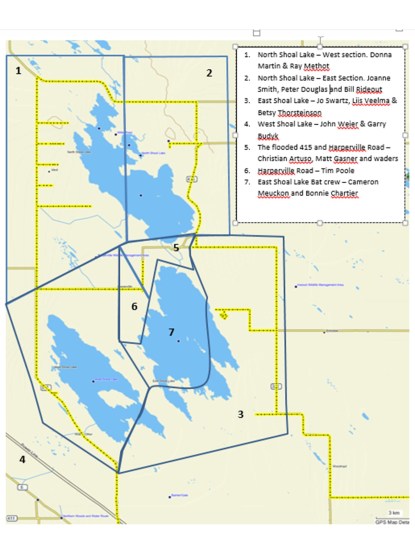
MB038 – NORTH, WEST AND EAST SHOAL LAKES, Donna Martin

  • 3 checklists submitted to eBird.
  • In September, Donna participated in World Shorebird Day, counting shorebirds and other species in the IBA.
  • Secured a donation from Rona of two pressure treated posts and hardware to erect 2 signs on the north side of the IBA.
  • Received a Lumber donation from Starr Building for North West and East Shoal Lake IBA worth approximately $400 to build some bird houses. Thanks to Sandra Cote for helping Donna Secure this donation.
  • Created a Facebook page for the North West and East Shoal Lake IBA linking to the Manitoba IBA website. See here.
  • Created a brochure for the IBA. Currently on hold.
  • Wrote a blogpost for the Manitoba IBA website on the Least Bittern in the North Shoal Lake (Least Bittern).
  • The main birding highlights included:
    • Herring and Ring-billed Gulls are thought to breed in the IBA but again, no colonies have been found yet.
    • Evidence of breeding Willet.
    • Red-necked Grebe bred successfully.
    • 2 adult Least Bitterns were observed in the summer. Following this, 5 juveniles were counted in the fall.
    • Black-crowned Night Heron are present, although there is currently no evidence of breeding.
    • American White Pelican present in low numbers throughout the summer and higher numbers in the fall. There may be a breeding colony.

MB091 – RIVERTON SANDY BAR, Joanne Smith

  • IBA signs and ‘Caution ground-nesting bird’ signs placed in parking area.
  • Placed information box with the IBA brochure in the parking area.
  • Delivered a presentation on the IBA alongside a presentation delivered by a representative of the East Interlake Conservation District. Audience of 25.
  • Set up Facebook page for Riverton Sandy Bar.
  • Regular visit to Riverton Sandy Bar, even in the depths of winter! Piping Plover have bred here in the past but not in 2014. Bird highlights included:
    • Red Knot, a trigger species on October 10.
    • 130 American White Pelican in early June.
    • 300 Ring-billed Gulls in late May.
    • 1500 Franklin’s Gulls in July
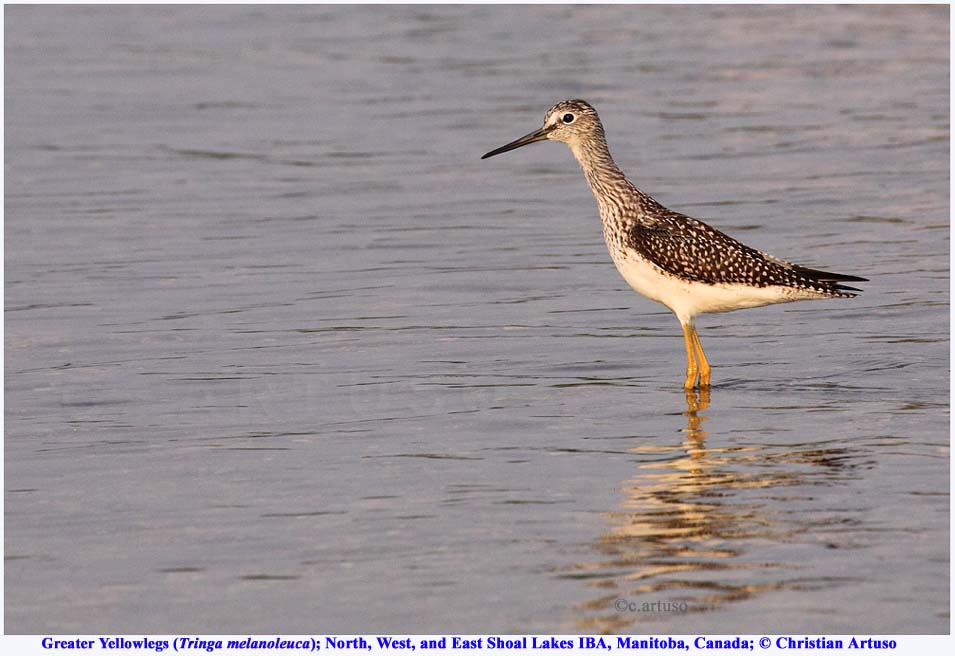
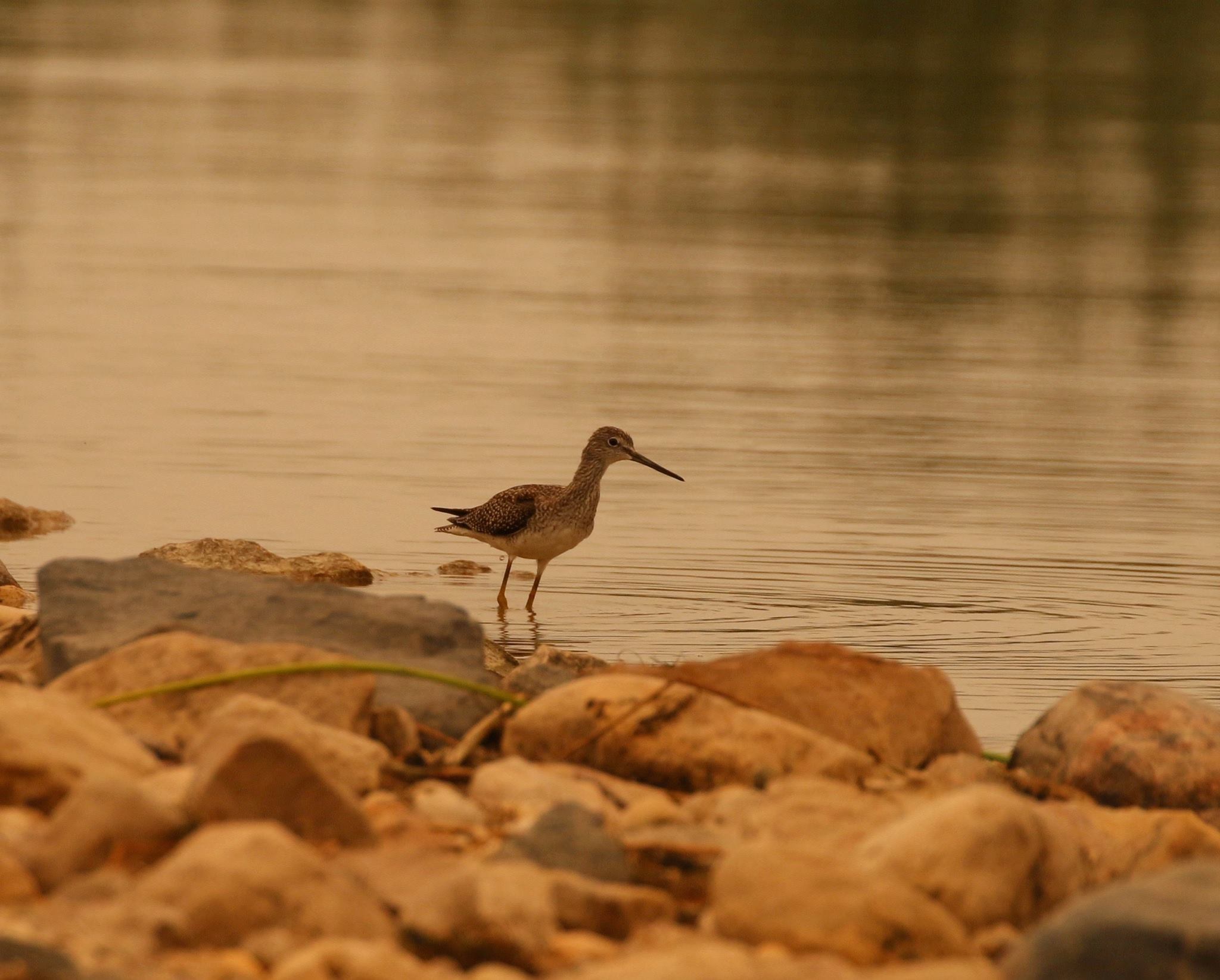
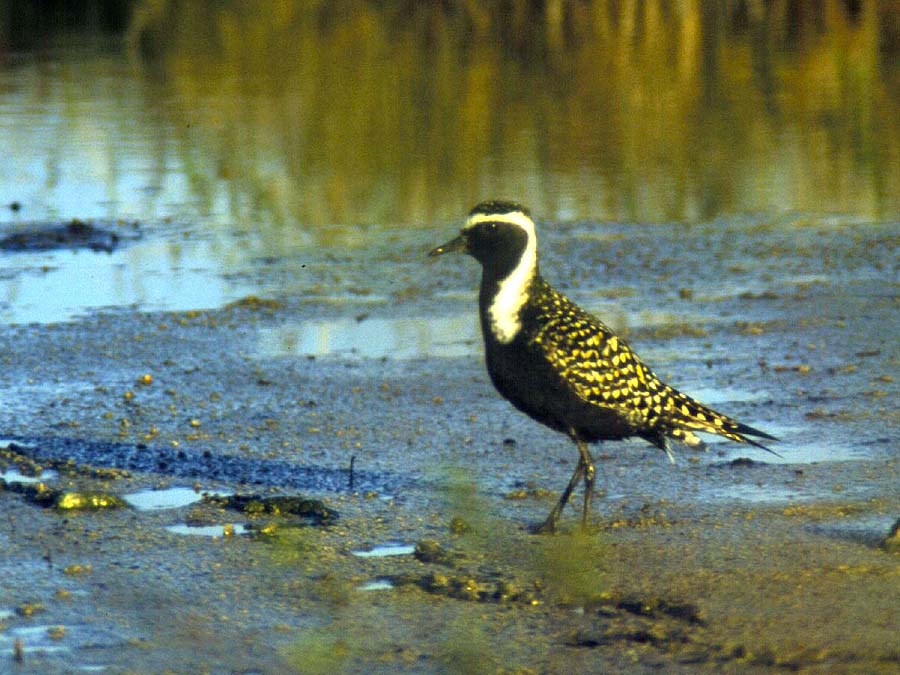
    • Shorebirds noted included Least Sandpiper, Killdeer, Marbled Godwit, Ruddy Turnstone, Black-bellied Plover, American Golden Plover, Sanderling, Dunlin, Hudsonian Godwit, Stilt Sandpiper, Semipalmated Sandpiper, Greater Yellowlegs, Pectoral Sandpiper and Baird’s Sandpiper.
    • 48 Western Grebe in early June.
    • 1000 Snow Goose and 1000 Canada Goose during fall migration

Richard Cain produced a logo for the Manitoba IBA Program. The image of the American White Pelican was selected to represent our program. Manitoba is the most important place in North America for this species, being home to one-third of the global breeding population.IBA Pelican Logo Hi Res

Netley-Libau Marsh (MB009): An Infestation of Bald Eagles

Charlie McPherson offers the latest tales of eagles, pelicans, leaky boats and cans of mushroom soup from Netley-Libau Marsh.

Adult Bald Eagle at Netley-Liba Marsh. Copyright Charlie McPherson

Adult Bald Eagle at Netley-Libau Marsh. Copyright Charlie McPherson

Can you believe it?  I backed the boat in at the end of Warner Road this morning and forgot to put the drain plug in again, and Marg wasn’t there this time to let Homer know before he got it off the trailer.

It would have been too hard to reload and drain it from the trailer,  what with the wind blowing the boat off it’s reloading line and Lake Winnipeg’s waves lifting it up and laying it on top of submerged rocks and all (how nice,) so I plugged the thing and started bailing  and dropped the partly filled bailing can into the water and it floated just right/upright off towards Gimli. So I chug-a-lug as much water as I can out of the 4 litre milk jug knowing I’ll be out on the lake for quite some time, then cut the bottom off the jug and used it as  bailing can.

Marg and I boated the beach ridge last week doing the Netley-Libau Marsh (NLM) spring counts for Canada’s Important Bird Area (IBA) Program and counted 39 Bald Eagles. That was according to the IBA Protocol (no double counts.)  I was wanting to redo that count today just to make sure that we hadn’t double counted any. We hadn’t. In fact, more had arrived.

Today’s tally:  Warner Rd. at the NW corner of the IBA to Patricia Beach at the NE corner of the IBA – 25 km., plus up the Main Channel (south) to the center of the marsh and down the East Channel (north) back to the lake – 12 km.

Bald Eagle: 86 (WHOA!)
Nest Occupied: 5
Adults: 24
Juveniles: 62

028  Juvenile Bald Eagle - Netly-Libau Marsh

Juvenile Bald Eagle at Netley-Libau Marsh. Copyright Charlie McPherson

Other Species not in last week’s spring migration count: 

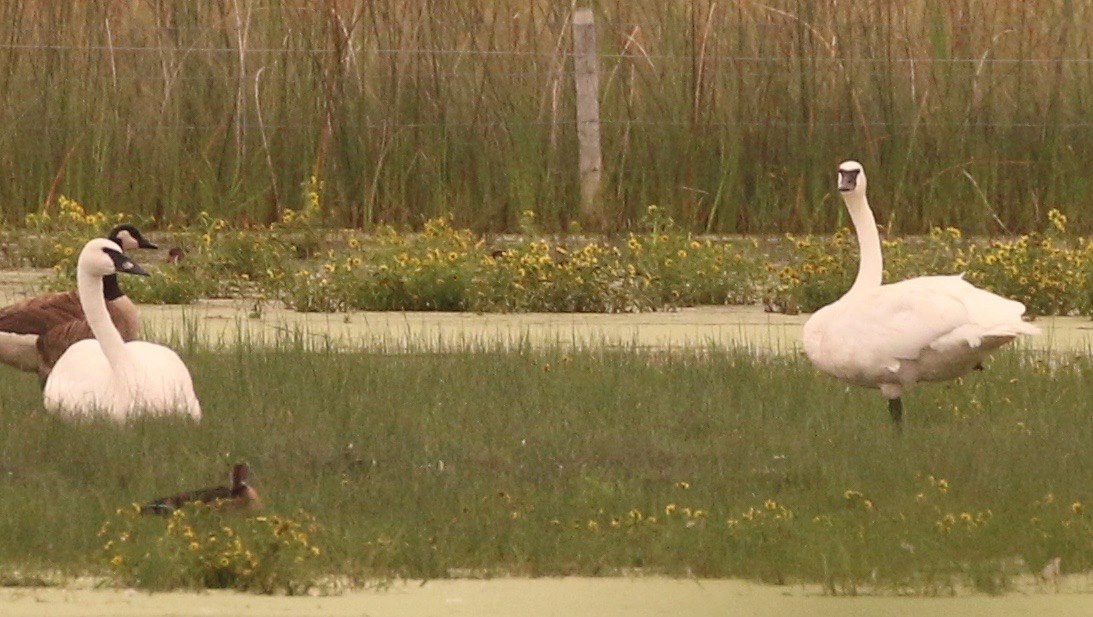
Tundra Swan: 20  

A 360 degree canvas of clean grey on clean grey was my treat for today, with additional  grey on grey added to yet even more grey on grey for fun.  Mixing beautiful greys and keeping them fresh and clean must be the Magic Painter’s specialty. I couldn’t find any errors. And then, to pull it all off,  a canvas within a canvas: a brilliant white sun poked it’s head out from amongst the grey to cast a sprawling, dazzling white net across the water to catch a flock of 20 White Pelicans struggling to break free in flight – the best white on white I’ve ever seen – crystals of backlit white water splashes marking their runways.   And off in the distance for an anchor, a pair of adult Bald Eagle sporting  all black coats and  sensitively painted all white diamonds for top hats and all white silk  for coat-tails.

GAWD! Was it ever cold on the lake: SE wind @ about 10+ and rising (not the best wind for lake travel – but doable,)  temps supposed to go to 10 C (ha, ha): long johns, lined pants, light down-lined coat under full cover skidoo suit; wool socks, leather wool-lined mitts (not gloves); cold left over white rice and black beans in a grey, mushroom soup gravy which, after bouncing around in the washtub waves and lifting the lid, I see a 5″x8″ of what I had seen all around me. Some crazy Lake Genie held back a few mushrooms for clean and fresh  grey clouds in a tint of grey soup for the  sky over a tone of grey soup for the lake,  spoonful’s of clean and fresh white rice for the net, tones of white rice mixed in just a touch of gravy for backlit pelicans and sparkles of white splashes for their runways; a few beans and a few grains of rice for the eagles, and a hodge/podge of mixed beans and gravy for the beach ridge. And to pull all that off, a few of the beans scattered about for the black backs of diving Western Grebes.

86 Bald Eagles! Who’d a thunk it! And that’s not counting the ones in the south end of the marsh. There’s always a few hanging around down there.

The Day of the Storm

Charlie McPherson, IBA Caretaker for Netley-Libau Marsh reminises about an especially memorable birding outing in 2012….

‘Tess, you’ll still need to dress warm and bring a change of clothing and rain gear and such.  You can run into soakers and sudden drops in temps. out there in June, even July’.

When I first met Ray he asked if I’d take him into the Netley-Libau Marsh (warm, sunny day – July 29, 2012) so I included him in on the counts I was having to do for Canada’s Important Bird Area program. We ended up counting birds all day from the Netley side of the marsh, along some of the beach ridge, and through the maze of marsh channels in the north end to the Libau side of the marsh when, around about 5:00 pm, I noticed a storm brewing in the west and I didn’t like the look of it – had never seen anything like it.   We were oh, I’d say, 20 km. from the truck. I advised him to pack up his birding gear and slap on his rain gear because we were going get it, and GET IT we did.

Like when my boys (8 and 10) asked me, years ago, to take them fishing one evening. I was too tired to go through the song and dance of loading and unloading the canoe and they were still too young to be of any help, really, especially paddling it, so I took them to the beach ridge and we fished from shore. Good thing too! The wind was very mild out of the south but it started shifting west, then turned into a violent tornado  with sweeping arms trying to suck us into it’s ugly, saliva dripping mouth.  We were getting sand blasted  and the boys started crying and  I hardly had but a few seconds to  grab them up and throw them into a stand of cane willows in a bit of swale along the lakeside of the ridge  and lay over top of them while THE MONSTER did its thing. It touched down at Gimli ten miles north but it sure would have blown us to ‘who knows where’ had we been in the canoe.

Because the wind was slight out of the south when we first started fishing, the water along the shoreline lay smooth and calm. By the time ‘The Thing’ did its thing in swinging west, gaining momentum,  then letting us have a taste of its rage from the north west, the quiet, smooth, ever so pleasant waters to fish in turned to a steamy, boiling pot of violence. As I lay there squint/peeking out over the lake, I wasn’t sure if the airborne gulls were fleeing for their lives or just dancing around in the wind having fun. I wasn’t having any, although I was kinda enthralled by the awesome wonder of it all. Had the torn touched down where we were, it might have torn us apart, or we might have been seen dancing around in the wind ourselves and, who knows, touching down in the middle of the lake or wherever it decided to spit us out.  Moral of the story? I had been eating lots of garlic with my bacon and eggs in the morning and storms like this don’t like garlic so eat lots of garlic and they’ll look for some other victims to gobble up – hee, hee!

Our back yard during the storm - July 29, 2012

Windswept cattails during the storm

So Ray and I  dawn our  full body rain gear and start beating’er back west across the marsh through it’s maize of channels to the Hughes Channel and it’s ‘tempt me into risking a 1/2 mile shot from it’s mouth, west to the Salamonia Channel via Lake Winnipeg’ for just an itsy, bitsie, teenie, weenie, speedy cruise along the shoreline where, once at the Sal.,  it’s an easy walk west along  the beach ridge to the truck,  the wind on the lake still being slight from the east so it’s, ‘not all that bad’ yet. But you can’t trust L. Wpg. when a storm is brewing. We weren’t but a couple hundred yards from the lake where Fran and I had those ’35 in one hour’ Sharp-shinned Hawks crashing our picnic the other day when a squall of wind turned dirty and came barreling up the channel stopping us dead in the water.  “Don’t you dare!” in other words. I pulled into the weeds along the bank and said, “The wind isn’t going to let us out Ray! We’ll have to go back south to the Passwa Cross Channel, then to the Sal., then to the beach ridge to the truck.” He said, “You know the marsh. It’s your call!”

So we boot it south up the Hughes, west and north  along the Passwa,  and attempt to cross Hughes Lake (a small,  shallow inner marsh lake) north west to the Sal. and the BIG STORM  hit with a soaking, violent vengeance.  We were no more than 100 ft. into  Hughes Lake and, had we had arms of elastic, we could have stretched’em  out  and touched the banks of  Sal. and pulled ourselves ashore –  we were that close –  about 1/2 km.! But we had to turn’er back. I sped the boat south up the Passwa about 100 yds. and rammed’er into a big, tall stand of cattails on the Passwa’s east bank.

There’s shelter in a big block of  cattails. I learned that as a young teen while hunting with my dad. I’d be standing  on the seat of the boat looking out over the tops of the cattails scanning the sky for ducks and getting about as cold as an improperly dressed  teen can get  in a  late October wind and would have to  tuck down out of the wind to warm up; doable, sorta, but  best if there a bit of  sun to beat  down on ya. Later in life, as a courtesy to my young, pre-teen/pre-hunting boys who’d be along for the ride whenever I went out for a hunt,  I built a box to keep them dry and off  the dog shaking/dog dripping wet floor of the boat and stuffed it with blankies and extra socks and mitts and scarves and hats and changes of clothes and hot soup and wagon wheels.  Wagon wheels:  1/2″ x 4″ round, chocolate coated wafery thingys –  kinda like a Kit Kat, only better (marsh mellowy, not crunchy,)  and  kinda common way back then.

As I’m yelling for Ray to pull’er up into the cattails, the wind sucks the  boat length/boat width piece of vapor barrier up and sends’er sailing 60 yards into the cattails.  I use that piece of tarp to keep wind spray from soaking me and my birding gear when tooling it into even slight winds over even tiny marsh lake/marsh channel wind driven waves, let alone even tiny L. Winnipeg wind driven waves. So I drop everything and disappear through the 8′ cattails –  torrential, drenching rain pounding me into the yucky, mucky marsh pavement –  chasing this piece of plastic hoping the wind won’t suck it up and send’er flying again.  Thankfully, I got it, and ran back and called for Ray to grab our comfy lawn/boat birding chairs. We tucked the plastic under the back legs and pulled the sheet over top of us and ‘iglood out the storm’ nice and safe down low below the howling wind and nice and safe from the deluge of rain. Did it ever come down, pelting at us for a good 35 minutes.

IBA Birders huddle under vapor barrier 'igloo' during Netly-Libau marsh's   vicious, July 2012 storm.

So we sat in comfort yacking above the roar of the rain getting to know each other. It was here in the Igloo that I told the Inuit about the Pembina Valley Hawk watches where he could get one of the Lifer’s he was lusting after – a Golden Eagle. Come spring the following year, we drove to the Valley and the first raptor on his first step out of the vehicle was a Golden Eagle. Imagine that! We had to bail the boat once the storm let up but floating around in the back was the water proof plastic tub where I keep my rusty camp stove and coffee pot,  and my  coffee making supplies. Best coffee I had in a long time, although it was iffy trying to coax the matches that I keep in my wallet to light. You want Boat Coffee Tess? Then it’s Boat Coffee you get. But don’t worry about the rust. The coffee grinds are the same color and you won’t even know it’s there. Ray brings his own, all new shiny camp gear now but I still do rustic.  It’s the Cancer in me. I’m a June baby. And besides, evening light on ‘rusty’ makes for better photos. So we survived, got out, got to the truck and found our way home. I picked a shivering wet Robin squab off the ridge when we got to the truck, cupped it in my hands and blew warm, yummy garlic breath on it for about half an hour to revive it, fed it dog food and hard boiled eggs (the right protein mix for birdies) for a couple of days, found a pair of adoptive parent Robins with kids the same age a couple of blocks over, got them to sign the paper work and let them take it from there. Robins will adopt. The highlight of our counting was when we came across the Forster’s Tern Colony between Pruden Bay and Parisian Lake (both inner marsh bodies of water) and scattered numbers of juvenile Franklin Gulls.

The western sky clears over Cochrane Lake after the July 2012 storm

The western sky clears over Cochrane Lake after the July 2012 storm

Moral of the story? Don’t go birding with Charlie on a day in July no matter how tempting the  yellowy, slanty/streaky evening light texturing and  warmly washing White Pelicans and coffee pots can be.  If you do fall into temptation, bring the extra clothing that he’s been tellin’ya to bring. And eat lots of garlic.  Ray skipped breakfast that day and look what happened to him. I didn’t, and the storm only ‘touched us.’ He can thank me for that, and for saving his life.

Our Journey