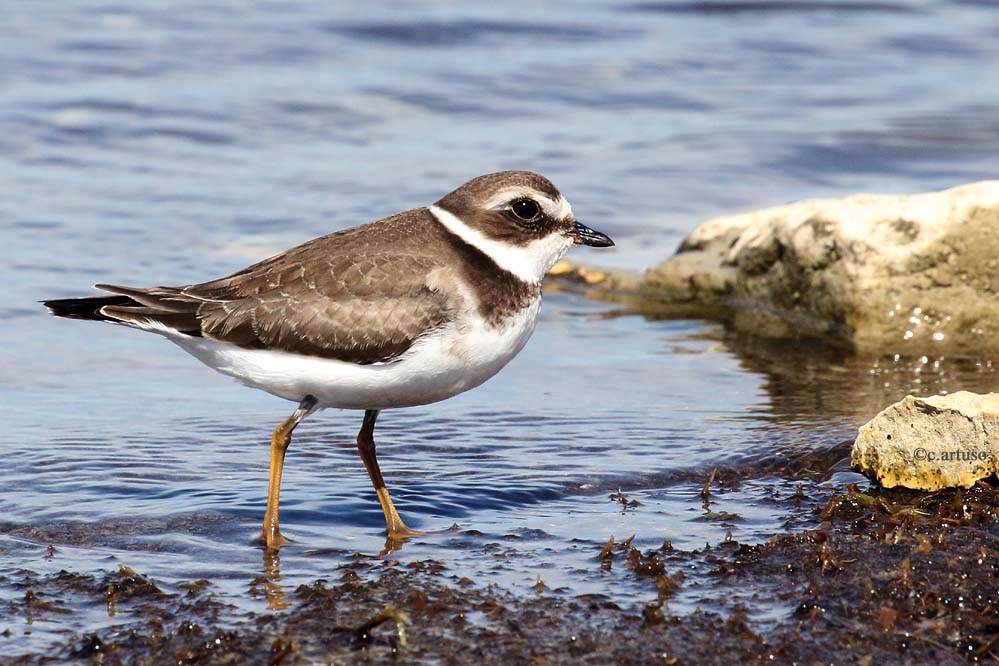
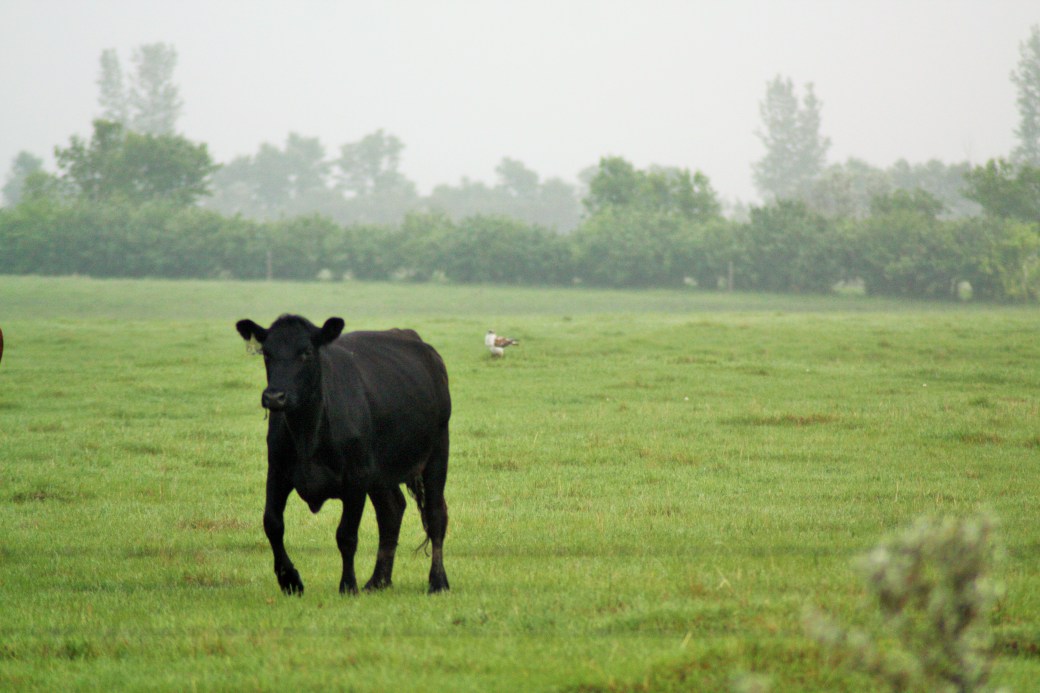
IBA Protocol for the eBird app

If you use the eBird app on a phone or tablet to enter your sightings, then this might be of interest to you. Gillian Richards contacted eBird last week as we have previously not been able to enter information under the IBA Canada Protocol even from a pc once the data has been submitted. Thankfully, this is no longer the case. You can do this by:

  1. Open you app and go into Settings
  2. Under the portal option, set your portal to be eBird Canada. Once you’ve done this, when you go to the Review & Submit page, you’ll see “IBA Canada” under the list of “other” protocols.

Hopefully this works but let us know if there are any issues

Some Things to Keep You Going Over Winter

Our volunteers are still getting out to IBAs before the final geese, warblers and shorebirds pack up for warm winter feeding in the south. There are a few opportunities over the coming months to get out and bird, to do some citizen science activities and enjoy hearing about birds (and IBAs). We will be keeping the Manitoba IBA Upcoming Events page on the website updated with anything of interest. For now though, here are a few activities to consider:

Nature Manitoba Birding Events

Saturday 5th November – Lake Winnipeg Beaches

Saturday 3rd November – Winnipeg River Outing

Sunday 18th December – Winnipeg Christmas Bird Count

Nature Manitoba Indoor Events

Nature Manitoba organises a number of terrific workshops and discovery evenings as part of its indoor program over the winter. There are a couple of IBA-related Discovery Evenings worth checking out:

Monday, February 6, 2017, Birds of the Hudson Bay Lowlands (incl. Seal River IBA) by Dr, Christian Artuso

Monday, February 27, 2017, Restoration of two large, coastal wetlands in Manitoba: Delta Marsh and Netley-Libau Marsh by Dr. Gordon Gainsborough

Christmas Bird Counts

Apart from the Winnipeg Christmas Bird Count, there are a number of events across Manitoba, including Oak Hammock Marsh, Portage La Prairie, Delta Marsh, Selkirk, Carman, Brandon, Glenboro, Riding Mountain and Inglis). You can find details about each one on the Bird Studies Canada map.

Nocturnal Owl Surveys

The Nocturnal Owl Surveys is in progress from mid-March to mid-April every year. The Manitoban version has been operating since 1991 thanks to Jim and Patsy Duncan.

The Final Blitz @ Oak Hammock Marsh – Geese Galore

Having awaken to the first flecks of snow on the ground today, it comes apparent that with the slow changing of the weather comes the demise of the monitoring season for Manitoba’s IBAs. And what a year it’s been! I will, in the next month or so, publish a review of some of the monitoring achievements for 2016 but for the moment we can satisfy ourselves with another review, that of the October 1st IBA blitz at Oak Hammock Marsh IBA.

We chose Oak Hammock Marsh for a few reasons: it is easily accessed and easily accessible compared to most IBAs; it is a protected site and therefore volunteers and hunters would not need to spend the day avoiding each other; there is already fall monitoring areas for counting waterfowl identified; and of course, it has a cafe.

This blitz would also turn out to be a wee bit different as we would be monitoring birds in two separate stages. The first would be an early morning count of the waterfowl departing the marsh, and the second, a count of all birds identified on walks across different parts of the Oak Hammock trails.

gwte-ohmic-jb

Ducks such as this Green-winged Teal, were going to be a large part of our day. Photo copyright Josie Brendle

As is often the way with bird surveys, we began in the gloom of early morning, meeting in the parking lot at the Interpretive Centre. Resident Naturalist, IBA Steering Committee member and bander extraordinaire, Paula Grieef was on hand to greet and to brief each group on the mornings work. Each group would start by taking up position on a vantage point at the corner of the marsh, a surefire way to get the chills. What’s more, some of us had day-old coffee in our flask, a horrendously poor decision in the circumstances.

Group A with regular IBA monitors Jo Swartz and Betsy Thorsteinson, along with first timers Emily Hanuschuk and Neil Balchan, were to be positioned in the northeast corner and walked the trail towards the middle mound (see here for trail guide). This area had the largest movement of Canada Geese, 10967 in total, plus 1222 Mallards. They also counted an impressive 19 Northern Harriers.

PBGR OHMIC JB.jpg

A single Pied-billed Grebe was observed in the Central Mound area. This speies was pretty scarce on the day of the blitz. Photo copyright Josie Brendle

Group B were directed to the northwest corner and headed to the northern mound. Bonnie Chartier, Emily McIntosh and John Hays. They counted fewer Canada Geese but 2256 Mallard and 42 Snow Goose, the largest count of the day for this species. Speaking with older hands, it is apparent that the number of Snow Goose in eastern Manitoba is far lower than in previous years. In 2008, 153,800 Snow and Ross’s Geese were counted  on October 8th at the marsh, so 42 was really pretty low! They also had a Sharp-shinned Hawk, American Golden Plover (congratulations to Emily on the lifer) and 31 Rusty Blackbirds.

grye-ohmic-jb

Emily, Bonnie and John did count 7 Greater Yellowlegs. Photo copyright Josie Brendle


Group C consisted of Christian Artuso, Sabina Mastrolonardo and Amélie Roberto-Charron. This group headed to the southeast corner close to the Oak Bluff. They managed to see the most species from their goose observation spot, including Wilson’s Snipe, Greater Yellowlegs, 7 Hooded Merganser and a globally significant, 574 Rusty Blackbird. This made up to 28 species. On their walk, they did find a Great Egret along the perimeter dike.

greg-ohmic-jb

Great Egrets were still present in low numbers. Photo copyright Josie Brendle

The final group consisted of Tim Poole, Cameron McNabb and Josie Brendle. This group were responsible for counting the southwest corner. An (exhausting) 6772 Canada Geese later, they took to the trails near the centre and were fortunate to see a number of shorebirds including American Avocet, Black-bellied Plover, Least Sandpiper, Pectoral Sandpiper, Long-billed Dowitcher and Wilson’s Snipe.

BBPL AMAV OHMIC JB.jpg

Black-bellied PLover on the front pond with American Avocet. Photo copyright Josie Brendle

We also managed to add the banding data form the Delta Bird Observatory (on tour at Oak Hammock) and could include Lincoln’s Sparrow, Harris’s Sparrow, Winter Wren, American Tree Sparrow and Fox Sparrow to the total.

1-IMG_3479.JPG

Myrtle Warbler, one of the songbirds present at Oak Hammock and one of the laer migrating warblers. Photo copyright Josie Brendle

Lunch followed with great views of a Peregrine from the Oak Hammock cafe and a feeding Great Egret.

I also forgot to ention a very late season Osprey at the marsh seen by two groups.

One final thing, it is often noticeable when attending birding events and Christmas Bird Counts that there are a lack of younger people participating in citizen science programs. So it was great to see five University of Manitoba students and 16 year old Emily involved in the blitz. Hopefully will get involved in the future….

Here are the final scores:

Snow Goose 105
Cackling Goose 50
Canada Goose 27898
Cackling/Canada Goose 5
Wood Duck 24
Gadwall 44
American Wigeon 3
Mallard 6120
Blue-winged Teal 269
Northern Shoveler 40
Northern Pintail 28
Green-winged Teal (American) 63
Canvasback 14
Redhead 20
Greater Scaup 5
Lesser Scaup 3
Common Goldeneye 1
Bufflehead 1
Ruddy Duck 5
Hooded Merganser 8
duck sp. 448
Pied-billed Grebe 4
Western Grebe 2
Double-crested Cormorant 2
American White Pelican 27
American Bittern 3
Great Blue Heron 3
Great Egret 3
Black-crowned Night Heron 1
Osprey 1
Northern Harrier 38
Sharp-shinned Hawk 1
Bald Eagle 2
Red-tailed Hawk 4
American Coot (Red-shielded) 23
Sandhill Crane 1
American Avocet 2
Black-bellied Plover 5
American Golden-Plover 21
Least Sandpiper 5
Pectoral Sandpiper 10
Long-billed Dowitcher 19
Wilson’s Snipe 54
Greater Yellowlegs 37
Lesser Yellowlegs 3
large shorebird sp. 13
Bonaparte’s Gull 2
Ring-billed Gull 93
Rock Pigeon (Feral Pigeon) 2
Mourning Dove 1
Downy Woodpecker 1
Northern Flicker 2
Merlin 1
Peregrine Falcon 1
Blue Jay 2
Black-billed Magpie 5
American Crow 6
Common Raven 11
Black-capped Chickadee 3
Winter Wren 1
Marsh Wren 14
Ruby-crowned Kinglet 4
American Robin 4
European Starling 63
American Pipit 76
Lapland Longspur 485
Tennessee Warbler 1
Common Yellowthroat 7
Palm Warbler 3
Yellow-rumped Warbler (Myrtle) 11
American Tree Sparrow 1
Fox Sparrow 2
Dark-eyed Junco 16
White-crowned Sparrow 9
Harris’s Sparrow 1
White-throated Sparrow 6
Savannah Sparrow 72
Song Sparrow 32
Lincoln’s Sparrow 2
Swamp Sparrow 46
sparrow sp. 7
Red-winged Blackbird 2853
Western Meadowlark 20
Yellow-headed Blackbird 3
Rusty Blackbird 609
Common Grackle 1
Brewer’s Blackbird 3
Blackbird sp 4865
American Goldfinch 22
passerine sp. 2
TOTAL 44809

Weeding Away the Day at Riverton Sandy Bar IBA

“I don’t think weed pulling is a very exciting thing for most people. It is just like a carpet out there, but it’s actually really easy to pull.”

Joanne Smith, IBA Caretaker, CBC News

Thus spoke the voice of wisdom! However, I have to confess something. Weed pulling can be hard work at times, but it can also be very rewarding, being a great way to enjoy a beautiful fall day, hang out with some fine company, see some fun birds and experience fantastic home baking. What better way to spend the final day in September!

img_3685

Volunteers making their way to the end of the sandbar. Photo copyright Joanne Smith

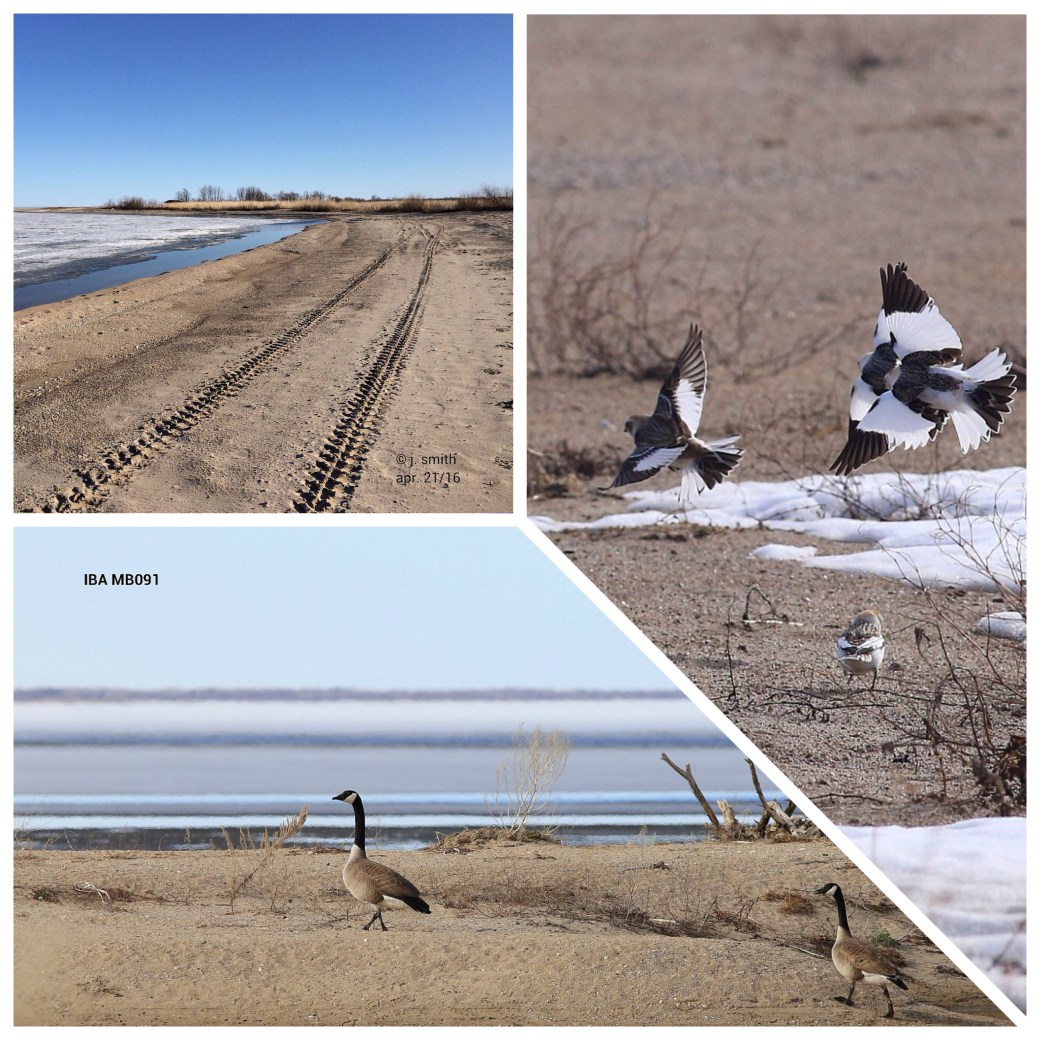
Firstly, a wee bit of background information. Caretaker Joanne Smith had been exploring options for removing white sweet clover, an invasive species taking over large areas of the Riverton sandbar. In addition, increased (illegal) ATV traffic has disturbed soils which provides ideal conditions for plants to colonise sandy soils.The increased vegetation has reduced habitat for Piping Plover and other nesting species. Joanne, a true champion of the IBA, wished to start the process of rectifying this, culminating in Fridays event.

joanne-smith-at-riverton-sandy-bar_5176

She tried to avoid appearing in any photos, but this time she was caught out. IBA Caretaker and all round champion, Joanne Smith. Copyright Christian Artuso

We arrived at the parking lot in good spirit. The IBA Program had taken on the great responsibility of providing the garden waste sacks for which we would remove the weeds of our labour. Proudly showing off my bundle of 20 bags, Joanne immediately informed us that we would need at least 10 times as many to remove the vegetation from the bar. What’s more, the target area was about 1km from the parking lot. Original plans to drive the weeds to the landfill at Gimli were shelved and a new plan hatched which would involve a permit and a bonfire.

That though would be a task for other organisations on another day. Our plan was simple, we would need to get pulling. Stage 1 was to select an area in which to remove the vegetation. In any walk of life it is important to adapt plans to the circumstances. Although many of the plants had still not gone to seed, some unfortunately had and it was clear that already large amounts of seed had dispersed on the sand. Lesson 1 then was to ensure we did any weed pulling earlier in the fall in repeat workparties in 2017 (for there will be repeats).

img_3699

A rare opportunity to get hands away from the binoculars for IBAs! Most of the clover was easy to pull away in bunches. However in one or two cases, two people were required to pull out weeds which were seemingly set in cement. Copyright Joanne Smith

Lesson number 2 of the day was to focus on one area and not spread ourselves too thinly. Following a first hour spread over a wide area, we decided latterly to focus all effort on a smaller area, clearing just enough habitat to create a single Piping Plover territory.

img_3694

Phase 2 photo – pulling great handfuls of weeds into large piles to be bagged. Note the open habitat – much better for Piping Plover. Copyright Joanne Smith

The final lesson was to make sure we could have a controlled burn on the day next time, ridding the area of any remaining seed to prevent greater encroachment. That said, the bagging team, led ably by Nature Manitoba member Jeff Bruce, did a great job.

img_3688

Jeff Bruce busy stuffing weeds into bags. Copyright Joanne Smith

Twenty full bags seemed like an achievement until you notice the very large pile of weeds on the right side of the photo below

img_3469

Enough of the hands on hips and get on with some work! Copyright Joanne Smith

On completing our days weed pulling, we couldn’t resist a short walk to the end of the bar to look for some birds. After all, we were in an IBA. The highlight had to be a Smith’s Longspur, lifer for at least 3 observers. Another highlight were the Rusty Blackbirds, numerous enough to hit the trigger for globally important concentrations on the day.

rubl-linda-curtis

One of the globally important concentration of Rusty Blackbirds at Riverton. Copyright Linda Curtis

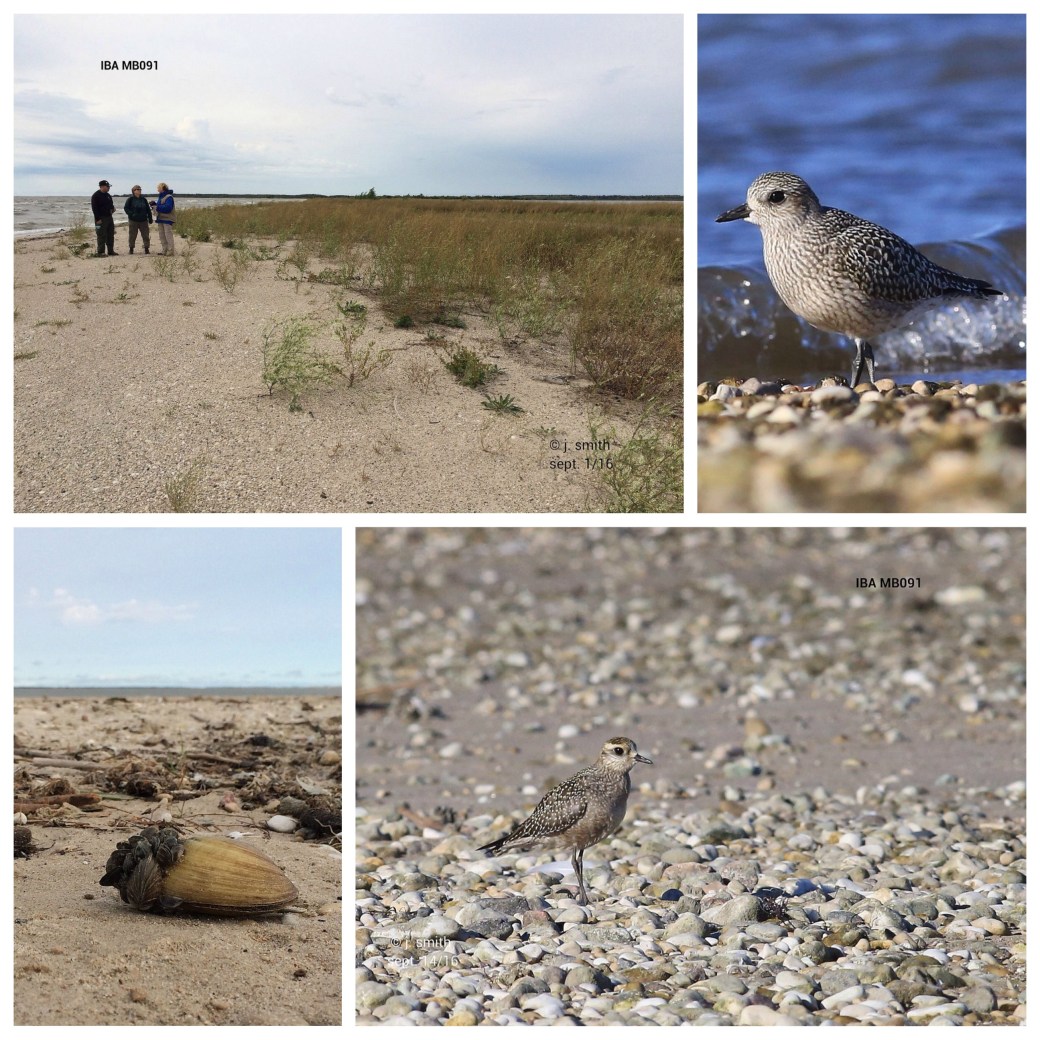
Other species encountered included a group of American Golden Plovers, Spotted Sandpiper, Black-bellied Plover, Harris Sparrow, Lapland Longspur, Horned Lark, Ring-billed Gull, Bonaparte’s Gull, Common Merganser, Green-winged Teal, Pectoral Sandpiper and American Pipit, a pretty good day list. Special mention to Jock McCracken here as well, having secured I believe 6 lifers during the morning.

agpl-linda-curtis

More elegant-looking than the similar Black-bellied Plover, the American Golden Plover was a nice addition to our daily bird list.

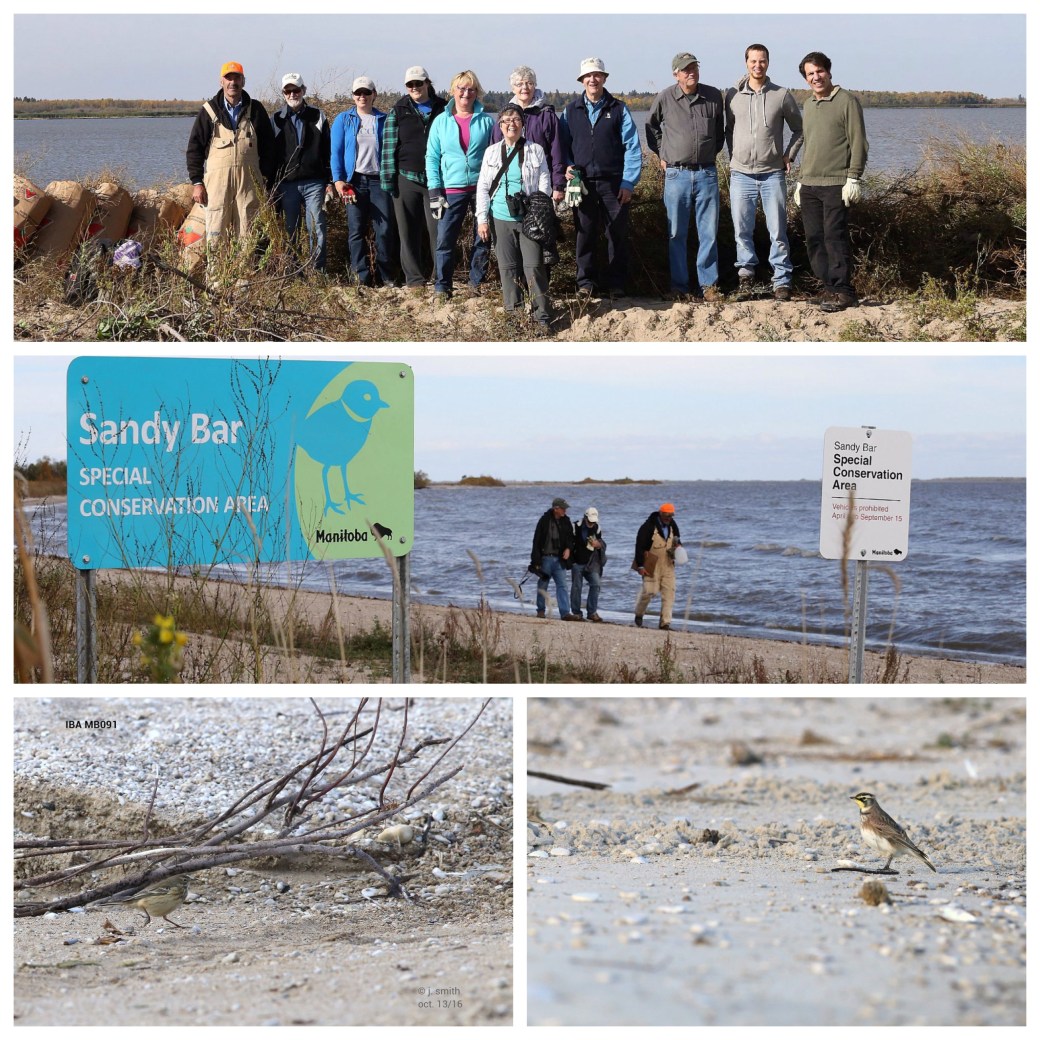
While we were out at the tip of the sandbar, Manitoba Sustainable Development had put up the below new signs. These are partly aimed at restricting vehicle access to the Special Conservation Area during the summer. ATV use is an increasing pastime seemingly in some of these rural areas and can cause disturbance to breeding birds and their habitats.

img_3698

New signs for Riverton Sandy Bar SCA (and IBA). Copyright Joanne Smith

Thank you to all our volunteers, the East Interlake Conservation District and Manitoba Sustainable Development. These were:

Christian Artuso, Tim Poole, Bonnie Chartier, Dave Roberts, Audrey Boitson, Heather Alexander, Jeff Bruce, Patricia Barrett, Thor Johannson, Jock McCracken, Linda Curtis and Peter and Elsie Douglas.


Most of all, thank you to Joanne, a great champion for Riverton Sandy Bar, for organising a great day. We will be doing this again in 2017, so please watch this space and consider joining us.

img_3693

Pretty much everyone apart from the photographer. Copyright Joanne Smith

Riverton Sandy Bar Piping Plover Habitat Work Party

Joanne Smith, IBA Caretaker for Riverton Sandy Bar has for a long while been exploring the possibility of improving habitat for nesting Piping Plovers via the removal of invasive sweet clover. By removing the sweet clover we hope that the increased areas of exposed sand will encourage Piping Plovers to nest again here as they did elsewhere in Manitoba in 2016. The arrangements are:

  1. Meet Friday September 30th, at 9:00 am at the Sandy Bar SAC Parking Lot. Sandy Bar is at the east end of PR329. Take HWY 8 to Riverton, turn east into the town of Riverton on PR 329 (this is the most southerly entrance into Riverton). Stay on this road until you end up at Sandy Bar. It will take you through the town, across the Icelandic River, onto gravel road, into the marsh area of this IBA and to the edge of the lake. Simply put, keep heading east on PR 329 and you’ll be there.
  2. Please bring gloves, food, drinks, long pants and extra layers. If it’s windy, the temperature could easily be 5 degrees or more colder out on the sand bar. This event will also require a mile walk in the sand and a short walk through thick bush.
  3. We will endeavour to bring some additional snacks and coffee
  4. If you know of any students who are working on volunteer credit hours, this may also be of interest.

Manitoba Conservation will also be putting up new boundary signs for this Special Conservation Area at this time.

According to Joanne ‘maybe you’ll have a chance at seeing horned larks, American pipits, Lapland longspurs, black-bellied plover or American golden plover as all of these species were seen on Oct. 1st of last year’.

Piping Plover_1

Maybe we can help bring this guy back. Copyright Christian Artuso


Oak Hammock Marsh IBA Blitz – October 1st 2016

For the first time in many months, this morning I had cold fingers as I cycled to work. To make matters worse, the building heating is not on yet and it’s been a pretty cold day in the office as well. We must be in the midst of fall!

So alas, winter is on its way but we still have ample opportunities to get out to Manitoba’s 38 IBAs. The program is doing its bit still to try to encourage folk to enjoy the final opportunities for citizen science bird monitoring ahead of winter and we have teamed up with our friends at Oak Hammock Marsh Interpretive Centre to undertake a final blitz of the season. This time we go out on Saturday October 1st to Oak Hammock to count as many birds as possible. We plan to start early, meeting at the centre at 7am and then setting out as four teams to begin with. Each team will set up at a corner of the IBA with the task of counting ducks and geese as they depart at sunrise to feed in the surrounding countryside. Around 10am, the teams will monitor different areas of the marsh to count the number of birds remaining. This is a great way of trying to gauge an accurate idea of the number of birds to be found at one of Manitoba’s top birding hotspots in early October.

Donna TUSW

Tundra Swans taken at the Shoal Lakes IBA October blitz in 2015. Counting birds flying from the marsh can be really fun! Photo copyright Donna Martin

Once we are finished, we will return to the centre at 1pm and shout volunteers a warm cup of coffee and lunch. you can’t get much better than that!

If you are interested in joining us, please contact Tim Poole, Manitoba IBA Program Coordinator at iba@naturemanitoba.ca or 204-943-9029

Donna RUBL

Hopefully there will be plenty of Rusty Blackbirdsin addition to what promises to be a spectacle of waterfowl. Photo copyright Donna Martin

Delta Marsh Blitz – The Final Tally

Following a day where groups of volunteers counting from vehicles and on foot and a second day of boat monitoring, we had recorded an impressive 32,070 birds across the IBA. If you were to visit parts of Delta in the coming weeks there is likely to be even more birds as waterfowl gather in larger numbers. The total species count was an equally impressive 145 species. Of these 59 species of songbird, 24 species of shorebird and an impressive 13 species of bird of prey. Impressively, shorebirds were the most numerous of all groups of birds counted, a total of 8199 across the 2 days with around half counted in one spot by Colin Blyth, Louanne Reid and Erica Alex.

OLYMPUS DIGITAL CAMERA

Just a snapshot but almost half of all shorebirds counted during the blitz were counted with these shorebirds. Copyright Erica Alex

Total species Total individuals
Blackbirds 8 1210
Cormorants and Pelicans 2 2444
Grebe 4 479
Gulls and terns 8 7712
Long-legged Wader 4 270
Other – non-songbird 11 267
Other – songbird 46 946
Rails 3 2956
Raptor 13 264
Shorebirds 24 8199
Swallows 5 2446
Waterfowl 17 4883
 TOTAL 145 32076

Now to individual species. The most numerous species over 2 days was the Ring-billed Gull at 5367 individuals, over half counted by Christian and Matt at Ambroise Beach before they headed in different directions. The next most numerous species was the Semipalmated Sandpiper. On the Semipalmated theme, the Semipalmated Plover came in at 1936 individuals. This is a key figure as we are pretty sure this is greater than 1% of the global population of this species, thus this would have been a globally significant concentration of this species.

semipalmated-plover_3175_artuso

The star of the show, a Semipalmated Plover at Delta Marsh IBA. Photo copyright Christian Artuso

Finally, before posting the complete species lists, I thought it would be worth reflecting for a moment on what all this means. The large concentrations of shorebirds seen by Cam and the other Manitoba Sustainable Development staff, although apparently historically not unusual, has become a rare sight in recent years. There are some excellent resources available out there if you are interested in learning more about the history and management of the marsh, not least a new book published in 2015 called Delta: A Prairie Marsh and Its People by Glen Suggett, Gordon Goldsborough & the Delta History Group. For a quick reference, there is a synopsis on the web of a presentation given by Dr Jennifer Shay to Nature Manitoba in 1998 on the subject of Resource Management which includes some excellent information on Delta Marsh. Cal Cuthbert, someone raised in the shadow of Delta Marsh and with a background in wetland management was of the opinion that these larger concentrations present at Delta was a temporary phenomenon driven by declining water levels which have exposed suitable habitat. It will be interesting to see what happens in the coming years.

Anyway, posted below are the results from the Delta Marsh IBA Blitz.

Species Day 1 Day 2 Blitz Total
Canada Goose 930 23 953
Wood Duck 15 0 15
Gadwall 59 55 114
American Wigeon 194 27 221
Mallard 874 759 1633
Blue-winged Teal 875 385 1260
Northern Shoveler 13 13 26
Northern Pintail 128 1 129
Green-winged Teal 224 13 237
dabbling duck sp. 4 0 4
Canvasback 10 2 12
Redhead 6 14 20
Ring-necked Duck 7 4 11
Bufflehead 1 1 2
Common Goldeneye 6 0 6
Harlequin Duck 1 0 1
Hooded Merganser 5 3 8
Ruddy Duck 4 7 11
duck sp. 0 220 220
Pied-billed Grebe 58 10 68
Red-necked Grebe 2 0 2
Eared Grebe 2 2 4
Western Grebe 315 90 405
Double-crested Cormorant 1525 108 1633
American White Pelican 321 490 811
American Bittern 5 2 7
Great Blue Heron 60 91 151
Great Egret 24 14 38
Black-crowned Night-Heron 4 70 74
Turkey Vulture 13 0 13
Northern Harrier 45 9 54
Sharp-shinned Hawk 1 0 1
Cooper’s Hawk 2 0 2
Northern Goshawk 2 0 2
Bald Eagle 40 17 57
Broad-winged Hawk 1 0 1
Swainson’s Hawk 3 0 3
Red-tailed Hawk 83 3 86
hawk sp. 4 0 4
Virginia Rail 2 1 3
Sora 2 0 2
American Coot 249 2702 2951
Sandhill Crane 132 0 132
American Avocet 9 5 14
Black-bellied Plover 54 8 62
Semipalmated Plover 1905 31 1936
Killdeer 71 38 109
Marbled Godwit 18 6 24
Ruddy Turnstone 3 3 6
Red Knot 1 0 1
Stilt Sandpiper 10 1 11
Sanderling 190 1 191
Baird’s Sandpiper 15 4 19
Least Sandpiper 1168 253 1421
White-rumped Sandpiper 26 0 26
Pectoral Sandpiper 107 0 107
Semipalmated Sandpiper 3598 56 3654
peep sp. 28 41 69
Short-billed Dowitcher 27 0 27
Long-billed Dowitcher 0 1 1
Wilson’s Snipe 10 8 18
Wilson’s Phalarope 12 4 16
Red-necked Phalarope 1 0 1
Spotted Sandpiper 29 11 40
Solitary Sandpiper 2 0 2
Greater Yellowlegs 151 84 235
Willet 4 7 11
Lesser Yellowlegs 163 35 198
Bonaparte’s Gull 436 5 441
Franklin’s Gull 1230 47 1277
Ring-billed Gull 5153 214 5367
Herring Gull 129 0 129
Caspian Tern 47 54 101
Black Tern 6 3 9
Common Tern 128 0 128
Forster’s Tern 144 72 216
Sterna sp. 44 0 44
Rock Pigeon (Feral Pigeon) 33 0 33
Mourning Dove 53 1 54
Great Horned Owl 1 0 1
Ruby-throated Hummingbird 15 2 17
Belted Kingfisher 6 0 6
Red-headed Woodpecker 3 0 3
Yellow-bellied Sapsucker 1 0 1
Downy Woodpecker 4 0 4
Hairy Woodpecker 2 0 2
Northern Flicker 14 0 14
American Kestrel 14 0 14
Merlin 20 3 23
Peregrine Falcon 3 0 3
Prairie Falcon 1 0 1
Eastern Wood-Pewee 1 0 1
Alder Flycatcher 1 0 1
Least Flycatcher 2 0 2
Eastern Phoebe 14 0 14
Eastern Kingbird 43 0 43
Blue-headed Vireo 1 0 1
Warbling Vireo 13 0 13
Red-eyed Vireo 1 0 1
Blue Jay 1 0 1
Black-billed Magpie 19 0 19
American Crow 15 4 19
Common Raven 18 2 20
Purple Martin 26 0 26
Tree Swallow 851 0 851
Bank Swallow 349 1 350
Barn Swallow 993 24 1017
Cliff Swallow 0 2 2
Swallow sp. 200 0 200
Black-capped Chickadee 1 0 1
Red-breasted Nuthatch 2 0 2
House Wren 11 0 11
Marsh Wren 14 1 15
Ruby-crowned Kinglet 1 0 1
Eastern Bluebird 13 0 13
American Robin 8 0 8
Gray Catbird 11 1 12
European Starling 213 0 213
Cedar Waxwing 87 0 87
Tennessee Warbler 19 0 19
Orange-crowned Warbler 2 0 2
Nashville Warbler 4 0 4
Mourning Warbler 1 0 1
Common Yellowthroat 33 0 33
American Redstart 31 0 31
Cape May Warbler 1 0 1
Magnolia Warbler 2 0 2
Blackburnian Warbler 1 0 1
Yellow Warbler 28 1 29
Chestnut-sided Warbler 2 0 2
Blackpoll Warbler 9 0 9
Palm Warbler 10 0 10
Yellow-rumped Warbler (Myrtle) 10 0 10
Black-throated Green Warbler 0 2 2
Chipping Sparrow 5 0 5
Clay-colored Sparrow 61 0 61
Vesper Sparrow 5 0 5
Savannah Sparrow 58 0 58
Song Sparrow 41 1 42
Swamp Sparrow 6 0 6
Rose-breasted Grosbeak 13 0 13
Bobolink 2 0 2
Red-winged Blackbird 136 27 163
Western Meadowlark 9 0 9
Yellow-headed Blackbird 363 8 371
Brewer’s Blackbird 33 0 33
Common Grackle 3 2 5
Brown-headed Cowbird 1 0 1
Baltimore Oriole 11 0 11
Blackbird sp 615 0 615
American Goldfinch 99 2 101
House Sparrow 1 0 1
25863 6207 32070

Thanks again to all volunteers over the two days, as ever very much appreciated!