In addition to hosting bird blitzes in IBA’s throughout the province, we also conduct habitat stewardship activities at various sites. In 2025, these events included a Weed Pull at the Riverton Sandy Bar IBA, and a shoreline clean-up along a section of the Red River in Lockport.
First up was the Riverton Sandy Bar Weed Pull on August 20. This is an event that we’ve hosted for a number of years, where we ask volunteers to help us remove invasive plants from the sand spit, which historically has been a nesting site for the Endangered Piping Plover.
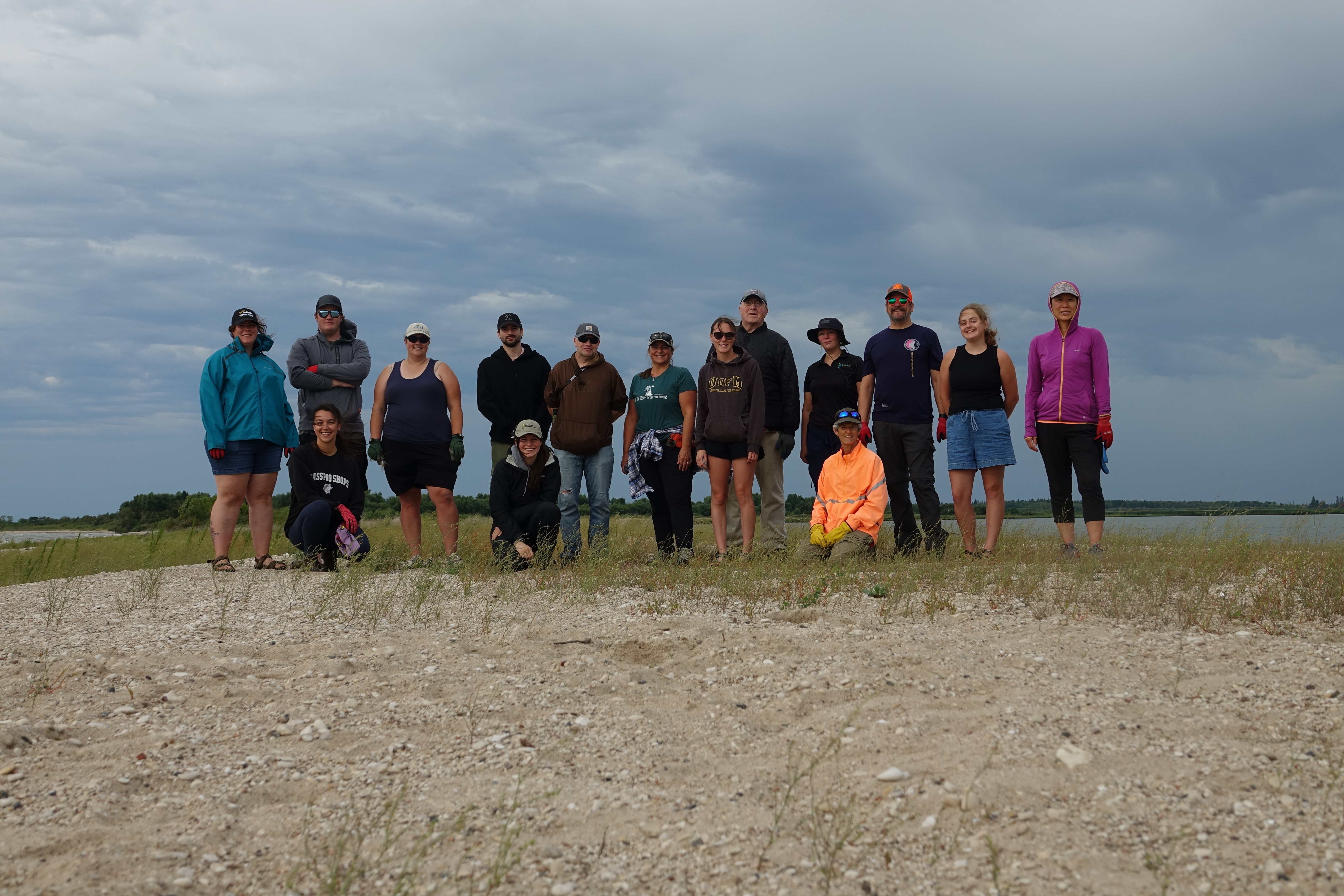
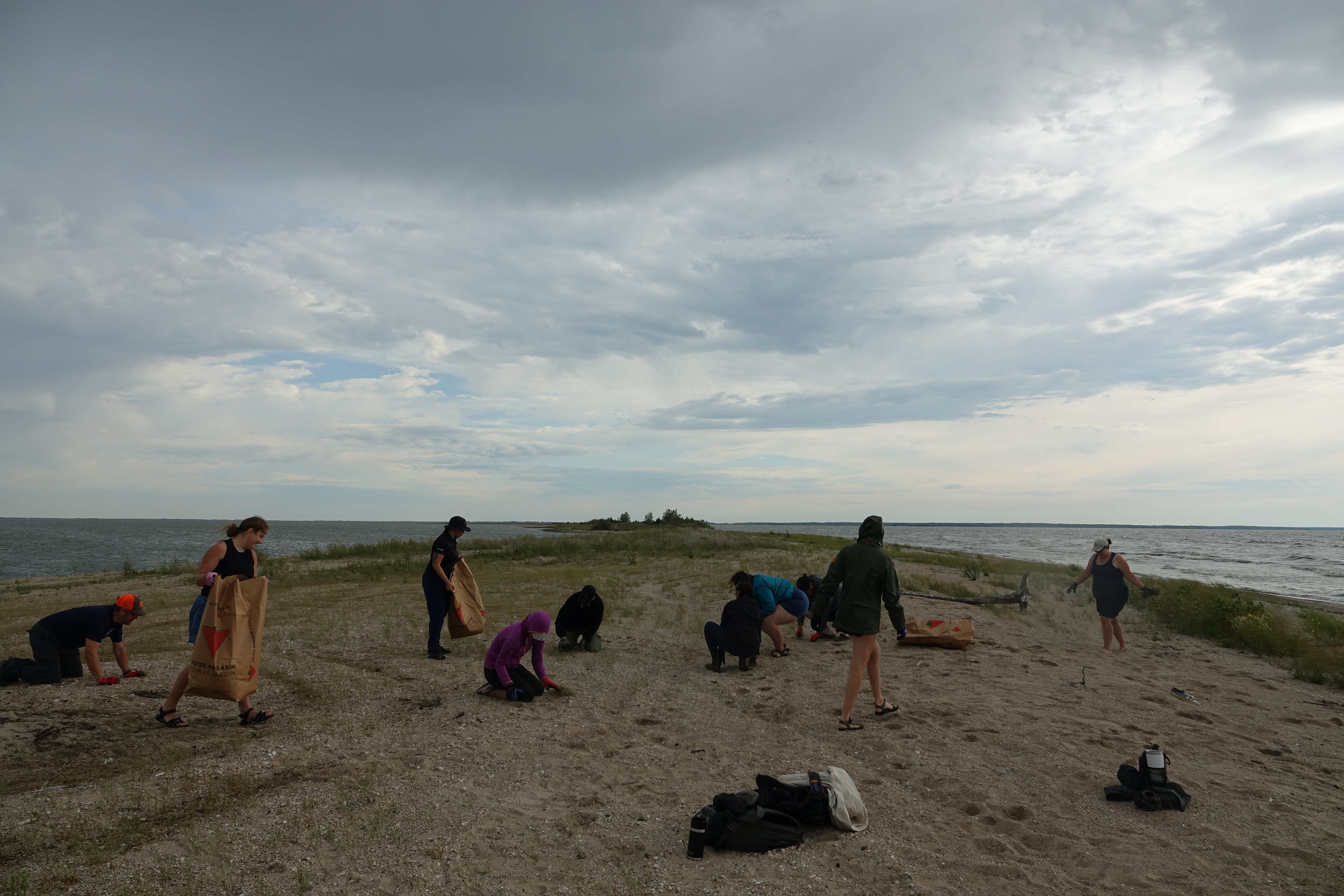
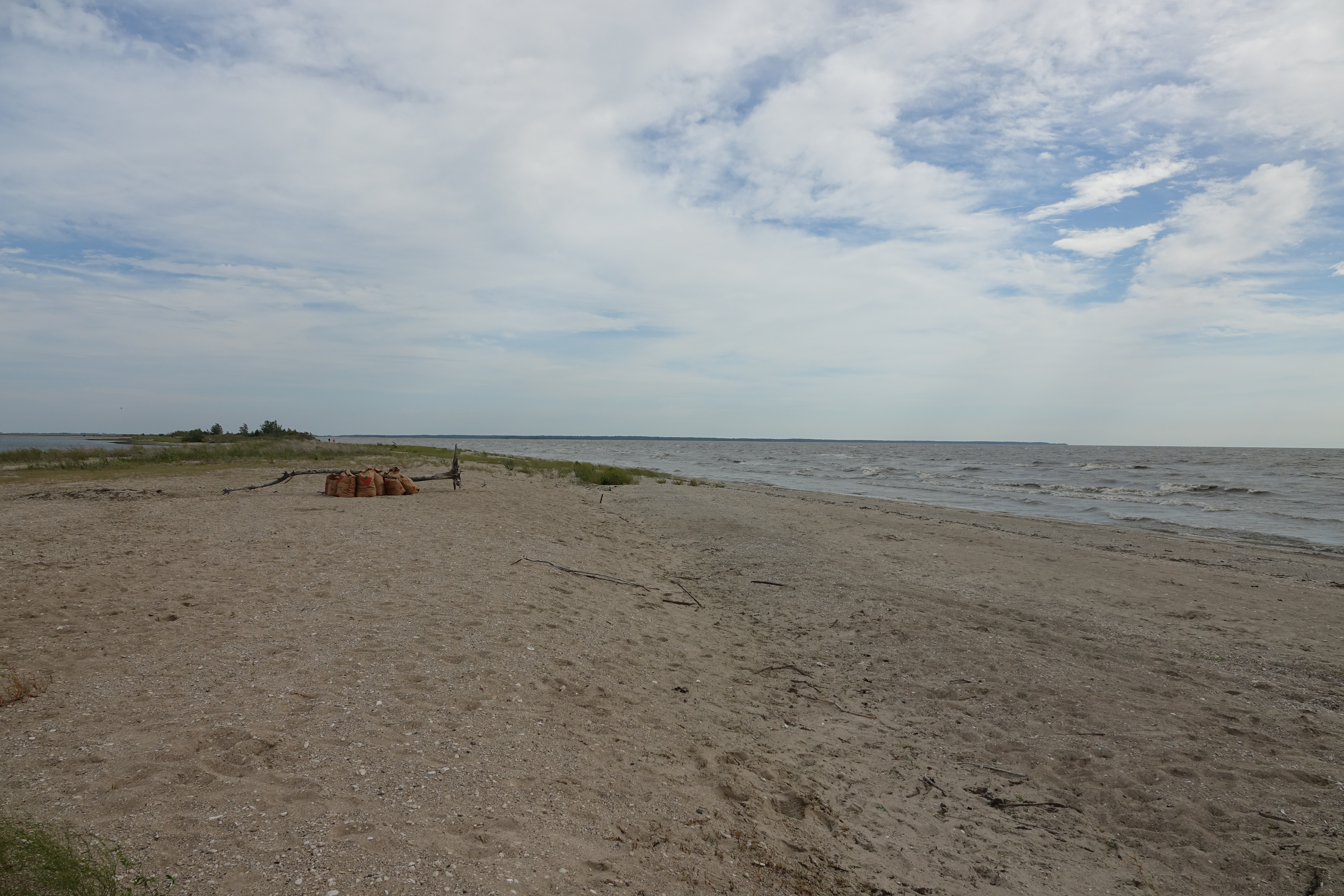
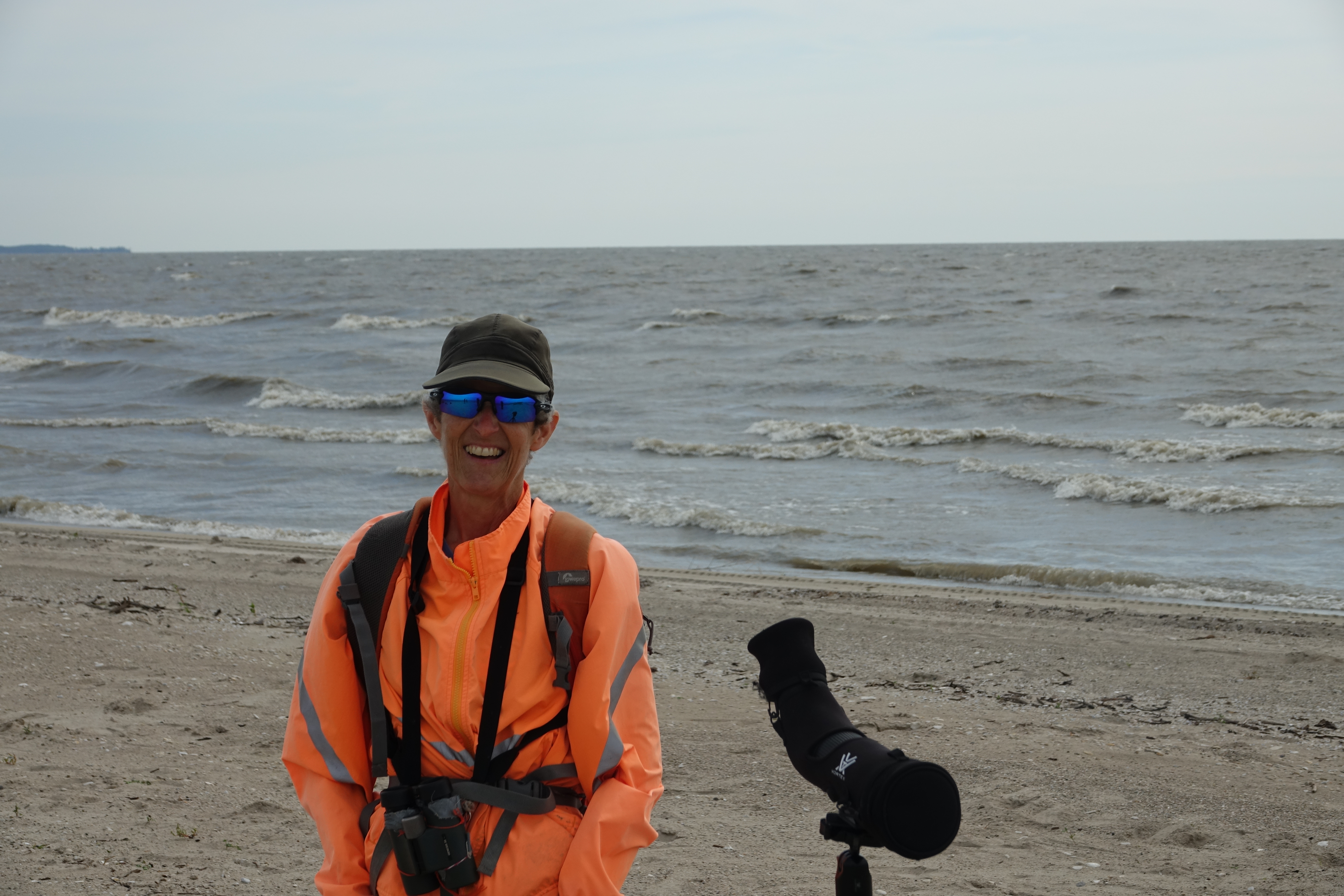
14 volunteers braved the wind and the drizzling rain to help us remove weeds from the beach, and by the end of the day, the crew had filled 9 yard waste bags! Incredible work!
The weed pulling crew. Photo by MarissaThe crew hard at work. Photo by MarissaA beach clear of weeds! Excellent work! Photo by Marissa
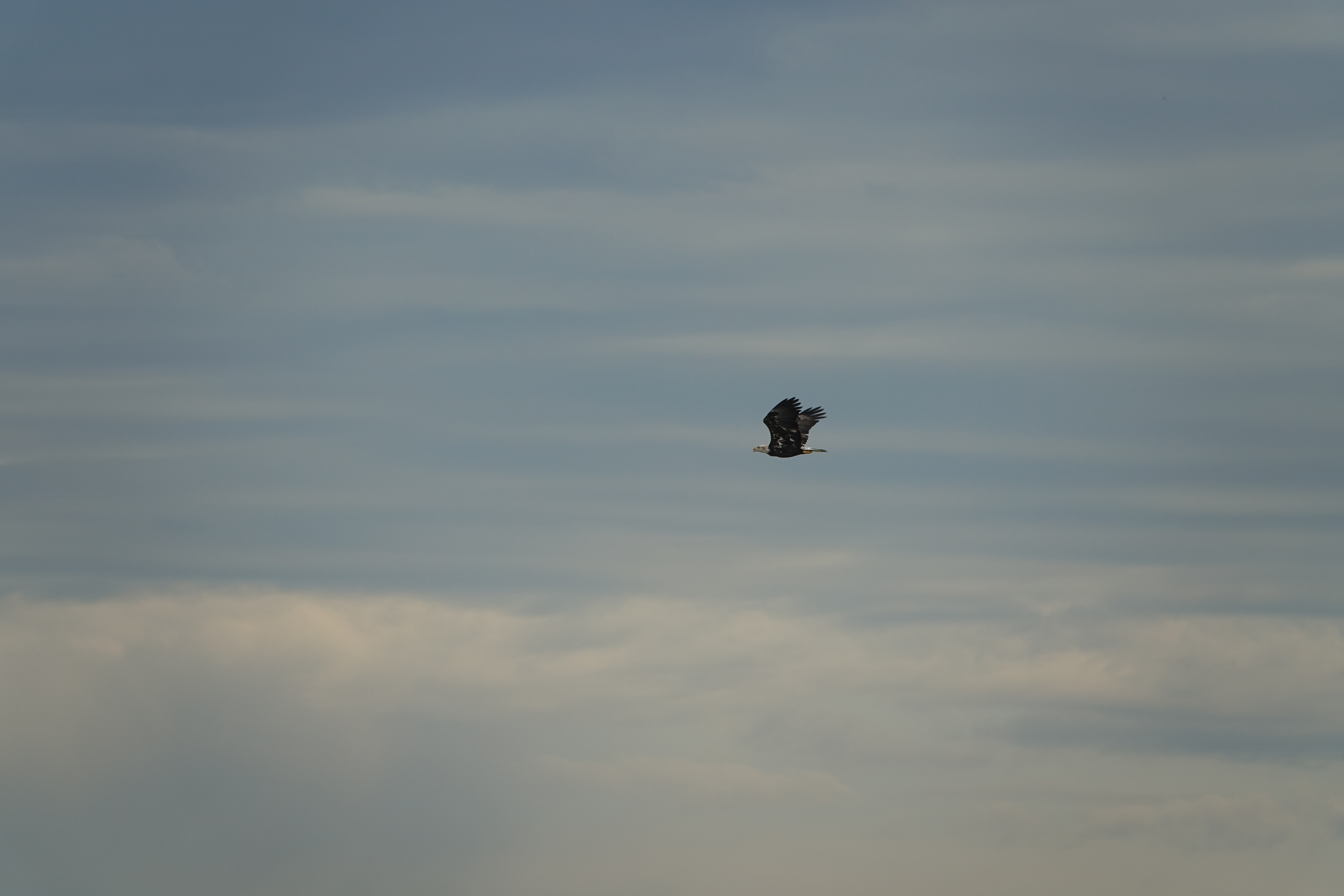
It wouldn’t be an IBA event without some birding! We saw 2 Bald Eagles flying overhead, one of which still had mottled white feathers on it’s wings, marking it as a juvenile eagle. Some other species that were spotted including 11 Common Terns, a Great Blue Heron, 5 American White Pelicans and a Merlin. Thanks to Dayle and Joanne for sharing your eBird list with us!
Juvenile Bald Eagle. Photo by MarissaIt wouldn’t be an IBA event without some birding! Photo by Marissa
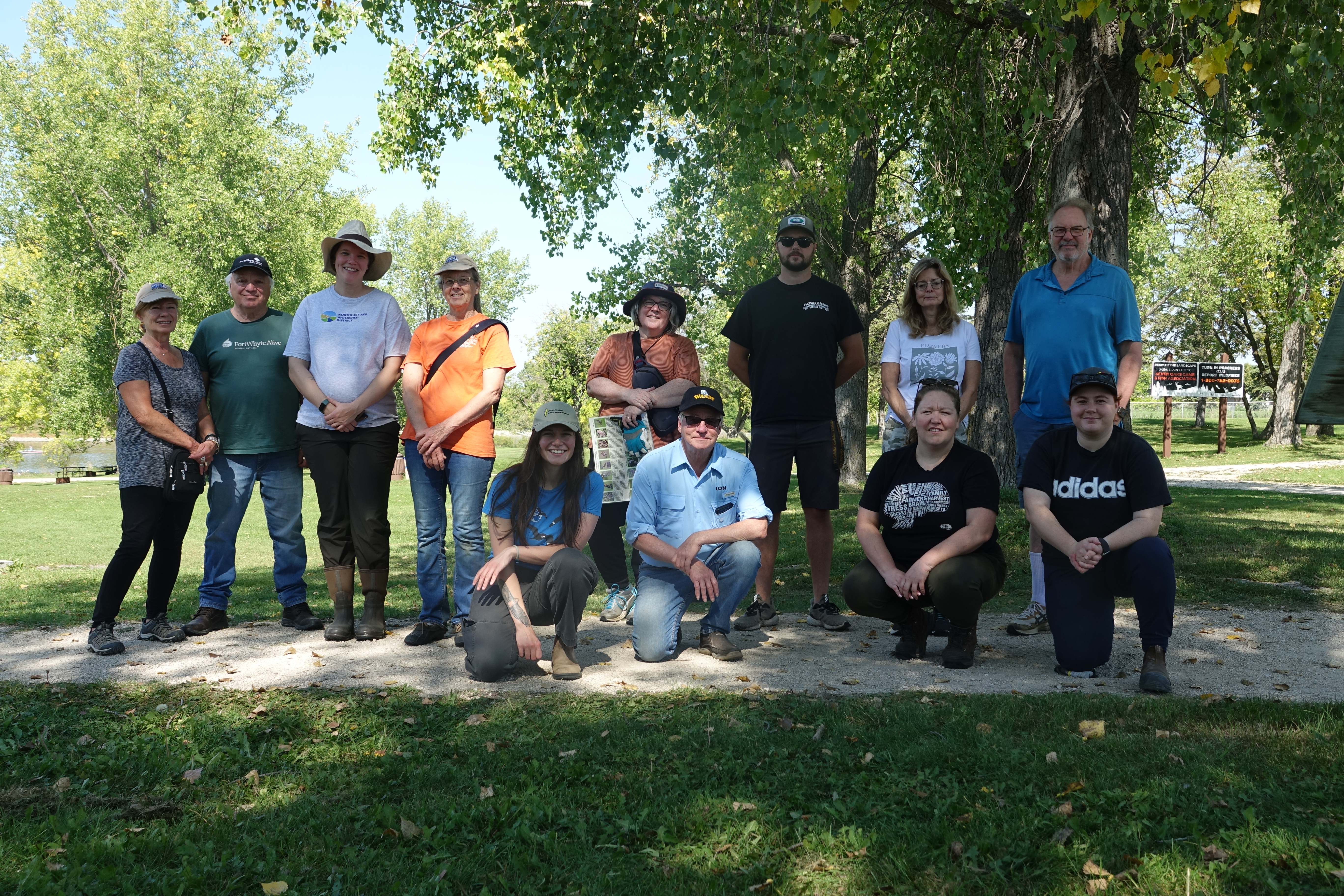
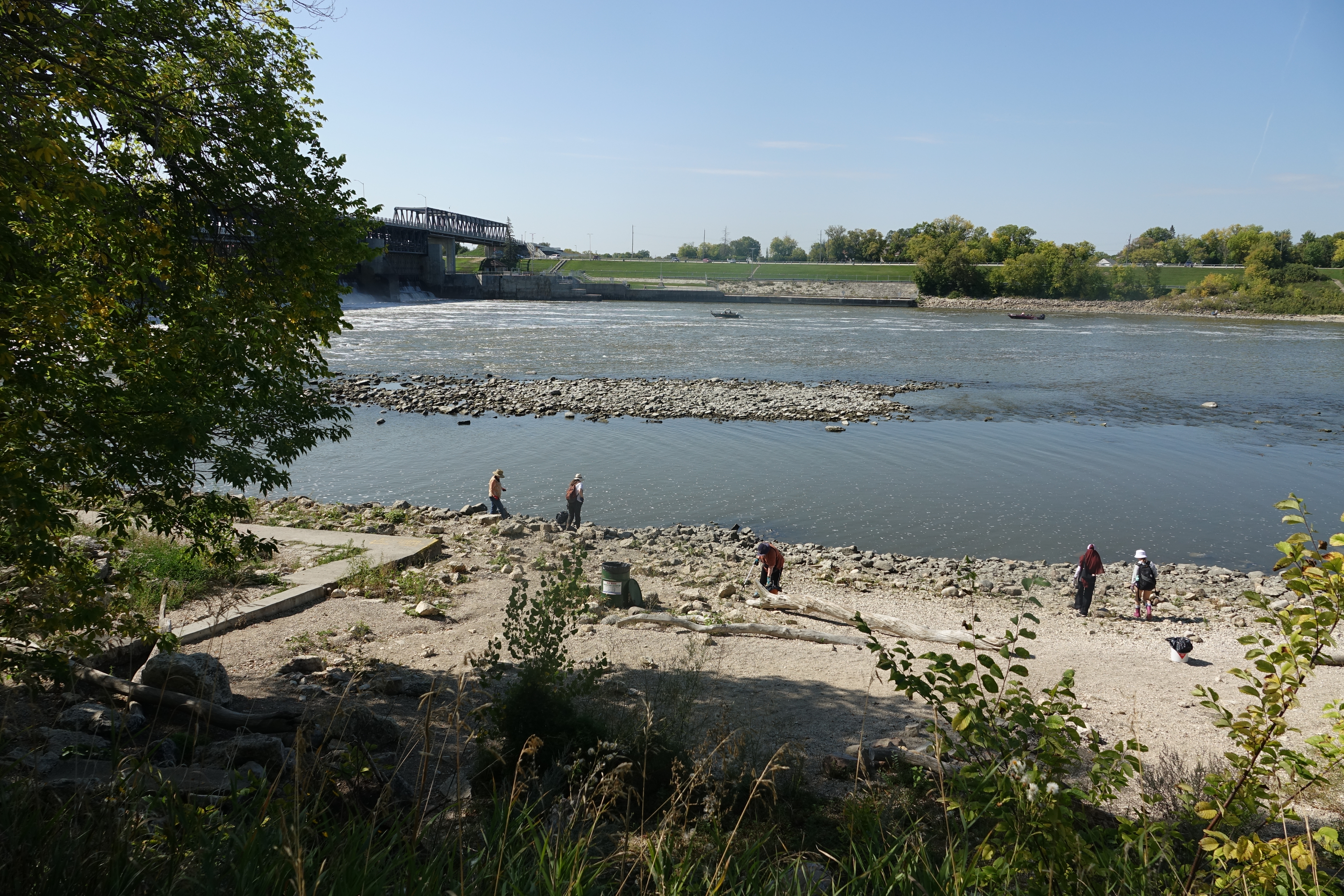
Our last event of the season was a shoreline clean-up along the Red River in Lockport on September 10. The targeted area was just downstream of the Lock and Dam, at the Lockport Heritage Park. Despite it being a very hot and sunny day, we had 17 volunteers come out and help us remove discarded fishing gear and other garbage from the Red River shoreline.
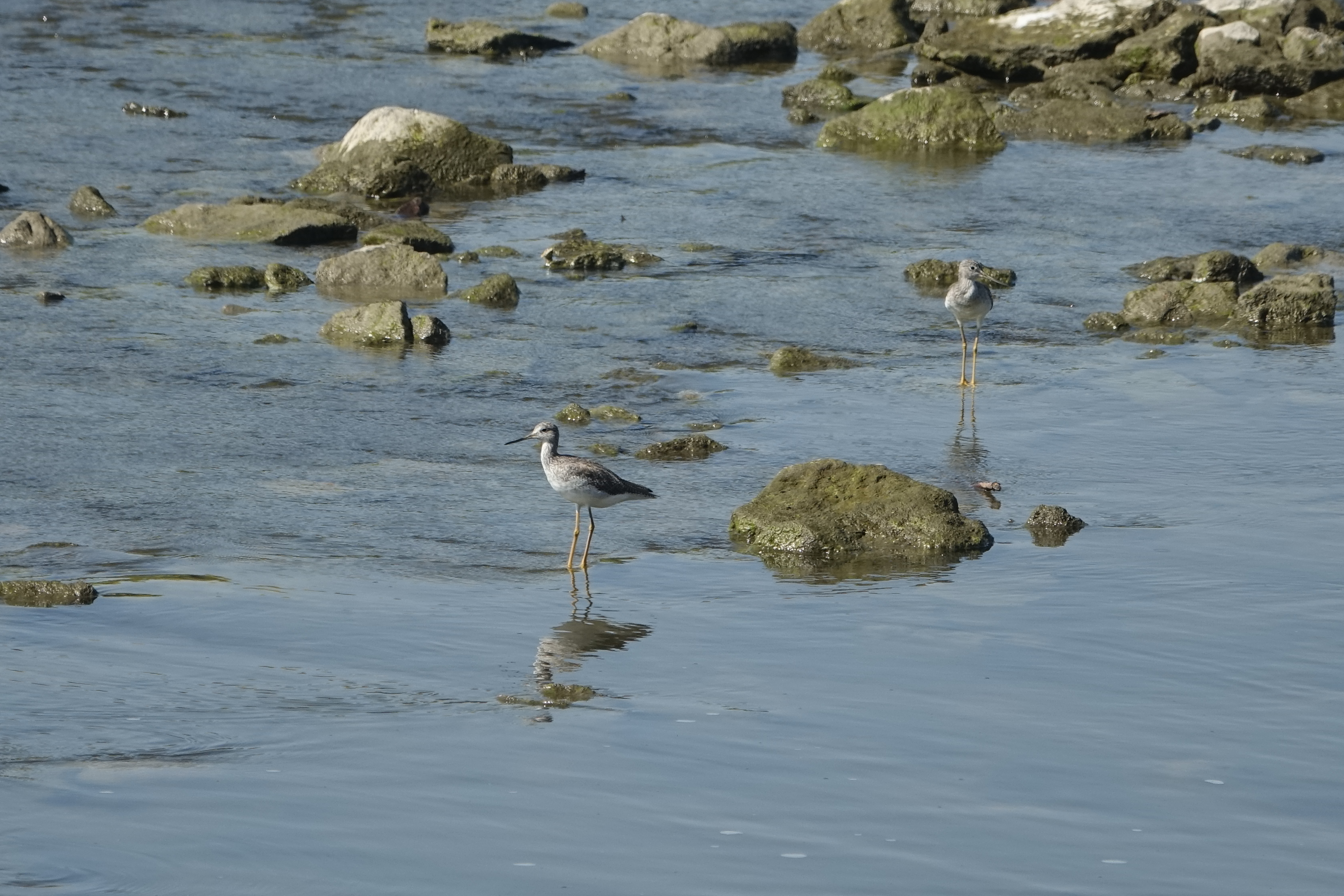
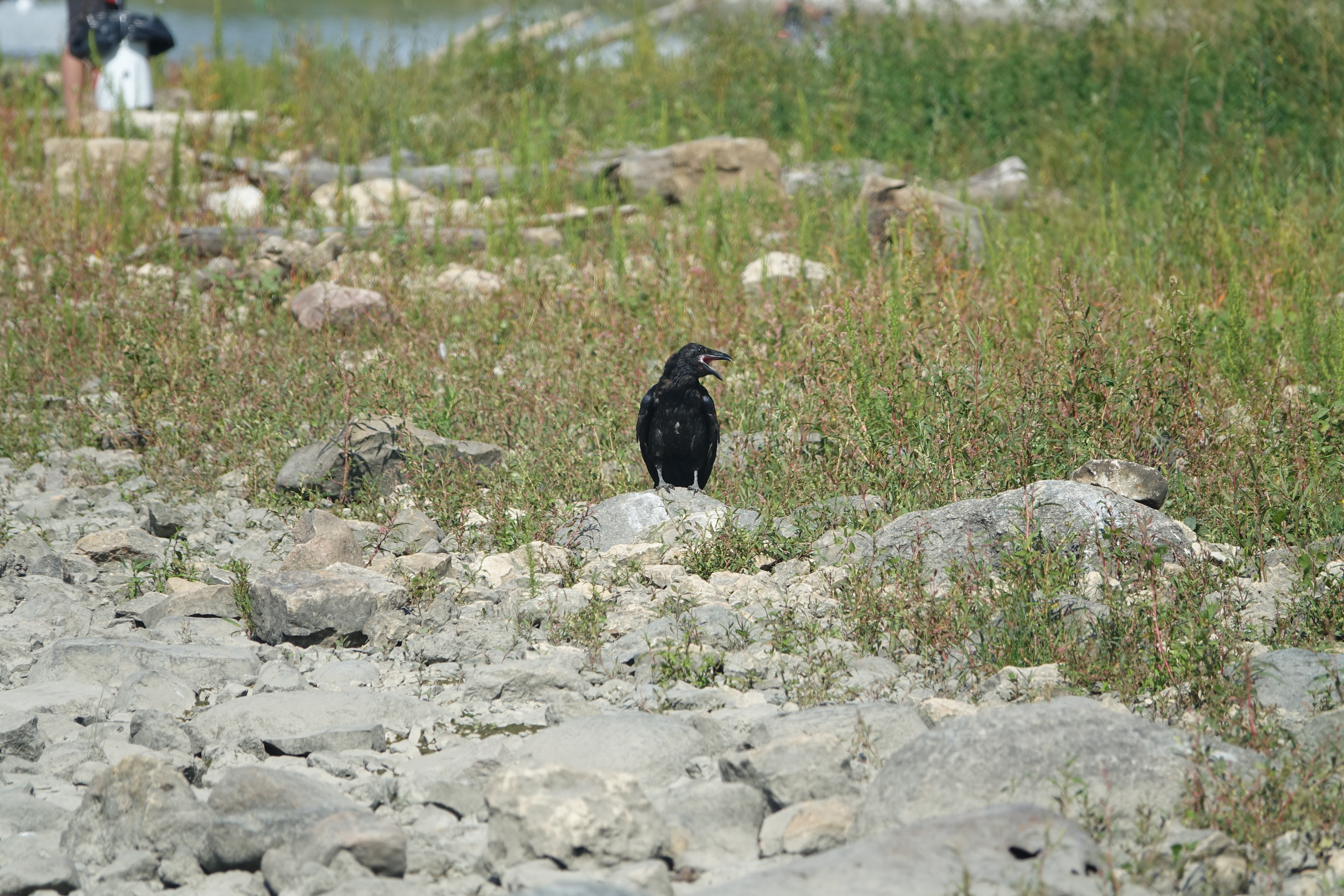
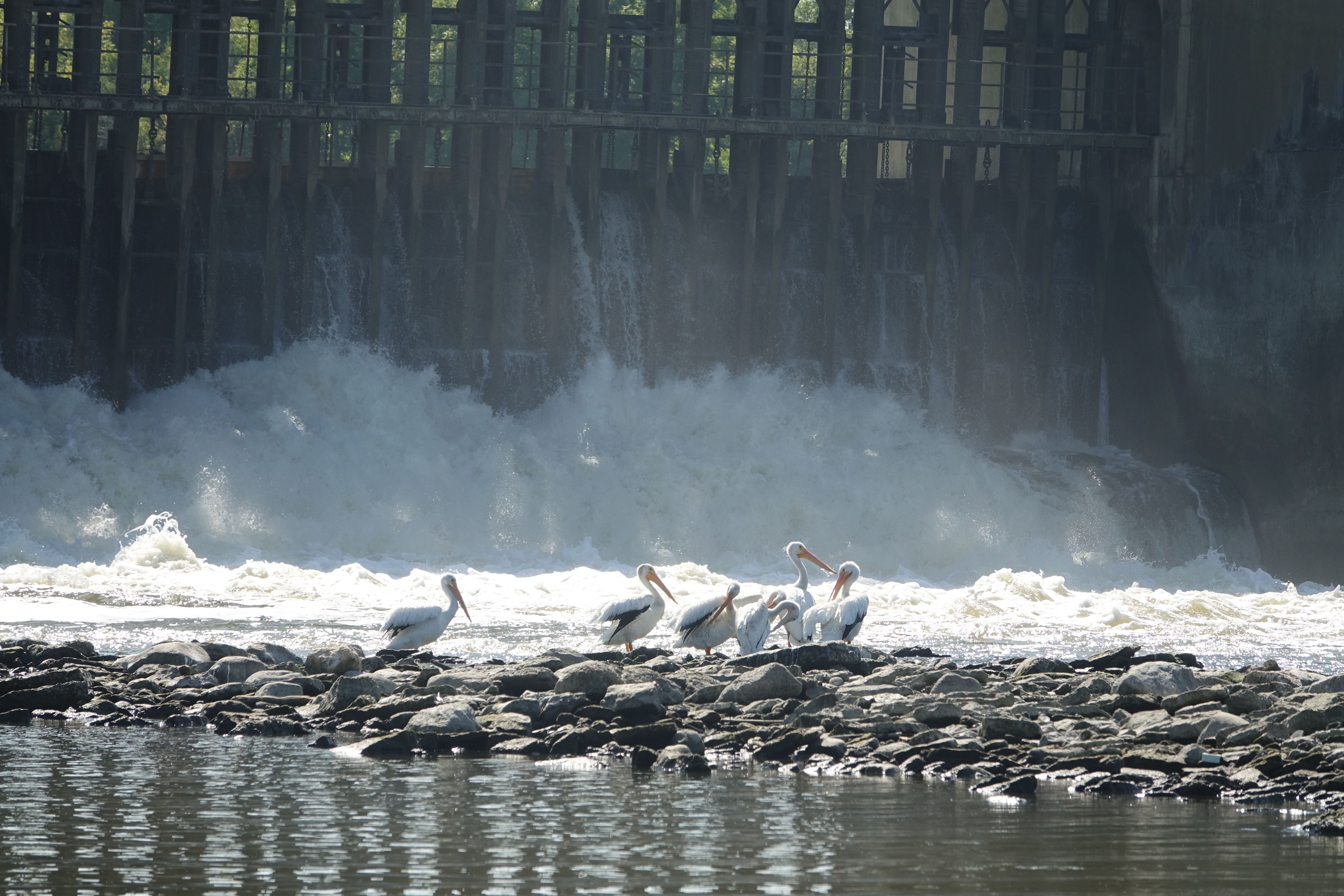
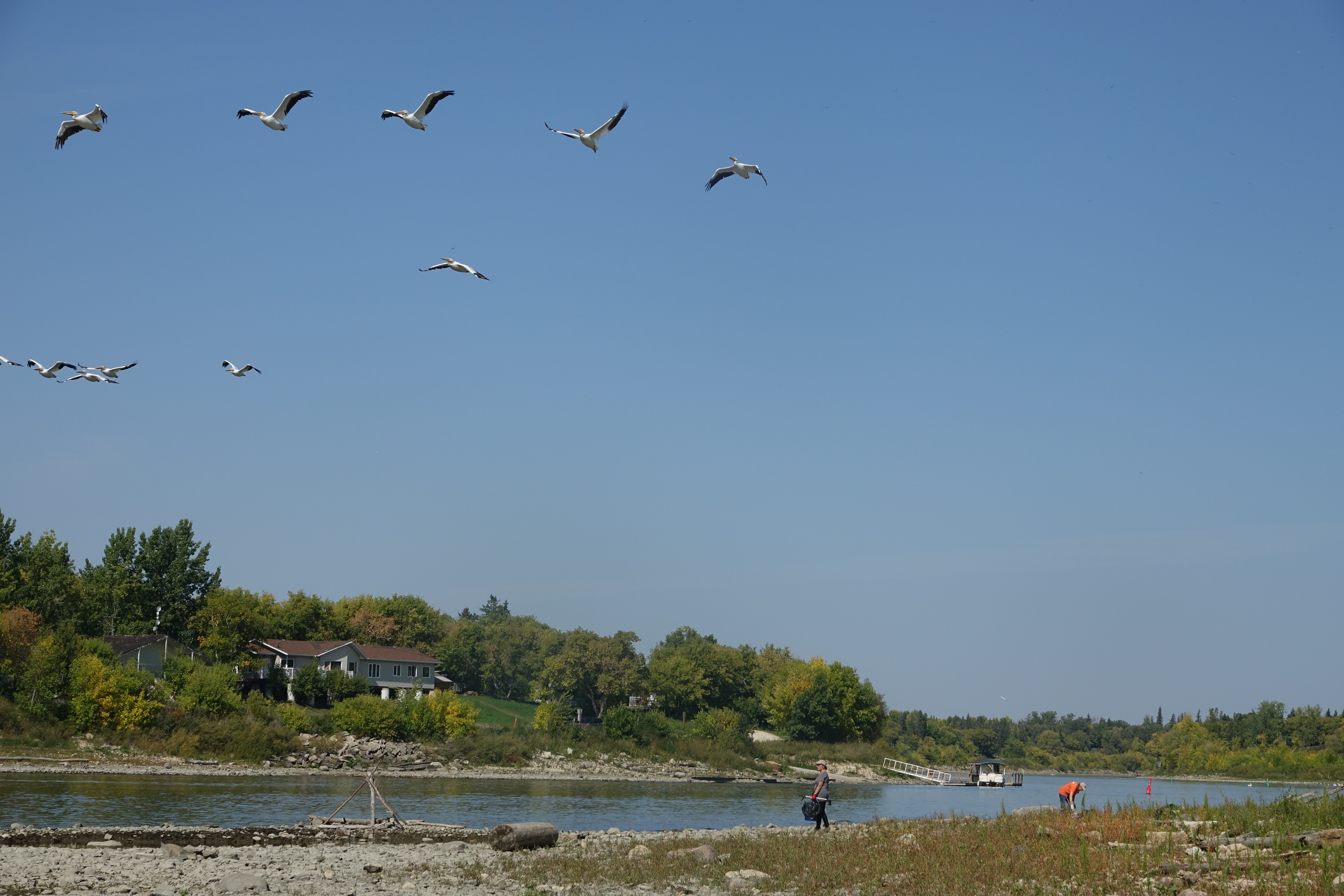
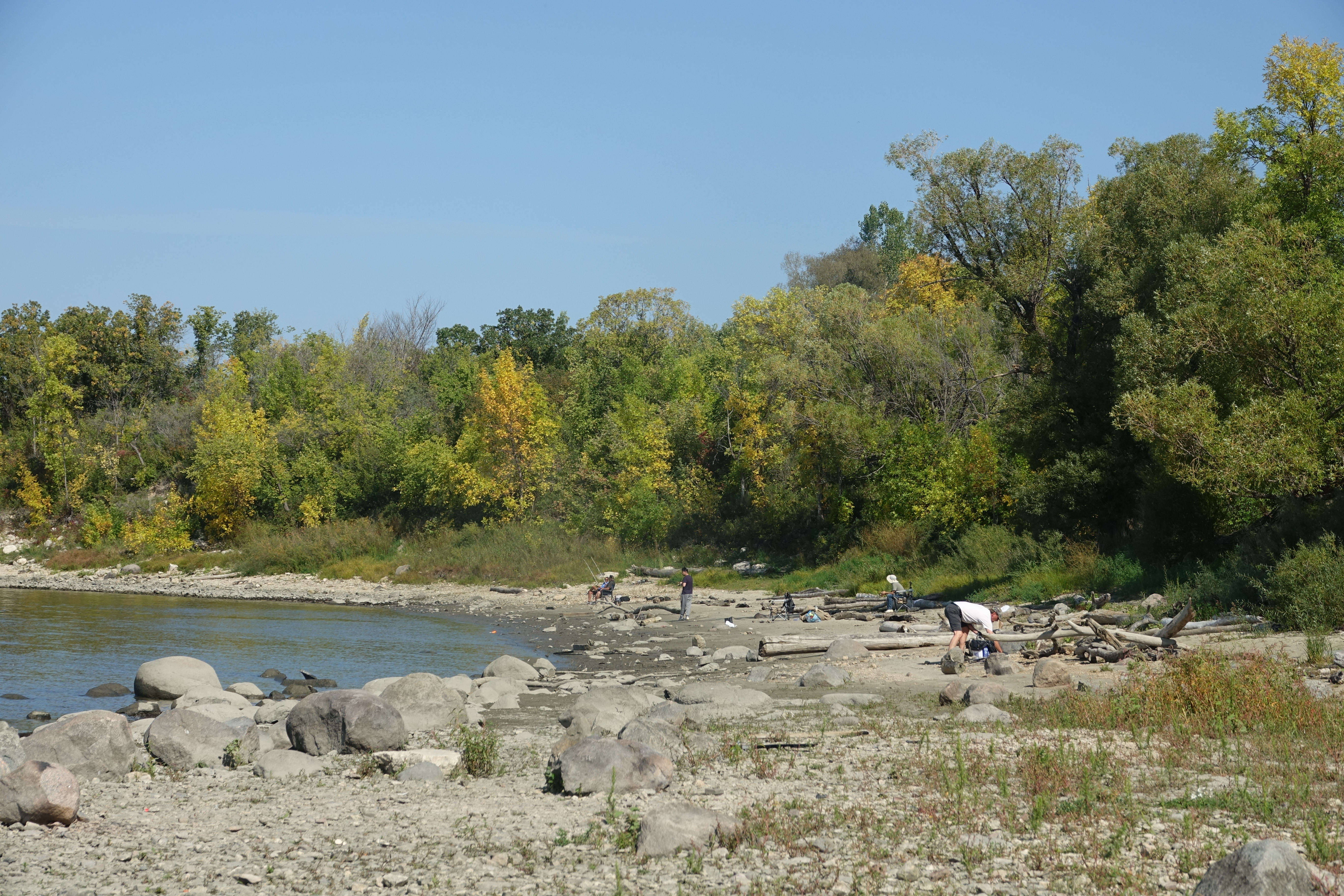
The low water levels in the river allowed volunteers to venture out onto the exposed rocks, where they had some close encounters with foraging shorebirds. Groups of American White Pelicans flew overhead, and a Common Raven came to see what all the action was. Thank you to our incredible team who braved the heat to help improve this section of shoreline habitat along the Red River.
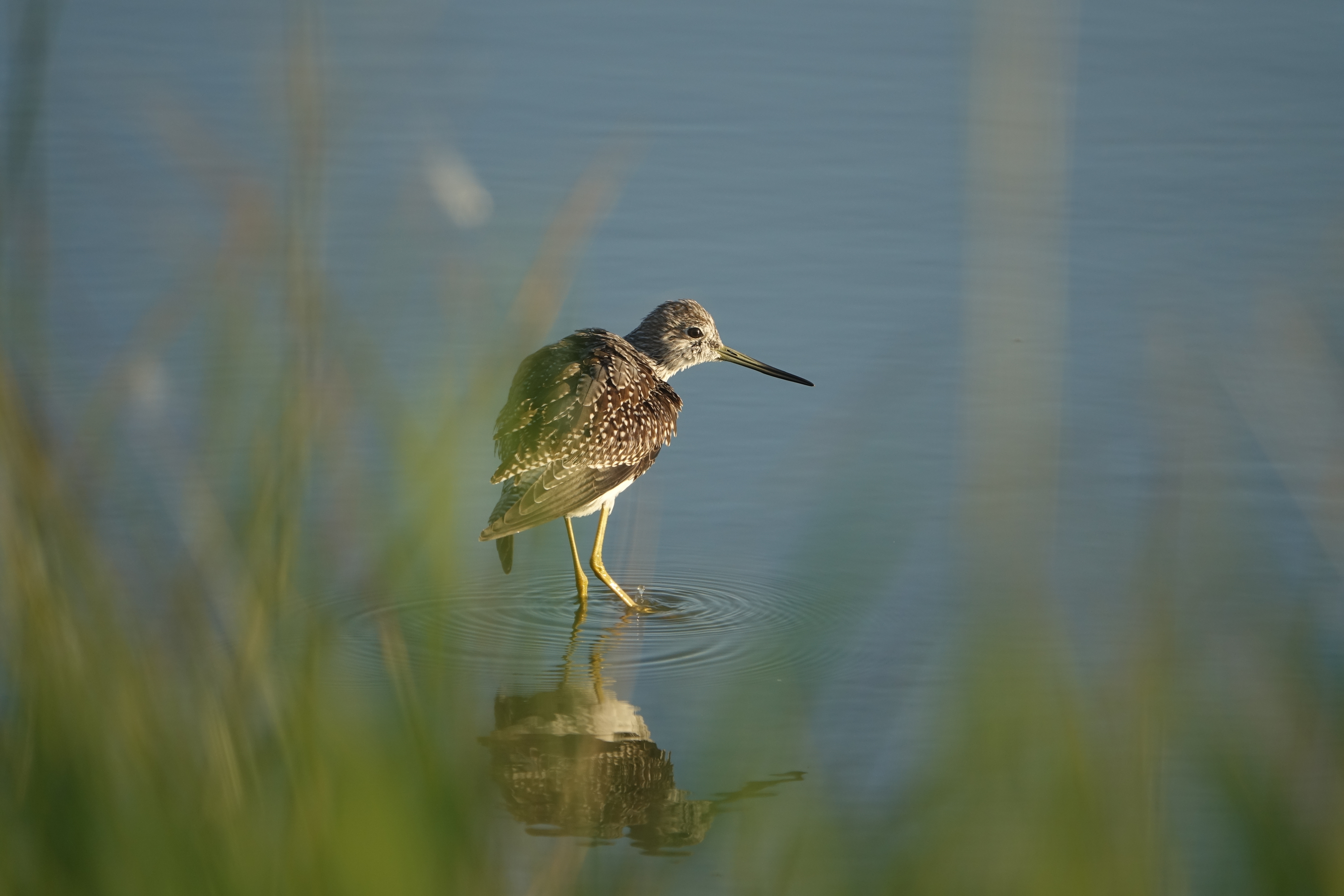
Our Lockport Shoreline Clean-up Volunteers! Photo by MarissaThe clean-up site. Photo by MarissaGreater Yellowlegs foraging in the shallow areas of the Red River. Photo by MarissaA Common Raven came to see what all the action was on the shoreline. Photo by MarissaA group of American White Pelicans hanging out by the dam outlet. Photo by MarissaFlyby of even more American White Pelicans! Photo by MarissaBeautiful fall colours along the Red River shoreline. Photo by Marissa
With that, we have finished recapping our summer 2025 events. A huge thank you to everyone who volunteered for our events this summer, you make our work possible! These events were also made possible through funding from Environment and Climate Change Canada’s Habitat Stewardship Program.
Keep a close eye on our Upcoming Events page, our social media, and your email inboxes for our 2026 events, coming soon! If you would like to be added to our mailing list, send me an email at iba@naturemanitoba.ca! We’re always looking for new volunteers, and all experience levels are welcome.
Hi folks! I’m back with our last blitz recap of the summer 2025 season! Almost time to start planning for this year’s events and I can’t wait! Our last Blitz of the season was on August 28th at the Oak Hammock Marsh IBA. Oak Hammock likely needs no introduction, being a site that has long been popular with birders for its proximity to the City of Winnipeg and its many accessible walking trails, but I’m going to give one anyway. I have my master’s in ecological restoration, so I can’t resist a good restoration success story.
When settlers first arrived in southern Manitoba, they came upon a vast marsh that stretched from what is now the north Perimeter Highway all the way to present-day Teulon. Over time, all this water was drained, and the land was converted to agriculture, leaving almost no trace of the wetland that once defined the area. That was until the 1960’s and 70’s, when the Provincial government began buying private lands to restore a small section of the original marsh. Though only a fraction of its original size (from approx. 47,000 hectares to its current size of 3600 hectares), the marsh restoration has been a huge success. Oak Hammock Marsh was designated as a provincial Wildlife Management Area in 1973 and received designation as a Ramsar wetland of international importance in 1987. Due to its importance for migrating shorebirds and waterfowl, Oak Hammock was also designated as an Important Bird Area in 1999. Today, Oak Hammock is home to the national headquarters of Ducks Unlimited Canada, and the newly renovated Harry J. Enns Wetland Discovery Centre, and remains an important stopover site for migrating birds.
On a personal note, my first visit to Oak Hammock Marsh was in 2022, when I was working as a Conservation Technician with Native Plant Solutions. On my first visit to the site, I was armed with a flaming drip torch, helping with a prescribed burn to rejuvenate the tallgrass prairie plants right next to the Wetland Discovery Centre entrance. It was a visit I won’t soon forget, and I’m very much looking forward to returning to conduct blitzes this summer.
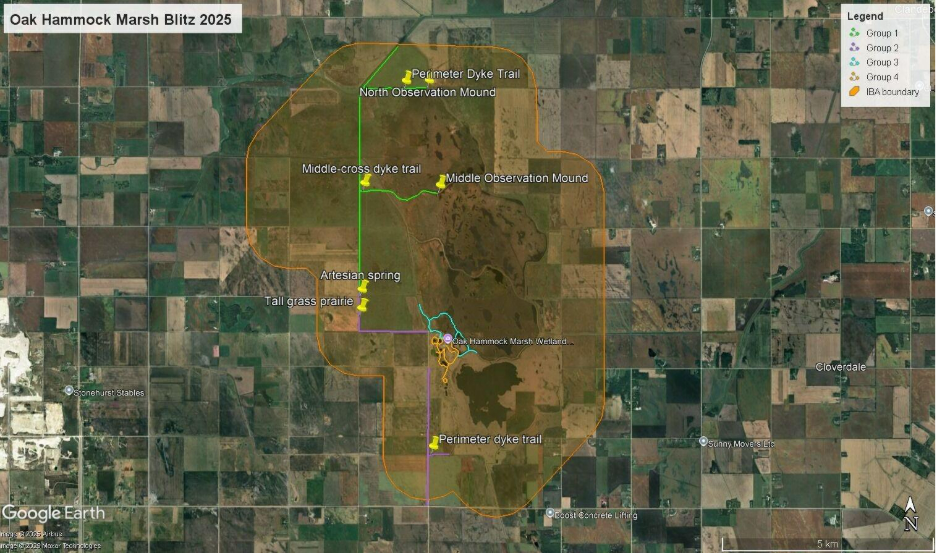
How’s that for a segue! The August 28 blitz at Oak Hammock Marsh was another general bird blitz, and we asked volunteers to record any and all birds that they spotted while out on their routes. For this blitz, we had four groups of volunteers that split up throughout the IBA according to the map below. Each group started birding at 7:30 am and wrapped up by 11:30 to meet for lunch at the Wetland Discovery Centre Café.
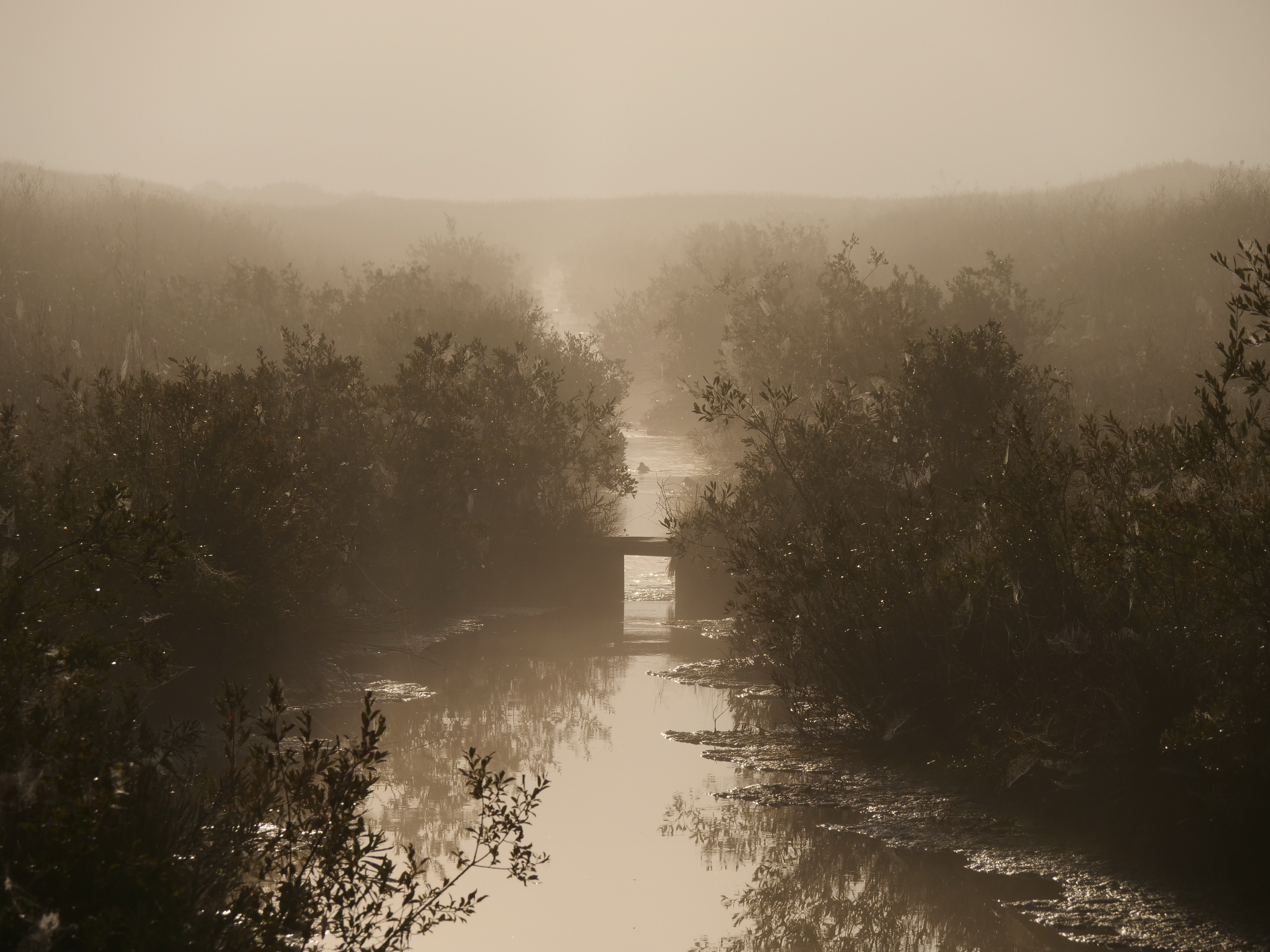
It was a beautiful, misty morning on the marsh. Once the sun broke through the mist, it revealed dew-covered fields sparkling with many, many spider webs. A perfect start to a morning of birding! Thank you to Katharine for the gorgeous photos capturing the mood of the morning!
A misty start to the morning. Photo by Katharine.
Dew sparkling on a field of spider webs. Photo by Katharine.
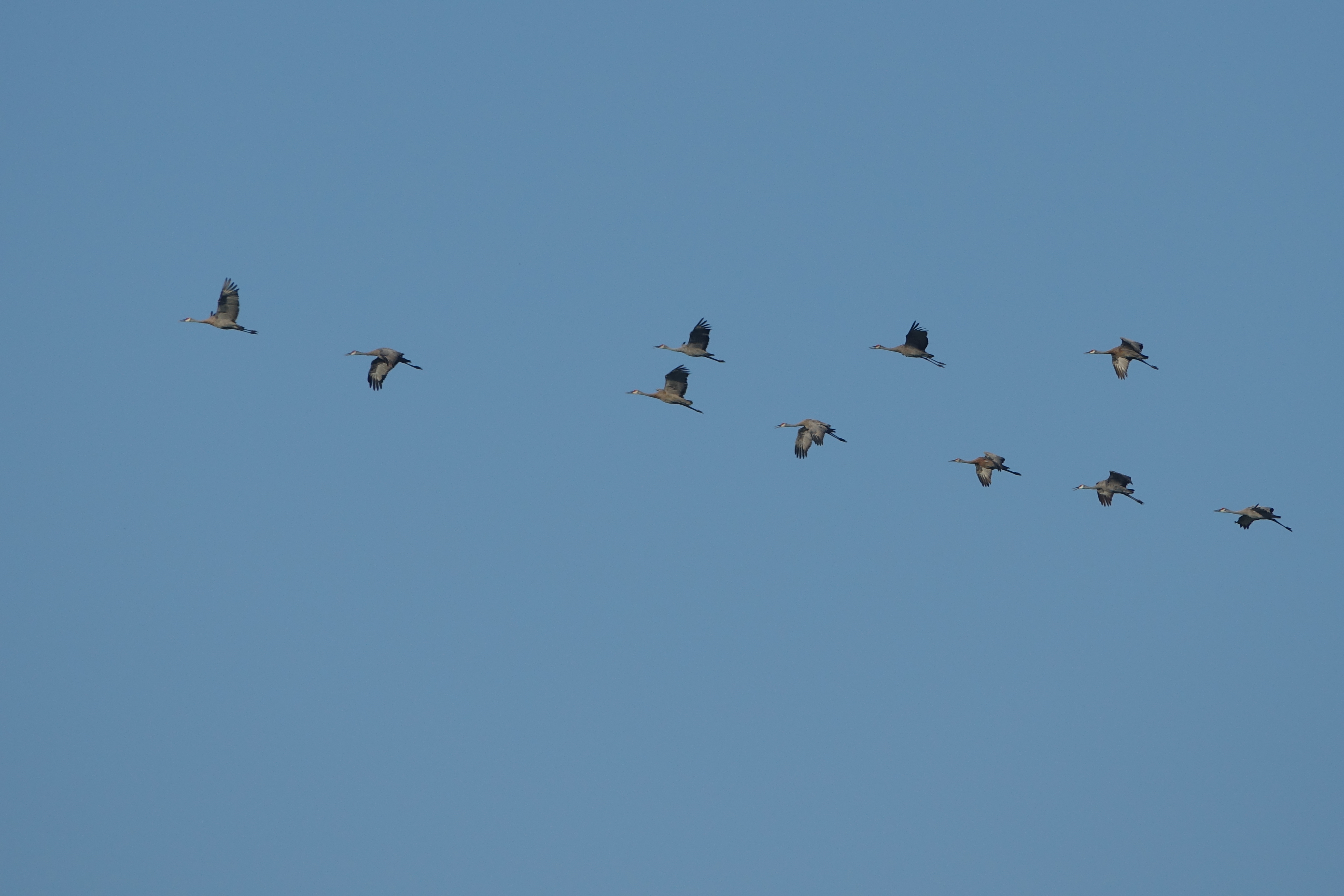
Our first group was made up of Marissa, Amaia and Kiefer. They started by traveling north up Road 13 E. The most notable observation on the first leg of this journey was a total of 150 Sandhill Cranes seen flying overhead and standing in the roadside fields. A total of 80 Mallards were spotted along this route, and several species of sparrow including Chipping Sparrow (1), Swamp Sparrow (1), and Savannah Sparrow (11). Next, the group ambled along the Perimeter Dyke Trail to reach the North Observation Mound. On this short section of trail, the group observed 22 different species, including 17 Barn Swallows and 6 Bobolinks, both species at risk.
Sandhill Cranes flying overhead. Photo by Marissa.
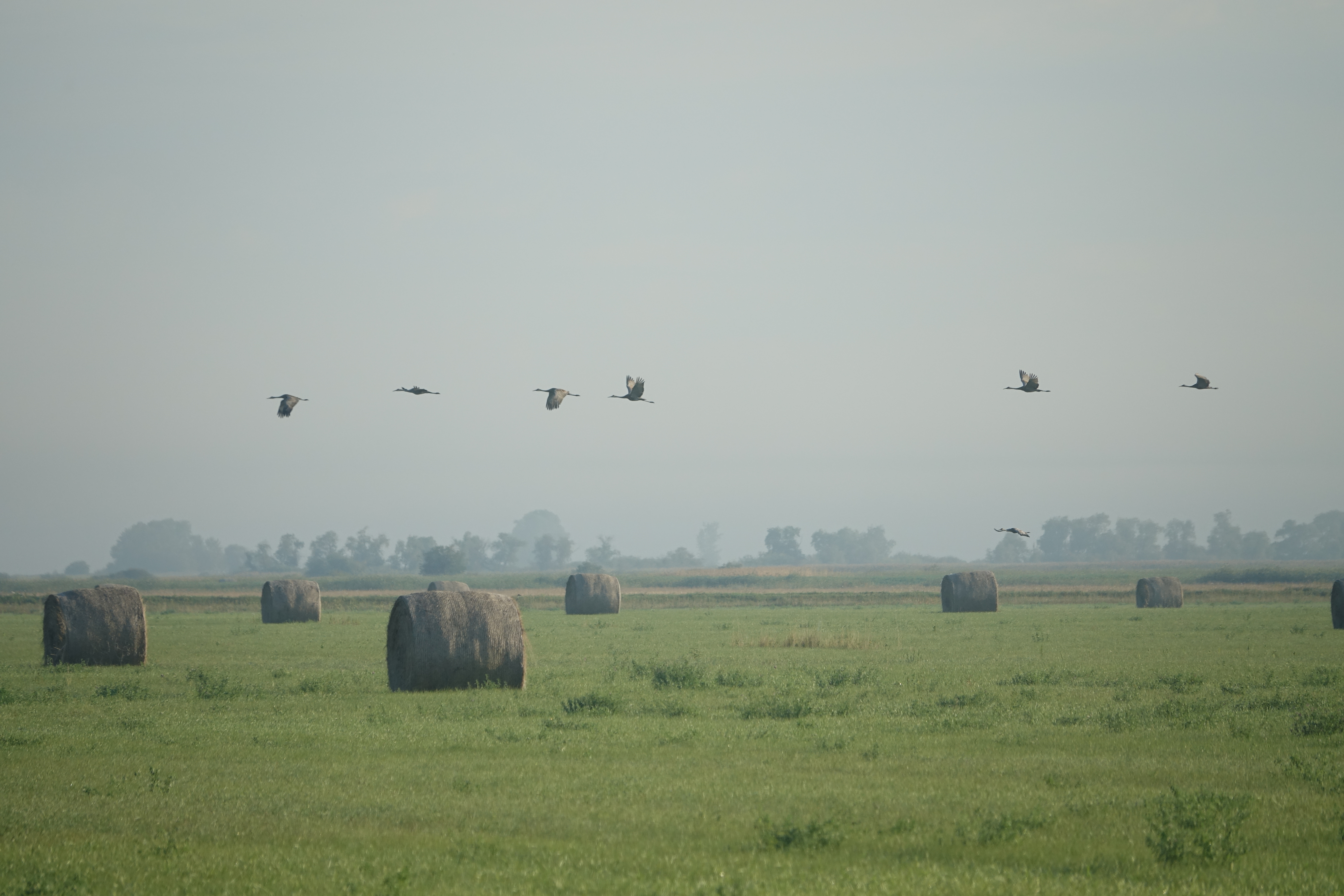
Our next group consisted of Jo, Jan, Betsy and Katharine. They began birding on Road 13 E, south of group 1, near the Artesian Spring. Along this route, group 2 also recorded 150 Sandhill Cranes with the note that they were heard to the northwest. Given that group 1 also observed 150 cranes, I’m going to assume that these were likely the same birds, as the sound of the Sandhill Crane’s unique call can carry very long distances. This group also observed 2 Wilson’s Snipes and 8 Savannah Sparrows on this route.
Sandhill Cranes taking off from a field. Photo by Marissa.
Group 2 then spent some time walking through the tallgrass prairie area near the intersection of Road 13 E and Road 79 N. They were rewarded with several prairie species including 3 Sharp-tailed Grouse, 3 Bobolinks, and a Western Meadowlark. To finish their morning, group 2 traveled south on Route 220, passing the Lure Crop, where they saw an additional 14 Sandhill Cranes. Along this route they also observed 8 Barn Swallows, another Bobolink, another Wilson’s Snipe and a Downy Woodpecker. A diverse crowd for such a small area!
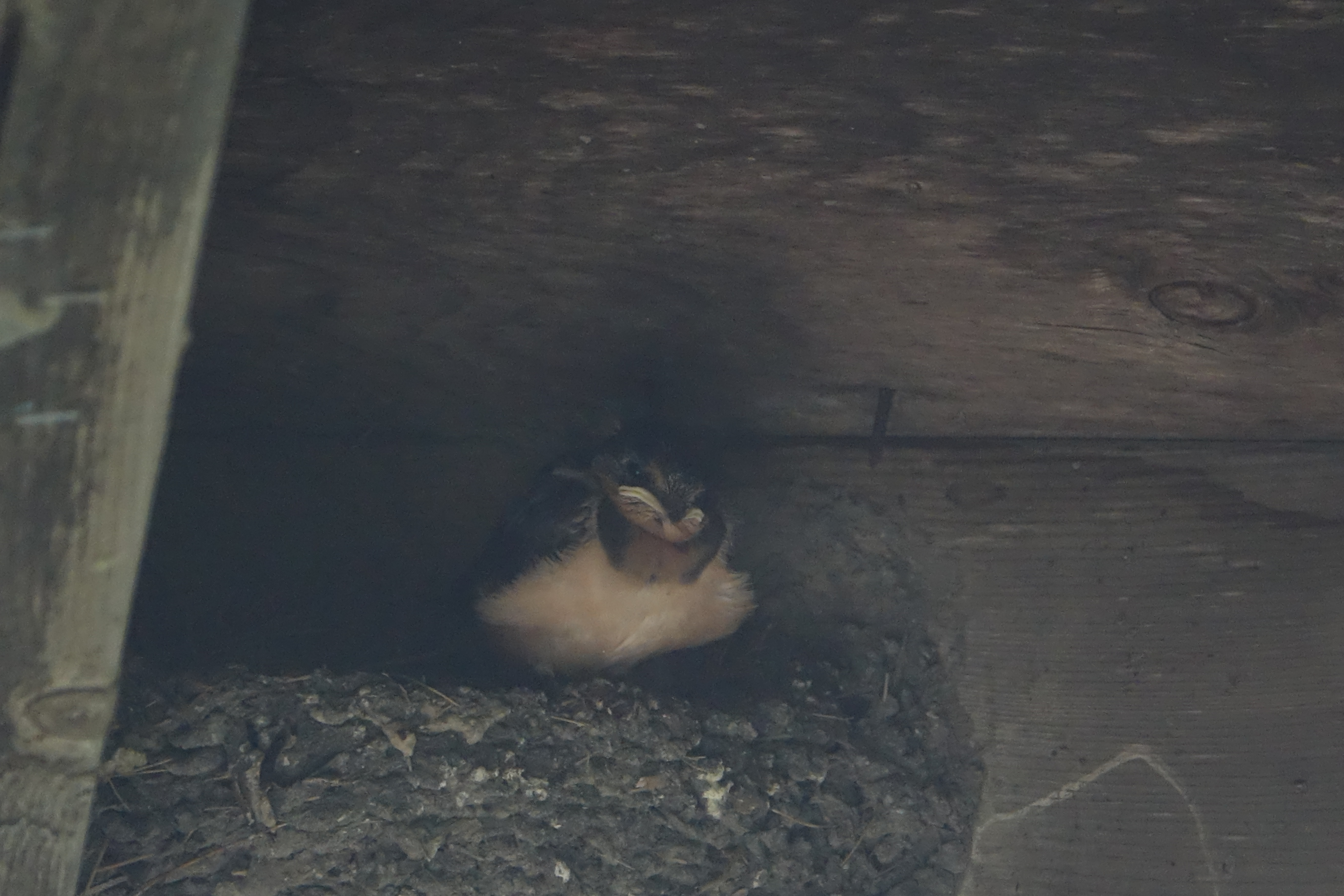
A grumpy-looking Barn Swallow. Photo by Marissa.
Next up was group 3, consisting of Emily, Matthew, Graham and Joanne. This group hit the trails, covering the area to the northeast of the Wetland Discovery Centre. While our first two groups tended to have a mix of wetland and grassland habitats, as they drove along the edge of the marsh with crops to their west, groups 3 and 4 were firmly in the marsh, which shows in the species assemblages they observed.
A Northern Harrier finding its next meal in the wetland vegetation. Photo by Marissa.
Group 3 started around the Wetland Discovery Centre, birding along the Killdeer and Jackrabbit Trails. On this first leg, the group observed 37 species, including a large flock of geese made up of 600 Canada Geese and 100 Snow Geese; five different species of shorebird (Short-billed/Long-billed Dowitcher, Lesser Yellowlegs, Greater Yellowlegs, Least Sandpiper and Pectoral Sandpiper); Barn Swallows (25) and Cliff Swallows (3), and a total of 350 Red-winged Blackbirds.
Greater Yellowlegs spied through the cattails. Photo by Marissa.
The group then made their way along the aptly named Wren Trail, where they observed 7 Sedge Wrens. The waterfowl was abundant on this section of their route, with 125 Mallards, as well as more Canada Geese (43), Northern Shovelers (2), a Gadwall (1), and Northern Pintails (10). They also added Wilson’s Snipe (9) and White-rumped Sandpiper (4) to their shorebird list and saw 13 Bobolinks.
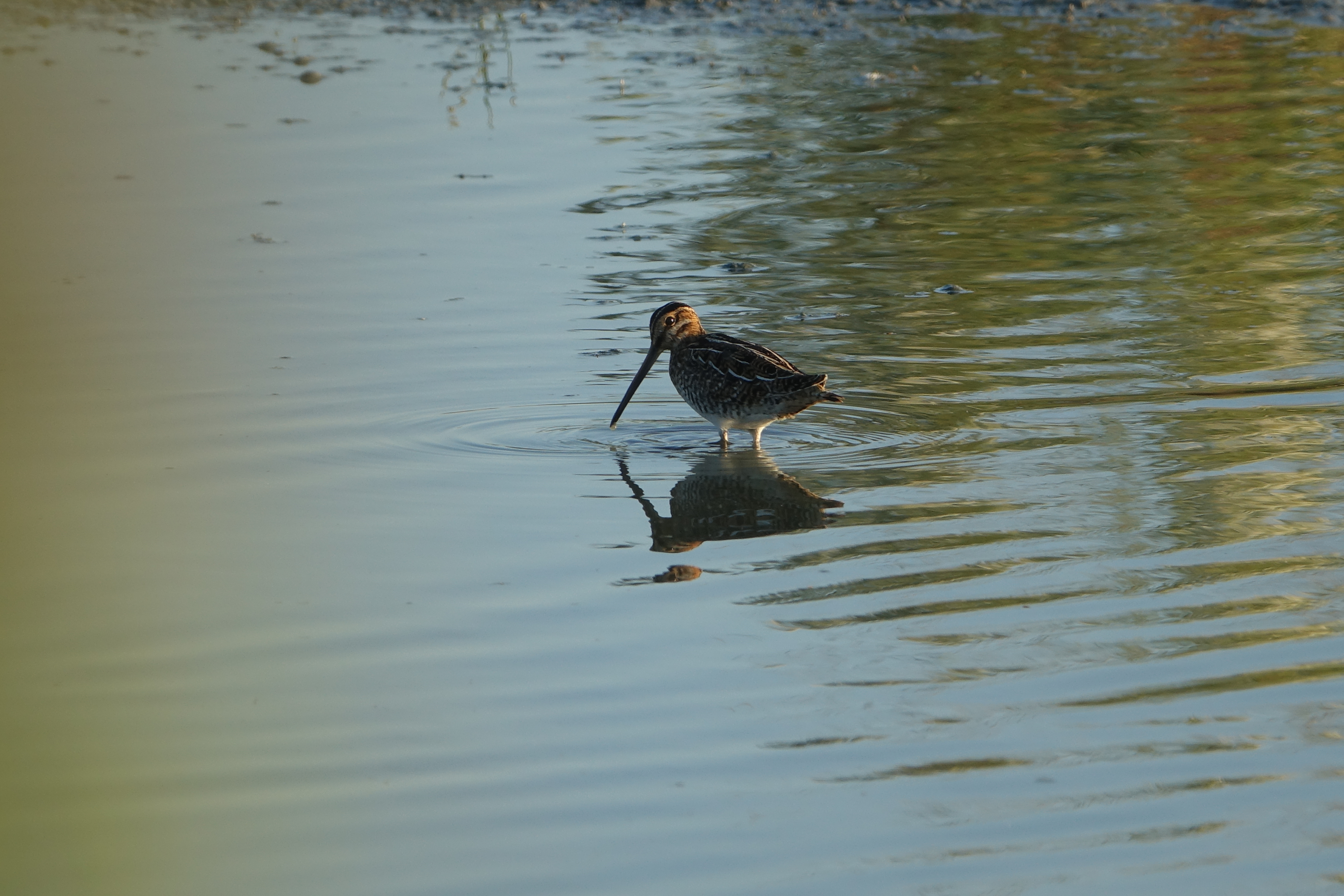
Wilson’s Snipe. Photo by Marissa.
Next, the group walked along the (again aptly named) Teal Trail, where they observed both the Green-winged and Blue-winged Teal. From the lookout, the group spied five Trumpeter Swans, an Endangered species under the provincial Endangered Species and Ecosystems Act. Group 3 finished their assigned routes by following the Coot and Cattail Trails, where they observed many of the same species already identified, with the addition of four species of gulls including Bonaparte’s (2), Franklin’s (53), Ring-billed (21) and the American Herring Gull (2).
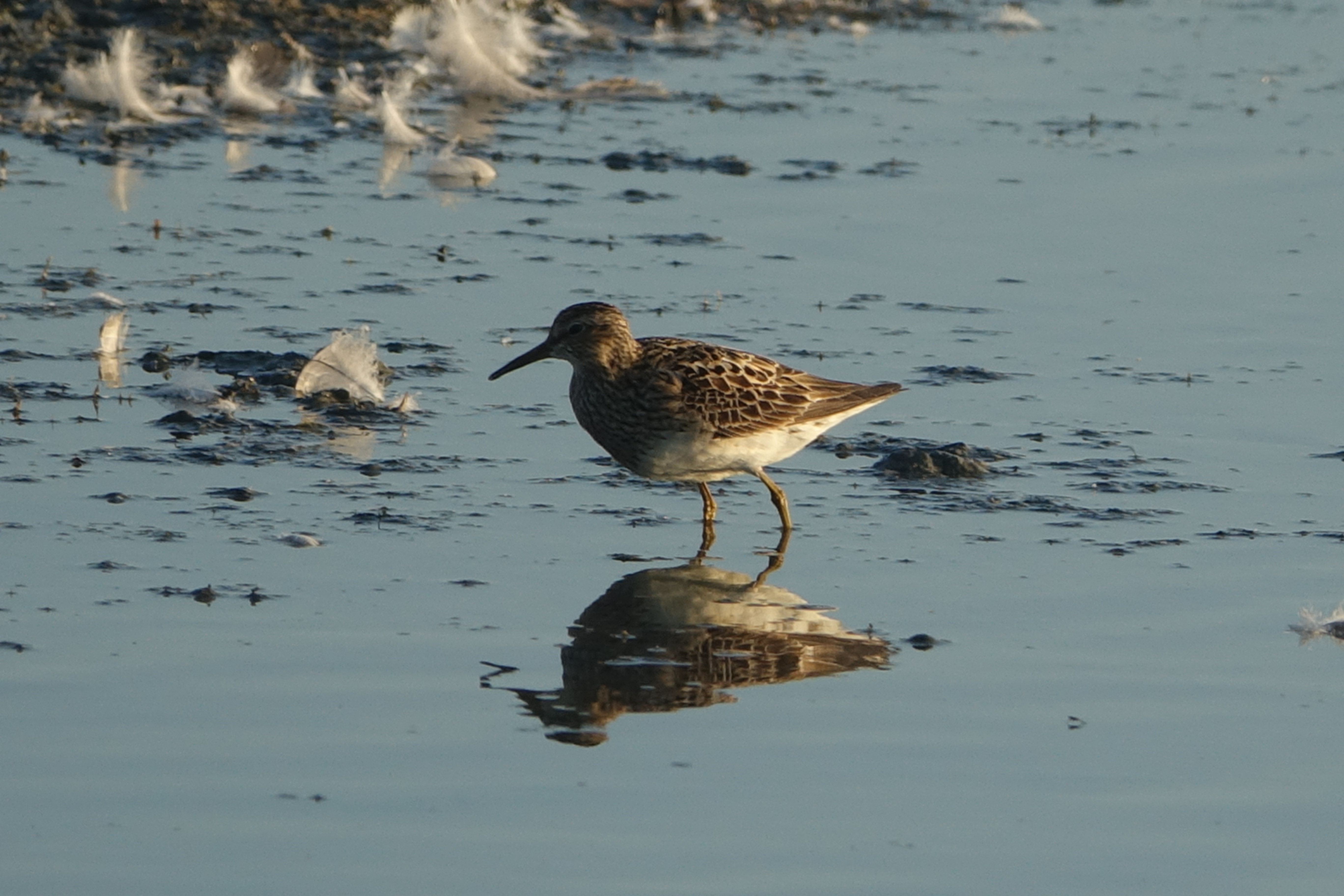
Pectoral Sandpiper. Photo by Marissa.
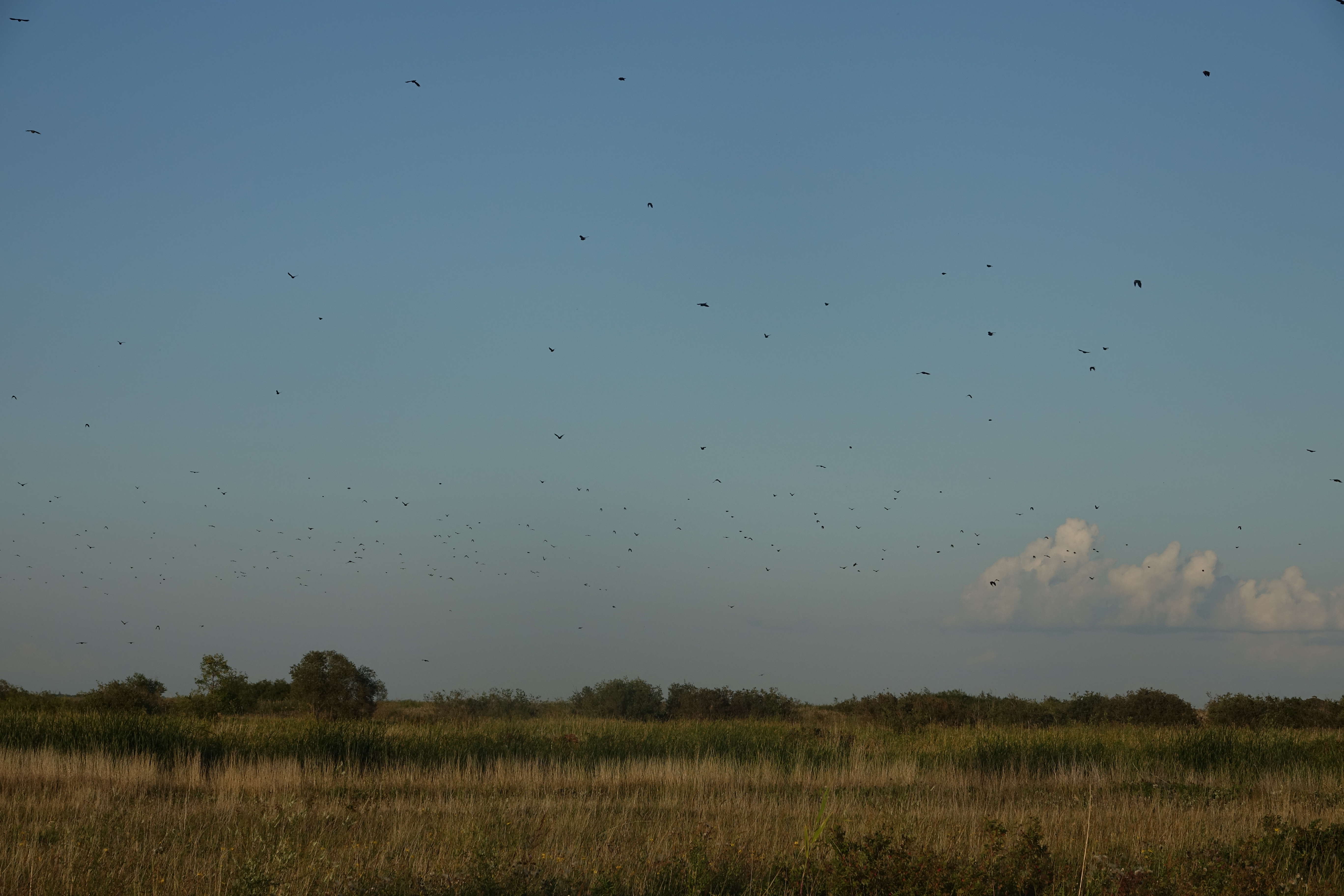
Our fourth and final group was made up of Bonnie, Gwen, and Paul, covering the trails to the southwest of the Wetland Discovery Centre. Bonnie, one of our seasoned shorebird surveyors, led the way along the International Shorebird Survey (ISS) Routes. They started along the ISS Route 1, which covers the Duck Pond Trail, and the Observation Blind, then north along the Lagoon Trail. On this first route, the shorebirds were out and about, with 12 Killdeer, 36 Wilson’s Snipe, 13 Lesser Yellowlegs, 3 Greater Yellowlegs, and 1 Least Sandpiper spotted. This was in addition to another Trumpeter Swan, 46 Mallards, and many other species of waterfowl. Despite all that, the highlight of this route had to have been the approximately 15,000 Red-winged Blackbirds spotted in migration. Wow!
A cloud of Red-winged Blackbirds over the marsh. Photo by Marissa.
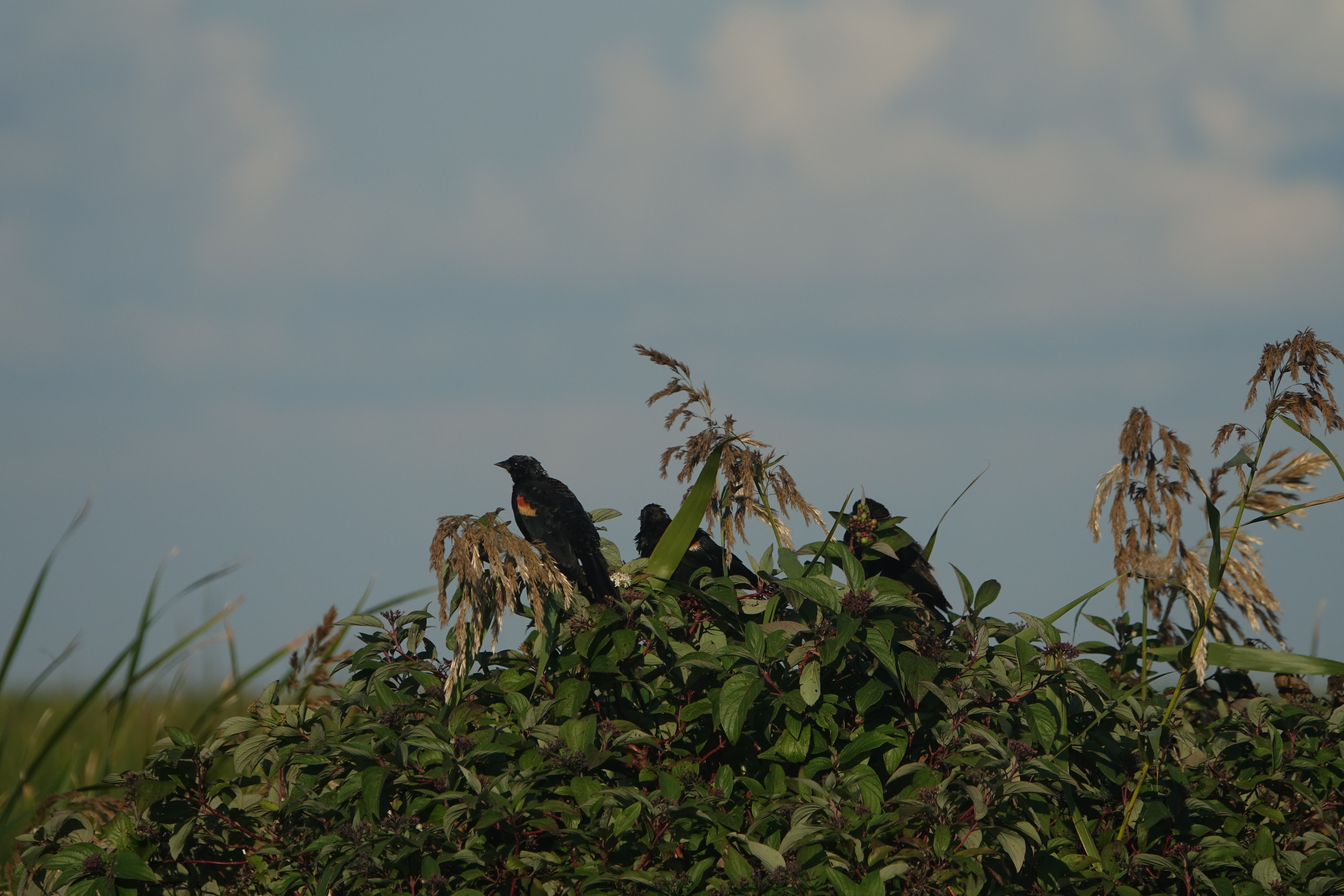
Red-winged Blackbirds. Photo by Marissa.
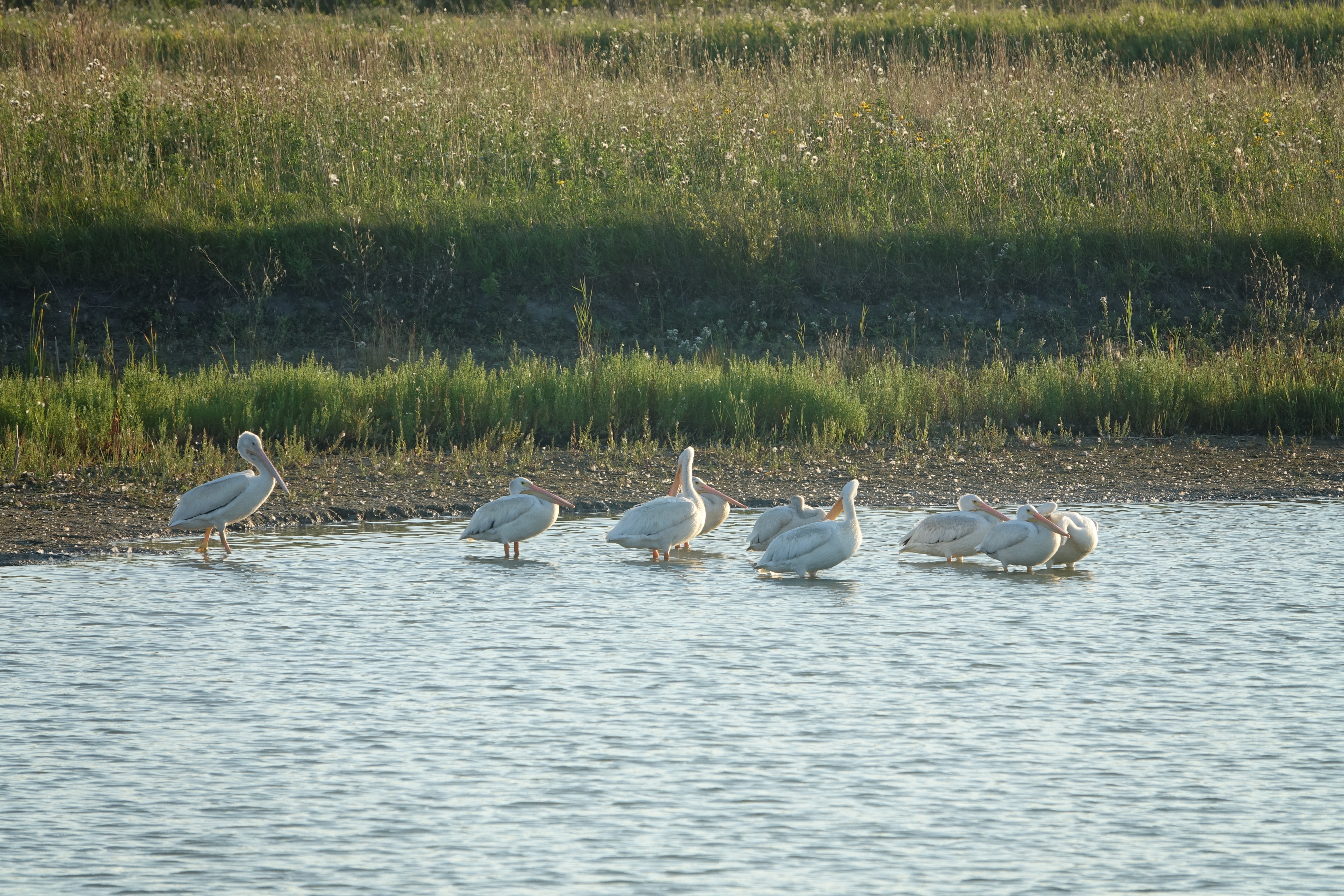
The final route for this group was ISS Route 2, taking the birders along Toad Road and the Blackbird Trail, before doubling back and following the Willow Trail back to the Wetland Discovery Centre. On this route the group observed 4 more Trumpeter Swans, 11 American White Pelicans, a Sharp-shinned Hawk, 24 Barn Swallows, and a Bobolink.
American White Pelicans. Photo by Marissa.
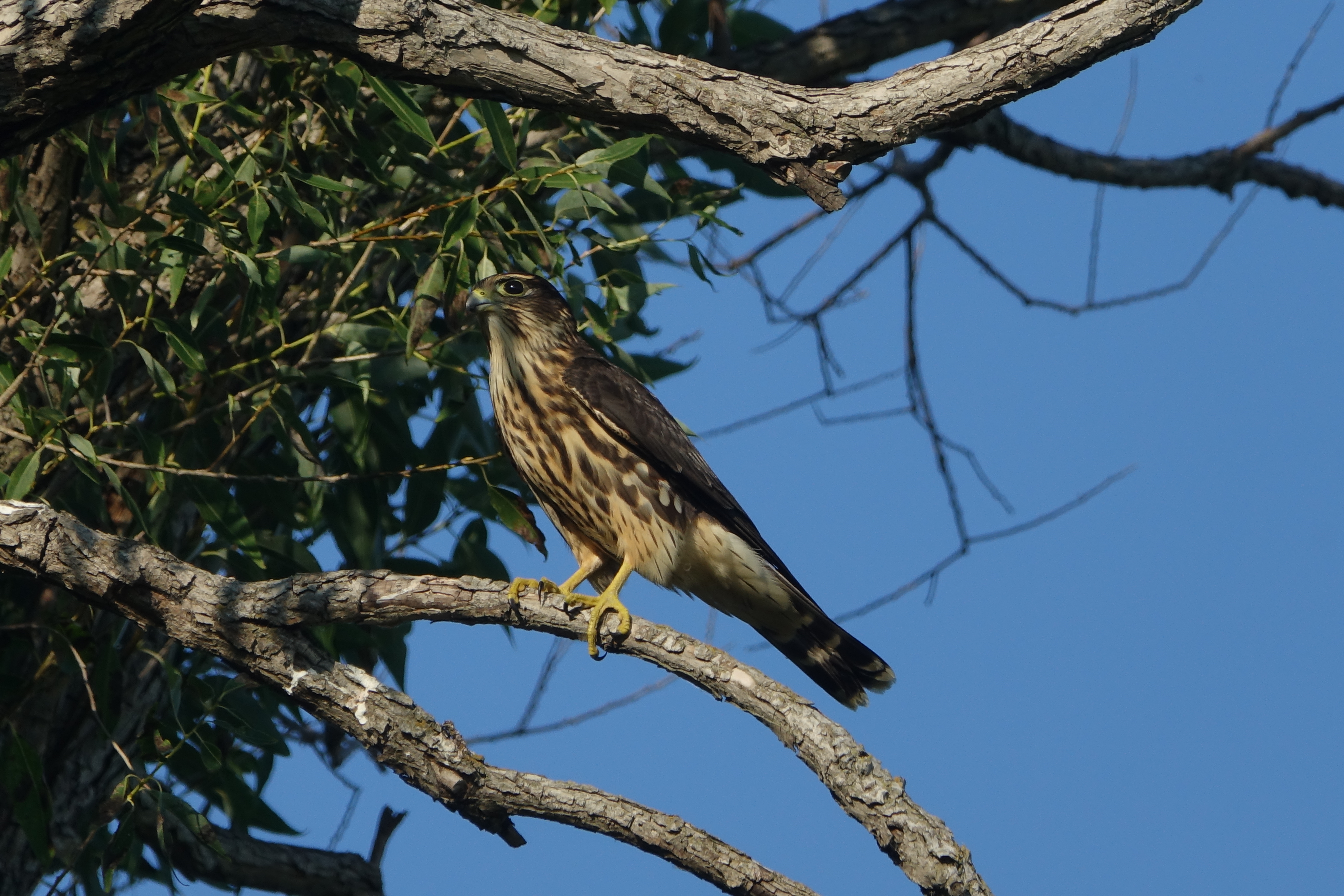
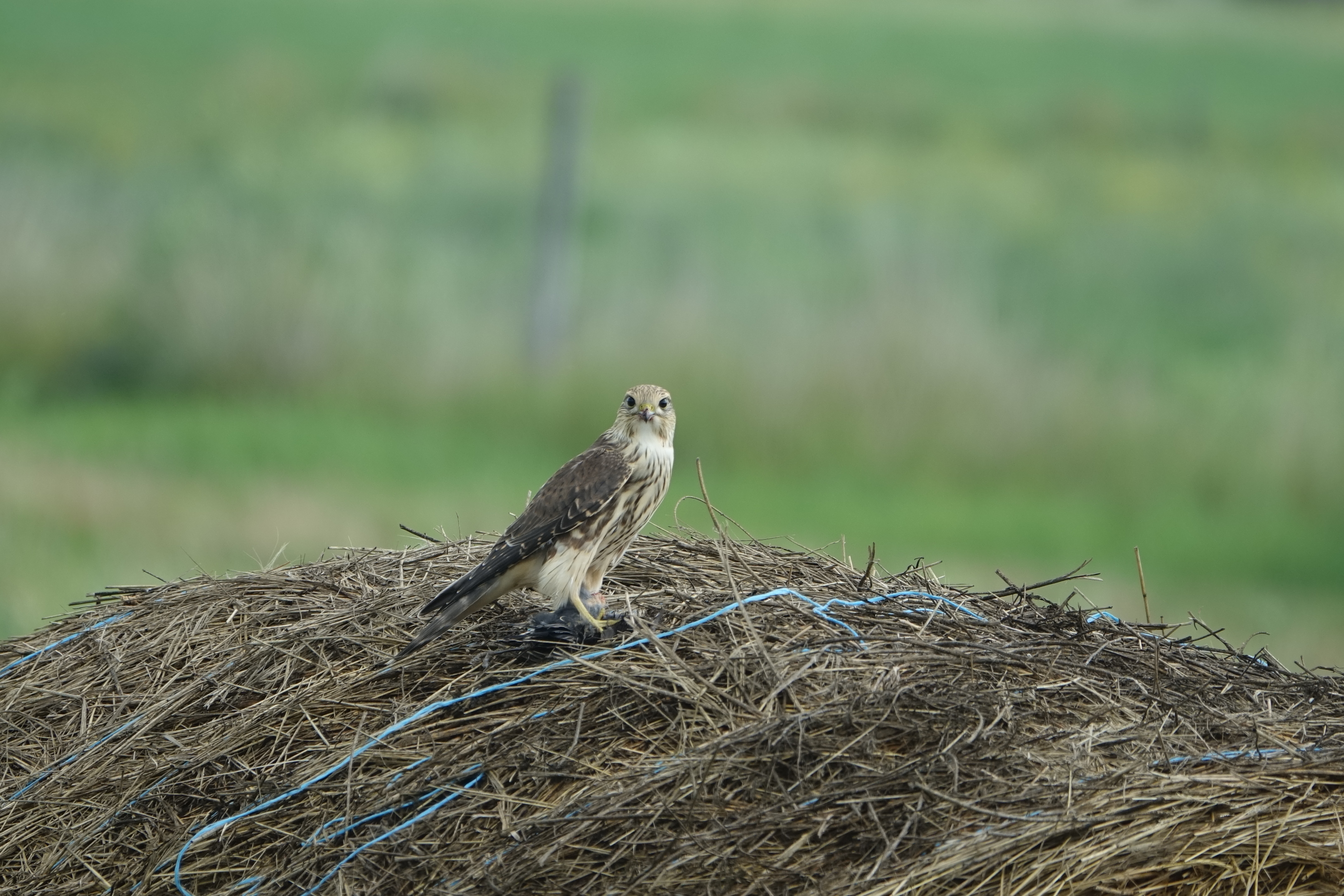
A Merlin posing in the willows. Photo by Marissa.
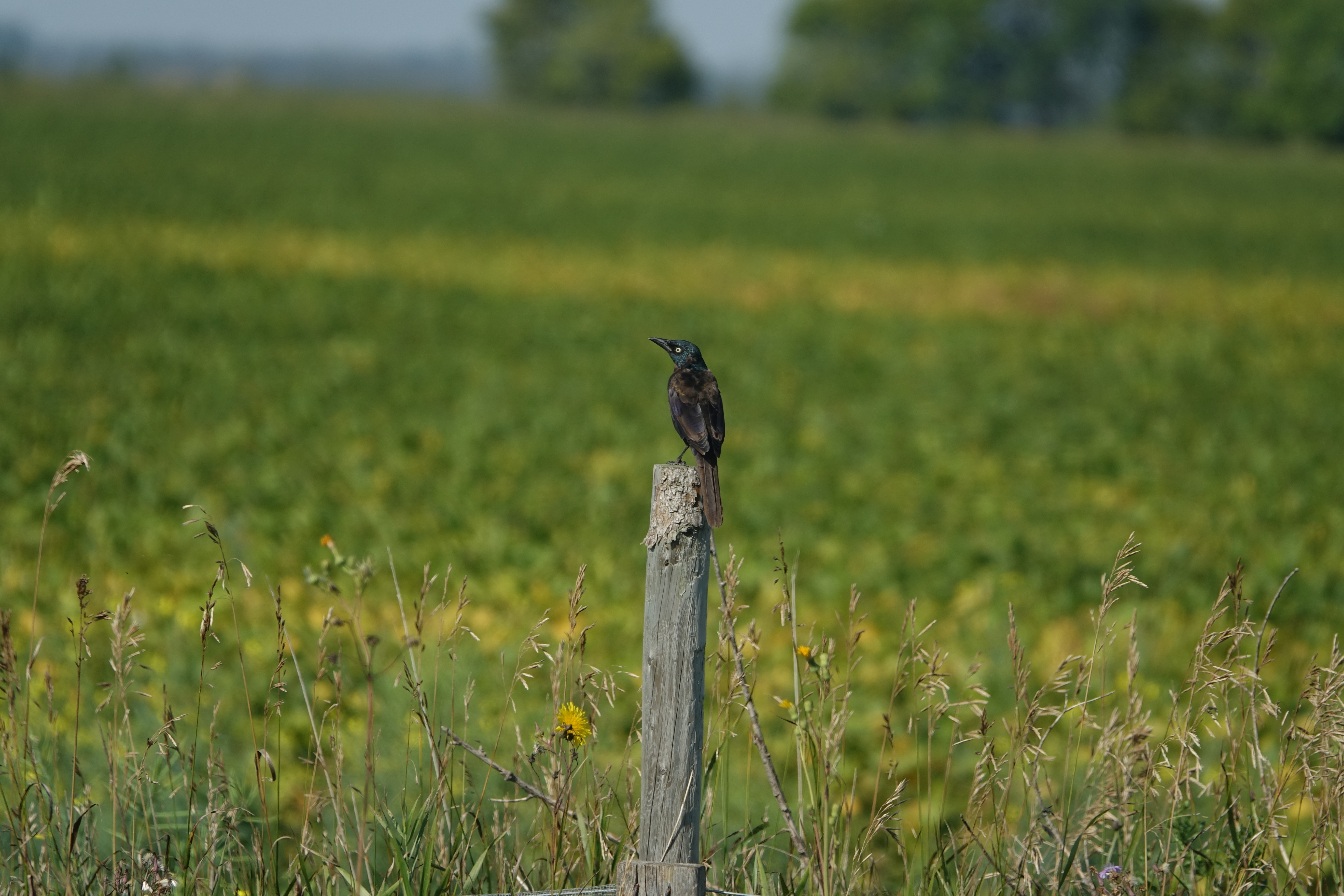
A Common Grackle showing off his iridescent blue head while perching on a fence post. Photo by Marissa.
Overall, it was a successful morning of birding, with 17,649 individual birds from 83 different species observed. A full table of observations is included below. As always, a huge thank you to everyone who joined us for this blitz, we truly couldn’t run without our volunteers. You’re awesome! This event was also made possible through funding from Environment and Climate Change Canada’s Habitat Stewardship Program. Thank you!
And with that, I am done recapping our 2025 IBA Bird Blitzes. Thank you for following along! I’ll be back with one more recap of our habitat stewardship events that took place in August and September, and then it’ll be into full-time planning mode for the summer. Make sure to follow along to stay informed on our upcoming events. If you’d like to join our mailing list to stay up to date, send me an email at iba@naturemanitoba.ca!
Hello! We’re back with another 2025 summer event recap, this time at the Delta Marsh IBA! Unlike our previous 2025 events, which focused on certain target species, this was a general blitz to help us determine what birds were using the IBA on the day of the blitz. The goal was to ID as many birds as we could to get a full picture of what was going on in the area!
Delta Marsh is an interesting site, providing many different habitat types depending on where you are in the IBA. The beaches on Lake Manitoba provide habitat for shorebirds; the wetlands are hotspots for waterfowl, and the upland deciduous forests provide habitat for forest species such as warblers, sparrows and woodpeckers. The wetlands also provide areas for insects to breed, providing a food source for aerial insectivores such as Barn Swallows, Bank Swallows, Cliff Swallows, Tree Swallows and Purple Martins.
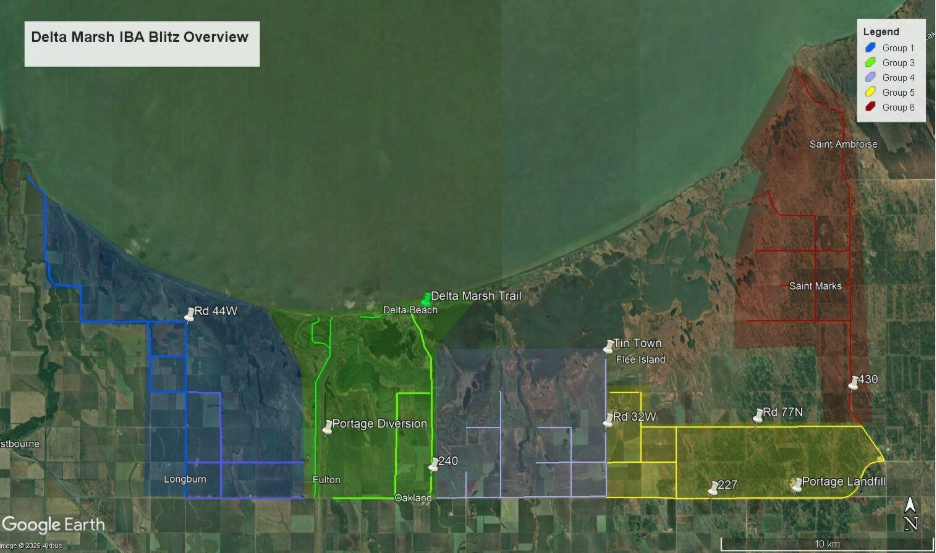
The Delta Marsh Blitz took place on August 6, and as usual, we split our participants into groups to cover the whole IBA. For this blitz, we had five groups of volunteers. Each group’s assigned area is highlighted in the map below. Due to some last-minute group shuffling, you’ll notice that Group 2 is missing on the map. To keep things consistent, I’ll refer to each group by their area as listed on the map. Each group began birding between 7-8:30 am and wrapped up by 12:30 pm to meet up for a group lunch at the Delta Beach Campground.
Our first group consisted of Marissa, Amy, and Connie, and they covered the westernmost portion of the IBA. They began by travelling north on Road 44W from Route 227, where they saw a large variety of birds, including several species of shorebirds (Killdeer, Wilson’s Phalarope, Greater Yellowlegs and peeps), 6 Red-tailed Hawks, 50 swallows (a mix of Bank Swallows and Barn Swallows, both listed as Threatened under the federal Species at Risk Act) and lots of blackbirds. This group saw 60 Yellow-headed Blackbirds, 17 Red-winged Blackbirds, 80 Brewer’s Blackbirds, and 20 Common Grackles. Next, the group travelled north along Route 242 until they reached Lynch’s Point Campground. On this leg they saw an Eastern Wood-Pewee, a SARA species of Special Concern. While zigzagging south down Road 45 W to Road 43 W, Group 1 saw their largest numbers of birds of the morning, with 400 Franklin’s Gulls, and large groups of four swallow species. They saw 50 Bank Swallows, 100 Tree Swallows, 50 Barn Swallows, and 200 Cliff Swallows. Group 1 finished the morning travelling down Route 227, where they saw an additional 25 Barn Swallows, and 17 Mourning Doves, bringing their total MODO’s to 49 for the day.
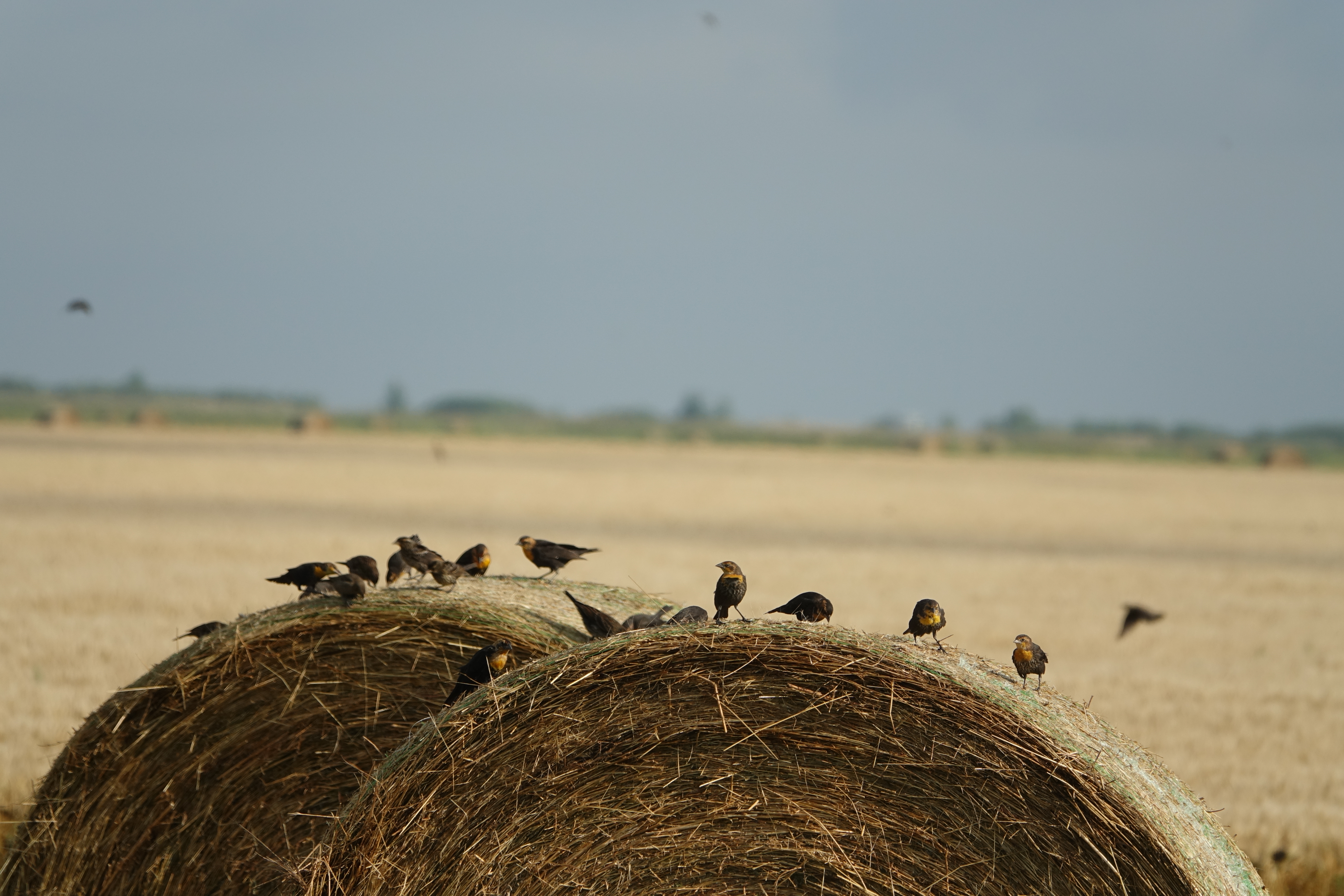
Yellow-headed Blackbirds. Photo by Marissa.
A perfect spot to enjoy a meal. Merlin photo by Marissa.
Moving eastward, our next group was Group 3, consisting of Jo, Bonnie, and Gwen. Group 3 covered the area east of the Portage Diversion to Route 240. This trio started the morning by heading north on Route 240 to Delta Beach, crossing through agricultural land and wetlands before arriving at the beach on the south shore of Lake Manitoba. The variety of habitat types presented a large variety of birds, including gulls, hawks, flycatchers, swallows, and blackbirds. Once they arrived at Delta Beach, this group put their shorebird identification skills to the test, observing 15 different species! The highlight was a group of 52 Hudsonian Godwits, likely stopping over on their long fall migration to South America. Group 3’s final route was along the Portage Diversion dike, again passing through a variety of habitats like agricultural land, wetlands, and shrubby riparian areas. Along this route, the group observed waterfowl like Wood Ducks and Mallards, a Great Blue Heron, 7 Red-tailed Hawks, an Eastern Wood-Pewee, Barn and Cliff Swallows, and 161 Yellow-headed Blackbirds.
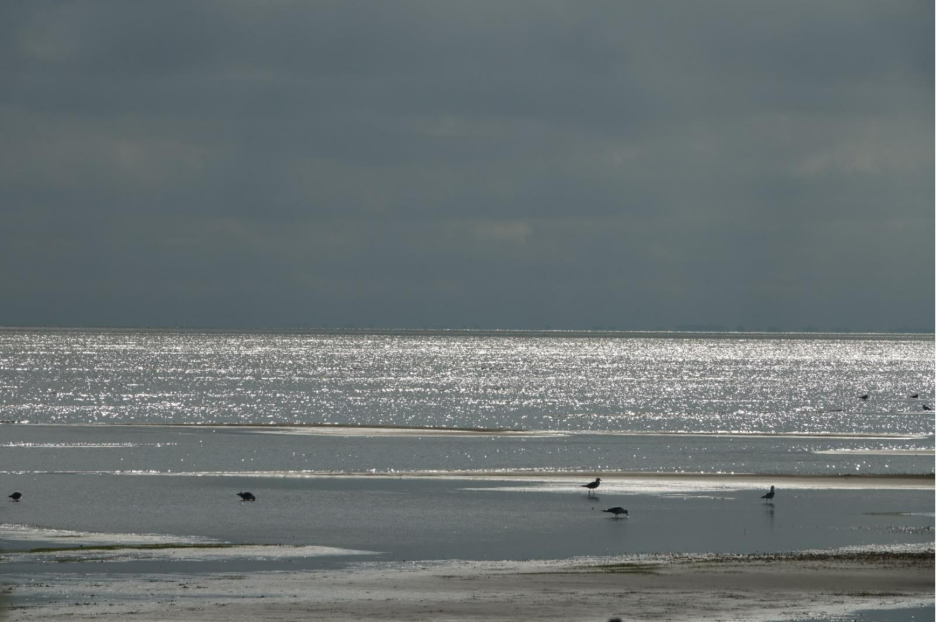
Moody skies over Lake Manitoba. Photo by Marissa.
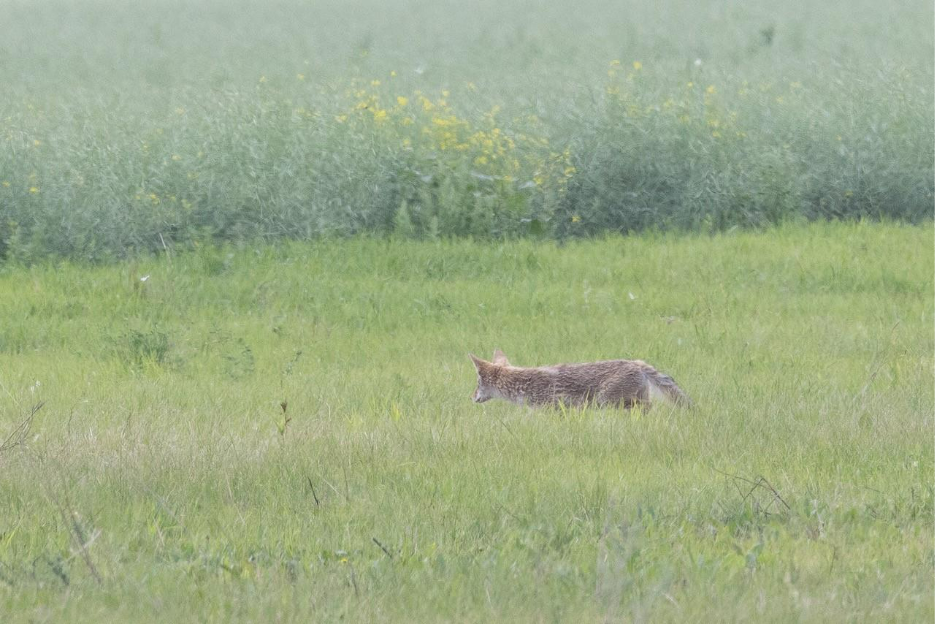
Carol, Eliza, Gary, and Katharine were in Group 4, covering the middle of the IBA from Route 240 to Road 32 W. The group started the day by traveling up and down Road 32 W, where they encountered 65 Barn Swallows, 11 Purple Martins, and 4 Northern Harriers. The birding continued down Roads 76 N and 33 W, where the group saw flycatchers (Eastern Wood-Pewee, Least Flycatcher, Great Crested Flycatcher, Eastern Kingbird), four species of swallows perched on the wires next the road with some sparrows joining in, the ever-present blackbirds, and a coyote stalking through the grass! For the rest of the morning, Group 4 travelled along Roads 33 W, 35 W and Route 227, continuing to see a similar species assemblage at each of their stops.
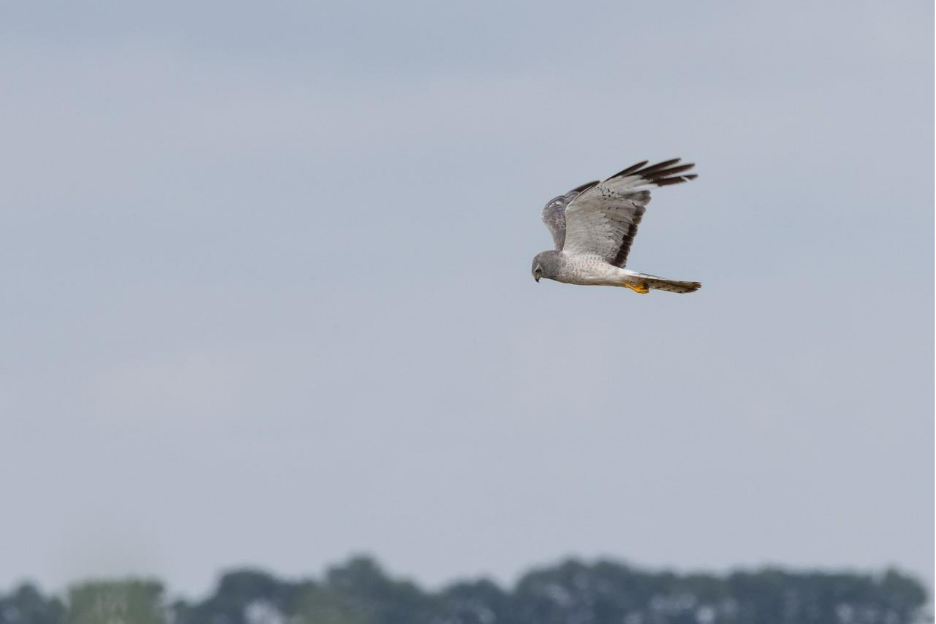
Northern Harrier on the lookout for breakfast. Photo by Carol.
An unexpected visitor to the IBA Blitz! Photo by Carol.
Alain, Pranav and Eda made up Group 5, covering the southeastern portion of the IBA. They started their day heading west on Road 77 N, where they encountered a few shorebirds, an American Bittern, an Eastern Bluebird, and several species of Sparrow. The trio continued along Road 78 N, where they saw the majority of their reported species for the day, including 40 Barn Swallows, 3 buffy nondescript birds with big black eyes that they deduced to be Sprague’s Pipits, and 45 Bobolink. Wow! This group finished off their morning at the Portage la Prairie Regional Landfill, observing 500 Ring-billed Gulls enjoying the food that the dump had to offer.
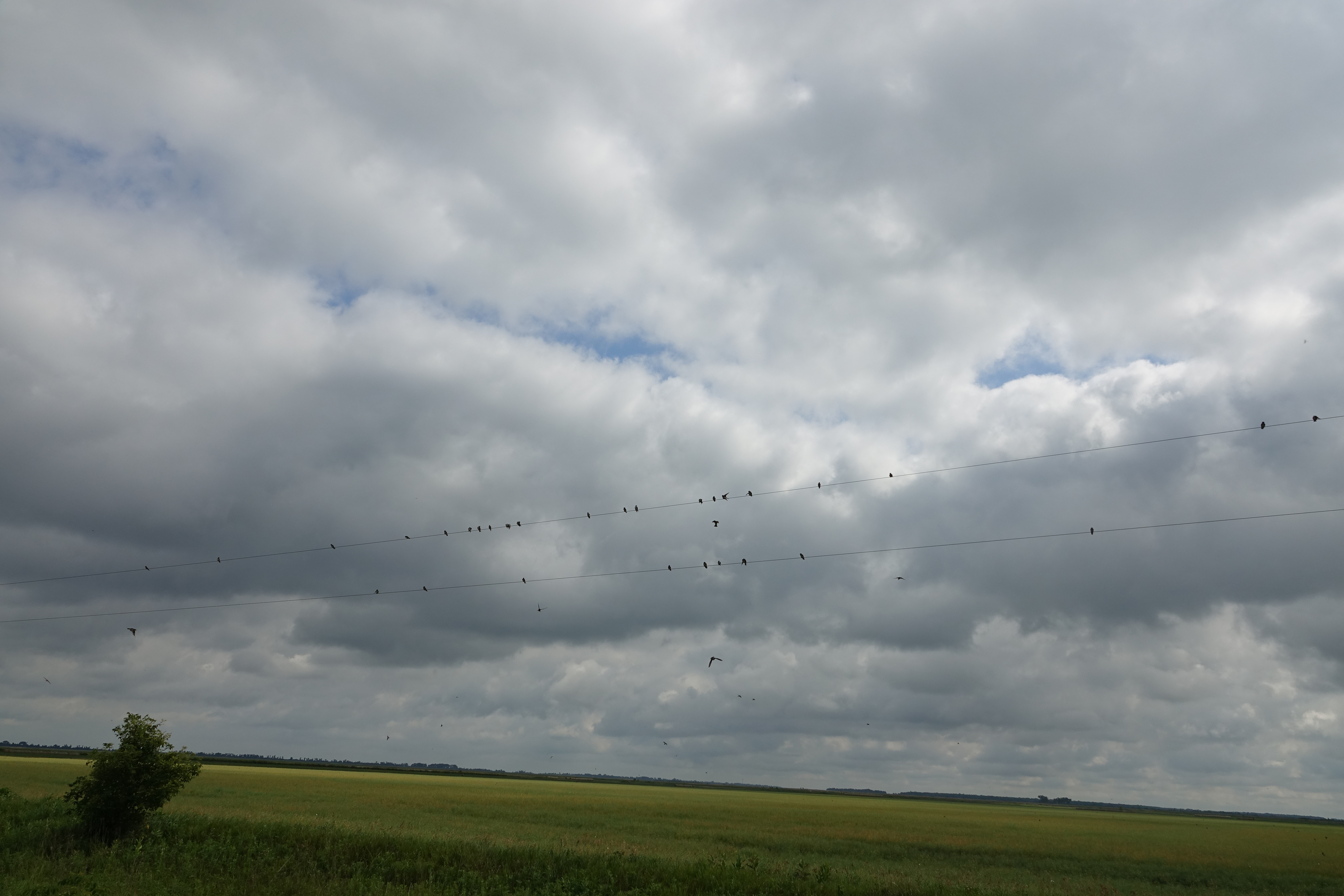
Swallows perched on roadside wires. Photo by Marissa.
Last but not least were Rudolf and Garry in Group 6, covering the northeast section of the IBA. Rudolf and Garry started the day on Route 240, winding through the marshes north of St. Ambroise. They observed several species of shorebirds, including 48 Least Sandpiper, as well as 52 Pelicans, and a family of 5 Northern Harriers. Over 250 swallows were spotted in this area, including Bank Swallows, Tree Swallows, Barn Swallows, and Purple Martins. Heading slightly south through St. Ambroise, the group began seeing woodpeckers galore, with 3 Yellow-bellied Sapsuckers, a Downy, a Hairy, 7 Northern Flickers and 2 Red-headed Woodpeckers!! In the same region they spotted flycatchers, vireos, swallows, sparrows and blackbirds, among others. From there, the group traveled along Road 83 North towards Clandeboye Bay, where they saw 4 Bobolink and promptly got stuck in the mud! They were able to get out, but it was a close call. Thankfully, Rudolf and Garry were able to carry on towards Waterhen Bay, where they recorded many species of waterfowl including 40 Mallards, 28 Western Grebes, and 123 Pelicans. The final route of the Blitz for these two took them down Road 82 N and route 430, where they encountered 23 Cedar Waxwings, and 38 Barn Swallows.
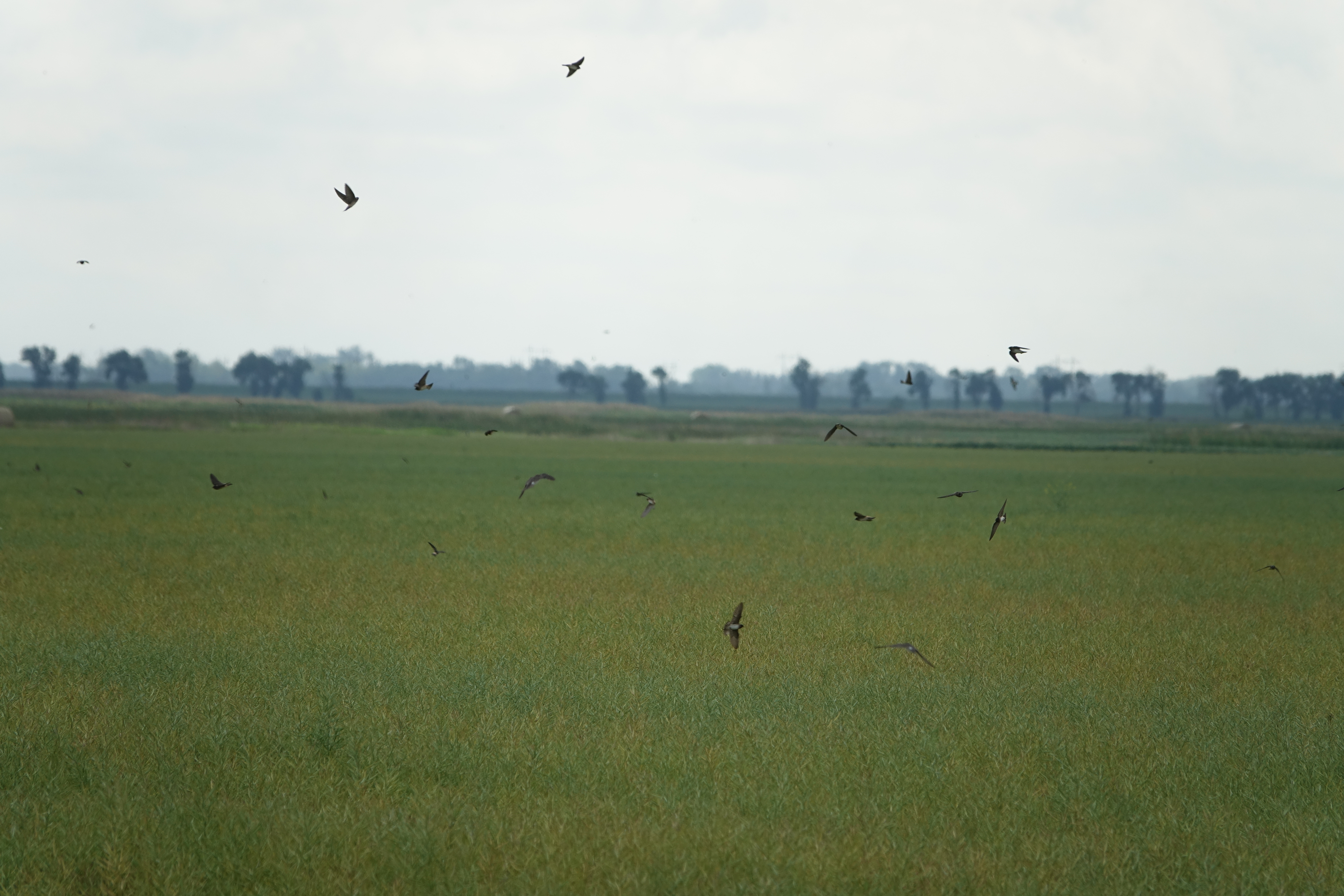
Large groups of swooping swallows were a common sight for most groups on this blitz. Photo by Marissa.
Overall, it was a great morning of birding, with a total of 122 species identified and 6155 individuals. A full species list is included below. A huge thank you to all our volunteers who made it out for this event; it wouldn’t have been possible without you! This event was also made possible by funding from Environment and Climate Change Canada’s Habitat Stewardship Fund. As always, if you’re interested in participating in similar events in the future, send me an email at iba@naturemanitoba.ca!
-Mackenzie
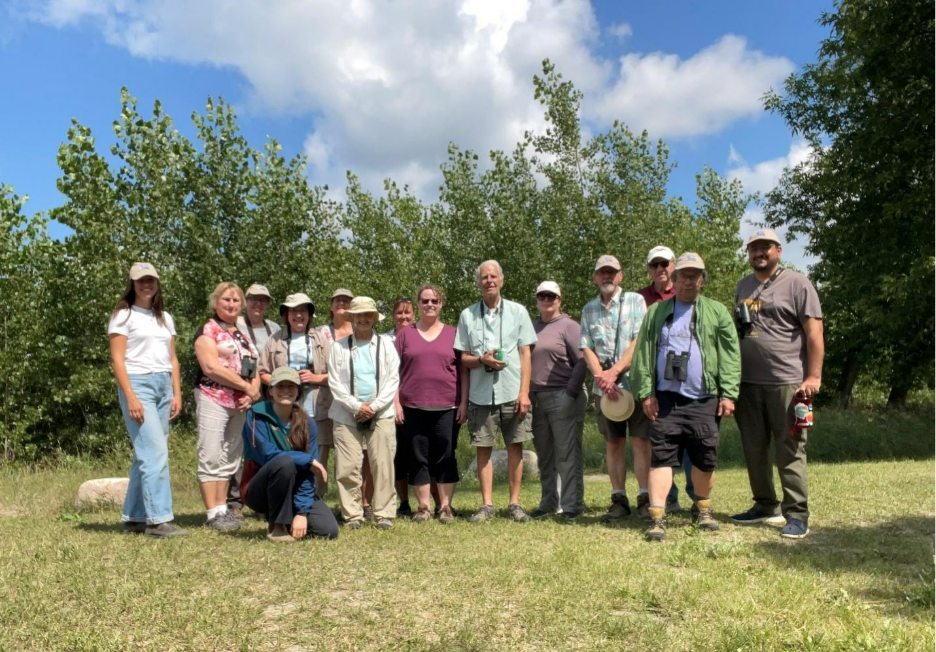
Our incredible Delta Marsh volunteers! Photo by Marissa.
Hi everyone! Our next summer 2025 event recap is another Red-headed Woodpecker Blitz, this time at the Shoal Lakes IBA in the Interlake region! This event took place on July 19, and we had 15 participants helping us search for this charismatic species at risk. Check out our post on the Oak Lake RHWO Blitz for more information about the identification and habitat requirements for the Red-headed Woodpecker.
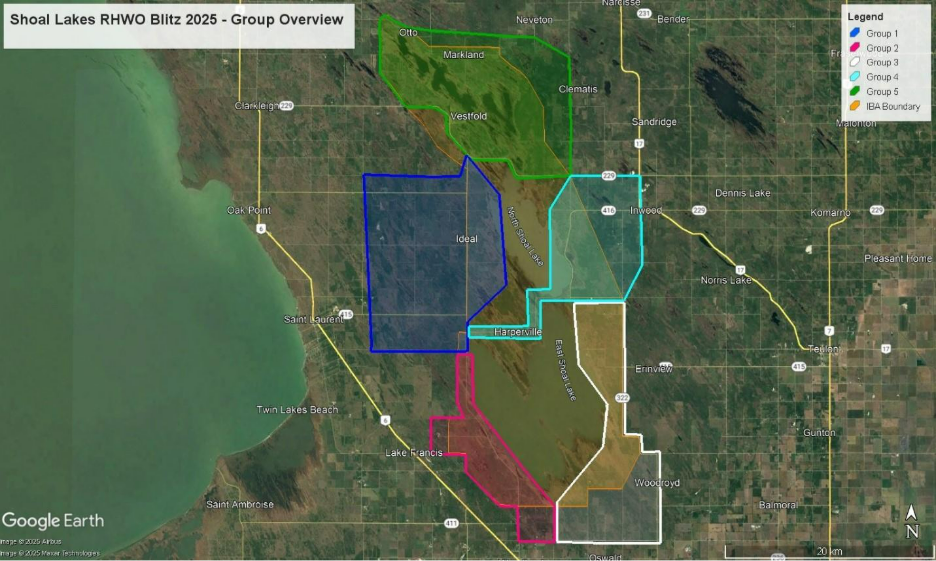
Participants split into five groups, each assigned to a section of the IBA. Within their sections, groups followed mapped-out routes, getting out of their vehicles to search more thoroughly in areas of suitable RHWO habitat. We also had an option for groups to follow a playback protocol, with the necessary permits from the provincial government. Each group kept a record of all the birds they saw along their routes, paying close attention to the RHWO. In total, 40 Red-headed Woodpeckers were counted, which I believe is a new blitz record!! At the end of the blitz, all groups met up to share their findings at Fry-Days in Teulon.
A map of our survey areas is below, as you can see, we extended beyond the IBA boundaries where there was potential habitat suitable for RHWO.
Jo, Betsy and Jan were in Group 1, searching the western section of the IBA. This group had an excellent morning of birding, spotting a whopping 61 different species, including 14 individual Red-headed Woodpeckers! The diversity of habitats in and around this IBA allows for some very diverse bird sightings in a short distance, as demonstrated by this group’s observations. They saw raptors, waterfowl, woodpeckers, flycatchers, sparrows, swallows and more! Other highlights from this group included 12 Barn Swallows and 4 Sandhill Cranes.
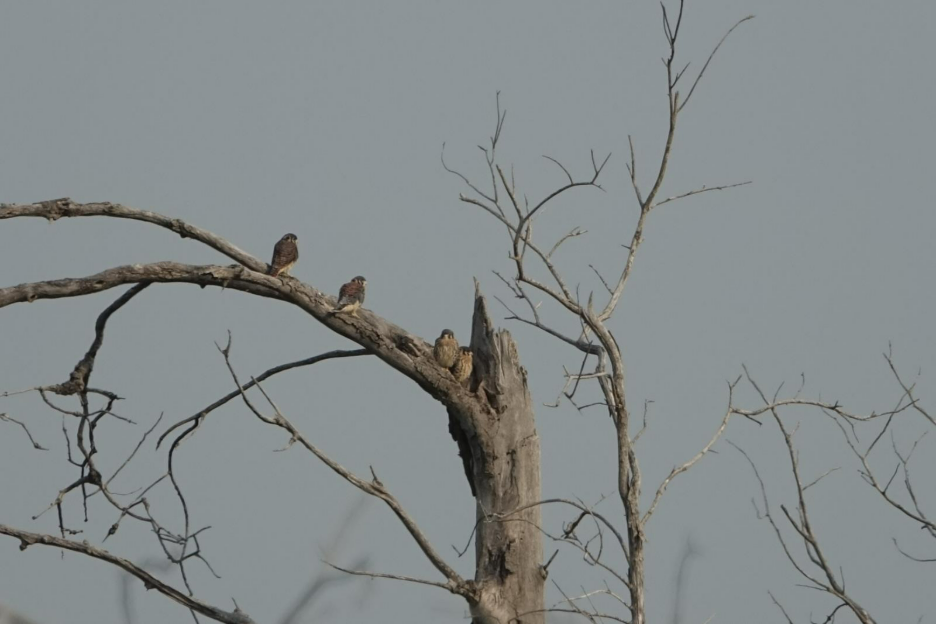
American Kestrels. Photo by Marissa
Katharine, Carol and Gary were in Group 2, covering the southwest section of the IBA, east of Highway 6 and along the west shore of East Shoal Lake, collectively sighting 5 RHWO. This trio also saw 3 Great Egrets, a Double-Crested Cormorant, and 2 Bobolinks!
An American Bittern going on it’s way. Photo by Marissa
Eda, Graham, Amy, Marissa made up Group 3, surveying the area between the east shore of East Shoal Lake and Highway 322. Although this group didn’t observe any Red-headed Woodpeckers, they were treated to a close encounter with a pair of Sandhill Cranes.
A close encounter with a Sandhill Crane. Photo by MarissaGroup 3’s view of East Shoal Lake. Photo by Marissa
Bonnie and Gwyn were in Group 4, and they travelled south on Highway 416 along the east shore of North Shoal Lake, then surveyed between North and East Shoal Lakes on Highway 415. They spotted 3 RHWO during their survey, as well as a total of 29 Great Egrets!
Group 5 put up our largest RHWO count, sighting 14 within the IBA, an additional 3 seen on the way to lunch, and a final one spotted later that afternoon for a total of 18. Great work Garry, Rudolf and Gene! This group also saw the most species of the day with a total of 73! Like Group 1, Group 5 had many different habitat types within their survey area in the northern end of the IBA, giving them opportunities to see many different types of birds.
The final count of the 2025 Shoal Lakes Red-headed Woodpecker Blitz came to 40 RHWO, as I said above, a new potential program record! In total, our excellent group of birders observed 1753 individuals of 102 different species. A table summarizing all the observations is included below. Thank you again to our volunteers for an incredible event! This event was made possible by funding from Environment and Climate Change Canada’s Habitat Stewardship Fund.
Amy, Eda and Graham on the lookout on the shore of East Shoal Lake. Photo by Marissa
Although we are still very much in winter mode, writing up these event summaries is getting me excited for the seasons to come. I’ll be starting to plan our 2026 Summer Events shortly, so if you’re interested in receiving updates about future events, send me an email at iba@naturemanitoba.ca!
Those of you who have been following us for a while will notice that this year’s Shorebird Data looks a little different than usual. For the past several years, we’ve asked volunteers to follow the International Shorebird Survey (ISS) protocol, which involves travelling along pre-determined routes at four target IBA’s to look for shorebirds. This method has been challenging for us, mostly due to the large fluctuations in water levels from year to year. Sometimes the routes become inaccessible due to high water; sometimes the areas of suitable shorebird habitat have dried up. An area with high quality shorebird habitat one year might look completely different the next year, and the ISS protocol doesn’t take that kind of variability into account.
So, this year we decided to take a different approach, asking volunteers to share shorebird observations with us outside the constraints of the ISS routes, and even outside of IBA boundaries. This data will help us determine where the important shorebird areas are in the province, and will be used to help us figure out our next steps for shorebird surveys.
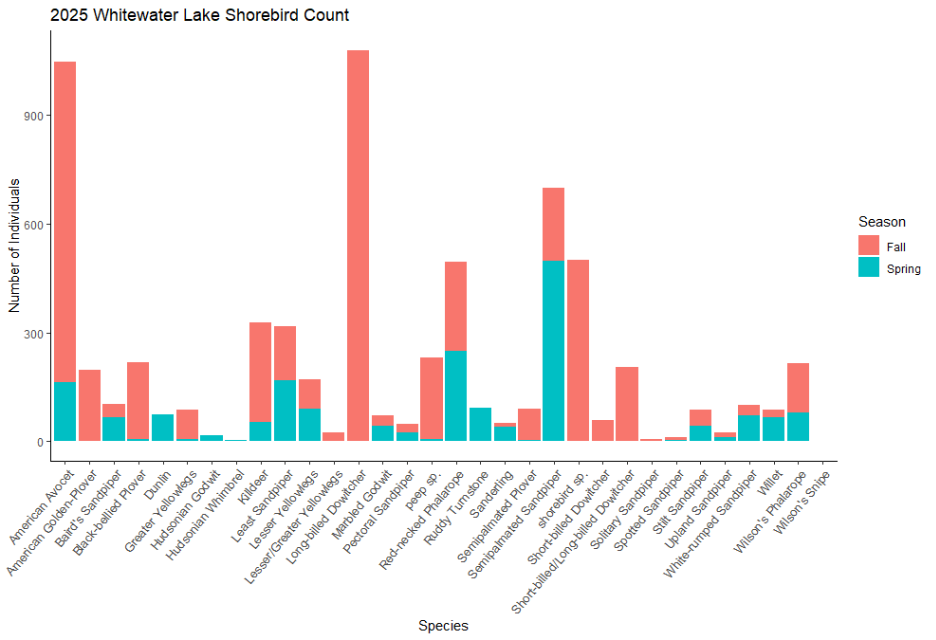
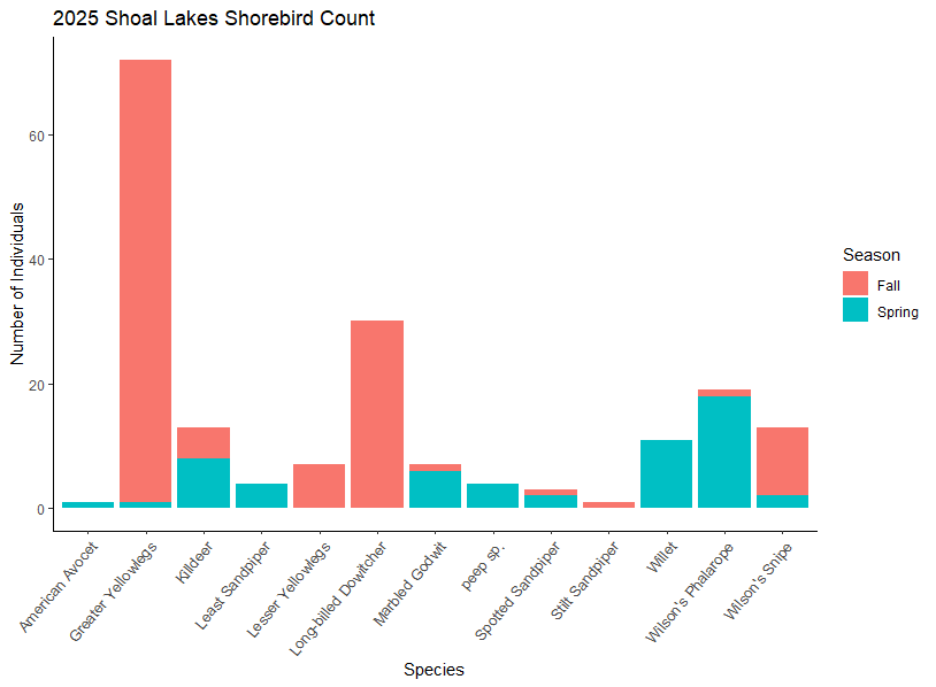
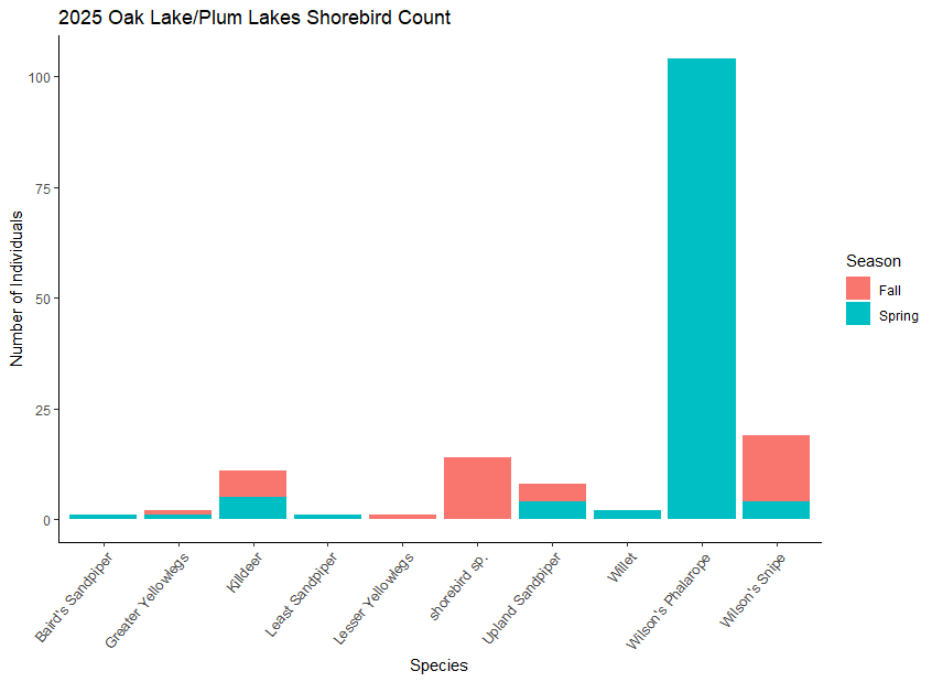
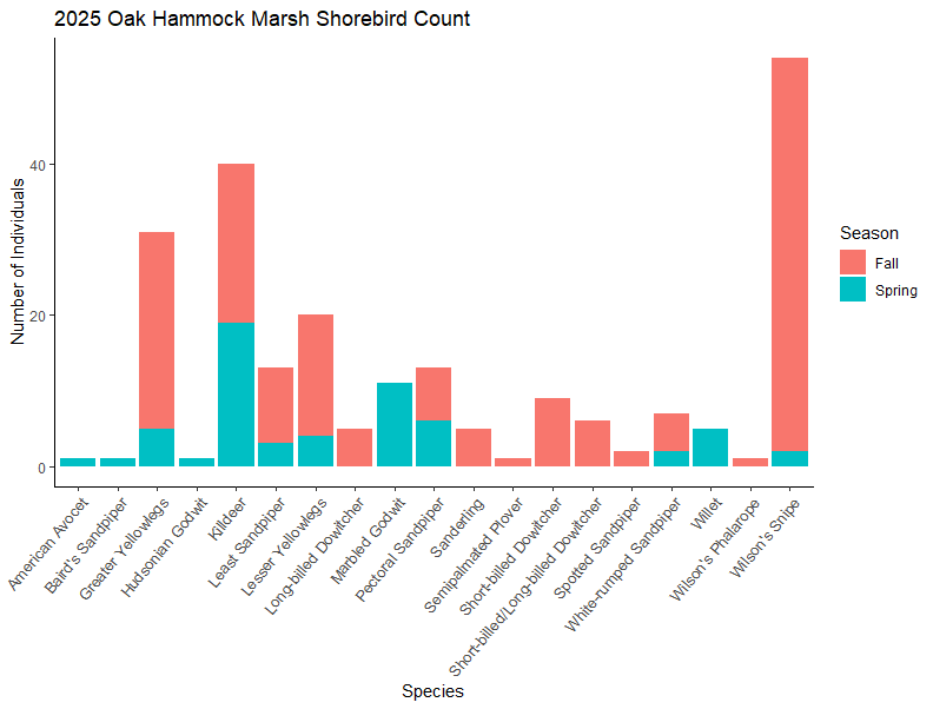
With that preamble over, let’s get to the data! I’ve still split the data into two seasons, spring (April 1 – June 15, 2025) and fall (July 11 – October 25, 2025), and we’ll look at the same four IBA’s as in previous years: Whitewater Lake, Shoal Lakes, Oak Lake/Plum Lakes and Oak Hammock Marsh. At the end of the post, I’ll include a short discussion of the other areas that had high numbers of shorebirds outside of those four IBA’s.
Whitewater Lake
Whitewater Lake had the highest numbers of shorebirds reported, as well as the highest species richness. In the spring, the most abundant species was the Semipalmated Sandpiper, while in the fall there were large numbers of Long-billed Dowitchers and American Avocets. These numbers are based on 39 eBird checklists in the spring, and 35 checklists in the fall, for a total of 74 checklists. Huge thank you to all who shared their Whitewater Lake eBird checklists with us, including Gillian, Colin, Sandy, Emily, Matthew, Carson, Glennis, Gene, John, Bonnie, Greg, Gwen, Amy, Kristopher, Renee, Megan, Pranav, Garry, Rudolf, Anita, Bill, Jackie, Mike, Cameron, and Tim.
Species
Fall Count
Spring Count
Total
American Avocet
885
164
1049
American Golden-Plover
198
0
198
Baird’s Sandpiper
38
66
104
Black-bellied Plover
212
5
217
Dunlin
0
75
75
Greater Yellowlegs
81
6
87
Hudsonian Godwit
1
16
17
Hudsonian Whimbrel
0
4
4
Killdeer
276
52
328
Least Sandpiper
151
167
318
Lesser Yellowlegs
80
90
170
Lesser/Greater Yellowlegs
25
0
25
Long-billed Dowitcher
1080
0
1080
Marbled Godwit
29
43
72
Pectoral Sandpiper
22
25
47
peep sp.
225
7
232
Red-necked Phalarope
246
250
496
Ruddy Turnstone
0
92
92
Sanderling
11
40
51
Semipalmated Plover
86
4
90
Semipalmated Sandpiper
203
498
701
shorebird sp.
500
0
500
Short-billed Dowitcher
58
1
59
Short-billed/Long-billed Dowitcher
205
0
205
Solitary Sandpiper
5
0
5
Spotted Sandpiper
8
2
10
Stilt Sandpiper
44
43
87
Upland Sandpiper
13
12
25
White-rumped Sandpiper
28
71
99
Willet
23
65
88
Wilson’s Phalarope
135
80
215
Wilson’s Snipe
0
1
1
Number of Species
28
26
32
Grand Total
4868
1879
6747
Shoal Lakes
The North, West and East Shoal Lakes hosted 13 species of shorebirds over the spring and fall seasons, with 10 in the spring and 9 in the fall. Dominant species at the Shoal Lakes included Wilson’s Phalarope and Willets in the spring, and Greater Yellowlegs in the fall. These counts were based on 11 spring checklists, and 13 fall checklists, for a total of 24 checklists. Thanks to John, Tim, Walfried, Cam, Chris, Bonnie, Gwen, Peter, Paul, Betsy, Jan, Jo, Garry, Gene, Rudolf, and Robert for sharing your eBird checklists with us!
Species
Fall Count
Spring Count
Total
American Avocet
0
1
1
Greater Yellowlegs
71
1
72
Killdeer
5
8
13
Least Sandpiper
0
4
4
Lesser Yellowlegs
7
0
7
Long-billed Dowitcher
30
0
30
Marbled Godwit
1
6
7
peep sp.
0
4
4
Spotted Sandpiper
1
2
3
Stilt Sandpiper
1
0
1
Willet
0
11
11
Wilson’s Phalarope
1
18
19
Wilson’s Snipe
11
2
13
Number of Species
9
10
13
Grand Total
128
57
185
Oak Lake/Plum Lakes
The Oak Lake/Plum Lakes IBA had the lowest species richness of the four target sites, and relatively low species counts in both the spring and fall. The one outlier was the large numbers of Wilson’s Phalaropes observed in the spring. These numbers are based on 9 spring checklists, and 5 fall checklists, for a total of 14 checklists. Thank you to Matthew, Bonnie, Greg, Gwen, Glennis, Sandy, Gene, John, Simone, Anita, Bill, Gillian, Jackie, and Mike for sharing your observations with us!
Species
Fall Count
Spring Count
Total
Baird’s Sandpiper
0
1
1
Greater Yellowlegs
1
1
2
Killdeer
6
5
11
Least Sandpiper
0
1
1
Lesser Yellowlegs
1
0
1
shorebird sp.
14
0
14
Upland Sandpiper
4
4
8
Willet
0
2
2
Wilson’s Phalarope
0
104
104
Wilson’s Snipe
15
4
19
Number of Species
6
8
10
Grand Total
41
122
163
Oak Hammock Marsh
Our final target site was Oak Hammock Marsh, which had a higher overall species richness than Oak Lake/Plum Lakes and the Shoal Lakes, although not as high as Whitewater Lake. The most abundant spring species were Killdeer and Marbled Godwit, and the most abundant fall species was Wilson’s Snipe. These numbers are based on 10 surveys in each of the spring and fall seasons. Thank you to Bonnie, Gwen, Garry, Aynsley, John, Tami, Emily, Graham, Matthew, Joanne, Paul, Betsy, Jan, Jo, Katharine, Tim and Linnea for sharing your checklists with us!
Species
Fall Count
Spring Count
Total
American Avocet
0
1
1
Baird’s Sandpiper
0
1
1
Greater Yellowlegs
26
5
31
Hudsonian Godwit
0
1
1
Killdeer
21
19
40
Least Sandpiper
10
3
13
Lesser Yellowlegs
16
4
20
Long-billed Dowitcher
5
0
5
Marbled Godwit
0
11
11
Pectoral Sandpiper
7
6
13
Sanderling
5
0
5
Semipalmated Plover
1
0
1
Short-billed Dowitcher
9
0
9
Short-billed/Long-billed Dowitcher
6
0
6
Spotted Sandpiper
2
0
2
White-rumped Sandpiper
5
2
7
Willet
0
5
5
Wilson’s Phalarope
1
0
1
Wilson’s Snipe
52
2
54
Number of Species
14
12
19
Grand Total
166
60
226
Other Important Sites
This is where we’re going to stray a little bit from the usual format of these roundup posts. This year we asked for all of your shorebird observations, outside of the ISS routes, and even outside of IBA boundaries. Similar to the data above, I only used the observations from April 1 – June 15 for spring observations and July 11 – October 25 for fall. There were shorebird observations in the period between these two ranges, but to stay consistent with the figures above, we’re going to exclude that data for now.
The figures below take into account all of the shorebird observations that were shared with us on eBird for the fall and spring seasons. Areas outside of IBA’s that were obvious groups, such as the Chain Lakes, Elton Road Wetland, and the Alexander-Griswold Marsh complex, were grouped together. Other observations were grouped by geographic areas into “Other Southwest”, “Other South Central”, and “Other Southeast”.
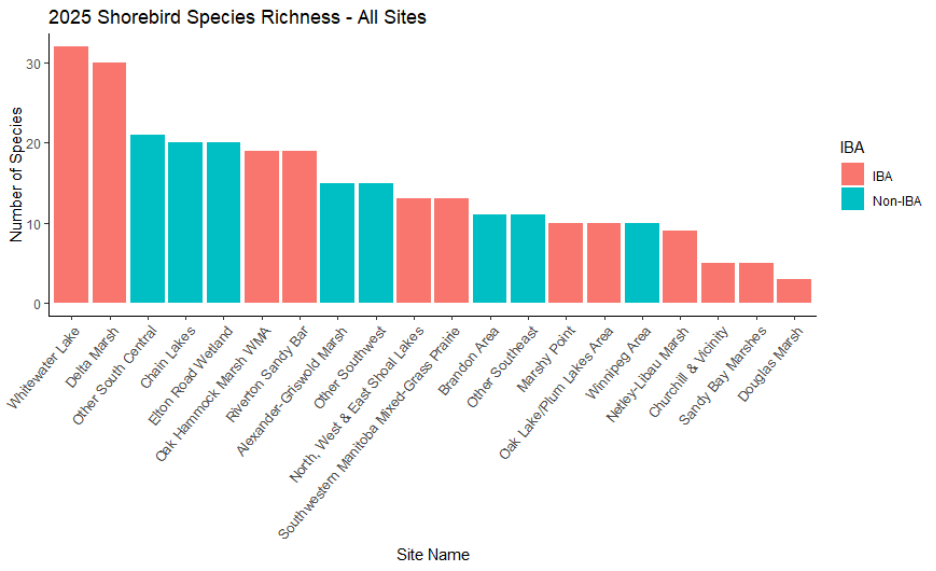
In terms of species richness, the site with the highest number of species overall was Whitewater Lake, followed closely by Delta Marsh. Interestingly, the next three highest values were not found in IBA’s, but in the “Other South Central” category (which includes the Pilot Mound area, and the southern Interlake), the Chain Lakes, and the Elton Road Wetland.
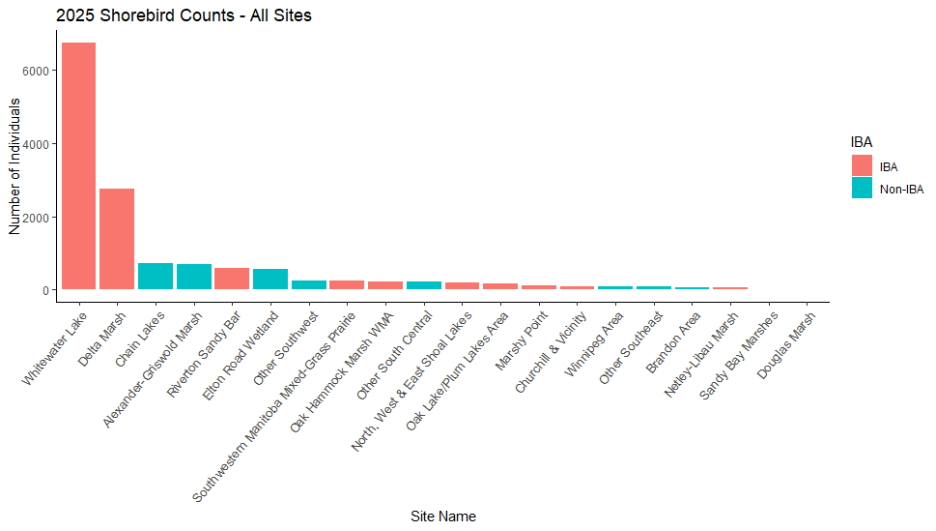
We see similar results looking at the overall shorebird counts for 2025. The site with the highest count by far was Whitewater Lake, followed again by Delta Marsh. The next highest were the Chain Lakes and the Alexander-Griswold Marsh areas.
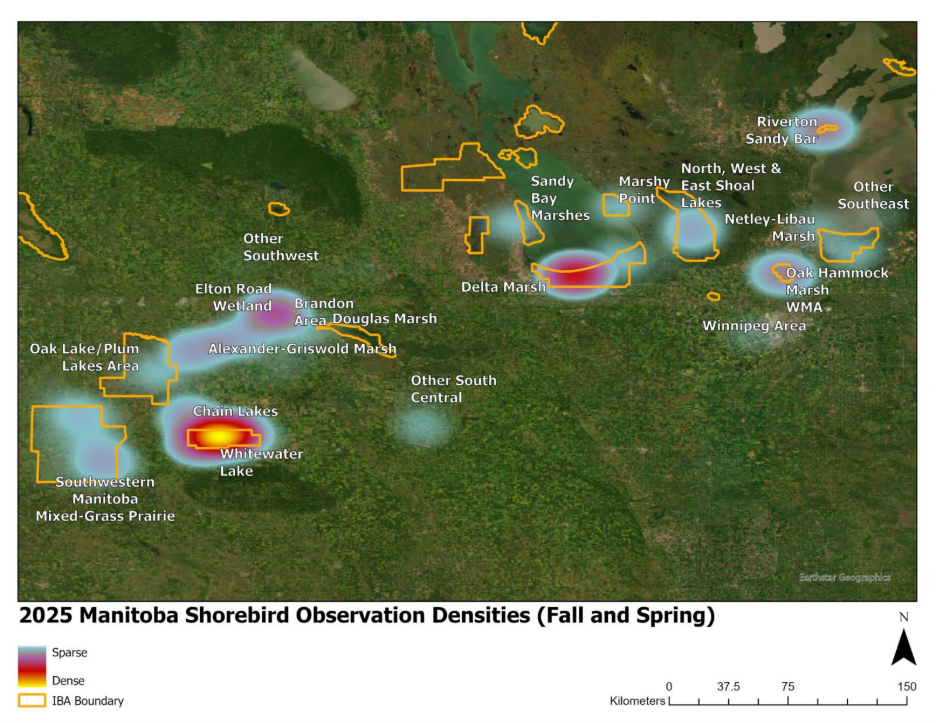
The map below takes this data one step further, showing the density of observations as a heat map. Yellow and red areas are those with high numbers of observations, while the lighter blue areas only have a few observations. We can see from the map that the Southwest had the highest density of points, concentrated around the Whitewater Lake IBA, the Southwestern Manitoba Mixed-Grass Prairie IBA and the wetlands surrounding Brandon. The other region that stands out on the map is Delta Marsh IBA.
Overall, we can say that southern Manitoba has many different areas that host shorebirds throughout their spring and fall migrations, both within and outside of IBA boundaries. Once again, a huge thank you to everyone who shared their eBird checklists with us, we wouldn’t be able to do this work without our incredibly talented network of volunteer citizen scientists!! If you’re interested in participating in our shorebird surveys, send us an email at iba@naturemanitoba.ca!
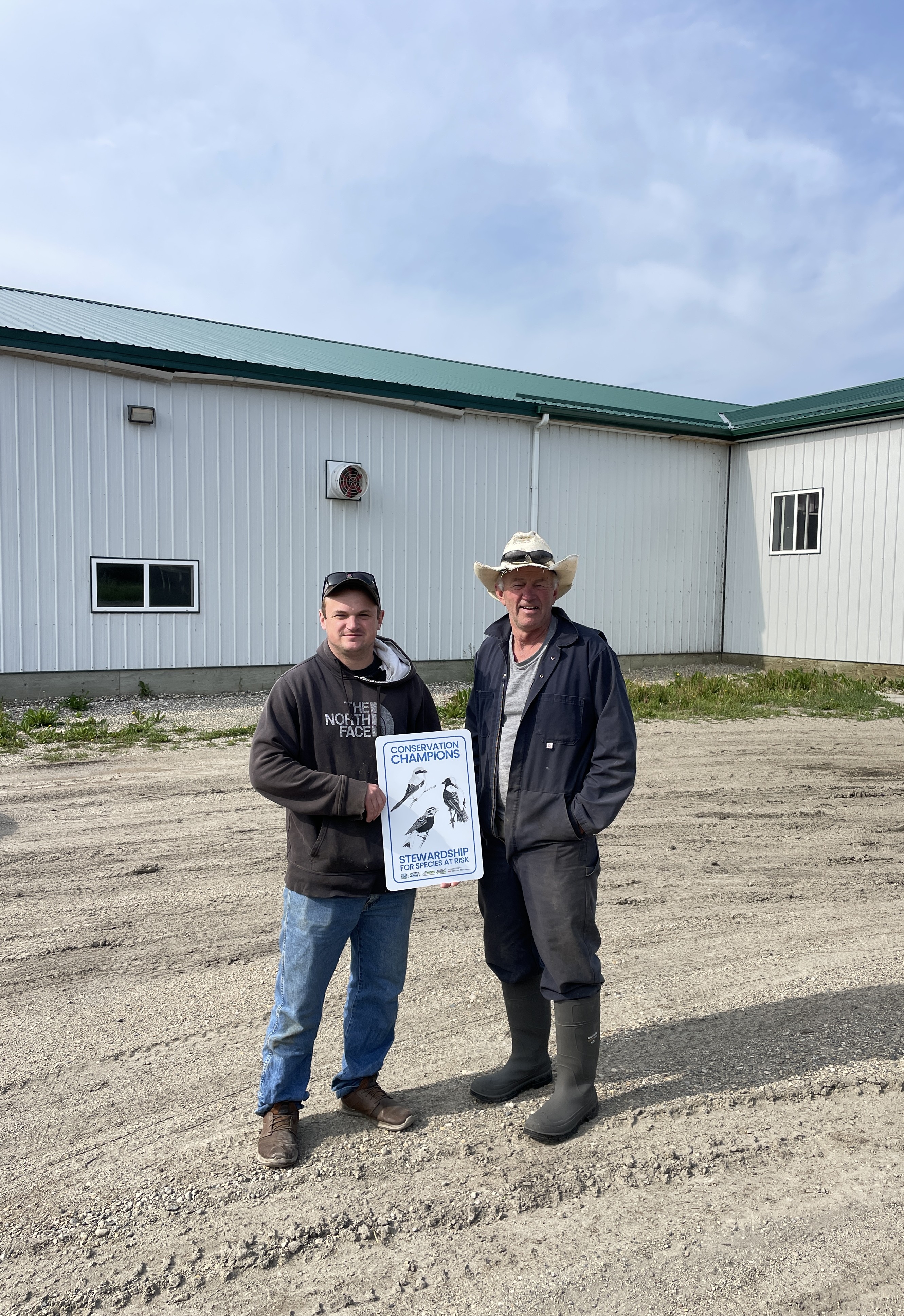
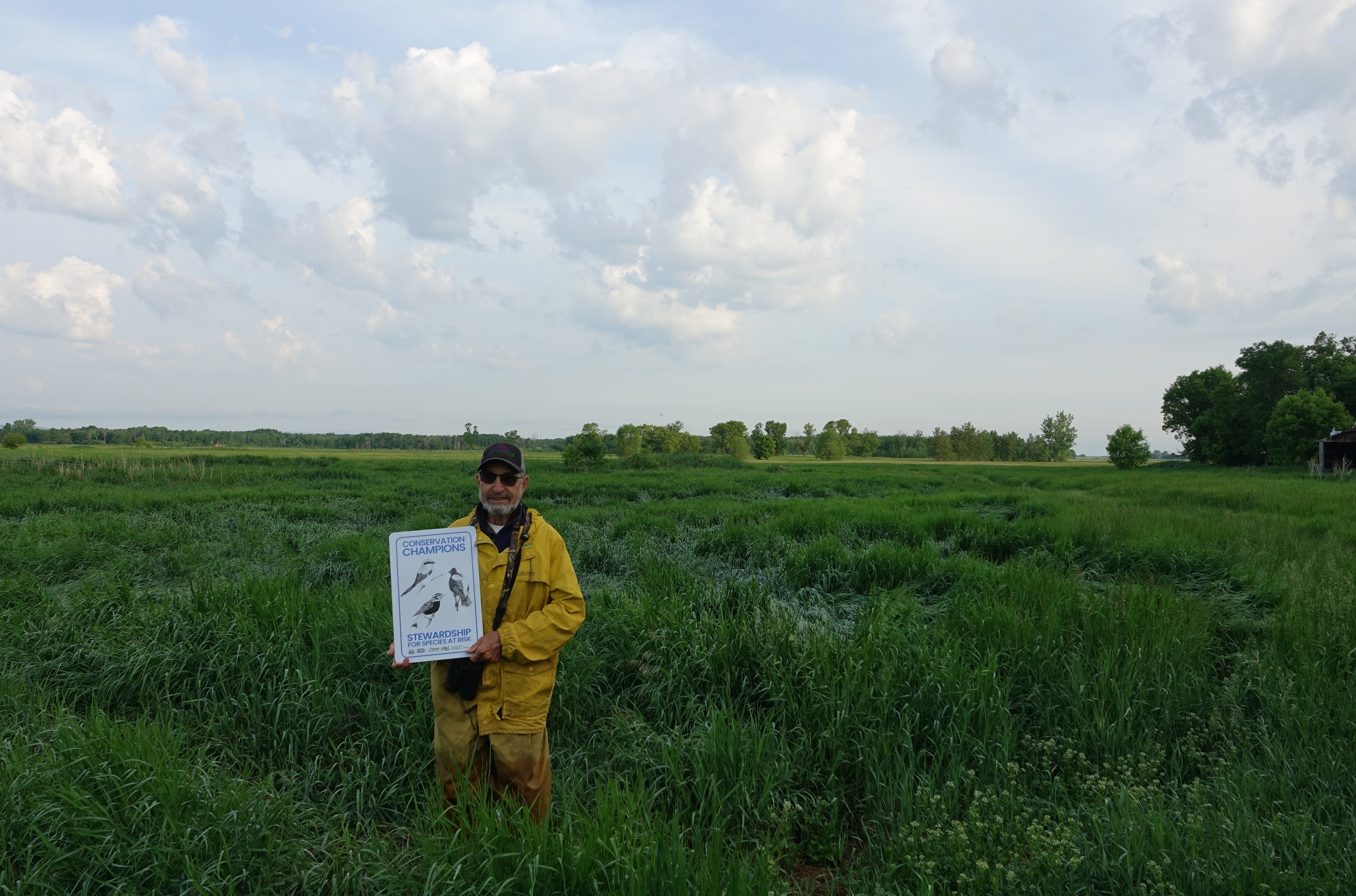
Our final 2025 Conservation Champion Spotlight is Sean Smith!
Sean is a third-generation dairy producer in the Clanwilliam area. He and his father Steven own and operate Clanman Jerseys Ltd.
Sean and his dad are passionate about working with the land, and coming up with creative ways to run their operations while keeping sustainability at the forefront. In a phone conversation last summer, Sean put part of their ethos simply: “Don’t push bush or drain wetlands”. Soil health and biodiversity are important considerations that go into how they manage their grazing livestock and other operations.
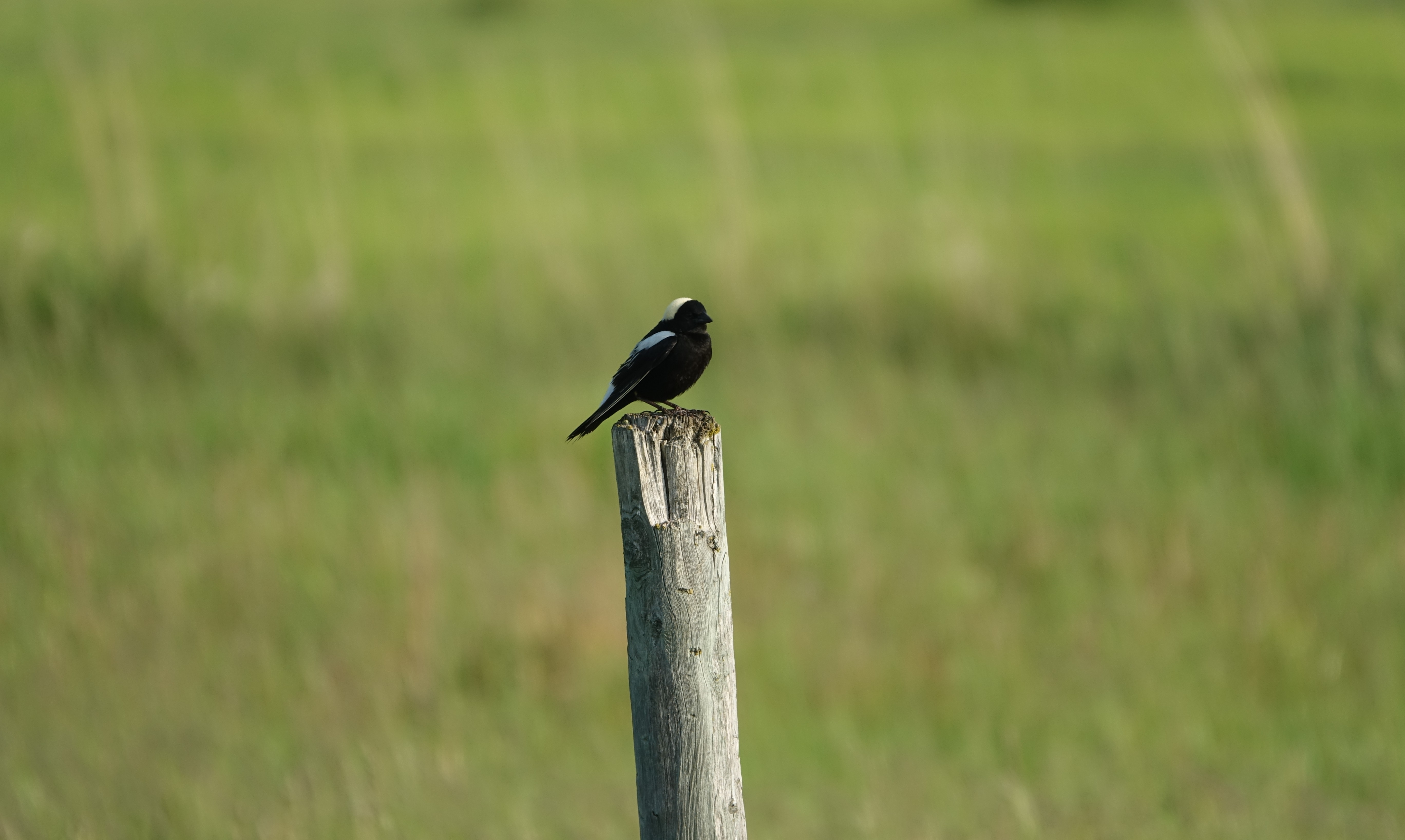
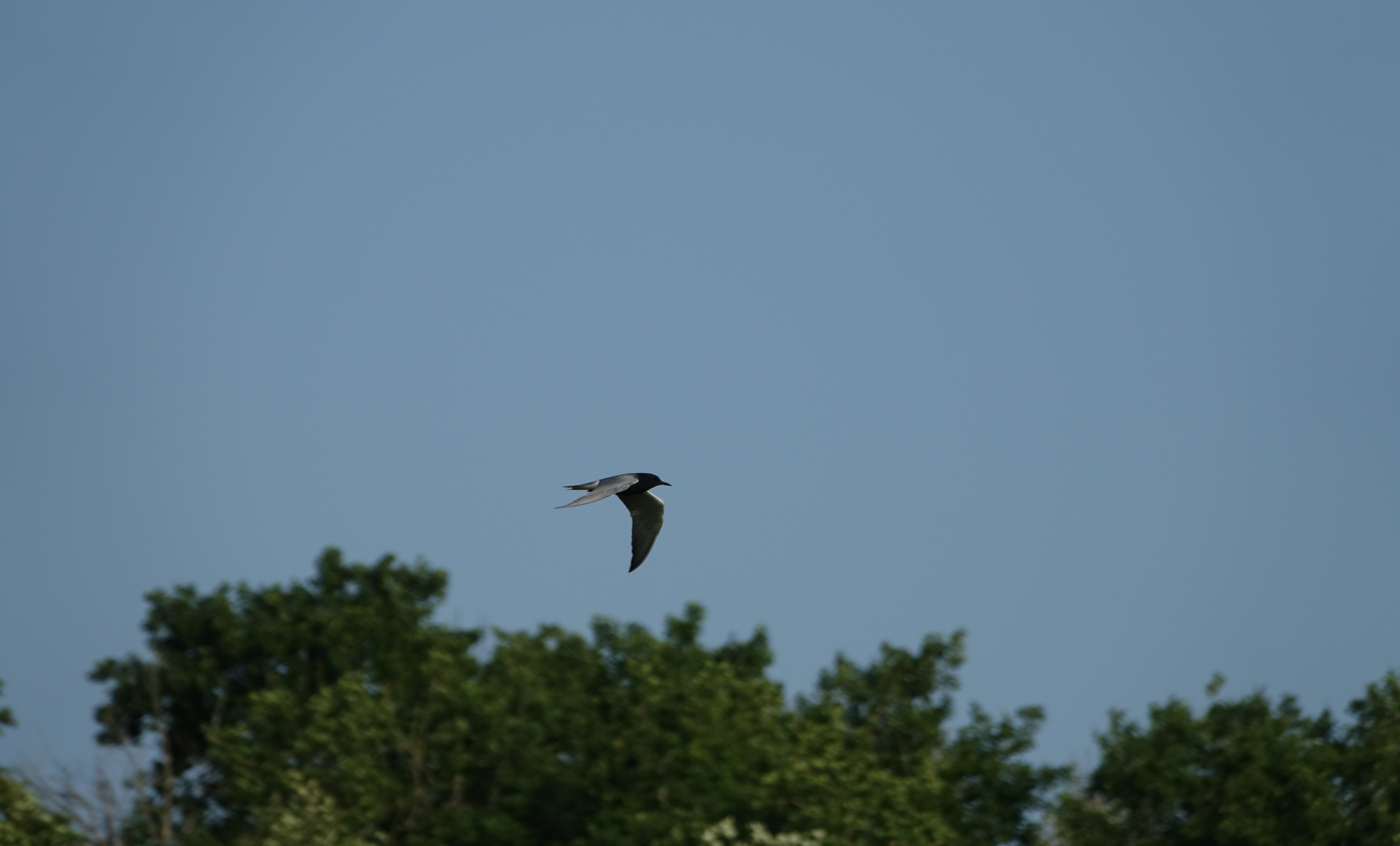
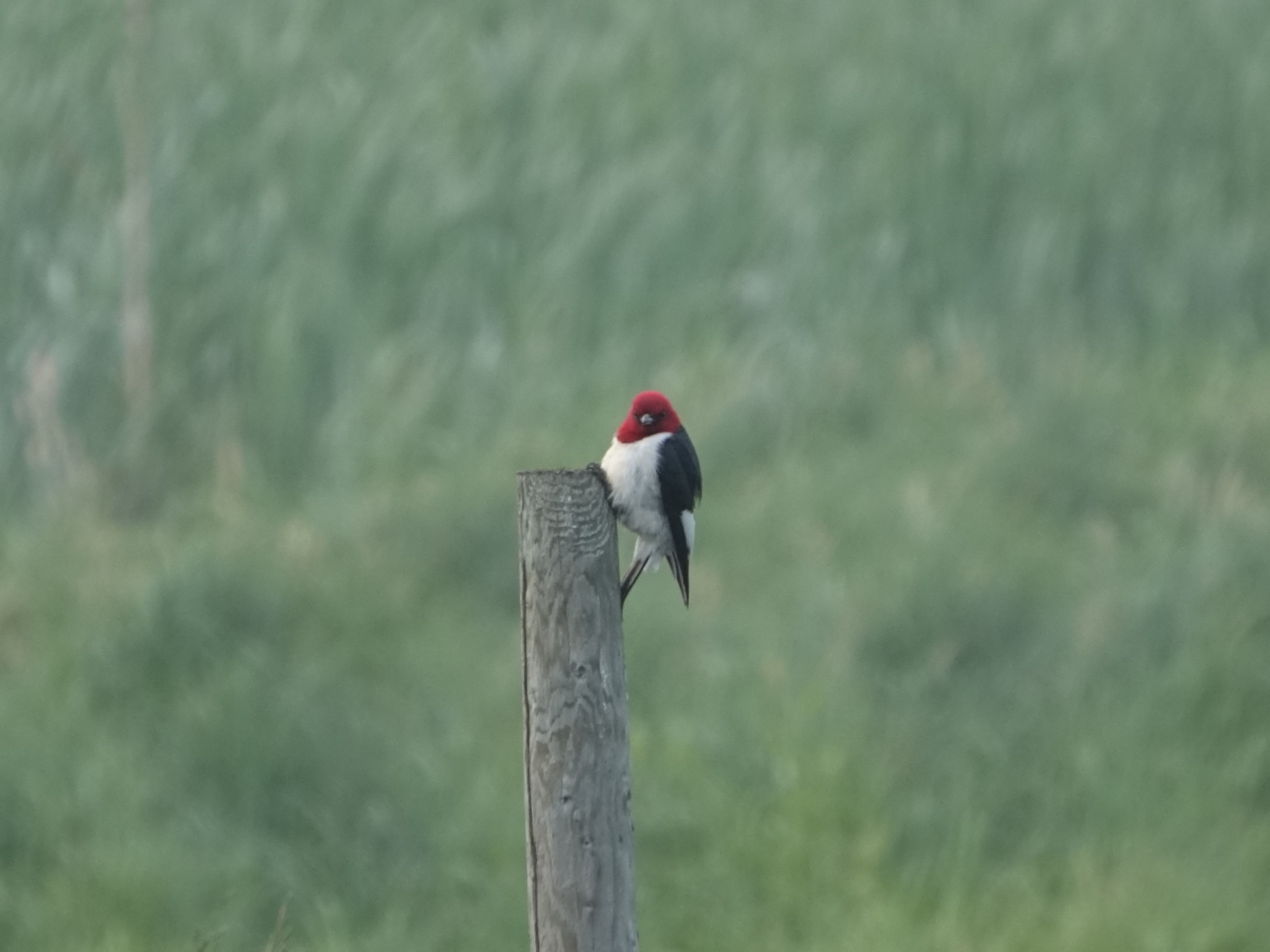
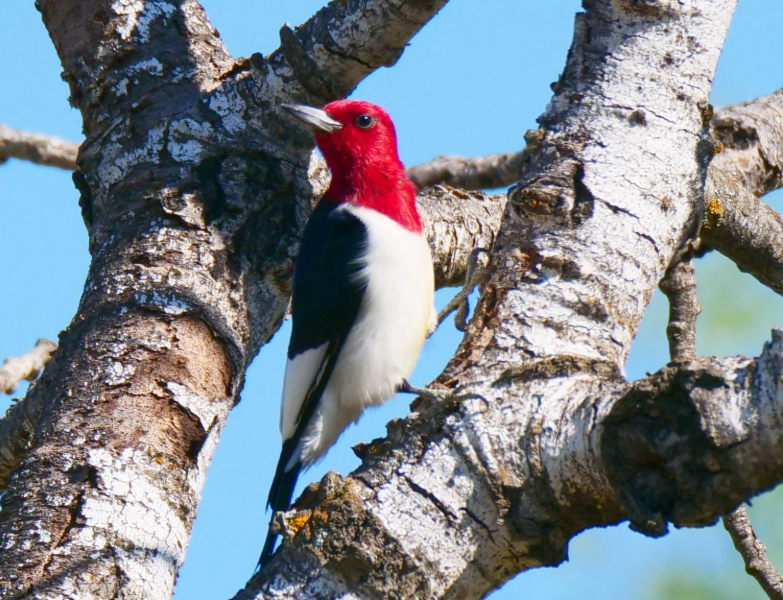
The property hosts a diverse array of habitats, from wetland complexes to fields to forested riverbeds. A survey of the property turned up many Bobolinks, a grassland bird species listed as Threatened in Canada. Near the wetlands, groups of Black Terns can be seen foraging along the water’s surface. The property is also home to several Red-headed Woodpeckers, a species at risk which has very specific habitat requirements – forested areas with little to no understory vegetation and with dead or dying trees in which to excavate their nesting cavities. The property has also been the site of a Sharp-tailed Grouse lek for over 40 years.
Innovative producers like Sean Smith and co. provide essential habitat for many species and inspiration for other conservation-minded landowners.
Thanks Sean for being a Conservation Champion!
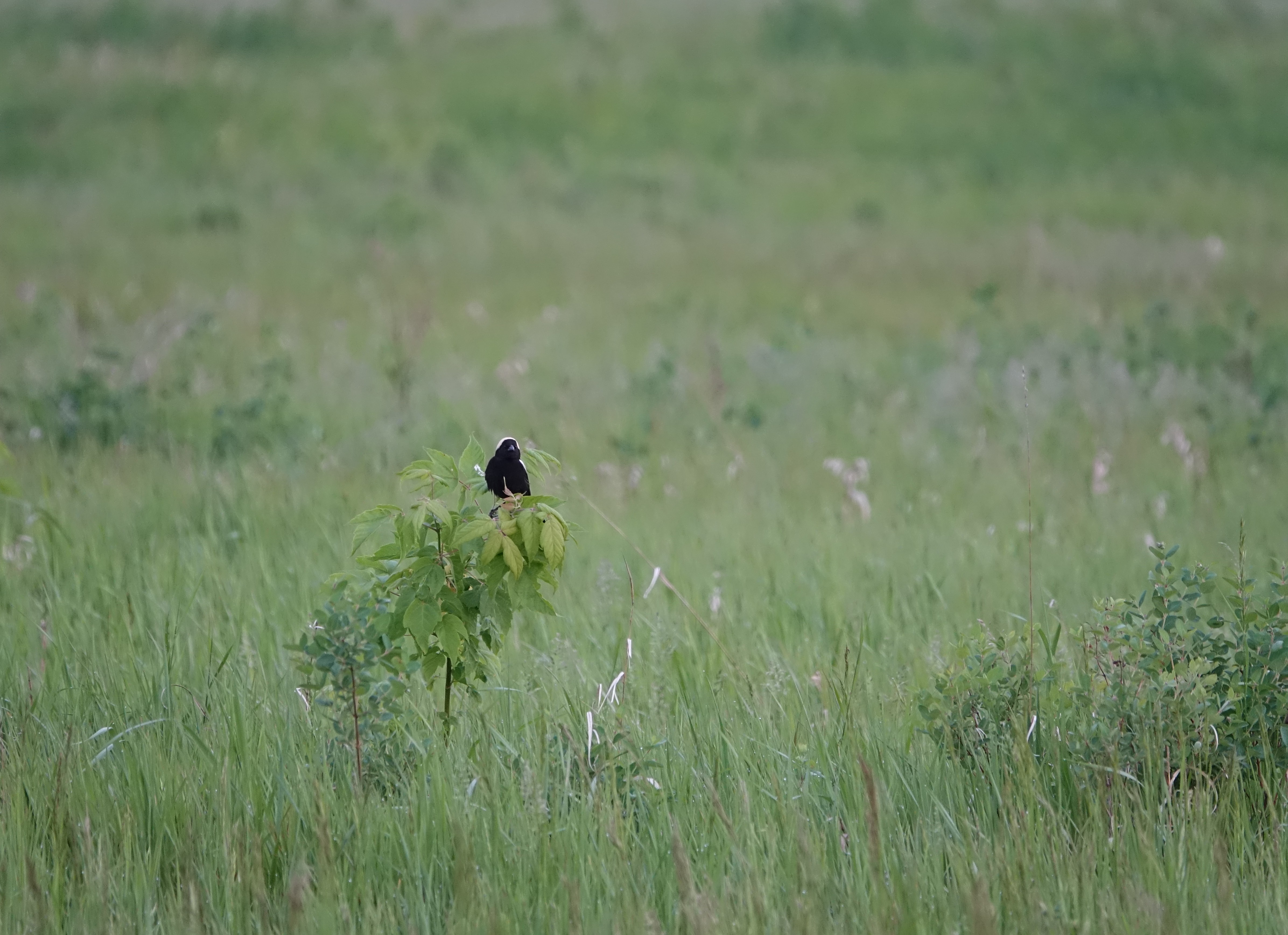
Bobolink. Photo by Marissa Berard.Black Tern. Photo by Marissa Berard.Red-headed Woodpecker. Photo by Marissa Berard.
To find out more about our Conservation Champions program and how you can get involved, check out the “Grassland Conservation Champions Program” tab on our website, or email Mackenzie at iba@naturemanitoba.ca. If you are a landowner with grassland bird habitat on your property, we’d love to hear from you!
Hi everyone! The next event we’d like to highlight from summer 2025 is the Red-headed Woodpecker (RHWO) Blitz that took place in the Oak Lake/Plum Lakes IBA on July 5.
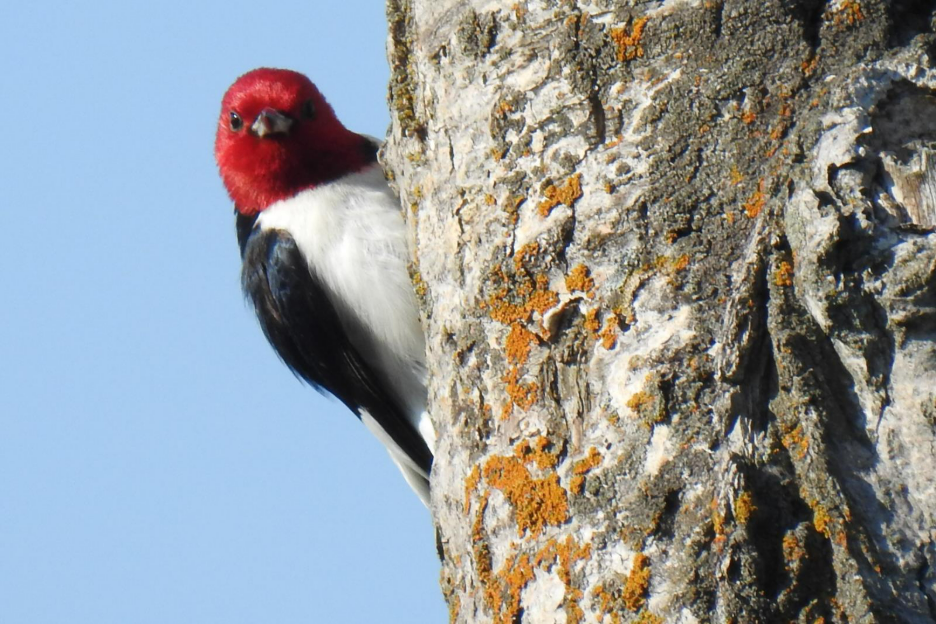
This was our 5th annual RHWO Blitz in this IBA, and we had 6 groups of volunteers split up to gather important data on this Threatened species. The Red-headed Woodpecker is one that’s hard to miss while out birding, with its vibrant red head and black and white body. This bird nests in cavities in dead or dying aspen or oak trees, and prefers sparse forests with little to no understory vegetation. Due to habitat loss, the Red-headed Woodpecker is facing steep population declines, and is listed as Threatened under both the provincial Endangered Species Act and the federal Species at Risk Act (SARA). If you’re curious to learn more about this Threatened bird species, you can read the write-up we put together at the following link: https://www.naturemanitoba.ca/red-headed-woodpecker
Red-headed Woodpecker. Photo by Katharine Schulz.
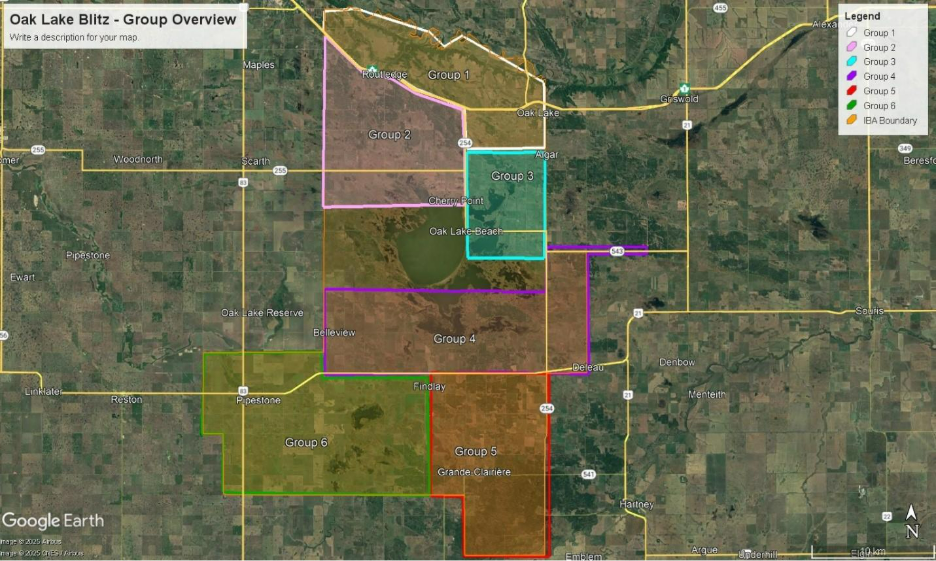
Volunteers drove along designated survey routes to look for Red-headed Woodpeckers, stopping in areas with suitable habitat: stands of aspen, oak, or cottonwood, with standing dead trees and sparse understories. There was an option to follow a playback protocol (under a provincial government permit), at these areas of suitable habitat. All groups began birding around 8:30 am and finished up in time for a picnic lunch at Oak Lake Provincial Park at 12:30. Although the focus was on RHWO, all species of birds observed were recorded and are listed in the table at the bottom of this post. A map showing each group’s survey area is below.
Group 1 consisted of Gillian and Gwyn, who covered the area north of Highway 1 and northeast of Highway 254. They spotted a total of 6 Red-headed Woodpeckers, including a group of 3 that were seen together. In addition to the RHWO, Gillian and Gwyn also spotted an Eastern Wood-Pewee, a COSEWIC and SARA species of Special Concern.
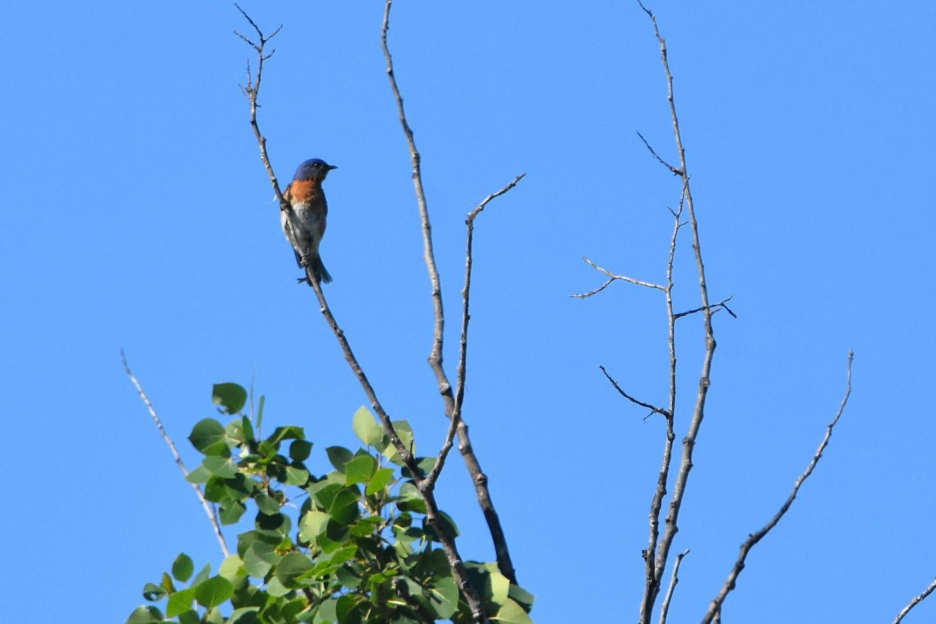
Eastern Bluebird. Photo by Gillian Richards.
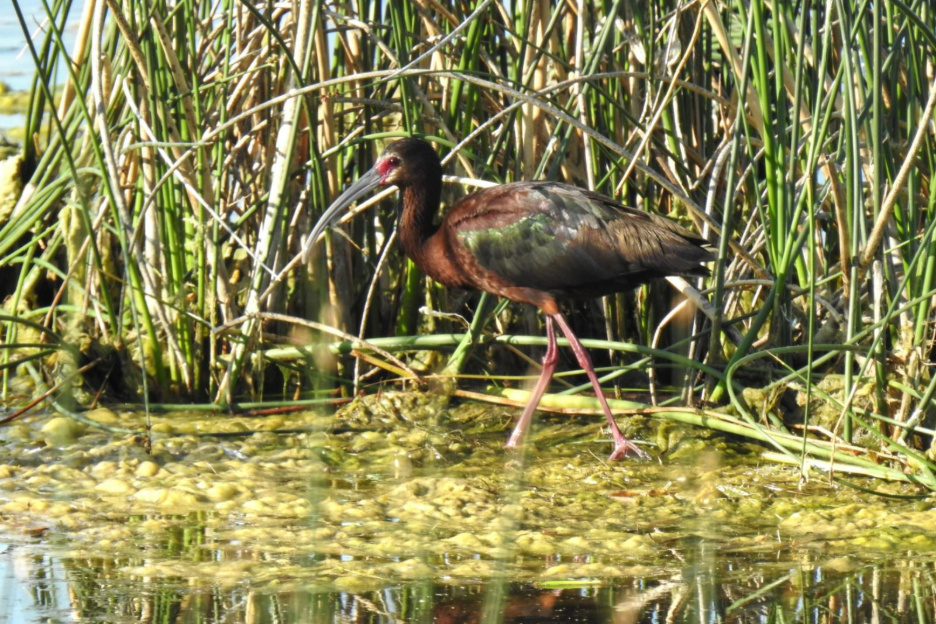
Group 2 was made up of Linda and Colette who surveyed the area south of Highway 1, west of Highway 254 and along the north end of Oak Lake. They saw a total of 3 Red-headed Woodpeckers, an Eastern Wood-Pewee, and a White-faced Ibis.
White-faced Ibis. Photo by Linda Anderson
Tom and Renee were in group 3, and they monitored the east side of Oak Lake. The two of them saw 6 Red-headed Woodpeckers, 3 along Road 48 North. They also saw a pair of Northern Shovelers with 7 ducklings in tow.
Red-headed Woodpecker staring us down. Photo by Linda Anderson.
Katharine and Alanna were in group 4, covering the south end of Oak Lake; Highway 543 between Road 134W and Road 138W; Road 138W and Road 137W. They had a very exciting morning, spotting 10 adult Red-headed Woodpeckers, in addition to hearing juveniles calling, a huge success! Katharine and Alanna also saw two Bobolink and a colony of 35 Bank Swallows. The Swallows were seen flying through the air and entering/exiting holes in piles of sandy soil. Both Bank Swallows and Bobolink are federally listed as Threatened species, so these were also great finds!
Yellow-bellied Sapsucker living up to its name. Photo by Katharine Schulz.
Group 5 was made up Leah, Kristopher and Glennis. The three of them covered the southeastern portion of the IBA, spotting 2 Red-headed Woodpeckers. They also spotted two large groups of Franklin’s Gulls, one group with a minimum estimate of 342 individuals, and another with 72 individuals, AND another large group of 34 Bank Swallows.
Large group of Franklin’s Gulls. Photo by Marissa Berard.
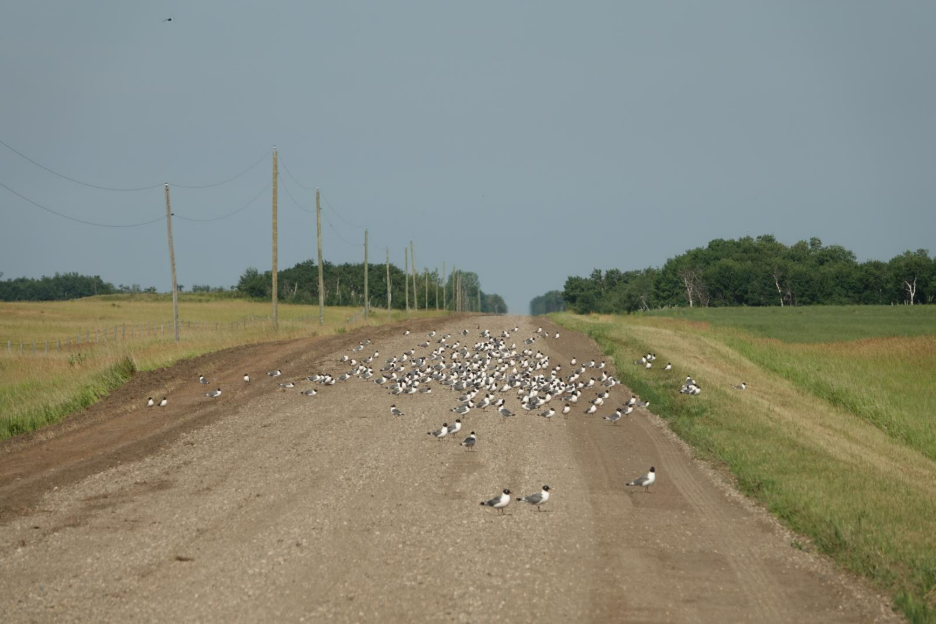
Marissa flew solo in group 6 covering the south-west portion of the IBA. She was unable to spot any Red-headed Woodpeckers, although she did she a Grasshopper Sparrow, an Eastern Wood-Pewee, and another large group of 200 Franklin’s Gulls.
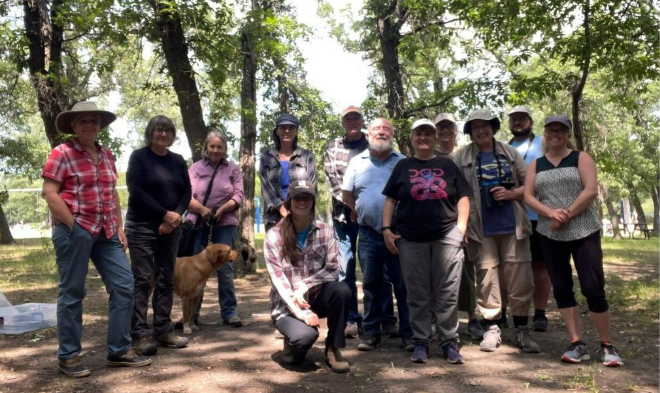
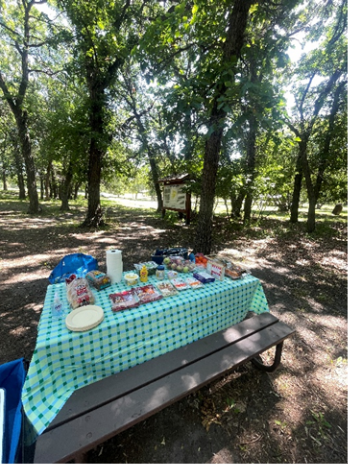
RHWO Team ready for lunch!A picturesque picnic spot after a morning of birding.
Our final count of the 2025 Oak Lake Blitz came to 24 RHWO. To compare to previous years, this wasn’t as high as last year’s program record of 45 individuals, but it was comparable with 2023 (25 RHWO), and higher than both 2022 (13 RWHO) and 2021 (16 RHWO). Although our focus was on RHWO, we saw a total of 84 different species, and 2,218 individual birds. Once again, a huge thank you to everyone who joined us for this blitz, your dedication and commitment to helping us survey Species at Risk is unmatched!
This event was made possible by funding from Environment and Climate Change Canada’s Habitat Stewardship Fund.
If you are interested in volunteering for future blitz events, please email iba@naturemanitoba.ca for more information.
Our next 2025 Conservation Champion that we’d like to highlight is Jacques Saquet!
Jacques is an avid naturalist and farmer who manages a herd of 60 bison near Laurier, Manitoba. In 2019, Jacques and his spouse Claudette bought a quarter section of land with the intention of moving bison there in the future. Nestled to the east of the Riding Mountain escarpment, this quarter section includes around 130 acres of grassland that had not been cultivated for more than 50 years, as well as areas of mature hardwood forest and young aspen forest.
Since acquiring the quarter section, Jacques has been working hard to prepare the land for the arrival of the bison. Jacques is currently working on building fencing to create over ten different paddocks. These paddocks will allow him to manage where the bison graze, which will help maximize plant diversity and soil health.
Each spring, 20-40 sharp-tailed grouse gather on this grassland for their annual courtship displays (a “lek” site). To protect these important grouse dancing grounds, Jacques plans to keep the paddock with the lek free of bison until after the courtship displays are over.
When Jacques accompanied Marissa for a bird survey on the property in June 2024, their start was delayed due to a cow elk and calf in the area! Knowing that this area is important for elk, Jacques plans to make sure the fence he is building will be low enough for adult elk to jump over, and the bottom high enough for the young to crawl under.
The forested sections of the property provide habitat for a variety of birds, including Red-headed Woodpeckers (a species at risk). In the open areas of the property, an array of species including Savannah Sparrows, LeConte’s Sparrows, and Bobolinks can be seen flying around and perching atop shrubs. Once the bison are added to the landscape, their grazing will play an important role in helping to restore and maintain this grassland habitat.
Thanks Jacques, for being a wonderful steward of bird habitat!
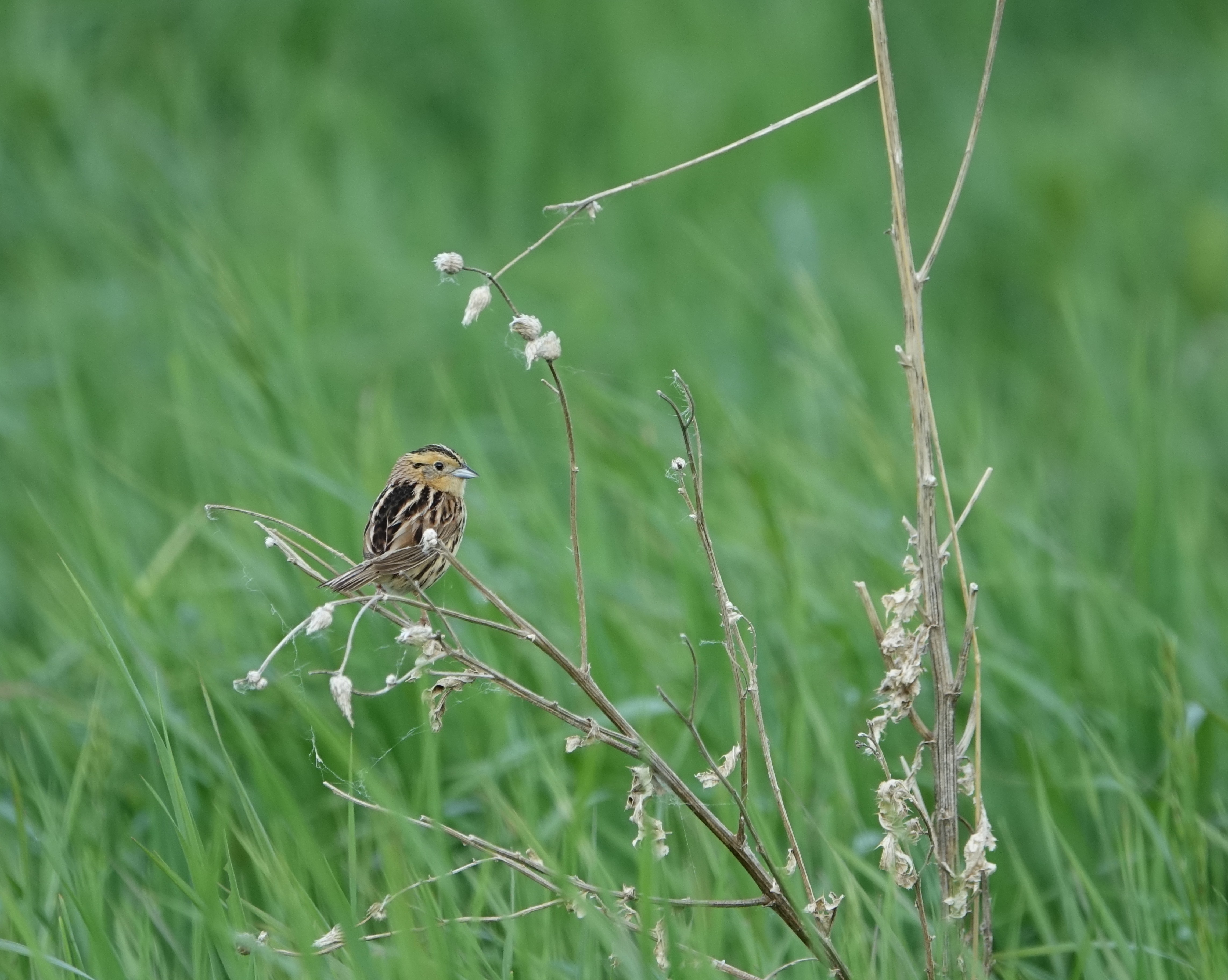
Bobolink. Photo by Marissa Berard.LeConte’s Sparrow. Photo by Marissa Berard.
Throughout the winter I’m planning to post recaps from our 2025 events, to help us dream of warmer days and get excited for what’s to come in 2026!
The first of these recaps will cover the Grassland Bird Blitz, which took place on June 7th in the Southwestern Manitoba Mixed-Grass Prairie IBA. The IBA was split into 6 sections, with each section monitored by a group of birders. The map below shows the boundaries of each section. Each group started between 5:00 and 6:30 am, with all groups wrapping up by noon. Each group recorded all the birds they saw, and paid special attention to the eight target species below:
Sprague’s Pipit
Chestnut-collared Longspur
Baird’s Sparrow
Ferruginous Hawk
Loggerhead Shrike
Grasshopper Sparrow
Burrowing Owl
Bobolink
Smokey sunrise over the prairies. Photo by Marissa.
Marissa and Liam were in Group 1, and they covered the northeast portion of the IBA. They saw five of the eight target species, including Sprague’s Pipit, Chestnut-collared Longspur, Grasshopper Sparrow, Bobolink, and Loggerhead Shrike.
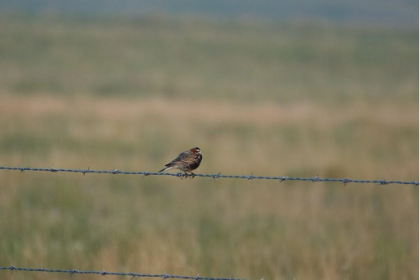
Loggerhead Shrike. Photo by Marissa. Tree Swallow with a feather in it’s beak. Photo by Marissa.
Group 2 consisted of Gillian, Jianping and Luc, and they covered the northwest portion of the IBA. This group had the most observations of Species at Risk, with 35 individuals of six different species including Sprague’s Pipit, Chestnut-collared Longspur, Grasshopper Sparrow, Loggerhead Shrike, Ferruginous Hawk, and Baird’s Sparrow.
Chestnut-collared Longspur. Photo by Marissa.
Jackie and Leanne were in Group 3 and covered the southwest portion of the IBA. They observed five of our target species including Loggerhead Shrike, Chestnut-collared Longspur, Grasshopper Sparrow (10 individuals!), Baird’s Sparrow and Bobolink. They also observed a Sharp-tailed Grouse lek.
Bobolink. Photo by Carol.
Carson and Marvin covered the central portion of the IBA in Group 4, and they observed two of our target species, including Bobolink and Grasshopper Sparrow. In addition to this, Carson and Marvin also observed a Red-headed Woodpecker. Not one of our target species for this blitz, but still a Species at Risk in Manitoba!
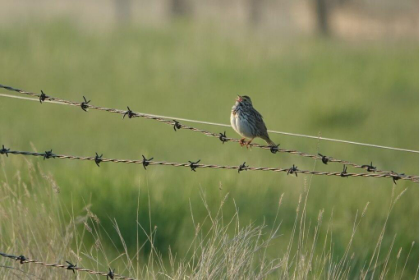
Savannah Sparrow. Photo by Marissa.
Katharine, Carol and Brian were in Group 5, and they covered the southeast portion of the IBA. This group observed Ferruginous Hawks, Baird’s Sparrow, Chestnut-collared Longspur, Sprague’s Pipit, Bobolink, and Grasshopper Sparrow. Notably, the Ferruginous Hawk was observed sitting on a large stick nest in the top of a tree.
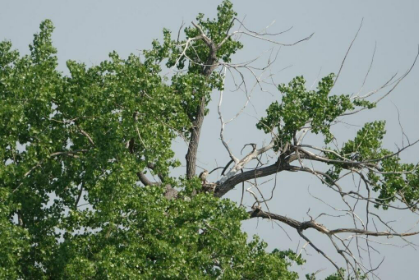
Ferruginous Hawk sitting in its nest. Photo by Marissa.
Our final group was Colin and his son, and they covered the east-central portion of the IBA. This group saw two of our target species at risk, the Chestnut-collared Longspur and the Bobolink.
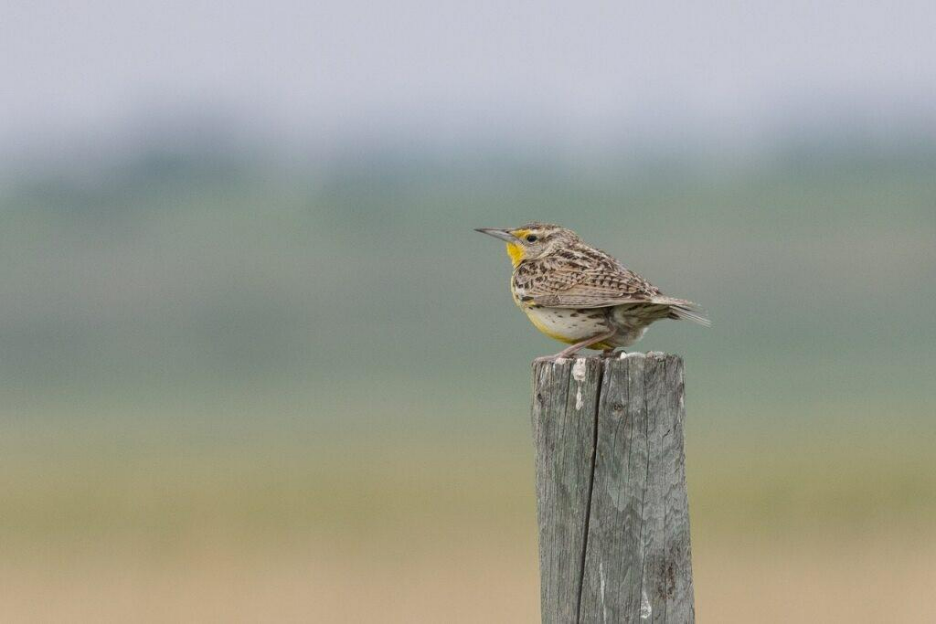
Western Meadowlark. Photo by Carol.
Once all groups were finished for the day, everyone met up at the Chicken Chef in Melita for a group lunch and to share their adventures from the morning. Huge thank you to our volunteers, Colin, Katharine, Carol, Brian, Carson, Marvin, Jackie, Leanne, Gillian, Jianping, Luc and Liam for joining our Grassland Blitz, and thank you to Carol, Gillian and Marissa for sharing your photos! A full list of the species observed can be found in the table below.
Throughout the winter we’ll be highlighting the folks who took part in our Grassland Conservation Champions Program in 2025. First up is Arron Nerbas!
Arron is a beef producer in Shellmouth, MB. He owns and operates Nerbas Bros Angus, alongside his brother and his parents. Located along the Manitoba escarpment by the Assiniboine River, their property includes a patchwork of different landscapes and elevations.
The dry, flat pastures at the top of the escarpment provide important grassland habitat for the Sprague’s Pipit, a species at risk. Listed as a Threatened species both provincially and federally, the Sprague’s Pipit is a grassland specialist and requires very specific habitat like the native prairie provided by Arron’s property. Their lovely cascading flight song can be heard coming from the sky, as they perform their aerial display far above the grassland. These pastures also provide habitat for other grassland species such as the Grasshopper Sparrow and Short-eared Owl.
As you move towards the river, the landscape shifts into rolling hills and aspen bluffs. In these areas, a variety of bird species can be found – Western Meadowlarks, Vesper Sparrows, Black-billed Cuckoos, and Northern Flickers just to name a few. Down in the river valley, the wetter terrain brings different species including Black Terns and Red-winged Blackbirds.
Arron is enthusiastic about providing diverse habitat and managing his livestock in a way that supports the health of the land and promotes biodiversity. Arron hosts a podcast with Amy Hughes called Think Outside The Fence, which aims to inspire positive change in agriculture.
Thank you to Arron for being a Conservation Champion!
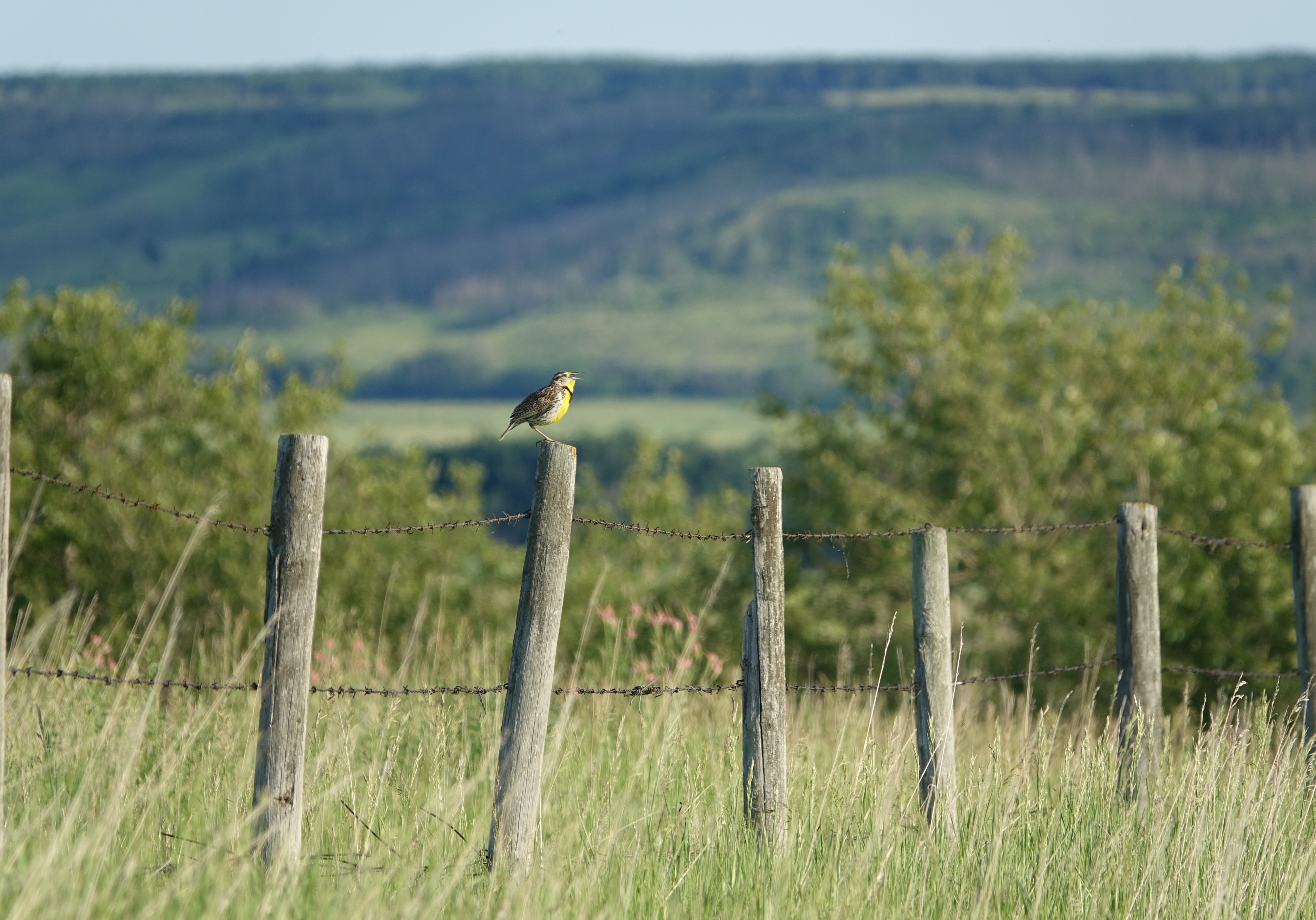
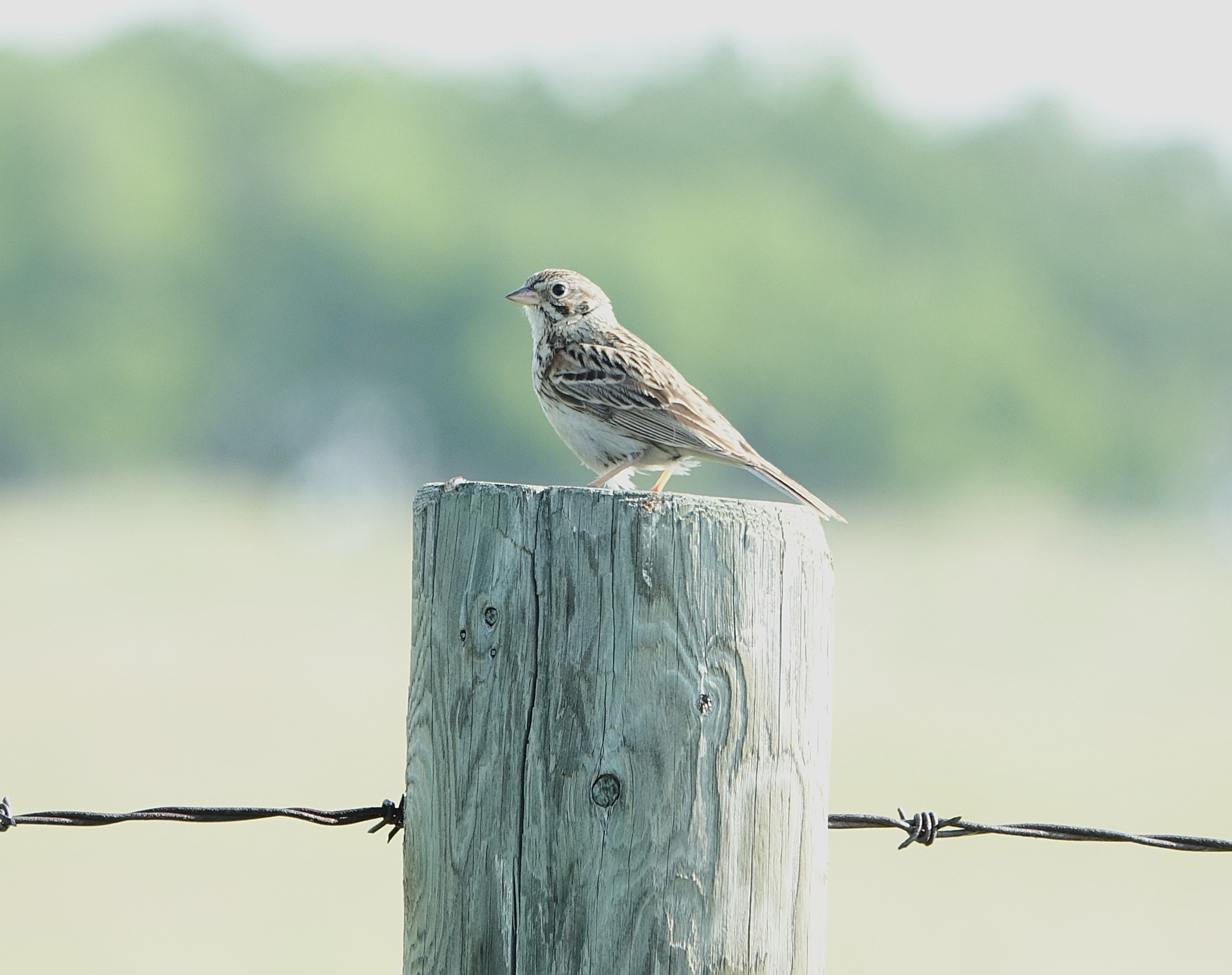
Western Meadowlark. Photo by Marissa Berard.Vesper Sparrow. Photo by Marissa Berard.







 Manitoba Important Bird Areas Program