Douglas Marsh Evening Bird Survey

We recently had an evening bird survey at Douglas Marsh, hosted by Nature Conservancy Canada and led by Manitoba IBA Program Coordinator, Tim Poole. Kelsey Bell, our Summer Assistant, gives her take on the proceedings.

On Friday, July 6th, 2019 Nature Conservancy Canada hosted an event out at the Douglas Marsh IBA, asking Manitoba IBA Program to lead a bird survey. Douglas Marsh IBA is a well-known wetland located East of Brandon, MB. The area is famous for hosting significant numbers of the elusive Yellow Rail, one of the nations vulnerably listed bird species. People from all over come to Douglas, MB, in the hopes of hearing this secretive little bird. Friday night was no different, the event attracted  upwards of 30 people. It was great to see so many people attending the event for just a chance to hear this secretive little bird. Visitors from the surrounding Brandon area, Portage La Prairie, Winnipeg and even St-Jean-Baptiste arrived at 8:30pm for a short presentation from Steven Anderson of NCC Manitoba, as well as our very own Tim Poole.

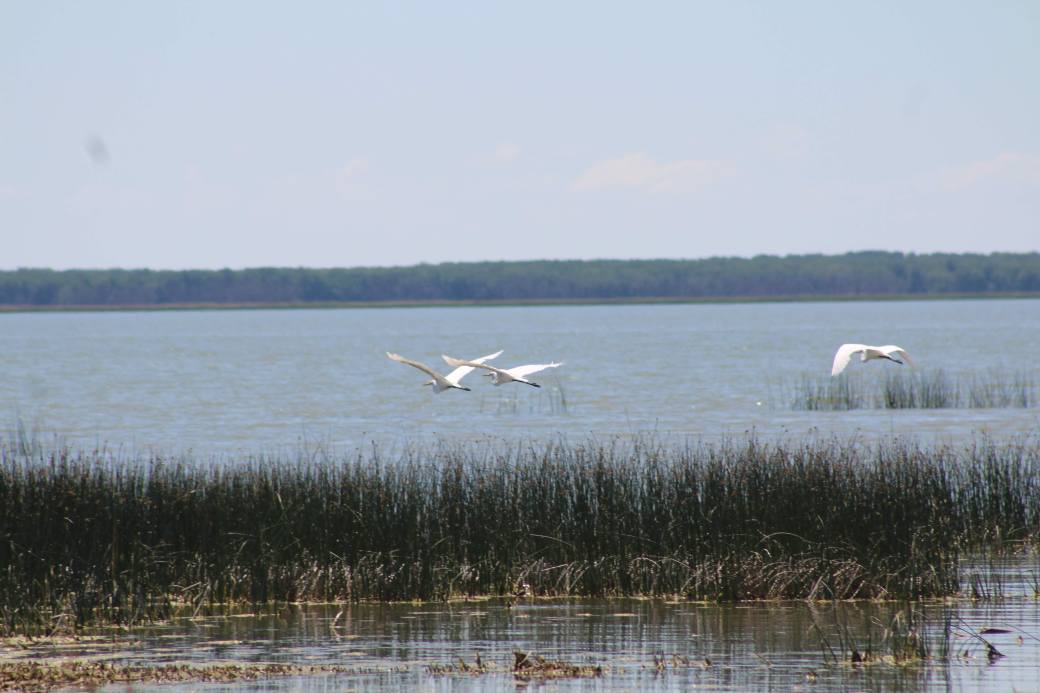
P1050918

A view over NCC’s Douglas Marsh property. Copyright Tim Poole

Following the presentation, we headed out to the NCC Douglas Marsh property to survey the birds. As soon as we entered the property a Brewer’s Blackbird dropped into the grass with food in her mouth. A short distance later, a pair of Bobolinks were seen, and the female quickly disappeared into the grasses. Great to see such strong nesting indicators from both species, especially the Bobolinks which are listed as a Species at Risk in Canada.

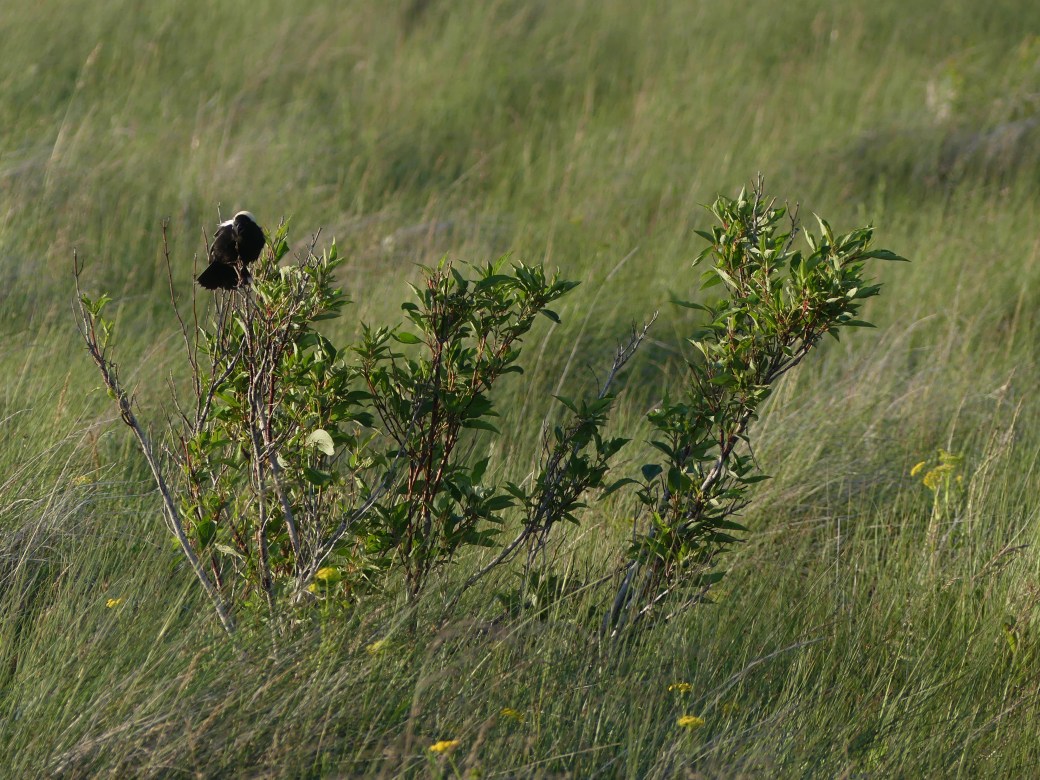
P1050905

Male Bobolink calling on the property. Copyright Tim Poole

Sedge wrens scolded us most of the evening with their distinct, angry sounding chatter. Wilson’s snipe graced us with their winnowing display near the road, on the edge of the property, and as the sun set lower on the horizon, we began to detect the soft songs of the LeConte’s Sparrow and Nelson’s Sparrow in the distance; a sure sign there would be Yellow Rail in the area.

As the final glimpse of dusk disappeared beyond the horizon, we headed to the road for our chance at hearing the bird we came for, the Yellow Rail. Although it was a quiet evening and activity felt low, our patience paid off. At approximately 11:15pm we heard the first Yellow Rails of the evening. As we listened to the subtle and distant call of the Yellow Rail, like two stones being clicked together, we were also charmed by the call of the Sora and Virginia Rail, from the opposite side of the road.

P1050923

A smudgy dusk over the marsh. Copyright Tim Poole

Much like many evening surveys, we relied mostly on aural detection of most of the species recorded. By the end of the evening a total of 23 species were detected in the area, including Western Meadowlarks, Savannah Sparrows, Marsh Wren and of course, Yellow Rail.

Thank you to everyone who made the trip out, it was great to see so many people come out to Douglas Marsh and assist with the survey. It was pleasant evening with fantastic weather. All-in-all, it was a great success!

Here is the evenings eBird checklist – https://ebird.org/canada/view/checklist/S58078655.

Riverton Sandy Bar Weed Pull, July 20th

We are planning our first weed pull in 2019 at the Riverton Sandy Bar IBA. This is the first time to try a Saturday event rather than a weekday.

The purpose of this Weed Pull is to once again clear an area of Sandy Bar to make the habitat more attractive to Piping Plover. This shorebird species last nested at Sandy Bar in 2004. With low lake levels and a large open sandy area we hope that the Piping Plover may once again make an appearance at Sandy Bar.

This is always a popular event. We are planning an earlier weed pull in 2019 following advice from botanists that we should pull the invasive clover before the fall when the plants turn to seed.

It would be great to have you join us on the 20th. Please feel free to forward this to others who may be interested in pulling weeds, meeting others and learning about the migrating birds at Sandy Bar.

Please email iba@naturemanitoba.ca to express an interest in registering.

Slide2

July IBA Blitz – Red-headed Woodpeckers

Our next blitz will be looking for Red-headed Woodpeckers at the North, West and East Shoal Lakes. We found several pairs during a blitz in this area in August 2019 (see here). We will also look for other birds obviously, but our focus will be on this endangered species.

Please email iba@naturemanitoba.ca to express an interest in registering.

The Brandon Birders are also planning a search for Red-headed Woodpeckers, possibly on the same day at the Oak Lake and Plum Lakes IBA. Please email brandonbirders@gmail.com  to express an interest.

Finally, if you are interested in looking for Red-headed Woodpeckers in our other IBAs, we would be interested in hearing from you, especially from anyone living in or near the Kinosota-Leifur IBA.

Slide1

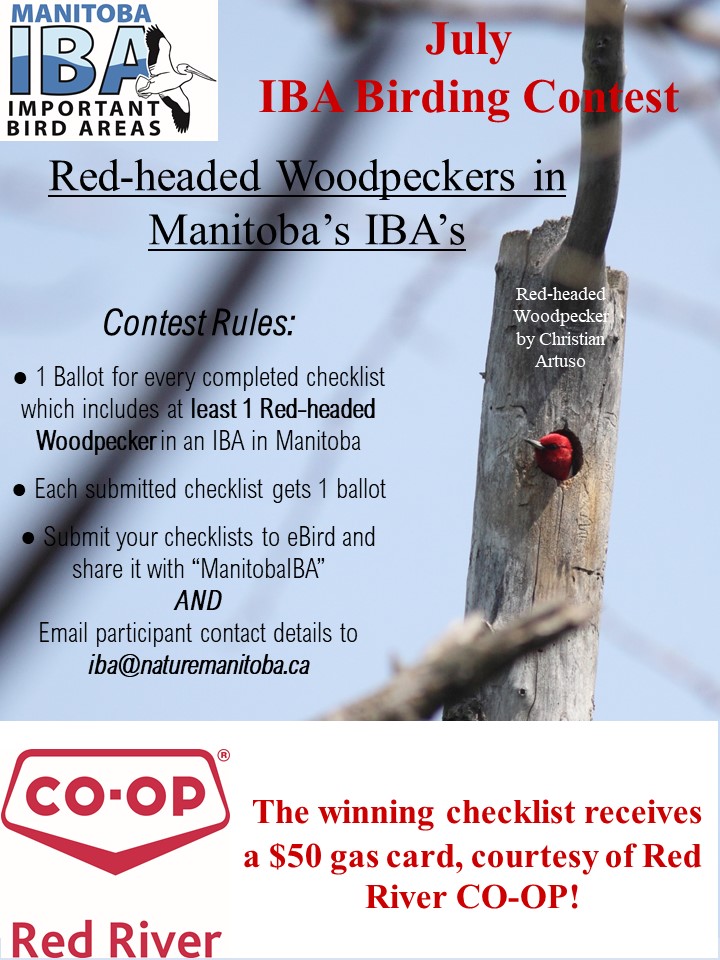
July IBA eBird Contest

July IBA poster for ebird contest.jpg

Start looking for those Red-headed Woodpeckers in July. You can also enter by submitting observations through our website at https://importantbirdareasmb.ca/submit-your-observations-comments/. At the end of the month we will do a draw of all eligible checklists for an opportunity to win a $50 gas card from Co-op, donated by Red River Co-op. IBAs you might expect to find this species includes:

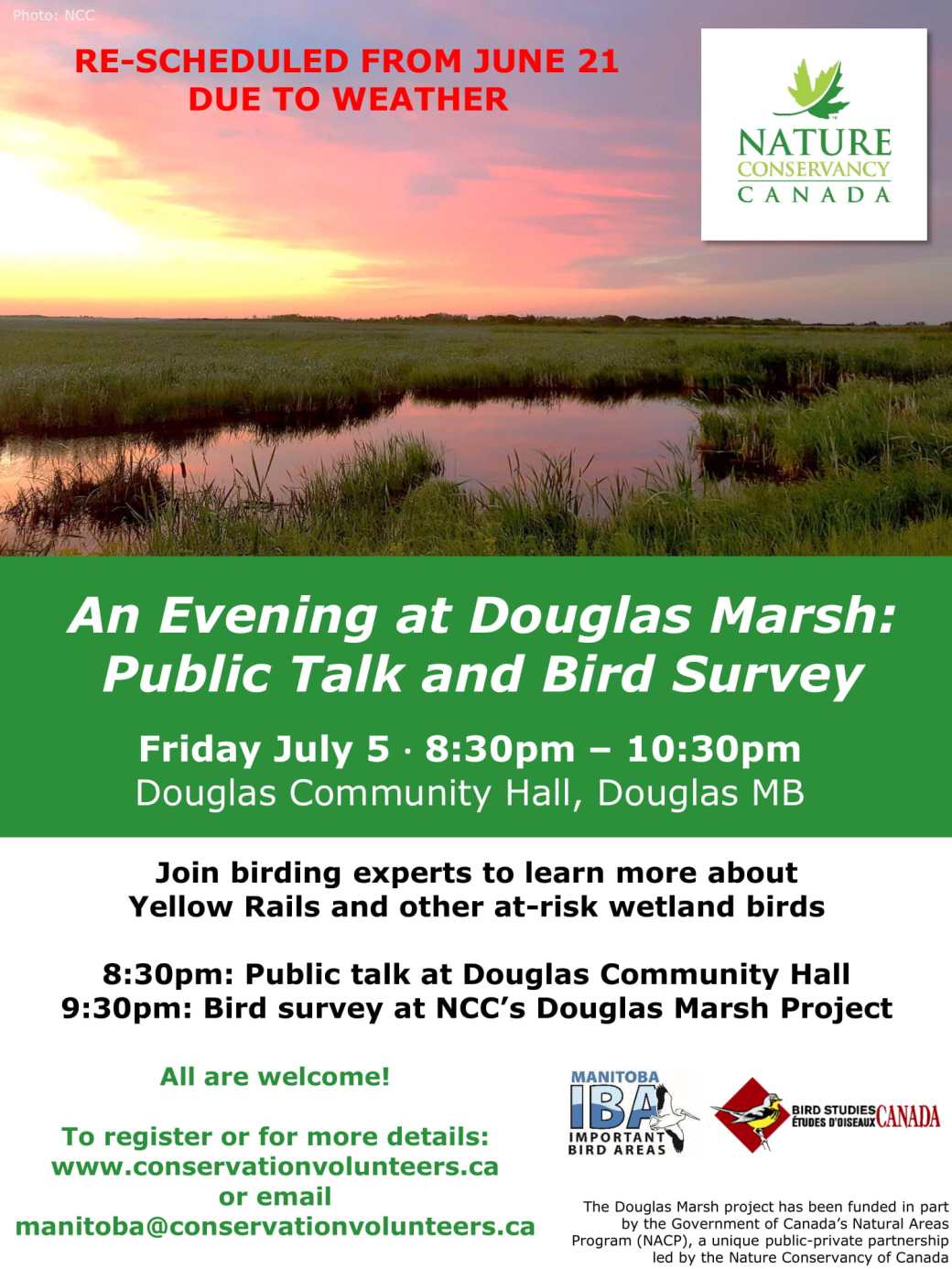
Re-scheduled Event with NCC at Douglas Marsh, July 5th

Douglas Marsh Bird Poster - Rescheduled 2-1

Following some very poor weather in June, NCC had to suspend this event. We are rearranging it for July 5th. Please come along, hear about the wonders of Douglas Marsh, the fascinating birds, and hopefully get to hear and see  some of these fascinating species, including Nelson’s Sparrow, Virginia Rail and the elusive Yellow Rail. NCC own property on the marsh and would love to share its secrets with you

Please signup beforehand by emailing Steven at manitoba@conservationvolunteers.ca.

June IBA Contest – Grassland Birds

Slide1.JPG

Here is the list of eligible species:

Baird’s Sparrow

Grasshopper Sparrow

Sprague’s Pipit

Chestnut-collared Longspur

Savannah Sparrow

Bobolink

Western Meadowlark

Loggerhead Shrike

Ferruginous Hawk

Sharp-tailed Grouse

Marbled Godwit

Willet

Upland Sandpiper

Burrowing Owl

Whitewater Lake ISS Trip with Lynnea Parker and Randy Mooi

Yesterday, May 29th, Randy Mooi, Curator of Zoology at the Manitoba Museum, and Lynnea Parker headed to Whitewater Lake to carry out International Shorebird Survey (ISS) transects. The day was pretty cloudy, smoke from Alberta creating dull, Mordor-like skies. Randy commented as follows:

‘Not the most fantastic day to be at Whitewater, but decent shorebird numbers of a variety of species. Shocking to have no ibis, and pretty much as weird to see only two coots! Grebes were pretty uncommon.’

Shorebirds 2 Whitewater east end May 29 2019 red

Ashen skies, and distant shorebirds, the changing face of Whitewater Lake? Copyright Randy Mooi

With a focus on shorebirds, there were plenty of undercounts of other groups. But the lack of coots, grebes and herons/ibises has also been noted by other birders this year. Strange! In total, they counted 69 species and 2,206 individuals. Of these, there were 18 species of shorebird, and 1,246 individuals, a little over half of all birds counted.

At least this plunging american Avocet gave some light relief. It almost looks a bit giraffe-like (all photos copyright Randy Mooi).

There was not much of an east-west split, although due to road conditions, part of the east was not covered.  Lynnea suspected that concentrations were highest in the northeast corner. Interestingly, and in sharp contrast, this area was almost devoid of water during our workshop on the 18th. Semipalmated Sandpiper was the most abundant species (464), with the next being, perhaps surprisingly, American Golden Plover. There were zero American Golden Plover and Baird’s Sandpiper on the 18th. On this occasion there were no dowitchers. This goes to show the seasonal changes being noted, something that ISS was established to examine.

Golden Plover 2 cropped Whitewater May 29 2019

Gorgeous flock of American Golden Plovers. Copyright Randy Mooi


Thank you to Lynnea and Randy for completing these surveys. We would also like to thank the Manitoba Museum for donating Randy’s time to help, and Canada Summer Jobs for funding Lynnea’s work in southwestern Manitoba this summer (there will be more to come on this).

We still need to do one more visit next week to the lake. If you are interested in helping out we would love to hear from you. Our long-term vision is that we would be able to get visiting groups of birders to run the ISS routes when they are at the lake – the routes cover some of the best places for birding anyway!

And, as ever, here are the results (please note, the 3 zones, east, west and Sexton’s are covered in the maps on this page).

Species Name Eastern ISS Routes Western ISS Route Sexton’s Island ISS Stop TOTAL
Snow Goose 0 36 0 36
Canada Goose 0 41 0 41
Blue-winged Teal 5 20 2 27
Northern Shoveler 2 94 3 99
Gadwall 4 48 2 54
American Wigeon 0 1 0 1
Mallard 2 112 2 116
Northern Pintail 0 6 0 6
Green-winged Teal 0 2 0 2
Lesser Scaup 0 40 0 40
Bufflehead 0 2 0 2
Ruddy Duck 0 1 0 1
Horned Grebe 0 1 0 1
Eared Grebe 0 3 0 3
Western Grebe 0 21 0 21
Mourning Dove 2 2 0 4
Sora 2 1 0 3
American Coot 2 1 0 3
American Avocet 11 52 2 65
Black-bellied Plover 1 2 0 3
American Golden-Plover 24 124 0 148
Killdeer 12 21 1 34
Marbled Godwit 1 15 1 17
Ruddy Turnstone 0 3 0 3
Stilt Sandpiper 4 75 0 79
Sanderling 20 0 0 20
Baird’s Sandpiper 60 53 17 130
Least Sandpiper 0 4 5 9
White-rumped Sandpiper 120 2 0 122
Pectoral Sandpiper 0 3 0 3
Semipalmated Sandpiper 250 210 4 464
Wilson’s Phalarope 5 16 2 23
Red-necked Phalarope 17 85 3 105
Spotted Sandpiper 0 2 0 2
Willet 5 10 3 18
Lesser Yellowlegs 0 1 0 1
Franklin’s Gull 29 0 0 29
Ring-billed Gull 25 0 0 25
Black Tern 1 0 0 1
Forster’s Tern 11 24 11 46
Double-crested Cormorant 0 6 0 6
American White Pelican 2 93 0 95
Great Egret 0 0 14 14
Turkey Vulture 1 0 0 1
Northern Harrier 2 1 1 4
Red-tailed Hawk 0 1 1 2
falcon sp. 0 1 0 1
Eastern Kingbird 0 6 0 6
Black-billed Magpie 1 0 0 1
Horned Lark 1 5 0 6
Barn Swallow 0 1 0 1
Cliff Swallow 0 3 0 3
Sedge Wren 6 9 0 15
American Robin 2 1 0 3
European Starling 0 3 0 3
American Goldfinch 2 0 0 2
Clay-colored Sparrow 1 0 0 1
Nelson’s Sparrow 1 0 0 1
Savannah Sparrow 12 4 1 17
Song Sparrow 5 1 2 8
Swamp Sparrow 1 0 0 1
Yellow-headed Blackbird 3 79 X 82+
Bobolink 1 0 0 1
Western Meadowlark 1 2 0 3
Red-winged Blackbird 42 X X 42+
Brown-headed Cowbird 7 14 0 21
Brewer’s Blackbird 6 X 0 6+
Common Grackle 7 43 0 50
Common Yellowthroat 3 0 0 3
Golden Plover 2 crop Whitewater May 29 2019

Close-up of the American Golden Plovers. Copyright Randy Mooi

Brandon Shorebird Workshop

On May 17th and 18th, Tim Poole and Christian Artuso delivered a Shorebird Workshop to the new Brandon Birders Group. On the evening of the 17th, we gave a presentation on shorebird identification to the group in a room at Brandon University. The room was donated for free for the evening, so special thanks to the folk at the University Geography Department.

On the morning of the 18th, we were joined by a group of 9 people for a trip to Whitewater Lake. The plan was to find some large groups of shorebirds around the lake and help them to identify the various species in the field, looking specifically at field marks.

When selecting dates for birding events, there is always an aspect of cross your fingers, hoping that it’s not bad weather. Well, we picked a day which was cold and windy, and pretty unpleasant to be outside. We did though plough on, knowing that the shorebirds would still be present in the area.

Christian and I (Tim) had been out at Oak Lake the previous day, completing the ISS survey for this IBA. On the way back to Brandon we were again astounded to see thousands of geese at Deleau, just outside the boundary of the Oak Lake and Plum Lakes IBA. Included in the mass of geese were over 1,000 Ross’s Geese, a significant spring concentration for southern Manitoba. There were also hundreds of geese on the way into Whitewater from Highway 10.

Ross's Goose_8254c_Snow Goose

Spot the smaller Ross’s Geese in the foreground, and compare with the larger Snow Geese behind. Copyright Christian Artuso

Starting at the east end at 19N (for a map of the IBA, click here), we encountered the unexpected, a vast area of open mud, small pools of water, and distant shoreline. This was in stark contrast to fall 2018. Back then, this area is was covered in shallow water and mudflats, ideal habitat for shorebirds. We could make out some distant Black-bellied Plover. Most impressively, Christian spotted a group of shorebirds flying directly towards us. The unmistakable round, russet forms of 13 Red Knots were a definite highlight of the day, everyone managing to get great views in their binoculars as they flew past.

shroebird workshop at Sexrtons_20190518_103201

Watching shorebirds at Sexton’s and trying to stay warm. Copyright Christian Artuso

We carried on along 20N towards the west. At one stage we picked out a vast flock of Snow Geese, over 19,000 splayed across the dull grey skyline. Along the road we also had Ross’s Goose and Greater White-fronted Goose. We also saw our only White-faced Ibis.

Ross's Goose_8460_Snow Goose_Artuso

There were clouds of Snow Geese at Whitewater on the day. Copyright Christian Artuso

Sexton’s Point had a few shorebirds to show, the highlight being a Hudsonian Godwit. We were able to show everyone the distinctly darker plumage and rufous chest. Another highlight was a Clark’s Grebe.

American Avocet_8771_Artuso

The unmistakable blue legs, salmon head and upcurved beak of an American Avocet. Copyright Christian Artuso.

At this point we still had not seen the large groups of shorebirds that we were expecting. We eventually did find one such group along the western edge of the lake.

shorebird fiock_9006_REKN_STSA_LESA_MAGO_Artuso

Mixed flock of shorebirds. Copyright Christian Artuso

Least Sandpiper, White-rumped Sandpiper, Dunlin, Pectoral Sandpiper, Stilt Sandpiper and Red-necked Phalarope were among the shorebirds foraging in a small wetland next to the road.

P1050803.JPG

Shorebirds feeding along the shoreline, note how grey it is! Copyright Tim Poole

We were able to use the scopes to really zoom in and show people the intricate details. For example, we showed everyone how to distinguish Least Sandpiper from the White-rumped Sandpiper (a lack of Semipalmated and Baird’s made this a lot easier). We asked everyone to focus first on the wing length versus tail length. Then we zoned in on other features (plumage, bill shape and length, leg colour, etc).

Least Sandpiper_8160_Artuso

Least Sandpiper. note that the primary feathers on the wings reach the same point on this bird as the tip of the tail feathers. This is typical of Least and Semipalmated. Note the yellow legs, brown plumage and decurved beak, all distinguishing features when compared with with Semipalmated Sandpiper. Copyright Christian Artuso

P1050800.JPG

Showing how cold we were, everyone sheltering behind the Atlas truck and sitting down. Copyright Tim Poole

There were small numbers of dowitchers mixed in with the general shorebird flocks. At this point, Whitewater Lake IBA Caretaker, Gillian Richards identified that one of these birds was a Long-billed Dowitcher. This was a great spot! We spent some time focusing on the differences between neighbouring Short-billed Dowitchers and the single Long-billed Dowitcher. The first thing that Gillian had noticed was that the flanks of the Long-billed were barred rather than spotted. The plumage was also darker red versus the salmon plumage of the Short-billed. Finally, the clincher was the contrast on the scapular and back feathers. In the case of the Long-billed, these have white tips, and the case of the Short-billed, they have buff tips. Christian very helpfully has provided a contrast collection of his photos from the day so you can really see what we are talking about!

Long-billed versus Short-billed Dowitcher comparison.jpg

Composite images by Christian Artuso

At this point, cold and wind battered, we headed in different directions. We hope everyone had a good trip, and learnt more about shorebirds, and we hope to do this again soon in eastern Manitoba!


While doing this, we completed the International Shorebird Survey route for west Whitewater Lake. If you would like to find out more about our involvement in this, and would like to contribute to shorebird monitoring, first take a look at this blog. There you will find maps. We would love to hear from you of course if you are interested in finding out more. Email us at iba@naturemanitoba.ca.


We are also providing links to some documents and resources which might prove useful to you as you learn more about shorebird identification.

IBA Shorebird Photo Identification Card (email if you would like us to mail you a laminated copy)

Copy of Christians’ shorebird presentation and notes

Christian’s shorebird notes handout

An old IBA blitz blog with some good info on fall identification of dowitchers

Christian’s Dowitcher notes

Surfbirds excellent Dowitcher comparison


Thank you to Glennis, Gillian and Alex for organising the workshop. We would also like to pass on thanks to our funders, notably the Baillie Fund, Enbridge and Tundra Oil and Gas for providing funds for our attendance.


Apart from Snow Geese, the most impressive numbers were of Least Sandpipers, and Stilt Sandpipers. Here is the eBird summary of the days birding.

Species Name Species Count
Snow Goose 22,154
Ross’s Goose 2
Greater White-fronted Goose 14
Canada Goose 180
Tundra Swan 31
Blue-winged Teal 66
Northern Shoveler 130
Gadwall 121
American Wigeon 6
Mallard 121
Northern Pintail 16
Green-winged Teal 3
Canvasback 43
Redhead 10
Ring-necked Duck 9
Lesser Scaup 6
Sharp-tailed Grouse 1
Red-necked Grebe 1
Eared Grebe 8
Western Grebe 95
Clark’s Grebe 1
Rock Pigeon 3
Eurasian Collared-Dove 1
Mourning Dove 4
American Coot 2
American Avocet 74
Black-bellied Plover 4
Semipalmated Plover 9
Killdeer 15
Upland Sandpiper 2
Hudsonian Godwit 1
Marbled Godwit 27
Red Knot 13
Stilt Sandpiper 183
Dunlin 9
Baird’s Sandpiper 5
Least Sandpiper 746
White-rumped Sandpiper 9
Pectoral Sandpiper 1
Semipalmated Sandpiper 5
Short-billed Dowitcher 18
Long-billed Dowitcher 1
Short-billed/Long-billed Dowitcher 1
Wilson’s Phalarope 48
Red-necked Phalarope 74
Spotted Sandpiper 1
Willet 15
Lesser Yellowlegs 12
shorebird sp. 500
Franklin’s Gull 441
Forster’s Tern 57
Double-crested Cormorant 2
American White Pelican 8
Great Egret 3
White-faced Ibis 1
Turkey Vulture 1
Northern Harrier 3
Red-tailed Hawk 3
Great Horned Owl 1
Peregrine Falcon 1
Common Raven 3
Horned Lark 1
Tree Swallow 4
Barn Swallow 13
Marsh Wren 1
American Robin 6
European Starling 3
American Pipit 1
Vesper Sparrow 2
Savannah Sparrow 9
Yellow-headed Blackbird 83
Bobolink 3
Western Meadowlark 7
Red-winged Blackbird 105
Brown-headed Cowbird 2
Common Grackle 36
Northern Waterthrush 1
Yellow Warbler 1
Palm Warbler 2
Yellow-rumped Warbler 1
House Sparrow 2