North, West, and East Shoal Lakes IBA Bird Blitz

On Sunday, May 6th, 14 birders split into 4 groups and covered over 177 km of the North, West, and East Shoal Lakes IBA (IBA map). With a late start to spring this year we were not sure what to expect in terms of species diversity and numbers. On Saturday, the day before the blitz, Tim Poole and Lynnea Parker noted that ice coverage on Lake Manitoba was still quite extensive at Sandy Bay Marshes IBA near Langruth. Lynnea was therefore glad to observe that West and East Shoal Lakes were mostly ice-free. North Shoal Lake was partially open along the roadsides and marshes.

122 species were observed in the morning with good numbers of waterfowl and grebes. Group 1 with Pierre, Bill, Wally, and William were particularly fond of the 171 American Robins and 159 Red-winged Blackbirds they thoroughly counted. However, the robins and blackbirds paled in comparison to the 611 Western Grebes which were spotted rafting together at West Shoal Lake (Group 1 checklist).

Shoal lakes 2018 Birding blitz-180506-001-IMGS5791_smaller size

View of West Shoal Lake with a large number of Western Grebes rafting in the distance, photo by Pierre Richard
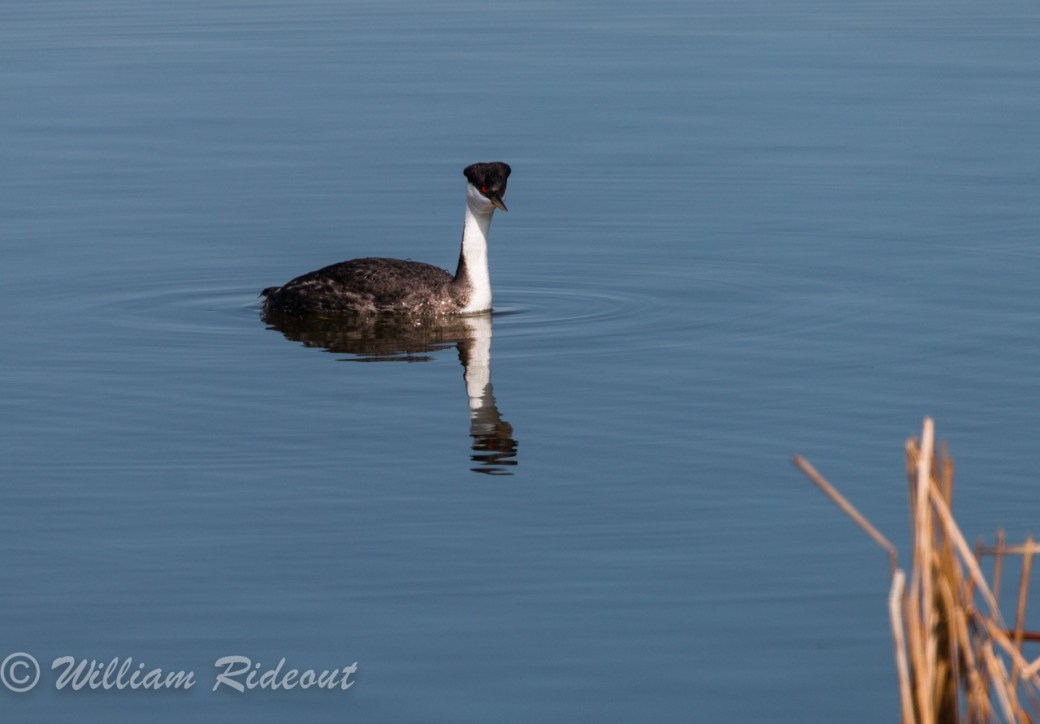
western grebe 1 William Rideout

Western Grebe, photo by William Rideout

At the Sandy Bay Grebe Watch event on May 5th, Tim and Lynnea had been hoping to see several hundred Western Grebes. Due to the heavy ice cover, only 112 Western Grebes were counted. It would seem our missing Grebes were over at West Shoal Lake instead! A further 500 were spotted by Bob Jones at Delta Marsh the previous day.

Group 2 with Jo, Betsy, Christian, and Mohammad surveyed the east side of East and North Shoal Lakes. Christian turned back the clock and took up his Atlas nickname ‘Moose Legs’, walking the rejuvenated wetland also known as PR415, which runs between North and East Shoal Lakes (Christian’s Checklist). The decommissioned, and partially flooded road was highly productive with 94 species, including high counts of waterfowl, Double-crested Cormorant, American White Pelican, American Coot, Sandhill Crane, Gulls, and Blackbirds. Unfortunately for Christian, he missed the Snowy Egret spied by Group #4 which was found on the same decommissioned road just outside his survey area to the west. Group #4 didn’t feel bad however, as Christian managed to find a Clark’s Grebe which they didn’t see. Photos below feature a pair of Lesser Yellowlegs (upper left), pair of Canvasbacks (middle left), flock of American White Pelicans (lower left), and a Marbled Godwit preening (right) (photos by Christian Artuso). (Additional checklists for this group: #1, #2, #3, #4, #5)


Group 3 with Joanne, Richard, Louise, and Eric surveyed the IBA area north of North Shoal Lake. They had many species of waterbirds despite having less open water in their area. Good sights from Group 3 included 4 Trumpeter Swans, 18 Red-necked Grebes, and 1 Semipalmated Plover (Checklist). The photos below by Joanne Smith include Red-necked Grebe (Left) and Willet (Right).


Group 4 with Lynnea, Cam, and Jeff surveyed the northern part of West Shoal Lake, west side of East Shoal Lake, and west side of North Shoal Lake. The highlights from this group included a Snowy Egret, good numbers of Green-winged Teal and Blue-winged Teal, and 11 Great Egret. Access to the open water was limited, but the marshy areas were moderately productive. Photos below were taken by Cam Nikkel and feature a Forster’s Tern (Left) and a Great Egret (Right).


Overall, highlights of the day included: 13 Greater White-fronted Goose, 766 Western Grebe, 1 Clark’s Grbe, 490 American White Pelican, 6 American Bittern, 32 Great Egret, 1 Snowy Egret, 3 Black-crowned Night-Heron, 116 Sandhill Crane, and 58 Bonaparte’s Gull.

After the morning blitz everyone gathered at Rosie’s Cafe in Inwood for a glorious lunch before wrapping up the event.

Compiled IBA Event Checklist:

Snow Goose 1,455
Ross’s Goose 8
Greater White-fronted Goose 13
Cackling Goose 9
Canada Goose 1,554
Trumpeter Swan 8
Tundra Swan 99
Wood Duck 2
Blue-winged Teal 340
Northern Shoveler 73
Gadwall 59
American Wigeon 26
Mallard 591
Northern Pintail 42
Green-winged Teal 428
Canvasback 662
Redhead 75
Ring-necked Duck 145
Greater Scaup 7
Lesser Scaup 313
Greater/Lesser Scaup 4
Bufflehead 31
Common Goldeneye 17
Hooded Merganser 4
Common Merganser 18
Red-breasted Merganser 8
Ruddy Duck 19
Ruffed Grouse 1
Sharp-tailed Grouse 1
Common Loon 15
Pied-billed Grebe 45
Horned Grebe 56
Red-necked Grebe 36
Eared Grebe 1
Western Grebe 766
Clark’s Grebe 1
Double-crested Cormorant 479
American White Pelican 490
American Bittern 6
Great Blue Heron 14
Great Egret 32
Snowy Egret 1
Black-crowned Night-Heron 3
Turkey Vulture 1
Osprey 2
Northern Harrier 11
Cooper’s Hawk 1
Bald Eagle 15
Broad-winged Hawk 1
Red-tailed Hawk 17
Virginia Rail 3
Sora 3
American Coot 537
Sandhill Crane 116
American Avocet 8
Semipalmated Plover 1
Killdeer 41
Marbled Godwit 19
Pectoral Sandpiper 1
Wilson’s Snipe 52
Wilson’s Phalarope 7
Greater Yellowlegs 22
Willet 23
Lesser Yellowlegs 114
Bonaparte’s Gull 58
Franklin’s Gull 1,305
Ring-billed Gull 2,802
Herring Gull 102
gull sp. 742
Caspian Tern 3
Common Tern 3
Forster’s Tern 173
Mourning Dove 15
Belted Kingfisher 7
Yellow-bellied Sapsucker 31
Downy Woodpecker 3
Hairy Woodpecker 2
Northern Flicker 28
Pileated Woodpecker 1
American Kestrel 6
Merlin 4
Eastern Phoebe 9
Blue Jay 6
Black-billed Magpie 25
American Crow 13
Common Raven 15
Tree Swallow 98
Barn Swallow 35
Black-capped Chickadee 2
Marsh Wren 23
Ruby-crowned Kinglet 7
Eastern Bluebird 4
Hermit Thrush 4
American Robin 208
Gray Catbird 1
European Starling 15
American Pipit 5
Orange-crowned Warbler 6
Palm Warbler 6
Yellow-rumped Warbler 5
LeConte’s Sparrow 2
American Tree Sparrow 2
Chipping Sparrow 1
Clay-colored Sparrow 6
Lark Sparrow 2
Fox Sparrow 1
White-crowned Sparrow 9
Harris’s Sparrow 1
White-throated Sparrow 7
Vesper Sparrow 3
Savannah Sparrow 53
Song Sparrow 115
Lincoln’s Sparrow 1
Swamp Sparrow 52
Yellow-headed Blackbird 665
Western Meadowlark 23
Red-winged Blackbird 2,676
Brown-headed Cowbird 54
Rusty Blackbird 104
Brewer’s Blackbird 32
Common Grackle 115
Purple Finch 1

Sandy Bay Grebe Watch

On Saturday, May 5th we held a Grebe Watch event at the Sandy Bay Marshes IBA. The Sandy Bay Marshes are located along the western shoreline of Lake Manitoba, just east of Langruth and Sandy Bay First Nation (Map). This IBA is known for its large concentrations of Western Grebes in the spring, with 500-1000 breeding pairs recorded in 1986! The purpose of this event was to see if Western Grebes (and other Grebes) were present and document their numbers.

On Friday, May 4th Tim Poole (IBA Coordinator) noted that the bays along the shoreline of Lake Manitoba were still heavily covered in ice. In light of the bays being covered in ice, the Grebe Watch was cancelled for individuals who had signed up from afar, such as Winnipeg. The event went ahead for local residents. The cold start to spring this year has seemingly delayed spring migration for many species of waterbirds.

Sandy Bay IBA Blitz-Langruth-Manitoba-000-LARGE-Lynnea A Parker2-1080641

Hollywood Beach, Sandy Bay Marshes. Photo by Lynnea A. Parker

It was a successful turnout with 8 people from the community and 1 person from Winnipeg joining us at Hollywood Beach. We started off the morning by gathering on the main beach and scanning for waterbirds. Tim and Lynnea Parker (IBA Assistant) set up spotting scopes to show the public a variety of species, including Western Grebe, Tundra Swan, Redhead, Canvasback, Bonaparte’s Gull, Common Tern, and Marbled Godwit.

P1040253

Western Grebe, Photo by Tim Poole

As anticipated, the Western Grebes were present in the IBA, but not in the high numbers we were initially hoping to see. We suspect the cold weather and ice along the shoreline was a contributing factor to the low numbers. In total, we recorded 70 species of birds including 112 Western Grebe. At the end of this blog post there is a  list of species which were detected.

We would like to thank everyone who did attend the Grebe Watch event, and we hope this opportunity has encouraged more people to take an interest in monitoring and reporting birds within the Sandy Bay Marshes.

Species Detected (70 Total)

24        Canada Goose

35        Tundra Swan

150      Blue-winged Teal

1          Northern Shoveler

26        Gadwall

12        American Wigeon

54        Mallard

6          Northern Pintail

280      Green-winged Teal

16        Redhead

8          Ring-necked Duck

34        Lesser Scaup

6          Bufflehead

4          Common Goldeneye

8          Common Merganser

1          Red-breasted Merganser

3          Ruddy Duck

6          Common Loon

3          Red-necked Grebe

112      Western Grebe

46        Double-crested Cormorant

18        American White Pelican

3          American Bittern

1          Turkey Vulture

4          Northern Harrier

2          Bald Eagle

2          Broad-winged Hawk

6          Red-tailed Hawk

2          Rough-legged Hawk

1          Virginia Rail

1          Sora

8          American Coot

12        Sandhill Crane

12        Killdeer

6          Marbled Godwit

3          Willet

9          Lesser Yellowlegs

6          Bonaparte’s Gull

4          Franklin’s Gull

16        Ring-billed Gull

2          Herring Gull

74        Common Tern

45        Rock Pigeon

2          Mourning Dove

4          Northern Flicker

2          American Kestrel

1          Merlin

3          Eastern Phoebe

1          Black-billed Magpie

1          American Crow

3          Common Raven

5          Tree Swallow

12        Barn Swallow

2          Black-capped Chickadee

1          Marsh Wren

1          Swainson’s Thrush

3          Hermit Thrush

2          American Robin

1          European Starling

25        Palm Warbler

6          Dark-eyed Junco

2          White-throated Sparrow

1          Savannah Sparrow

10        Song Sparrow

6          Swamp Sparrow

45        Yellow-headed Blackbird

4          Western Meadowlark

400      Red-winged Blackbird

18        Brewer’s Blackbird

6          Common Grackle

1          Yellow-rumped Warbler

Lone Wolf on the Riverton Sandy Bar IBA

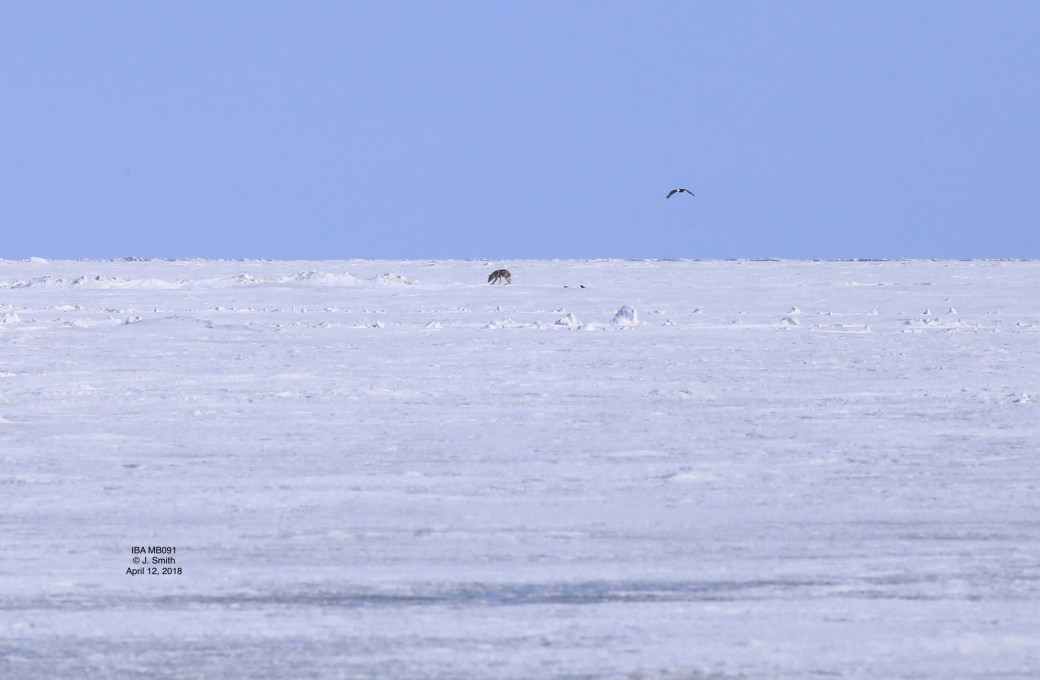
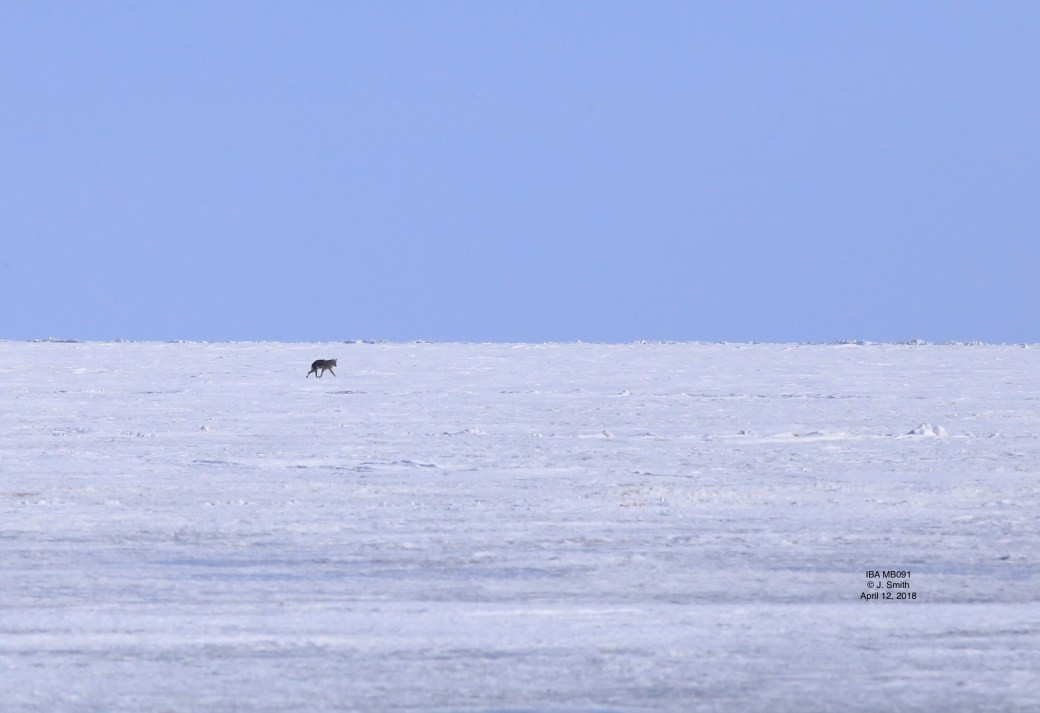
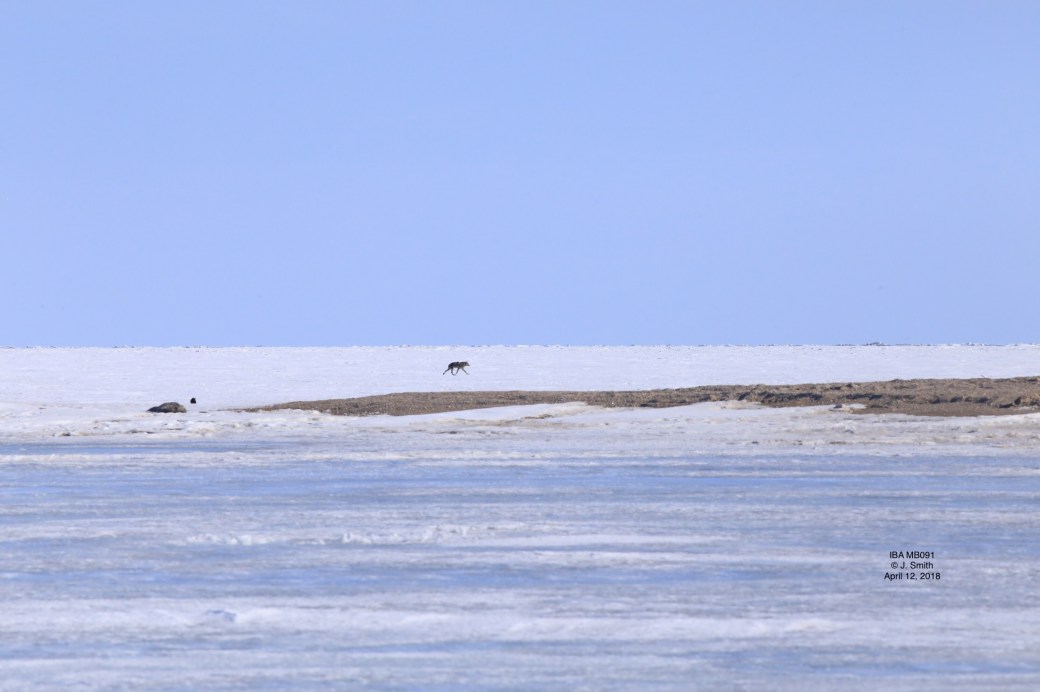
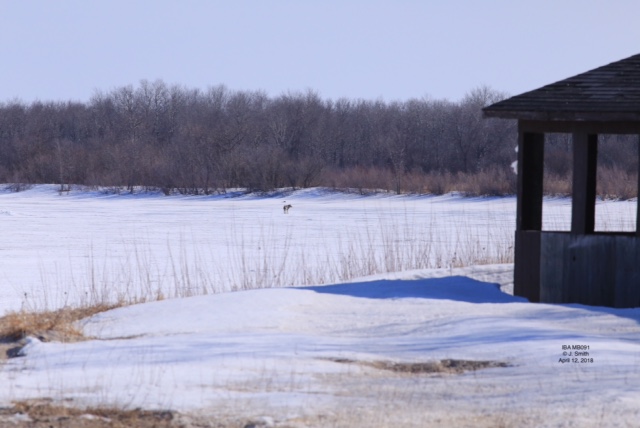
It is always nice to report something a bit different in one of Manitoba’s IBAs, and this is no exception. The Churchill and Vicinity IBA or the Saskatchewan River Delta IBA are probably the most likely places to see wolves within Manitoba’s IBA network. It was therefore a pleasant surprise to receive reports from Caretaker, Joanne Smith, late last Thursday, that she had spotted a Timber Wolf on the Riverton Sandy Bar IBA.

The series of photos below begin with the wolf, seemingly being closely watched by a Bald Eagle, as it walks on Lake Winnipeg. The Bald Eagle seems to then chase off a raven, before the wolf follows the sandbar towards solid land, and even a building in the final photo.

Thanks Joanne for the use of your photos, certainly makes a nice difference to post this on our website!

IMG_0303IMG_0306IMG_0311IMG_0312IMG_0316

IMG_0317

New Report – Summary of Grassland Bird Monitoring in Southwestern Manitoba in 2017

The Manitoba IBA Program are partners on some exciting projects to deliver incentives to land managers, primarily beef producers, in southwestern Manitoba. These projects are being funded under the auspices of the Environment and Climate Change Canada (ECCC) program ‘Species At Risk Partnerships on Agricultural Land’ or SARPAL.

As part of our contribution to this project, Christian Artuso of Bird Studies Canada carried out monitoring surveys on 32 properties. These properties were located in a target area covering the Southwestern Manitoba Mixed-grass Prairie IBA, Pipestone and Maple Lakes and the western portion of the Oak Lake and Plum Lakes IBA. The intention of these visits was to produce a baseline of bird abundance and presence on these properties, and to provide a list of species for the producer (each were later to receive a 2 sided summary of the results for their property). Close attention was given to Species At Risk (SAR), especially grassland species, such as Sprague’s Pipit, Chestnut-collared Longspur, Baird’s Sparrow, Ferruginous Hawk and Loggerhead Shrike. You can see Christian’s photos of all these species in the mosaic below (all copyright Christian Artuso).

You can read a summary of the outputs for yourself by downloading the document at the end of this blog, but for a quick summary, here is a summary of Species At Risk recorded during the summer of 2017 by the bird surveys (and a couple of IBA events and volunteers) in these areas.

Species Blind Souris Lyleton Grasslands Oak Lake Pipestone Poverty Plains Grand Total
Ferruginous Hawk   6       6
Yellow Rail     1     1
Common Nighthawk   1       1
Red-headed Woodpecker     2 7   9
Loggerhead Shrike   4   1 2 7
Eastern Wood-Pewee       1   1
Barn Swallow 1 25 11 6 6 49
Sprague’s Pipit 13 16 7 6 8 50
Chestnut-collared Longspur 31 33   10 24 98
Grasshopper Sparrow 16 55 7 7 23 108
Baird’s Sparrow 4 3 6   3 16
Bobolink 19 98 38 13 36 204

We would like to thank all our project partners, West Souris River Conservation District, Turtle Mountain Conservation District, Manitoba Beef Producers and Manitoba Habitat Heritage Corporation. Most of all, thank you to each landowner who kindly gave us permission to survey their property.

To read the report in full,  please download here.

For more information on the SARPAL program, please visit the Keep Grazing webpages on the Manitoba Beef Producers website.


Nature Manitoba’s New Avian Stewardship Program Assistant

Lynnea Parker Poster PPARFM

Lynnea Parker presenting her research poster, 2016

My name is Lynnea Parker and I am very thrilled to be joining Nature Manitoba for the next year as a full-time internship student. This intern position was made possible through co-funding provided by EcoCanada and Nature Manitoba. I will be working directly with the Manitoba’s Breeding Bird Atlas, Nocturnal Owl Survey, Important Bird Areas (IBA) program and the Chimney Swift Initiative.

I moved to Winnipeg from Nanaimo, BC in the fall of 2015 to pursue a master’s degree at the University of Manitoba. My thesis is on bear smart messaging and black bear conflicts near Riding Mountain National Park. This project was a perfect fit for me, as I have always held a passion for understanding human-wildlife interactions and finding non-lethal ways to reduce conflict. I plan to defend my thesis and graduate this summer.

Aside from my educational goals, I have held an interest in birding since 2013 when I received my first field job as a Grassland Songbird Research Technician in Brooks, AB. This is the same project that was the focus of ex-IBA Summer Assistant, Patricia Rosa’s PhD. I learned how to identify grassland songbirds and conduct various bird and plant survey methods for the first time. Since that summer, birding has become a dedicated hobby. The wonderful bird diversity and variety of conservation-oriented initiatives in Manitoba have prompted me to stay in the province after the completion of my master’s degree.

Left: Chestnut-collared Longspur chicks, Right Upper: Long-billed Curlew, Right Middle: Marbled Godwit, Right Lower: Prairie Rattlesnake. Photos by Lynnea Parker.

Riding Mountain National Park was a fantastic setting to conduct research and go bird watching. A little known, but highly diverse IBA is located at Proven Lake, just 20 minutes south of Wasagaming. It was at this IBA I encountered my first Great Gray Owl at dusk. Other highlights of this IBA included being startled by a Short-eared Owl in the spooky black spruce bog, watching Bobolink glide across open fields, and stumbling across many nests alongside the 1.5 km trail.

_DSC0575 crop Facebook

Great Gray Owl at dusk, Proven Lake IBA, Photo by Lynnea Parker

A Year in Review At MB091, Riverton Sandy Bar by Joanne Smith

Joanne Smith, our caretaker for MB091 Riverton Sandy Bar gives us an overview of comings and goings during another successful 2017 in the IBA. All photos unless stated otherwise were taken by and copyright to Joanne Smith. 

The year 2017 began as most years do at Important Bird And Biodiversity Area MB091 Riverton Sandy Bar. From January to March, ice fishing shacks dotted the ice on Lake Winnipeg, just south of the IBA’s Riverton Sandy Bar and Hecla Bar. This area is well known to both local and visiting recreational fishermen. 2017 also proved to be special because of local and visiting volunteers who came out to help pull invasive sweet clover with the goal of improving the habitat for possible future Piping Plover. With recent breeding success in other parts of the province, the possibility of having this nationally Endangered species return to Sandy Bar is quite real. The last record of nesting Piping Plover at Sandy Bar was in 2004.

From the arrival of Herring gulls in late March and first signs of nesting Canada Geese in early April, to the last fall migrants in late October, Sandy Bar can definitively be a hot spot for many species of birds ranging from the more common Mallard to the endangered Red Knot rufa subspecies. Fishermen, birders, volunteers and the birds all flock to Sandy Bar!

By the third week of April Herring Gulls had already begun to settle in and prepare nests. Approximately 65 gulls and 18 nests (without eggs) could be seen at the far end of Sandy Bar. American White Pelicans and Double Crested Cormorants had also made their arrival at this point.

Along with the arrival of new species, massive chunks of ice littered the shoreline as a wind/ rain/snow storm had battered the area in mid-April. Willows were bent over along the shoreline and the old wooden building which is used by nesting Barn Swallows (COSEWIC Threatened) received damage to many of its boards. The destruction left by the storm was a sharp contrast to the tranquility of seeing three Common Loons diving on the calm Lake Winnipeg waters just north of Sandy Bar. Hawk species Northern Harrier and Bald Eagle as well as the migrating song bird American Tree Sparrow were also regulars at this point. The huge Bald Eagle nest just west of the IBA boundary had already been occupied for several weeks at this point.

otherAppsImage (5)
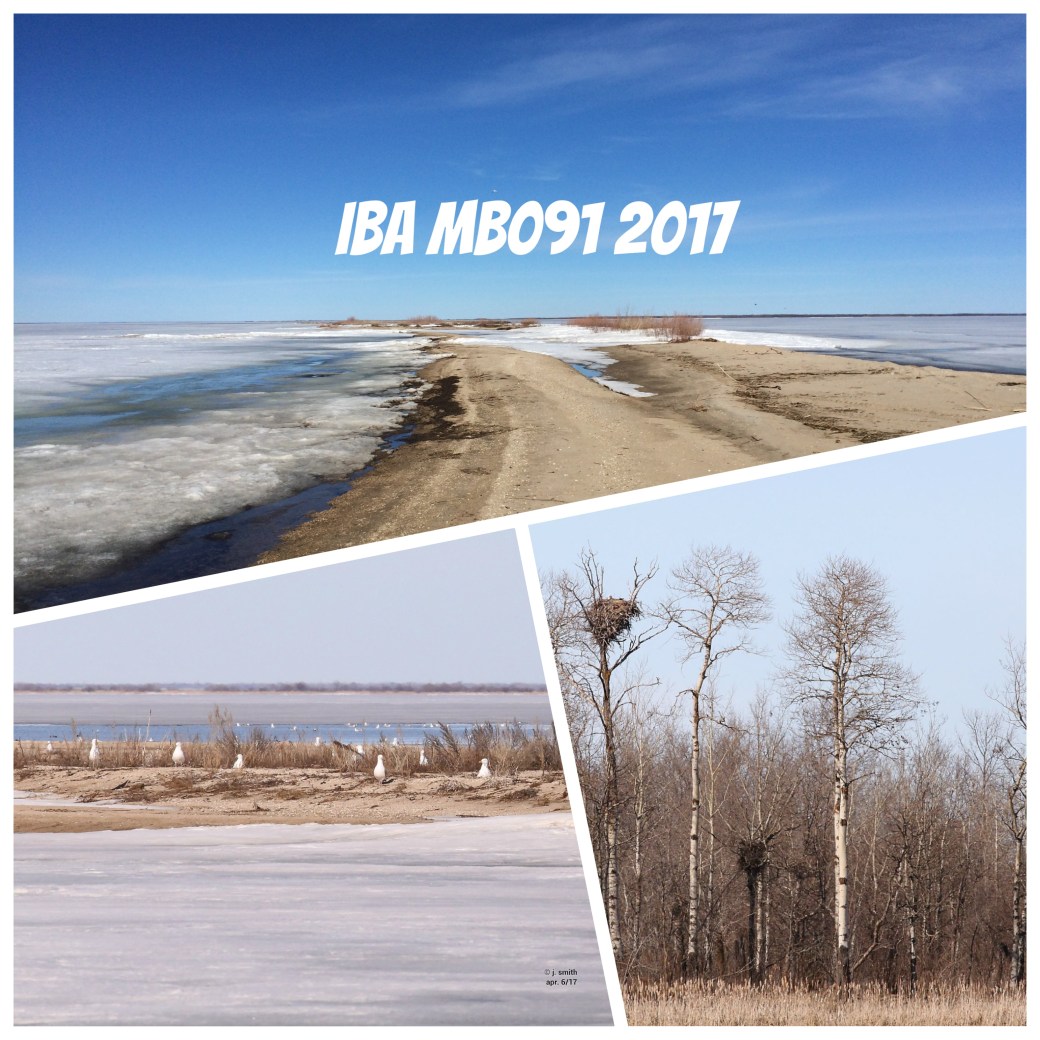
April images, clockwise from top: Sandy Bar; occupied Bald eagle nest; Herring Gulls checking out nest sites

By early May other waterfowl species such as American Wigeon, Northern Pintail, Lesser Scaup and Gadwall were visiting the waters off Sandy Bar. Migrants Yellow-rumped and Palm Warblers could be seen along the shoreline and the Song Sparrows had already begun to check out the vegetation on the edge of the marsh that would make ideal spots to nest. One lone Snow Bunting lingered further out on the sand bar and one Barn Swallow had arrived to check out the building that would serve as home to its young in the coming weeks. At this point, a few shorebirds and marsh birds had also made an appearance. Two Marbled Godwits and one Sora (local breeder) were seen by mid-May. Towards the end of May sightings of migrating Sanderlings, Ruddy Turnstone, Whimbrel and Red Knot were also added to the shorebird visitor list.

MB091 May images

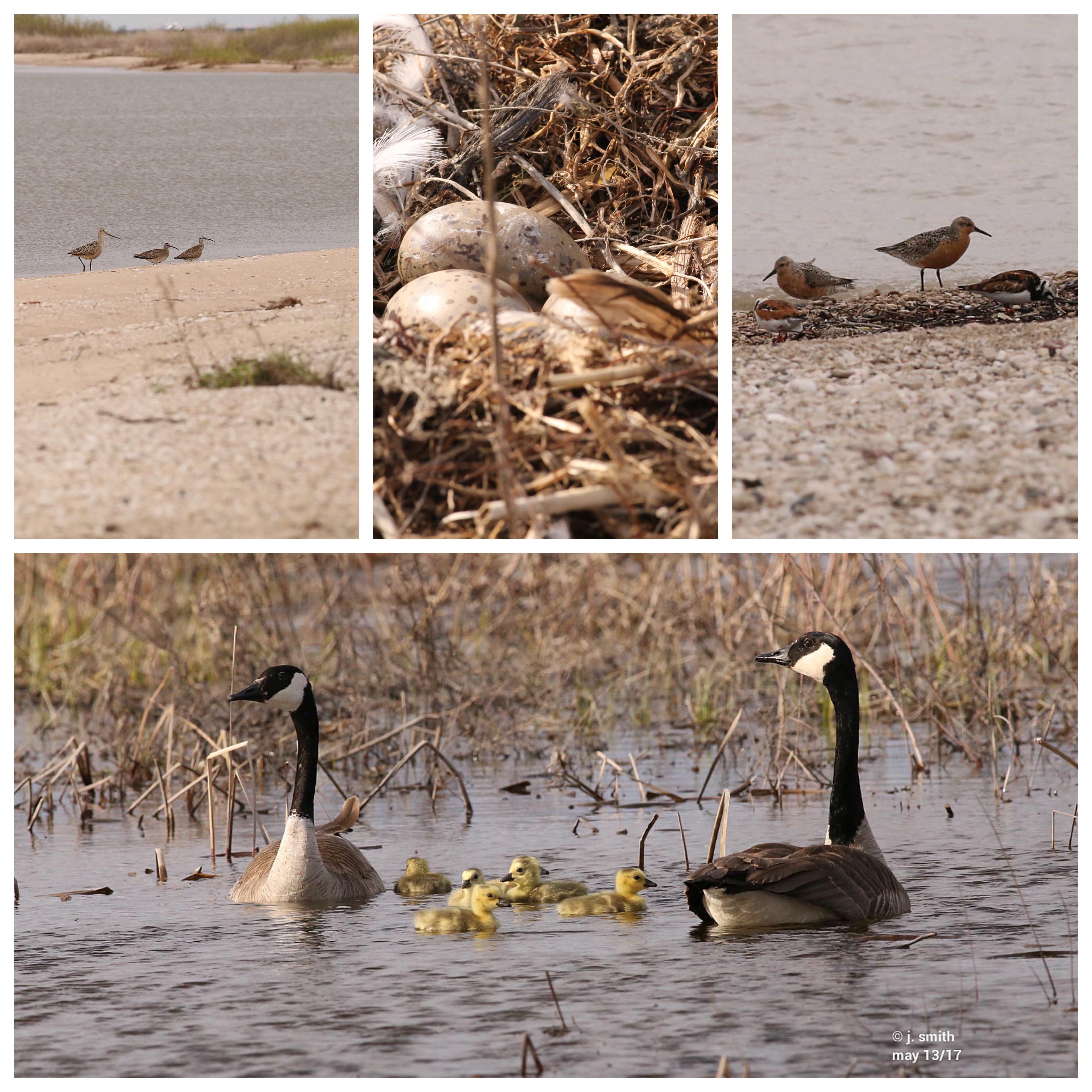
May images, clockwise from top left: Marbled godwit and Whimbrels; Herring Gull nest; Red Knot and Ruddy Turnstone; Canada Goose Family

The month of June included a few more shorebird species including Dunlin (seen by Jock McCracken), Semipalmated Sandpipers, Semipalmated Plover, Black-bellied Plover, White- rumped Sandpiper and local breeding species Killdeer and Spotted Sandpiper. By June 8th one Killdeer pair had already chosen an area of the shoreline to nest on. Unfortunately they had chosen an area close to human foot and ATV traffic and it didn’t appear in later weeks as if they had been successful in this particular spot. But then again, much goes on that our human eyes never see. June was definitely a successful month for Canada Geese. Numerous families could be seen on the lake consisting of little fluffy goslings bouncing on the waves between protective parents. A view of Hecla Bar with binoculars showed American White-Pelican and Double-crested Cormorants taking it easy on the distant sand bar.

otherAppsImage (6)

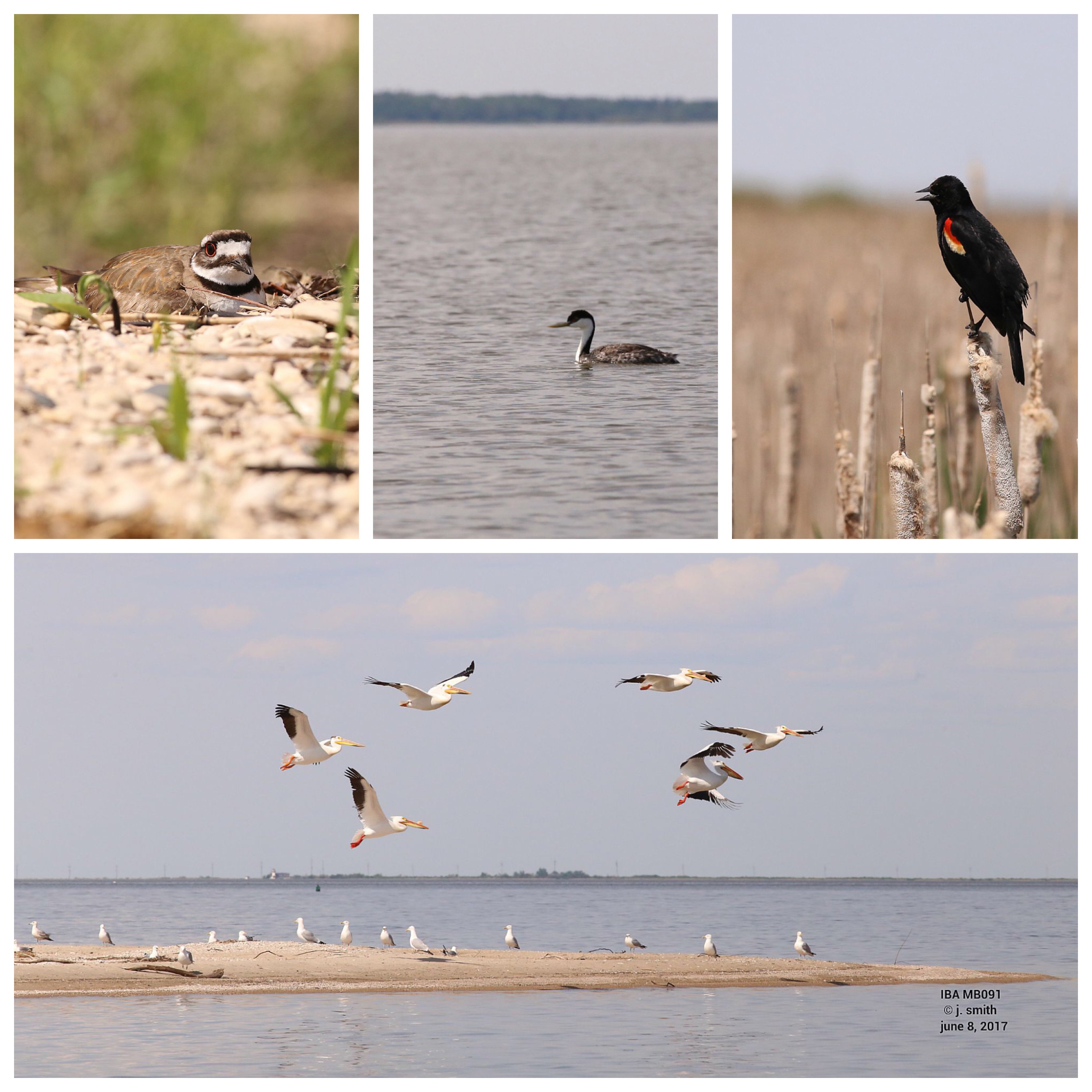
June images, clockwise from top left: Killdeer on nest; Western Grebe; Red-winged Blackbird staking out territory at Marsh; Herring Gulls And American White Pelican

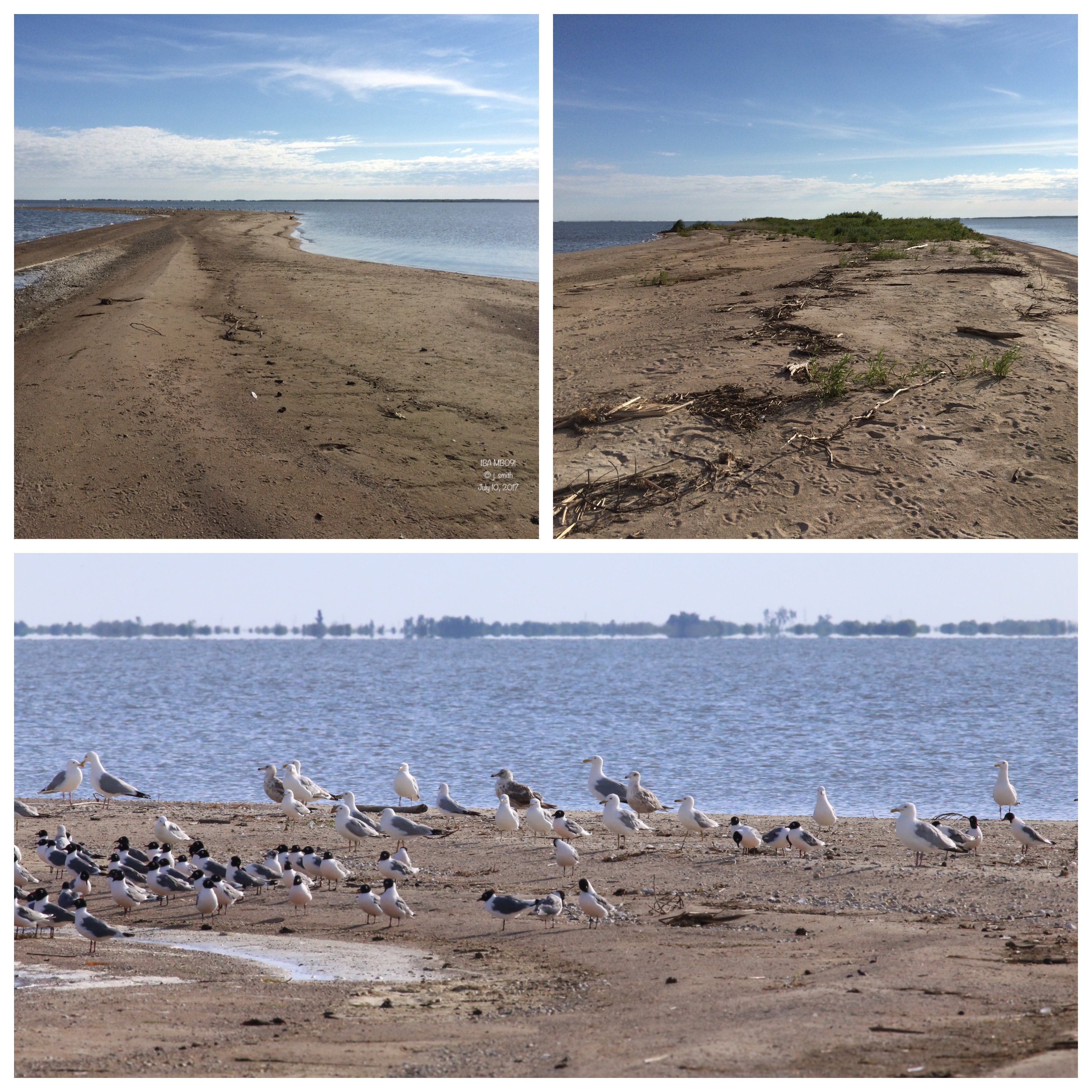
In July, 75 Herring Gull adults could be seen at the far end of Sandy Bar with at least 5 juveniles. Close to 300 Franklin’s Gulls were sunning themselves on the shoreline some distance from the Herring Gulls. Marsh Wrens were numerous along the road that winds through the marsh area of the IBA. Even though we humans think of July as a summer month, some shorebirds had already begun their fall migration south. By July 10th, two Greater Yellowlegs made a stop at Sandy Bar before continuing their journey south.

otherAppsImage (7)

July images, clockwise from top left: looking out towards the tip of the bar; vegetation at the tip; Franklin’s Gulls, Ring-billed Gulls and Herring Gulls

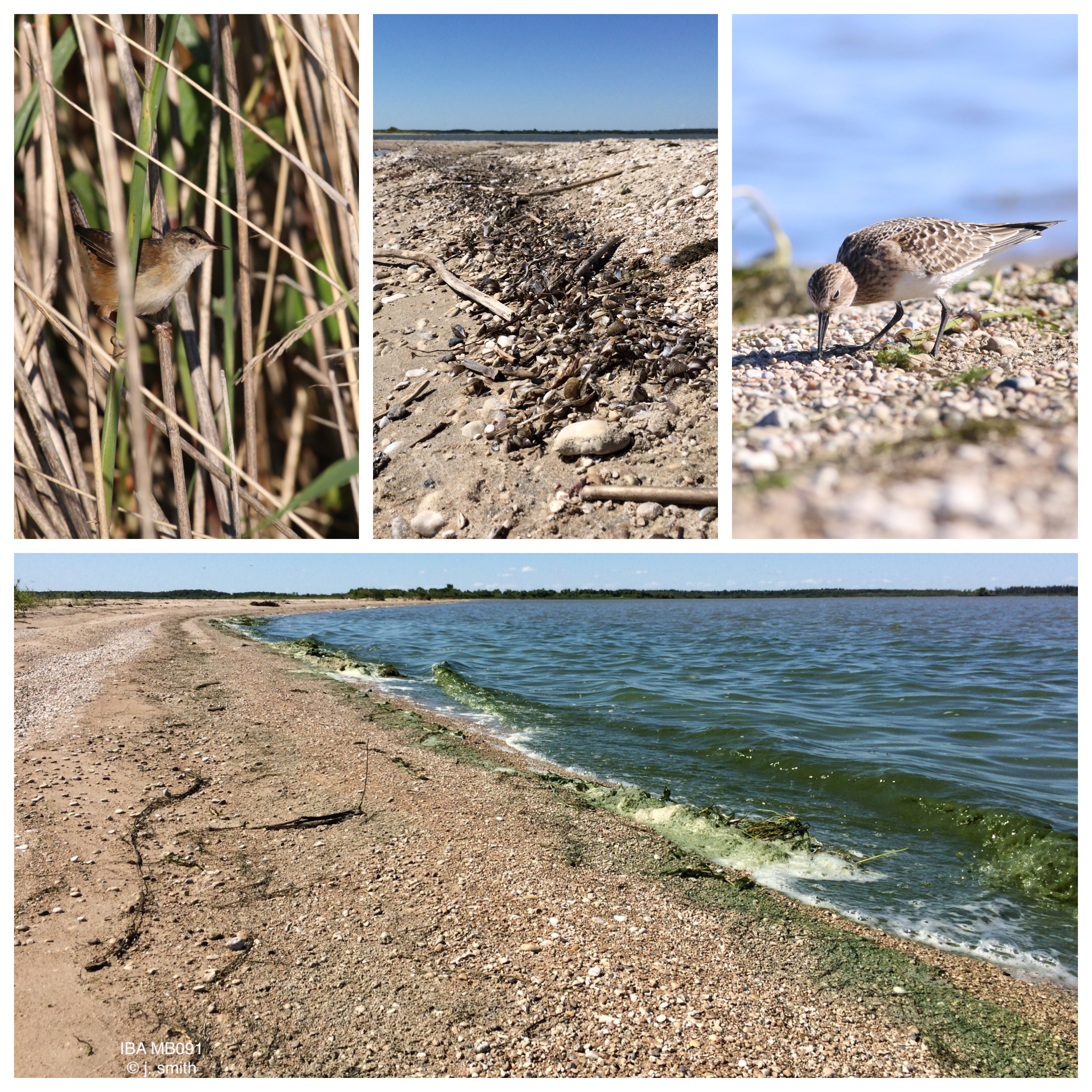
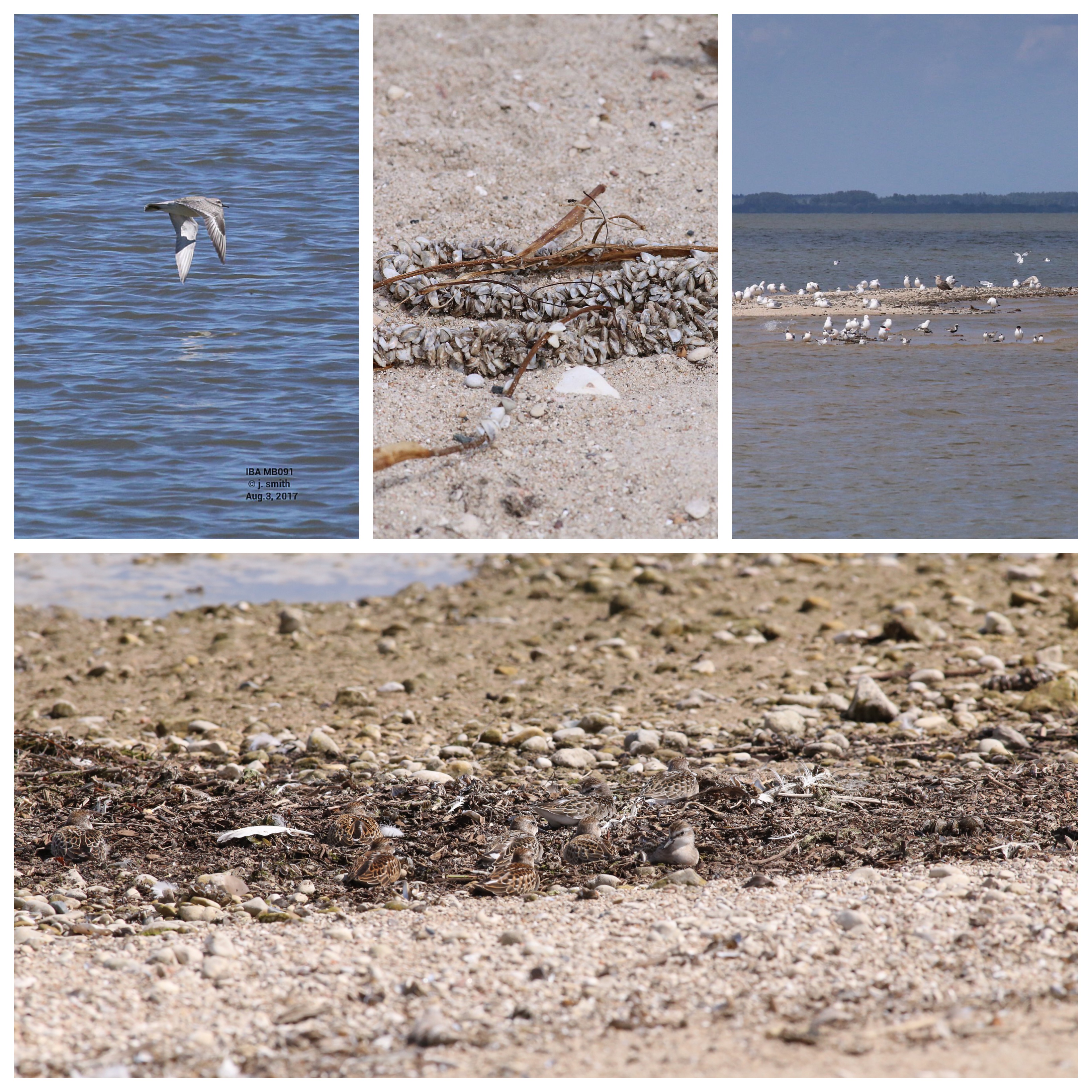
By the first week of August more shorebirds were using Sandy Bar as a refueling station before continuing their fall migration. Many shorebird species nest in northern Canada and the Arctic and then fly back to South America for the winter months. Baird’s Sandpiper, Least Sandpiper, Semipalmated Sandpipers, Black-bellied Plovers, Ruddy Turnstone, one lone Sanderling and one Red Knot had made appearances in early August.

otherAppsImage (8).JPG

Early August images. Clockwise from top left: Marsh Wren; Zebra Mussels; Baird’s Sandpiper; Blue-green algae

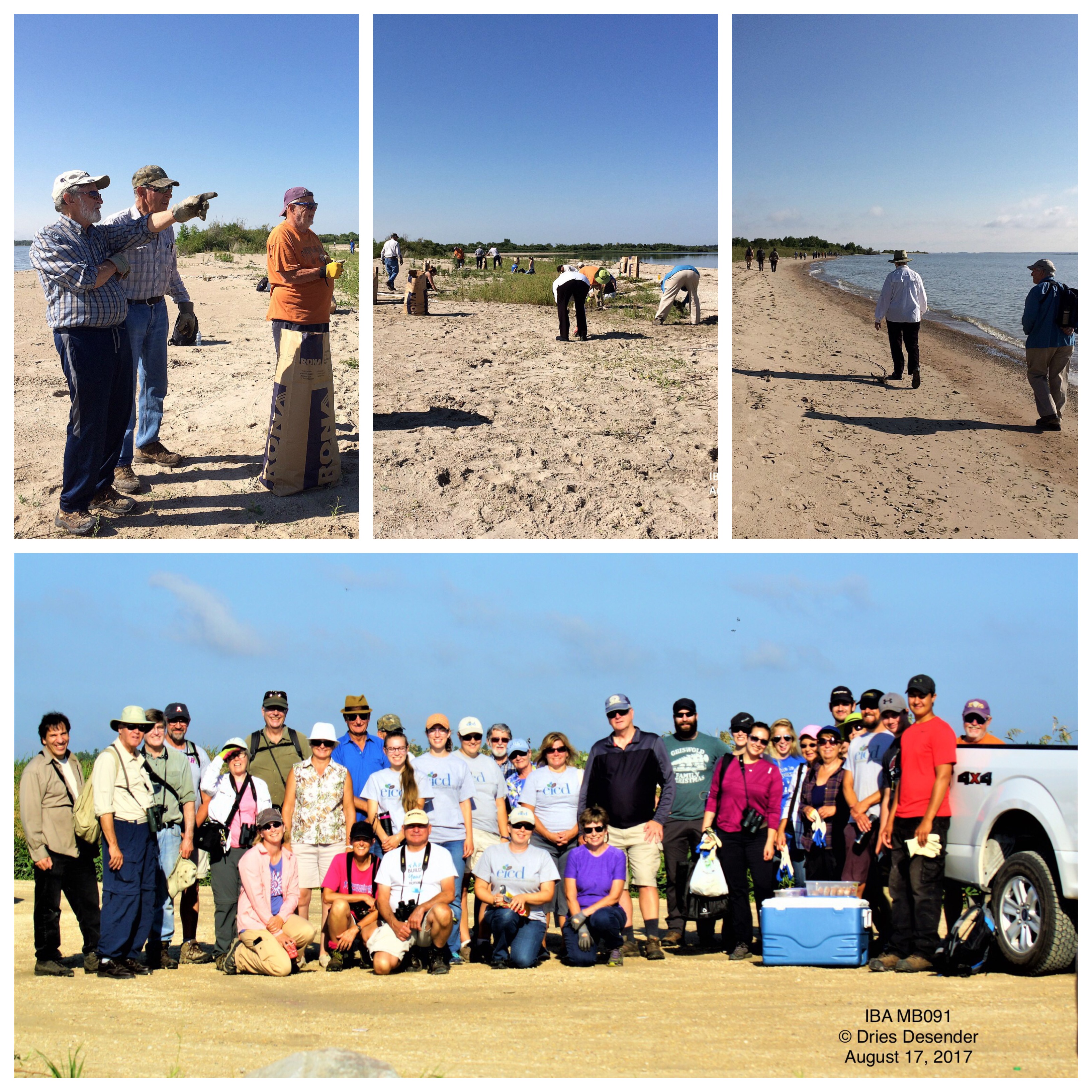
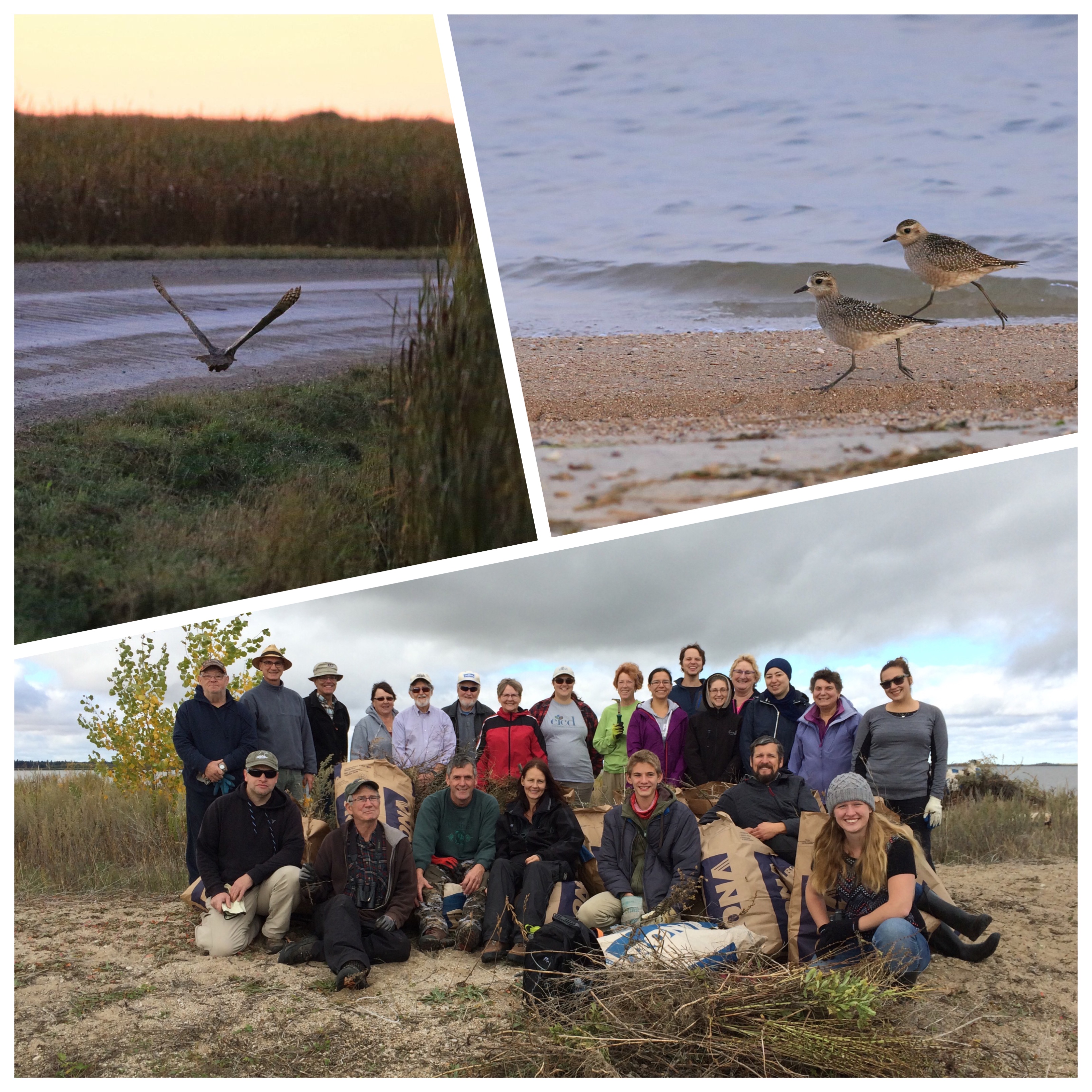
On August 17th, thirty-six volunteers from the Riverton, Interlake and Winnipeg areas, came together to pull weeds at Sandy Bar. Riverton resident, Thor Johannson was instrumental in recruiting local volunteers and both the East Interlake Conservation District and Manitoba Sustainable Development were on board to pull weeds. After a brief introduction and coffee and donuts, volunteers headed out onto the sand bar to begin the weed pull. The day started with a pleasant 16 degrees but soon rose to 26. Despite the heat, volunteers sweated their way to filling sixty-six bags of weeds! Not too shabby! Along with the humans, there were three additional shorebird species using the sand bar as a stopover refueling station. Lesser Yellowlegs, Pectoral Sandpiper and the super long distance migrant American Golden Plover (can fly up to 20,000 miles per year, including a nonstop flight of over 3000 miles over the Atlantic Ocean) put in an appearance. An extra bonus was when Linda Curtis spotted and photographed two Trumpeter Swans just north of the Sandy Bar marsh area.

MB091 weeders

Weed pickers at work (top); the weed team, photo by Dries Desender (bottom)

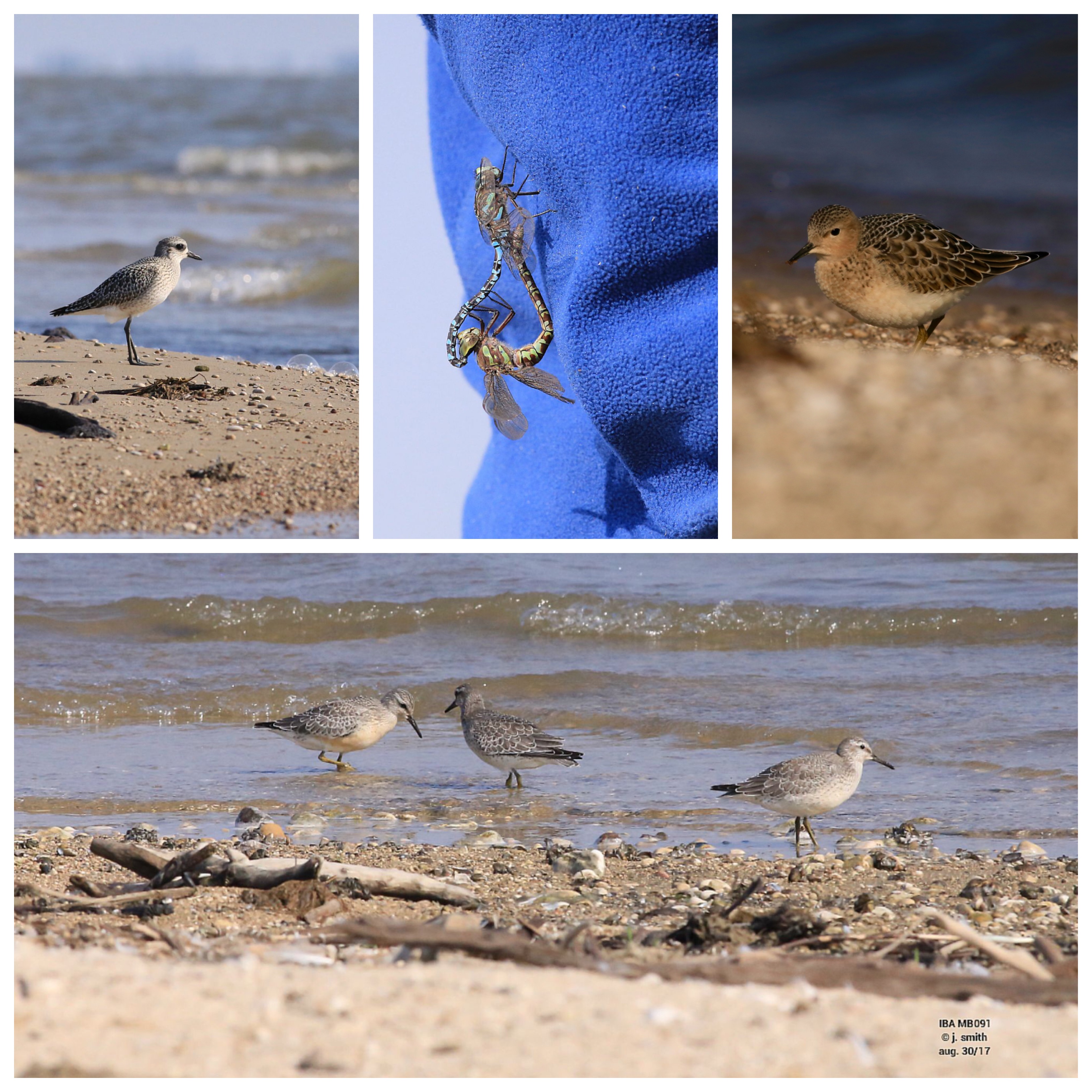
Late August provided sightings of five Buff-breasted Sandpipers and four Red Knots. Buff- breasted Sandpipers are sometimes seen during migration in plowed fields or the sod farms near Oak Hammock Marsh. Having them show up at IBA Riverton Sandy Bar was an extra special bonus. A week later, both species were seen by a group of nine individuals. For some, this was the first time seeing them in 2017 and for a few others, they were lifers (a birder’s term used when they see a species for the very first time).

otherAppsImage (10)

Late August images. Clockwise from top left: Black-Bellied Plover; Canada Darner (thanks to Deanna Dodgson for the id); Buff-breasted Sandpiper; Red Knots

otherAppsImage (9)

Late August images. Clockwise from top left: Red Knot; zebra mussel necklace; Herring, Ring-billed Gulls, Caspian, Common, Forster’s terns, Black-bellied Plovers, 2 hard to find Red Knots in far back; Sandpipers in camouflage (guess the numbers and species)

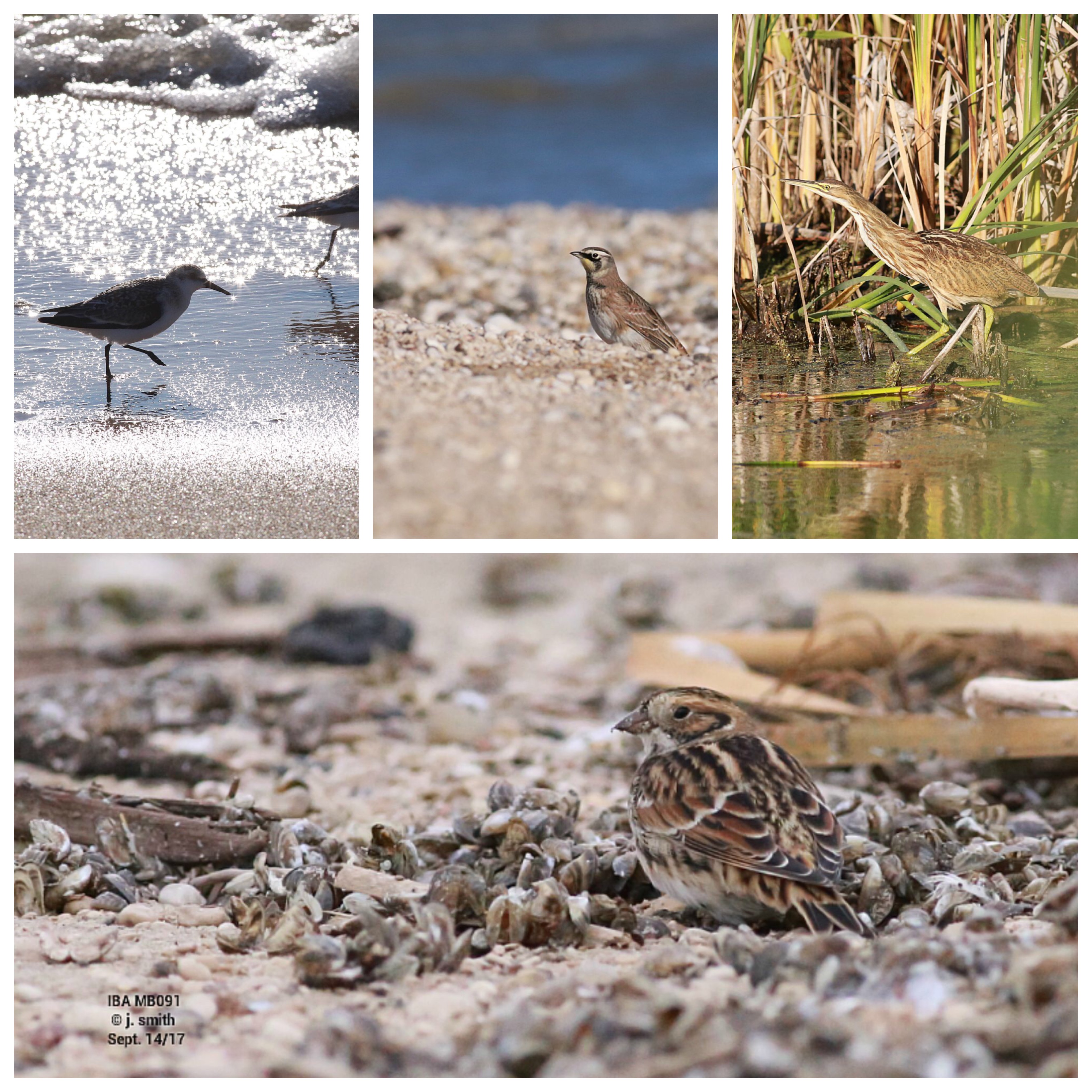
By September 8th, real signs of the upcoming fall season were noticed at Sandy Bar as Horned Lark and Lapland Longspur dropped by to refuel. On September 14th two American Black Ducks were noticed by Bonnie Chartier. American Pipits also put in an appearance. Earlier that day, Ryan and Irene Porteous were fortunate enough to see twenty-five White-winged Scoters on the lake. Another sure sign of the changing seasons.

otherAppsImage (11).JPG

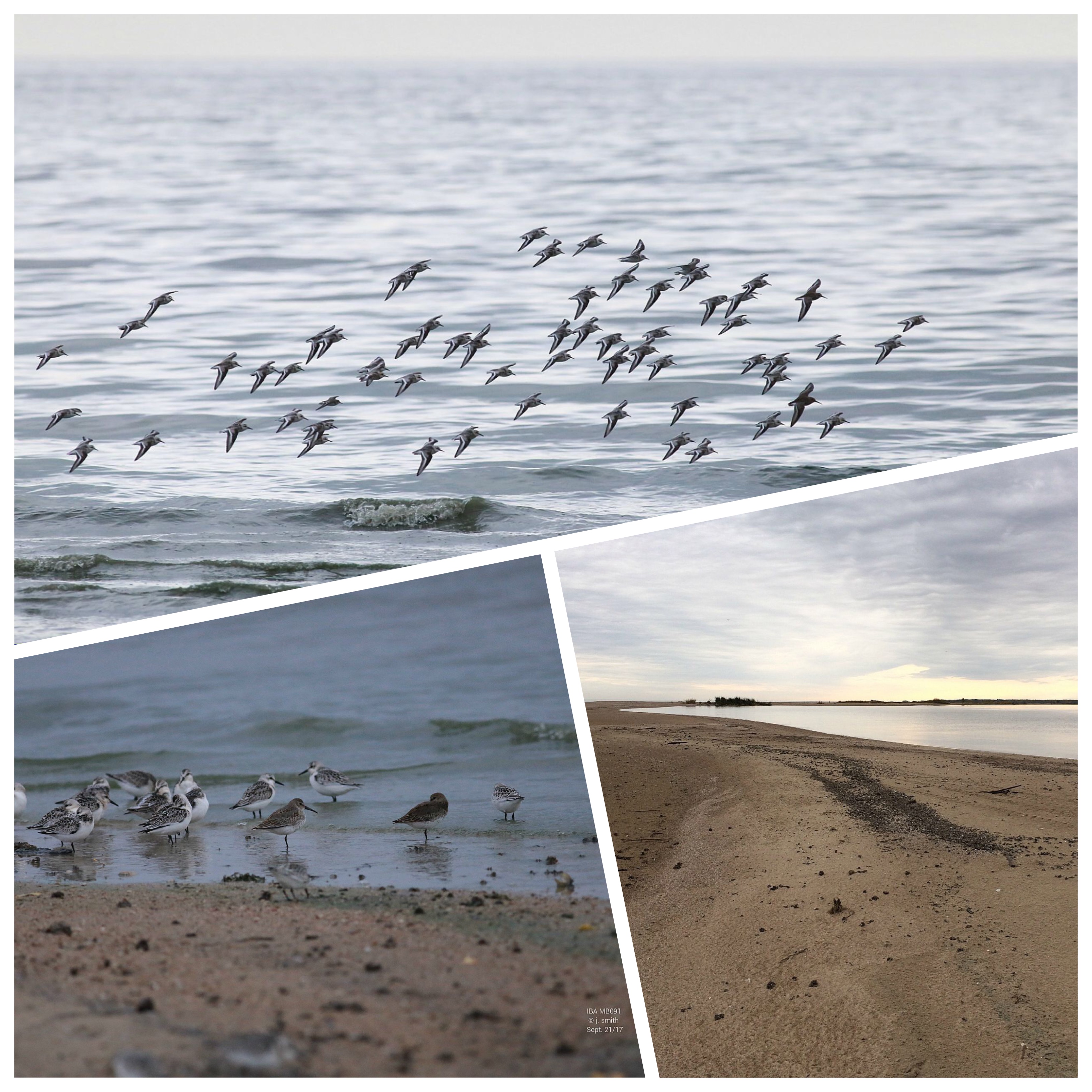
September highlights, clockwise from top left: Sanderlings; Horned Lark; American Bittern; Lapland Longspur

Late summer also brought its regular waves of algae rolling onto shore. While it can look rather interesting, it’s probably not a good sign for Lake Winnipeg. Zebra mussels are now so common on the shoreline at Sandy Bar that one almost forgets to mention them.

On September 29th, another weed pull was carried out by volunteers. Thirty-five volunteers spent the morning pulling fifty bags of invasive sweet clover including a good number of people from the Riverton Friendship Centre. Riverton High School Science teacher Don Bodnarus brought his grade 9/10 class out to experience the event as part of their science and outdoor education program. And dare we use the word “snow” in the month of September, but one lone Snow Bunting was seen amongst the sixty-five Lapland Longspurs. A nice sighting of two more American Golden Plover and numerous Snow Geese also added to this successful event.

otherAppsImage (12).JPG

Final weed pull, clockwise from top left: Great-Horned Owl; American Golden Plover; Sept 29 weed pullers

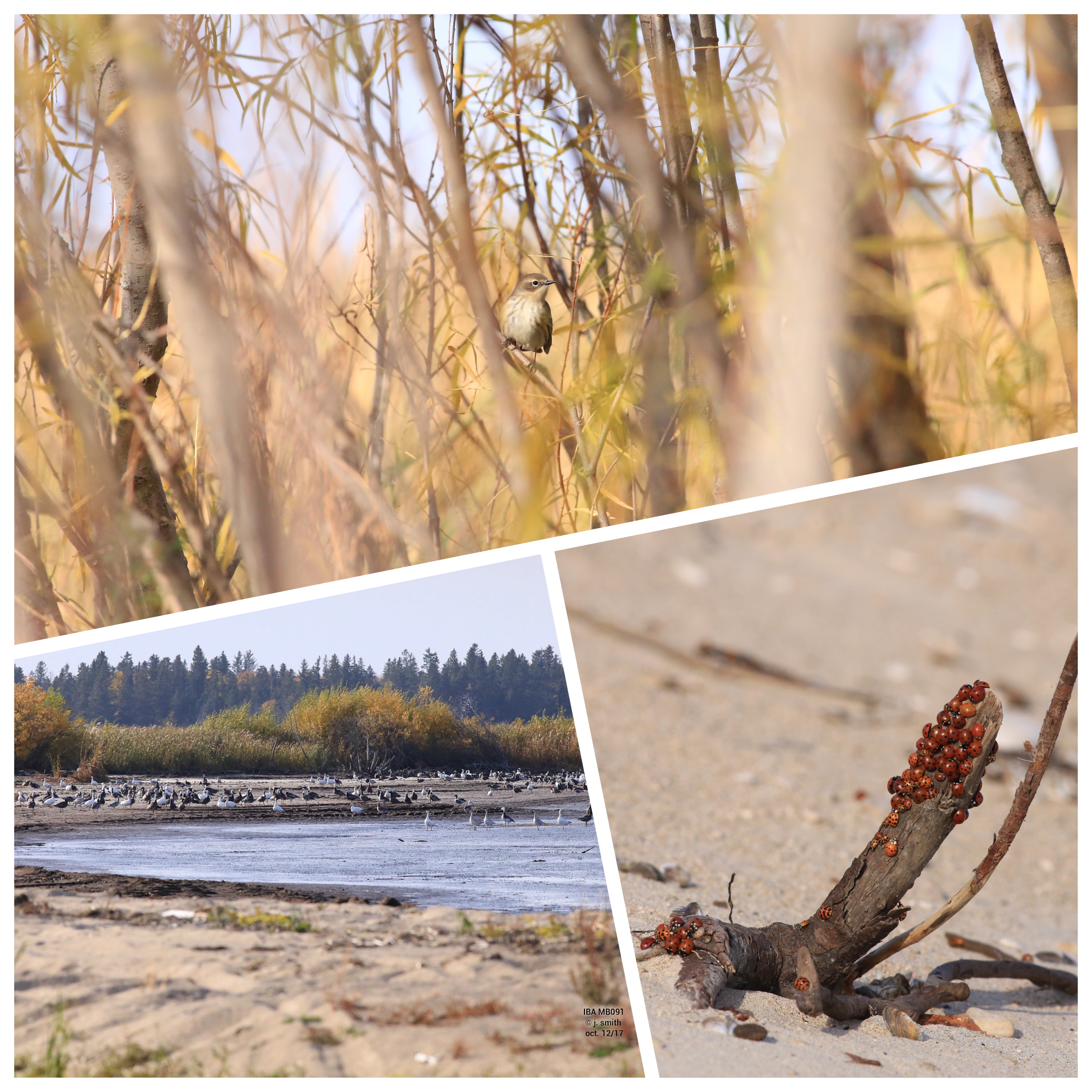
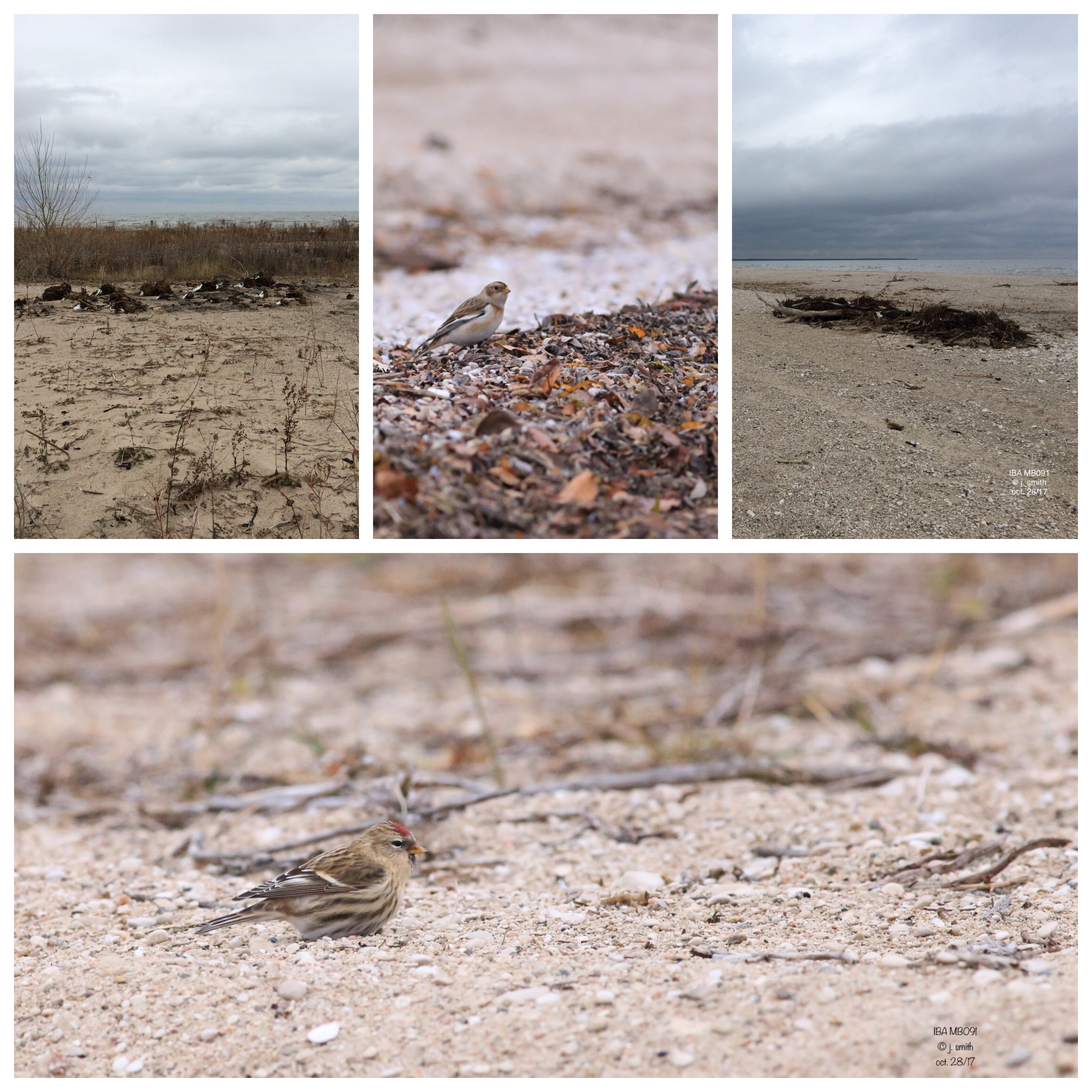
Earlier in September, John Weier spotted a Peregrine Falcon flying past the tip of Sandy Bar and by mid-October, the northern shore of the IBA was occupied by hundreds of migrating Canada and Cackling Geese. Later that month, Common Redpolls were also added to the 2017 fall bird list at Sandy Bar. Another sign that fall had definitely arrived.

otherAppsImage (2)

Flavours of fall, clockwise from top: Yellow-rumped Warbler; invasive Asian lady beetles; Snow Geese

The final chapter in the 2017 weed pulling weedathons was completed as Sustainable Development made their way out to Sandy Bar in October to burn the 100+ bags of invasive sweet clover.

otherAppsImage (13)

Final fall images, clockwise from top left: burnt weed bags; Snow Bunting; weeds gone up in smoke; Common Redpoll

The lake levels were lower in 2017 than the previous 4 years since IBA Riverton Sandy Bar monitoring had begun. Despite this, one cannot help but think that it was the combined effort of many volunteers who cleared the area of weeds along with the lower lake levels that made Sandy Bar more appealing as a stopover for important migrating shorebirds such as the Buff- breasted Sandpiper and the endangered Red Knot.  With more weed pulling events and continued lower lake levels, maybe we’ll eventually see another pair of nationally Endangered Piping Plover stake out Riverton Sandy Bar as their place to successfully raise young.

otherAppsImage (3)

Fall shorebird migration on the sandbar was the most successful in terms of species richness in a number of years – maybe a sign of early weeding success? Clockwise from top: Sanderlings and two Dunlin in flight, the sandy bar, more Sanderlins and Dunlin

Many thanks to all weed pullers, weed burners, bird monitors, Rona in Gimli for a donation of bags and gloves, those who made eBird entries and all who simply showed an interest in learning more about Important Bird And Biodiversity Area MB091 Riverton Sandy Bar.

May 2018 be as productive as 2017!

MB091 Riverton Sandy Bar

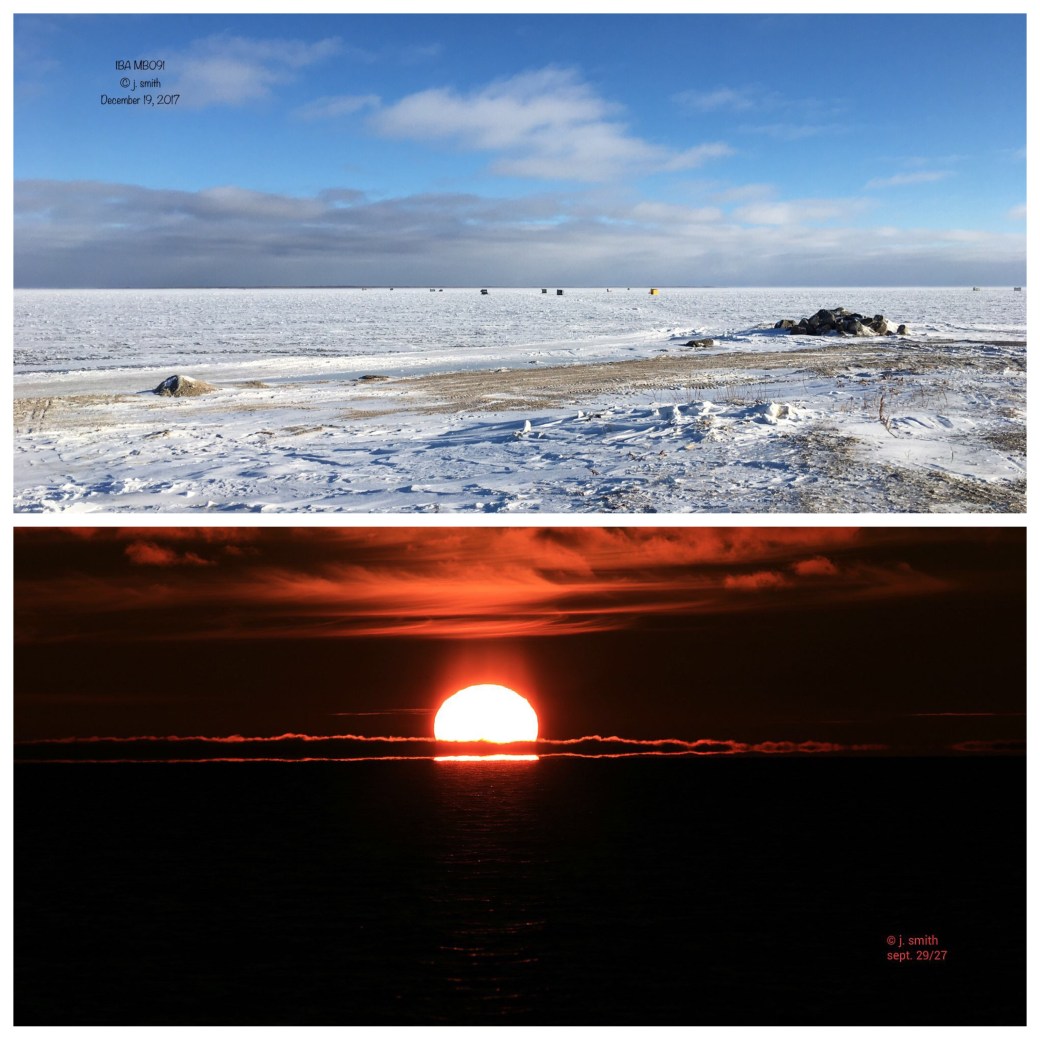
Top: Fishing Ice shacks Bottom: Sunrise taken morning of weed pull Sept 29

Footnote: 2017 has been a wonderful year in the life of Riverton Sandy Bar, no doubt almost 100% due to one person. Joanne has been a fabulous caretaker and a real asset to the program. Thanks Joanne!

Happy Holidays From the Manitoba IBA Program

Seasons Greetings From the Manitoba IBA Program

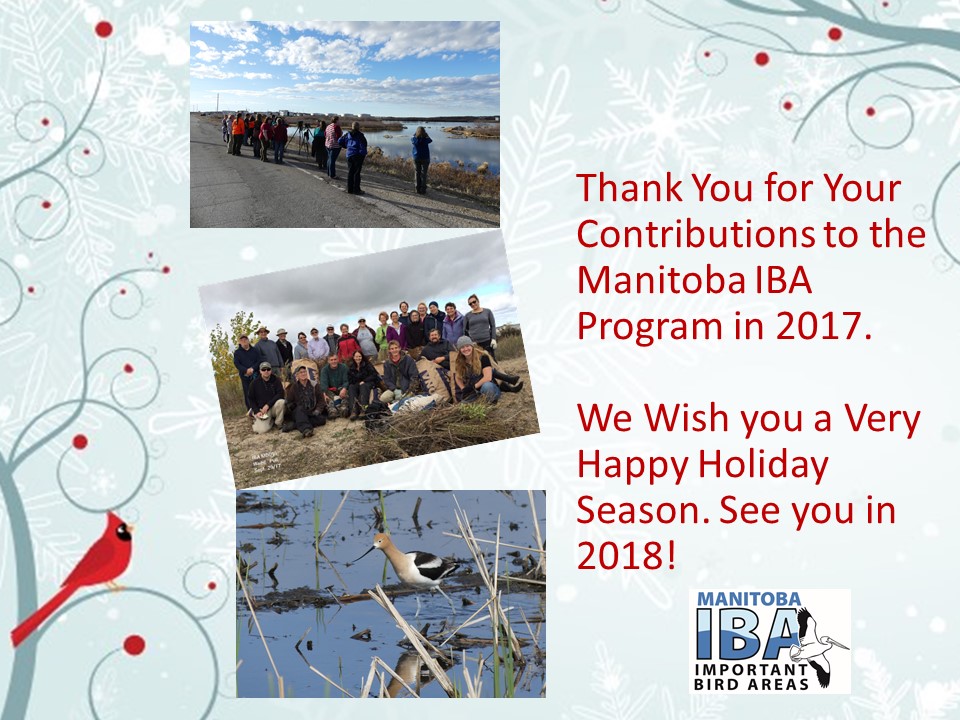
Thank you to everyone who has counted birds, pulled weeds, led public bird walks, been an advocate for globally important habitats for biodiversity and the many other critical activities which make this program what it is. 2017 has been a fantastic year for the Manitoba IBA Program and we would be nothing without our brilliant volunteers.

A few notable highlights from 2017 included:

Have a wonderful holiday season and see you in 2018!