Eastern Whip-poor will Surveys

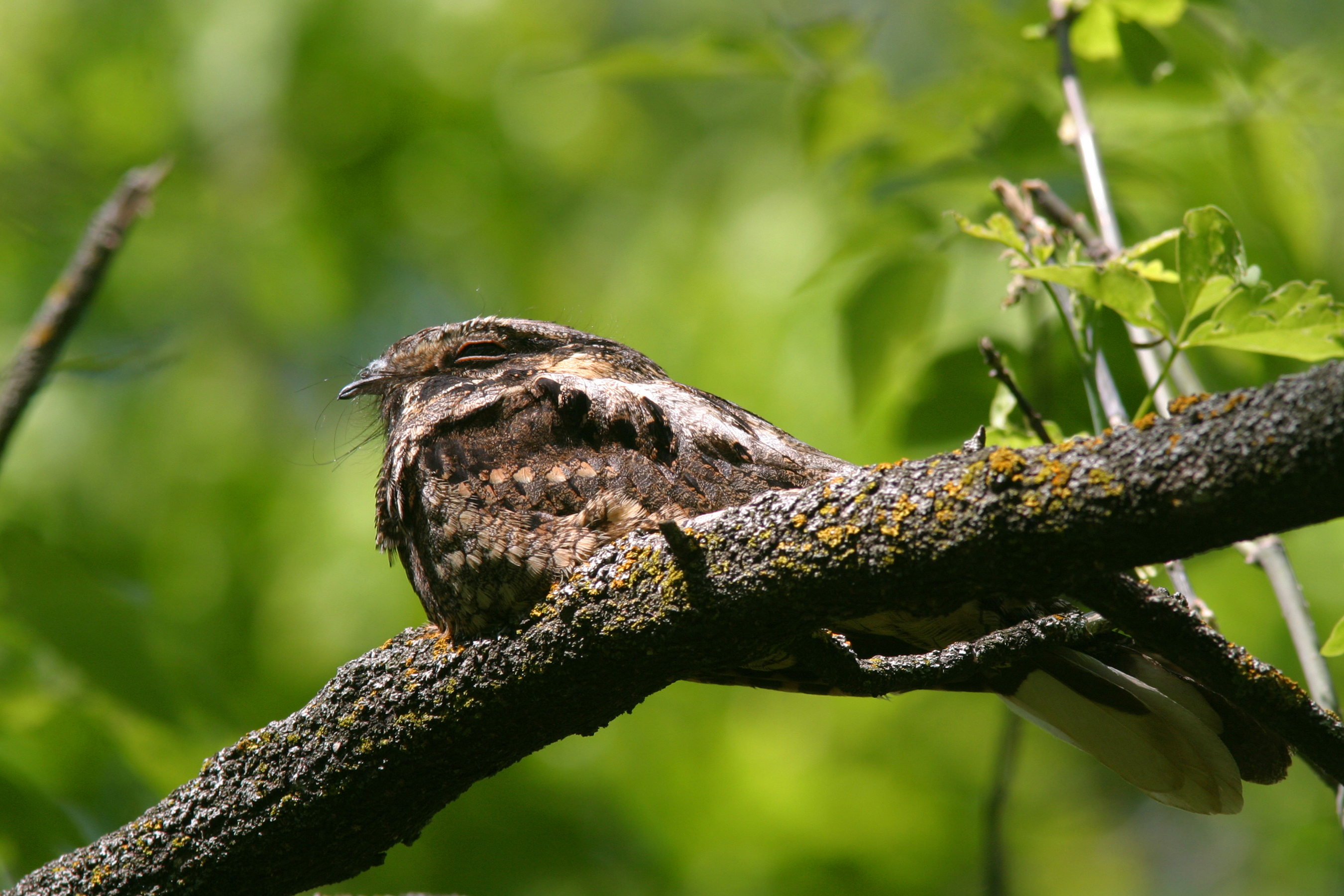
Eastern Whip-poor-will. Photo by Christian Artuso.

This year, for the first time, Manitoba IBA is monitoring a very interesting, incredibly elusive bird, the Eastern Whip-poor-will. It is one of two species of special focus this summer, along with the Red-headed Woodpecker. The Eastern Whip-poor-will is part of the nightjar family, a group of nocturnal insectivore birds. Coming from the same group is the Common Nighthawk, another bird found in Manitoba. After a week or two spent coming up with a proper protocol for surveying these birds, Amanda, Vicky and I conducted our first survey. More on that below, but first, we need to get to know the Whip-poor-will a little better.

The Whip-poor will is a medium sized, top heavy bird who calls out their own name. You may hear them calling their distinct whip-poor-will for hours on end. The Whip-poor-will is a ground nester, often choosing a spot next to a shelter from the warm sun. The prefer forests with open understory. They are incredibly hard to spot during the day due to their colouring and nocturnal nature. 

Whip-poor-will numbers are in decline. The Whip-poor-will is a threatened species in Manitoba and Canada and is on the 2016 State of North America’s Birds’ Watch List, which reports on birds that are most at risk of extinction without the intervention of conservation efforts. The main concern for Whip-poor-wills is the loss of open understory forests, which can come from conversion to pasture, crops or urbanization. The birds are also at risk for collision with cars due to their inclination to sit on or fly over roadways.   

Because this year was our first for monitoring these birds, we had to come up with the proper protocol. Working from the Canadian Nightjar survey (Birds Canada), we put together a survey protocol specific to Nightjars in Manitoba. Our first survey took place at the Delta Marsh IBA. Our version of the Nightjar survey this year is exploratory, meaning there are no set routes, and you simply drive around and find suitable habitat. We chose this option as there were very few records of Whip-poor-wills in Manitoba IBAs to base a route around. Typical suitable habitat included forests that are not overly dense and sections of forest or treed pasture with open sections of meadow. They key time to see (hear) Whip-poor-wills is the two week period around the full moon – for the breeding season this means the full moon in June. Once we find a good spot, we stop and listen for 6 minutes. It is important to remain very quiet and to not play any call backs. This usually involves turning the car off and sticking our heads almost out the window. Whip-poor-wills have very distinct calls, but sometimes they are far from the road, and their calls have been loud and very faint. We found when multiple birds would call at the same time, it was tough to figure out how many there were due to varying distance and the layering of the sounds.  

We have been fortunate to identify a handful of the birds on each survey we have conducted so far, meaning that we now know there are individuals located in the IBAs – a big step up from where we were when starting the surveys. This includes two surveys in the Shoal Lakes IBA and two in the Delta Marsh IBA. Because they are nocturnal, it is always by their calls. One observation we made was that we were only identifying the birds after it had become dark (rather than the 30 minutes before sunset start of the survey). That doesn’t mean they aren’t out earlier; we have just only heard them once other birds grow silent.  

The exploratory nature of the survey means leaving main roads and traveling mile roads within the IBA. Often it is a large area that we are covering and can be visited more than once. Sometimes we travel all the way down a road to find that we are simply moving closer to a do not trespass sign, forcing us to turn around and try another road. Vicky and I were very surprised when we drove up to someone’s driveway near West Shoal Lake and were greeted by two farms dogs and a donkey running to the car to say hello! If they were there to seem threatening, it only surprised and delighted us.

Overall, the surveys have been a success and I hope we will be able to monitor more before the summer is up. It is very exciting to know that this threatened bird is so close to home.  

If you are interested in learning more about whip poor wills or conducting your own survey, we would love to hear from you. We are also looking for any reports that you might have of Whip-poor-wills during the breeding period around any of our IBAs. Simply email Amanda at iba@naturemanitoba.ca for more information!

-Ariel

July IBA Events

As COVID-19 numbers stay low, and the province slowly opens up the Manitoba IBA program is also ready to hold events with volunteers again! We are limiting our event capacity and continuing to follow our same COVID-19 protocols from last year (social distancing, no carpooling outside your “bubble” and mandatory masks) but we are excited to see you all again!

International Shorebird Survey Spring 2021

Hello Everyone!

I am Ariel, one of Manitoba IBA’s Summer students for 2021. This past spring, our coordinator Amanda and I, as well as some of our wonderful volunteers have been visiting some of our IBAS to survey for shorebirds.

The protocol that we follow is one of our own, based heavily on the International Shorebird survey by Manomet, but fitted to the specific characteristics of Manitoba. The original protocol includes elements specific to coastal shoreline, which obviously doesn’t work for us in southern Manitoba! There are 4 survey sites that were covered throughout the spring shorebird monitoring. These sites are Whitewater Lake, Oak Hammock Marsh, Shoal Lakes IBA and Oak/Plum Lakes. Oak Hammock Marsh and the Shoal Lakes IBA routes are new this year! Theses sites have multiple routes to monitor and are normally surveyed 3 times in the spring and 3 times in the fall. Below you will find the results of our surveys for the Spring 2021 season. Note that while multiple species are observed and recorded under the ISS protocol during surveys, only shorebirds are included in the data.  

New this year are several photos sites that we have set up in the IBAs. The purpose of these photo sites is to take a photo and share it with us so that we may compare photos of the site each year. Sites that are chosen are usually marked with something distinct, such as a road sign.

A big thank you to Gillian, Bonnie, Tammi, and Mike, our lovely volunteers who were a big help this year in going out and monitoring our IBAs!  

Spring 2021 Oak Hammock Marsh

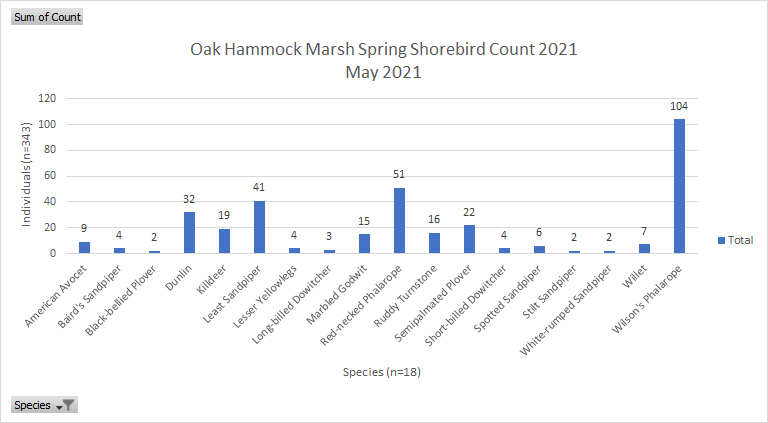
Oak hammock Marsh has 3 routes and was monitored several times in May partially during shorebird peak season. A total of 18 species were identified by volunteers and the IBA Program. Routes included the front pond – which as you may know is managed for shorebirds by the staff at the Marsh. One of the routes also includes our shorebirds scrape constructed last autumn. Route 2 was visited four times, Route 1 as visited twice and route 3 was visited three times. The Shorebird Scrape was done 3 times.

2021 Spring Season Oak Hammock Marsh 
SpeciesTotal # of IndividualsProportion of Individuals (%)
American Avocet93
Baird’s Sandpiper 41
Black-bellied Plover21
Dunlin329
Killdeer196
Least Sandpiper4112
Lesser Yellowlegs 41
Long Billed Dowitcher 30.87
Marbled Godwit154.37
Red Necked-phalarope5114.87
Ruddy Turnstone164.66
Semi plamated plover226.41
Short billed dowithcer41.17
Spotted Sandpiper61.75
Stilt Sandpiper20.58
White rumper Sandpiper20.58
Willet 72.04
Wilson’s Phalarope10430.32
   
Total343100
Total # of species18 
Based on 13 surveys

Spring 2021 Oak/Plum Lakes

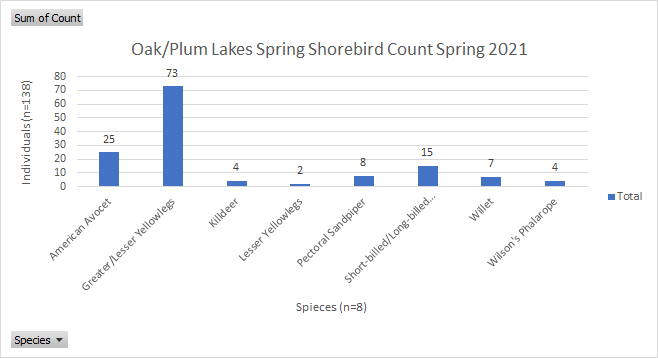
Oak and Plum lakes has 3 routes that were each monitored once. Due to the drought weather this spring, many of the areas close to the roads had dried out or moved farther back, making identification difficult at times. A total of 8 species were identified.

2021 Spring Season Oak/Plum Lakes 
SpeciesTotal # of IndividualsProportion of Individuals (%)
American Avocet2518
Greater/Lesser Yellowlegs7353
Killdeer43
Lesser Yellowlegs 21
Pectoral Sandpiper86
Short billed?Long billed dowwitcher1511
Willet75
Wilson’s Phalarope42.90
   
Total138100
Total # of species8 
based on 3 surveys

Really low water levels at the ISS site along the northern tip of Grande Clairiere Road at Oak Lake. Normally the water goes all the way (and sometimes covers) the rock causeway seen at the end of the video. No wonder the shorebirds are so far out!

Spring 2021 Shoal Lake

Extremely low water at Shoal Lakes. Normally the entire beige- coloured (dried out) mudflat is covered with water. Photo by A. Shave.

North and South Shoal Lakes cover a larger area. There are 4 routes around the lakes, plus the water access near the Erinview campground. They were surveyed 25 times between April and June. Route 1 was surveyed five times, route 2 was surveyed eight times, route 3 was surveyed six times and route 4 was surveyed four times. The Campground was surveyed twice. A total of 24 species were identified. Shoal Lakes was my personal favorite IBA to survey as it was common to see a variety of other birds, such as several species of duck, pelicans, birds of prey and even a Red Headed Woodpecker, one of our focus species this year. Shoal Lakes was another area that was very clearly affected by the drought this year, with many normally suitable spots to survey having been dried out and pushed back farther from the road.

2021 Spring Season Shoal Lakes  
SpeciesTotal # of IndividualsProportion of Individuals (%)
American Avocet516
American Woodcock 10
Bairds Sandpiper162
Dunlin91
Greater Yellowlegs465
Greater/lesser Yellowlegs10
Hudsonian Godwit10
Killdeer11413.59
Least Sandpiper17220.50
Lesser Yellowlegs10112.04
Long billed Dowitcher 70.83
Marbled Godwit 293.46
Pectoral Sandpiper111.31
peep sp. 242.86
Semipalamated Plover10812.87
Semipalamated sandpiper60.72
Short billed dowitcher141.67
Short billed/long billed dowitcher 111.31
Solitary Sandpiper30.36
Spotted Sandpiper151.79
White rumped sandpiper50.60
Willet374.41
Wilson’s phalarope 485.72
Wilson’s snipe91.07
Total839100
Total # of species24 
Based on 23 surveys
A group of American Avocets at Whitewater Lake. Photo by A. Shave

Spring 2021 Whitewater Lake

Whitewater Lake was surveyed 23 times over the course of the season. There are 7 routes in total on the east and west side of the lake. For the west side of the lake, route 1 was surveyed three times, route 2 was surveyed twice and route 3 was surveyed five times. For the East side of the lake, route 1 was surveyed four times and route 2 was surveyed once. Sexton’s point was surveyed eight times. While the graph shows large numbers of certain birds, volunteers reported that the water around the lake was low, and When Amanda and I went to set up photo sites, we noticed the same. The dry weather has no doubt affected the IBA’s this year. A total of 23 species were recorded with a staggering 23,424 individuals counted. A large number of these shorebirds were recorded by Gillian on May 16th when huge numbers of shorebirds were counted along the ISS routes.

2021 Spring Season Shoal Lakes  
SpeciesTotal # of IndividualsProportion of Individuals (%)
American Avocet6043
American Golden-Plover80
Bairds Sandpiper4162
Blackbellied plover 1160
Dunlin10
Greater Yellowlegs60
Hudsonian Godwit70.03
Killdeer450.19
Least Sandpiper14856.39
Lesser Yellowlegs810.35
Marbled Godwit 1110.48
Pectoral Sandpiper1870680.48
Red necked Phalarope 1960.84
Semipalamated Plover1400.60
Semipalamated sandpiper3791.63
Short billed Dowitcher120.05
Short billed/long billed Dowitcher 550.24
Spotted Sandpiper10.00
Stilt Sandpiper 1890.81
Upland Sandpiper50.02
White Rumped Sandpiper 3281.41
Willet620.27
Wilson’s Phalarope 2891.24
Total23242100
Total # of species23 

As we can see by the graph, most species have relatively high counts but the Pectoral Sandpiper’s count towers over the rest at 18,706!

Future ISS Surveys

If you are interested in volunteering for International Shorebird surveys or about shorebird identification, please contact Amanda at iba@naturemanitoba.ca for more information as well as tools to get you started. You do not have to commit to running all sites at a location – there may even be a route or two that you follow on your normal birding trips! We are also able to provide mentoring for shorebird ID and/or lend out spotting scopes if needed. The fall ISS survey period starts on July 11th and runs until October 25th.

Welcome to our 2021 Summer Assistants!

Bird representation of Amanda and summer students touching down for the field season!

This year we have two summer assistants joining our program. Ariel will be focusing on work with Species at Risk and Vicky will be helping with a variety of IBA activities. While we are sad to say that we have been quiet on the public programming side, we have been busy behind the scenes! Read on for a hello from both of our summer assistants…

Hi Everyone! 

My Name is Ariel and I am the newest employee at IBA for the summer of 2021! I am currently a student at the University of Winnipeg, working towards my bachelor’s degree in Environmental Studies with a focus on issues in sustainability.

After developing a deep interest in the environment and animals during my childhood, I knew that I wanted to bring that love into my future career and do my part. In the past, I have volunteered with the Green Action Centre and worked a variety of jobs, from barista to greenhouse technician. After a few years of casually watching birds, I decided to take it more seriously, and after seeing a group of Cedar Waxwings out in Bird Lake, my interest in birding exploded! That’s why I am so excited to be working with the IBA team this summer and I am looking forward to hopefully spotting my first Whip-poor-will!

Hello everyone! My name is Vicky Tang, and I am happy to be a part of the team as a Program Assistant this summer.

I am currently finishing my 3rd year at the University of Manitoba. I am working towards a Bachelor of Science degree in Biological Sciences, with focus on environmental and integrative physiology. I am also minoring in Entomology, so leave the creepy critters to me! This will be my first year working with a conservation focused employment and I hope to continue this trend! Starting with IBA, I am looking forward to learning about Manitoba’s native species and developing my competence towards conservational efforts.

I have been passionate about nature since childhood. I love the sounds I can hear being in the forest, and what makes up most of the sounds are birds. So, I am excited to be monitoring birds and participating in field trips to learn more about them in hopes to provide good care to our native bird species.

We are excited to have Vicky and Ariel on board!

On the Lookout for Shorebirds at the Shorebird Scrape

This spring the Manitoba IBA program at staff at the Harry J. Enns Wetland Discovery Centre put out a trail camera at the Oak Hammock Marsh shorebird scrape. The scrape was constructed last year to create additional habitat for shorebirds in the marsh. It is the first time (to our knowledge) that a scrape has been constructed in Manitoba for shorebird habitat. A scrape is a shallow depression made in the ground of wet habitat (in our case attached to a pond) that is seasonally filled with water. The scrape slowly dries out and provides the shallow water and shoreline habitat favoured by shorebirds and many other bird species as well. As this is very much a trial, we wanted to have a set of “eyes” out on the scrape often – so we added a trail camera!

While the trail camera gives us a good idea of how often shorebirds are at the scrape – nothing beats a pair of eyes and binoculars (or a spotting scope). So, if you are birding at the marsh, a stop by the scrape and an eBird checklist shared with Manitoba IBA is appreciated! You will see from some of our images below that due to the limitations of putting the camera out in the marsh mud, the distance the shorebirds are often at, and the resolution of the trail camera, determining species is difficult. I have tried to identify the shorebirds in the photos below, but if you can make out a species I cannot – I am happy to hear from you!

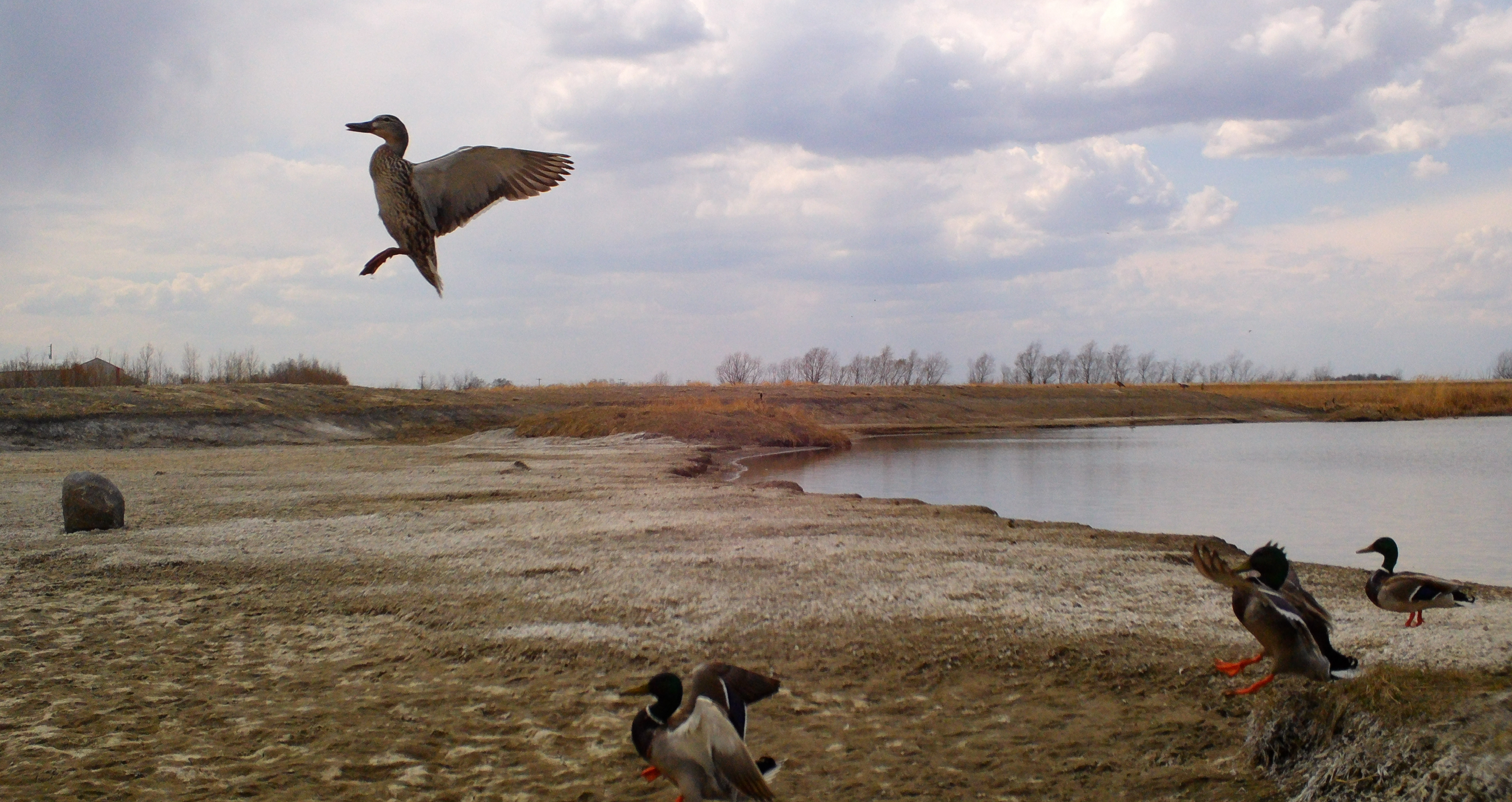
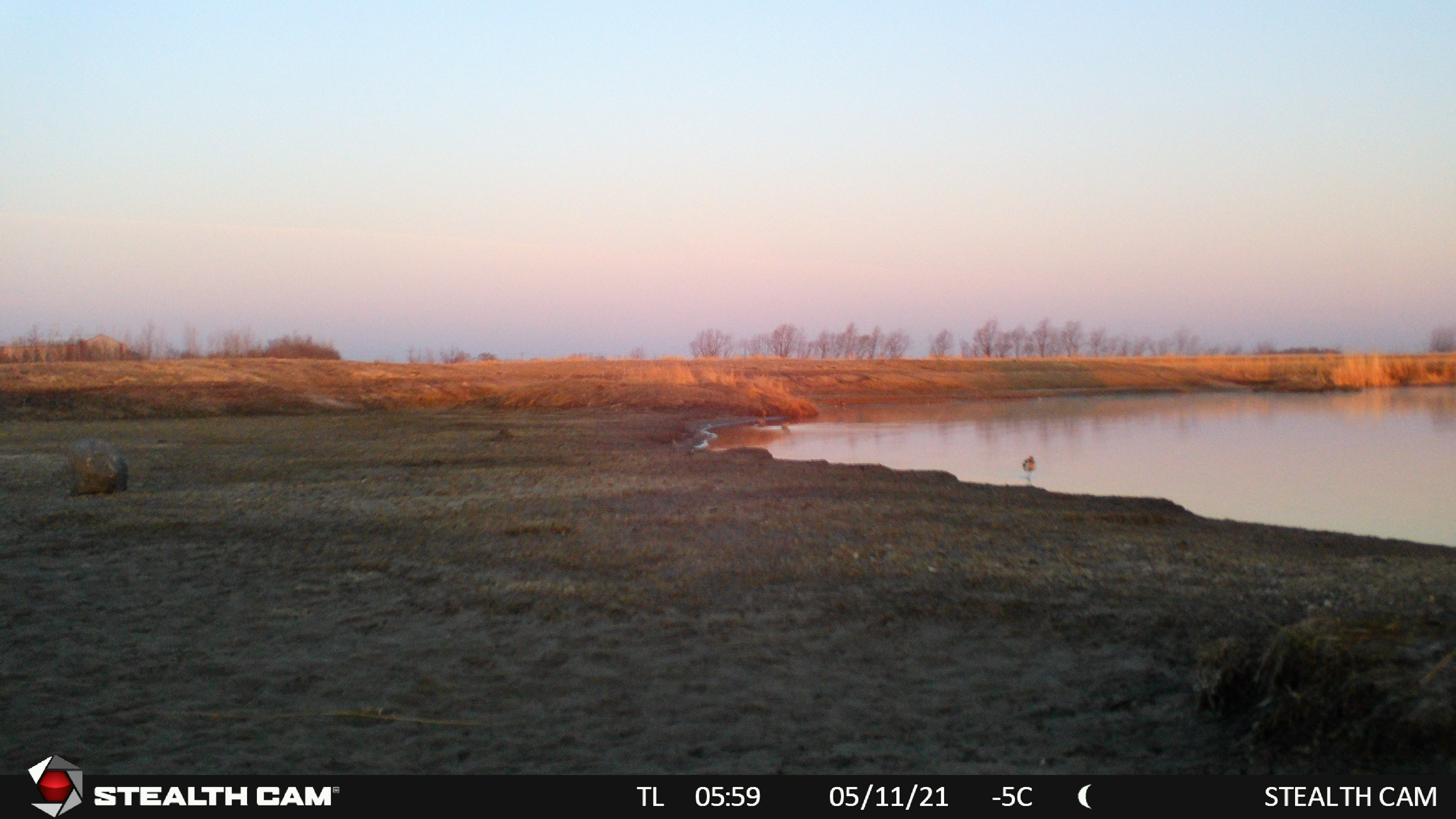
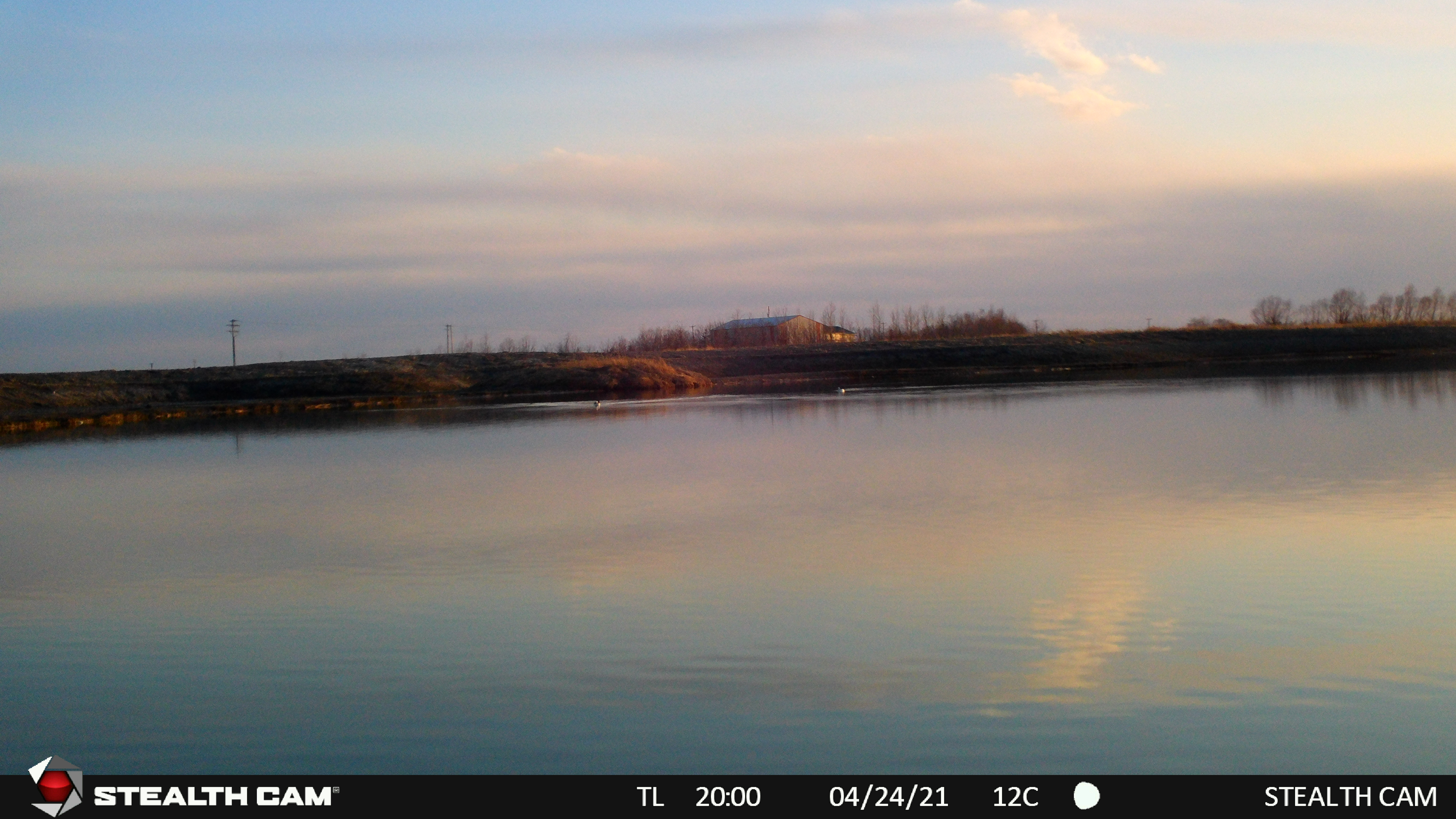
Our first photos with the trail camera were taken April 22. Our late April photos largely consisted of Canada Geese. We also had some nice sunset/ sunrise photos and various duck species.

A chilly morning on April 24th with Redheads and Canada Geese out on the pond and scrape (scrape on the back left side of the photo).

On April 26th we moved the camera to a new spot to get a better view of the scrape. This is when we saw our first shorebird at the scrape – a Marbled Godwit.

Two Marbled Godwits enjoying the scrape on April 26th. They stuck around for about 40 minutes that day according to the camera.

The Marbled Godwit was our most consistent species at the scrape showing up on April 26-27, April 29-May 1, and May 4-10.

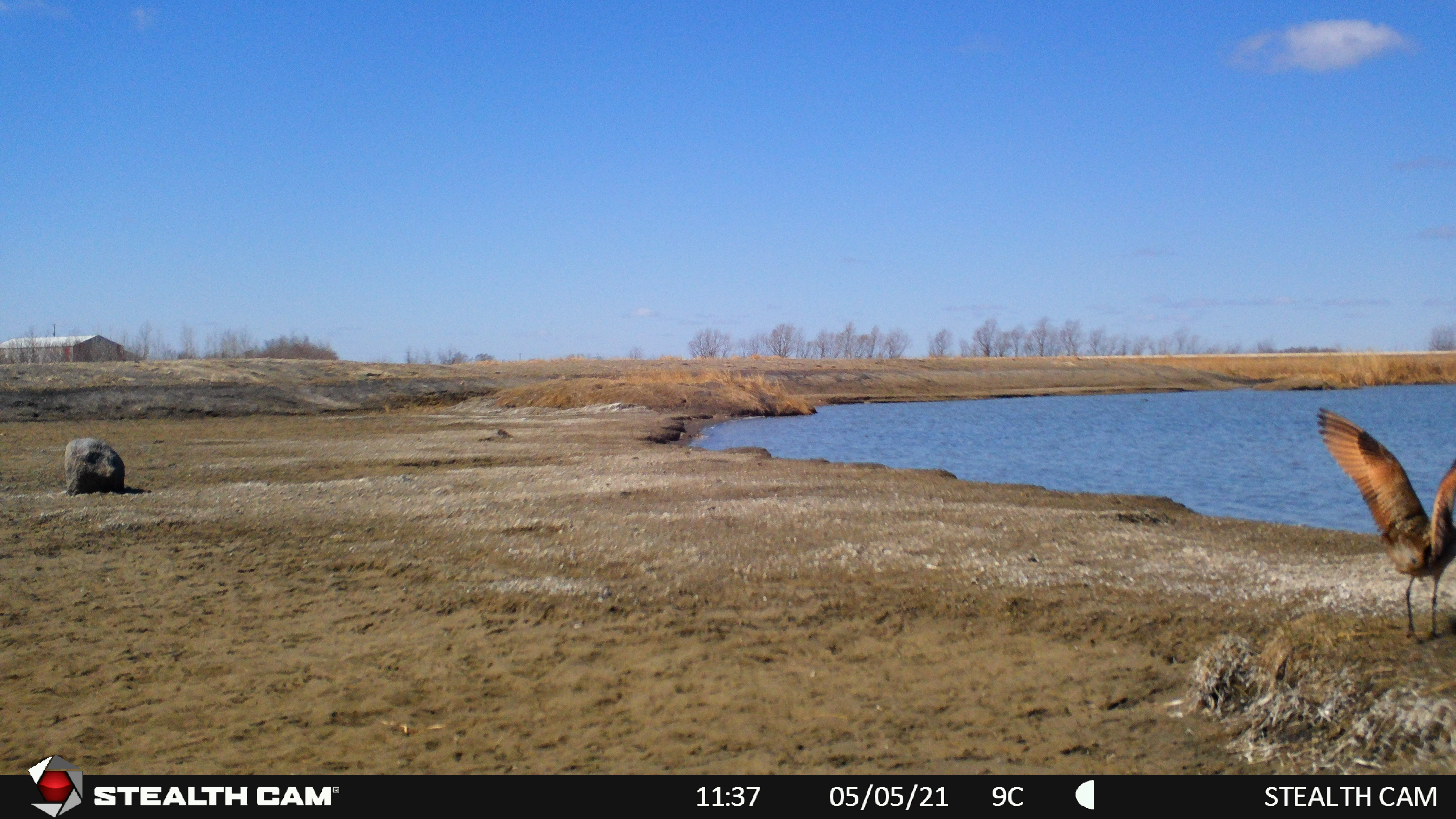
The nice cinnamon colour of the Marbled Godwit’s wing is seen as it does a big stretch in the corner of the camera on May 5th.

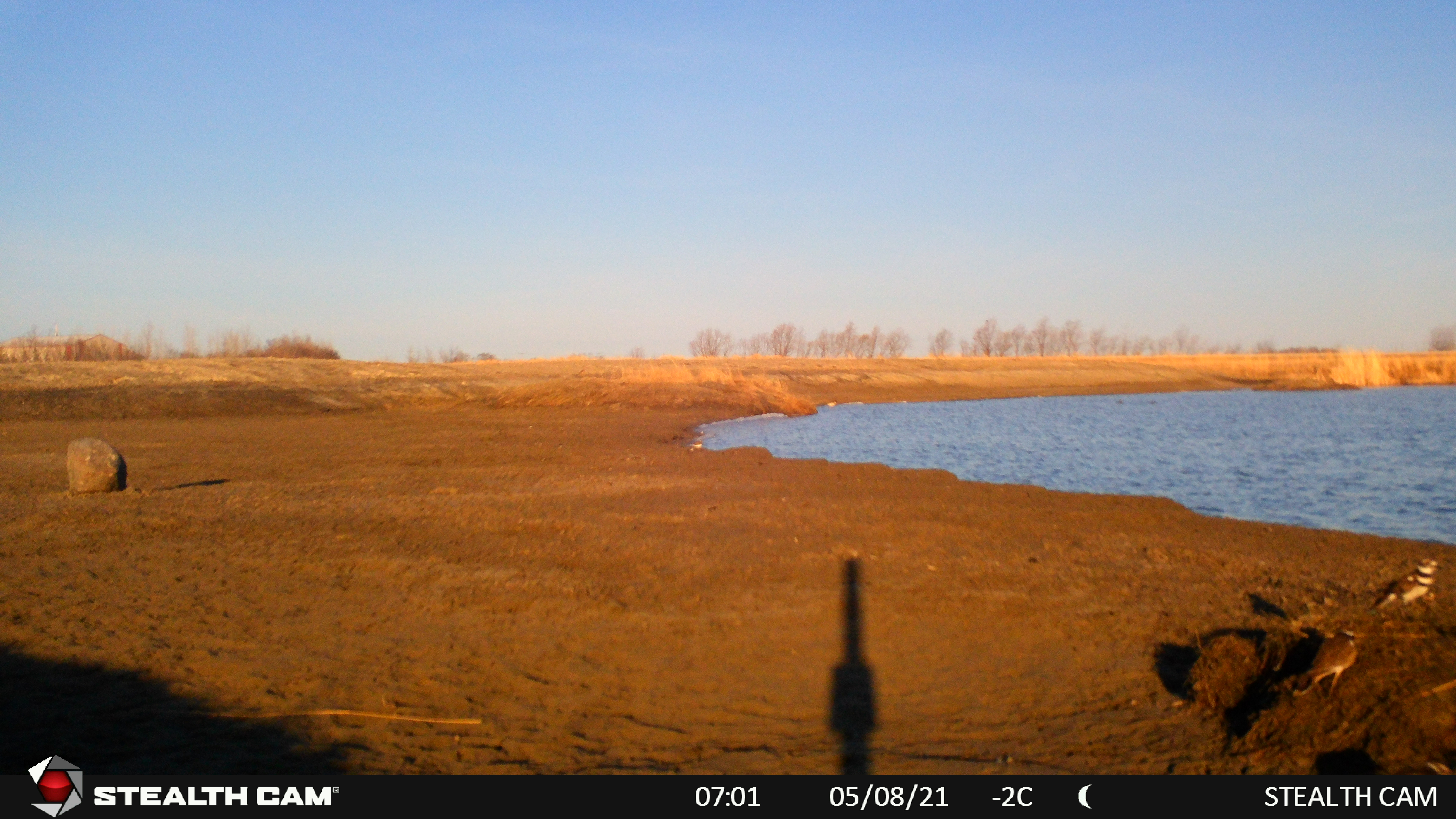
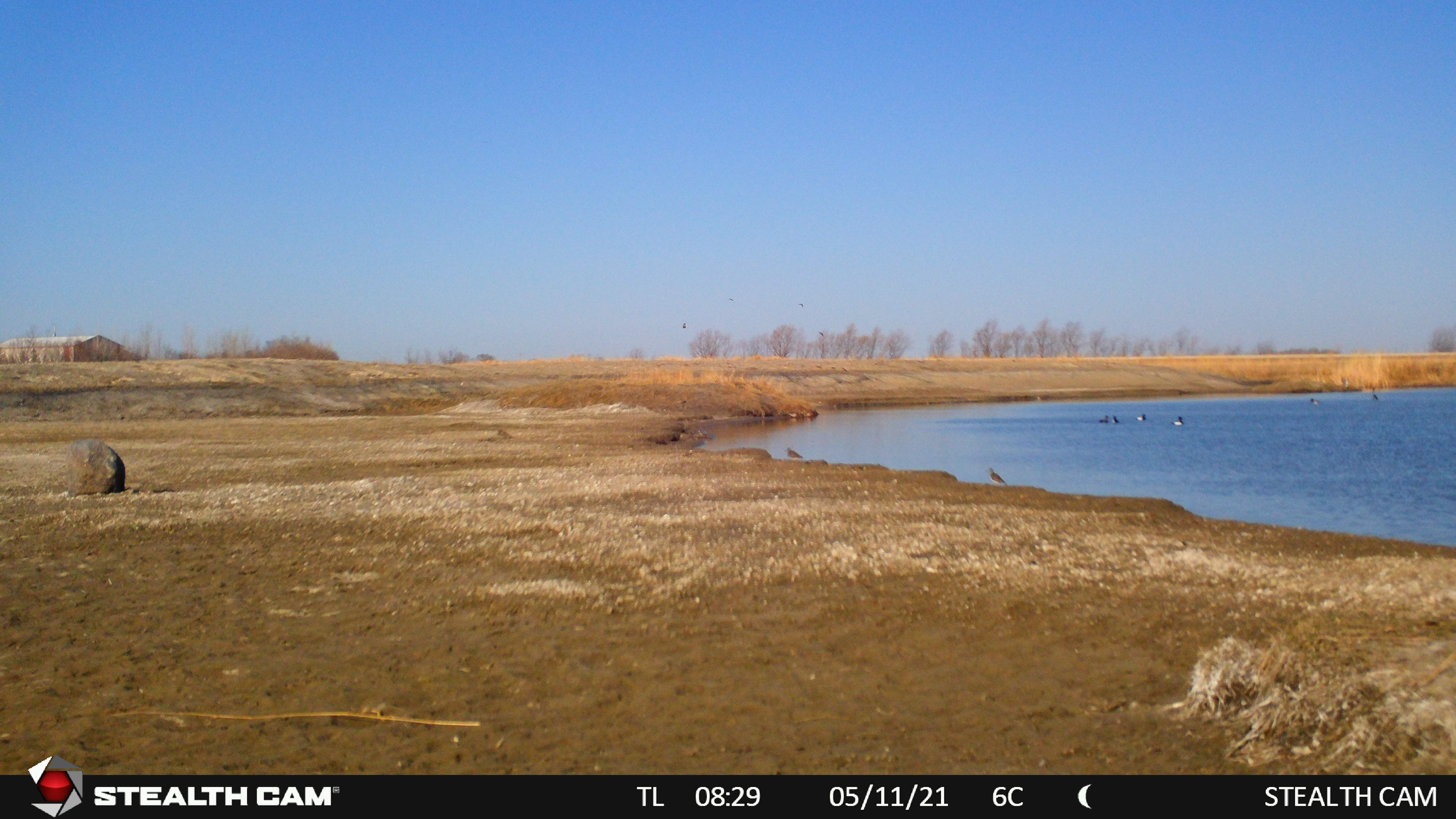
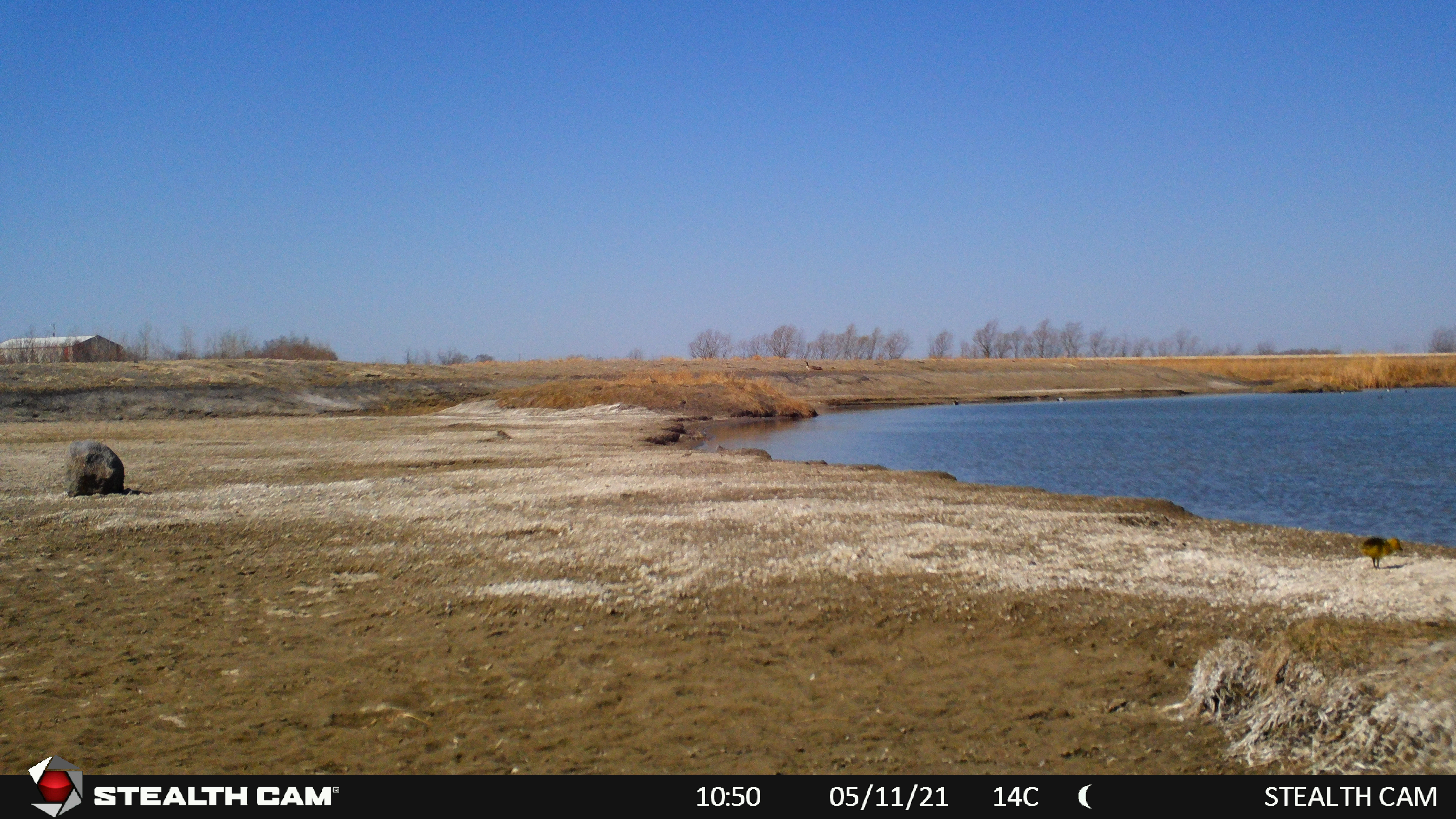
Other species spotted include American Avocet on May 10-11, Killdeer on May 1 and May 8 and Yellowlegs (species unknown) on May 9-11.

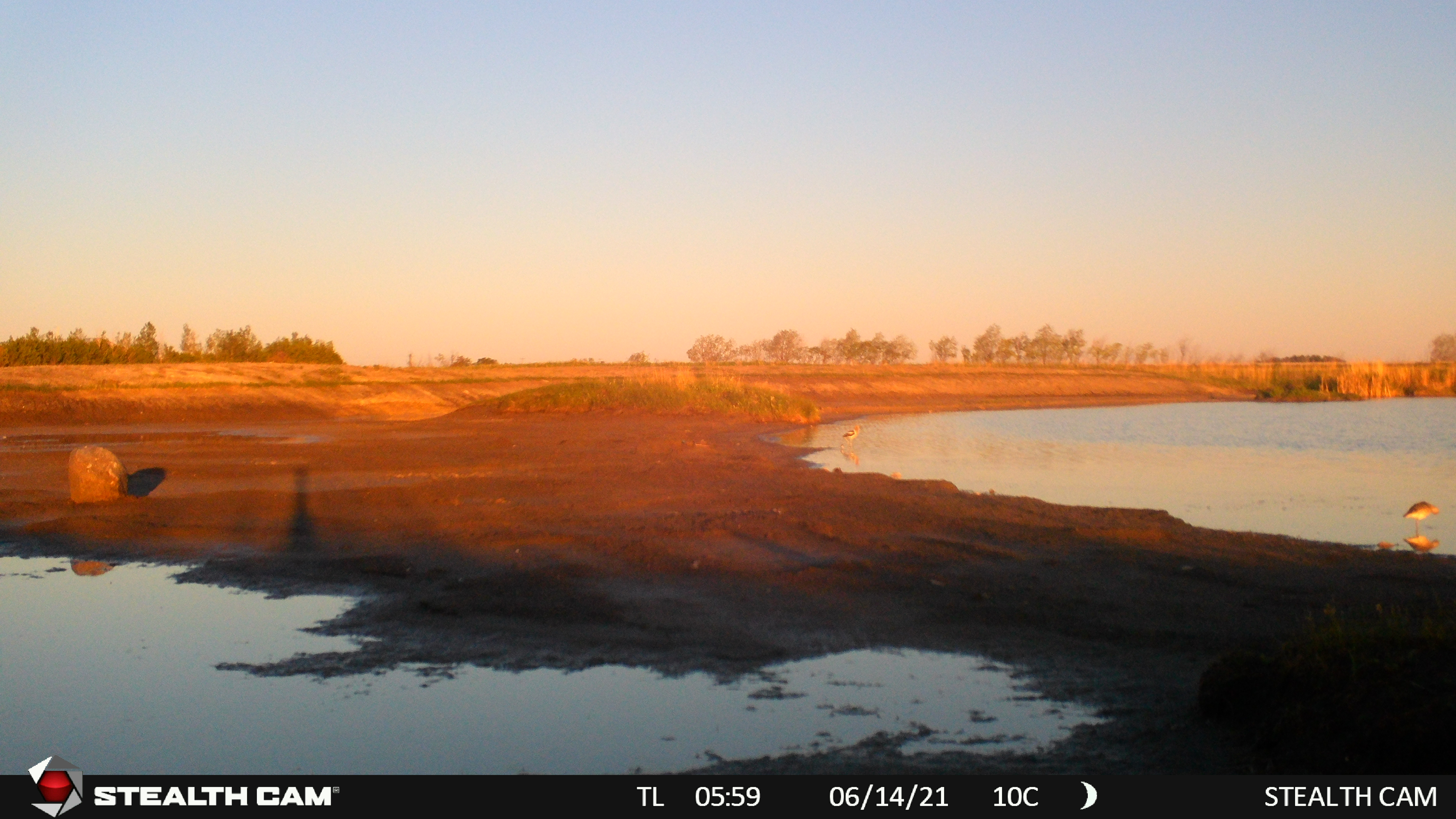
Avocet on a chilly morning at the scrape on May 11.
Two Killdeer scoping out the scrape in May 8.
Two Yellowlegs at the scrape on May 11.

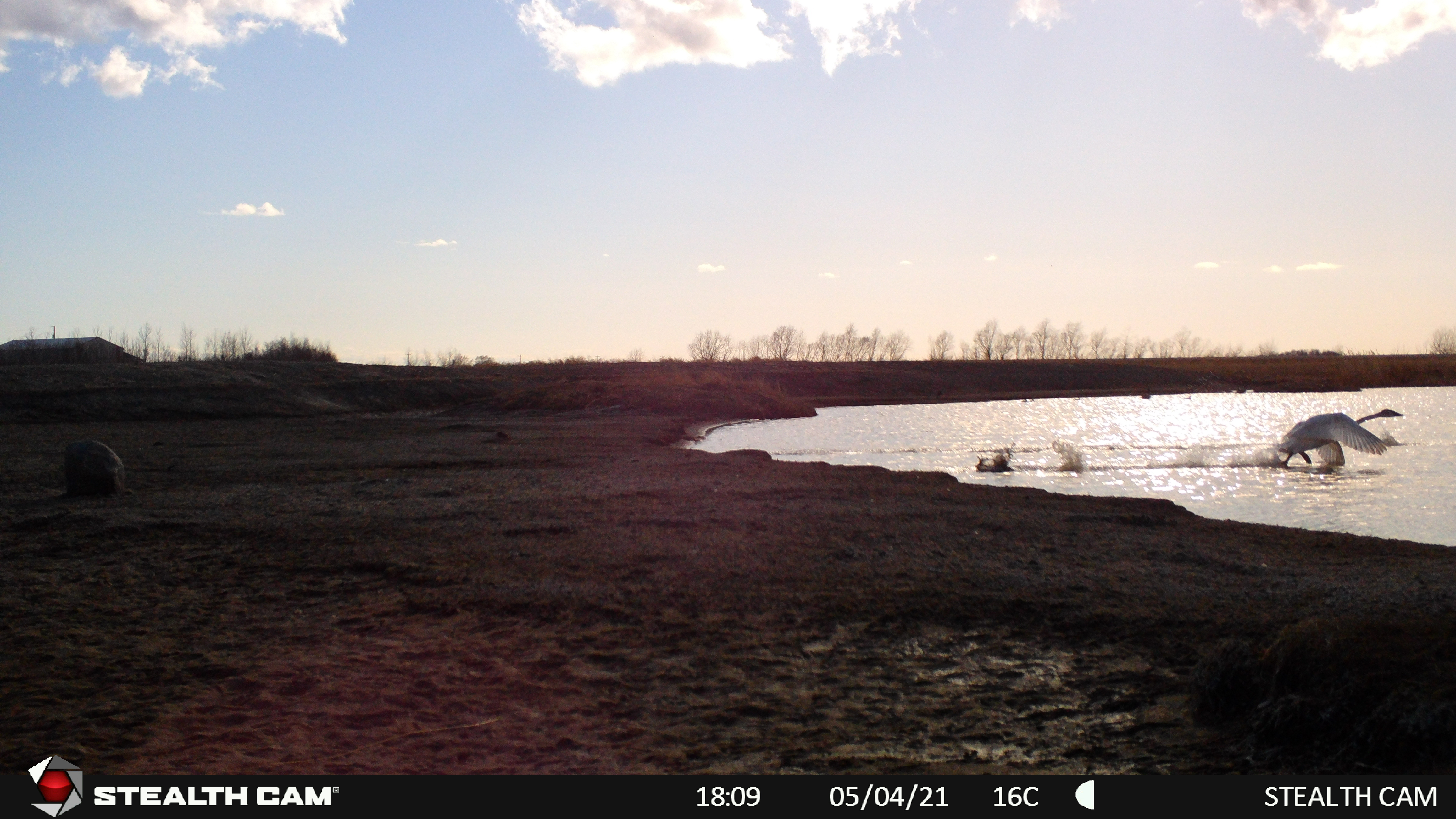
Some other notable non-shorebird sightings from the trail camera include swans (unsure if Trumpeter or Tundra), a gosling, a crow flyby and some lovely sunset/sunrise photos of the scrape. Who says wetlands can’t be beautiful!

Lift off on on the evening of May 4th!
A gosling is in the bottom right corner of the photo. Don’t worry, the parents were around in a previous photo! The first goslings were reported at the marsh on April 30.
A still sunset on the scrape.

These photos were from relative early on in shorebird migration, photos during the peak time are still to come. We access the camera periodically to change the SD cards and batteries so stay tuned to see what comes off the camera next!

We are Hiring (again)!

Manitoba IBA recently received funding through the province of Manitoba’s Green Team program to hire a Summer Assistant. We are excited to have another member of our summer staff come on board. See below for application information. A .pdf of this job posting is available upon request at iba@naturemanitoba.ca.

Manitoba Important Bird Areas Summer Assistant

The Manitoba Important Bird Area (IBA) Program is hiring a Summer Assistant. This position is based out of Winnipeg and includes travel to various IBAs in southern Manitoba. The position is a 460-hour full-time contract at $13/hr – start date late May/ early June 2021.

For more information on the Manitoba IBA program, visit: http://importantbirdareasmb.ca.

Responsibilities

Working closely with the IBA Coordinator, the responsibilities of the Program Assistant are to:

  • monitor the endangered Chimney Swift in urban areas of Manitoba, especially Winnipeg;
  • monitor populations of threatened birds in Manitoba’s IBAs;
  • assist with species at risk monitoring blitzes in Manitoba’s IBAs;
  • assist with organising events and activities for the Manitoba IBA Program;
  • provide outreach to landowners with the federally threatened bird species;
  • research and develop educational materials for landowners and the general public to promote Manitoba’s IBAs;
  • represent the IBA Program at meetings, local events and festivals in southern and central Manitoba;
  • data entry;
  • assist with Manitoba IBA blog site and social media set-up;
  • assist with volunteer and partner communications via email and phone;
  • other duties as assigned.

Qualifications

The successful applicant will have:

  • A minimum of 2 years of post-secondary education in biology, conservation or environmental science degree / diploma program
  • Knowledge of and demonstrated interest in the natural history of Manitoba
  • A keen interest in, knowledge of and ability to identify birds in Manitoba
  • Previous experience in environmental education and outreach is a strong asset
  • Experience with & knowledge of WordPress, Facebook and the Microsoft Office suite
  • Exceptional written and interpersonal communication skills
  • Strong organizational skills and attention to detail
  • Ability to work well as a team and independently

Interested in applying?

Applicants must meet the following criteria to be eligible for the position:

  • youth aged 15 to 29,
  • living in Manitoba, and
  • legally entitled to work in Canada.

How to Apply:

Interested applicants should forward their resume and short 1 page cover letter as 1 PDF file by email to the IBA Coordinator at iba@naturemanitoba.ca (Subject line: IBA Summer Assistant) by Friday, May 14th, 2021. Applications will be reviewed as they are submitted.

Only those candidates selected for an interview will be contacted.

Earth Day is for the Birds!

Celebrate Earth Day this year by becoming more bird friendly! We know that bird populations are declining across Canada and globally, with some groups of birds declining more strongly than others. As individuals it is easy to feel overwhelmed – what can we do? Below are some concrete actions you can take starting on Earth Day and continuing year-round.


Window Collision Prevention

Window collisions are one of the leading causes of bird deaths in Canada. When people think of window collisions they often think of high-rise buildings, but actually by the numbers more birds collide with residential buildings – likely because there are more of them on the landscape. There are multiple products you can buy local or make yourself to reduce the impact of your windows.

Window cling from Charlotte’s Birdseed. Photo provided by Laura Meuckon.

Charlotte’s Birdseed is a Winnipeg-based small business that has partnered with Nature Manitoba to donate $2 from each window cling sold to bird conservation. This beautiful window cling plays double duty by breaking up the reflection of the outdoors in your window, as well as displaying a lovely piece of local art. You can find them at charlottesbirdseed.com/. When using window clings find one that is the right size for your window – ideally you want to have gaps of less than 5 cm or 2” around the clings.

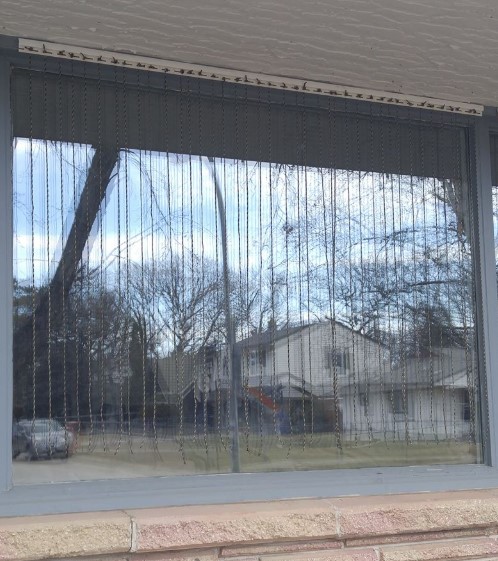
For DIY solutions try strings or ribbons on the outside of your window, tempera paint or soap! If you have a bird feeder or bath in your yard placing it as close as possible to a window (0.5 m or less) can reduce window collision injuries as the short distance to the window means that a bird cannot gather as much momentum when hitting a window from the feeder. For more information on prevention of window collisions including commercial and DIY products see FLAP Canada.

Photo of my DIY Bird Saver. Instructions available from www.birdsavers.com/make-your-own/. It only took me a couple of hours and about $20 in supplies for three large windows. Photo by Amanda Shave.

Keep Cats and Birds Safe

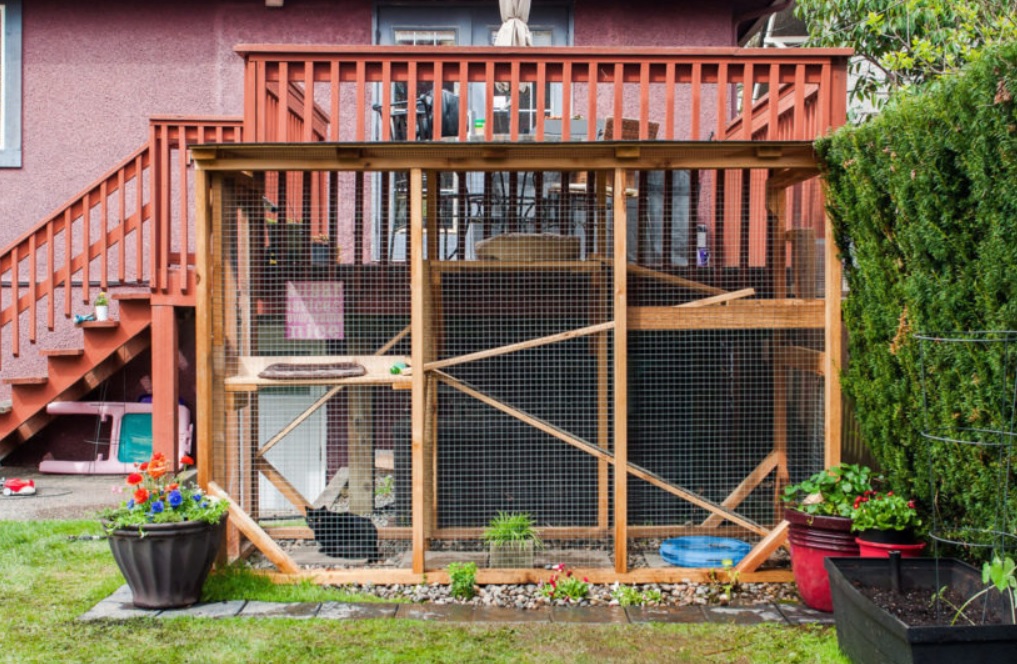
Cats are the number one cause of bird death according to a study published in 2013 (A Synthesis of Human-related Avian Mortality in Canada). This includes both feral and domestic cats – which may hunt birds whether they are hungry or not. The best way to keep birds safe from cats (and cats safe as well) is keep cats from free-roaming outside. Perhaps the purrrfect project this spring is to build a catio (cat patio)! Catios allow cats to enjoy the outdoors without having a negative impact on nature, and keeping cats safe from dangers such as traffic. Check out this article from B.C.’s SPCA to learn about some of the key considerations in building your own catio and some build guides that fit the space you have: https://spca.bc.ca/news/how-to-build-a-catio/

Example of a catio. Photo from BC SPCA.

Spread the Word about Bird Habitats

An easy way to make an impact is to spread the word about the importance of habitat for birds. For many species a key reason for population decline is a loss of habitat. This habitat is different for each species but overall conservation of habitat is key and each habitat type has different drivers of decline.

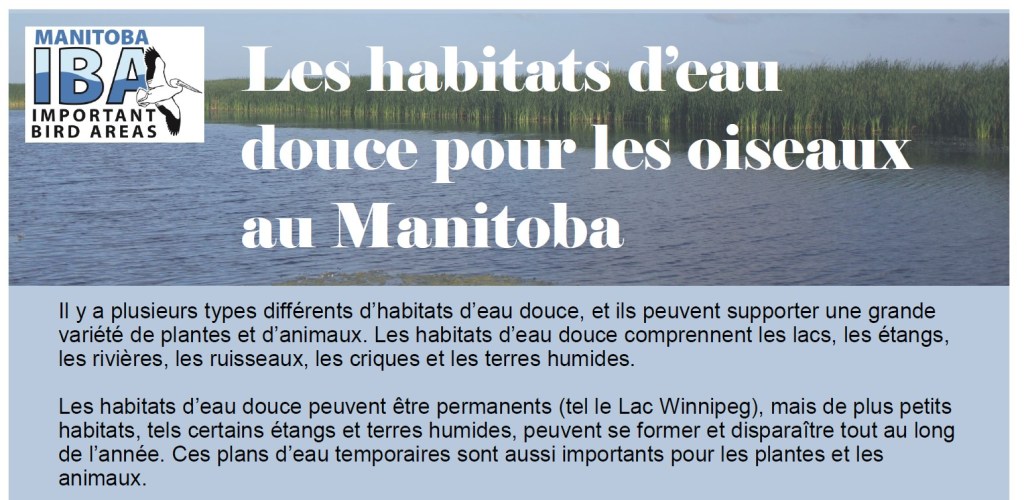
Freshwater habitat – Freshwater habitat includes everything from temporary ponds formed by spring meltwater to the huge Lake Winnipeg. Common threats to freshwater habitat include climate change, pollution, invasive species, land use changes and drainage. To find out more about the ways in which freshwater habitat is key for bird species see our Freshwater Habitat Factsheet. Or visit our newly created Shorebird Scrape at Oak Hammock Marsh to see freshwater habitat conservation in action!  

A snowy shorebird scrape at Oak Hammock Marsh several weeks ago, it sure looks different now! I saw a Killdeer using the scrape last week. Photo by Amanda Shave.

Grassland habitat – Manitoba contains both tall-grass, and mixed-grass prairie habitat. Prairie habitat is key for birds that are grassland obligate species – birds that can only live on the prairies. This includes birds such as the Burrowing Owl and Chestnut-collared Longspur. Many grassland bird species are threatened or endangered. Threats to grassland habitat include conversion to other land uses, such as crop-land, and climate change. Advocating and spreading the word about the importance of grassland habitat is key to having people recognize the importance of this often under-appreciated habitat.

Forest habitat – Manitoba contains a variety of forested habitats from boreal to aspen woodlands. Common threats to forest habitat include clearing or breaking up the forest habitat used by birds, spraying of pesticides and climate change. Keeping remaining woodlots and forest habitats intact is key to help forest birds survive.

A Red-headed Woodpecker in a woodlot at the North, East and West Shoal Lakes IBA in 2020. Red-headed Woodpeckers are a threatened species under the federal Species at Risk Act. Photo by Amanda Shave.

Urban habitat – While urban habitat is not in danger of declining, the quality of the habitat within urban areas is not all equal. Providing food, water and shelter for birds that live in our city habitats can be key. This can include planting native plants that go to seed, reducing the use of pesticides to benefit insect-eating birds, and leaving brush in areas of your yard to provide shelter.


Volunteer with a Conservation Organization

Manitoba IBA has several different volunteer opportunities available for people of all birding skill levels. If you would like to know about volunteer opportunities as they come up, please email iba@naturemanitoba.ca.

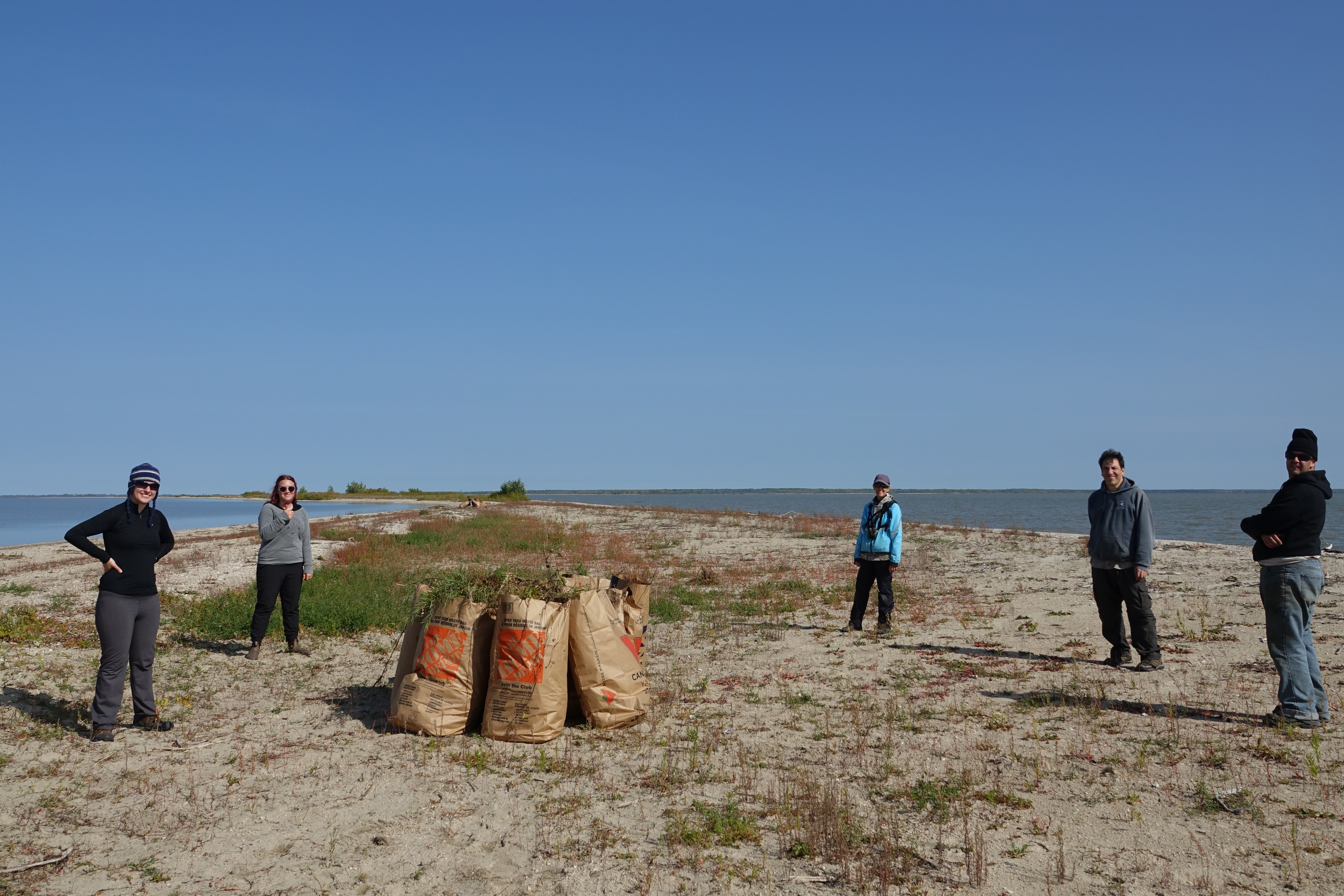
Some of our weed pull volunteers in 2020 doing an excellent job social distancing while improving the habitat for shorebirds at Riverton Sandy Bar IBA. Photo by Amanda Shave.

Bird Blitz Volunteers – Volunteers go out in groups to count and monitor bird populations in our Important Bird Areas. This gives us an idea of the health of the IBAs, general bird trends, outreach and education opportunities and is overall good fun!

Shoreline Clean-up and Weed Pull Volunteers – Manitoba IBA conducts weed pulls and shoreline clean-ups at our IBAs along Lake Winnipeg and Lake Manitoba. Abandoned fishing gear and other garbage can entangle birds but is easy to clean up! Invasive vegetation, such as burdock and sweet clover can take over a beach, growing over the open, sandy habitat that is key for some birds like Piping Plovers.

International Shorebird Survey (ISS) Volunteers – Are you interested in shorebirds? If you go birding along any of our ISS routes in Manitoba, please enter the checklist under the ISS protocol in ebird.org! If you would like to learn more about shorebird ID we would be glad to partner you with an experienced volunteer to learn the ropes.

IBA Caretaker Volunteers – If you tend to visit your local IBA multiple times a year, you may be interested in becoming an IBA caretaker for that IBA. Our Caretakers submit regular bird reports to us from their IBA. See here for more information.

New Materials Available for Wetland Habitats in Manitoba IBAs

La version français suit…

With funding from the EcoAction Community Program Grant, Manitoba IBA was able to create and translate new materials for volunteers and the public to use.

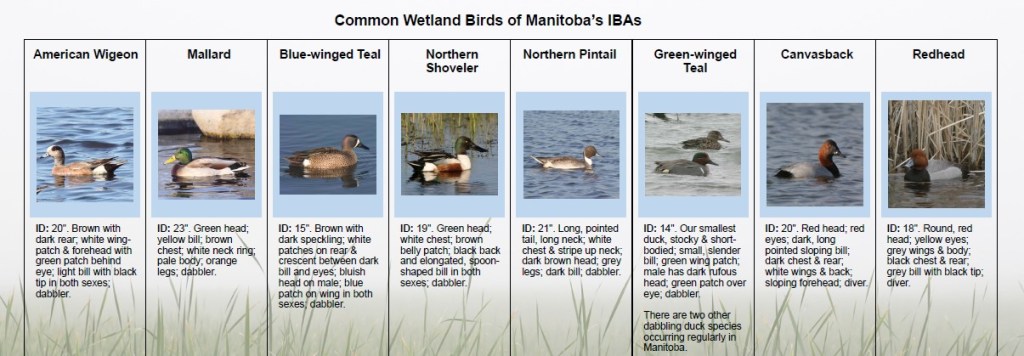
Our popular Shorebird Identification Cards and Wetland Bird Identification Cards are now available in both English and French. These laminated cards have a photo, size and a brief descriptor of shorebirds and common wetland birds of Manitoba. They fold up and are easy to store in your pocket as a quick reference guide. You can find them here, or contact us for a paper copy in either language at iba@naturemanitoba.ca.

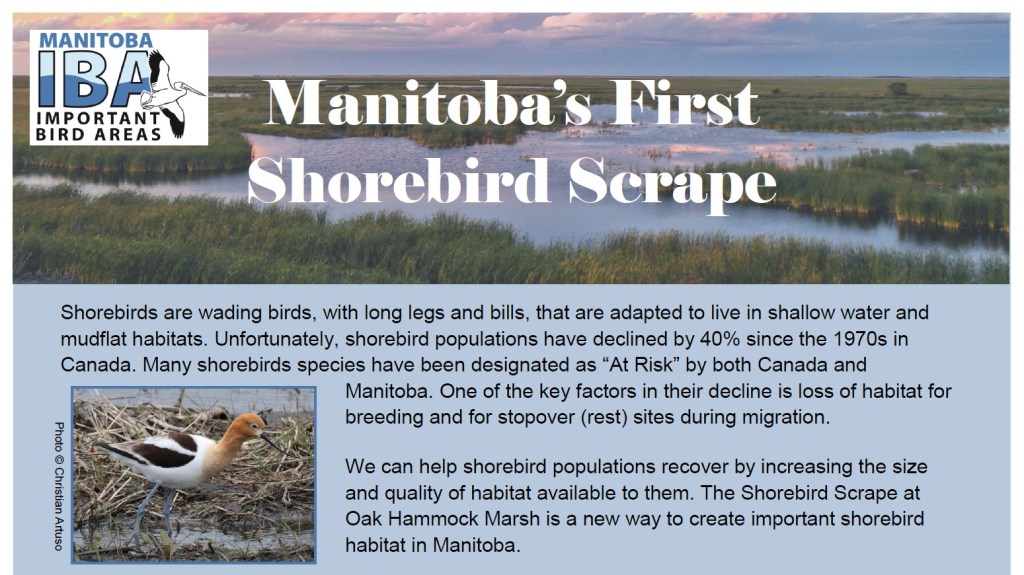
This spring will be the first full year for the new Shorebird Scrape that was built at Oak Hammock Marsh last year. A scrape is a shallow, low-lying depression in the ground. Scrapes have been used to create habitat for shorebirds in Europe, but to our knowledge this is the first time it has been tried in Manitoba. Scrapes create gently sloping bare shoreline habitat and shallow water habitat that is custom-made for shorebirds to be able to feed. Scrapes are fed by snow-melt and rainfall so we expect the scrape will have its first full year of potential on display this spring (as it was built last autumn).

In addition to creating shorebird habitat our wetland scrape can have a variety of other uses such as:

  • Creating habitat for many other plants and animals that use shallow water and shoreline habitats
  • Storage of water on the landscape
  • Flood reduction
  • Water filtration for excess nutrients and other pollution
  • Recreation – birding and other wildlife viewing.

If you are curious about shorebird scrapes or freshwater habitat, we have two new factsheets available on our website to help! Our Manitoba’s First Shorebird Scrape factsheet provides more information about this new-to-Manitoba conservation tool, and our Freshwater Habitat for Birds in Manitoba factsheet has a variety of information and tips on how you can help keep our freshwater habitats in Manitoba healthy. Our factsheets are available in English and French. You can find both factsheets here, or contact us for a paper copy.

Nouveaux matériaux disponibles pour les habitats des terres humides dans les ZICO du Manitoba

Grâce au financement de la subvention du programme communautaire ÉcoAction, la ZICO du Manitoba a pu créer et traduire de nouveaux documents à l’usage des bénévoles et du public.

Nos cartes populaires d’identification des oiseaux de rivage et des oiseaux des milieux humides sont maintenant disponibles en anglais et en français. Ces cartes plastifiées comportent une photo, la taille et une brève description des oiseaux de rivage et des oiseaux communs des milieux humides du Manitoba. Elles se plient et sont faciles à ranger dans votre poche comme guide de référence rapide. Vous pouvez les trouver ici, ou nous contacter pour obtenir une copie papier dans l’une ou l’autre langue à iba@naturemanitoba.ca.

Ce printemps sera la première année complète d’utilisation du nouvel étrépage pour oiseaux de rivage qui a été construit au marais Oak Hammock l’année dernière. Un étrépage est une dépression peu profonde et de faible hauteur dans le sol. Les étrépages ont été utilisés pour créer un habitat pour les oiseaux de rivage en Europe, mais à notre connaissance, c’est la première fois qu’il est essayé au Manitoba. Les étrépages créent un habitat de rivage nu en pente douce et un habitat d’eau peu profonde qui est fait sur mesure pour que les oiseaux de rivage puissent se nourrir. Les étrépages sont alimentés par la fonte des neiges et les précipitations, de sorte que nous prévoyons que l’étrépage aura sa première année complète de potentiel en démonstration ce printemps (puisqu’il a été construit l’automne dernier).

En plus de créer un habitat pour les oiseaux de rivage, notre étrépage des zones humides peut avoir une variété d’autres utilisations telles que :

– La création d’un habitat pour de nombreuses autres plantes et animaux qui utilisent les eaux peu profondes et les habitats du littoral

– Le stockage de l’eau dans le paysage

– la réduction des inondations

– La filtration de l’eau pour l’excès de nutriments et autres polluants

– Les loisirs : bservation des oiseaux et d’autres espèces sauvages.

Si vous êtes curieux au sujet des étrépages d’oiseaux de rivage ou des habitats d’eau douce, nous avons deux nouvelles fiches d’information disponibles sur notre site Web pour vous aider ! Notre fiche d’information sur le premier étrépage à limicoles du Manitoba fournit plus d’information sur ce nouvel outil de conservation au Manitoba et notre fiche d’information sur les habitats d’eau douce pour les oiseaux au Manitoba contient une variété d’informations et de conseils sur la façon dont vous pouvez aider à garder nos habitats d’eau douce en bonne santé au Manitoba. Nos fiches d’information sont disponibles en anglais et en français. Vous pouvez trouver les deux fiches ici, ou nous contacter pour obtenir une copie papier dans l’une ou l’autre langue à iba@naturemanitoba.ca.  

We are Hiring!

Manitoba IBA is hiring for two positions this summer. We are looking for a Grassland Bird Monitoring Technician, as well as a Species at Risk Assistant for the 2021 field season. Please continue reading for both job descriptions.


Grassland Bird Monitoring Technician

The Manitoba Important Bird Areas (IBA) Program is hiring a Grassland Bird Monitoring Technician. Communication will be necessary with staff in Winnipeg, but this job can be based anywhere in Manitoba. It includes a significant period of travel in southwestern Manitoba. Salary is $3,000- $3,300 CDN per month (based on experience) plus reimbursement for travel costs. Contract length is flexible at around 12 weeks. For more information on the Manitoba IBA Areas program, visit: http://importantbirdareasmb.ca

Responsibilities

  • Work with the IBA Program Coordinator and other partner organizations to plan field season in southwestern Manitoba;
  • Conduct grassland breeding bird surveys on private pastureland in southwestern Manitoba;
  • Liaise with grassland landowners to arrange surveys and provide outreach on grassland birds in southwestern Manitoba;
  • Multi-night travel to southwestern Manitoba during the breeding bird season;
  • Data management, data entry and basic statistical analysis for results of grassland bird surveys;
  • Writing personalized report for each participating landowner and final season-end report to Manitoba IBA and project funders;
  • Other duties as assigned.

Qualifications

  • A minimum of an undergraduate degree in biology, conservation or environmental science degree / diploma program;
  • Strong knowledge and ability to identify Manitoba grassland birds by sight and sound;
  • Previous experience conducting point counts and/ or surveying birds using other sampling methods;
  • Ability to plan and work independently as well as collaborate remotely as part of a team;
  • Comfortable and experienced in working safely in remote environments and around cattle;
  • Experience with and knowledge of Microsoft office, GPS, and navigation using legal land maps;
  • Organized with a strong attention to detail;
  • Previous experience in environmental education and outreach is a strong asset;
  • Valid Driver’s License.

Start Date:

May 2021

Interested in applying?

Applicants must meet the following criteria to be eligible for the position:

  • Living in Manitoba;
  • Legally entitled to work in Canada.

How to Apply:

Interested applicants should forward their resume and short 1 page cover letter as 1 PDF file by email to the IBA Coordinator at iba@naturemanitoba.ca (Subject line: Grassland Bird Monitoring Technician) by March 29, 2021.

Only those candidates selected for an interview will be contacted.


Avian Species at Risk Assistant

The Manitoba Important Bird Area (IBA) Program is hiring an Avian Species at Risk Assistant. This position is based out of Winnipeg and includes travel to various IBAs in southern and central Manitoba. This position will include some weekend work. The position is a 500-hour full-time contract at $13/ hr – start date May 2021.

For more information on the Manitoba IBA program, visit: http://importantbirdareasmb.ca.

Responsibilities

Working closely with the IBA Coordinator, the responsibilities of the Avian Species at Risk Assistant are to:

  • monitor populations of threatened birds in Manitoba’s IBAs;
  • assist with organising events and activities for the Manitoba IBA Program, such as bird blitzes;
  • provide outreach to landowners with the federally threatened Red-headed Woodpecker, Eastern Whip-poor-will and various shorebird species at risk;
  • research and develop educational materials for landowners and the general public to promote education of species at risk;
  • represent the IBA Program at meetings, local events and festivals in southern and central Manitoba;
  • assist with Manitoba IBA blog site and social media;
  • assist with volunteer and partner communications via email and phone;
  • other duties as assigned.

Qualifications

  • A minimum of 2 years of post-secondary education in biology, conservation or environmental science degree / diploma program;
  • A keen interest in, knowledge of and ability to identify birds in Manitoba;
  • Previous experience in environmental education and outreach is a strong asset;
  • Experience with & knowledge of WordPress, Facebook and the Microsoft Office suite;
  • Exceptional written and interpersonal communication skills;
  • Strong organizational skills and attention to detail;
  • Ability to work well as a team and independently;
  • Valid Drivers license is required.

Interested in applying?

Applicants must meet the following criteria to be eligible for the position:

  • Living in Manitoba; and
  • Legally entitled to work in Canada.

How to Apply:

Interested applicants should forward their resume and short 1 page cover letter as 1 PDF file by email to the IBA Coordinator at iba@naturemanitoba.ca (Subject line: Avian Species at Risk Assistant) by March 29th, 2021.

Only those candidates selected for an interview will be contacted.