Oak Lake Red-headed Woodpecker Blitz 2024

It’s hard to believe it’s already the last week of July! Time is flying by. Before we jump into the blitz recap, here’s a quick event announcement: Join us for a morning bird walk at Assiniboine Park (in Winnipeg) on Wednesday, July 31 from 8:30am-10am. We will meet at the entrance to the English Gardens at 8:30am. All skill levels welcome! For more info or to RSVP, please send us an email at iba@naturemanitoba.ca

Alright, let’s get into the blitz. On July 6th, 2024, the Manitoba IBA program conducted a blitz to search for Red-headed Woodpeckers (RHWO) in the Oak Lake/Plum Lakes IBA. This blitz marked our 4th year in a row doing a RHWO count in this area. It was a great success! We had 15 participants and counted a total of 45 Red-headed Woodpeckers, which is a new record for us! A big thank you goes out to Tom, Renee, Glennis, Kathryn, Gillian, Gwyn, Liam, Herb, Leah, Philippe, Carson, Katharine and Lee Ann for being a part of this event!

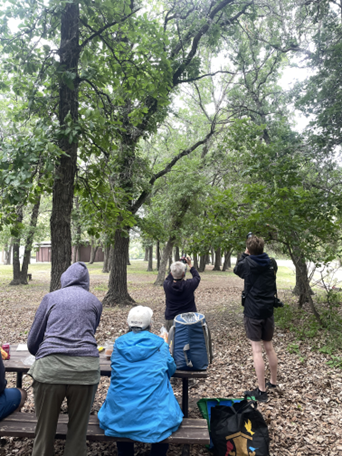
The Red-headed Woodpecker dream team!

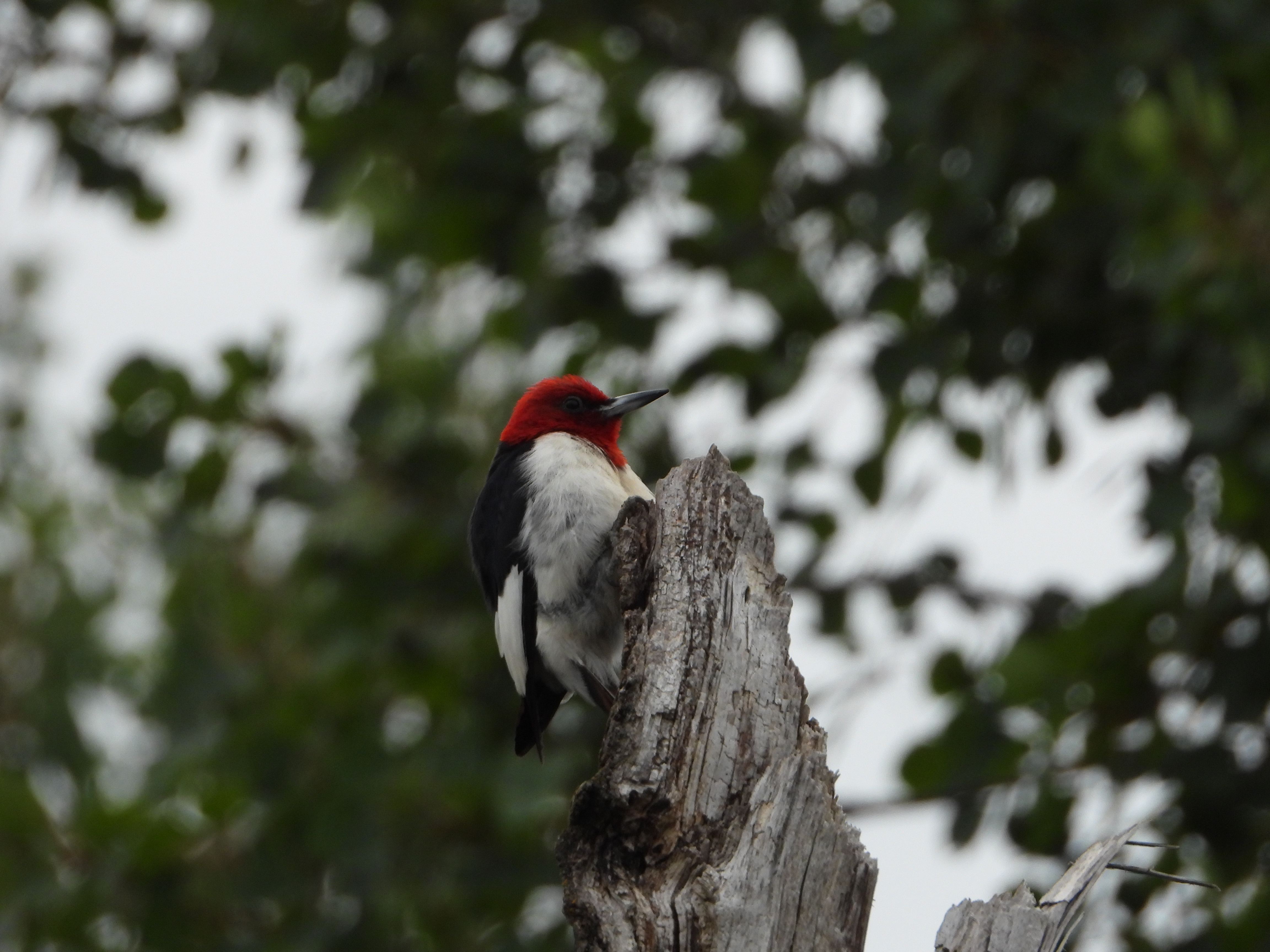
If you’ve ever seen a Red-headed Woodpecker, you’ve surely noticed how striking this species is. If you’re curious to learn more about this Threatened bird species, you’re in luck because the Red-headed Woodpecker happens to be Nature Manitoba’s Bird of the Month in July 2024. You can read the write-up we put together at the following link: https://www.naturemanitoba.ca/red-headed-woodpecker

Red-headed Woodpecker. Photo by Gillian Richards.

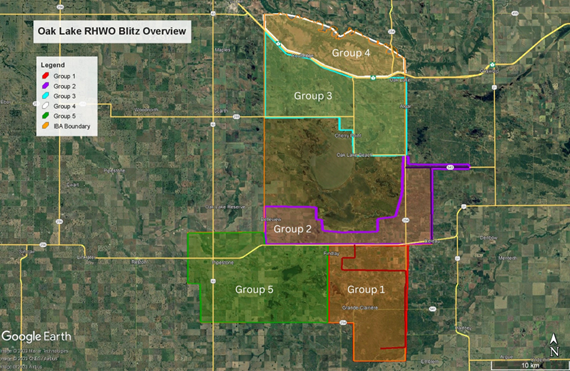
Because we had so many incredible volunteers involved in the blitz this year, we were able to split up into 7 groups and cover a lot of ground and explore some areas that had not been covered in-depth in previous years. Each group was assigned an area to cover. which they searched by driving along the roads and stopping in areas of suitable habitat, following a playback protocol (with the necessary permits from the provincial government), and meticulously recording any RHWO sightings. It was a beautiful morning with almost no wind. We got started between 8:00-8:30am and birded in our areas until we met up for lunch in Oak Lake Beach.

Below is a map of the areas covered:

Group 1 was made up of Tom and Renee, who covered the area north of Highway 1. They saw 2 Red-headed Woodpeckers, about 1/2km apart from each other. Other highlights include an Indigo Bunting and a Pileated Woodpecker.

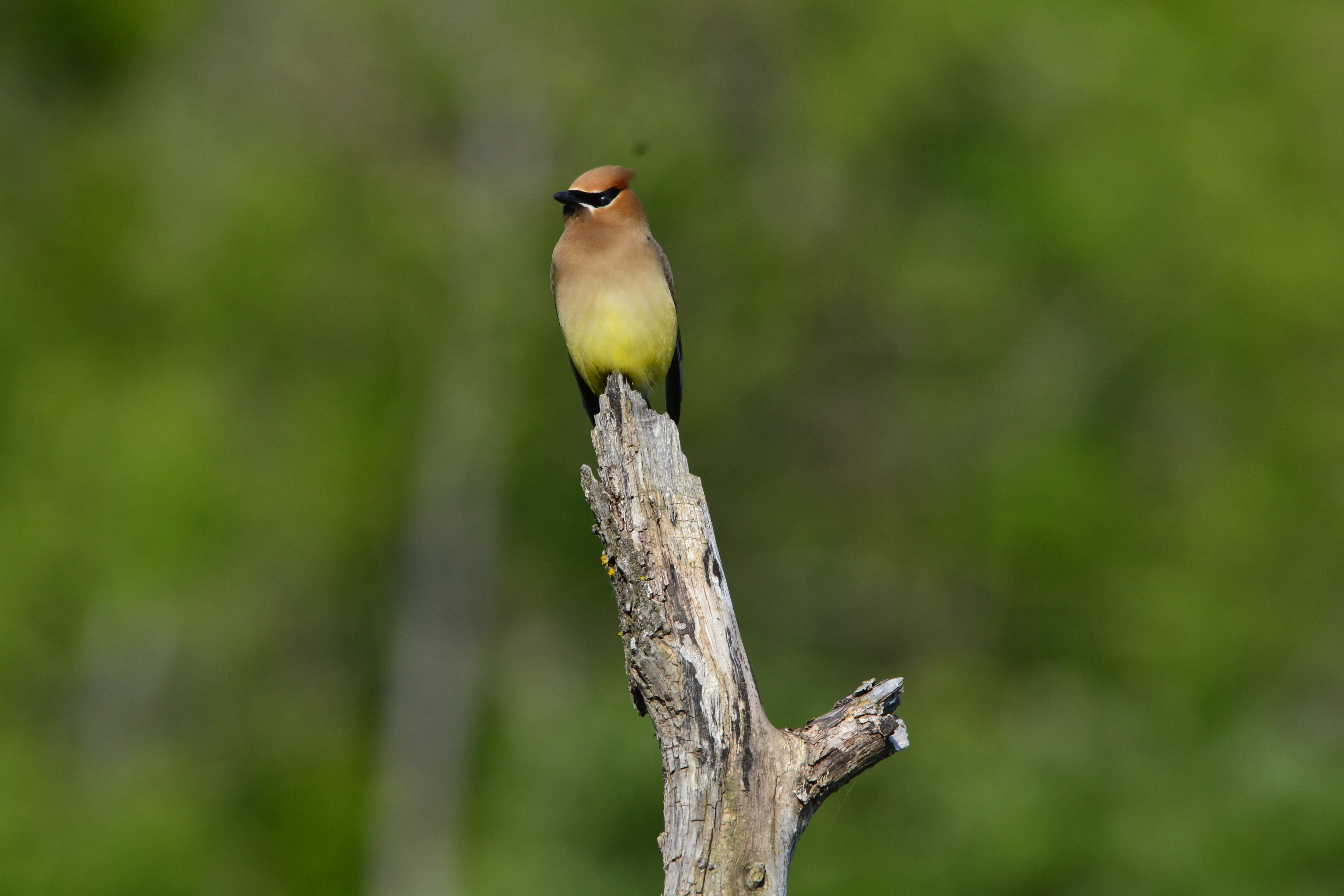
Cedar Waxwing. Photo by Tom Will.

Group 2 was made up of Glennis and Kathryn, who covered the northwestern portion of the IBA (north of Oak Lake Beach and west of the 254). They saw a total of 7 Red-headed Woodpeckers, including 2 juveniles. They also saw 2 Brown Thrashers.Group 3 was made up of Gillian and Gwyn, who covered a northeastern portion of the IBA. They saw 12 Red-headed Woodpeckers! Other highlights include 6 Bobolink, 1 Black-billed Cuckoo, and 1 Bufflehead female with 9 adorable ducklings (photo below).

Bufflehead family. Photo by Gillian Richards.

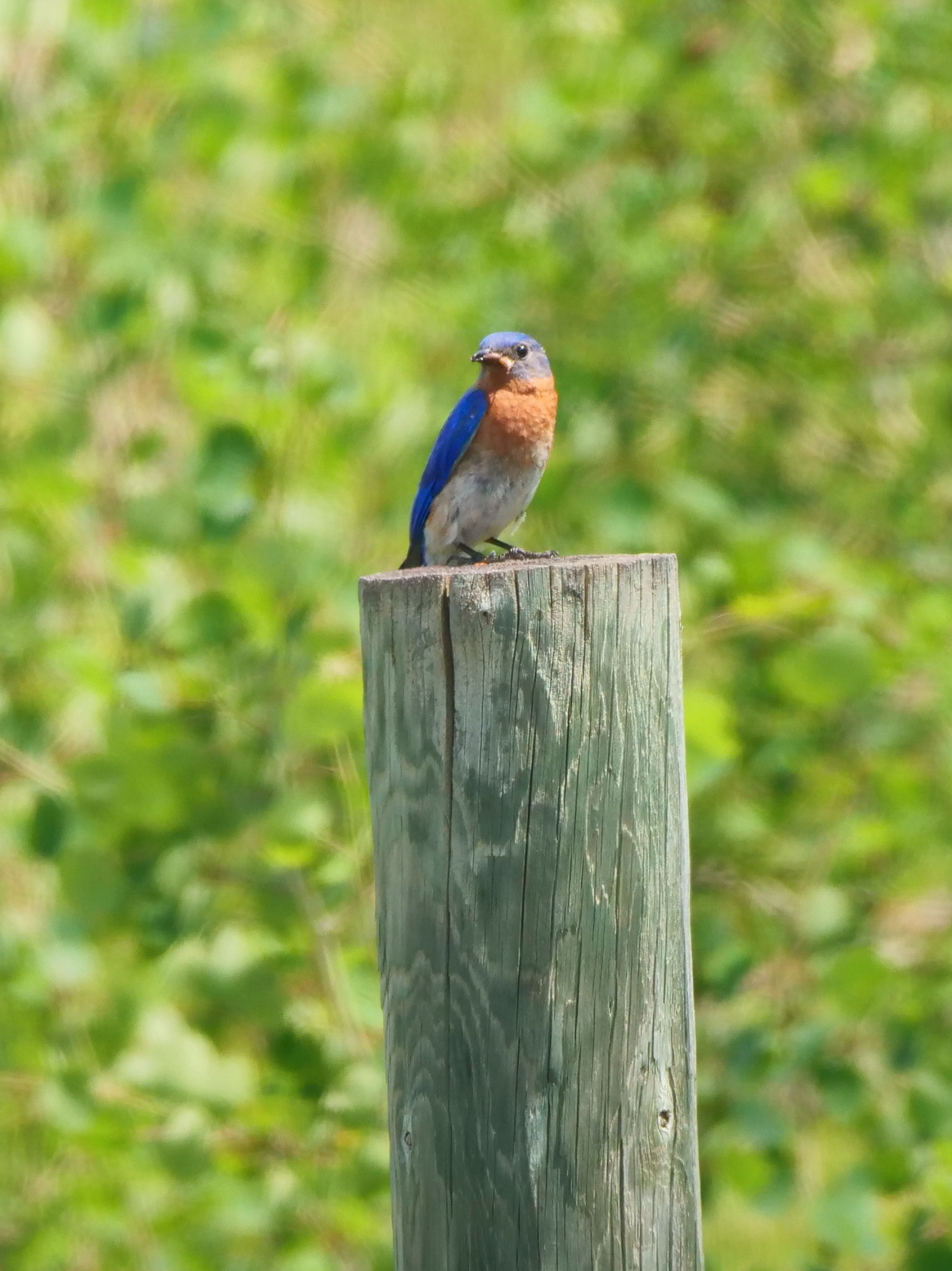
Group 4 was comprised of Marissa, Liam, and Herb, who covered an area in the eastern portion of the IBA, including PR 541 and the Deleau areas. They saw a total of 15 Red-headed Woodpeckers! Other highlights include a group of 3 badgers, and 3 Eastern Bluebirds. Katharine drove along PR 541 on her way home after the blitz and managed to snap a great photo of an Eastern Bluebird carrying some insect prey.

Eastern Bluebird. Photo by Katharine Schulz.

Group 5 was made up of Leah and Aynsley, who covered the southeastern portion of the IBA. They saw 6 Red-headed Woodpeckers.

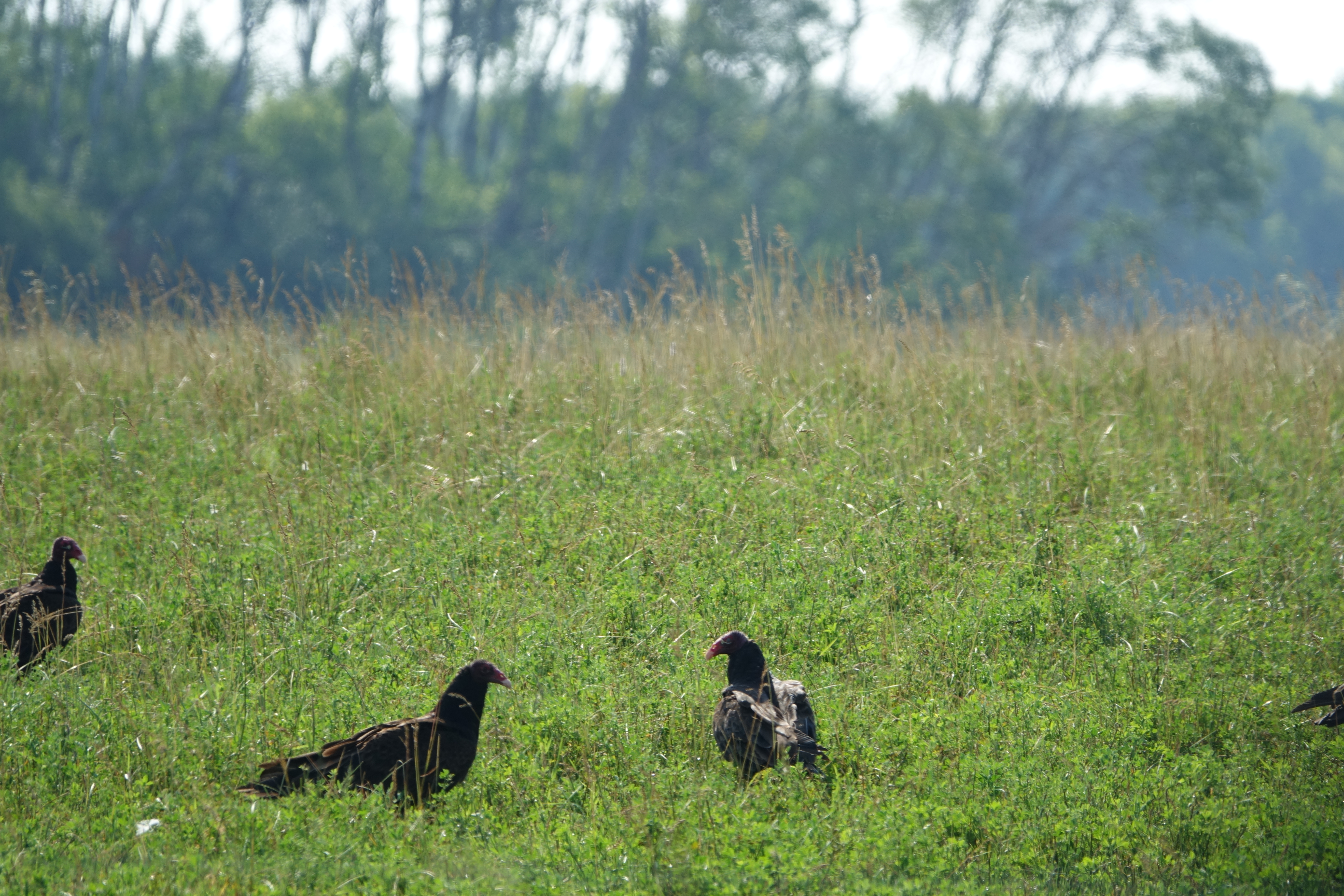
Turkey Vultures. Photo by Aynsley Woods.
Red-headed Woodpecker. Photo by Aynsley Woods.

Group 6 was made up of Carson and Philippe, who covered a southcentral portion of the IBA. They saw 3 Red-headed Woodpeckers. They also saw a Sprague’s Pipit.

Group 7 was made up of Katharine and Lee Ann, and they covered the southwest portion of the IBA. They did not find much suitable habitat in their area and did not see any Red-headed Woodpeckers. They did however find a lot of grassland habitat complete with some exciting grassland bird species, including 3 Sprague’s Pipits!

Upland Sandpiper. Photo by Katharine Schulz.

As we mentioned at the beginning, our final count came out to 45 RHWO. This is a new blitz record. In 2023, we counted 25 RHWO. In 2022, we counted 13 RHWO, and in 2021 we counted 16 RHWO. A summary of all the birds identified can be found below. We saw a total of 90 species and a total of 1,756 individuals. Once again, we express our deep gratitude to our amazing volunteers for their dedication and commitment to helping us survey species at risk.

This event was made possible by funding from Environment and Climate Change Canada’s Habitat Stewardship Fund.

If you are interested in volunteering for future blitz events, please email iba@naturemanitoba.ca for more information.

-Aynsley & Marissa

SpeciesCount
American Coot3
American Crow29
American Goldfinch23
American Kestrel7
American Redstart3
American Robin30
Bald Eagle1
Baltimore Oriole7
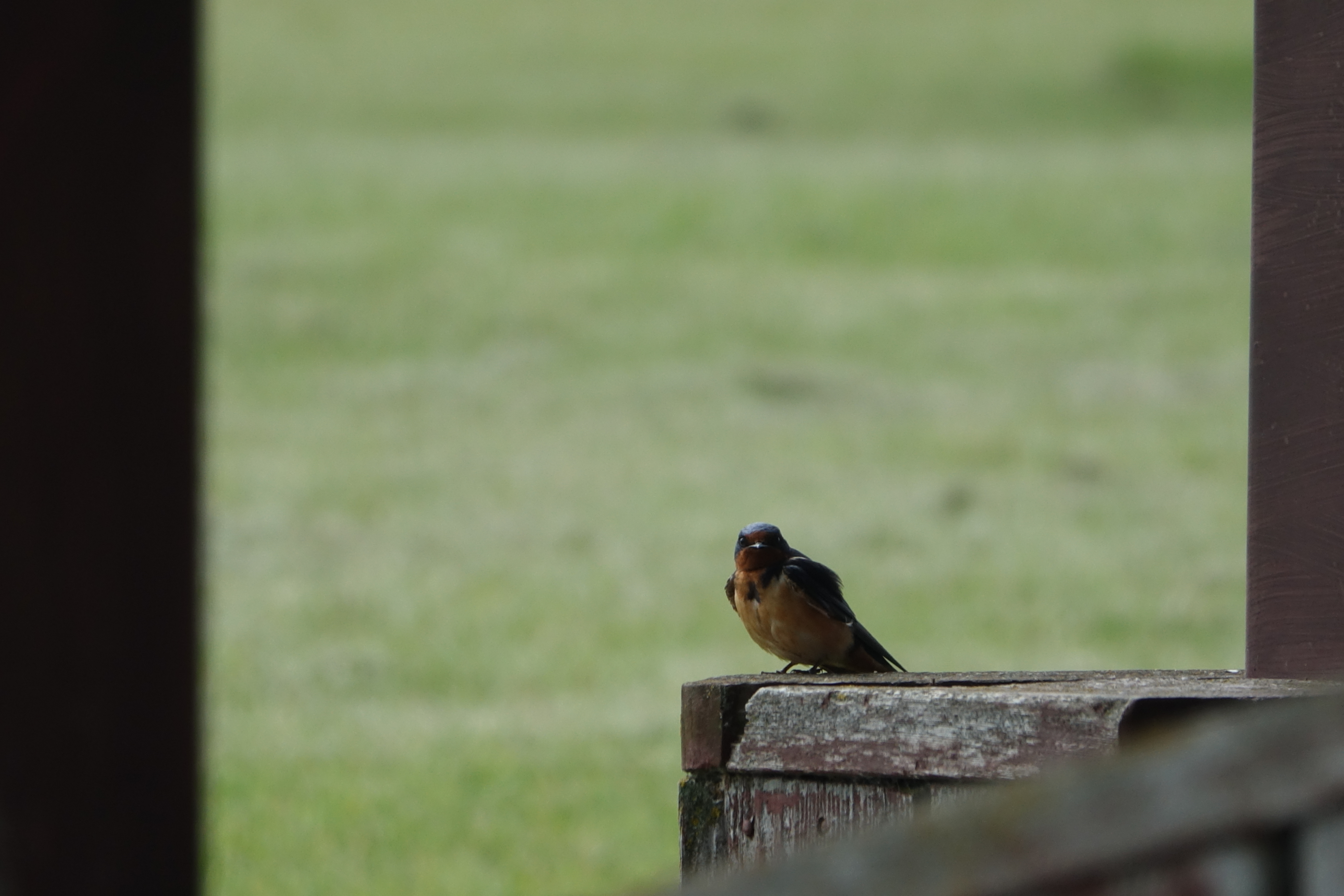
Barn Swallow27
Black Tern18
Black and White Warbler1
Black-billed Cuckoo1
Black-billed Magpie9
Black-capped Chickadee2
Black-crowned Night Heron1
Blue-winged Teal4
Bobolink17
Brewer’s Blackbird96
Broad-winged Hawk1
Brown Thrasher6
Brown-headed Cowbird89
Bufflehead1
Canada Goose3
Cedar Waxwing20
Chipping Sparrow14
Clay-coloured Sparrow49
Cliff Swallow17
Common Grackle3
Common Raven6
Common Yellowthroat13
Eastern Bluebird2
Eastern Kingbird78
Eastern Towhee1
Eastern Wood-Pewee1
European Starling3
Forester’s Tern1
Franklin’s Gull324
Gadwall17
Grasshopper Sparrow1
Grey Catbird8
Great Crested Flycatcher1
Green-winged Teal1
Hairy Woodpecker1
House Sparrow20
House Wren38
Indigo Bunting1
Killdeer2
Lark Sparrow4
Least Flycatcher47
LeConte’s Sparrow1
Mallard21
Mourning Dove83
Nelson’s Sparrow1
Northern Flicker7
Northern Harrier3
Northern Shoveler3
Orange-crowned Warbler1
Ovenbird3
Pileated Woodpecker2
Purple Finch1
Purple Martin1
Red-eyed Vireo11
Redhead2
Red-headed Woodpecker45
Red-tailed Hawk7
Red-winged Blackbird102
Rock Pigeon (Feral Pigeon)3
Savannah Sparrow26
Sedge Wren6
Sharp-tailed Grouse1
Song Sparrow9
Sora6
Spotted Sandpiper1
Sprague’s Pipit4
Swainson’s Hawk6
swallow sp.1
Tree Swallow82
Turkey Vulture6
Upland Sandpiper9
Veery2
Vesper Sparrow26
Warbling Vireo8
Western Kingbird37
Western Meadowlark91
White-breasted Nuthatch3
White-faced Ibis6
Willet1
Wilson’s Snipe8
Yellow Warbler33
Yellow-bellied Sapsucker14
Yellow-headed Blackbird21
Total species90
Total individuals1756

Oak Hammock Bird Walk – June 22

On Saturday June 22th, the Manitoba IBA program led a bird walk at the Oak Hammock Marsh IBA. Six people met and joined us in the parking lot of the Harry J. Enns Interpretive Centre at 10am. Both the coordinator Marissa, and I, the program assistant (Aynsley) were there to lead our group. The birders in our group had a range of birding experience.

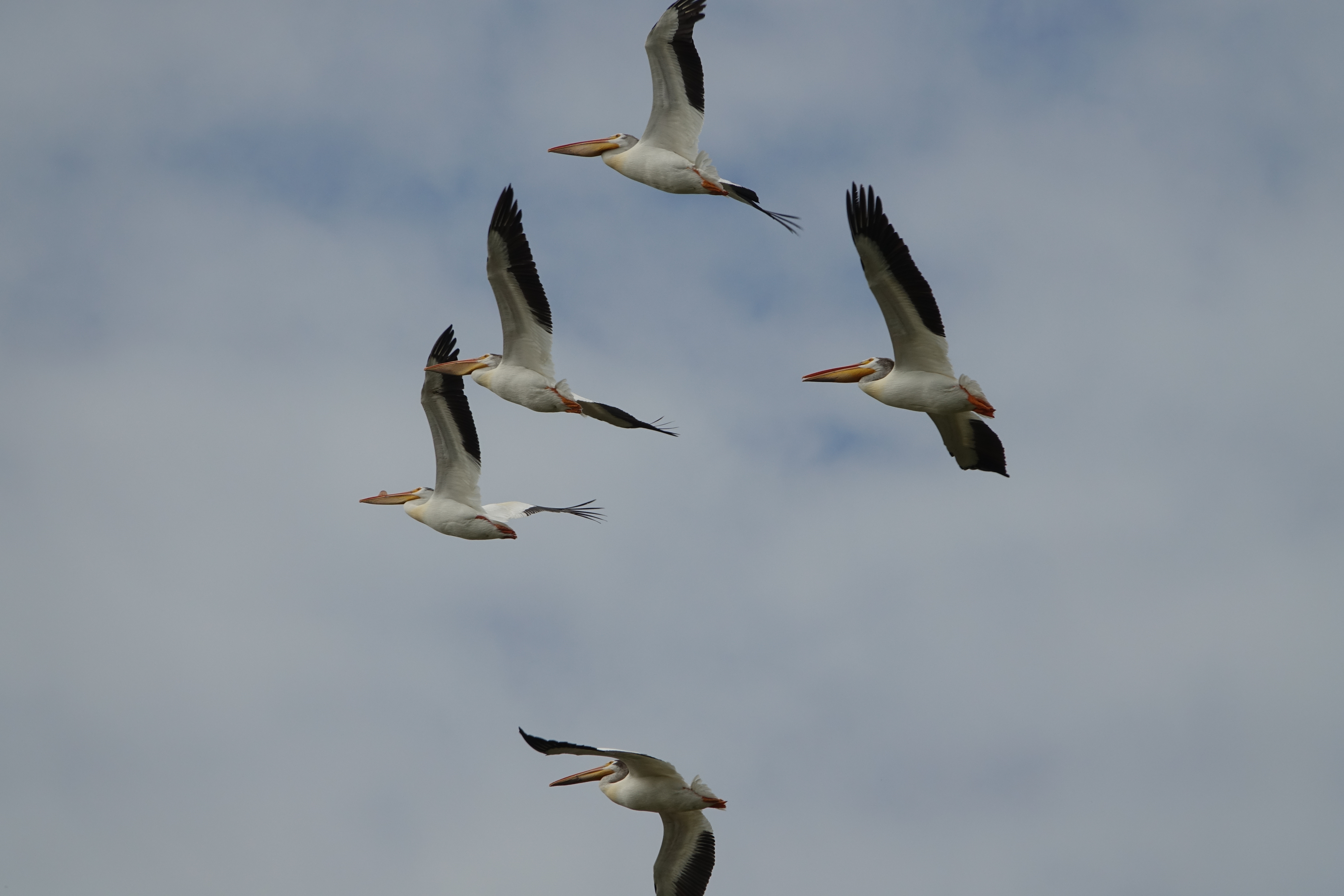
Our first exciting sighting came while we were still in the parking lot. A large flock of American White Pelicans, joined by a single Double-crested Cormorant flew overhead in a loose V-shape.  

American White Pelicans. Photo: A. Woods

We began our journey on Beaver trail, leading into Blackbird trail. Here we were able to hear a very loud Alder Flycatcher who sat very nice while having its picture taken. We also observed some Purple Martins around their nest boxes.

We continued our adventure along Blackbird trail, hearing a Virginia Rail, observing many Red-winged Blackbirds, Barn Swallows, American Pelicans, a few Yellow-headed Blackbirds, a Ruddy Duck and some Blue-winged Teals.

Alder Flycatcher. Photo: A. Woods.
Resting Ruddy Duck. Photo: A. Woods

We continued along Toad Road, observing an Eastern Kingbird, more Blue-winged Teal, some Clay-coloured Sparrows, a Yellow Warbler, a Song Sparrow, and more Ruddy Ducks. We also saw some Yellow Lady Slippers, heard many Common Yellowthroats, and a Sora.

This trail led us to Duck Pond trail, where we stopped at the shorebird scrape. The water was so high that most of the scrape was underwater. The high water levels allowed us to see some more waterfowl and other species, including some Gadwalls, Redheads, Black Terns, Killdeer, and some Tree and Barn Swallows.

Barn Swallow. Photo: A. Woods.
Pair of Killdeer. Photo: A. Woods

The humidity and hot weather were picking up as we headed back towards the main parking lot. Along the way we saw some more sparrows, including a Savannah Sparrow and a Clay-coloured Sparrow that were both singing away on easily visible perches (which gave us a great opportunity to learn how to identify them by sight and by sound).

Clay-coloured Sparrow. Photo: A. Woods

We heard another Sora, and learned a little bit about the insect traps around the marsh from one of our knowledgeable group members.

Overall, the trails were awesome and some great birds were seen! A very big thank you to all who joined us! Below is a full species checklist:

SpeciesCount
Canada Goose20
Blue-winged Teal7
Gadwall2
Mallard5
Redhead2
Ring-necked Duck1
Ruddy Duck4
Mourning Dove2
Virginia Rail1
Sora2
Killdeer3
Black Tern2
Double-crested Cormorant1
American White Pelican60
Alder Flycatcher2
Eastern Kingbird3
Tree Swallow10
Purple Martin6
Barn Swallow8
Sedge Wren1
Marsh Wren3
American Goldfinch2
Clay-coloured Sparrow5
Savannah Sparrow2
Song Sparrow4
Yellow-headed Blackbird8
Red-winged Blackbird30
Brown-headed Cowbird5
Common Yellowthroat6
Yellow Warbler5

-Aynsley

Upcoming May Shorebird Events!

Hello!

Spring migration is in full swing, and we’re in full preparation mode for the upcoming field season. Up first, we’ve got two exciting shorebird events to announce!

The first is a shorebird identification talk on Friday, May 17 at 7 pm, organized by Westman Naturalists. Gillian and Gwyn Richards, both incredible birders, will be giving a presentation on how to identify shorebird species commonly seen in southwestern MB! This is a hybrid event, so if you aren’t in the Brandon area you can still attend. The in-person presentation will be at Brandon University (Brodie Building Room 3-47). The virtual option will be on Zoom. To register and for more information, please visit the Westman Naturalists website: https://westman-naturalists.github.io/events.html

The second is a shorebird identification workshop on Saturday, May 25 at 9 am, outdoors in southwestern MB. As shorebirds migrate through, it can be hard to predict when and where they will be found in good numbers. We will determine the exact location closer to the date, but we hope to hold this event within 30 minutes of Brandon. To register, please email iba@naturemanitoba.ca.

We’ve got a summer full of exciting events and volunteer opportunities in store. We will be announcing more dates next week, so stay tuned.

In case you haven’t seen it yet, the Manitoba IBA program now has an Instagram page. Our username is @manitobaiba, give us a follow!  

Happy Mother’s Day weekend, and happy birding.

-Marissa

COSEWIC Update – January 2024

It’s the most wonderful time of the year, for those keeping track of the annual COSEWIC status reports! COSEWIC (Committee on the Status of Endangered Wildlife in Canada) is an independent advisory panel that provides information to the Minister of Environment and Climate Change in Canada. This group of experts is responsible for identifying and assessing the conservation status of wildlife species across Canada.

Each year, these committees meet, assess, and determine the urgency rankings of wildlife species across Canada and rank them into different categories: not at risk, special concern, threatened, endangered, or extirpated. Species are also designated by priority categories of high, mid, and low, prior to COSEWIC assessment. Our last COSEWIC blog update was in 2020, so this post will include any changes in species found in Manitoba that occurred since then.

Short-eared Owl

As of 2021, the status of Short-eared Owls has been changed from Special Concern to Threatened by COSEWIC. This change in status is attributed to loss of nesting and wintering habitat, causing population declines. Observations of Short-eared Owls have been reported in the Oak Hammock Marsh and Saskatchewan River Delta IBAs. There have also been some observations at Delta Marsh and North, East, and West Shoal Lakes IBAs.

Short-eared Owl. Photo by Christian Artuso.

Short-Eared Owl Species at Risk Information

Ferruginous Hawk

The Ferruginous Hawk was previously assessed as Threatened by COSEWIC, but was changed to Special Concern in 2021. Recent trends in this species indicate populations are slowly growing despite ongoing habitat loss. Ferruginous Hawks can be seen in grassland areas of Manitoba including the Southwestern Manitoba Mixed Grass Prairie and Whitewater Lake IBAs. A few observations have also been recorded around the Oak Lake/Plum Lakes IBA.

Ferruginous Hawk. Photo by Christian Artuso.

Ferruginous Hawk Species at Risk Information

Ross’s Gull

In 2021, this species was reassessed from Threatened to Endangered by COSEWIC, due to their small breeding population and low breeding success in Canada. Ross’s Gull can be seen around Whitewater Lake IBA during migration. Chances of seeing Ross’s Gull elsewhere in Manitoba are very limited due to their preference for arctic habitats.

Ross’s Gull. Photo by Christian Artuso.

Ross’s Gull Species at Risk Information

Bobolink

In 2022, COSEWIC reassessed the status of the Bobolink to Special Concern, from Threatened. This change in assessment is due to a slower rate of population decline than previously believed. Bobolinks can be seen in many IBAs in Manitoba, including the Southwestern Manitoba Mixed Grass Prairie, Oak Hammock Marsh, Whitewater Lake, and Delta Marsh to name a few. Based on eBird, Bobolinks are frequently in many areas across Manitoba.

Bobolink. Photo by Christian Artuso.

Bobolink Species at Risk Information

Eastern Whip-poor-will

In 2022, the Eastern Whip-poor-will was reassessed as Special Concern from Threatened by COSEWIC. This change in designation is based on indications that their populations are stabilizing and possibly increasing. Chances of observing this bird are very low, as they are cryptic and nocturnal. However, you are much more likely to hear this bird and its distinctive, repetitive “Whip-poor-will” call. Eastern Whip-poor-wills have been noted around the Delta Marsh and North, East, and West Shoal Lakes IBAs in Manitoba.

Eastern Whip-poor-will. Photo by Christian Artuso.

Eastern Whip-poor-will Species at Risk Information

Future assessments

The latest round of COSEWIC assessments took place in December 2023. During this round, both the Yellow Rail and Horned Grebe were re-evaluated, and both stayed in their original category of Special Concern.

The next round of assessments is scheduled for April 2024 and will include the Least Bittern (currently Threatened), the Short-billed Dowitcher (not yet assessed), and the Long-billed Curlew (currently Special Concern but considered extirpated in Manitoba). The full schedule can be found here: Status reports in preparation (cosewic.ca)

There are many species listed as candidates for assessment by COSEWIC. You can view the full list here: Candidate wildlife species (cosewic.ca)

 The species found in Manitoba that are considered high priority for assessment are:

  • Horned Lark
  • Marbled Godwit
  • American Tree Sparrow
  • Arctic Tern
  • Greater Yellowlegs
  • Solitary Sandpiper

Current COSEWIC status of Manitoba species

Species in Manitoba currently under COSEWIC designation include the following:

Special Concern:

  • Yellow Rail
  • Rusty Black Bird
  • Buff-breasted Sandpiper
  • Red-necked Phalarope
  • Western Grebe
  • Baird’s Sparrow
  • Horned Grebe (Western population)
  • Harris’ Sparrow
  • Olive-sided Flycatcher
  • Evening Grosebeak
  • Canada Warbler
  • Common Nighthawk

Threatened:

  • Sprague’s Pipit
  • Least Bittern
  • Loggerhead Shrike Prairie subspecies
  • Golden-winged Warbler
  • Chimney Swift
  • Chestnut-collared Longspur
  • Bank Swallow
  • Lark Bunting
  • Hudsonian Godwit
  • Lesser Yellowlegs

Endangered:

  • Whooping Crane
  • Piping Plover circumcinctus subspecies
  • Eskimo Curlew
  • Burrowing Owl
  • Red Knot rufa subspecies Tierra del Fuego / Patagonia wintering population
  • Red-headed Woodpecker

ISS Fall 2023 Roundup

This fall was a gorgeous and warm one to get out in nature. Luckily, our dedicated volunteers and staff were able to get out before the weather turned, to conduct our annual fall International Shorebird Surveys (ISS) within the province. These ISS surveys allow us to obtain data and track long-term global trends of shorebird populations. The fall survey period goes from July 11 until October 25 each year.

Within the province of Manitoba, we survey 4 IBAs using the ISS protocol. They include Whitewater Lake; North, East, and West Shoal Lakes; Oak Lake/Plum Lakes; and Oak Hammock Marsh. Each IBA has pre-set routes. Whitewater Lake has a total of 8 routes including 4 on the east side of the lake, 3 on the west side of the lake, as well as a stationary route. North, East and West Shoal Lakes IBA has 4 routes around the lakes, and a stationary route. Oak Lake/Plum Lakes has 5 routes, 2 of which are stationary.

We try to survey each route 3 times in the spring and 3 times in the fall, though sometimes the weather and road conditions impact how many routes can be accessed. While all species observed during the surveys can be recorded, only shorebird observations are included in this roundup.  

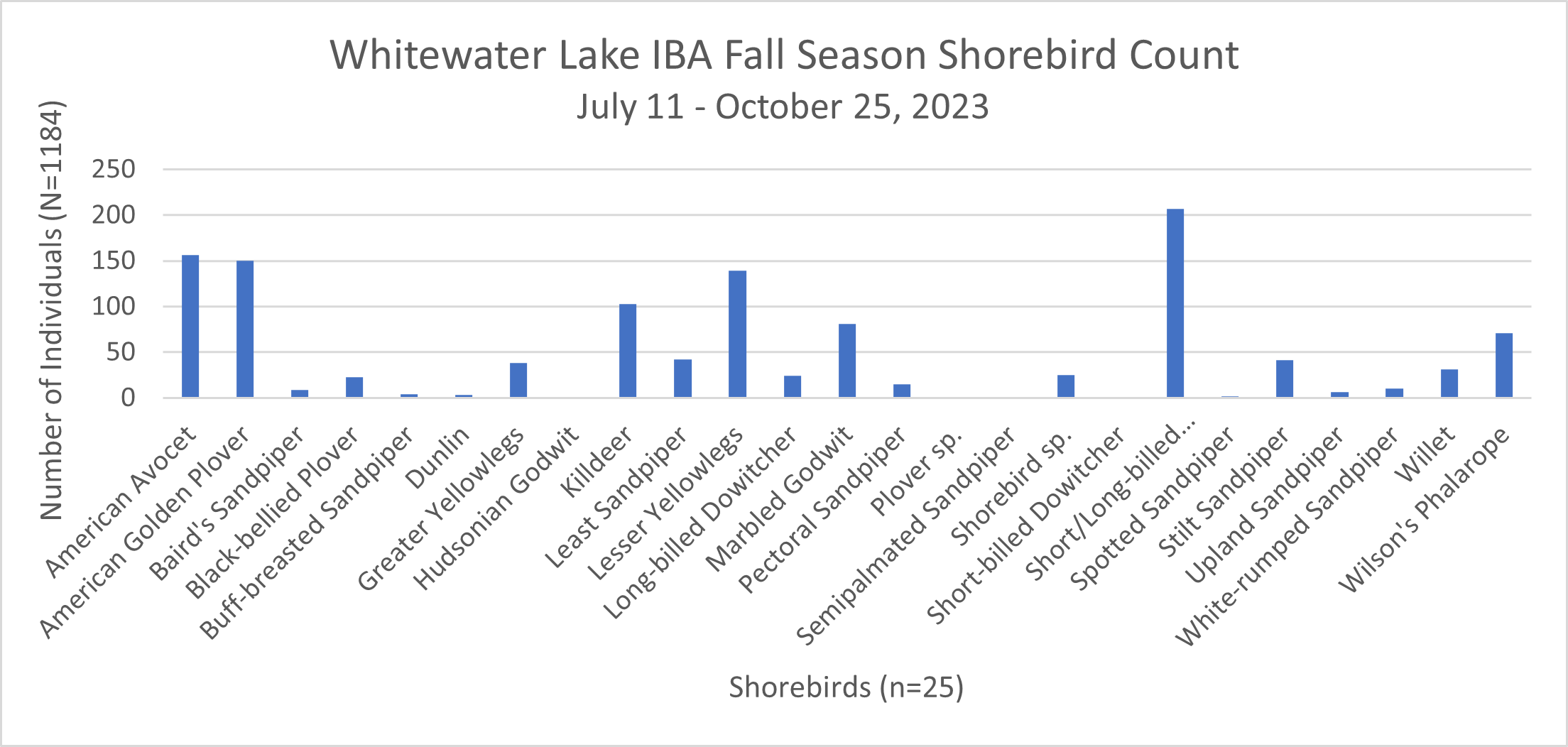
Whitewater Lake

SpeciesTotal # of Individuals
American Avocet156
American Golden Plover150
Baird’s Sandpiper9
Black-bellied Plover23
Buff-breasted Sandpiper4
Dunlin3
Greater Yellowlegs38
Hudsonian Godwit1
Killdeer103
Least Sandpiper42
Lesser Yellowlegs139
Long-billed Dowitcher24
Marbled Godwit81
Pectoral Sandpiper15
Plover sp.1
Semipalmated Sandpiper1
Shorebird sp.25
Short-billed Dowitcher1
Short/Long-billed Dowitcher207
Spotted Sandpiper2
Stilt Sandpiper41
Upland Sandpiper6
White-rumped Sandpiper10
Willet31
Wilson’s Phalarope71
Total1184
Total # of species25

Whitewater Lake was visited 8 times during the fall ISS period. Routes E1 and E3 were each visited only once. E2 was visited twice. Sexton’s Point was visited 3 times. W1 was visited 4 times. Lastly, W2 and W3 were visited 6 times each. The most abundant species seen at Whitewater Lake this fall were Short-billed/Long-billed Dowitchers. These species are grouped, as differences can be very difficult to distinguish. There were also abundant numbers of American Avocets, American Golden Plovers, and Lesser Yellowlegs.

A big thank you to Gillian Richards, Glennis Lewis, Carson Kearns, Bonnie Johnston, Joan Carritt, Tharina Uys, Darrell Robinson, Madelyn Robinson, Margret Robinson, Carson Kearns, Garry Budyk, John Weier, Marissa Berard and Aynsley Woods for monitoring Whitewater Lake!

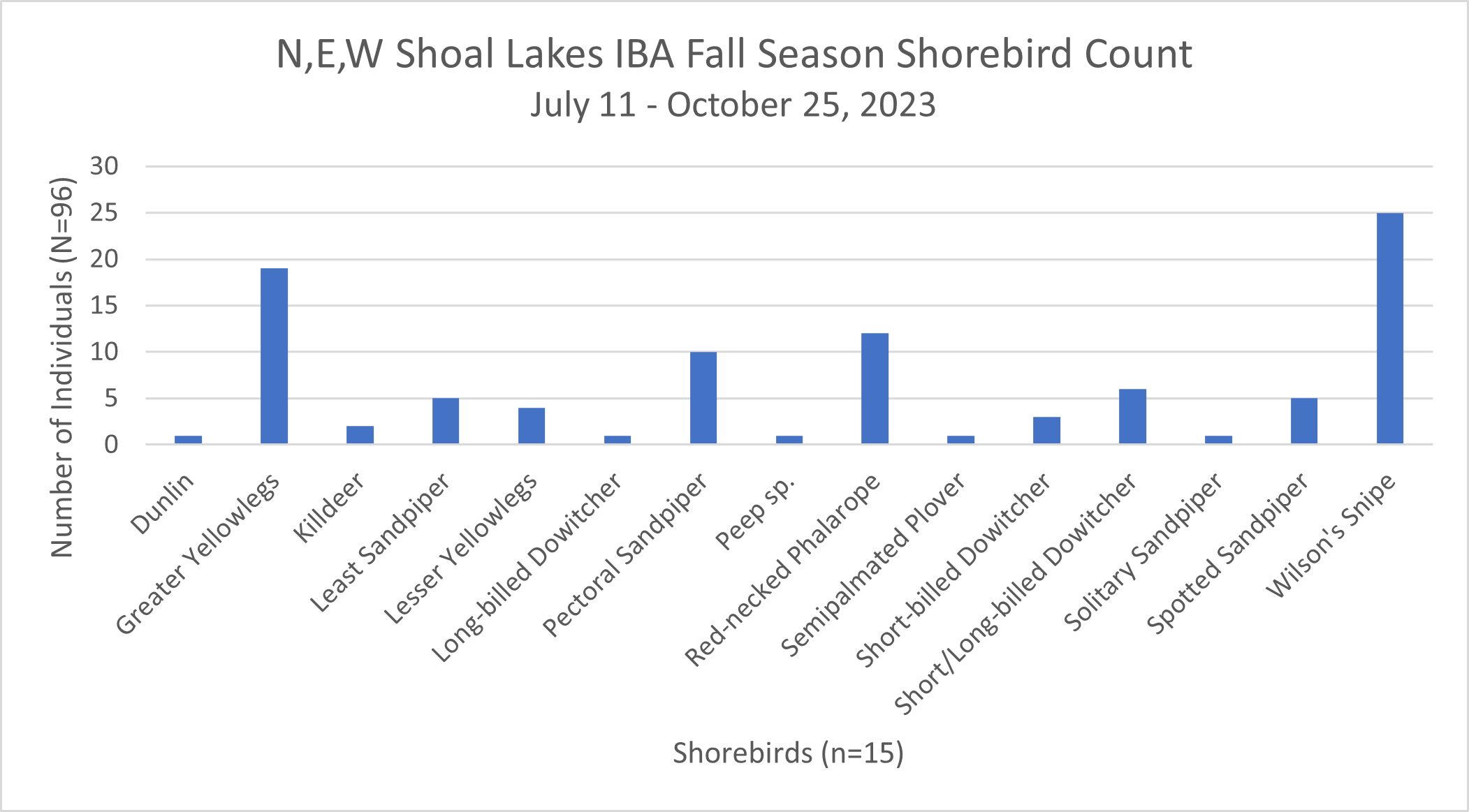
North, East, and West Shoal Lakes

SpeciesTotal # of Individuals
Dunlin1
Greater Yellowlegs19
Killdeer2
Least Sandpiper5
Lesser Yellowlegs4
Long-billed Dowitcher1
Pectoral Sandpiper10
Peep sp.1
Red-necked Phalarope12
Semipalmated Plover1
Short-billed Dowitcher3
Short/Long-billed Dowitcher6
Solitary Sandpiper1
Spotted Sandpiper5
Wilson’s Snipe25
Total96
Total # of species15

North, East, and West Shoal Lakes were visited 4 times during the fall migration period. Each route was visited 3 times. The most numerous species seen at this IBA were Wilson’s Snipe and Greater Yellowlegs.

A big thank you to Cameron Tramley, Tim Poole, Bonnie Chartier, Gwen Armbruster, and Peter Douglas for monitoring this IBA!

Oak Lake/Plum Lakes

SpeciesTotal # of Individuals
American Avocet2
Baird’s Sandpiper1
Greater Yellowlegs11
Killdeer10
Lesser Yellowlegs12
Pectoral Sandpiper19
Peep sp.8
Semipalmated Plover2
Semipalmated Sandpiper1
Shorebird sp.19
Solitary Sandpiper2
Spotted Sandpiper3
Willet2
Wilson’s Snipe3
Total95
Total Number of species14

Oak Lake/Plum Lakes was visited 3 times this fall. Routes 1 and 2 were visited 3 times each. Routes 3 and 4 were each visited once, while Route 5 was inaccessible due to water levels. A total of 95 shorebirds were observed here this fall, with the most frequent species observed being Pectoral Sandpipers.

A very big thank you to Gillian Richards, Matt Gasner, Aynsley Woods and Marissa Berard for surveying this IBA!

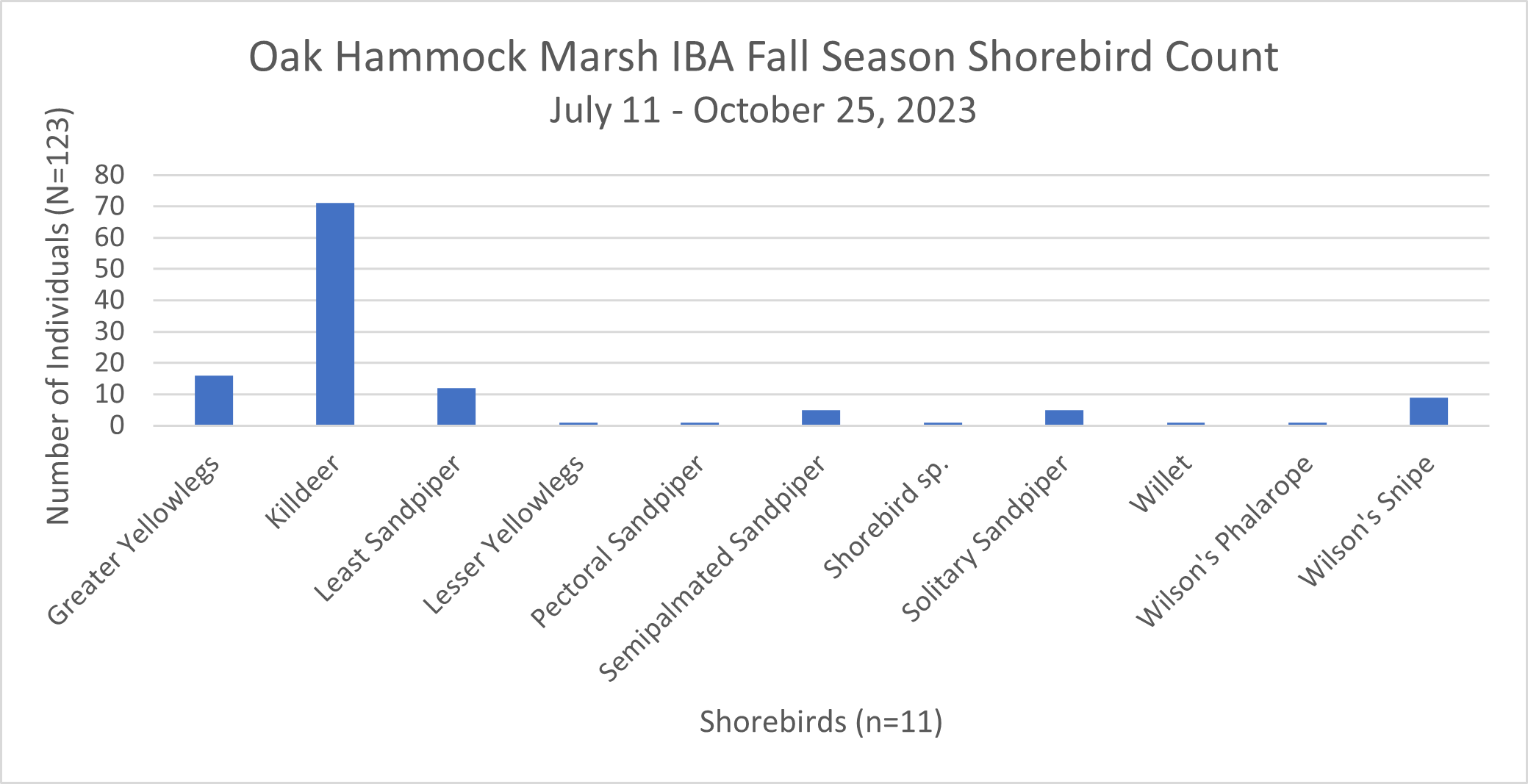
Oak Hammock Marsh

SpeciesTotal # of Individuals
Greater Yellowlegs16
Killdeer71
Least Sandpiper12
Lesser Yellowlegs1
Pectoral Sandpiper1
Semipalmated Sandpiper5
Shorebird sp.1
Solitary Sandpiper5
Willet1
Wilson’s Phalarope1
Wilson’s Snipe9
Total123
Total # of species11

Oak Hammock Marsh was visited 3 times over the fall migration. Routes 2 and 3 were both surveyed twice. Route 1 was surveyed 3 times. Killdeer were the most abundant species seen in the marsh.

A very big thank you to Cameron Tramley, Tim Poole, Bonnie Chartier, Peter Douglas, and Aynsley Woods!  

Pectoral Sandpipers, taken in a previous year. Photo by Amanda Shave.

Based on the summaries above, unsurprisingly Whitewater Lake had the most species and individuals observed, with 1184 individuals and 25 species. Oak Lake/Plum Lakes had the least number of individuals observed (n=95). Oak Hammock Marsh had the least number of species observed, with 11 species.  

Once again, we would like to thank all our volunteers for their amazing generosity and commitment to helping us complete our work! Without them we would not be able to complete these surveys that contribute to accurately tracking shorebird populations. If you are interested in volunteering for our 2024 International Shorebird Surveys, we will be looking for volunteers. Email iba@naturemanitoba.ca for more information.

-Aynsley

Shoal Lakes Red-headed Woodpecker Blitz – September 2023

On September 9th, the Manitoba IBA program held a Red-headed Woodpecker (RHWO) Blitz in the North, East and West Shoal Lakes IBA. Back in July, IBA program staff conducted Red-headed Woodpecker surveys in this area and observed a total of 14 adult Red-headed Woodpeckers. We were not sure how many Red-headed Woodpeckers would still be around, especially as many species seem to be migrating a week or two earlier than usual this year.

Our blitz was divided into 3 groups of 3 people. Just like our Oak Lake blitz, each group was given an area within the IBA to cover with suggested survey routes to follow. Below is a map of our group areas:

Originally, we were going to have four groups but we ended up having three groups instead, so Group 1 covered both the ‘Group 1’ and ‘Group 2’ areas on the map, in the southern and western portion of the IBA.  This group was made up of Marissa, Arianne and AJ. This group saw 2 juvenile Red-headed Woodpeckers in the ‘Group 2’ area.

Group 3 included Bonnie, Gwen, and Catherine. They saw a lot of activity from many birds including Mallards, Pine Siskins, Sandhill Cranes. They saw 1 juvenile Red-headed Woodpecker along their route.

Group 4 included Carson, Dries and Janice. They observed a total of 3 juvenile Red-headed Woodpeckers in addition to many other species.

AJ and Arianne on the look out for birds. Photo by Marissa Berard.

After a full morning of blitzing and birding, our group met for lunch at Rosie’s Café in Inwood to fuel up and share about our mornings. The consensus was that while it seems that most of the Red-headed Woodpeckers had already left the area to migrate, it was a beautiful morning with lots of bird activity overall.  

In total, we observed 6 juvenile Red-headed Woodpeckers during the blitz followed by 2 more (1 adult and 1 juvenile) on the way home after the blitz.  In addition to 58 species, and 1,080 individuals. Below is a recap of all species observed. A big thank you to our volunteers Bonnie Chartier, Gwen Armbruster, Catherine Copp, Carson Kearns, Dries Desender, Janice Thordarson, Arianne Ruff, and AJ Bhuiyan for participating to count this important species at risk!

-Marissa and Aynsley

SpeciesTotal # of Individuals
Accipiter sp.1
American Bittern1
American Coot20
American Crow17
American Goldfinch25
American Kestrel9
American Redstart2
American Robin33
American White Pelican7
Bald Eagle3
Barn Swallow45
Belted Kingfisher6
Black-billed Magpie12
Black-capped Chickadee2
Blackpoll Warbler2
Blue Jay23
Blue-winged Teal8
Buteo sp.1
Canada Goose425
Cedar Waxwing31
Clay-coloured Sparrow3
Common Raven11
Common Yellowthroat1
Downy Woodpecker4
Eastern Bluebird3
Eastern Kingbird2
Eastern Phoebe1
European Starling27
Gray Catbird3
Great Blue Heron2
Great Egret1
Greater Yellowlegs7
Green-wing Teal2
Hairy Woodpecker3
Harris’ Sparrow1
LeConte’s Sparrow1
Lesser Yellowlegs1
Lincon’s Sparrow7
Mallard108
Merlin4
Mourning Dove5
Northern Flicker61
Northern Harrier1
Northern Shoveler1
Pine Siskin68
Red-headed Woodpecker8
Red-tailed Hawk20
Rock Pigeon (Feral Pigeon)4
Ruddy Duck1
Sandhill Crane16
Savannah Sparrow6
Sharp-shinned Hawk2
Sharp-tailed Grouse1
Song Sparrow2
Swamp Sparrow1
Turkey Vulture4
Western Meadowlark6
White-breasted Nuthatch3
Yellow-bellied Sapsucker5
Total1080

Oak Lake Red-headed Woodpecker Blitz – July 2023

The Manitoba IBA program held a Red-headed Woodpecker blitz in the Oak Lake/Plum Lakes IBA on Saturday, July 15th. This is the third consecutive year that we blitz this IBA for Red-headed Woodpeckers (RHWO). Although windy, our 5 groups all managed to spot some Red-headed Woodpeckers.

Our blitzing group was comprised of 11 people, split up into 5 groups for maximum coverage of the IBA. Each group was assigned an area, two of which included a pre-determined survey route. Below is a map of the areas covered:

Map of our blitz area.
Our group, missing Tom, Renee, Glennis and Sandy. Photo by Marissa Berard.

The wind was strong, as it seems to often be in the Oak Lake area. Thankfully, that didn’t stop us from finding Red-headed Woodpeckers.

Group 1 was comprised of Gillian, Kathryn and Leah. Their area was in the southeast portion of the IBA and included a survey route. They found two pairs of Red-headed Woodpeckers (4 RHWO total).

A pair of Red-headed Woodpeckers seen by Group 1. Photo by Gillian Richards.

Group 2 covered the central portion of the IBA and was made up of Glennis, Sandy and Carson. Their area also included a survey route. During the blitz, they managed to count 14 Red-headed Woodpeckers!!!

Red-headed Woodpecker seen by Group 2. Photo by Carson Kearns.

Group 3 consisted of Katharine and Lee Ann. Their area did not include a survey route, so they focused their birding in areas of suitable habitat. They counted 4 Red-headed Woodpeckers. They also saw a Loggerhead Shrike, which is quite exciting.

Loggerhead Shrike sitting on a barbed wire fence. Photo by Katharine Schulz.

Group 4 was made up of Tom and Renee, who covered the area north of Highway 1. They counted 1 Red-headed Woodpecker.

Red-headed Woodpecker, seen by Group 4. Photo by Tom Will.

Group 5, comprised of me (Marissa), covered the southwest portion of the IBA. At my first stop, I saw a pair of Red-headed Woodpeckers in a stand of dying aspen trees. I didn’t see any more during the rest of my blitz, so the total for group 5 amounted to 2 RHWO. Unfortunately, on the way back to Oak Lake Beach to meet with the rest of the groups, I found a dead RHWO on the road that must have been hit by a car. It was a good reminder to be aware of wildlife, including birds, while driving. On a more positive note, one of my personal highlights of the morning was spotting a beautiful Eastern Bluebird, on the way home after the blitz.

Eastern Bluebird. Photo by Marissa Berard.

After the blitz, we all met up at the Oak Lake Marina for some snacks and to share with each other about our mornings. At this point, the wind had really picked up, and we could barely hear each other talk! Thankfully, Leah is from the Oak Lake area and was able to show us a better spot that was more sheltered from the wind. We moved locations to the park, and set up at a picnic table that was much more sheltered. As a bonus, an Eastern Wood-Pewee was singing away right by our picnic table! This bird was very photogenic and certainly not camera-shy. It remained on a branch singing loudly, perched right in perfect view!

The very photogenic Eastern Wood-Pewee. Photo by Carson Kearns
Eastern Wood-Pewee photoshoot at our post-blitz picnic spot! Photo by Marissa Berard.

In total, we saw 25 Red-headed Woodpeckers during the blitz. A summary of all the species identified can be found below. We saw a total of 84 species (plus blackbird sp. and small falcon sp.) and a total of 1,907 individuals. Thank you to Gillian Richards, Kathryn Hyndman, Glennis Lewis, Sandy Hominick, Renee Will, Tom Will, Carson Kearns, Katharine Schulz, Lee Ann, and Leah Lees for joining me to count this species at risk!

-Marissa

SpeciesNumber of Individuals
American Avocet3
American Bittern1
American Coot4
American Crow49
American Goldfinch37
American Kestrel15
American Robin26
Bald Eagle2
Baltimore Oriole3
Barn Swallow22
Black Tern54
Black-billed Cuckoo1
Black-billed Magpie6
Blackbird sp.20
Black-capped Chickadee3
Black-crowned Night Heron1
Blue-winged Teal1
Bobolink5
Brewer’s Blackbird106
Brown Thrasher1
Brown-headed Cowbird8
Canada Goose1
Cedar Waxwing18
Chipping Sparrow8
Clay-coloured Sparrow12
Cliff Swallow6
Common Grackle5
Common Raven1
Common Yellowthroat10
Cooper’s Hawk1
Double-crested Cormorant1
Downy Woodpecker1
Eastern Bluebird5
Eastern Kingbird66
Eastern Phoebe1
Eastern Wood-Pewee2
European Starling2
Franklin’s Gull599
Gray Catbird6
Gray Partridge16
Great Crested Flycatcher3
Hairy Woodpecker1
Horned Lark2
House Sparrow17
House Wren21
Killdeer4
Lark Sparrow10
Least Flycatcher16
LeConte’s Sparrow1
Lesser Yellowlegs1
Loggerhead Shrike1
Mallard4
Marsh Wren1
Merlin4
Mourning Dove88
Nelson’s Sparrow4
Northern Flicker8
Northern Harrier2
Orchard Oriole1
Pied-billed Grebe1
Red-eyed Vireo3
Red-headed Woodpecker28
Red-necked Grebe6
Red-tailed Hawk2
Red-winged Blackbird255
Ring-billed Gull9
Rock Pigeon (Feral Pigeon)6
Savannah Sparrow14
Sedge Wren1
Small Falcon sp.1
Song Sparrow8
Sora1
Swainson’s Hawk5
Tree Swallow13
Turkey Vulture7
Upland Sandpiper1
Veery2
Vesper Sparrow9
Warbling Vireo4
Western Kingbird10
Western Meadowlark70
White-faced Ibis7
Wilson’s Snipe1
Yellow Warbler6
Yellow-bellied Sapsucker3
Yellow-headed Blackbird116
Total number of species84
Total number of individuals1907

Sandy Bar Weed Pull – August 2023

This past Saturday, August 12th, we ran our first weed pull at the Riverton Sandy Bar since 2021. Last year, the water levels on Lake Winnipeg were so high that the Sandy Bar was underwater – instead, we ended up doing a purple loosestrife pull at Oak Hammock Marsh, and shoreline clean-ups at Delta Beach and Lockport. This year, the water levels cooperated and we were able to do a weed pull once again. The purpose of our weed pulls is to restore habitat for Piping Plovers (an Endangered species) as well as other shorebirds, gulls and terns. The Riverton Sandy Bar was designated as a Special Conservation Area because Piping Plovers have nested here in the past. Piping Plovers prefer open sandy areas to nest, so by removing the vegetation, we hope that one day these birds will nest in this area once again.

Thank you to Joanne, Allan, Lynn, Judy, Lorraine, and Carson, for joining Aynsley and I to pull weeds for the Piping Plovers!

Our wonderful team! Photo by M. Berard.

Our weed pull events are notorious for attracting interesting weather. On the drive there, many of us encountered pockets of pouring rain… Fortunately, though ominous rain clouds often surrounded us throughout the morning, the rain never reached us. The cool dry weather (around 15 degrees) ended up being perfect for pulling weeds.

A rainbow greeting us on the way to the weed pull area. Photo by M. Berard.

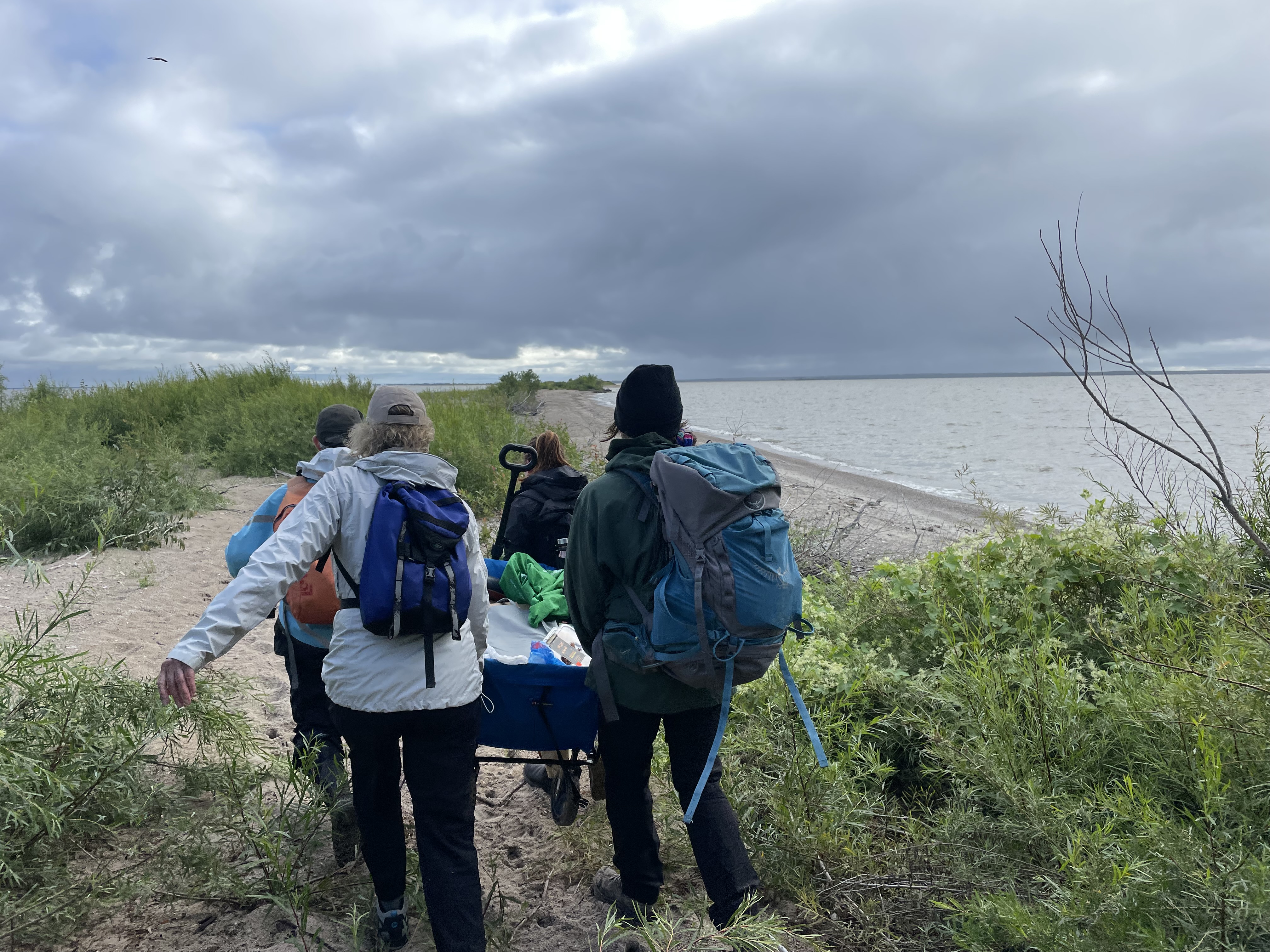
We met in the parking lot bright and early, at 8 am. After chatting and fuelling up on snacks and coffee, we began the approximately 1 km trek to the weed pull area. We loaded up a wagon with the essentials (coffee!!!), which was quite easy to pull along the packed wet sand. Our group took turns teaming up to carry the wagon over a few more challenging sections of terrain.

Teamwork makes the dream work! Photo by L. Rose.  

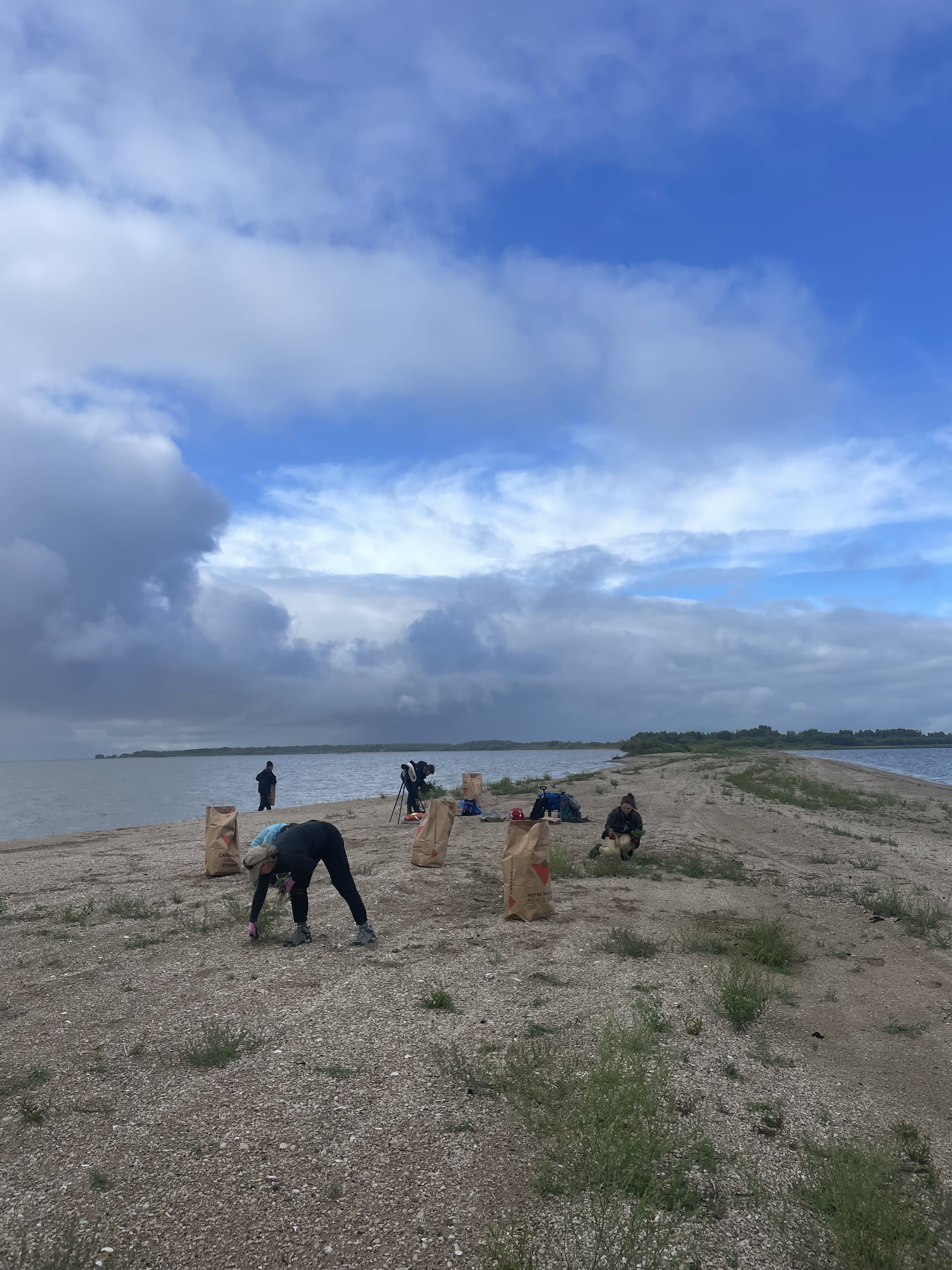
Once arrived, we got to work. The main type of vegetation we were pulling was the invasive Sweet Clover, which is quite easy to pull and makes for a satisfying experience. From our starting point, volunteers spread out in different directions – some worked towards the southwest, while others worked towards the northeast. Throughout the morning, our group shared lots of stories, jokes and laughter. What a lovely way to connect, while contributing to conservation.

Volunteers hard at work! Photo by M. Berard.

All in all, we managed to remove 20 full bags of weeds from the Sandy Bar! It was very satisfying to see the clear difference in the amount of vegetation after our hard work, compared to before. Though many of us felt like we could have continued to weed all day (it’s so hard to stop once you start), we wrapped up around noon.     

The weed pull area (facing northeast from our starting point) before and after our weed pull. Photo by M. Berard.
The weed pull area (facing southwest from our starting point) before and after our weed pull. Photo by M. Berard.

While pulling weeds, we also had our eyes and ears open for birds. Highlights included a Bald Eagle flying around in the distance, pelicans, and Semipalmated Sandpipers. After the pull, Joanne went for a walk to the end of the spit for some extra birding. She compiled our bird sightings for the morning into an eBird checklist – thanks Joanne!!

Semipalmated Sandpiper. Photo by Joanne Smith.

Here is the full species list:

SpeciesCount
Canada Goose42
Mallard8
Green-winged Teal12
Semipalmated Plover1
Baird’s Sandpiper4
Least Sandpiper3
Semipalmated Sandpiper24
Greater Yellowlegs3
Lesser Yellowlegs4
Bonaparte’s Gull3
Ring-billed Gull21
Herring Gull2
Common Loon1
Double-crested Cormorant11
American White Pelican24
Northern Harrier2
Bald Eagle6
Merlin1
Eastern Kingbird1
American Crow2
Tree Swallow1
Barn Swallow1
Marsh Wren2
Gray Catbird1
Cedar Waxwing4
Song Sparrow2
Swamp Sparrow1
Yellow Warbler6
Total # of species28
Total # of individuals193

This event was funded by Environment and Climate Change Canada’s Habitat Stewardship Fund.

Thanks again to our volunteers, we couldn’t do this without you! If you have any questions or if you would be interested in participating in events like this in the future, you can get on our mailing list by emailing iba@naturemanitoba.ca!

-Marissa

Purple Loosestrife Pull – August 2023

This past weekend, we ran our second ‘Purple Loosestrife Pull’ at Oak Hammock Marsh IBA. Our group of 15 met outside of the Harry J. Enns Wetland Discovery Centre at 10 am. Once we got organized, did some introductions, and handed out some outreach materials, we headed out to the stand which is about a 15-minute drive away, on the eastern edge of the WMA. The sun was hot, but thankfully there was a nice breeze once we got to our destination. Our group spent the next few hours building connections, beating the heat with some cool refreshments, and successfully removing a full truckload of Purple Loosestrife. A huge thank you to Judy, Lorraine, Jon, Amanda, Cindy, Alain, Josh, Salem, Hayden, Lifa, Kenzy, Mariam and Gus for coming out and helping Aynsley and I with this important work!

Our wonderful group of volunteers! Photo by Marissa Berard.

Purple Loosestrife (Lythrum salicaria), recognizable by its bright pink-purple flowers and square, woody stem, is an invasive plant that is rapidly spreading throughout North America. First having arrived in the early 1800s, this plant is thought to have been transported here in the soil of ballast water on European ships, as well as by being deliberately planted by European settlers. Its dense root systems crowd out native plant species, resulting in lower biodiversity and degraded habitat for birds and other animals. Even though this plant has many negative effects on our natural ecosystems, it can still be found planted in gardens and sold in garden centres. More in-depth information on Purple Loosestrife can be found on the Invasive Species Centre website: https://www.invasivespeciescentre.ca/invasive-species/meet-the-species/invasive-plants/purple-loosestrife/

Purple Loosestrife at Oak Hammock Marsh. Photo by Marissa Berard.

When a stand of purple loosestrife was first confirmed on the eastern edge of Oak Hammock Marsh in July 2022, the Manitoba IBA program decided to work to prevent the spread of this invasive species by organizing our first ‘Purple Loosestrife Pull’ in September 2022. Oak Hammock Marsh provides valuable habitat for a variety of wetland and grassland birds, so protecting it from the threat of purple loosestrife is important.

Amanda and Jon removing Purple Loosestrife. Photo by Marissa Berard.

While completely removing this stand would be difficult and would require a lot of resources, our approach is one of “damage control” – to limit its spread as much as we can. In general, the best time to remove invasive plants is when they are flowering but before they have gone to seed, to avoid spreading more seed in the process of removing them. Because some of the Purple Loosestrife had started to go to seed, we did not fully pull the plants. Instead, working in small groups, we would place the top of the plants (with the flowers and seeds) in a garbage bag to trap all the seeds, and cut the plant at the base. By cutting the plants and putting them in garbage bags, we are preventing a massive number of seeds from being dispersed into the area and growing into full plants in the future. One plant can spread up to 2 million seeds per year, so removing them before they are able to spread them is key!

Below is a photo of our group along with the results of our day’s work – As I mentioned at the start of this blog post, we removed enough Purple Loosestrife to completely fill up the back of my pickup truck! Once again, a massive thank you goes to our incredible volunteers.

Our day’s work! Woohoo! Photo by Marissa Berard.

Interested in helping with our stewardship work? We will be at the Riverton Sandy Bar this coming Saturday, August 12th to protect Piping Plover habitat by pulling weeds. We will get started at 8 am. If you are interested in participating, send me an email at iba@naturemanitoba.ca!

-Marissa 

Upcoming August Events!

The Manitoba IBA program is looking for volunteers for our upcoming events, including a purple loosestrife pull at Oak Hammock Marsh, a weed pull at Riverton Sandy Bar, and a bird blitz at Whitewater Lake. Keep reading for more details. The more the merrier!

Purple Loosestrife Pull – Saturday, August 5th

We organized our first Purple Loosestrife pull last September, after a stand of Purple Loosestrife (an invasive wetland plant) was discovered on the east side of Oak Hammock Marsh. Join us again this year to protect the wetland habitat at Oak Hammock Marsh on Saturday, August 5th from 10 am – 2 pm. Snacks and refreshments will be provided.

Sandy Bar Weed Pull – Saturday, August 12th

We will be meeting at the Riverton Sandy Bar on Saturday, August 12th from 8 am – 12 pm, to remove weeds and restore habitat for Piping Plovers and other shorebirds. Snacks and refreshments will be provided. We were unable to run our annual weed pulls last year because of the very high water levels on Lake Winnipeg, so it will be great to get out to this spot again!

Whitewater Lake Blitz – Sunday, August 27th

Join us for a bird blitz at Whitewater Lake on Sunday, August 27th, starting at 8:30 am. We will be focusing on counting shorebirds, but there will be many other birds to see as well! Snacks and refreshments will be provided at the end of the morning. Carpooling from Winnipeg or Brandon may be available.

To sign up for these events or for more information, you can email me at iba@naturemanitoba.ca

Thanks!

-Marissa