Hi folks! I’m back with our last blitz recap of the summer 2025 season! Almost time to start planning for this year’s events and I can’t wait! Our last Blitz of the season was on August 28th at the Oak Hammock Marsh IBA. Oak Hammock likely needs no introduction, being a site that has long been popular with birders for its proximity to the City of Winnipeg and its many accessible walking trails, but I’m going to give one anyway. I have my master’s in ecological restoration, so I can’t resist a good restoration success story.
When settlers first arrived in southern Manitoba, they came upon a vast marsh that stretched from what is now the north Perimeter Highway all the way to present-day Teulon. Over time, all this water was drained, and the land was converted to agriculture, leaving almost no trace of the wetland that once defined the area. That was until the 1960’s and 70’s, when the Provincial government began buying private lands to restore a small section of the original marsh. Though only a fraction of its original size (from approx. 47,000 hectares to its current size of 3600 hectares), the marsh restoration has been a huge success. Oak Hammock Marsh was designated as a provincial Wildlife Management Area in 1973 and received designation as a Ramsar wetland of international importance in 1987. Due to its importance for migrating shorebirds and waterfowl, Oak Hammock was also designated as an Important Bird Area in 1999. Today, Oak Hammock is home to the national headquarters of Ducks Unlimited Canada, and the newly renovated Harry J. Enns Wetland Discovery Centre, and remains an important stopover site for migrating birds.
On a personal note, my first visit to Oak Hammock Marsh was in 2022, when I was working as a Conservation Technician with Native Plant Solutions. On my first visit to the site, I was armed with a flaming drip torch, helping with a prescribed burn to rejuvenate the tallgrass prairie plants right next to the Wetland Discovery Centre entrance. It was a visit I won’t soon forget, and I’m very much looking forward to returning to conduct blitzes this summer.
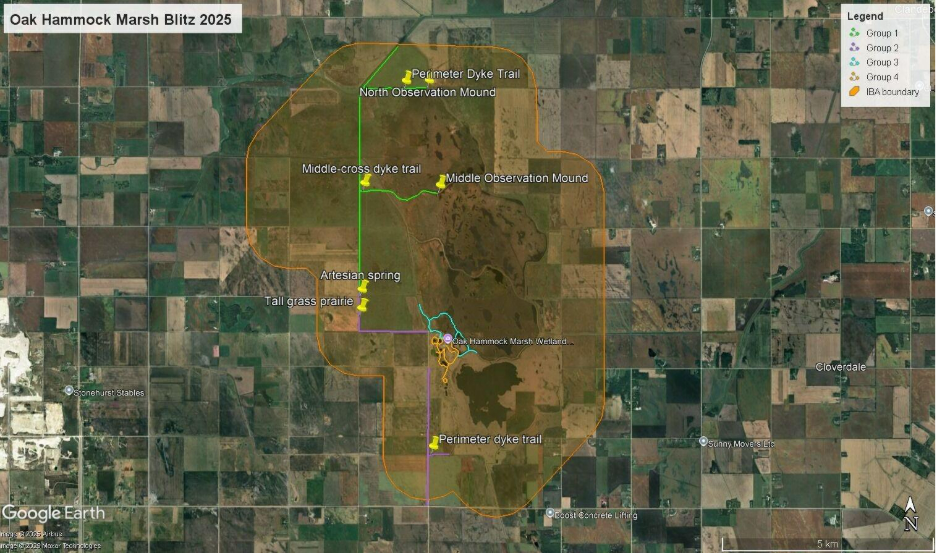
How’s that for a segue! The August 28 blitz at Oak Hammock Marsh was another general bird blitz, and we asked volunteers to record any and all birds that they spotted while out on their routes. For this blitz, we had four groups of volunteers that split up throughout the IBA according to the map below. Each group started birding at 7:30 am and wrapped up by 11:30 to meet for lunch at the Wetland Discovery Centre Café.
It was a beautiful, misty morning on the marsh. Once the sun broke through the mist, it revealed dew-covered fields sparkling with many, many spider webs. A perfect start to a morning of birding! Thank you to Katharine for the gorgeous photos capturing the mood of the morning!
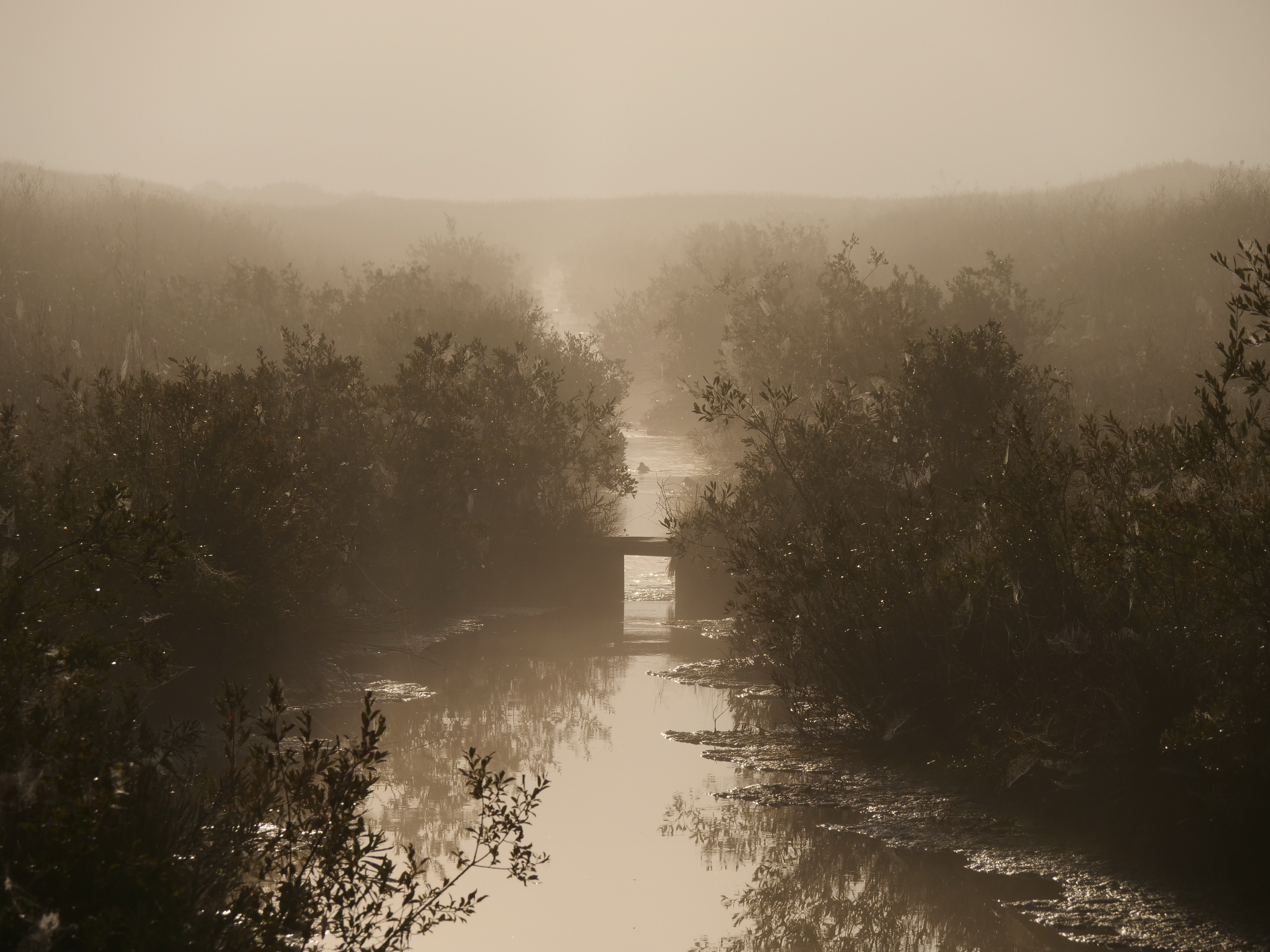
A misty start to the morning. Photo by Katharine.

Dew sparkling on a field of spider webs. Photo by Katharine.
Our first group was made up of Marissa, Amaia and Kiefer. They started by traveling north up Road 13 E. The most notable observation on the first leg of this journey was a total of 150 Sandhill Cranes seen flying overhead and standing in the roadside fields. A total of 80 Mallards were spotted along this route, and several species of sparrow including Chipping Sparrow (1), Swamp Sparrow (1), and Savannah Sparrow (11). Next, the group ambled along the Perimeter Dyke Trail to reach the North Observation Mound. On this short section of trail, the group observed 22 different species, including 17 Barn Swallows and 6 Bobolinks, both species at risk.
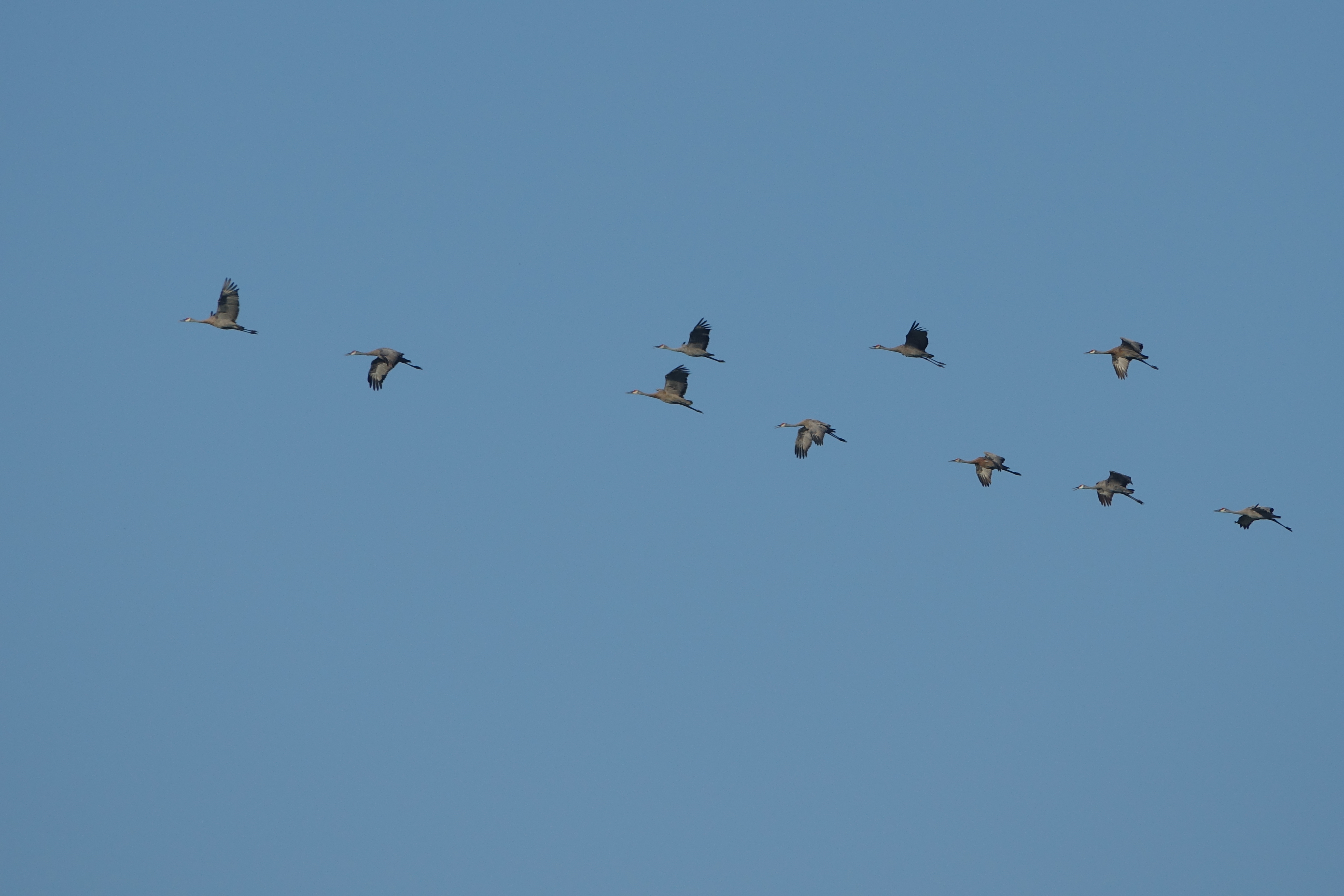
Sandhill Cranes flying overhead. Photo by Marissa.
Our next group consisted of Jo, Jan, Betsy and Katharine. They began birding on Road 13 E, south of group 1, near the Artesian Spring. Along this route, group 2 also recorded 150 Sandhill Cranes with the note that they were heard to the northwest. Given that group 1 also observed 150 cranes, I’m going to assume that these were likely the same birds, as the sound of the Sandhill Crane’s unique call can carry very long distances. This group also observed 2 Wilson’s Snipes and 8 Savannah Sparrows on this route.
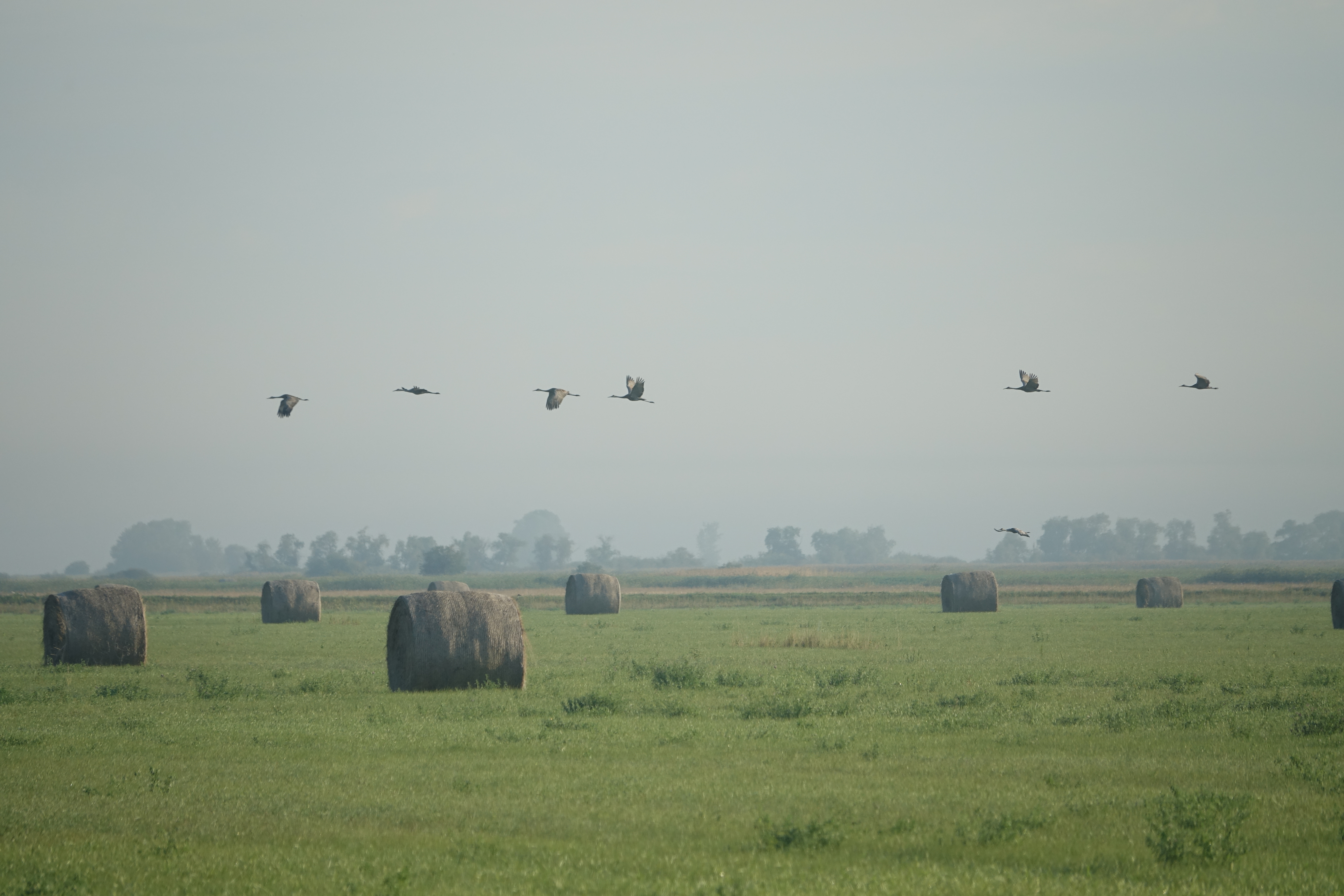
Sandhill Cranes taking off from a field. Photo by Marissa.
Group 2 then spent some time walking through the tallgrass prairie area near the intersection of Road 13 E and Road 79 N. They were rewarded with several prairie species including 3 Sharp-tailed Grouse, 3 Bobolinks, and a Western Meadowlark. To finish their morning, group 2 traveled south on Route 220, passing the Lure Crop, where they saw an additional 14 Sandhill Cranes. Along this route they also observed 8 Barn Swallows, another Bobolink, another Wilson’s Snipe and a Downy Woodpecker. A diverse crowd for such a small area!
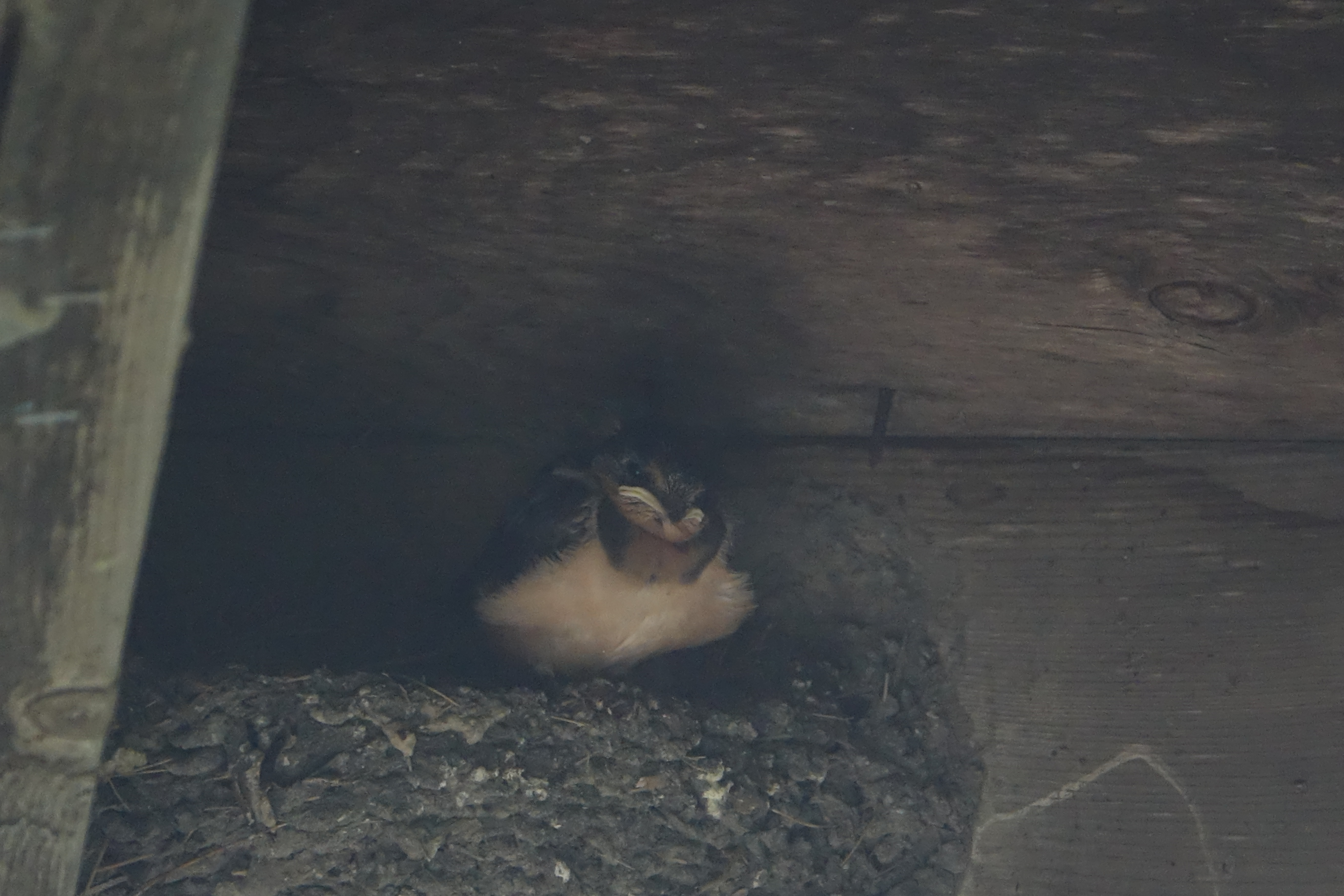
A grumpy-looking Barn Swallow. Photo by Marissa.
Next up was group 3, consisting of Emily, Matthew, Graham and Joanne. This group hit the trails, covering the area to the northeast of the Wetland Discovery Centre. While our first two groups tended to have a mix of wetland and grassland habitats, as they drove along the edge of the marsh with crops to their west, groups 3 and 4 were firmly in the marsh, which shows in the species assemblages they observed.

A Northern Harrier finding its next meal in the wetland vegetation. Photo by Marissa.
Group 3 started around the Wetland Discovery Centre, birding along the Killdeer and Jackrabbit Trails. On this first leg, the group observed 37 species, including a large flock of geese made up of 600 Canada Geese and 100 Snow Geese; five different species of shorebird (Short-billed/Long-billed Dowitcher, Lesser Yellowlegs, Greater Yellowlegs, Least Sandpiper and Pectoral Sandpiper); Barn Swallows (25) and Cliff Swallows (3), and a total of 350 Red-winged Blackbirds.
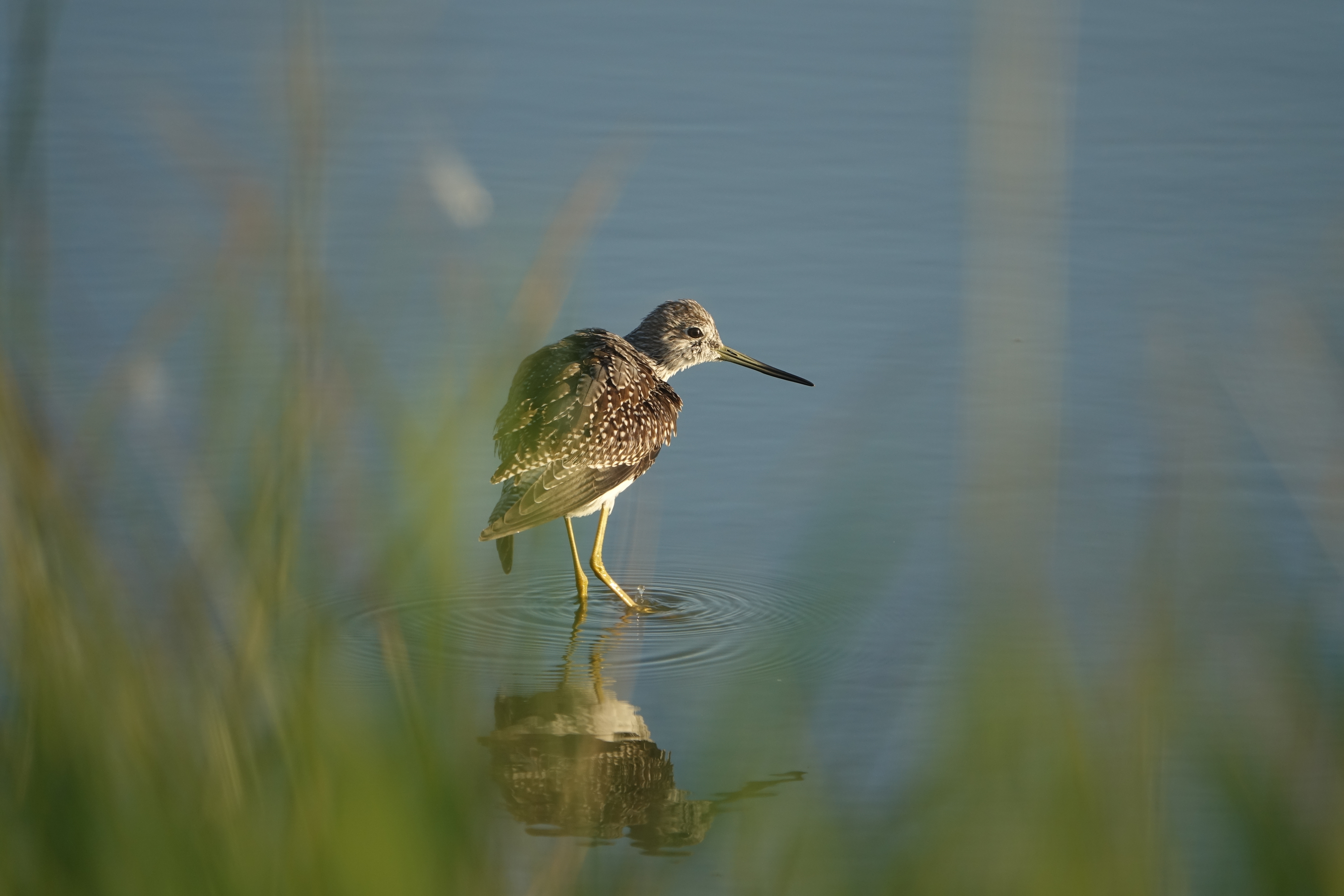
Greater Yellowlegs spied through the cattails. Photo by Marissa.
The group then made their way along the aptly named Wren Trail, where they observed 7 Sedge Wrens. The waterfowl was abundant on this section of their route, with 125 Mallards, as well as more Canada Geese (43), Northern Shovelers (2), a Gadwall (1), and Northern Pintails (10). They also added Wilson’s Snipe (9) and White-rumped Sandpiper (4) to their shorebird list and saw 13 Bobolinks.
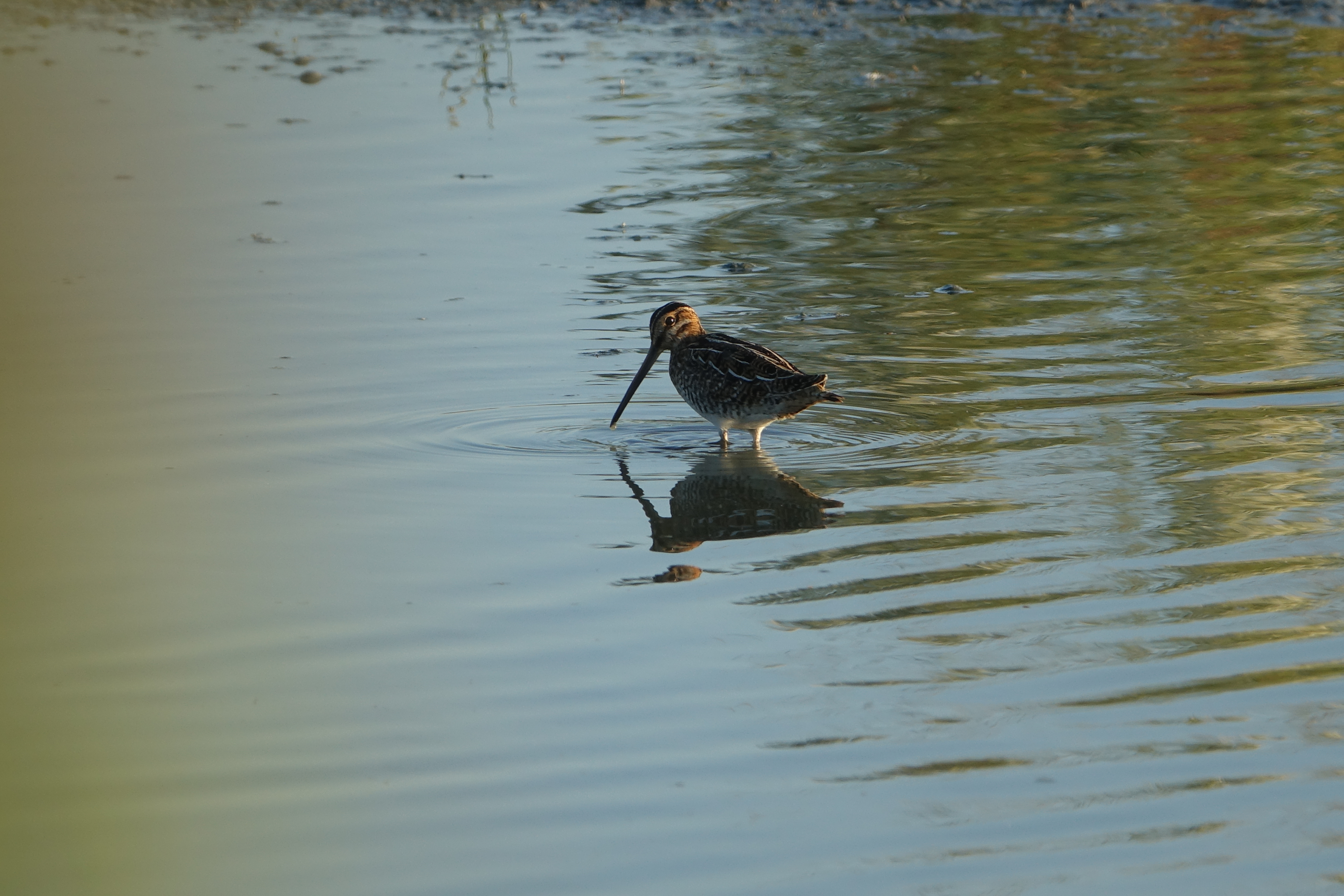
Wilson’s Snipe. Photo by Marissa.
Next, the group walked along the (again aptly named) Teal Trail, where they observed both the Green-winged and Blue-winged Teal. From the lookout, the group spied five Trumpeter Swans, an Endangered species under the provincial Endangered Species and Ecosystems Act. Group 3 finished their assigned routes by following the Coot and Cattail Trails, where they observed many of the same species already identified, with the addition of four species of gulls including Bonaparte’s (2), Franklin’s (53), Ring-billed (21) and the American Herring Gull (2).
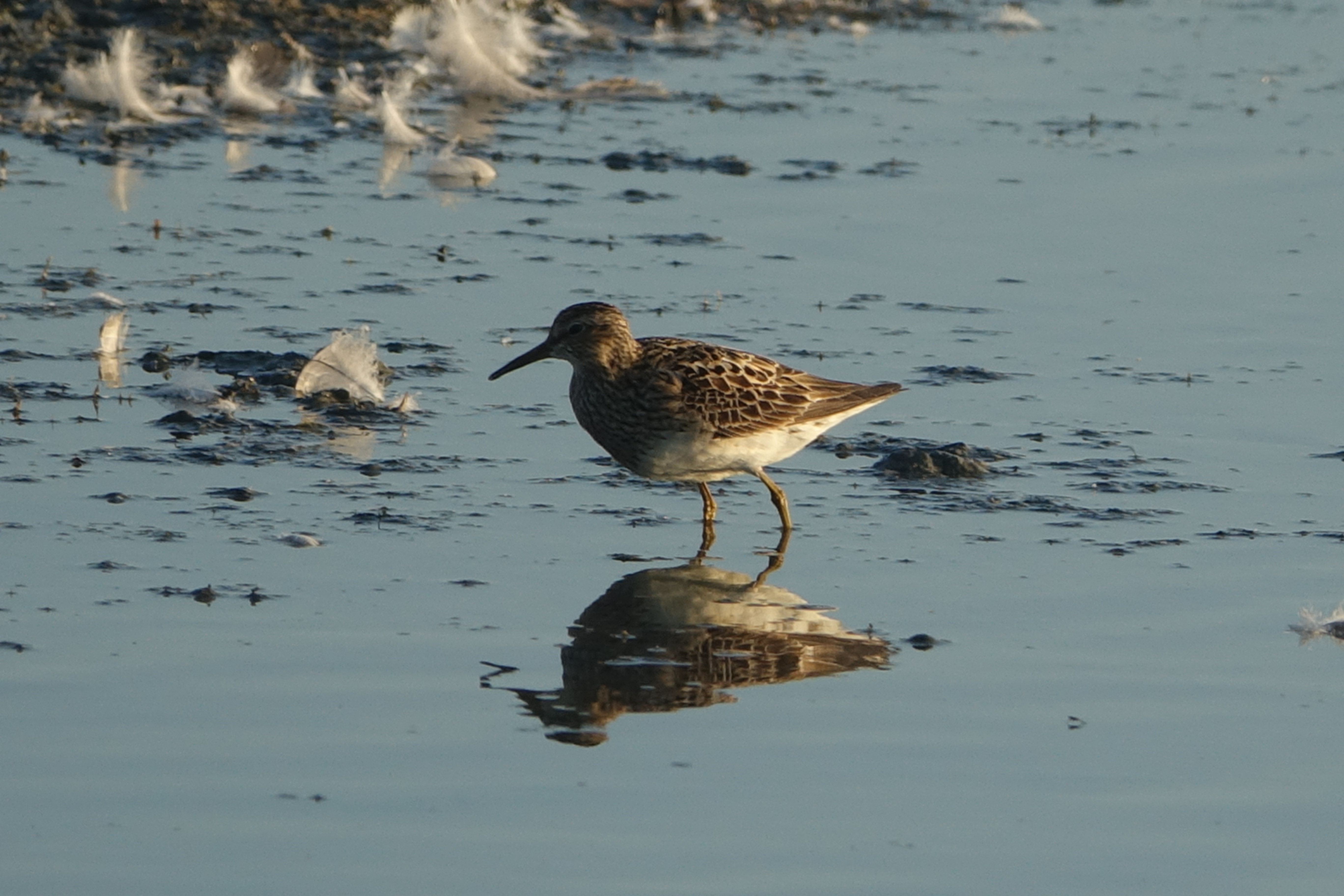
Pectoral Sandpiper. Photo by Marissa.
Our fourth and final group was made up of Bonnie, Gwen, and Paul, covering the trails to the southwest of the Wetland Discovery Centre. Bonnie, one of our seasoned shorebird surveyors, led the way along the International Shorebird Survey (ISS) Routes. They started along the ISS Route 1, which covers the Duck Pond Trail, and the Observation Blind, then north along the Lagoon Trail. On this first route, the shorebirds were out and about, with 12 Killdeer, 36 Wilson’s Snipe, 13 Lesser Yellowlegs, 3 Greater Yellowlegs, and 1 Least Sandpiper spotted. This was in addition to another Trumpeter Swan, 46 Mallards, and many other species of waterfowl. Despite all that, the highlight of this route had to have been the approximately 15,000 Red-winged Blackbirds spotted in migration. Wow!
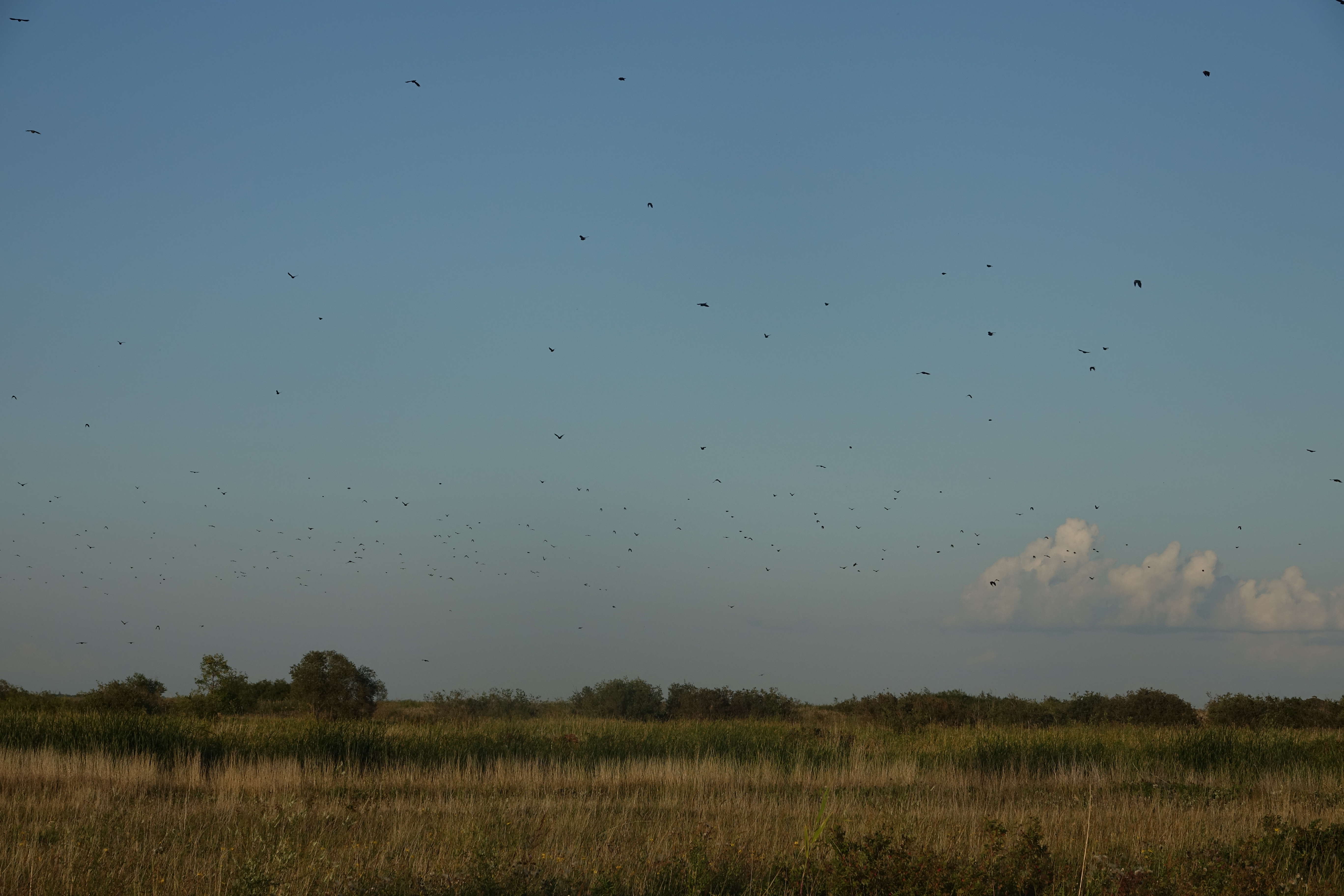
A cloud of Red-winged Blackbirds over the marsh. Photo by Marissa.
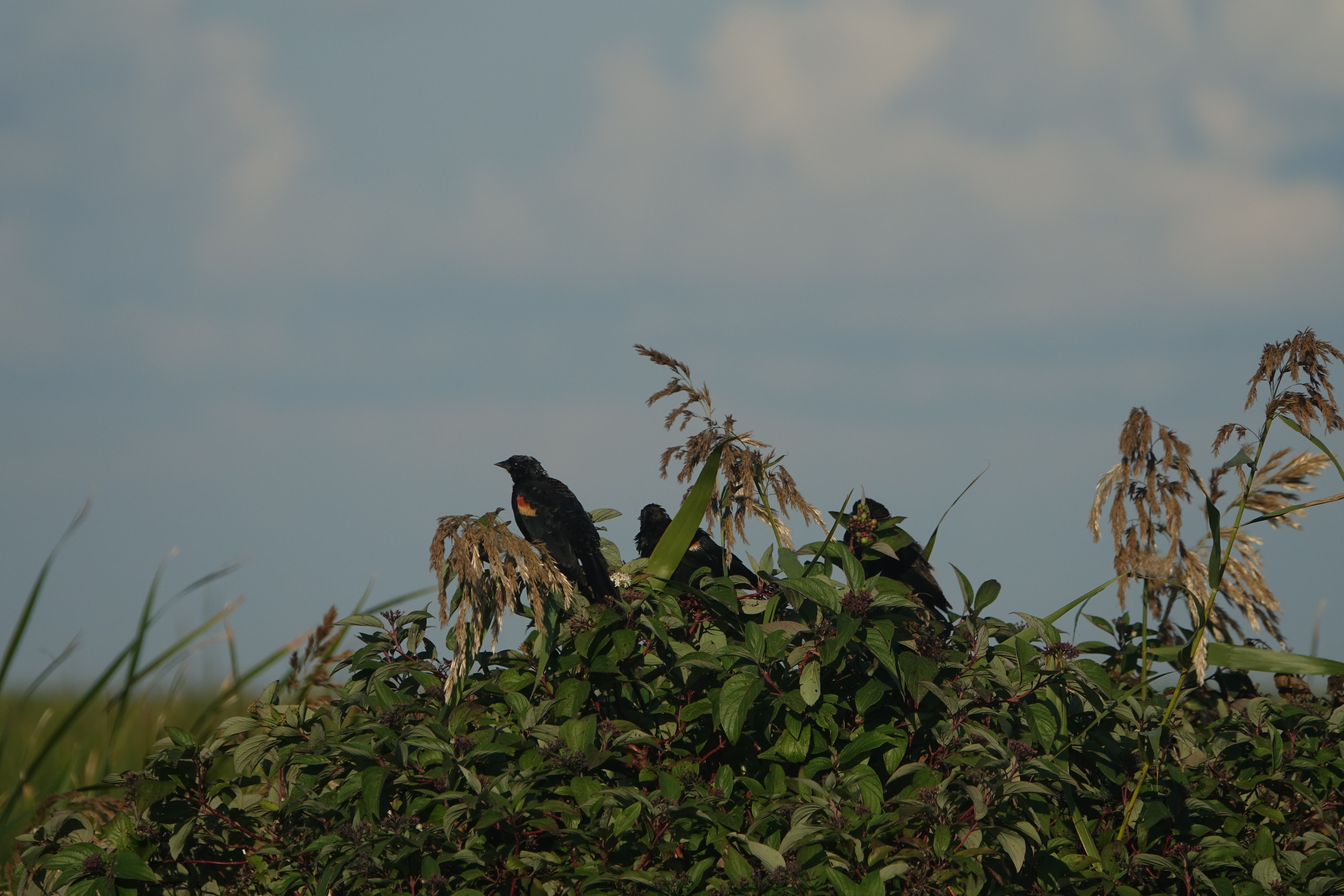
Red-winged Blackbirds. Photo by Marissa.
The final route for this group was ISS Route 2, taking the birders along Toad Road and the Blackbird Trail, before doubling back and following the Willow Trail back to the Wetland Discovery Centre. On this route the group observed 4 more Trumpeter Swans, 11 American White Pelicans, a Sharp-shinned Hawk, 24 Barn Swallows, and a Bobolink.
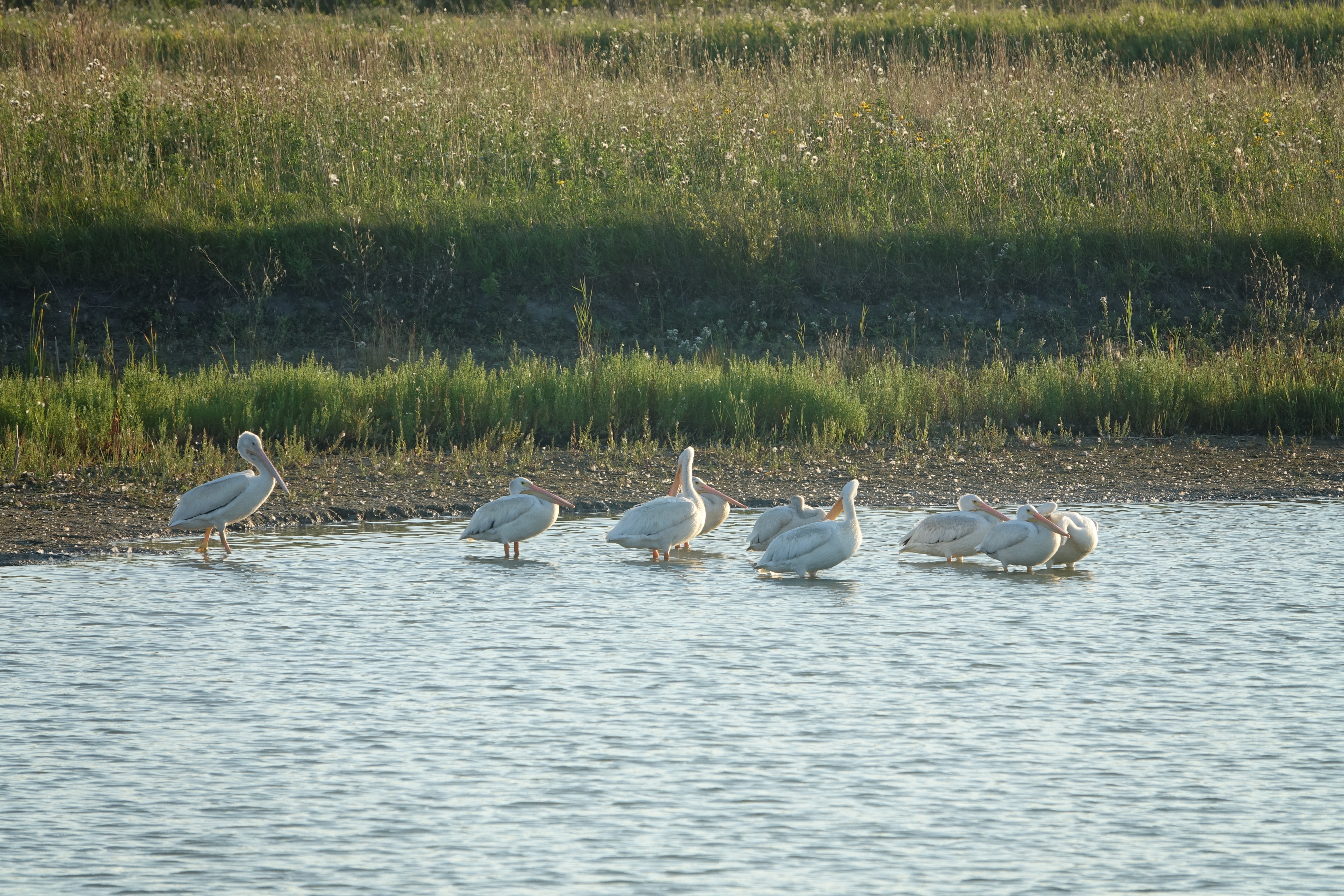
American White Pelicans. Photo by Marissa.
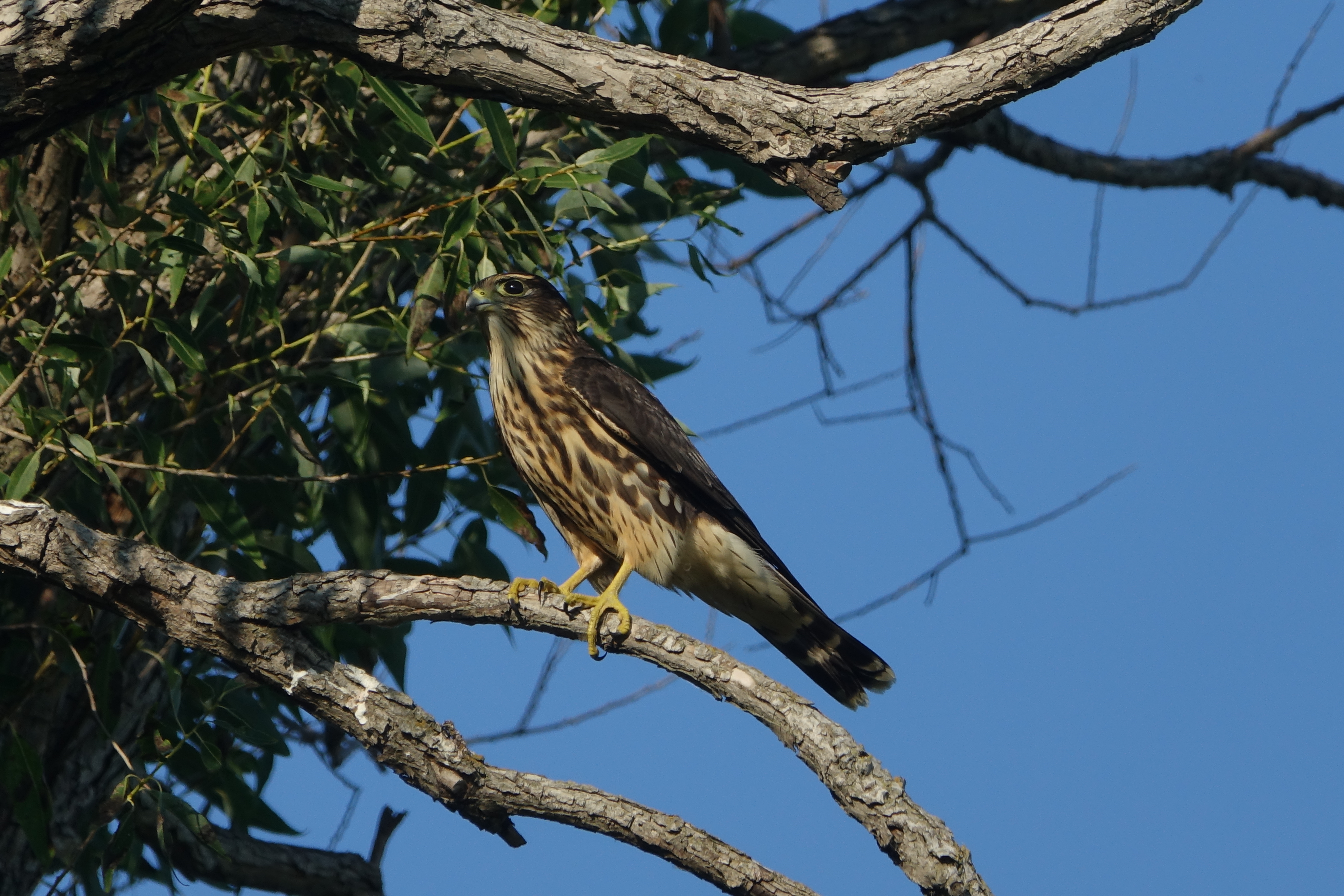
A Merlin posing in the willows. Photo by Marissa.
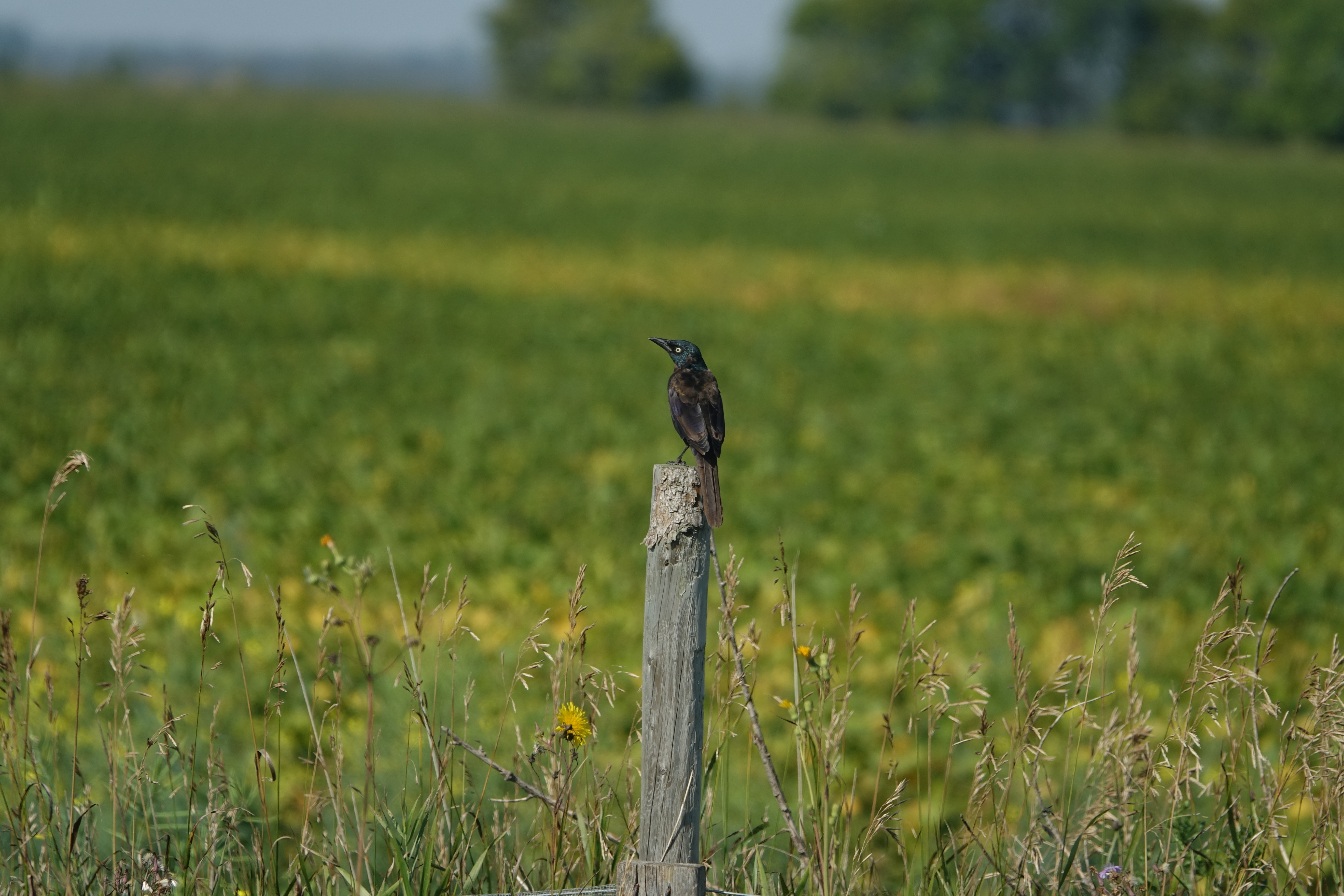
A Common Grackle showing off his iridescent blue head while perching on a fence post. Photo by Marissa.
Overall, it was a successful morning of birding, with 17,649 individual birds from 83 different species observed. A full table of observations is included below. As always, a huge thank you to everyone who joined us for this blitz, we truly couldn’t run without our volunteers. You’re awesome! This event was also made possible through funding from Environment and Climate Change Canada’s Habitat Stewardship Program. Thank you!
And with that, I am done recapping our 2025 IBA Bird Blitzes. Thank you for following along! I’ll be back with one more recap of our habitat stewardship events that took place in August and September, and then it’ll be into full-time planning mode for the summer. Make sure to follow along to stay informed on our upcoming events. If you’d like to join our mailing list to stay up to date, send me an email at iba@naturemanitoba.ca!
-Mackenzie
| Species | Sum of Count |
| American Bittern | 1 |
| American Crow | 1 |
| American Goldfinch | 32 |
| American Herring Gull | 3 |
| American Kestrel | 2 |
| American Redstart | 5 |
| American Robin | 1 |
| American White Pelican | 19 |
| Bald Eagle | 2 |
| Barn Swallow | 86 |
| Blackpoll Warbler | 1 |
| Blue Jay | 2 |
| Blue-winged Teal | 38 |
| Bobolink | 24 |
| Bonaparte’s Gull | 2 |
| Brewer’s Blackbird | 2 |
| Brown-headed Cowbird | 8 |
| Buteo sp. | 1 |
| Canada Goose | 745 |
| Cedar Waxwing | 1 |
| Chipping Sparrow | 2 |
| Clay-colored Sparrow | 9 |
| Cliff Swallow | 3 |
| Common Goldeneye | 3 |
| Common Grackle | 5 |
| Common Raven | 12 |
| Common Yellowthroat | 46 |
| Cooper’s Hawk | 1 |
| Double-crested Cormorant | 11 |
| Downy Woodpecker | 2 |
| Eastern Kingbird | 9 |
| Franklin’s Gull | 58 |
| Gadwall | 4 |
| Gray Catbird | 10 |
| Great Blue Heron | 1 |
| Greater Yellowlegs | 5 |
| Green-winged Teal | 5 |
| Killdeer | 12 |
| Least Flycatcher | 1 |
| Least Sandpiper | 2 |
| Lesser Scaup | 11 |
| Lesser Yellowlegs | 16 |
| Lincoln’s Sparrow | 2 |
| Mallard | 302 |
| Marsh Wren | 5 |
| Merlin | 10 |
| Mourning Dove | 14 |
| Nelson’s Sparrow | 1 |
| Northern Harrier | 7 |
| Northern House Wren | 1 |
| Northern Pintail | 12 |
| Northern Shoveler | 9 |
| Northern Yellow Warbler | 11 |
| Palm Warbler | 2 |
| Pectoral Sandpiper | 4 |
| Pied-billed Grebe | 8 |
| Red-breasted Nuthatch | 3 |
| Red-eyed Vireo | 2 |
| Red-tailed Hawk | 2 |
| Red-winged Blackbird | 15424 |
| Ring-billed Gull | 28 |
| Ring-necked Duck | 1 |
| Rose-breasted Grosbeak | 1 |
| Ruddy Duck | 1 |
| Sandhill Crane | 330 |
| Savannah Sparrow | 39 |
| Sedge Wren | 11 |
| Sharp-shinned Hawk | 1 |
| Sharp-tailed Grouse | 3 |
| Short-billed/Long-billed Dowitcher | 5 |
| Snow Goose | 100 |
| Song Sparrow | 6 |
| Sora | 3 |
| Swainson’s Thrush | 1 |
| Swamp Sparrow | 22 |
| Tennessee Warbler | 1 |
| Tree Swallow | 3 |
| Trumpeter Swan | 10 |
| Vesper Sparrow | 1 |
| Western Meadowlark | 4 |
| White-rumped Sandpiper | 4 |
| White-throated Sparrow | 2 |
| Wilson’s Snipe | 49 |
| Grand Total | 17649 |
| Total Species | 83 |
 Manitoba Important Bird Areas Program